
Do Under Eye Patches Actually Work? Here’s What the Science Says
Under eye patches are one of the most-searched skincare formats on the market right now. They dominate social feeds, fill bathroom shelves, and inspire a level of consumer enthusiasm that few other skincare products manage to sustain. But the enthusiasm has generated a very legitimate question: do under eye patches actually work, or are they a ritual that feels effective without delivering anything meaningful?
It is a fair question, and it deserves a straight answer. The short version is: yes, under eye patches work. But the longer and more useful answer is that their effectiveness depends entirely on two things: the format of the patch itself, and what is underneath it when you wear it. Understand those two variables, and the skepticism dissolves. Get them wrong, and you are likely spending money on something that mostly feels nice.
This blog is not about which eye cream to use for which concern. If you want that, Eye Cream 101 covers it in full. What this blog is about is the science of the patch format: how occlusion works at the skin level, why it is a clinically validated principle and not a marketing invention, how different patch formats compare when you apply that science, and what ingredient you should be sealing underneath the patch for the periorbital area specifically. Think of it as the mechanics behind the method.
Start with what the patch is actually doing to your skin. Then understand why format determines whether that mechanism is being used correctly. The rest follows naturally from there.
What Under Eye Patches Are Actually Doing to Your Skin
The first thing to understand about an under eye patch is what it does at the most fundamental level, before any ingredient enters the picture. A patch placed against the under-eye skin creates a physical barrier between that skin and the surrounding environment. That simple act has two immediate physiological consequences, and both of them matter.
The first consequence is a reduction in transepidermal water loss, commonly abbreviated as TEWL. Transepidermal water loss is the ongoing passive diffusion of water through the skin surface and into the surrounding air. It happens continuously, to every centimeter of your skin, at varying rates depending on where you are on the body and how compromised or intact your skin barrier is. The under-eye area loses moisture faster than most other facial zones, and the anatomy of the periorbital skin explains why.
The skin beneath the eye is anatomically distinct from skin elsewhere on the face. It is approximately 0.5mm thick compared to roughly 2mm on the rest of the face. It has significantly fewer sebaceous (oil) glands, which means it lacks the natural lipid layer that helps other areas retain moisture more easily. It sits over a complex network of fine capillaries and connective tissue with relatively little structural padding beneath it. All of this makes the periorbital area both more prone to dehydration and more visibly responsive to changes in hydration and fluid balance. When this skin is tired, dehydrated, or stressed, the effects are more visible here than almost anywhere else.
A patch applied over this area slows the rate at which moisture escapes. The skin underneath retains its own moisture more effectively. On its own, even before any product enters the equation, this occlusive barrier provides a measurable hydration benefit. The under-eye skin is not fighting against moisture loss for the duration of wear.
The second consequence is the change in the local environment beneath the patch. When any topical product is applied to skin and left open to the air, a portion of that product, particularly its water-based components, evaporates before it can fully absorb. The more lightweight the formula, the faster this evaporation occurs. An occlusive seal eliminates that evaporation window. The product applied beneath the patch remains in direct, sustained contact with the skin surface for the full duration of wear.
This is what do under eye patches do in practical terms: they create a sealed, moist environment that simultaneously preserves the skin’s own moisture and maximizes the contact time between any active ingredient and the skin. The patch itself is not the treatment. It is a delivery mechanism. Understanding that distinction is what separates effective patch use from ineffective patch use, and it is the distinction that the rest of this blog is built around.
“A patch is not a treatment by itself. It is a delivery system. Its effectiveness is proportional to what it is delivering, and how well it maintains contact between that ingredient and the skin.”
The clinical principle that explains why this mechanism works has been understood in dermatology for decades. That is where the conversation goes next.
Occlusion: A Dermatological Principle, Not a Marketing Claim
Occlusion is not a term invented by the skincare industry. In clinical dermatology, occlusion refers to the application of a physical barrier to the skin surface with the specific purpose of preventing moisture loss and increasing the permeability of the stratum corneum, the outermost layer of the skin, to topically applied substances. It is a well-documented mechanism with a long history of clinical application.
Occlusive dressings have been used in wound care and dermatology for decades. The clinical rationale is straightforward: a sealed, moist environment accelerates epithelialization, reduces inflammation, and improves the response of skin tissue to topical treatment. A review published in the Journal of Dermatologic Surgery and Oncology confirms that occlusive dressings create a moist environment that meaningfully changes the skin’s response to topical agents, and identifies their role in opening the skin barrier to more effective treatment as one of their most significant contributions to dermatological science.
What this means in the context of skincare is specific and important. When an active ingredient is applied to skin beneath an occlusive layer, the stratum corneum becomes more permeable. The ingredient does not simply sit at the surface waiting to absorb. It is held in direct, continuous contact with skin that has become more receptive to it. The result is deeper and more efficient absorption than the same product applied without occlusion. This is not a hypothesis. It is a well-established mechanism that dermatologists have relied on in clinical practice for a long time.
Under normal open-air conditions, a meaningful portion of any topical formula evaporates before it can fully absorb. This is particularly true for lightweight eye creams and serums with high water content. These formulas are often designed to feel light and non-greasy, which is a legitimate formulation priority for the periorbital area, but the trade-off is that their water phase evaporates quickly. Occlusion eliminates that trade-off entirely. The formula stays in contact with the skin, and the skin is more prepared to receive it.
Silicone sheeting offers a relevant clinical parallel. Solid silicone sheeting has been used in clinical scar management for decades precisely because it creates a sustained, sealed environment over treated tissue. The sustained contact changes the tissue environment in a way that an open application cannot replicate. This is the same physical principle at work when a solid silicone eye patch is placed over a topically applied active.
There is a distinction worth making clearly here, because it is widely misunderstood. Silicone as an ingredient in a skincare formulation behaves differently from solid silicone sheeting used as a physical patch. A randomized controlled trial published in Skin Pharmacology and Physiology by De Paepe et al. found that silicone compounds used in cream formulations do not function as occlusive agents. The silicone excipients tested were water vapor permeable and did not significantly reduce transepidermal water loss compared to untreated skin. Petrolatum, by contrast, did form an occlusive layer with measurable, sustained effects on skin hydration.
The takeaway from this research is precise: silicone as an ingredient in a cream or serum is not what creates occlusion. The physical silicone patch, applied as a solid, airtight sheet against the skin, is what creates occlusion. These are two separate things with two separate mechanisms. The patch is not enhanced because it contains silicone as an ingredient. It functions as an occlusive delivery tool because of what it physically is: a non-porous, waterproof solid pressed flush against the skin.
The clinical evidence for occlusion enhancing topical ingredient absorption is not industry marketing. It is a dermatologically established principle with a robust body of research behind it. What matters for the consumer is whether the patch format they are using applies this principle correctly. Not all formats do, and the differences between them are meaningful.
Reusable Silicone vs. Single-Use Hydrogel: What the Science Distinguishes
Now that the occlusion principle is established, the critical consumer question becomes: which patch format actually uses it? Under eye patches currently available on the market fall into two dominant categories, and the science draws a clear line between them.
Single-use hydrogel patches arrive pre-loaded with a serum or gel solution. The mechanism is a slow release of the product contained within the gel matrix onto the skin surface as the patch sits in place. The ingredient delivery comes from within the patch itself, not from a separately applied product beneath it.
The limitations of this format are structural, not incidental.
First, the ingredient concentration is fixed at the point of manufacture. The consumer has no control over what active they receive, at what strength, or how it maps to their specific concern. What is in the patch is what you get, and that formulation decision was made long before the product reached your hands.
Second, because the gel matrix is itself the product, there is no meaningful way to combine a single-use hydrogel patch with a separately chosen active applied beneath it. The patch and its ingredient load are one unit. The concept of using a hydrogel patch to amplify a separately selected eye cream does not apply to this format.
Third, the cooling and soothing effect of a hydrogel patch is real, and the temporary relief it provides is not nothing. But it is also largely surface-level. Once the patch is removed and the cooling sensation fades, the active ingredient that was delivered from the gel has no sustained delivery mechanism keeping it at the skin surface. Absorption is limited to the contact period, and the formula is not sealed in place post-removal.
Fourth, and increasingly relevant to consumers thinking carefully about their purchasing habits, single-use patches generate a significant and ongoing material waste stream. A pair used once and discarded, two or three times per week, accumulates into a substantial volume of non-recyclable material over months of use.
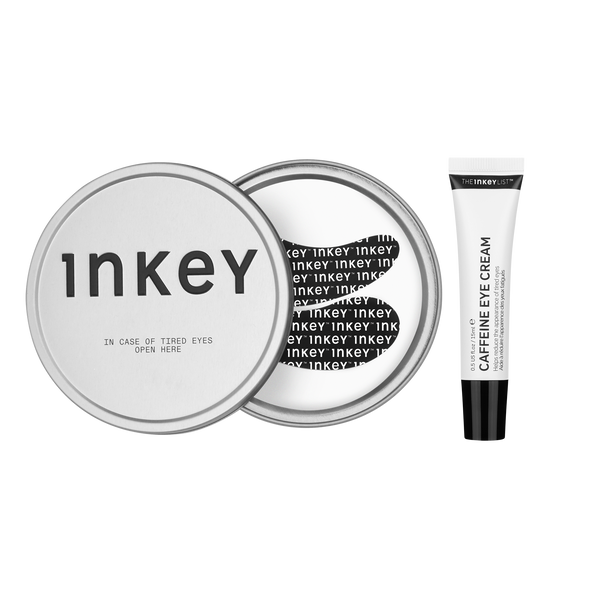
Reusable silicone patches operate on a fundamentally different model. Made from 100% solid silicone, they are airtight and waterproof. Applied over a separately chosen eye cream, the silicone patch creates a physical occlusive seal. The mechanism is the one described in the previous section: moisture is retained, evaporation is eliminated, and the active ingredient remains in sustained, direct contact with the periorbital skin for the full duration of wear.
The critical advantage of this format is control. The consumer selects the active ingredient, the concentration, and the targeted concern. The patch amplifies that choice rather than replacing it. A well-formulated, targeted eye cream sealed beneath a silicone patch will consistently deliver more of its active ingredient more completely than the same cream applied and left open to air, and it will consistently deliver more targeted treatment than a pre-loaded hydrogel patch whose formulation cannot be adjusted.
Reusable silicone patches are also designed for indefinite use. After each session, they are rinsed with water and a small amount of hand soap, patted dry, and stored flat in an included travel tin. There is no replacement purchasing, no waste accumulation, and no ongoing material cost beyond the eye cream itself.
The Reusable Eye Patches and Caffeine Eye Cream Duo is designed precisely around this format logic: reusable silicone over a targeted, well-formulated active, at a price point that reflects the fact that the patches require no repurchase.
It is also worth acknowledging the social media landscape honestly. The under eye patch category has been significantly shaped by high-price, single-use formats with strong visual presence and substantial marketing investment. The science of occlusion does not inherently favor the more expensive or more aesthetically appealing format. It favors the format that maintains the most sustained and effective contact between active ingredient and skin. On that measure, reusable silicone over a targeted cream wins on the science.
Understanding the format advantage gets you halfway there. The other half is what you apply beneath the patch, because the occlusion principle does not care whether the ingredient underneath it is excellent or mediocre. It amplifies both.
Caffeine Under the Patch: Why the Ingredient Choice Matters
Once you understand that a silicone patch functions as a delivery amplifier rather than a treatment in itself, the obvious next question is: what should it be amplifying? For the periorbital area specifically, the evidence points clearly to caffeine as the right active, and the reasons have to do with the unique physiology of the under-eye zone.
Caffeine is one of the most thoroughly documented topical ingredients for the periorbital area. Its mechanisms are distinct, well-researched, and directly relevant to the three concerns that matter most beneath the eye: vascular discoloration, fluid retention, and the appearance of fine lines and structural thinning.
The first mechanism is vasoconstriction. Applied topically, caffeine temporarily narrows the blood vessels beneath the periorbital skin. Because this skin is exceptionally thin, the bluish or purplish discoloration associated with vascular dark circles is largely the visual result of those vessels showing through. Vasoconstriction reduces the diameter of those vessels and, by extension, reduces the visible discoloration. This is the same physiological response that caffeine produces systemically when consumed as a beverage, applied with precision to the site where the concern is visible.
The second mechanism is its anti-edema action. Caffeine limits capillary permeability, which refers to the degree to which vessel walls allow plasma to leak into the surrounding connective tissue. When capillary permeability is elevated, fluid accumulates in the periorbital space. This is the physiological basis of under-eye puffiness. According to Healthline’s clinical overview of periorbital edema, fluid accumulation beneath the eye is a physiological response driven by factors including inflammation of the small blood vessels around the eyes. By limiting how readily those vessels allow fluid to escape into surrounding tissue, caffeine addresses the cause of puffiness at the capillary level, not just the surface.
The third mechanism is antioxidant activity. Caffeine neutralizes free radicals generated by UV exposure and environmental stress. Given that the periorbital skin is among the thinnest and most structurally fragile on the body, oxidative damage accumulates here with particular speed and visibility. The antioxidant function of caffeine provides a protective benefit that extends beyond the immediate cosmetic effects.
When any of these mechanisms are delivered via an open application, a proportion of the formula evaporates during absorption. The caffeine reaches the skin, but not as completely as it would under sealed conditions. When the same formula is applied beneath a silicone patch, the caffeine is held in sustained, direct contact with the periorbital skin for the full duration of wear. All three mechanisms have the best possible conditions to operate.
The INKEY List Caffeine Eye Cream is formulated at 0.3% caffeine, a concentration calibrated for the sensitivity of the periorbital area. It is paired with two supporting actives that address the remaining primary concerns:
- Matrixyl 3000: A peptide complex that signals the skin to support collagen production, targeting the structural fine line and firmness concern at the collagen level rather than at the surface.
- Albizia Julibrissin Bark Extract: Addresses the visible appearance of under-eye fatigue and the dullness that accumulates with disrupted sleep and environmental stress.
Together, these three actives address the full primary concern spectrum of the under-eye area in a single, targeted formula. When sealed beneath a silicone patch, each active has the optimal delivery conditions. The patch does not change what the ingredients are or what they do. It changes how completely they are able to work.
For those who want to see what consistent use of this formula looks like in practice, the Caffeine Eye Cream Before and After Results provides real-world evidence of what this formula delivers over time.
The Reusable Eye Patches and Caffeine Eye Cream Duo packages the silicone format and the targeted active together at $21.85, making the science straightforward to apply in practice.
The format and the ingredient are both established. The final dimension worth addressing is why the reusable format is also the more considered, practical, and financially sensible choice over time.
The Reusable Case: Sustainability, Value, and Practical Logic
Under eye patches have become one of the highest-waste formats in the skincare category. It is not a minor distinction. A single-use hydrogel patch is used once, for a session of ten to twenty minutes, and then discarded. For someone using them two to three times per week, that represents a consistent and ongoing volume of non-recyclable material generated by a single skincare step. Over weeks and months, the accumulated waste from this format alone is significant, and the repurchasing cost required to sustain it adds up alongside it.
Reusable silicone patches operate on the opposite logic entirely. A single pair is designed to be used indefinitely. The care routine is minimal by design:
- After each session, rinse the patches with water and a small amount of hand soap.
- Pat them dry with a clean cloth.
- Store flat in the included travel tin, which keeps them clean and undamaged between uses.
That is the full maintenance requirement. There is no expiration date on the patches, no degradation with regular washing, and no point at which a new pair needs to be purchased. The ongoing cost of the reusable patch system is limited entirely to the Caffeine Eye Cream, which is priced at $12.00 for 15ml.
The value comparison against single-use formats is direct and concrete. Single-use under eye patch packs in the premium segment of the market are typically priced between $25 and $40 or more per pack, with each pack containing five to eight pairs. At two to three uses per week, a single pack depletes in two to four weeks. Over three months, that represents multiple repurchases and a per-session cost that compounds steadily. The Reusable Eye Patches and Caffeine Eye Cream Duo is $21.85 for two full-size products, with the patches requiring no further investment.
The travel tin is a practical detail worth noting. Reusable patches left loose in a drawer or bag pick up lint, lose their shape, and are easy to misplace. The included tin keeps them flat, protected, and ready for use. It is the kind of detail that turns a product into a routine rather than an occasional experiment.
There is also a cold refrigeration option that adds a compounding benefit. Storing the silicone patches in the fridge for ten minutes before use adds a mild vasoconstriction effect from the cooling temperature itself, which works in direct parallel with the caffeine’s vasoconstrictive mechanism. The cold temperature narrows the blood vessels in the same way caffeine does biochemically. Using both together produces a combined effect that either alone cannot replicate.
The patches are suitable for all skin types, including sensitive skin, and are confirmed safe for use during pregnancy and breastfeeding. There is no specialized skin condition required to benefit from them and no compatibility concern that would exclude a significant portion of the audience.
A format that performs better, costs less over time, generates substantially less waste, and requires no complex maintenance is not a compromise. It is a straightforward upgrade. The final piece is knowing how to use it correctly for maximum effect.
How to Use Reusable Eye Patches for Maximum Effect
Understanding the science behind under eye patches is useful. Knowing how to apply that science in a daily routine is what converts understanding into results. Here is exactly how to use reusable silicone eye patches to get the most out of the occlusion principle and the Caffeine Eye Cream beneath it.
Where patches fit in your routine: Apply them after cleansing and after any serums, before moisturizer. This positioning works in the morning, in the evening, or both, depending on your routine and how much time you have. Morning use is popular for its visible depuffing effect going into the day. Evening use allows the caffeine and supporting actives to absorb fully overnight, making it a productive treatment step within a broader nighttime routine.
Step-by-step usage:
- After cleansing, apply a generous layer of Caffeine Eye Cream to the under-eye area. Do not apply sparingly here. The occlusion principle works because the ingredient is held in continuous contact with the skin, and a thin application will absorb quickly even before the patch goes on.
- Place the silicone patches on top, with the narrow end oriented toward the inner corner of each eye. The patch should sit flush against the skin with no gaps at the edges.
- Leave the patches on for ten to twenty minutes. This is the active delivery window. The stratum corneum is becoming more permeable, the caffeine is held in sustained contact, and evaporation is eliminated.
- Remove the patches gently and tap any remaining cream into the skin. Do not wipe. The product remaining on the surface after removal is still active. Pressing it in with your fingertip rather than removing it preserves the full dose.
- Continue with the rest of your routine: moisturizer, and SPF in the morning.
- Rinse the patches with water and a small amount of hand soap, pat dry, and store flat in the included tin.
Optional enhancement: Refrigerate the patches for ten minutes before use. The cooling temperature adds mild vasoconstriction that works alongside the caffeine’s own vasoconstrictive mechanism. This is the most effective way to use the duo on mornings when visible puffiness is the primary concern.
Frequency: Daily use delivers the most consistent results. A minimum of two to three times per week will produce noticeable improvement over time. The patches are fast enough to fit into a morning routine on days when time is limited, and thorough enough to function as a dedicated evening treatment step on days when it is not.
On days without the patches: The Caffeine Eye Cream functions as a standalone step in the standard layering sequence, applied after serums and before moisturizer. The patches enhance the cream. They do not replace it as the everyday application. Using the cream consistently, with or without the patches, is what builds the cumulative benefit over time. The patches are the amplifier, not the foundation.
Important notes on safety and use: Apply around the eyes, not on the eyelids or close to the waterline. If you are introducing either the patches or the Caffeine Eye Cream into your routine for the first time, patch test on a small area first. Both are formulated for the sensitive periorbital area, but patch testing is always the right starting point with any new product near the eyes.
For anyone who wants to go beyond the format and delivery science covered in this blog and into the full landscape of eye care, including which active targets which concern and how to build a complete eye routine, Eye Cream 101 is the complete resource. And for those interested in building the duo into a broader skincare regimen, Build Your Own Routine allows you to combine it with other targeted steps.
The Science Is Clear: Format and Ingredient Determine the Outcome
The answer to whether under eye patches work is conditional, but the conditions are not complicated. A patch that creates a genuine occlusive seal over a well-formulated, targeted active gives that active the best possible delivery conditions. A patch that replaces the active choice with a pre-loaded, fixed-concentration gel formula removes the consumer’s control over what they are receiving and how it maps to their concern.
The science of occlusion is not a marketing concept. It is a dermatologically established principle that has been applied in clinical settings for decades, documented in peer-reviewed literature, and validated through randomized controlled trials. When it is applied correctly, with a solid silicone patch over a targeted active, the result is measurably more effective delivery than open-air application.
Caffeine is the right active for the periorbital area: vasoconstrictive, anti-edema, and antioxidant. Paired with Matrixyl 3000 for structural support and Albizia Julibrissin Bark Extract for fatigue, the Caffeine Eye Cream addresses the full primary concern spectrum of the under-eye area. Sealed beneath a silicone patch, each of those actives reaches the skin more completely.
The reusable format is also the more practical and more considered choice. One pair, indefinitely reused, at a cost that does not compound with every week of consistent use. Less waste, better value, and a refrigeration option that compounds the depuffing benefit when you need it most.
Understanding the science turns a product question into a clear decision. And the decision, based on what the science actually says, is to choose the format that applies the occlusion principle correctly, with the active that the periorbital area is specifically equipped to benefit from.
If you want to go deeper on what is actually causing dark circles, puffiness, and fine lines at a biological level, Dark Circles, Puffiness and Fine Lines: What’s Actually Causing Them covers the root causes in full.
Get the Duo That Applies the Science Correctly
Shop the Reusable Eye Patches and Caffeine Eye Cream Duo — $21.85 for two full-size products.
See real results: Caffeine Eye Cream Before and After
Explore all eye treatments: Shop Eye Treatments