



How to Get Glowing Skin: The Complete INKEY Guide
The science of radiant skin — and the step-by-step AM and PM routine built on cleansing, Vitamin C and exosomes.
Author
askINKEY skincare advisor
Published
16 May, 2026
Time to read
18 minutes
This guide covers everything you need to know about getting glowing skin — not the generic lifestyle advice you've already heard, but the actual science: why skin loses its radiance, which ingredients restore it, and how to build a full AM and PM skincare routine that delivers visible results. INKEY's approach is ingredient-led and science-backed. Every product recommendation in this guide exists because of what's inside it, not because of a trend or a label.
The three products at the center of this guide:
What most competitor guides skip is the full routine picture - specifically, what to do both morning and evening. This guide gives you both, in full, step by step. Before any of that, though, it helps to understand what's actually causing your skin to look dull in the first place.
Why Skin Loses Its Glow - And What's Actually Happening Beneath the Surface
Glowing skin is not a single thing. It is the result of several biological processes all working correctly at the same time - and when any one of them breaks down, the complexion starts to look flat, uneven, or tired. Understanding what's actually happening beneath the surface is the most useful place to start, because it changes how you approach every product decision that follows.
The skin's surface reflects light. When that surface is smooth, even, and well-hydrated, light bounces off it in a way that reads as radiance. When it's uneven - layered with dead cells, damaged by UV, compromised by dehydration - light scatters instead of reflecting, and the result is dullness. That's the visual reality. Here's what's driving it biologically.
Dead skin cell accumulation is the most common and most overlooked cause of dull skin. The skin naturally sheds dead cells in a cycle that takes roughly 28 to 40 days in younger skin - a process called desquamation. As the skin ages, that cycle slows considerably. Cells that should have been shed linger on the surface, building up a layer that disrupts light reflection. Think of it like dust settling on a mirror: the mirror itself is still functional, but the accumulated layer on top is what prevents it from doing its job. Regular, gentle exfoliation and targeted actives can help accelerate this process and restore a smoother surface.
UV damage and environmental pollution are the next major contributors. Free radicals generated by UV radiation and airborne pollutants trigger oxidative stress inside the skin cell, damaging the cell's structure, accelerating melanin production (which causes uneven tone and dark spots), and breaking down the collagen matrix that gives skin its plump, firm texture. According to research published on Healthline, antioxidant ingredients are critical in neutralizing this oxidative damage before it compounds - which is exactly where Vitamin C becomes indispensable in a glow routine.
Dehydration is a less obvious but equally significant factor. Dehydrated skin cells lose their plumpness, and without that internal volume, the surface becomes rough and slightly sunken at a microscopic level - which again scatters light rather than reflecting it. This is worth emphasizing: even oily skin can be dehydrated. Oil and water are different things, and an oily complexion with dehydrated cells still won't glow. For a deeper look at how hydration affects skin radiance, read our guide to the importance of hydration for healthy, glowing skin.
Slowed cell renewal compounds with age. Newer, brighter skin cells form at the base of the epidermis and travel upward to the surface. When that journey slows — which it does progressively after our mid-20s — the skin surface is occupied by older, less reflective cells for longer. The result is a complexion that looks progressively more tired, regardless of the lifestyle factors that haven't changed.
Environmental stress signals — including blue light exposure, air pollution, lack of sleep, and chronic low-level stress — trigger visible inflammation in the skin. Redness, puffiness, and uneven tone are all inflammatory responses. Individually, each is minor. Cumulatively, they create a complexion that looks dull, reactive, and fatigued even when a person feels fine.
None of this is hopeless - it's biological, which means it's addressable with the right ingredients. The key is knowing which ingredients solve which problem, and in what order to apply them. That starts with the step most people rush, underestimate, or skip entirely.
Now that you understand what's causing dullness, here's where to start fixing it - and it begins before any serum reaches your skin.
Start Here - Why Cleansing Is the Foundation of Glowing Skin
The most common mistake in a glow routine is treating the cleanser as an afterthought. It isn't. Cleansing is arguably the highest-leverage step in your entire routine - because if dead skin cells, SPF residue, pollution particles, and oxidized sebum are not properly removed, the brightening serums you apply afterward cannot penetrate effectively. You're essentially applying expensive actives to a contaminated surface and expecting full results.
This is the glow step that most people underestimate, and most skincare guides fail to explain properly. Cleansing doesn't just remove makeup. It prepares the skin's surface for everything that follows — and the way you cleanse matters as much as what you cleanse with.
The double cleanse is the framework for glowing skin. The principle is simple: the first cleanse removes surface-level impurities — makeup, SPF, pollution, excess oil. The second cleanse works directly on the skin itself, clearing pores and preparing the surface for treatment. This two-step approach isn't complicated, but it's consistently the difference between a routine that delivers results and one that plateaus.
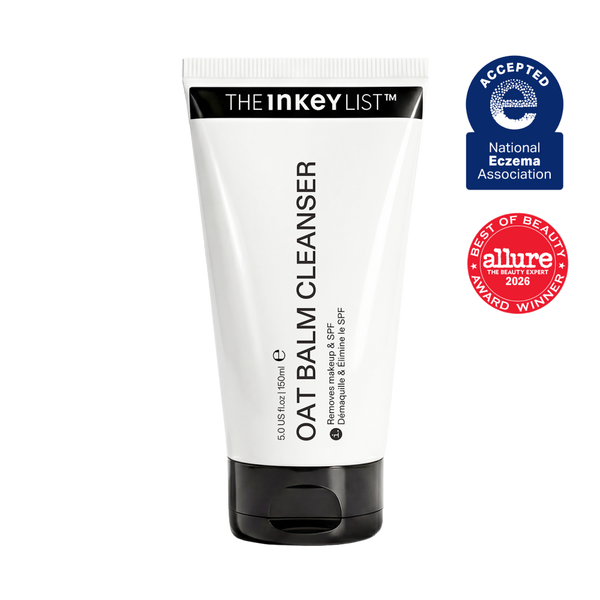
For the first cleanse, the Oat Cleansing Balm 150ml is the starting point. Formulated with 5% Oat Kernel Oil and Sea Buckthorn Oil, it removes 100% waterproof makeup and SPF in 30 seconds - not with harsh surfactants, but with an emulsification method that lifts impurities gently without stripping the skin's natural moisture. The clinical data behind it is specific: it delivers clinically proven 12-hour hydration, and visibly improves texture, radiance, smoothness, and redness with consistent use.
What makes this balm particularly valuable for a glow routine — beyond its makeup-removing performance - is the quality of the skin it leaves behind. Oat Kernel Oil is exceptionally rich in ceramides and omega fatty acids, which actively support the skin's barrier rather than compromising it. Sea Buckthorn Oil brings antioxidant-rich carotenoids that immediately contribute a warm, subtle luminosity to the complexion. You're not just removing impurities; you're actively nourishing the skin during the cleanse step.
It's also suitable for all skin types, including sensitive and blemish-prone - and it's pregnancy safe. The updated Oat Cleansing Balm formula reflects refinements based on user feedback and clinical insight.
One of the lesser-known uses of the Oat Cleansing Balm is as a 10-minute nourishing mask. Apply it to dry skin, let it sit, then rinse. The result is an instant glow boost — particularly useful before an event or at the start of a new routine when your skin needs an immediate reset. It's the kind of dual-use functionality that makes a product genuinely worth the shelf space.
INKEY Tip: Cleanse for a full 60 seconds. It sounds simple, but most people cleanse for less than 20. A full minute of massage allows the balm to properly emulsify and lift impurities - and it's the step that makes everything applied afterward work harder.
For the second cleanse, the right choice depends on your skin type — whether that's a gel cleanser for oilier skin, a cream formula for drier types, or something in between. Our guide to choosing the right cleanser for you walks through every option without the guesswork.
With a clean canvas, skin is ready for the ingredients that actually deliver the glow. And the one to know first is Vitamin C.
The Brightening Ingredient Your Skin Has Been Waiting For - Vitamin C Serum Benefits for Glowing Skin
Vitamin C has earned its reputation as the gold-standard brightening ingredient in skincare - not through marketing, but through decades of research into how it interacts with the skin's biology. It works at the root cause of dullness rather than masking it on the surface. Understanding why makes it easier to use it correctly, and to appreciate why the specific form of Vitamin C matters far more than most people realize.
The mechanism: Vitamin C inhibits tyrosinase — the enzyme responsible for melanin production. When tyrosinase activity is reduced, the melanin that causes dark spots and uneven tone is produced more slowly, and existing pigmentation begins to fade. Simultaneously, Vitamin C acts as a powerful antioxidant, neutralizing the free radicals generated by UV exposure and pollution before they can damage skin cells and trigger more pigmentation. It also plays a direct role in collagen synthesis - supporting the structural proteins that give skin its firmness and plumpness, both of which contribute to how light reflects off the surface. Healthline's comprehensive review of Vitamin C serum benefits explains the antioxidant science in depth for readers who want the full picture.
For the complete breakdown of how Vitamin C works in skincare - including all the different forms, how to layer it, and how to build it into any routine - read our full Vitamin C guide.
The form of Vitamin C is everything. Most Vitamin C serums on the market use L-Ascorbic Acid — the purest, most studied form. It's potent, but it comes with significant drawbacks: it oxidizes rapidly when exposed to air or light (turning the serum orange or brown and rendering it ineffective), and at the concentrations needed for efficacy, it frequently causes stinging, redness, and irritation - particularly on sensitive skin.
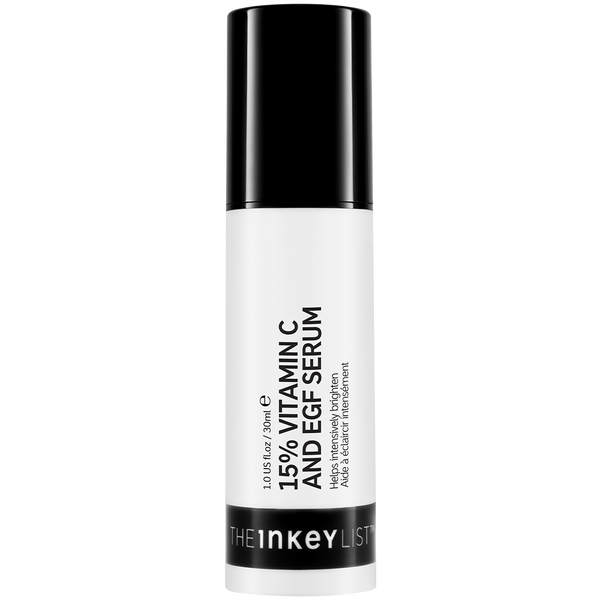
The INKEY 15% Vitamin C + EGF Serum uses Ascorbyl Glucoside instead - a stabilized derivative of Vitamin C that bonds to a glucose molecule, which stabilizes the compound and dramatically reduces irritation potential. On contact with skin, the glucose bond cleaves and the active Vitamin C is released exactly where it needs to work. The result is the same brightening mechanism as L-Ascorbic Acid — tyrosinase inhibition, antioxidant protection, collagen support — but with a formula that stays effective from the first drop to the last, and is gentle enough for even the most reactive skin types.
Why Ascorbyl Glucoside over L-Ascorbic Acid? Stability. Gentleness. Same results, without the sting.
The EGF difference. The second major ingredient in this serum is 1% Epitensive™ EGF - a plant-derived Epidermal Growth Factor developed by Lipotrue. EGF is a biological signaling protein that communicates with skin cells, triggering renewal and regeneration. At 1% concentration, it works alongside the Vitamin C to not only brighten the surface but support the skin's underlying renewal processes — improving elasticity and helping the skin recover from the visible effects of aging and environmental stress.
The clinical evidence is significant:
- 87% of participants agree skin looks brighter after 4 weeks — independent consumer trial, 64 participants
- 88% saw visible improvement in skin tone and texture
- 84% agree skin looks healthier and less dull
These aren't aspirational marketing claims — they're results from an independent consumer trial conducted over a full month of use. What they tell you is that this serum is doing something measurable within a timeframe that's realistic for real use.
87% agree skin looks brighter after just 4 weeks.†
What this serum targets: dullness, uneven skin tone, dark spots and hyperpigmentation, early signs of aging, and loss of elasticity. It's a morning serum - Vitamin C's antioxidant properties are most valuable in the AM, when the skin is about to be exposed to UV and environmental stressors. Apply a pea-sized amount to damp skin after cleansing, before SPF. Fragrance-free, certified vegan, and safe for use during pregnancy and breastfeeding.
One note on compatibility: Vitamin C and retinol should not be used in the same routine. Vitamin C is your AM brightening treatment; retinol belongs in the PM. This isn't a limitation — it's actually an elegant division of labor, which the routine section below maps out clearly.
Want to go deeper on everything Vitamin C does for your skin? The full Vitamin C guide covers the complete ingredient science, different forms, and layering rules in detail.
Vitamin C is your daily brightening essential. But if your skin is ready for the next level - or nothing seems to be working - there's a newer generation of ingredient that goes even deeper.
Next-Generation Glow - What Exosome Serums Actually Do for Skin Radiance
There's a meaningful distinction between ingredients that treat the skin's surface and ingredients that support the skin's own renewal. Vitamin C brightens by inhibiting a specific enzyme. Hyaluronic acid hydrates by attracting water. Retinol accelerates cell turnover by binding to specific receptors. These are all effective, well-understood mechanisms. Exosomes operate differently - and that difference is what makes them genuinely exciting.
Exosomes are not an active ingredient in the conventional sense. They are nano-sized vesicles (about 300 times smaller than a pore) naturally found in plants. In skincare, plant-derived exosomes are rich in proteins, lipids and skin-loving actives that support your skin's natural renewal for visibly rejuvenated, glowing skin — without needles, without clinical procedures, and without downtime.
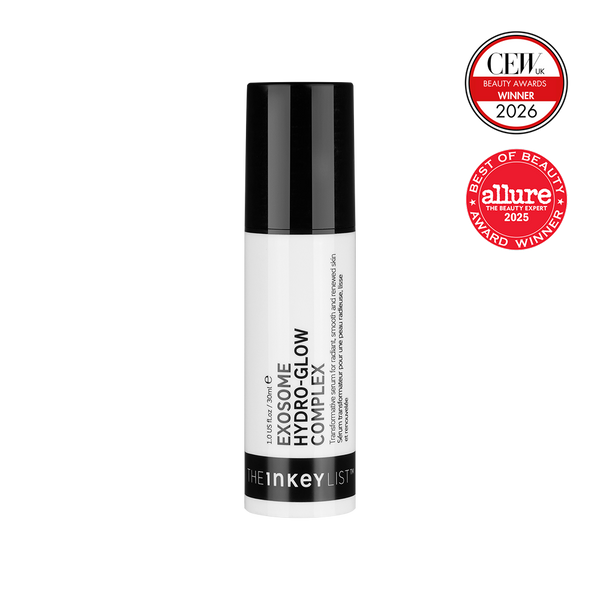
The INKEY Exosome Glow Serum uses 1% plant-derived Cica Exosomes — derived from Centella Asiatica, a botanical long established in skincare for its skin-calming properties. Each bottle contains 3 million exosomes. The testing data is striking:
- 55% reduction in visible signs of skin stress (redness, puffiness, visible irritation)***
- 63% increase in skin renewal activity in 8 hours*
- 100% saw more glowing skin, clinically proven*
- Proven to deliver up to 12-hours of hydration**
The 100% result is the one worth pausing on. In a clinical study where every single participant reported more glowing skin after four weeks of use, something is working. That's not a statistical average - that's a unanimous outcome.
100% saw more glowing skin, clinically proven.*
The full formula works as a system, not just a single-ingredient solution. Alongside the Cica Exosomes, the serum contains:
- 1% Kollaren™ peptide — visibly improves firmness and skin structure
- 1% Hyaluronic Acid — multi-molecular hydration that plumps at multiple depths
- 1% Ectoin — barrier-strengthening and moisture-locking for up to 12 hours
- Prickly Pear Extract — gentle resurfacing that contributes to a smoother, more luminous surface
- Q10/Ubiquinone — antioxidant protection against daily environmental stressors
Together, these deliver 6-in-1 skin rejuvenation: clinically proven to visibly improve radiance, hydration, tone, firmness, elasticity, and texture* — all in a single serum step. That's meaningful for anyone who wants an effective routine without a 10-step shelf.
Our Exosome Glow Serum is particularly valuable in two situations. First, for skin that has plateaued - where a solid routine has been in place for months but visible improvement has stalled, or where the complexion is persistently dull despite consistent care. With a 63% increase in skin renewal activity in 8 hours,*** the Exosome Glow Serum can help restart visible progress. Second, for skin that is going through a challenging period — hormonal changes, stress, illness, environmental exposure — where skin needs extra support to look rejuvenated.
One important compatibility note: the Exosome Glow Serum is a great pairing with retinol as part of your evening routine. See exactly how exosomes and retinol work together.
For readers who want the full scientific explanation of how exosomes work in skincare — the biology, the research, and the long-term implications for the skin — our complete exosomes guide covers it all.
Vitamin C brightens. Exosomes deliver 6-in-1 rejuvenation. Together, they're your morning glow system.
The Exosome Glow Serum is suitable for all skin types, safe during pregnancy and breastfeeding, and free from fragrance, alcohol, and parabens. It works both AM and PM, making it the anchor of this routine. Speaking of which — now you have the three ingredients. Here's exactly how to use them together, morning and evening, in a full routine built for glowing skin.
Your Full Skincare Routine for Glowing Skin - AM & PM Step-by-Step
Knowing which ingredients work is one thing. Knowing how to sequence them - and in which part of the day to use each - is what determines whether you actually see results. This is the routine framework that brings everything in this guide together.
Two principles apply throughout:
- Always apply serums to damp skin — not wet, not dry. Slightly damp skin after cleansing significantly improves absorption of both the Exosome Serum and the Vitamin C Serum.
- Apply serums in thinnest to thickest consistency. The Exosome Glow Serum goes first; Vitamin C Serum second. Moisturizer follows.
Consistency is everything here. The clinical data for these products is built on 4 to 8 weeks of daily use. Visible transformation doesn't happen in three days. But with the right routine maintained consistently, it does happen.
Morning Routine for Glowing Skin
Step 1: Cleanse
Start with the Oat Cleansing Balm 150ml. Even in the morning — when you haven't worn makeup or SPF overnight — the skin accumulates sebum, remnants of evening products, and environmental particles. A morning cleanse with the Oat Cleansing Balm removes all of it while simultaneously nourishing the skin. Cleanse for a full 60 seconds, then rinse thoroughly.
Step 2: Exosome Glow Serum
Immediately after cleansing - while skin is still slightly damp - apply a pea-sized amount of the Exosome Glow Serum and press it gently into the skin. This is always the first serum step — it works best when it reaches skin first, before other serums.
Step 3: 15% Vitamin C + EGF Serum
Apply a pea-sized amount of the 15% Vitamin C + EGF Serum after the Exosome Serum, on skin that is still slightly damp. Press gently - don't rub. This is your antioxidant shield and brightening treatment, applied before you step out into UV and pollution exposure.
Step 4: Moisturize
Follow with a moisturizer suited to your skin type. For oily or combination skin, the lightweight Omega Water Cream delivers hydration without weight or shine. For dry or mature skin, the BioActive Ceramide Moisturizer provides richer nourishment and barrier support.
Step 5: SPF
Non-negotiable. This is the final AM step, applied over moisturizer. Vitamin C's brightening results are actively undermined by UV exposure — SPF protects the investment you're making with every serum you apply. The Dewy Sunscreen is also a glow amplifier in itself, giving skin a luminous, skin-like finish.
Evening Routine for Glowing Skin
Step 1: First Cleanse
The Oat Cleansing Balm 150ml melts waterproof makeup and SPF in 30 seconds. This is the most important cleanse of the day. A thorough first cleanse sets up the entire PM routine.
Step 2: Second Cleanse
Follow with a second cleanser suited to your skin type, to work on the skin itself. Our cleanser guide helps you find the right match.
Step 3: Exosome Glow Serum
Apply the Exosome Glow Serum to damp skin as your first serum — exactly as in the AM. Overnight is when skin's natural renewal is most active — supported by a 63% increase in skin renewal activity in 8 hours.***
Step 4: Optional Active Treatment
If you use retinol, this is where it goes — in the PM routine, never alongside Vitamin C. The Exosome Glow Serum applied before retinol is a great pairing as part of your evening routine.
Step 5: Moisturize
Finish with a moisturizer. For dry or mature skin, the BioActive Ceramide Moisturizer is the PM recommendation — ceramide-rich formulas support the barrier overnight, locking in the hydration that serums deliver.
Consistency over 4–8 weeks is where the real transformation happens. Good ingredients + patience = visible results.
One final principle: Vitamin C in the morning, retinol in the evening - never in the same routine. They serve different biological functions and perform better when they have their own dedicated window. This isn't a limitation; it's the smartest way to use both.
Now you have the routine. But even with the right products, certain habits quietly undermine the results. Here's what to watch out for.
Glow-Killing Mistakes - What's Actually Stopping Your Skin from Looking Radiant
Great ingredients can only do so much if the habits around them are working against you. These are the most common patterns that prevent a glow routine from delivering its full results — not because the products aren't working, but because of how they're being used.
Skipping SPF after your morning Vitamin C. This is the single most counterproductive habit in a brightening routine. Vitamin C's mechanism involves inhibiting melanin production and neutralizing oxidative damage. UV exposure actively triggers both of those processes. When you apply Vitamin C in the morning and then go out without SPF, you're simultaneously trying to reduce pigmentation and triggering more of it. As covered in our full Vitamin C guide, SPF is not optional when using Vitamin C - it's what protects and amplifies the results you're building every day.
Applying serums to dry skin. Both the Vitamin C Serum and the Exosome Glow Serum are formulated to absorb most effectively on skin that is slightly damp - immediately after cleansing, before the skin has dried fully. When you apply these serums to completely dry skin after a shower or after waiting several minutes post-cleanse, absorption is significantly reduced. The habit of applying immediately after cleansing - while the skin still has a slight moisture film - takes seconds to adopt and meaningfully improves results.
Rushing the cleanse. When you cleanse for less than 60 seconds - which is most people, most of the time - SPF residue, pollution particles, and makeup are not fully emulsified and lifted from the skin. The treatments you apply afterward are then working through a contaminated surface rather than on clean skin. The Oat Cleansing Balm needs adequate contact time to do its job. Sixty seconds is a habit worth building.
Expecting results in days rather than weeks. The clinical data for the Vitamin C + EGF Serum is based on 4 weeks of use. The Exosome Glow Serum delivers clinic worthy rejuvenated skin in 14 days,* with results building over 4 to 8 weeks of consistent daily use. Switching products before this window closes is the most common reason people cycle through serums without ever seeing the results they're capable of delivering. Give your routine the time it needs.
Using Vitamin C and retinol in the same routine. These two actives are powerful individually. Together in the same routine, the combination increases the risk of irritation - redness, sensitivity, and barrier disruption — without improving efficacy. The solution is simple: Vitamin C in the morning, retinol in the evening. Two routines, two jobs, zero conflict.
Neglecting hydration as a glow factor. Dehydrated skin cells can't reflect light evenly — regardless of what serums you're using on top. Hydration is foundational to radiance. Even oily skin can be dehydrated, and when it is, the surface looks flat and dull. Our guide to why hydration matters for glowing skin goes into detail on this connection.
Over-exfoliating without supporting the barrier. There's a reflexive instinct to exfoliate when skin looks dull — but aggressive or excessive exfoliation strips the skin's barrier, leading to redness, reactivity, and sensitivity that actually worsen dullness. The right approach is to support the barrier alongside any exfoliation — using barrier-repairing ingredients like ceramides and Ectoin alongside exfoliating actives, rather than using exfoliation in isolation.
Still have questions? Here are the most common ones we hear about getting glowing skin - answered.
Glowing Skin Is Built, Not Stumbled Into
Radiant skin is not a lucky accident, and it's not the result of drinking an extra glass of water. It is the output of the right biological conditions, maintained consistently — a clean surface that reflects light properly, adequate cellular hydration, an even melanin distribution, and a cell renewal cycle that keeps newer, brighter cells at the surface.
The three-part system covered in this guide addresses all of it. The Oat Cleansing Balm creates the glow-ready surface that makes every other step more effective. The 15% Vitamin C + EGF Serum works at the daily brightening layer - inhibiting pigmentation, neutralizing oxidative damage, and supporting collagen. The Exosome Glow Serum delivers 6-in-1 skin rejuvenation — clinically proven to visibly improve radiance, hydration, tone, firmness, elasticity and texture.*
Results build over weeks. That's not a caveat — that's how clinically validated ingredients work. And because all three products are suitable for all skin types, including sensitive, the barrier to starting is low. The knowledge is the hard part. Now you have it.
For everything you need to know about Vitamin C for skin — the forms, the science, the layering rules - read the full Vitamin C guide here.
Shop the Glow Edit
Ready to build your routine? Start with the three products at the center of this guide:
- Oat Cleansing Balm 150ml — The glow-ready cleanse
- 15% Vitamin C + EGF Serum — Your daily brightening treatment
- Exosome Glow Serum — 6-in-1 skin rejuvenation
Not sure where to start? Take our 2-minute Skincare Quiz and get a routine personalized for your skin.
* 4-week clinical study of 26 people
** Clinical study of 31 people
*** In-vitro testing of Cica Exosomes showed a 55% reduction in pro-inflammatory markers and a 63% increase in markers associated with skin renewal after 8 hours.
† Independent consumer trial, 64 participants
Frequently Asked Questions
Got a question?
Our askINKEY team are a friendly bunch of skincare experts with deep product knowledge and zero judgement. Whether you're an ingredient obsessive or just starting out, we'll make it make sense. No question too big. No question too small. We Give A Care, Every Day.


