

Is Bakuchiol Good for Menopausal Skin? What to Use Instead (and Why)
Discover how this gentle retinol alternative helps improve firmness, smooth fine lines and support a healthier skin barrier without the irritation often associated with traditional retinoids.
Author
askINKEY skincare advisor
Published
17 June, 2026
Time to read
13 minutes
Bakuchiol has become one of the most searched skincare ingredients for menopausal skin - and there are real reasons for that. It is gentle, plant-derived, and has clinical evidence behind it. But the picture is more nuanced than the internet often lets on.
This blog explains what the science actually says about bakuchiol for menopausal skin: where it has genuine merit, where its limitations lie, and what the clinical evidence points to as stronger alternatives. It is worth saying upfront that INKEY does not currently sell a bakuchiol product. What we do sell are formulations specifically engineered to address the same menopausal skin concerns - our Starter Retinol ($15), Advanced 0.2% Retinal ($22), and Bio-Active Ceramide Moisturizer ($22) - each with clinical data that goes beyond what the bakuchiol evidence base currently supports.
Here is what this blog covers: what menopause does to skin at a biological level, why bakuchiol has become a go-to for managing those changes, what the clinical research actually shows, where its limitations sit, what to look for in an effective menopausal skin serum, and what to use instead.
What Happens to Your Skin During Menopause?
Menopause is not just a hormonal event. For skin, it is a structural shift - one that changes the biology of how skin produces collagen, holds moisture, regulates inflammation, and maintains its barrier. Understanding what is actually happening underneath is what makes the difference between choosing a product that sounds good and choosing one that addresses the real problem.
The central driver is estrogen decline. As estrogen falls during perimenopause and into menopause, it triggers a cascade of skin changes that are distinct from ordinary chronological aging - and considerably faster. According to research cited by the Cleveland Clinic, women can lose up to 30% of their skin’s collagen in the first five years after menopause. After that initial period, collagen continues to decline at approximately 2.1% per year for the following fifteen years. These are not gradual shifts. They are steep.
What does that actually look like for skin day-to-day? The effects are wide-ranging, and they interact with each other in ways that make the skin more reactive overall.
- Collagen and elastin loss - skin becomes visibly thinner, less firm, and more prone to sagging and fine lines at a pace that outstrips standard age-related change.
- Compromised moisture retention - estrogen plays a direct role in regulating hyaluronic acid and ceramide production. Less estrogen means the skin has a harder time holding water, leading to persistent dryness, tightness, and sometimes itching.
- Increased sensitivity and barrier disruption - the skin barrier becomes more easily destabilized. Actives that were tolerated without issue before menopause can suddenly feel irritating. The adjustment period associated with retinol, for example, can feel more intense.
- Higher hyperpigmentation risk - hormonal fluctuations alter melanin distribution, making uneven skin tone and dark spots more likely. UV exposure compounds this.
- Hot flash-related inflammation - repeated cycles of skin flushing and heat cause ongoing, low-grade inflammation that contributes to redness and accelerated barrier disruption over time.
Cleveland Clinic’s overview of menopause and skin and Northwestern Medicine’s guidance both confirm that these are systemic changes - not cosmetic concerns with cosmetic fixes. They require ingredients with meaningful clinical evidence, not just gentle ones.
This is the backdrop against which bakuchiol’s appeal needs to be assessed. It is also why ingredient choice during menopause carries more weight than at other life stages. The right formulation can genuinely slow visible change. The wrong one - or one that is simply too gentle for the speed of what is happening - cannot keep up.
For those already exploring anti-aging skincare options, the starting point is always understanding the biology first. That is what this blog is built around.
Why Bakuchiol Appeals to Menopausal Skin (and When It Makes Sense)
Bakuchiol’s appeal is not accidental. It is rooted in a specific and legitimate set of properties that map closely onto what menopausal skin needs - or at least, what menopausal skin is worried about tolerating.
Bakuchiol is a meroterpene phenol derived from the seeds and leaves of the Psoralea corylifolia plant, sometimes called babchi. It has a long history in both Ayurvedic and traditional Chinese medicine, though its entry into modern skincare is relatively recent. What brought it to mainstream attention was a specific finding: bakuchiol activates retinol-like gene expression pathways in the skin - specifically stimulating retinoic acid receptors (RARs) and retinoid X receptors (RXRs) - without being a retinoid. As peer-reviewed pharmacological research published on PubMed Centralconfirms, this mechanism drives collagen synthesis and skin cell renewal through a route that mimics retinol’s core function, but without retinol’s associated irritation.
That distinction matters enormously for menopausal skin. Here is why bakuchiol is so frequently sought out:
- No adjustment period - bakuchiol does not cause the initial dryness, flaking, or stinging that retinol can trigger during the first weeks of use. For skin that is already barrier-compromised and reactive, this is not a minor consideration.
- Anti-inflammatory and antioxidant activity - menopausal skin has lost some of the natural anti-inflammatory protection that estrogen provides. Bakuchiol’s ability to inhibit inflammatory pathways - including NF-kB activation and pro-inflammatory cytokines - means it works with reactive skin rather than against it.
- No photosensitivity increase - unlike retinol, bakuchiol does not increase the skin’s sensitivity to UV radiation. It can be used morning and evening, and does not require the same level of SPF vigilance during use (though SPF remains non-negotiable for menopausal skin regardless of which actives are in your routine).
- Does not worsen dryness - retinol’s cell-renewal action can intensify dryness in the early weeks of use. Bakuchiol does not carry this risk, which is particularly relevant when moisture retention is already compromised.
For a full breakdown of how bakuchiol works as an ingredient, our bakuchiol ingredient guide covers the mechanism in depth.
The honest summary: bakuchiol is a well-reasoned choice for menopausal skin that is very reactive, barrier-sensitive, or in a situation where retinoids genuinely cannot be tolerated. Its gentleness is not a euphemism for ineffectiveness - it reflects a real and distinct mechanism of action. The question is whether that mechanism is sufficient for what menopausal skin actually needs, and at what speed.
That is where the science becomes important.
What the Science Actually Says About Bakuchiol for Menopausal Skin
The most cited evidence for bakuchiol comes from a 2018 randomized controlled trial published in the British Journal of Dermatology. The trial was prospective, randomized, and double-blind - the appropriate design for comparing topical ingredients. It recruited 44 participants and ran for 12 weeks, comparing 0.5% bakuchiol cream (applied twice daily) with 0.5% retinol cream (applied once daily).
The headline finding was significant: both bakuchiol and retinol produced comparable reductions in wrinkle surface area and hyperpigmentation. There was no statistically significant difference between the two in terms of anti-aging outcomes. Bakuchiol, however, showed a meaningfully better tolerability profile - fewer instances of skin scaling, stinging, and dryness among participants in the bakuchiol group.
This is genuinely good news for bakuchiol. A randomized controlled trial showing comparable efficacy to retinol, with better tolerability, is a credible result. It is not marketing language. It is peer-reviewed data.
But - and this matters for menopausal skin specifically - Harvard Health’s assessment characterizes bakuchiol as “promising but unproven at scale.” The landmark study included 44 participants. Retinol’s evidence base spans decades of multi-trial research across thousands of participants. That gap in volume and depth is real.
The evidence is continuing to build. A 2026 randomized controlled trial published on PubMed Central examined the combination of genistein and bakuchiol for skin renewal, with further promising results. The trajectory of the research is positive. The current state of it, however, remains limited compared to established retinoids.
The additional detail that matters for menopausal skin is how bakuchiol’s anti-inflammatory properties interact with estrogen decline. Estrogen itself carries meaningful anti-inflammatory effects on the skin. As it falls during menopause, the skin loses some of that natural protection. Cleveland Clinic’s review of bakuchiol acknowledges that bakuchiol’s antioxidant and anti-inflammatory activity can partially offset this through its own mechanisms - inhibiting the same inflammatory pathways (NF-kB, pro-inflammatory cytokines) that estrogen previously helped regulate. This is one of the more compelling arguments for bakuchiol specifically in menopausal skin, and it is backed by the pharmacological data.
The collagen-stimulation mechanism is real, too. Bakuchiol activates retinol-like gene expression pathways that support collagen production - gradually and without the irritation spike. The question is one of pace. Bakuchiol typically requires 8 to 12 weeks of consistent daily use for meaningful visible results. Well-formulated retinol shows visible fine line improvement from 7 days. Retinal - which sits one conversion step closer to retinoic acid than retinol - shows visible wrinkle reduction from 1 week.
For menopausal skin, where collagen loss is not a gradual background process but an accelerating one, timeline is not a trivial consideration. It is part of the clinical calculus.
For further context on retinol as the gold-standard active for anti-aging, our retinol ingredient guide explains the full evidence base and why it remains the benchmark.
The Limitations of Bakuchiol for Menopausal Skin
Giving bakuchiol a fair assessment means being honest about what it cannot do - not to dismiss it, but because menopausal skin has specific, fast-moving needs that the evidence should genuinely be able to meet.
The first limitation is the scale of the evidence base. The landmark 2018 BJD study - the strongest clinical evidence bakuchiol has - included 44 participants over 12 weeks. That is not a negligible result; the trial design was rigorous. But retinol’s evidence base includes multi-decade, multi-trial research across thousands of participants at multiple concentrations. When choosing between a well-formulated retinoid and bakuchiol for skin undergoing the structural changes of menopause, the depth of the evidence behind each ingredient is a legitimate factor. As the PubMed Central pharmacological review confirms, bakuchiol’s mechanisms are sound - the gap is in the volume of clinical validation, not the plausibility of the science.
The second limitation is pace. Bakuchiol’s gentle mechanism - the quality that makes it so appealing for reactive menopausal skin - is also what makes it slower. An ingredient that activates collagen-supporting pathways gradually will, by definition, produce results gradually. For skin that is losing up to 30% of its collagen in five years, an 8-to-12 week runway to visible results is not catastrophic - but it is slower than what well-formulated retinoids can deliver.
The third limitation is ceiling. Bakuchiol stimulates collagen-supporting gene expression at a gentler rate than clinical retinoids. It cannot fully compensate for the speed and depth of collagen depletion that estrogen loss drives. It addresses some of the right pathways - but not with the potency that the current evidence base for menopausal skin supports as optimal.
For menopausal skin, where collagen loss is accelerating rather than creeping, the question is not just whether an ingredient works - but whether it works fast enough and deeply enough to make a meaningful difference.
What bakuchiol cannot fully address for menopausal skin:
- Pace of visible results - 8-12 weeks versus 7 days for retinol and 1 week for retinal.
- Depth of collagen stimulation - bakuchiol’s mechanism is real but gentler; it does not match retinoid potency at equivalent concentrations.
- Evidence volume - the clinical data behind retinoids is substantially broader and more replicated.
- Barrier ceramide replenishment - bakuchiol does not address the ceramide depletion that occurs as estrogen declines; this requires separate formulation.
For a full side-by-side comparison of bakuchiol and retinol, our dedicated guide covers the differences in detail. This blog focuses specifically on what those differences mean for menopausal skin.
INKEY does not currently sell a bakuchiol product. What we have developed instead are formulations built specifically to close the tolerability gap - the core concern that drives people towards bakuchiol in the first place - without sacrificing clinical potency.
What to Look for in a Serum for Menopausal Skin
Before the product recommendations, it is worth establishing the ingredient criteria that actually matter for menopausal skin. This is useful both for evaluating INKEY’s formulations and for any other products a reader might be considering. The right serum is not simply the gentlest one - it is the one that addresses the real biological picture.
Collagen-Stimulating Actives With Real Clinical Evidence
Retinol, retinal, and peptides each have documented clinical evidence for collagen stimulation and visible anti-aging results. When evaluating any product, look for formulations that cite actual participant numbers, trial lengths, and specific outcomes - not just ingredient names. “Contains retinol” tells you very little. “Clinically proven to smooth fine lines in 7 days across 95% of participants who experienced zero irritation” tells you something you can evaluate.
Barrier-Supportive Formulation
Any active ingredient that drives cell turnover or collagen stimulation must be paired with barrier-supporting ingredients. Ceramides, lipids, and squalane are not optional additions - they are what prevent an effective active from making menopausal skin worse by stripping what little barrier integrity remains. A serum that works well in isolation but compromises the barrier over time is a net negative for skin that is already barrier-compromised.
Tolerability Engineering
The reason so many people with menopausal skin are drawn to bakuchiol is the perceived harshness of retinol. That perception has a basis in reality - standard retinol formulations can cause significant irritation, particularly in the early weeks of use. But the solution is not to abandon retinoids; it is to choose formulations that are specifically engineered for tolerability. Encapsulated or slow-release retinoid delivery systems release the active gradually into the skin, reducing the likelihood of irritation without reducing efficacy. This is the key distinction between well-formulated retinoids and poorly formulated ones.
Anti-Inflammatory Support
As discussed, menopausal skin has lost some of estrogen’s natural anti-inflammatory protection. Northwestern Medicine’s guidance on menopause and skin highlights the role of inflammation in driving menopausal skin changes. Look for formulations that include calming actives - bisabolol, SymRelief, or similar proven compounds - particularly when pairing with a retinoid.
Hyperpigmentation Support
Menopausal skin is more prone to uneven melanin distribution and dark spots due to hormonal fluctuation. An ingredient that addresses both skin renewal and tone simultaneously - as retinol and retinal do - covers more ground than a single-purpose brightening agent. Cell turnover is the mechanism; tone improvement follows.
Realistic Timeline Expectations
Finally, manage expectations honestly - both your own and those implied by ingredient choices. Bakuchiol: 8-12 weeks for meaningful visible change. Well-formulated retinol: visible fine line improvement from 7 days. Retinal: visible wrinkle reduction from 1 week. For skin where change is happening quickly, that timeline gap matters.
With these criteria established, here is how INKEY’s formulations map to them - and which one is right for which starting point.
The INKEY Alternatives to Bakuchiol for Menopausal Skin
INKEY’s recommended alternatives for menopausal skin are three formulations with distinct entry points, all designed around the same core principle: clinical efficacy without compromising tolerability. No guesswork. No marketing language. Data first.
Starter Retinol - The Entry Point for Retinoid-Naive Menopausal Skin
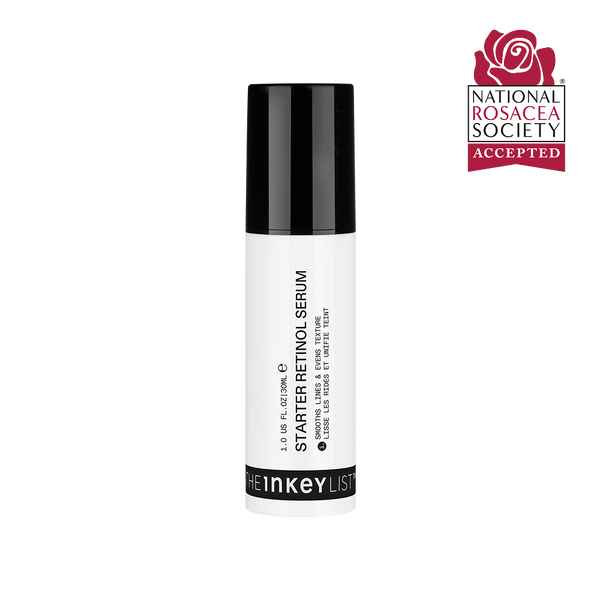
The Starter Retinol ($15) is built specifically for people who are new to retinoids, have previously found retinol too irritating, or whose skin is sensitive and reactive - precisely the profile of many menopausal skin users who have been drawn to bakuchiol.
The formulation uses a Dual-Retinoid complex: 1% Granactive Pro+ (an encapsulated form of Granactive Retinoid) combined with 0.01% Retinal. This slow-release system delivers the active gradually into the skin, reducing the irritation spike associated with standard retinol formats while maintaining efficacy. The clinical claim is that it is proven to be 2x more effective than standard retinol.
The clinical data is specific and participant-verified:
- 95% experienced zero irritation - this directly addresses the concern that retinol is “too harsh” for menopausal skin
- Clinically proven to smooth fine lines from 7 days
- 90% saw significant improvement in wrinkles in 4 weeks
- 86% agreed skin tone looked more even
- 92% said skin felt noticeably smoother
The supporting ingredients are chosen with menopausal skin in mind: SymRelief for calming, Amisol Trio for barrier lipid support, and Squalane for hydration. This is not a retinol serum with a calming ingredient added on - it is a formulation where barrier support is built into the architecture.
Use it PM only, 2-3 nights per week to begin. If skin feels reactive in the first two weeks, the moisture sandwich method - applying a thin layer of moisturizer before and after the retinol - can bridge the adjustment period without abandoning the active.
Advanced 0.2% Retinal - For Those Stepping Up from Bakuchiol
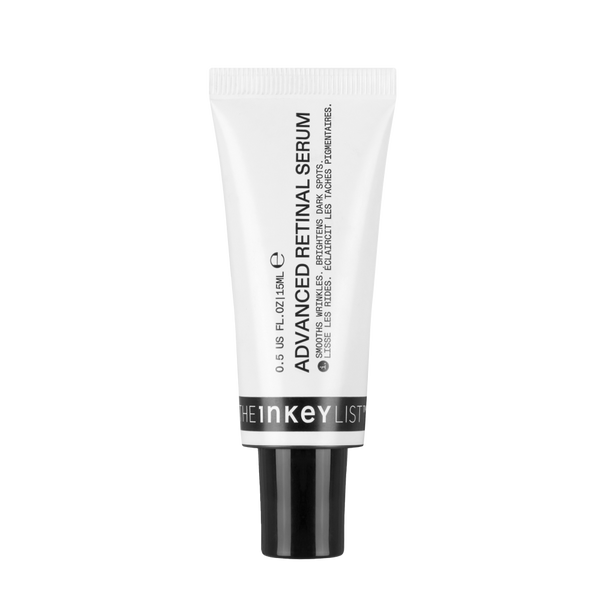
The Advanced 0.2% Retinal ($22) is for menopausal skin that is already comfortable with actives - either those moving up from bakuchiol or those who have tolerated the Starter Retinol and want deeper, faster results.
Retinal sits one conversion step closer to retinoic acid (the biologically active form of vitamin A) than retinol. That proximity in the conversion chain translates to speed and potency: retinal works up to 11x faster than standard retinol. For menopausal skin where collagen loss is accelerating, this matters.
The clinical outcomes are significant:
- Clinically proven to visibly reduce deep wrinkles in 1 week
- 85% saw firmer, more lifted-looking skin in 4 weeks
- 80% saw visible improvement in skin radiance
- Contains Sirtalice for visible firming in 30 minutes
This is the appropriate step-up for someone who has been using bakuchiol and found it effective but wants stronger, faster results. It is not the starting point - that is the Starter Retinol. But for skin that is ready for more, the Advanced Retinal delivers it with clinical evidence behind every claim.
PM only. Build frequency gradually.
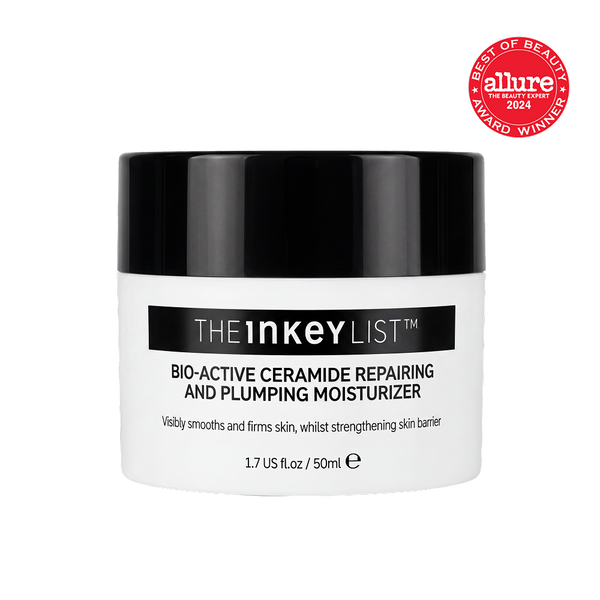
Bio-Active Ceramide Moisturizer - Clinical Anti-Aging Without a Retinoid
The Bio-Active Ceramide Moisturizer ($22) serves two distinct roles: as a standalone anti-aging moisturizer for menopausal skin that cannot or does not want to use retinoids, and as an essential pairing product alongside either retinol option.
Its relevance for menopausal skin goes beyond general moisturization. As estrogen declines, the skin’s natural ceramide production falls - ceramides are part of what estrogen helps regulate. The Bioactive Ceramide NP in this formula directly addresses that depletion, repairing and strengthening the barrier at the level where menopausal skin is losing it. The Gransil Blur technology provides an immediate visible effect, blurring the appearance of fine lines while the active ingredients work over time.
The clinical data: clinically proven to reduce 6 signs of aging in 28 days. It has also won the Allure Best of Beauty Award six consecutive times - independent, external validation that is harder to manufacture than a clinical claim.
For menopausal skin that does use retinoids, pairing the Ceramide Moisturizer with either retinol product is not just advisable - it directly counteracts the barrier disruption risk and replenishes the ceramides that estrogen decline has already begun reducing.
Not sure where to start across these three? Take our Skincare Quiz and we will build a routine personalized to your skin in under two minutes.
How to Build a Menopausal Skincare Routine
Knowing which ingredients to use is one thing. Knowing how to layer them, when to use them, and how to introduce them without destabilizing already-reactive skin is where routine-building makes the real difference.
Three frameworks below - each designed for a different starting point.
Routine 1 - For Menopausal Skin New to Retinoids
AM:
- Cleanser
- Hydrating serum - apply to damp skin
- Bio-Active Ceramide Moisturizer ($22)
- SPF - essential every morning without exception
PM (2-3 nights per week to start):
- Cleanser
- Hydrating serum
- Starter Retinol ($15) - pea-sized amount only
- Bio-Active Ceramide Moisturizer ($22)
Tip: In the first two weeks, if skin feels reactive after the Starter Retinol, apply a thin layer of the Ceramide Moisturizer before the retinol as well as after. This moisture sandwich slows the rate of active delivery to the skin, reducing irritation without removing the active entirely.
Routine 2 - For Menopausal Skin Stepping Up from Bakuchiol
AM:
- Cleanser
- Hydrating serum
- Bio-Active Ceramide Moisturizer ($22)
- SPF
PM (build frequency gradually):
- Cleanser
- Advanced 0.2% Retinal ($22)
- Bio-Active Ceramide Moisturizer ($22)
When stepping up from bakuchiol to retinal, begin on 2 nights per week and increase to nightly use over 4-6 weeks as skin adjusts. The Bio-Active Ceramide Moisturizer each night is not optional here - it is what keeps the barrier intact while the retinal drives results.
Routine 3 - Retinoid-Free Menopausal Routine
AM and PM:
- Cleanser
- Hydrating serum - apply to damp skin
- Bio-Active Ceramide Moisturizer ($22)
For menopausal skin that genuinely cannot use retinoids - due to sensitivity, medical reasons, or personal preference - the Bio-Active Ceramide Moisturizer’s combination of Bioactive Ceramide NP and Gransil Blur technology delivers clinically proven anti-aging results in a fully retinoid-free format. It is not a compromise; it is a distinct clinical option.
General Tips for Menopausal Skin Routines
- Introduce retinoids slowly - start 2-3 nights per week and build over 4-8 weeks. Skin tolerance is built gradually, and rushing the frequency is the most common cause of unnecessary irritation.
- Always follow retinoids with a moisturizer - barrier support is non-negotiable for menopausal skin. The ceramide moisturizer is the recommended pairing for both INKEY retinoid products.
- SPF every morning without exception - retinoids increase photosensitivity, and menopausal skin is already more vulnerable to UV-triggered hyperpigmentation. No SPF, no retinoid use.
- Hydration first - apply hydrating serums to damp skin before actives. The damp skin surface improves absorption and helps actives distribute more evenly.
For more detail on introducing retinoids safely into a menopausal skin routine, our retinol ingredient guide covers the full process step by step.
Not sure where to start? Take our Skincare Quiz and get a personalized routine built around your specific skin.
Menopause Changes Skin - The Right Formulation Makes the Difference
Bakuchiol is a genuinely effective ingredient. That is not a consolation point or a gentle let-down before a pivot to a product recommendation. Its anti-inflammatory properties, its ability to activate collagen-supporting gene pathways without irritation, and its tolerability profile are all real and clinically documented. It is not hype.
But the evidence base has limits. The landmark study included 44 participants. Results take 8-12 weeks. And for menopausal skin - where collagen loss is accelerating, ceramide production is falling, and the barrier is more easily destabilized - the depth and speed of clinical backing matters more than at any other life stage.
The concern that drives people towards bakuchiol - that retinol is too harsh - is a concern that well-formulated retinoids have already addressed. The Starter Retinol’s 95% zero-irritation clinical result is not a marketing claim; it is the result of a formulation designed specifically to close that gap. For menopausal skin that wants retinoid results without retinoid irritation, that data point changes the equation.
The Bio-Active Ceramide Moisturizer offers something else entirely: retinoid-free anti-aging that is clinically proven to reduce 6 signs of aging in 28 days, with direct barrier replenishment that speaks specifically to what estrogen decline takes away. For skin that cannot or does not want to use retinoids, it is not a fallback. It is a clinical option in its own right.
Menopause changes skin. Significantly, quickly, and in ways that require ingredients with real evidence behind them. The right formulation - whether that is a slow-release retinoid designed for sensitive skin or a ceramide moisturizer that repairs what hormone decline depletes - makes a measurable difference.
Shop the anti-aging collection to see the full range.
Ready to find the right routine for menopausal skin? Take our Skincare Quiz and we will build it in under two minutes - personalized to your skin, your tolerance, and your goals.
Frequently Asked Questions
Got a question?
Our askINKEY team are a friendly bunch of skincare experts with deep product knowledge and zero judgement. Whether you're an ingredient obsessive or just starting out, we'll make it make sense. No question too big. No question too small. We Give A Care, Every Day.


