


NAD+ vs Niacinamide: The Precursor Connection Explained
Niacinamide and NAD+ are connected but not the same - niacinamide is a precursor your body uses to make NAD+, and here is what that means for your skincare routine.
Author
askINKEY skincare advisor
Published
18 October, 2026
Time to read
9 minutes
There is a lot of confusion online about whether niacinamide and NAD+ are the same ingredient, and this blog clears it up in plain English. If you have seen both names floating around skincare labels, articles and social feeds, you are not alone in wondering where one ends and the other begins. This post covers the precursor relationship between niacinamide and NAD+, what each one actually is, and where niacinamide fits in a sensible routine. In other words, if you have ever typed “nad vs niacinamide” or “is niacinamide nad” into a search bar, you are in the right place.
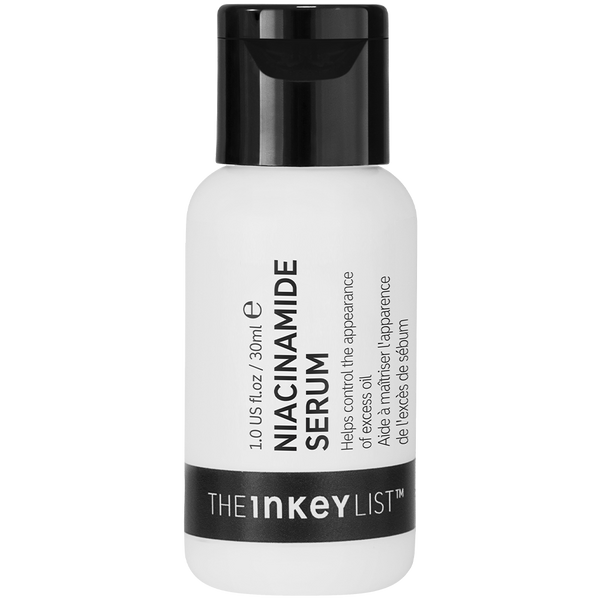
Here is the one-line answer before we go deeper: they are connected but not the same. Niacinamide is one of the building blocks your body uses to make NAD+, which is why the two keep getting mentioned together. We will keep this strictly about skin and ingredient science, not supplements, IV drips or anything medical. And if you would like a simple, affordable way to put niacinamide to work in your routine, our Niacinamide Serum ($13 for 30ml) is the practical starting point. If you want the full science of the molecule itself, head to what NAD+ actually is.
The short answer: niacinamide and NAD+ are connected, but not the same
Let us settle the core question straight away, because most people arrive here wanting the bottom line before the detail. Niacinamide is an ingredient you can apply to your skin. NAD+ is a molecule your cells naturally make and use every single day. They are related because niacinamide is one of the raw materials, or precursors, that your body uses to build NAD+. That single relationship is the reason the two terms get tangled together so often.
So let us answer the exact questions people ask, in plain words. Is NAD the same as niacinamide? No. Is niacinamide a precursor to NAD+? Yes. Is NAD+ the same as niacinamide? Still no, even though they are in the same nutritional family. The most common point of confusion is simple: seeing both terms used in skincare marketing does not make them the same thing. One is something you put on, the other is something your cells produce.
Niacinamide helps make NAD+. That makes it a precursor, not a synonym.
It is worth drawing a boundary now and keeping it for the rest of the article. When we talk about niacinamide here, we mean the ingredient in a topical serum or moisturizer. When we talk about NAD+, we mean the molecule inside your cells. We are not talking about supplements, injections or anything you would discuss with a doctor. That is a different conversation entirely, and it is not what this blog is about. If you want the complete breakdown of the molecule, the full NAD+ explainer is the home for that detail, and it goes far deeper than we will here.
With the short answer locked in, let us define each term properly so the precursor idea genuinely makes sense. We will start with the one you can actually buy and apply: niacinamide.
What is niacinamide?
Niacinamide is a form of vitamin B3, a water-soluble vitamin that shows up in a huge number of skincare formulas because it is well tolerated by most skin types. If you have ever scanned an ingredients list and spotted niacinamide near the top, there is a good reason it is so popular. It is gentle, versatile and plays nicely with most other ingredients, which makes it one of the easiest actives to slot into a routine without drama. So when people ask “what is niacinamide” in a skincare context, the plain answer is that it is a vitamin B3 derivative used topically to support healthier-looking skin.
We will keep the “what it does” portion brief here, because the full detail lives on the ingredient page. But a short summary helps the precursor idea land, so here are the niacinamide benefits people care about most.
What niacinamide does for your skin
- Helps control excess oil and shine, which is why it is a favorite for oily and combination skin.
- Helps improve the look of uneven texture and the appearance of visible pores.
- Helps calm the look of redness, so skin appears more even and settled.
- Supports the skin barrier, which is the outer layer that helps keep moisture in and irritation out.
Niacinamide also pairs well in everyday routines, which is part of its appeal. It does not demand a complicated schedule, and it rarely fights with the other steps you already use. That everyday-friendliness is exactly why it has become a staple rather than a novelty. For a concrete example of niacinamide in action, our Niacinamide Serum uses 10% niacinamide alongside 1% hyaluronic acid to hydrate and plump, so you get the oil-balancing and texture-smoothing benefits of niacinamide with a hit of lightweight moisture in the same step.
If you want to go properly deep on usage, layering order and the full list of niacinamide benefits, everything niacinamide does and how to use it is the right place to read next. We are keeping this section intentionally light so we can focus on the part that most articles skip: the connection to NAD+.
With niacinamide defined, let us turn to the other half of the comparison, which is the molecule your body actually builds.
What is NAD+?
NAD+, short for nicotinamide adenine dinucleotide, is a molecule found naturally in every cell in your body. It is involved in energy production and in the everyday processes that keep your cells functioning the way they should. That is the plain-English version, and it is deliberately short, because the complete story is bigger than one section of a comparison blog can do justice to.
Why NAD+ matters
NAD+ has been getting more attention in skincare conversations lately, largely because of its central role in cell function. When a molecule is this fundamental to how cells work, people naturally start asking whether it has a place in skincare. That curiosity is healthy, and it is exactly why the term keeps appearing alongside familiar ingredients like niacinamide. For the complete breakdown of NAD+ and what it means for skin, what NAD+ is and why it matters for skin is the authoritative home for that detail, and we would rather send you there than give you a watered-down version.
A quick word on the chemistry question, because it comes up a lot. People often ask whether NAD is a peptide, or what NAD is chemically. Rather than answer that here and repeat content that lives elsewhere, we will point you to the piece that handles it properly: is NAD a peptide? the chemistry explained. That blog unpacks the chemical identity cleanly, so you will get a far better answer there than a paragraph here could offer. When it comes to NAD+ skincare generally, the short version is that interest is growing because of the molecule’s role inside cells, and the pillar page tracks that conversation in full.
Now that both terms are clear, let us connect them. This is the part most articles gloss over, and it is the real reason you are here.
The precursor connection: how niacinamide relates to NAD+
This is the heart of the whole blog, so let us slow down and make it genuinely clear. The relationship between niacinamide and NAD+ is a precursor relationship, and once that clicks, the “nad vs niacinamide” question stops being confusing.
What “precursor” actually means in plain English
A precursor is a starting ingredient your body uses to build something else. Think of flour. Flour is a precursor to bread. You would never call flour and bread the same thing, but you also could not make the bread without the flour. The flour is the raw material; the bread is the finished product. Niacinamide works in a similar way here. Niacinamide is one of the raw materials your cells use to make NAD+. It is the flour, not the loaf. That is why calling niacinamide and NAD+ “the same” misses the point: one is an input, the other is the output.
Does niacinamide convert to NAD+?
In the body, yes, niacinamide (also called nicotinamide) is converted into NAD+ through a well-studied recycling route often called the salvage pathway. The name sounds technical, but the idea is simple. Rather than building NAD+ entirely from scratch every time, your cells reuse and recycle building blocks like nicotinamide to keep NAD+ topped up efficiently. This is established cell biology and nutrition science, not marketing speculation. A peer-reviewed overview of vitamin B3 forms as NAD+ precursors confirms that niacinamide sits firmly in the NAD+ precursor family, and research on nicotinamide and NAD+ via the salvage pathway describes that recycling route in detail.
Now for the honest part, because credibility matters more than hype. The conversion of niacinamide into NAD+ is well established inside the body’s nutrition and cell biology. What we will not do is claim that applying a topical niacinamide serum raises your skin’s NAD+ to a measurable degree. That is a leap the evidence does not cleanly support, and overpromising would do you a disservice. The accurate framing is this: niacinamide is the precursor the body uses to make NAD+. That is a statement about biology, not a promise about what a serum does to your NAD+ reading. For how niacinamide behaves in skin specifically, including its recognized precursor role, this overview of how niacinamide works in skin ties the science back to skincare in a measured way.
So let us answer the query cluster directly and honestly:
- Does niacinamide convert to NAD+? In the body, yes, via the salvage pathway.
- Does niacinamide increase or raise NAD+ levels? It is a precursor the body uses to make NAD+, but we are not claiming a topical serum measurably boosts your skin’s NAD+.
- Is niacinamide a precursor to NAD+? Yes. That is the core of the connection and the single most important takeaway here.
Niacinamide is a precursor the body uses to make NAD+, which is why the two get mentioned together.
If you want to keep reading about the molecule itself rather than the precursor, the full NAD+ explainer picks up exactly where curiosity tends to lead next. Having explained the connection, let us summarize the practical differences so you can hold both ideas clearly in your head.
NAD+ vs niacinamide: the key differences at a glance
Sometimes the fastest way to lock in an idea is a clean side-by-side recap. So here is the distinction stripped down to its essentials, without any new complexity.
- What each one is: niacinamide is an ingredient you apply to your skin. NAD+ is a molecule your cells make and use.
- Where you encounter each: you will see niacinamide on an ingredients list. You will find NAD+ inside your cells, not on a product label as something you apply in the same way.
- The relationship: one helps build the other. Niacinamide is the precursor, and NAD+ is the molecule the body builds from it, among other sources.
The one takeaway worth carrying away is that these two belong to the same family but do different jobs. Niacinamide is the precursor. NAD+ is the molecule. So when someone asks “what is the difference between niacinamide and nad”, the honest, plain answer is that niacinamide is a starting material you can apply, while NAD+ is a finished molecule your body produces and uses internally.
That is really all there is to the comparison itself. If you still want the deeper NAD+ dive, what NAD+ is and why it matters remains the best next read. Now let us move from theory to action, because the real question for most readers is what all of this means for their actual routine.
So which should be in your routine?
Here is where understanding turns into something useful. Practically speaking, you apply niacinamide; you do not “apply NAD+” in the same way. So for most people, the sensible, affordable and proven step is a well-formulated niacinamide product. That is not a knock on NAD+ as a fascinating molecule. It is simply a reflection of what you can actually do with your own hands at your own sink.
Where our Niacinamide Serum fits
If you want an easy entry point, our Niacinamide Serum ($13 for 30ml) pairs 10% niacinamide with 1% hyaluronic acid, so you get oil-balancing and texture-smoothing benefits alongside lightweight hydration. It suits oily or combination skin, anyone bothered by the look of visible pores or uneven texture, and anyone wanting to calm the appearance of redness. It is a straightforward, non-fussy step that slots neatly into most routines, which is exactly the point.
Pairing niacinamide with the rest of your routine
Niacinamide is famously easy to layer, and a few simple pairings go a long way.
- Apply niacinamide to clean skin, before heavier creams, since a lightweight serum absorbs best early.
- Follow with your usual hydration or moisturizer to seal everything in.
- In the morning, consider a brightening partner. Our 15% Vitamin C + EGF Serum ($20) is a tidy daytime pairing if you want to add radiance to the mix.
If your goal is a more comprehensive glow-up step, the Exosome HydroGlow Complex is worth a look too: it is a 6-in-1 skin rejuvenation formula, clinically proven to visibly improve radiance, hydration, tone, firmness, elasticity and texture, and it helps support natural collagen production. Used sparingly and in context, it can round out a routine built around a dependable niacinamide base.
For the finer points of layering order, frequency and how to combine niacinamide with everything else you use, everything niacinamide does and how to use it covers the usage detail far more thoroughly than a single routine section can. The key message is that niacinamide is a low-drama, high-utility anchor, and the right pairings simply build around it.
Before we wrap up, there is one adjacent question that almost always comes up next, so let us pre-empt it: what about niacin?
A quick note on niacin vs niacinamide
Niacin and niacinamide are both forms of vitamin B3, but they are not identical, and that is a separate question from NAD+ vs niacinamide. We will not unpack the full comparison here, because it deserves its own proper explanation. If you want the complete breakdown of how they differ and what that means for your skin, niacin vs niacinamide: the full comparison is the dedicated read.
Conclusion
The simplest way to remember all of this is that niacinamide and NAD+ are connected but not the same. Niacinamide is a precursor the body uses to make NAD+, which is exactly why the two keep getting mentioned together in skincare. One is a raw material you can apply; the other is a molecule your cells build and use.
For everyday skincare, a well-formulated niacinamide step is the simple, affordable and proven move. You do not need to chase the more complicated molecule to look after your skin well; you need a dependable ingredient used consistently. That is the whole philosophy here: clear guidance, proven ingredients and real results, without the hype. If you want to put that into practice, our Niacinamide Serum ($13 for 30ml) is the easy place to start, and the full NAD+ explainer is there whenever you want to go deeper.
Ready to put niacinamide to work?
Try Shop our Niacinamide Serum ($13 for 30ml) as an easy, affordable way to add niacinamide to your routine today. And if you want to understand the bigger picture behind the molecule, Read the full NAD+ guide next.
Frequently Asked Questions
Got a question?
Our askINKEY team are a friendly bunch of skincare experts with deep product knowledge and zero judgement. Whether you're an ingredient obsessive or just starting out, we'll make it make sense. No question too big. No question too small. We Give A Care, Every Day.


