

Benzoyl Peroxide vs Salicylic Acid: Which Is Better for Acne?
Two of the most popular blemish-fighting ingredients work in completely different ways - here's how to tell which one your skin actually needs.
Author
askINKEY skincare advisor
Published
06 September, 2026
Time to read
15 minutes
Benzoyl peroxide vs salicylic acid is one of the most common questions in skincare, and it is usually answered badly. The two ingredients get recommended interchangeably, stocked side by side and described in almost identical language. In reality they attack acne from completely different angles, and picking the wrong one for your skin is the reason a lot of people decide “nothing works.”
One disclosure up front, because it should change how you read this. INKEY does not make a benzoyl peroxide product. So this is not a comparison engineered to arrive at a convenient conclusion. Where benzoyl peroxide is the better choice, we will tell you.
Below: how each ingredient works, which suits your skin type, which suits your specific type of acne, whether you can use them together, and what to do about body acne and post-acne marks. For the bigger picture, our acne hub is the parent guide.
The Short Answer, Up Front
Benzoyl peroxide targets bacteria. Salicylic acid clears blockages. One disinfects, the other unclogs. Almost every other difference between them comes down to that.
So neither is better in the abstract, because they are not aimed at the same thing. Blackheads, whiteheads and congested, bumpy texture are a blockage problem, which is salicylic acid territory. Red, raised, inflamed pimples have a bacterial component, which is where benzoyl peroxide earns its reputation.
The practical verdict: for everyday use, across most skin types, salicylic acid is the more versatile pick. It is gentler, it suits more people, and it can live in your routine long term. Benzoyl peroxide is the more specialized tool, effective in its lane but higher maintenance. Here is the detail behind that call.
How Salicylic Acid Works on Acne
Salicylic acid is a beta hydroxy acid, or BHA. We have a full explainer on whether salicylic acid is a BHA, so here is the short version.
The defining property is that salicylic acid is oil-soluble. Most exfoliating acids are water-soluble and work across the surface of your skin. Salicylic acid can move through the oil sitting inside a pore, which means it reaches the clog itself instead of working around the edges of it. That is the entire reason it is the standard recommendation for congestion.
Inside the pore, it loosens the bonds holding dead skin cells together, which is what keratolytic means. Dead cells should shed naturally. When they do not, they bind with sebum and form the plug that becomes a blackhead or a whitehead. Salicylic acid gets that shedding process moving again.
It is also mildly anti-inflammatory, which makes sense given it is chemically related to aspirin. That takes some heat out of a spot, though it is not antibacterial in any real sense.
Over the counter, the effective range is roughly 0.5% to 2%. Two percent is the ceiling, and it is the concentration the strongest clinical evidence sits at.
Speaking of which. In a head-to-head study, a 2% salicylic acid cleanser was compared against a 10% benzoyl peroxide wash over four weeks in thirty patients. Only the salicylic acid cleanser produced a statistically significant reduction in comedones, the blackheads and whiteheads caused by blocked pores.
A 2% salicylic acid cleanser beat a 10% benzoyl peroxide wash on comedones, at one fifth of the concentration.
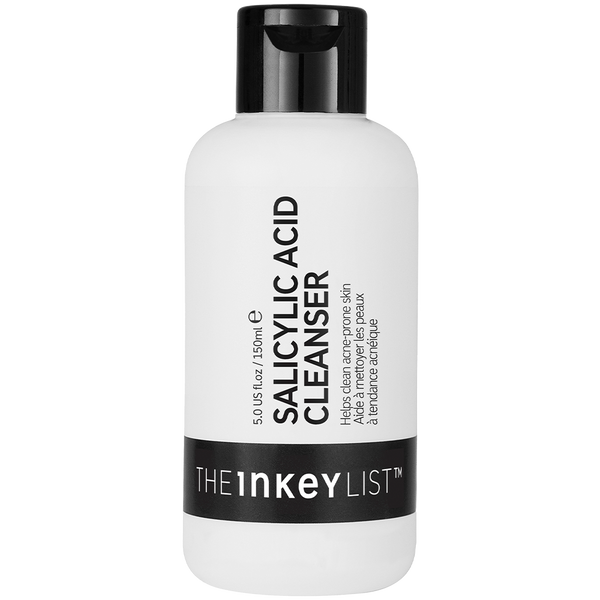
That is a head-to-head clinical study, and we will be straight about the caveats. Thirty participants over four weeks is a small, short trial, not a definitive verdict. What makes it worth leading with is that it is a genuine direct comparison, and the format tested was a 2% salicylic acid cleanser. That is exactly the format of our Salicylic Acid Cleanser.
The results carried one nuance worth repeating because it does not flatter either side neatly. People who began on benzoyl peroxide kept improving after switching to salicylic acid. People who switched the other way got worse during the transition.
Salicylic acid is best suited to blackheads, whiteheads, congestion and oily skin. For the full ingredient breakdown beyond this comparison, see our salicylic acid page.
How Benzoyl Peroxide Works on Acne
Benzoyl peroxide is an antiseptic and antibacterial, and it deserves a fair hearing rather than a token paragraph.
It releases oxygen into the pore. The bacteria most associated with inflammatory acne are anaerobic, so they struggle in an oxygen-rich environment. That makes benzoyl peroxide directly effective against red, raised, pus-filled pimples in a way salicylic acid simply is not. If inflammatory acne is your main pattern, this is a genuine strength.
Benzoyl peroxide is not oil-soluble, so it works primarily on the skin surface and the upper pore rather than penetrating a deep plug of sebum. There is a secondary keratolytic effect, but it is not the main event.
You will find it over the counter at 2.5%, 5% and 10%. More is not better. Research has increasingly pointed toward lower concentrations delivering similar results with significantly less irritation, which is worth knowing before you reach for the strongest option on the shelf.
Now the trade-offs, honestly. Benzoyl peroxide has a higher irritation risk than salicylic acid. Dryness, peeling, flaking and redness are common, especially during the first few weeks. If you have sensitive skin, treat that as a real factor rather than fine print.
The deeper concern is what sustained irritation leads to. Ongoing dryness and peeling can progress into a damaged skin barrier, and a compromised barrier tends to leave skin more reactive and more breakout-prone. That is the counterproductive cycle to watch. If you recognize those symptoms already, our guide on what to do if you have over-exfoliated is the way back.
There is also a more recent data point worth one mention. In a 2024 randomized study, a salicylic acid-based formulation performed comparably to benzoyl peroxide 5% for mild-to-moderate acne, with better tolerability. The essential caveat: the tested cream was a multi-ingredient formulation combining salicylic acid with lipohydroxy acid, niacinamide and zinc. So it does not show that salicylic acid alone matches benzoyl peroxide. It shows that a well-constructed salicylic acid formula can compete while being easier on your skin. The 2024 randomized study has the full detail.
And the warning nobody gives you until it is too late. Benzoyl peroxide bleaches fabric. Reliably. It will strip color from your towels, pillowcases, sheets and gym clothes, and it does not have to be wet to do it. Residue on your fingers transfers to a dark shirt. Overnight product migrates onto a navy pillowcase. This is the most common regret people report with the ingredient, and it is completely preventable. Switch to white bedding and white towels, or budget for replacements.
The Core Difference, in One Paragraph
One targets bacteria, the other clears blockages. Benzoyl peroxide floods the pore with oxygen that acne-associated bacteria cannot tolerate. Salicylic acid dissolves the mix of dead skin and oil physically plugging the pore, working from the inside out. Every other difference, the irritation profiles, the ideal skin types, the ruined pillowcases, follows from that.
Which Is Better for Your Skin Type?
Oily and combination skin. Salicylic acid, clearly. Oil-solubility is exactly what oily skin benefits from, since there is more sebum for the acid to travel through. Adding our Niacinamide Serum is smart, because niacinamide addresses oil production and the appearance of pores while salicylic acid handles what is already clogged. Our oily skin page covers the full approach.
Dry skin. Salicylic acid works on dry skin, but format is everything. A rinse-off cleanser delivers the active with limited contact time, which is far kinder than a leave-on product on already-dehydrated skin. Follow with a proper moisturizer.
Sensitive and reactive skin. Salicylic acid is the clearly gentler option, and a rinse-off cleanser is the lowest-risk way in. Start with the Salicylic Acid Cleanser two or three times a week and build from there rather than diving into a daily leave-on active. Our sensitive skin and redness guidance is worth reading alongside this.
Combination skin. Target your congested zones instead of treating your entire face as one problem. Salicylic acid where you are actually clogged, usually the T-zone, and lightweight hydration everywhere. Our Omega Water Creamsuits this well because it is oil-free and water-based.
Worth saying directly, because it gets ignored constantly: oily, acne-prone skin still needs a moisturizer. Stripping your skin does not reduce oil production. It usually increases it, and you damage your barrier in the process.
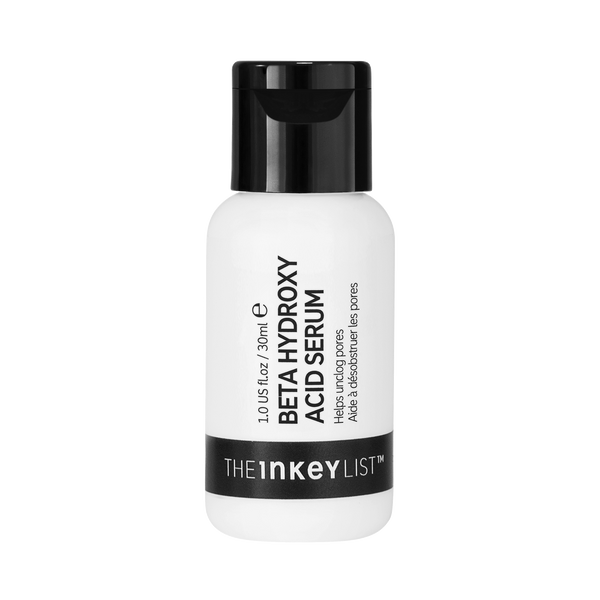
If you want a leave-on option instead of a cleanser, the Beta Hydroxy Acid (BHA) Serum is the natural next step once you know your skin tolerates the ingredient.
Which Is Better for Your Type of Acne?
Blackheads, whiteheads and congestion. Salicylic acid, decisively. This is a mechanical problem, a plug of oil and dead skin inside the pore, and salicylic acid is built to get into it. Our blackheads page and our guide to what causes clogged pores go deeper, so we will send you there rather than repeat it here.
Inflamed, red, pus-filled pimples. This is benzoyl peroxide’s strongest case, because the driver is bacterial. If that is your dominant pattern, it is a legitimate option and we are not going to pretend otherwise. From our own range, the alternatives are the Succinic Acid Treatment for individual spots and Hydrocolloid Invisible Pimple Patches for surface spots and whiteheads, which absorb fluid and stop you picking.
Cystic acne. Neither ingredient is the answer, and we would rather say that plainly than hedge. Cystic lesions form deep below the surface, out of reach of a topical BHA or antibacterial. This calls for a dermatologist, not another product. Our cystic acne guide explains what is happening beneath the skin.
Most people have a mix of types, which is completely normal. If you want to understand the classifications, what is acne vulgaris breaks it down clearly.
Hormonal Acne Versus Bacterial Acne
Most comparison articles skip this distinction, which is strange, because it can flip the answer entirely.
Hormonal acne has a recognizable pattern. It concentrates along the jawline, chin and lower cheeks. The spots tend to be deeper and more tender than surface pimples, they recur in the same spots, and for many people they arrive on a predictable monthly cycle.
Here is why that matters for this comparison. Hormonal breakouts are driven by hormonal fluctuations increasing oil production, which then blocks pores. The root cause is excess sebum, not bacterial overgrowth. Salicylic acid, being oil-soluble and focused on clearing blockages, is working much closer to the actual cause. Benzoyl peroxide’s antibacterial mechanism is largely irrelevant when bacteria were not what started it.
Bacterial-driven acne presents differently. Expect clusters of red, pustular pimples across the T-zone and forehead rather than a jawline pattern, with no particular link to a monthly cycle. That is where benzoyl peroxide is genuinely well matched.
Hormones are not the only non-bacterial trigger, either. Stress plays a real role, covered in does stress cause acne. Acne also behaves differently in your late twenties and beyond, which our guide to adult acne after 25 addresses, and our hormonal acne guide is the full deep dive.
If you genuinely do not know which pattern you have, the Acne Analyzer Pro will give you a sharper answer than self-diagnosing from an article. For everything else, the acne hub is the parent guide.
Can You Use Salicylic Acid and Benzoyl Peroxide Together?
Generally, no. Not on the same area at the same time.
The logic is simple. Both ingredients can compromise the skin barrier on their own. Use them together and you compound that risk, and what you typically get is dryness, flaking and irritation rather than faster clearing. More actives does not equal more progress.
There is also no compelling evidence that combining them beats using either one properly. That makes the extra irritation a cost with nothing to show for it.
If you are determined to use both, the two workable approaches are separating them by time of day, one in the morning and one at night, or separating them by area, one on congested zones and one on inflamed ones. Both are viable. Both are also more complexity than most people need. If your skin starts protesting, stop instead of pushing through.
The better move is usually a different combination altogether. Salicylic acid and niacinamide pair genuinely well. Salicylic acid clears the pore. Niacinamide works on oil production, pore appearance and surface redness. Different jobs, same goal, no compounding irritation. Our Niacinamide Serum fits in easily, with Omega Water Cream as the moisturizer keeping your barrier supported.
We have covered the salicylic acid and niacinamide duo in detail, and does niacinamide help with acne covers the supporting evidence. If layering is what worries you generally, read our guide to using acids in your routine and what not to mix with retinol.
Body Acne on the Back, Chest and Shoulders
For body acne, the practical argument decides this before the clinical one matters.
Benzoyl peroxide bleaches fabric. Your back, chest and shoulders are in constant contact with sheets, towels, shirts and workout gear. That makes it genuinely impractical rather than mildly annoying. Plenty of people learn this the expensive way, with a drawer of blotchy dark t-shirts and a set of orange-streaked towels.
The Glycolic Acid Exfoliating Body Stick is our primary recommendation for body acne. The stick format makes hard-to-reach areas like the center of your back genuinely manageable, which matters more than people expect, because a product you cannot physically apply does nothing. The Salicylic Acid Cleanser can also be used on your chest, back and decollete if it is already in your routine.
The triggers are worth addressing too, because most are fixable. Sweat sitting on skin, friction from backpacks and tight straps, and staying in damp workout clothes after the gym. Showering promptly after exercise does more for body acne than most products will.
Our back acne page is the full resource, with the back acne guide and what causes back acne covering causes and management in depth.
Does Salicylic Acid Help With Acne Scars?
Start with a distinction most articles blur. A flat brown, red or purple patch left after a pimple heals is a mark, which is pigmentation. An indent or raised bump in the skin’s texture is a scar, which is structural damage. Different problems, different solutions, and confusing the two costs people a lot of money.
So, does salicylic acid help with acne scars? Honestly, not directly. Salicylic acid does not act on pigmentation and it is not a brightening ingredient. What it does is support cell turnover, so as your skin renews, post-acne marks fade gradually as part of that process. That effect is real but indirect, and slower than most people hope. For genuine textural scarring, topicals are not the answer at all.
For targeted work on post-acne marks, dioic acid is the ingredient to look for. It is in our 360 Acne Clearing Serumalongside 2% salicylic acid and 0.4% Dendriclear, which is why that serum handles congestion and marks in a single step.
Our acne scars and hyperpigmentation pages cover the wider picture, and salicylic acid for acne scars is the dedicated deep dive.
Once your breakouts have calmed and marks are fading, plenty of people shift focus toward overall radiance. If that is where you are, the Exosome Hydro-Glow Complex is a glow step rather than an acne one, with 100% saw more glowing skin, clinically proven*.
A Simple Four-Step Routine
Four steps. Cleanse, treat, hydrate, protect.
Cleanse. Use the Salicylic Acid Cleanser and massage for around sixty seconds before rinsing. Contact time is the difference between a cleanser working and a cleanser doing nothing, and a ten-second rinse is the most common reason people write one off.
Treat. Either the Beta Hydroxy Acid (BHA) Serum if congestion is your only concern, or the 360 Acne Clearing Serum if you are dealing with congestion plus marks. As needed, the Succinic Acid Treatment on individual spots and Hydrocolloid Invisible Pimple Patches on surface spots and whiteheads.
Hydrate. Omega Water Cream is an oil-free, water-based moisturizer, so it covers the oily skin slot and the barrier support slot in one step.
Protect. Follow with a daily broad-spectrum SPF every morning. This is not optional, because salicylic acid increases photosensitivity. Our guide to what SPF actually means explains how to choose one.
On timelines, set expectations properly. Skin cell turnover takes weeks, so judge results at four to eight weeks of consistent use, not four days. If you are still deciding where to start, our guide to the best cleanser for blemish-prone skin is the place to begin.
The Honest Verdict
Salicylic acid suits more people, more of the time. It works on congestion at the source, it performs well on oily skin, it is better matched to hormonal patterns along the jawline, and it is far more practical for body acne. It is also gentler, which means it can stay in your routine indefinitely rather than being something you cycle on and off.
Benzoyl peroxide has a real role. For inflamed, bacterial acne it does something salicylic acid cannot, and ignoring that would be dishonest. Its limitations are as much practical as clinical. Higher irritation risk, real barrier disruption, and fabric bleaching that makes daily use a genuine inconvenience rather than a minor annoyance.
We opened by telling you INKEY does not sell a benzoyl peroxide product. We are closing on it, because it is the point: the answer would have been identical either way. Where the other ingredient wins, we said so.
Whichever you choose, patch test and start slow. Two or three times a week and building up beats every day and quitting in two weeks. If your acne is persistent, painful or severe, see a dermatologist rather than buying another product. Consistency beats intensity, every time.
Where to Go Next
Know what you need? Browse the acne and breakouts collection.
Still unsure? The Acne Analyzer Pro is AI-powered and dermatologist-backed, and it will read your skin more precisely than any article can.
Want to keep reading? All our acne and breakout content lives in one place.
Shop the Routine
- Salicylic Acid Cleanser 150ml - $15
- Beta Hydroxy Acid (BHA) Serum - $14
- 360 Acne Clearing Serum - $18
- Niacinamide Serum - $13
- Omega Water Cream 50ml - $15
- Succinic Acid Treatment - $15
- Hydrocolloid Invisible Pimple Patches Pack of 22 - $10
- Glycolic Acid Exfoliating Body Stick - $20
- Exosome Hydro-Glow Complex - $24
*4-week clinical study of 26 people
Frequently Asked Questions
Got a question?
Our askINKEY team are a friendly bunch of skincare experts with deep product knowledge and zero judgement. Whether you're an ingredient obsessive or just starting out, we'll make it make sense. No question too big. No question too small. We Give A Care, Every Day.


