



Do Exosome Serums Work? 5 Exosome Skincare Myths Debunked
The five biggest exosome myths, cleared up - what plant-derived exosomes really do for your skin, and how soon you'll actually see it.
Author
askINKEY skincare advisor
Published
13 March, 2026
Time to read
16 minutes
Exosomes have become one of the most talked about and least understood ingredients in skincare. They appear on clinic menus, on serum boxes, and in every “next big thing” round-up, and yet most people still cannot say with any confidence whether exosomes skincare is genuine science or an expensive buzzword wearing a lab coat.
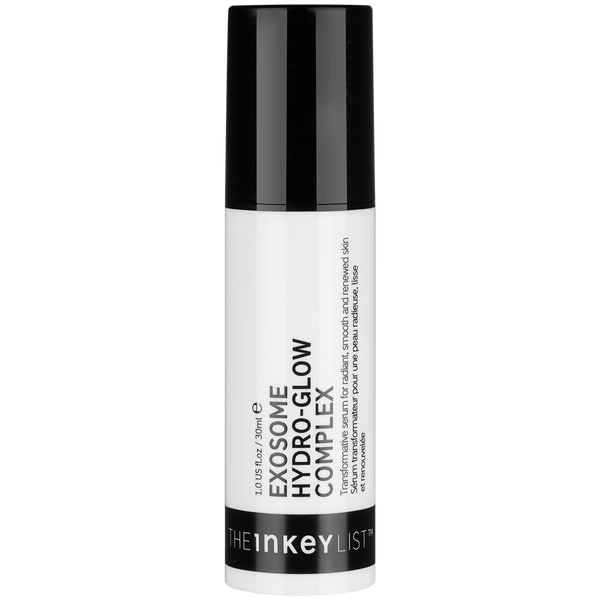
This article does not set out to define the ingredient. It sets out to answer the doubt. We have taken the five claims people repeat most often about exosomes and separated what is accurate from what is not, using only what our own clinical and in-vitro testing supports. The product under discussion throughout is the Exosome Hydro-Glow Complex, $24.00 for 30ml.
One clarifying line for anyone who wants it: exosomes are tiny naturally occurring vesicles, and ours are derived from plants rather than from human or stem cell sources. If you want the full ingredient breakdown, our guide to what exosomes actually are covers it properly. This article stays focused on the questions people actually type into a search bar at 11pm.
By the end you will know whether exosome serums work, whether exosomes are safe for your skin, whether you need to book a clinic appointment to benefit from them, how long results genuinely take, and whether this category is meant for your skin type at all.
We will start with the belief that underpins nearly every other misconception in the category: the idea that not all exosomes count.
Myth 1: All Exosomes Are the Same, and You Need Human-Derived Ones
This is the most persistent belief in the whole category, and it is the one that shapes how people judge every product they encounter. The assumption runs like this: exosomes originally entered the beauty conversation through advanced clinic treatments built around human or stem cell derived material, therefore anything else must be a diluted imitation. Plant-derived exosomes, in this telling, are the budget substitute.
That framing gets the science backwards.
Source is a formulation decision, not a hierarchy
Exosomes are not a single standardized ingredient. They are a category of naturally occurring vesicles, and they can be sourced from an enormous range of biological material. What they contain, how they behave in a formula, how stable they are, and how they are regulated all shift depending on where they come from. Two products can both say “exosomes” on the label and contain something meaningfully different.
Choosing a plant source is therefore an active formulation decision with real consequences, not a compromise made to save money. Plant-derived material is vegan, it is scalable and reproducible, and it sidesteps the sourcing and regulatory complications that come with human-derived material in a cosmetic product sold on a shelf rather than administered in a clinic.
Our exosomes come from Centella Asiatica, better known to most people as cica. If you have spent any time in skincare, you already know the name. Centella Asiatica is one of the most established soothing botanicals in the industry, with decades of use behind it in formulas aimed at sensitive, stressed and easily irritated skin. It is a familiar, well-tolerated plant with a long track record, and that familiarity is part of the point.
The Exosome Hydro-Glow Complex contains 1% Cica Exosomes, and the formula is certified vegan by The Vegan Society.
Sourcing methods vary across the category, and if you want the comparison in detail we cover plant-derived vs fermentation-derived exosomes separately.
What plant-derived exosomes actually do in a serum
Here is where precision matters more than personality, because this is the point at which a lot of marketing in this category quietly overreaches.
Our Cica Exosomes work at the surface of the skin to support its natural renewal processes. That is the mechanism, stated plainly and completely. They are a topical cosmetic ingredient in a topical cosmetic product, and they behave accordingly.
We are deliberately not going further than that sentence, because going further would mean describing something a serum on a bathroom shelf is not doing. You will encounter plenty of copy in this category that reaches for more dramatic language. We would rather tell you exactly what the ingredient does and let the results speak.
In our own in-vitro testing, Cica Exosomes showed a: 63% increase in skin renewal activity in 8 hours***
That is a laboratory result, measured on cells in controlled conditions rather than on a face, and the footnote at the bottom of this article tells you precisely what was measured. We think that distinction matters. A number is only useful if you know what kind of number it is.
The research context: this is a real scientific field
One reasonable version of the skepticism goes: is anyone outside the beauty industry actually studying this, or did marketing invent the whole thing?
They are studying it, and quite actively. Plant-derived extracellular vesicles have become a substantial area of academic interest, with published work examining their characteristics, how they are isolated, and their potential applications in dermatology. A 2025 review in the Journal of Nanobiotechnology surveys research into plant-derived exosome-like nanovesicles across the field, covering how these vesicles are produced, how researchers characterize them, and where the open questions still sit. It is a serious body of literature with serious unresolved problems in it, which is what an active research area looks like.
There is also published work specific to our plant. A 2025 paper in the International Journal of Molecular Sciencespresents an in vitro characterization of Centella asiatica extracellular vesicles, examining vesicles isolated from Centella asiatica tissue culture using laboratory assays. Because our exosomes come from Centella Asiatica specifically, that is about as directly relevant a piece of third-party scientific context as exists.
Two important caveats, and we would rather state them ourselves than have you discover them later.
First, these are studies of the ingredient category conducted by independent researchers. They are not studies of our product, and nothing in them describes what the Exosome Hydro-Glow Complex does. We cite them so you can see the field is real, not to borrow their conclusions.
Second, academic papers are written in medical and laboratory language for a scientific audience. That vocabulary belongs in a journal describing cells in a dish. It does not translate into a description of what a cosmetic serum does to your face, and we are not going to pretend otherwise.
So the honest answer to Myth 1: exosome sources genuinely do differ, and that difference is real rather than cosmetic. But “different” is not the same as “lesser.” Plant-derived exosomes from Centella Asiatica are a deliberate, disclosed, vegan-certified choice, and the research community treats plant-derived vesicles as a legitimate area of study rather than a marketing flourish.
Which brings us neatly to the objection that usually arrives next. If the ingredient is real, why has it historically cost so much?
Myth 2: Exosomes Are Just an Expensive Marketing Gimmick
Let us give this criticism its strongest form first, because it deserves one.
For the past couple of years, exosome serums have overwhelmingly launched at $70, $100, and well beyond. When an ingredient consistently appears at that price point, a rational shopper draws a rational conclusion: the premium is buying the word on the box, not the contents inside it. That is not cynicism. That is pattern recognition, and it is usually a healthy instinct.
But there are two separate questions tangled together here, and separating them changes the answer.
An expensive ingredient elsewhere is not a gimmick everywhere
The first question is whether exosomes do anything. The second is whether the prices commonly attached to them are justified. These are genuinely independent, and conflating them leads people to dismiss an entire ingredient category because of how other people have chosen to price it.
Plenty of now-ordinary actives arrived expensive and became accessible. Retinol, vitamin C and hyaluronic acid all had their premium-only era. The ingredient did not change when the price came down. What changed was who was willing to formulate with it at a fair margin.
The Exosome Hydro-Glow Complex is $24.00 for 30ml. That is the entire argument, and we would rather make it by pricing the product honestly than by criticizing anyone else’s.
Transparency is the part nobody talks about
Here is something genuinely useful for anyone comparison shopping in this category, and it goes beyond price.
We disclose our concentration: 1% Cica Exosomes. You can read it, compare it, and hold us to it.
You will also see exosome products marketed with counts in the billions. Enormous, impressive-looking numbers. Here is the problem with them as a shopping tool: a raw particle count on its own tells you very little about how much active material is in the formula you are buying, because it does not tell you the concentration in the finished product. A very large number and a very small percentage can happily coexist on the same box.
This is not a criticism of anyone in particular. It is a criticism of a convention, and one worth knowing about before you spend your money. A disclosed percentage is a claim you can actually evaluate. We would rather compete on that. We go further into why this matters in how much exosome is enough.
Six actives, one step
The other reason the value case works is that the exosomes are not doing the job alone. This is a 6-in-1 formula, and every ingredient in it is there for a reason:
- 1% Cica Exosomes from Centella Asiatica, working at the surface of the skin to support its natural renewal processes
- 1% Kollaren™, a peptide complex that helps visibly improve firmness and skin structure
- 1% Hyaluronic Acid for multi-level hydration, drawing moisture into skin at different depths
- 1% Ectoin for barrier support and additional hydration
- Q10 for antioxidant protection against daily environmental stress
- Prickly Pear extract for gentle resurfacing and a smoother finish
Kollaren™ is a peptide, and if peptides are unfamiliar territory our guide to peptides explains the category without the jargon. It helps support natural collagen production, and in the finished formula it helps visibly improve firmness and skin structure.
Together, the six deliver 6-in-1 skin rejuvenation: clinically proven to visibly improve radiance, hydration, tone, firmness, elasticity and texture*.
Six measured improvements from one step is the actual value proposition. You are not paying $24.00 for exosomes and hoping. You are paying $24.00 for a formula in which several well-established actives are working alongside them.
If you already use a dedicated Hyaluronic Acid Serum and are wondering whether this duplicates it, the honest answer is that the hydration here is one component of a broader glow formula rather than the entire point of the product. They layer perfectly happily.
Outside validation
Two brief data points, offered without a paragraph built around either.
The Exosome Hydro-Glow Complex is a CEW UK Beauty Awards Winner 2026.
And it currently holds a 4.5 star average from over 960 reviews, which is a reasonable sample of people who bought it with their own money and came back to say what happened.
For anyone still weighing whether exosomes deserve a place in a routine that already contains cheaper, more familiar actives, our comparison of Vitamin C vs Niacinamide vs Exosomes: the ultimate glow ingredient showdown works through that trade-off in detail.
So: not a gimmick, and not necessarily expensive. Which raises the question of where you actually have to go to get it, and this is where the biggest misconception in the category lives.
Myth 3: You Need Injections or an In-Clinic Exosome Facial
Search interest in the exosome facial has climbed steadily, and it is easy to see why. Clinics across the country now offer exosome treatments, frequently as an add-on to microneedling or similar procedures, and the pricing reflects the setting, the equipment and the practitioner’s time. For a lot of people, that is the only version of exosomes they have ever encountered.
Which produces an entirely reasonable question: if the real version happens in a clinic with a professional, is the at-home version just a watered-down imitation of the same idea?
The honest answer requires being clear about what is actually different, and we would rather be straight with you than sell you something on a false equivalence.
What an exosome facial actually involves
A professional exosome facial is a treatment delivered by a trained practitioner, typically combining exosome-containing preparations with a procedure such as microneedling. The procedure is the active part of the arrangement. It is what makes the treatment intensive, and it is also what makes it a clinical appointment rather than a Tuesday evening.
That means the whole package: a consultation, a booking, a cost per session, usually a course of sessions rather than one, downtime afterwards, and aftercare instructions you need to actually follow. Some people love this. It is a considered, professional, results-focused experience, and if you have had one and enjoyed it, nothing here is an argument against going back.
The clinical side of this field is genuinely well documented. A 2026 review examines plant-derived extracellular vesicles in clinical and aesthetic dermatology, and a 2024 paper looks at clinical applications of exosomes in cosmetic dermatology. Both are worth knowing exist. Both discuss procedural and injectable applications in medical language written for practitioners, and neither describes anything about a topical serum. We reference them purely as background on the professional landscape, because you deserve to know that landscape is real before we explain why you do not have to enter it.
Why a topical exosome serum works without needles
A serum and a clinical procedure are different things with different intensities. Pretending otherwise would be dishonest, and it would also be unnecessary, because the at-home case stands up perfectly well on its own terms.
A topical serum is formulated from the beginning to work topically. Nothing about it is a scaled-down attempt at a procedure. It is a different product doing a different job, designed for daily use by a person with no clinical training and no appointment.
Scale is part of why that works. Our exosomes are extremely small, roughly 300 times smaller than a pore, which is why they are formulated to work at the surface of the skin to support its natural renewal processes without any needling involved at all. No device, no procedure, no practitioner.
What that means practically:
- No needles. Nothing is injected and nothing is punctured.
- No downtime. No redness to schedule around, no days of looking like you had something done.
- No appointment. No booking, no travel, no waiting list.
- No aftercare protocol. You are not managing a recovery.
- Twice daily. Morning and evening, straight after cleansing.
The formula is also built for people who cannot or would rather not have invasive treatments. It is fragrance-free, alcohol-free and non-comedogenic. It is dermatologically tested and clinically tested. And it is safe to use during pregnancy and breastfeeding, which rules out a great many professional options for a great many people at exactly the point in life when skin is behaving unpredictably.
For that group in particular, “you do not need an appointment” is not a convenience argument. It is the difference between having an option and not having one.
Your facial-in-a-bottle routine
A facial-in-a-bottle: the glow of a facial appointment, built into your daily routine at home.
That is the organizing idea, and it is the fairest description of what this serum is for. Not a replacement for professional treatment. Not a rival to it. A way to get radiant, rejuvenated-looking skin without needing to book anything.
The clinical result behind that promise is specific: Clinic-worthy rejuvenated skin in 14 days*.
Building the routine takes very little effort:
- Cleanse as normal, morning and evening.
- Apply the Exosome Hydro-Glow Complex to damp skin, a pea-sized amount across face and neck.
- Follow with your usual treatments and moisturizer, and SPF in the morning.
- Add the Exosome Boosting Dry Sheet Mask when skin wants a longer moment, for a ten minute high-performance treatment.
That last step is the closest thing to an actual at-home facial in the range. Ten minutes, no mess, no equipment, and the nearest most of us get to a spa afternoon on a weeknight.
So, do exosome serums work without the clinic? Yes, on their own terms, and what exosomes do for skin in a topical formula is well defined: they work at the surface to support its natural renewal processes, alongside five other actives doing complementary jobs. What they are not doing is replicating a procedure, and we would rather say so.
If clinic-inspired ingredients interest you generally, PDRN is the other name you will keep encountering. Our PDRN Serum brings that ingredient into an at-home format, our guide to what PDRN is explains it from scratch, and if you are trying to work out which of the two suits you, PDRN vs exosomes puts them side by side.
Once people accept they can do this at home, the next question is immediate and universal: how long before anything actually happens?
Myth 4: Exosome Results Take Months to Show Up
This is the myth we most want to correct, partly because our own earlier advice contributed to it.
The received wisdom in skincare is that anything worthwhile takes four to six weeks minimum, and often a full skin cycle or three before you can fairly judge it. That rule of thumb exists for good reasons and it holds true for plenty of actives. Retinol genuinely does ask for patience. So do many pigmentation treatments.
But applying that timeline universally means people abandon products that were already working, and it means they judge fast-acting formulas by a standard designed for slow ones.
Glow from first use. Full results in 14 days.*
What “glow from first use” honestly means
We want to be precise here, because this is exactly the kind of claim that gets stretched.
Glow from first use means an immediately hydrated, radiant finish. Skin looks fresher, feels more comfortable, and catches the light better. That is a real, visible, same-day difference and it is the reason the serum feels worth using before any longer-term change has occurred.
It is not a transformation. It will not resurface your skin overnight or undo anything structural in ten minutes. Anyone promising that is selling you something.
The distinction matters because overpromising is how trust gets destroyed in this industry. If we tell you that day one delivers everything, day three feels like a disappointment. If we tell you day one delivers a genuine glow and the fuller result arrives inside two weeks, you can actually judge whether we were right.
What the clinical testing showed
Three results anchor this section, and each carries a footnote explaining exactly what was measured:
- 100% saw more glowing skin, clinically proven*
- Clinic-worthy rejuvenated skin in 14 days*
- Proven to deliver up to 12 hours of hydration**
Fourteen days. Not two months, not a full skin cycle, not “be patient and see.”
If you want to see how that plays out beyond the study, our exosome serum before and after results timeline walks through it.
Why consistency still matters
There is one condition attached, and it is not a marketing condition. It is how the result was actually produced.
The 14-day result was measured with twice daily use, morning and evening. That is the protocol the study followed, so that is the protocol we recommend. Using it sporadically is not a smaller version of the same result, it is a different and untested thing.
Two weeks of consistent use is a genuinely achievable ask. It is one product, one step, twice a day, for fourteen days.
What appears first, and what builds
Not everything arrives at once, and it helps to know the shape of it.
Hydration and radiance show up fastest. Hydration is the quickest visual change any skincare product can deliver, because dehydrated skin looks dull and tired almost immediately and looks better almost immediately once that is addressed. If your skin sits in that dehydrated-but-not-dry category, our guide to dehydrated skin explains why it responds so quickly. With up to 12 hours of hydration**, that first impression holds through a working day rather than fading by lunchtime.
The other elements of the 6-in-1 skin rejuvenation result build across the full period. Tone, firmness, elasticity and texture are gradual by nature. They are still measurable inside those 14 days, but they accumulate rather than arrive.
For context, if you are used to vitamin C and its longer runway before visible brightening, the pace here will feel noticeably different. That is a difference in what each formula is doing, not a ranking
Two weeks. Twice a day. That is the honest timeline, and we would rather be held to a short specific one than hide behind a long vague one.
Which leaves one barrier standing: the widespread assumption that none of this was meant for your skin in the first place.
Myth 5: Exosomes Are Only for Mature or Damaged Skin
This last myth quietly excludes a large number of people who would benefit, and it comes from a completely understandable place.
Exosomes entered public awareness through advanced clinical treatments, and those treatments were largely marketed around aging concerns. The association stuck. Exosomes got filed mentally as a rescue ingredient: something for skin that is already visibly struggling, already lined, already damaged. If you are 26 with occasional congestion, or if your main concern is that your skin flushes at the slightest provocation, you reasonably concluded this was not aimed at you.
What this serum actually targets
The Exosome Hydro-Glow Complex is a glow and hydration serum. Its targets are dullness, uneven texture, dehydration and general rejuvenation.
Read that list again with an eye on age. Dullness is not an age. Dehydration is definitely not an age, and it frequently affects oily and younger skin more than mature skin. Uneven texture arrives whenever it likes. These are concerns at any stage of life, and treating them as the exclusive property of one demographic makes very little sense.
It is suitable for all skin types, including sensitive skin.
The suitability facts, in full
For anyone scanning to find out “can I actually use this,” here is the complete answer in one place:
- Suitable for all skin types
- Suitable for sensitive skin
- Safe during pregnancy and breastfeeding
- Non-comedogenic, so it will not clog pores
- Fragrance-free
- Alcohol-free
- Dermatologically tested
- Clinically tested
- Vegan and certified by The Vegan Society
- pH 6.0 to 6.5
That is an unusually accommodating profile for a serum in a category with an intimidating reputation.
For sensitive and easily irritated skin
If your skin flares easily, the relevant result is this one: 55% reduction in visible signs of skin stress (redness, puffiness, visible irritation)***
Note the wording carefully, because we have chosen it deliberately. This is about visible signs. Redness you can see, puffiness you can see, irritation you can see. The footnote at the bottom explains precisely what the in-vitro testing measured, and we would rather point you there than round the language up into something more dramatic. If the term itself is unfamiliar, we explain what skin stress is in full.
For anyone whose main frustration is visible redness, that guide covers what tends to help and what tends to make it worse. If your barrier needs additional reinforcement alongside this serum, ceramides are the usual next consideration. And for reactive, easily irritated skin that wants a dedicated companion product, the Ectoin Hydro-Barrier Serum is the natural pairing, built around the same barrier-supporting ingredient that appears in the 6-in-1 formula.
For younger skin
If you are in your twenties and assumed exosomes were premature for you, the more useful frame is glow rather than anti-aging. Dullness from late nights, dehydration from a compromised barrier, texture that never quite smooths out: these respond to hydration and renewal support regardless of your birth year.
If oil control and congestion are higher on your list, niacinamide may be the more targeted starting point, and the two work perfectly well in the same routine.
One universal caveat: patch test any new product before applying it to your whole face. Not because this formula is risky, but because individual skin is individual and fifteen minutes of caution costs nothing. Our guide to why you should do a patch test walks through how to do it properly.
Five myths cleared. Now the practical part: how to actually fit this into a routine you will keep.
How to Use an Exosome Serum in Your Routine
Knowing an ingredient works is only half of it. Most products that get abandoned are abandoned because their owner was not certain where they went, worried about combining them with something else, or simply forgot. Here is the whole thing, resolved.
Where it goes
Step two. Straight after cleansing, before treatments and before moisturizer. Morning and evening, both.
The logic is straightforward: the serum is lightweight and water-based, so it belongs early, before anything heavier sits on top of it. Thinnest to thickest is the rule that governs nearly all layering, and this follows it.
How much, and the one tip worth remembering
A pea-sized amount across face and neck is enough. This is a concentrated formula and more does not accelerate anything.
INKEY tip: apply it to damp skin. Not soaking, just not fully dry after cleansing. Damp skin helps lock in hydration and makes the product easier to spread evenly across the whole face with a small amount. It is a five second adjustment with a genuinely noticeable difference.
Layering with your other actives
This is the question we get most often, and layering anxiety is the single most common reason a new serum ends up unused at the back of a cabinet.
The Exosome Hydro-Glow Complex works alongside retinol, vitamin C, AHAs and BHAs. Apply it after cleansing and before those treatments. Because it sits early in the routine and is not itself an exfoliating or strongly active step, it does not compete with them for space or destabilize them.
If you use retinol, the exosome serum goes on first, then your retinol, then moisturizer. Retinol has more genuine combining restrictions than most actives, and our guide to what not to mix with retinol is worth five minutes if you are building an evening routine around it.
If you use vitamin C in the morning, the same order applies: exosome serum first, then vitamin C, then moisturizer and SPF.
Finishing the morning
Always follow with SPF. Every morning, regardless of weather, season or how long you expect to be outside. Sun protection is the single highest-return step in any routine, and it protects the results you are working for.
Apply it as the final step, over the serum and your moisturizer. If SPF labelling has always been faintly confusing, what SPF is decodes it.
Your full routine, in order
Morning
- Cleanse
- Exosome Hydro-Glow Complex on damp skin
- Any additional treatments
- Moisturizer
- SPF
Evening
- Cleanse
- Exosome Hydro-Glow Complex on damp skin
- Any additional treatments, including retinol
- Moisturizer
Optional additions
When skin wants more than a serum, the Exosome Boosting Dry Sheet Mask delivers a ten minute high-performance treatment. Useful after travel, after a bad week of sleep, or before an occasion where you want skin looking its best.
For a fuller renewal routine, the PDRN Serum layers underneath as the lighter, water-based step, with the exosome serum applied over it.
That covers the routine. What follows are the remaining questions, answered as directly as we can.
Still want the full ingredient deep dive? Our complete guide to exosomes explained covers the science from the beginning, and our exosomes page goes further into the background.
The Honest Bottom Line on Exosomes Skincare
Five myths, five corrections. Plant-derived exosomes are a deliberate formulation choice rather than a compromise. The category is not a gimmick, even though some of its pricing has understandably made people suspect it was. You do not need needles or an appointment to benefit from it. Results arrive considerably faster than the standard skincare timeline would suggest. And this is not an ingredient reserved for mature or damaged skin, because dullness, dehydration and uneven texture are not restricted by age.
What sits underneath all five is a simpler point. Exosome skincare is a genuinely researched area, and it does not have to be expensive or intimidating to be worth your time. The confusion around it has been created largely by how it has been sold, not by what it is.
In clinical testing, 100% saw more glowing skin, clinically proven*.
Skincare has become unnecessarily complicated, full of ingredients that arrive wrapped in language designed to impress rather than inform. The point of this article was not to convince you of anything. It was to give you clarity you can actually trust, including the parts where we told you what the product does not do.
Ready to Try It?
Shop the Exosome Hydro-Glow Complex, $24.00 for 30ml. One step, twice a day, morning and evening.
Still deciding? Take the skincare quiz for a routine built around your skin rather than around a trend, or read everything you need to know about exosomes if you want the full science before you commit.
Because at The INKEY List, We Give A Care.
*4-week clinical study of 26 people **Clinical study of 31 people ***In-vitro testing of Cica Exosomes showed a 55% reduction in pro-inflammatory markers and a 63% increase in markers associated with skin renewal after 8 hours.
Frequently Asked Questions
Got a question?
Our askINKEY team are a friendly bunch of skincare experts with deep product knowledge and zero judgement. Whether you're an ingredient obsessive or just starting out, we'll make it make sense. No question too big. No question too small. We Give A Care, Every Day.


