


Can Dry Skin Cause Acne? Why You Get Both and How to Treat It
Dry skin that still breaks out isn't a contradiction. Here's why it happens, and the routine that treats both at once.
Author
askINKEY skincare advisor
Published
14 September, 2026
Time to read
18 minutes
Can dry skin cause acne? Not directly. Dry skin does not cause acne on its own, but it creates the conditions that make breakouts far more likely, which is why so many people are dealing with dry skin and acne at the same time. Both things can be true at once, and that is the part most advice misses.
Here is the problem with the advice that is out there. Most acne guidance is written for oily skin, so it tells you to strip, foam and degrease. Most dry skin guidance ignores acne entirely, so it tells you to layer on rich creams and stop exfoliating. If you have dry, acne-prone skin, you are being told to do two opposite things at the same time, and neither one is working.
This article fixes that. We will cover the difference between dry and dehydrated skin, because that distinction alone resolves a lot of failed routines. Then the four mechanisms that actually connect dryness to dry skin breakouts. Then the common mistakes that keep people stuck, the ingredients that handle both problems at once, and a full AM and PM routine you can start tonight.
If you would rather get a personalized read on your skin before committing to a long read, Acne Analyzer Pro™ will give you one in a couple of minutes. Otherwise, keep going.
At a glance, the products that feature in this routine:
- Oat Cleansing Balm - 150ml, $17 - gentle first cleanse that removes makeup and SPF without stripping
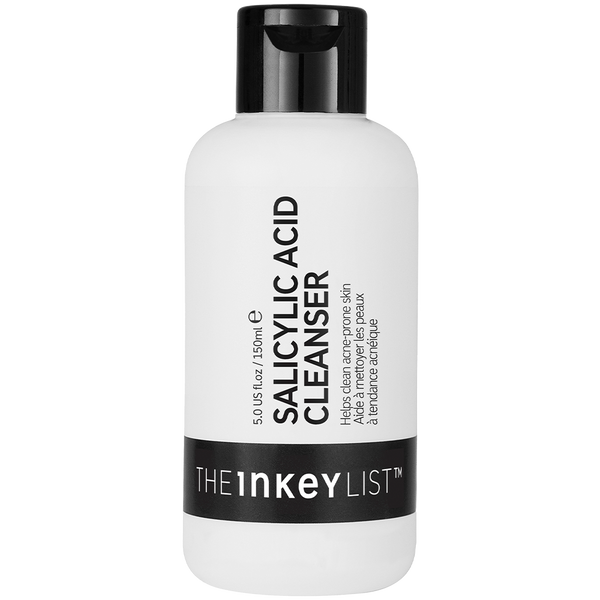
- Salicylic Acid Cleanser - 150ml, $15 - 2% salicylic acid acne treatment cleanser
- Beta Hydroxy Acid (BHA) Serum, $14 - 2% salicylic acid with 1% hyaluronic acid
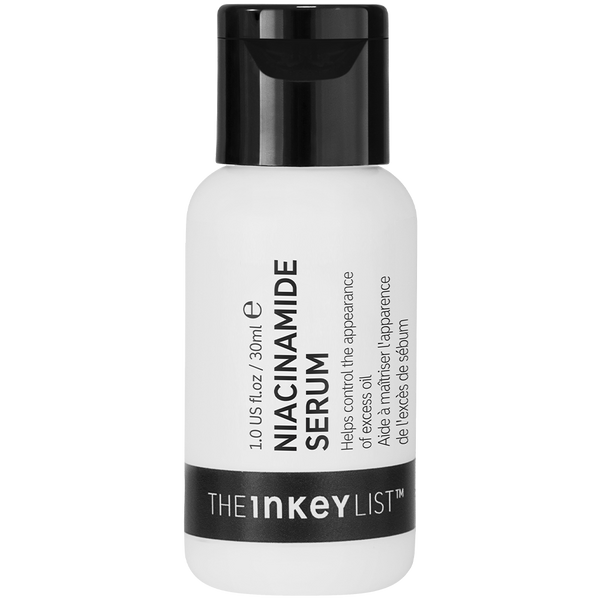
- 10% Niacinamide Serum, $13 - oil control, texture and the look of redness
- 360° Acne Clearing Serum, $18 - targets three stages of acne in one step
- Succinic Acid Acne Treatment, $15 - targeted spot treatment
- Hydrocolloid Invisible Pimple Patches - Pack of 22, $10 - overnight or under makeup
- Bio-Active Ceramide Moisturizer, $22 - barrier support for dry, acne-prone skin
- Exosome Hydro-Glow Complex, $24 - optional glow step
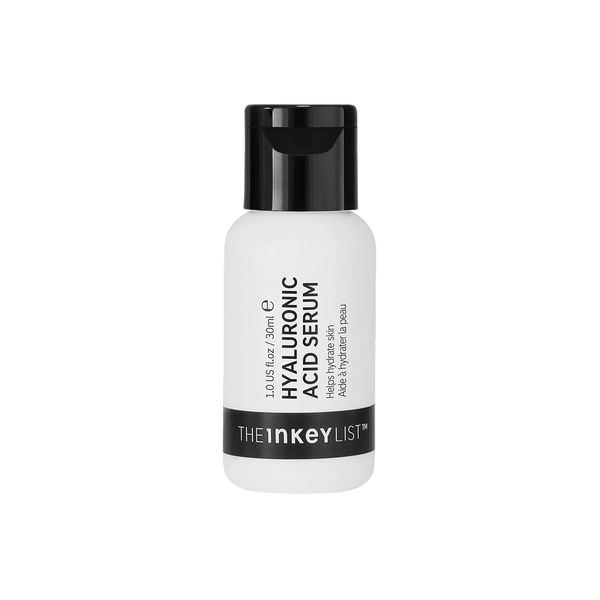
- Hyaluronic Acid Serum, $13 - water-binding hydration with no added oil
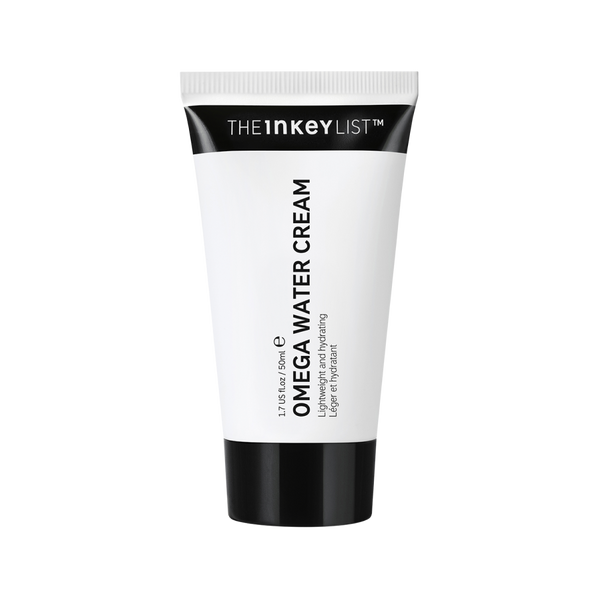
- Omega Water Cream, $15 - oil-free lightweight moisture
- Ectoin Hydro-Barrier Serum, $17 - hydration and barrier support for reactive skin
- Hydro-Surge Dewy Face Mist, $14 - for damp skin application and midday top-ups
Before any of that is useful, though, there is one question you need to answer about your own skin. Dry and dehydrated are not the same thing, and the fix is different for each.
Dry Skin vs Dehydrated Skin: Which Do You Have?
This is the single most useful distinction in the whole article, and it is the one most people get wrong. Treating dehydrated skin as though it were dry skin is why a lot of expensive routines quietly fail. You end up adding oil to skin that was thirsty, or adding water to skin that could not hold onto it.
Dry skin is a skin type. It lacks oil, and more specifically it lacks lipids: the fats that make up the outer layer of your skin. It is generally a long-term characteristic rather than a phase you pass through. It shows up as flaking, rough texture, a tight feeling that does not ease, and a dull, slightly papery look.
Dehydrated skin is a temporary condition. It lacks water, not oil. Any skin type can be dehydrated, including oily skin and acne-prone skin. It shows up as tightness right after cleansing, dullness, and fine lines that look more obvious than they did last month.
The two are not mutually exclusive. You can absolutely be both at once, and people with dry, acne-prone skin very often are. Short on lipids, short on water, and still producing enough oil for pores to get blocked.
A quick self-check
Run through these honestly. There are no wrong answers, only useful ones.
- How does your skin feel 30 minutes after cleansing, before you apply anything? Tight and uncomfortable points toward dehydration. Rough and papery points toward dryness.
- Does your skin flake, or does it only feel tight? Visible flaking is a dryness signal. Tightness without flaking leans dehydrated.
- Is it seasonal or year round? A problem that arrives every November and leaves in April is usually dehydration driven by cold air and indoor heating. A year-round pattern is more likely to be your skin type.
- Does your skin look oily by midday but still feel tight? This is the classic dehydration signature, and it is extremely common in people who are also breaking out.
- Does your skin sting when you apply products that used to be fine? That is a barrier signal rather than a hydration signal, and it usually means you need to pull back before adding anything new.
If several of those pointed toward dryness, What is Dry Skin? is the full explainer on what causes it and what genuinely helps. If they pointed toward dehydration instead, What is Dehydrated Skin? is the right starting point and worth five minutes. If you want to go deeper on the diagnostic side, How to Tell If Your Skin Is Dehydrated: 7 Signs You Might Be Missing extends the self-check considerably.
Why this matters for your breakouts
Here is the connection that makes the dry skin vs dehydrated skin question worth caring about. Dehydration is frequently what pushes skin into producing more oil. Your skin reads the water shortage as a problem and responds with the only tool it has, which is oil. That extra oil, combined with dead skin cells that have not shed cleanly, is precisely how pores get blocked.
So getting the water content right is not a nice-to-have that sits alongside your acne treatment. It is a prerequisite for the acne treatment working properly. Skin that is adequately hydrated tolerates actives better, reacts less, and stops overcompensating.
If you are oily and flaky at the same time and that combination has never made sense to you, Why Oily Skin Gets Dehydrated Too addresses it directly. And if you want to settle the skin type question properly rather than guessing, What’s Your Skin Type? will get you there.
Once you know what you are working with, you can shop dry skin with some idea of what you are actually looking for rather than buying on hope. Now, to the question in the title.
Can Dry Skin Cause Acne? The Honest Answer
Dry skin does not directly cause acne. That is the honest answer, and it is worth stating plainly rather than burying it.
Acne is driven by four things: oil production, dead skin cells, bacteria and hormones. Dryness is not on that list. If you have dry skin and no other predisposing factors, dryness alone will not manufacture acne out of nothing.
But that is not the whole picture, and it is why the yes-or-no answers you find online are so unsatisfying. Dry skin creates the conditions in which breakouts become far more likely. It tilts the board. So when people ask “does dry skin cause acne,” the technically correct “no” is less useful than the real answer, which is that dryness and acne are linked through four specific mechanisms.
Understanding those mechanisms matters more than memorizing a rule, because once you can see the cause and effect you can work out what to do when your own skin does something unexpected.
A compromised barrier lets irritants in and water out
Your skin barrier is the outermost layer of your skin. Its job is simple to describe: keep water in, keep irritants out. Think of it as a brick wall, where the cells are the bricks and the lipids between them are the mortar.
When that mortar is depleted, the wall stops doing its job in both directions. Water escapes more easily, a process called transepidermal water loss. External irritants get in more easily. Skin becomes more reactive, more easily provoked, and slower to settle when something upsets it.
This is directly relevant to acne, not incidentally relevant. Research has linked barrier disruption with acne, with studies observing higher rates of water loss and lower levels of barrier lipids such as ceramides in acne-affected skin. A clinical review on acne and the skin barrier covers the relationship in detail for anyone who wants the technical version.
The practical implication is that barrier support is not a separate project from acne treatment. It is part of it. If you want the full mechanism explained without the clinical language, What is a Damaged Skin Barrier? and What Is TEWL (Transepidermal Water Loss) and How to Prevent It? both go further than this section can.
Dryness can trigger more oil, not less
This is the counterintuitive one, and it is the mechanism that explains the most confusing symptom pattern.
When your skin is dry, it can produce more oil to compensate. Not less. More. The American Academy of Dermatology states it about as plainly as it can be stated.
“When your skin becomes dry, your body makes more oil. The extra oil can clog your pores, which may lead to more breakouts.” American Academy of Dermatology
Read that again if you have spent years trying to strip oil out of skin that felt tight. The result of that overcompensation is the exact combination that sends people looking for answers: flaky, tight skin in the morning that is somehow shiny and congested by four in the afternoon.
It connects straight back to the previous section. Dehydrated skin overcompensates the same way, which is why oily, acne-prone skin so often turns out to be dehydrated skin underneath. What is Oily Skin? covers what oil production is genuinely doing and why the goal is regulation rather than elimination.
The takeaway is uncomfortable if you have built a routine around degreasing: aggressively removing oil from dry skin can produce more of the thing you were trying to remove.
Dead skin cell buildup blocks pores
Dry skin sheds more visibly than other skin types, and those dead cells do not always clear away cleanly. They sit on the surface and, crucially, they sit inside the pore.
Here is comedone formation in plain terms. NIAMS describes acne as beginning when “the hair, sebum, and keratinocytes stick together inside the pore,” which prevents the dead cells from shedding and keeps oil from reaching the surface. Oil and dead cells combine into a plug. The pore blocks. If the plug stays below the surface you get a whitehead. If it reaches the surface and oxidizes you get a blackhead.
Now overlay that on dry skin. More dead cells, sluggish shedding, and potentially more oil from the compensatory mechanism above. That is a well-stocked supply of exactly the two raw materials a blocked pore needs. Acne Types, Causes, & Risk Factors from NIAMS sets out the full sequence, and What Causes Clogged Pores? The Complete Guide to Congested Skin extends the pore side of the explanation.
This is also why gentle, consistent exfoliation matters more for dry, acne-prone skin than aggressive occasional scrubbing. Little and often clears the buildup without tearing through the lipids you cannot spare.
Over-stripping makes both problems worse at once
The fourth mechanism is not something your skin does. It is something we do to it.
Harsh cleansers, high concentrations of actives, hot water and over-washing all strip out the lipids the barrier is built from. That increases water loss. Increased water loss deepens dryness. Dryness can trigger more oil. More oil, meeting more dead cells, feeds more breakouts. Which prompts more stripping.
That is a closed loop, and it is the single most common reason people with dry, acne-prone skin stay stuck for years. The AAD makes the same point from the other direction in its guidance on how to control oily skin, noting that harsh products can leave skin producing more oil rather than less.
The good news buried in all four mechanisms is that they are self-reinforcing in both directions. A cycle that compounds damage can also compound improvement. Support the barrier, restore the water content, and the oil overcompensation tends to settle, which gives your actives a far easier job.
Understanding the mechanism is the theory. The next part is where most people recognize themselves.
The Mistakes That Make Dry, Acne-Prone Skin Worse
None of what follows is a character flaw. Every one of these mistakes is a reasonable response to what the internet tells you about acne. They are just aimed at the wrong skin.
Over-cleansing
Washing three or four times a day, using water hot enough to feel good, or using a foaming cleanser that leaves your face squeaky. Squeaky is not clean. Squeaky is stripped, and it means you have removed lipids along with the dirt.
Do this instead: Cleanse twice a day at most, morning and night, with lukewarm water. Give it a full 60 seconds so the cleanser has time to work, then stop. If your skin feels tight afterward, the cleanser is too harsh for you.
Stacking too many acids
A salicylic acid cleanser, then an acid toner, then a BHA serum, then a retinol, all in the same evening. Each of those products is fine on its own. Together, on a barrier that is already struggling, they are far too much.
Do this instead: Alternate actives across different nights rather than layering them in one. Skincare Ingredients You Should Never Mix: The Complete Layering Guide gives you the practical rules, and Sensitive Skin and Acne: How to Treat Without Stripping is the right companion read if your skin is reactive as well as dry.
Skipping moisturizer because you are breaking out
The most common mistake and the most counterproductive one. The logic feels sound: my skin is oily and congested, so why add more? But skipping moisturizer tends to make things worse, because it leaves the water loss unaddressed and the compensatory oil cycle running.
The AAD actively recommends moisturizer for people with acne, particularly those using treatments like salicylic acid, benzoyl peroxide or retinoids, noting that these treatments tend to dry and irritate the skin and that daily moisturizer helps skin tolerate them.
Do this instead: Keep the moisturizer, change the texture. A lightweight, oil-free, non-comedogenic formula gives you the barrier support without the heaviness. The Best Moisturizer for Acne-Prone Skin works through the options properly.
Picking and squeezing
It damages the surface, extends how long the spot takes to settle, and meaningfully raises your risk of a mark that outlasts the pimple by months.
Do this instead: Cover it. A Hydrocolloid Invisible Pimple Patch creates a physical barrier between your fingers and the spot, and draws out fluid while it sits there. Wear one overnight or discreetly under makeup. What are Acne Scars & Post-Acne Marks? explains what you are protecting yourself from.
Chasing dryness with more treatment
Your skin gets flaky from an active, so you reach for an exfoliant to remove the flakes. Entirely logical, completely wrong. The flaking is a signal that the barrier is struggling, and exfoliating compounds it.
Do this instead: Pull back. Drop the actives for several days, cleanse gently, and focus on hydration and barrier support until your skin settles. Over-Exfoliated Skin: Signs, Causes and How to Repair It covers the recovery properly, and What is Sensitive Skin? is useful if this happens to you often.
Not giving anything time
Switching products every two weeks means you will never know what worked. Skin cell turnover takes roughly a month, and acne treatments generally need six to eight weeks to show their full effect.
Do this instead: Commit to one routine for at least eight weeks before judging it. Change one variable at a time. Take a photo at the start so you are comparing against evidence rather than memory.
Notice how many of those corrections involve doing less. That is deliberate. Now for the short list of ingredients genuinely worth adding.
Ingredients That Work for Dry, Acne-Prone Skin
Five ingredients, each of which addresses dryness and acne together rather than trading one off against the other. For each one: what it is, why it works for this specific combination, how to use it, and the honest caveat.
Salicylic Acid
Salicylic acid is a beta hydroxy acid, and its defining feature is that it is oil-soluble. That means it can get inside the pore and work on the plug from within, rather than only resurfacing the top of your skin. That is why it is the standard for acne treatment.
The obvious worry for dry, acne-prone skin is that it will dry you out further. The answer is formulation and frequency, not avoidance. Formulas that pair 2% salicylic acid with hyaluronic acid are specifically designed to clear pores while putting water back.
How to use it:
- Start 2 to 3 times per week, not daily, and build from there
- Use it in the evening
- Always follow with moisturizer
- Never stack it with another acid in the same routine
The Salicylic Acid Cleanser gives you a lower-contact introduction since it rinses off. The Beta Hydroxy Acid (BHA) Serum is the leave-on option, and it includes 1% hyaluronic acid precisely so it does not leave you tight. For active acne alongside post-acne marks, the 360° Acne Clearing Serum targets three stages in one step. For individual spots rather than all-over use, Succinic Acid Acne Treatment is the targeted option.
Honest caveat: salicylic acid is not a permanent fix applied once. It works through consistent use, and going harder does not speed it up. If you are weighing it against the alternative, Benzoyl Peroxide vs Salicylic Acid is worth reading, because benzoyl peroxide is notably more drying and that matters a lot for this skin.
Niacinamide
Niacinamide is a form of vitamin B3 and one of the most broadly useful ingredients available. It helps control oil, supports the look of even texture and helps reduce the appearance of redness.
It suits this combination particularly well because it addresses oil without stripping. That is the exact balance dry, acne-prone skin needs and the exact balance most oil-control products fail to strike. It is also well tolerated by most skin, including reactive skin.
How to use it:
- Morning or evening, after your hydrating serum
- Daily use is fine for most people once you have introduced it
- Pairs well with salicylic acid when used thoughtfully
The 10% Niacinamide Serum is the product here. Is Niacinamide Good for Dry Skin? Benefits & How to Use answers the obvious objection, and Salicylic Acid and Niacinamide: The Best Duo for Oily, Acne-Prone Skin covers pairing them.
Honest caveat: a small number of people find higher concentrations tingle or flush at first. Introduce it on alternate days and build up.
Hyaluronic Acid
Hyaluronic acid is a humectant, meaning it draws water into the skin and holds it there. It addresses the water side of the problem without adding any oil at all, which is exactly what dehydrated, congested skin needs.
There is one application detail that materially changes your results, and most people get it wrong.
How to use it:
- Apply to damp skin, not dry skin
- Follow immediately with moisturizer to seal the water in
- Morning and evening
That sequence matters. A humectant applied to bone-dry skin in a dry environment, with nothing layered over it, can pull water from deeper in your skin and let it evaporate. Damp skin first, moisturizer after. Every time.
The Hyaluronic Acid Serum is the core product. Hydro-Surge Dewy Face Mist is useful for creating that damp surface, or for a midday top-up. Is Hyaluronic Acid Good for Acne-Prone Skin? handles the question of whether hydration will congest you further.
Honest caveat: hyaluronic acid adds water but not lipids. It is one half of the job, and on its own it will not fix genuinely dry skin.
Ceramides and Omega Fatty Acids
Ceramides are the lipids your barrier is actually built from. They are the mortar between the bricks. Dry skin is characteristically short on them, and research has observed lower ceramide levels in acne-affected skin specifically.
Replacing them helps strengthen the skin barrier. That supports barrier function, which reduces water loss, which eases the dryness that drives the compensatory oil cycle. This is the ingredient that interrupts the loop described earlier.
How to use it:
- As your moisturizer step, morning and evening
- Apply to slightly damp skin, over your serums
- Use consistently rather than only when skin feels bad
The Bio-Active Ceramide Moisturizer is the option for drier skin. If your skin is dry but still congested and you want something lighter, Omega Water Cream is the oil-free alternative. What is Ceramide NP? explains what you are reading on the label, and Hyaluronic Acid vs Ceramides is the right read if you can only buy one.
Honest caveat: barrier support is slow and unglamorous. You will not see a dramatic change in three days. You will notice, around week four, that your skin stops reacting to things.
Ectoin
Ectoin is the one most people have not tried, and it deserves a place in this conversation. It is a molecule originally identified in microorganisms living in extreme environments, and it works by holding water around skin cells while helping protect against environmental stress.
Why it suits this reader specifically: it hydrates and supports barrier function at the same time, and it is well suited to skin that is dry, easily irritated and dealing with active treatment. That makes it a genuinely good partner to salicylic acid. The acid does the pore work while the ectoin supports the barrier through it.
How to use it:
- Apply to damp skin before moisturizer
- Morning, evening, or both
- Especially useful on nights when you are using an active, and during cold weather
The Ectoin Hydro-Barrier Serum is the product. Ectoin vs Hyaluronic Acid: What’s the Difference? will help you decide whether you need one, the other, or both.
Honest caveat: ectoin is a support ingredient, not an acne treatment. It makes your actives easier to tolerate. It does not replace them.
Once breakouts start coming under control, most people find the next thing they want back is their glow. That is a separate job.
Bringing Back Glow After a Breakout
Clearing breakouts and getting your glow back are two different tasks, and conflating them leads to disappointment.
Skin that has been through a breakout cycle, followed by weeks of consistent active use, often looks flat, uneven and tired even after the spots themselves have gone. The acne treatment did its job. It just was not designed to do this one.
Be clear on the positioning here: what follows is an optional step. It does not replace salicylic acid and it does not replace niacinamide. Those are still doing the clearing work. This sits after your hydrating serum and before your moisturizer, and it addresses radiance rather than breakouts.
Exosomes are, in the simplest terms, a delivery system that helps carry ingredients to where they work. If you want the fuller explanation, the education page covers it properly rather than us compressing it into two lines here.
The Exosome Hydro-Glow Complex is the product, and these are its clinically supported claims:
- “100% saw more glowing skin, clinically proven*”
- “Clinic worthy rejuvenated skin in 14 days*”
- “6-in-1 skin rejuvenation: clinically proven to visibly improve radiance, hydration, tone, firmness, elasticity, and texture*”
- “Proven to deliver up to 12-hours of hydration**”
- “Helps support natural collagen production”
4-week clinical study of 26 people. *Clinical study of 31 people.
One important distinction before you decide. If your main post-breakout concern is dullness and uneven-looking tone, this is the right step. If your main concern is specific dark marks left behind by individual spots, that is a different problem with different solutions, and What are Acne Scars & Post-Acne Marks? is the better starting point. Exosomes are not the answer for marks.
In practice, it slots in as step four of your morning routine and step four or five in the evening, always before moisturizer. For the full version, The Exosome Glow Routine: Clinically Proven Radiance in 14 Days lays it out.
Here is everything assembled into the routine you came for.
Your AM and PM Routine for Dry, Acne-Prone Skin
Your AM routine
- Cleanse gently. A gentle cleanse only in the morning. For most people with dry, acne-prone skin, the salicylic acid cleanser belongs in the evening routine, not this one.
- Hydrate on damp skin. Hyaluronic Acid Serum, or Ectoin Hydro-Barrier Serum if your barrier is struggling.
- Treat. 10% Niacinamide Serum for oil control and the look of even texture.
- Optional glow. Exosome Hydro-Glow Complex.
- Moisturize. Bio-Active Ceramide Moisturizer for drier skin, or Omega Water Cream for lighter, oil-free hydration.
- SPF. Finish with a non-comedogenic, broad-spectrum SPF 30 or higher, every single day. Reapply through the day where you can. What is SPF? covers the basics, and Best Sunscreen for Dry Skin: Ingredients to Look Forwill help you find a texture that works on dry skin.
Your PM routine
- First cleanse. Oat Cleansing Balm to remove makeup, SPF and the day.
- Second cleanse. Salicylic Acid Cleanser, on active nights only.
- Hydrate on damp skin. Same as the morning.
- Treat. Beta Hydroxy Acid (BHA) Serum on active nights, starting 2 to 3 times per week. Alternate your actives rather than stacking them.
- Spot treat. Succinic Acid Acne Treatment on individual spots, or a hydrocolloid patch overnight.
- Moisturize. Always, including on nights you used an active. Especially on those nights.
How to build up without irritating your skin
Do not start all of this on Monday. A four-week ramp gets you to the same place with far less trouble.
- Week one. Cleanser and moisturizer only. Let your skin settle and establish a baseline.
- Week two. Add your hydrating serum, morning and evening.
- Week three. Introduce one active, twice that week. One. Not two.
- Week four. If your skin is comfortable, build frequency. If it is not, stay where you are for another week.
Patch test anything new on a small area first, and introduce one product at a time so you know what caused what. How to Build Your Skincare Routine has the general framework if you want to adapt this.
When to see a dermatologist
Skincare handles a great deal, but not everything, and knowing where the line sits saves time.
Book an appointment if your acne has not improved after six to eight weeks of consistent over-the-counter treatment, if you are getting painful deep cysts or nodules, if your acne is leaving scars or dark marks, if it is affecting how you feel day to day, or if your skin is persistently raw, stinging or looks irritated.
Prescription treatment is often simply the right answer, and needing it is not a failure of your skincare routine. The two work together, with skincare supporting the treatment and helping you tolerate it. The AAD’s guidance on when to see a dermatologist about acne and the NIAMS overview of acne diagnosis and treatment both set out what to expect.
One practical note: if you are already on prescription acne medication, check with your dermatologist before adding actives to your routine.
Shop the routine
- Oat Cleansing Balm - 150ml, $17
- Salicylic Acid Cleanser - 150ml, $15
- Beta Hydroxy Acid (BHA) Serum, $14
- 10% Niacinamide Serum, $13
- Hyaluronic Acid Serum, $13
- Omega Water Cream, $15
- Ectoin Hydro-Barrier Serum, $17
- Hydro-Surge Dewy Face Mist, $14
- 360° Acne Clearing Serum, $18
- Succinic Acid Acne Treatment, $15
- Hydrocolloid Invisible Pimple Patches - Pack of 22, $10
- Bio-Active Ceramide Moisturizer, $22
- Exosome Hydro-Glow Complex, $24
If you would rather not assemble it yourself, the Intro Routine for Acne comes pre-built.
The Takeaway
Dry skin does not cause acne, but it creates the conditions where breakouts thrive. That is why treating only the acne, or only the dryness, leaves so many routines stalling at the halfway point. The two problems are connected, so the solution has to address both.
The shift is smaller than it sounds. Support the barrier rather than stripping it. Get the water content right before you escalate the actives. Use one active at a time, at a frequency your skin can actually tolerate, and give it weeks rather than days to prove itself.
This is not about buying more products. It is about using fewer, better-matched ones consistently, which is usually cheaper than what you are doing now. Expect gradual, visible improvement rather than an overnight transformation. Clear guidance, proven ingredients, real results.
Not sure where your skin sits? Start with Acne Analyzer Pro™ for a personalized read before you change anything. You can also take the skin quiz to get a routine built around dry, acne-prone skin, or browse Acne & Breakouts and Dry Skin directly. If you would rather skip the assembly, the Intro Routine for Acne has the essentials in one place.
Frequently Asked Questions
Got a question?
Our askINKEY team are a friendly bunch of skincare experts with deep product knowledge and zero judgement. Whether you're an ingredient obsessive or just starting out, we'll make it make sense. No question too big. No question too small. We Give A Care, Every Day.


