

How to Reapply Sunscreen Over Makeup Without Ruining It
The simple, makeup-safe way to top up your SPF mid-day — no smudging, no patchiness, no starting your face again.
Author
askINKEY skincare advisor
Published
28 May, 2026
Time to read
16 minutes
It is early afternoon. Your makeup is on and doing its job. Your sunscreen went on around seven in the morning, and it is no longer delivering what the label promised. Everyone tells you to reapply. Almost nobody tells you how to do it without wrecking a face you spent twenty minutes on.
This guide covers exactly that. You will get three methods that work over a full face of makeup, the single technique that matters more than all the others, how to choose a sunscreen that layers well in the first place, and how to remove everything properly at night. Learning how to reapply sunscreen over makeup is mostly a matter of changing how you move your hand.
One thing up front: The INKEY List does not currently sell a sunscreen in the US. This is method guidance, not a product pitch. It works with whichever sunscreen is already in your bag. If you want the full picture on how often you should be reapplying, our SPF guide covers it.
Before the how, it is worth understanding why a morning application stops working by lunchtime.
Why Your Sunscreen Needs Topping Up, Even Over Makeup
Sunscreen is not a one-and-done morning step. It is a film sitting on the surface of your skin, and films degrade. In a randomized controlled study on realistic sunscreen durability, researchers measured a decline of roughly 15 to 40 percent in SPF protection across about eight hours under realistic conditions, including movement and water exposure. That is not a rounding error. That is the difference between the protection you think you have and the protection you actually have by three in the afternoon.
Three ordinary things are responsible, and none of them involve doing anything wrong.
Sweat. Even a mild amount, even indoors, gradually lifts and thins the layer.
Sebum. Your skin produces oil all day. That oil pushes up underneath the sunscreen film and breaks it apart from below.
Touch. You rest your chin on your hand. You push your sunglasses up. You hold a phone to your cheek. A collar rubs your neck. A mask sits across your nose and jaw. Every one of those contacts removes a little product, and they compound across a day.
Sebum deserves particular attention if you have oily or combination skin. Oil production is not a cosmetic inconvenience here, it is a mechanical problem. A steady output of sebum physically disrupts the even layer you applied that morning, which is why oily skin types often find their sunscreen has effectively vanished by early afternoon while the rest of their base is still holding. If that describes you, our guide to oily skin explains what is happening at the surface and how to work with it rather than against it.
It is also worth addressing the indoor question, because a lot of people quietly assume a desk job exempts them. UVA passes through standard window glass. A seat by a window is not the same as no exposure, and UVA is the wavelength most associated with long-term visible aging. Overcast days are not a reprieve either. If you want the seasonal version of this argument, we have covered whether you need to wear sunscreen all year round separately.
There is one group for whom reapplication matters more than most: anyone dealing with uneven tone or dark marks. Existing pigmentation darkens with UV exposure. You can run an excellent routine of targeted actives for months and quietly undo the progress with inconsistent daytime protection, because the marks you are treating respond to light. Consistent daily sun protection is one of the most meaningful things you can do for tone, which is why topping up is not optional if pigmentation is your primary concern. Our hyperpigmentation guide covers the full picture, and we have answered the obvious follow-up in does sunscreen really help with hyperpigmentation.
On frequency, the short answer is the standard one. The American Academy of Dermatology recommends reapplyingroughly every two hours of daylight exposure, and more often if you are swimming or sweating heavily. For everything else on timing, strength and quantity, our complete guide to SPF is the place to go. If you are weighing up which strength to buy, we have also compared SPF 30 and SPF 50, and if you are unsure which filter system suits you, mineral versus chemical sunscreen breaks down the practical differences.
Does the SPF in My Foundation Count?
No. Not on its own.
The reason is quantity, not quality, and it is worth understanding the mechanism rather than just accepting the verdict. SPF ratings are established in laboratory testing at an application density of 2 mg/cm2. That is a specific, measured, fairly thick layer. Research on SPF and application thickness has consistently found that real-world sunscreen application lands closer to a quarter or a half of that figure, which already means most people are getting meaningfully less protection than the bottle advertises.
Foundation is applied far more thinly still. Nobody wears a nickel-sized amount of foundation. The entire point of a modern base is that it looks like skin, which means it goes on in a fraction of the thickness a sunscreen requires to perform. A foundation labeled SPF 20 worn at normal makeup thickness does not deliver SPF 20. It delivers something considerably lower, and something you cannot calculate.
This is not a fringe position. The Skin Cancer Foundation’s guidance on making sunscreen work with makeup is clear that SPF-containing makeup should not be relied on as a sole source of protection. Treat it as a bonus layer. Never the base layer.
So topping up is non-negotiable. Which leaves the obvious obstacle: a full face of makeup sitting between you and your skin.
Why Makeup Makes Reapplying SPF So Awkward
If reapplying sunscreen over makeup has gone badly for you, you are not doing it wrong because you lack skill. You are doing it wrong because the intuitive motion is the wrong motion. Here is what actually goes wrong, in four recognizable forms.
- Streaking and patchiness. You rub sunscreen in, and the foundation underneath travels with your fingers. You end up with bare patches where there was coverage and dense patches where the product bunched.
- Pilling. Two formulas refuse to cooperate and roll into small grey balls that lift off the skin, taking makeup with them.
- A grey or ashen cast. Mineral filters sitting over complexion products can shift the color of your base, and it is most visible on deeper skin tones and on a second or third application.
- A slippery finish. Everything sits on top of everything else and slides around for the next hour, migrating into your smile lines by four o’clock.
The underlying cause is simpler than the symptoms suggest. Your makeup is a finished, set film. It has dried down, it has bonded to your skin, and it is stable right up until you disturb it. Rubbing a liquid into that film lifts it and redistributes it. The sunscreen is almost never the villain. The motion is.
That distinction matters, because it means you do not necessarily need to replace your sunscreen. You need to change how you put it on.
Pilling deserves a slightly longer note because it is the failure people find most baffling. It is usually an interaction rather than a single product’s fault. A very silicone-heavy product meeting a very water-heavy one is a classic trigger, and so is impatience. If you do not let each layer settle before adding the next, you are essentially asking two wet films to become one, and they will not. Our guide to preventing pilling when applying your skincare routine goes into the chemistry and the fixes in more detail, and it is the most useful companion read to this section.
Hydration plays a quieter role. Skin that has become dehydrated across the day grabs at product. It takes up color unevenly, it exaggerates texture, and it makes every patch look worse than it is. Sometimes what reads as a failed reapplication is really a dehydration problem wearing a costume. If your base looks progressively rougher as the day goes on regardless of what you do to it, dehydrated skin is worth reading.
One more consideration. Reapplying means more product on your face and more physical contact with it across the day. For most people that is unremarkable. If you react easily, it is worth being deliberate about it: choose a formula you already know your skin tolerates, use a light hand, and resist the urge to keep working at an area that is not behaving. Our sensitive skin guide covers what to prioritize. It is also worth getting the morning order right in the first place, which we cover in how to prep skin before makeup.
All of this is solvable, and it is solvable with one change. The change is in how you move your hand.
The Core Method: Reapplying SPF With a Damp Sponge
A slightly damp makeup sponge is the most reliable tool for reapplying sunscreen over makeup, and the reason is straightforward physics. A sponge pressed flat against the face deposits product downward, onto the surface, without dragging anything sideways. Fingers, by contrast, almost always sweep. The dampness matters too: a dry sponge will drink a significant portion of your sunscreen before any of it reaches your skin.
You need four things. Your sunscreen. A clean makeup sponge. Access to water. Clean hands. That is the entire kit, and it fits in a bag.
Press and roll. Never sweep, never drag.
That is the whole technique in five words. Everything below is detail.
1. Blot first. Press a clean tissue over the oiliest areas of your face, typically the forehead, nose and chin. Press, do not wipe. You are lifting surface oil and sweat, not removing makeup. Reapplying onto a slick surface is the single most common reason sunscreen refuses to sit down properly, and skipping this step will undermine everything that follows.
2. Dampen and squeeze the sponge. Run it under water until it swells, then squeeze it out firmly. Then squeeze it again. You are aiming for springy and cool, not wet. A dripping sponge dilutes your sunscreen and delivers a thin, uneven film that will not protect you.
3. Dispense a genuinely adequate amount. Roughly a third of a teaspoon for the face alone is a useful mental benchmark. It will look like more than you expect. Dispense it onto the back of your hand rather than directly onto the sponge, so you control how much gets picked up and you can see how much you have actually used.
4. Load the sponge. Tap the sponge into the product on the back of your hand, picking up a small amount at a time. You are not trying to saturate it. You are giving it enough to deposit across one section of the face.
5. Press and roll. Place the sponge flat against the skin. Press down. Roll it slightly. Lift. Then move to the next spot and repeat. The rolling motion is small, closer to a rock than a stroke, and it helps distribute product to the edges of where the sponge made contact. Never sweep. Never drag. Never wipe.
6. Work in a deliberate order. Forehead and hairline first. Then the nose and around the nostrils, which are almost universally missed. Then the cheeks, working outward toward the ears. Then the jawline and straight down onto the neck. Chin last. Having a fixed order means you stop relying on memory halfway through a busy day.
7. Reload between sections. Do not try to stretch one load of product across your whole face. Under-application is the single biggest way this method fails, and it fails invisibly, because a thin layer of sunscreen looks identical to an adequate one.
8. Leave the eye area alone with the sponge. Treat it separately, as below.
9. Let it set for one to two minutes. Do not touch your face. This is when the finish settles and any tackiness disappears. Most people who think reapplication ruined their makeup actually judged it during this window, before it had finished drying down.
10. Assess in natural light, then do a second pass. Look at your face near a window rather than under office lighting. Press a second, lighter layer only where coverage looks thin. A second pass is normal and expected. It gets you closer to the density the SPF number was tested at.
The eye area
Sunscreen that migrates into the eyes stings, and the eye area is both thin-skinned and heavily exposed. Press gently along the orbital bone rather than working close to the lash line. Use a lighter touch here than anywhere else on the face, and stop where you can feel bone beneath your fingertip. That boundary is your guide. If a particular formula consistently stings your eyes no matter how carefully you apply it, that formula is not right for your eye area, and no amount of technique will fix it.
How much is actually enough
Come back to the numbers from earlier. The Skin Cancer Foundation reports that most people apply only 25 to 50 percent of the recommended amount of sunscreen. That is the norm, not the exception, and it means the protection most of us receive is substantially below the figure on the packaging.
The practical implication is liberating rather than discouraging. If under-application is the default, then deliberately erring on the generous side simply corrects a known bias. You are not overdoing it. You are landing somewhere closer to the tested amount. Our guide to how much skincare you should actually use applies the same logic across the rest of a routine.
If your base does shift
Sometimes it will, particularly around the nose and chin. Do not reach for more foundation. Press the area with a clean fingertip instead. Warmth and gentle pressure re-blend a base far more effectively than adding another layer of product on top, and adding foundation over a freshly reapplied sunscreen is a reliable way to create exactly the patchiness you were trying to avoid.
A note on hygiene
Sponges used for mid-day top-ups live in bags, which means they live in warmth and darkness alongside everything else in there. Wash yours regularly, let it dry fully before it goes back in the bag, and replace it more often than feels necessary. Repeatedly pressing a dirty sponge into your face is a genuine congestion and breakout risk, and it is an avoidable one.
A sponge is the most reliable method, but it is not the only one. Two other formats suit different situations and different bags.
Face Mists and Powder SPF: The Two Alternatives
Face mists, and what they can and cannot do
Start with the distinction that most content in this category blurs, because getting it wrong leaves people unprotected.
A hydrating mist is not a sunscreen. An SPF mist is a sunscreen. They are different products doing different jobs, and the fact that they arrive in similar packaging is genuinely dangerous.
On SPF mists. They are convenient over makeup, and that is a real advantage. They are also very easy to under-apply, and that is a real problem. A quick spritz from arm’s length does not deliver a protective film. It delivers a scattering of droplets, most of which never land. If you use one, apply generously, hold it closer to your face than feels natural, mist until the skin looks visibly damp, and go over each area more than once. The application-quantity issue from earlier in this article applies here with more force than anywhere else.
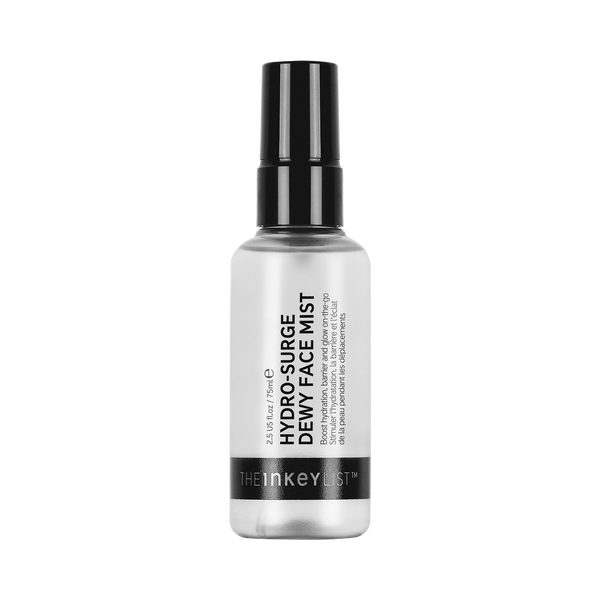
On hydrating mists. This is where our Hydro-surge Dewy Face Mist sits, and it is worth being precise about what it does. It contains no SPF and offers no sun protection whatsoever. What it does is refresh makeup that has gone flat or dry-looking through the day, add comfort to skin that feels tight, and help a base look less cakey. In a two-week trial of 103 people, consumers agreed it promotes an instant glow without disturbing makeup.
The useful part for this article is that it can be used over sunscreen. Let your sunscreen dry down fully first, then mist. A light veil of hydration will not move or compromise the layer underneath. We have covered the broader version of this question in can you use face mist over makeup.
The formula is straightforward. 3% Hydroviton Insta for instant hydration lasting up to 12 hours. 3% Aquaxyl to help the barrier hold onto moisture and reduce water loss. 2% Earth Marine Water for glow. It is alcohol-free and fragrance-free, which matters when you are misting repeatedly across a day, and it has been clinically patch tested on 31 people and is suitable for sensitive skin. Humectants like Glycerin work by drawing water into the upper layers of the skin, which is why a hydrating mist feels immediately more comfortable than plain water.
Be clear on what it is not. It is not a setting spray. It will not lock your makeup in place.
There is a reason skin gets thirsty by mid-afternoon regardless of what you applied that morning. Water moves continuously out of the skin and evaporates from the surface, a process called transepidermal water loss, and air conditioning and central heating both accelerate it. That is a comfort problem, and a mist solves it. It is a completely separate problem from protection. If you want the mechanism, we have explained what TEWL is and how a damaged skin barrier makes it worse. For anyone whose skin runs dry to begin with, sunscreen for dry skin is the more targeted read.
Powder SPF, the most practical top-up over a full face
Powder sunscreen is a loose or pressed mineral powder carrying sun filters, usually zinc oxide or titanium dioxide, applied with a built-in brush directly onto your makeup.
Its appeal to makeup wearers is obvious and legitimate. It will not disturb a base the way a liquid can. It absorbs oil and reduces shine while it protects, which solves two problems at once. It is genuinely portable, it does not leak, and the whole process takes about fifteen seconds at a desk.
Now the caveat, stated without hedging, because this is where the honest answer diverges from the convenient one.
Powder sunscreens are very easy to under-apply relative to the 2 mg/cm2 standard their SPF number is based on. Achieving the labeled protection requires a far heavier layer than almost anyone applies, and powder can rub off across the day.
Cleveland Clinic’s assessment of whether powder sunscreen actually works reaches the same conclusion. The dermatological position is consistent: powder is best treated as a top-up over an existing base layer of liquid or cream sunscreen, not as your only source of protection.
There is regulatory context worth knowing too. In its proposed sunscreen rule, the FDA acknowledged powder sunscreens as a recognized dosage form while indicating that additional data is needed on their effectiveness, and flagged inhalation and particle-size considerations. That is not a reason to panic. It is a reason to understand what you are buying.
Used properly, powder earns its place. Build in layers rather than trying to cover everything in one pass. Press the brush into the skin rather than dusting it lightly across the surface, since dusting deposits almost nothing. Pay particular attention to the nose and forehead, which get the most direct exposure and produce the most oil. And accept it for what it is: a supplement to a proper morning application, not a replacement for one.
Sticks deserve a brief mention as a third format. They are excellent for targeted areas, particularly the nose, cheekbones, hairline and the tops of the ears, and the natural motion with a stick is pressure rather than dragging, which suits makeup well. Getting even coverage across a full face over makeup with one is awkward, so treat it as a spot tool.
Here is the comparison in plain terms. Use a damp sponge for the most reliable coverage. Use powder for the fastest and most makeup-safe top-up. Use a hydrating mist for comfort and for reviving a base that has gone flat, understanding that it is doing nothing for protection. The INKEY List does not currently sell a powder, mist-format or stick SPF in the US, so none of this is a product recommendation. It is format guidance, and you should buy whichever one you will actually use.
Every one of these methods works better when the sunscreen underneath was chosen to live alongside makeup in the first place.
How to Choose a Sunscreen That Layers Well With Makeup
The best sunscreen for wearing with makeup is the one that behaves itself in both positions: underneath a base in the morning, and on top of it at two in the afternoon. Most sunscreens are good at one and awkward at the other. Here is what to look for.
-
Texture and finish. Lightweight fluids and gel-creams sit under makeup more cleanly than thick, rich creams, which need longer to absorb and tend to move foundation around when they do. Match the finish to your skin and your base. Matte or soft-matte finishes suit oily skin and play well with most foundations. Dewy finishes suit dry skin but can read as slippery under a full coverage base, and they will amplify any shine you already had by mid-afternoon.
-
Filter type. Mineral filters can leave a white or grey cast over complexion products, and that cast is more visible on deeper skin tones and more visible again on a second application, since you are effectively stacking pigment. Chemical filters are usually more cosmetically invisible over makeup. Neither category is better than the other for your skin. They simply behave differently on top of a base, and if you are reapplying two or three times a day that behavior compounds. Our comparison of mineral versus chemical sunscreen covers the full trade-off.
-
Pilling resistance. There is a quick test. Apply a small amount to clean skin on the back of your hand or your jaw, wait sixty seconds, then rub gently. If it balls up on bare skin, it will pile under foundation. Then repeat the test over your usual moisturizer, because pilling is almost always an interaction between two products rather than the fault of one. The sunscreen you blamed may be perfectly fine with a different base layer.
-
SPF strength. The short version is that a higher SPF buys you margin against the near-certainty that you will under-apply. Given that most people use between a quarter and a half of the tested amount, starting from a higher number leaves you better off when reality intervenes. We have gone through the detail in SPF 30 versus SPF 50.
-
Dosing format. This sounds trivial and it is not. A pump or a squeeze tube lets you dose accurately and see how much you have used. A wide-mouth jar does not, and it introduces a hygiene issue if you are dipping fingers into it mid-day. Practical packaging makes correct application more likely.
-
A second bottle for your bag. Behavior beats intention. A travel-size version of your sunscreen that lives permanently in the bag you actually carry will do more for your protection than the best formula in the world sitting on a bathroom shelf at home.
Skin type shapes the shortlist. If you react easily, prioritize fragrance-free formulas with simple filter systems and fewer variables, and check sunscreen for sensitive skin alongside our broader sensitive skin guidance. If you are oily or blemish-prone, look for non-comedogenic formulas with oil-controlling finishes that will not compound the sebum problem across the day, which we cover in what to look for in sunscreen for oily, acne-prone skin. If your skin runs dry, look for humectants in the formula and something that will not cling to or emphasize flaky patches, covered in best sunscreen for dry skin and in our dry skin guide.
It is also worth thinking about what sits underneath. Sunscreen is the last skincare step in the morning, after your serums and your moisturizer, and it should be given a minute to settle before makeup goes on. Antioxidants in the morning are a natural partner to it, which we explain in vitamin C and sunscreen: why you need both.
For everything else, from how filters work to how much to use, our complete guide to SPF is the reference. And to repeat the honest position: The INKEY List does not currently offer a sunscreen in the US, so use this as a neutral framework for whichever one you choose.
Everything you apply across a day, in however many layers, has to come off properly at night. That step matters more than people think.
Taking It All Off: Removing Sunscreen and Makeup at Night
Here is the concern nobody says out loud. If you have reapplied sunscreen two or three times over a full face of makeup, there is meaningfully more product sitting on your skin at nine in the evening than on an ordinary day. That is not an argument for skipping the reapplication. It is an argument for cleansing properly.
Sunscreen is harder to remove than most people assume, and the reason is that it is designed to be. Water resistance and adherence are features. A formula that clings through sweat and movement is doing exactly what you paid it to do at two in the afternoon, and it is precisely why a quick splash of water and a foaming wash will not shift it at ten at night. What gets left behind sits in the follicles overnight.
The mechanical answer is an oil-based first cleanse. Oil dissolves oil. Oil-based cleansers break down water-resistant and oil-based products in a way that water-based cleansers physically cannot, which is the entire logic of the double cleanse and why it exists as a category at all.
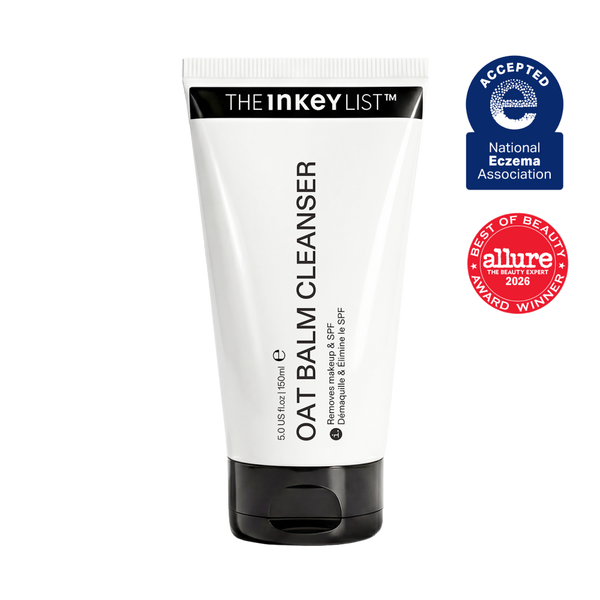
This is where our Oat Cleansing Balm comes in as a first step. In a consumer trial of 29 participants, it removed 100 percent of waterproof makeup and SPF in 30 seconds. The formula is built around 5% Oat Kernel Oil, which delivers ceramides and omega 3 and 6 fatty acids to dissolve makeup while supporting the skin barrier, with Sea Buckthorn Oil to help soothe and balance.
The part that matters most for this particular reader is what happens to your skin afterward. Heavier cleansing has a reputation for leaving skin stripped and reactive, and that reputation is often earned. This one is clinically proven to support skin barrier function over four weeks in a trial of 29 participants, and it holds the National Eczema Association Seal of Acceptance. Removing three layers of sunscreen does not have to cost you your barrier.
The technique is specific, and it is worth getting right.
- Apply to dry skin with dry hands. Water at this stage prevents the balm from breaking down makeup properly.
- Massage for 30 to 60 seconds. This is longer than feels necessary and it is the step most people rush.
- Pay deliberate attention to the hairline, the jawline, around the nose and the ears. Sunscreen collects in exactly these places and they are the areas most commonly missed.
- Add warm water to emulsify. The balm will turn milky.
- Rinse thoroughly.
On days with heavy sunscreen reapplication, follow with a water-based second cleanse. To be clear, that is a recommendation for heavy-SPF days rather than a rule for every night of your life. Our complete guide to double cleansing explains when it earns its place and when it is unnecessary, and we have gone deeper on how to remove sunscreen properly and why double cleansing matters if you want the full method. For the broader routine, how to remove makeup properly covers the rest.
One closing note on the barrier. The goal is clean, not squeaky. Skin that feels tight after cleansing has been over-stripped, and over-stripped skin is more reactive, more uncomfortable and more prone to problems the following day. If your face feels taut as it dries, the cleanse was too aggressive, not thorough enough.
That completes the daily loop. Before you go, here is a quick diagnostic you can run against your own habits.
Common Mistakes When Reapplying SPF Over Makeup
- Rubbing instead of pressing. The number one cause of streaked, patchy makeup after a top-up. Press and roll. Do not sweep.
- Under-applying. The most consequential mistake, because it is invisible. Most people apply a quarter to a half of the tested amount, which means the number on the bottle is not the protection you are receiving. This applies with extra force to powders and mists.
- Missing the edges. The ears and especially the tops of the ears, the neck and the back of the neck, the hairline and any visible part, the eyelids and the lips. These are among the most commonly missed areas and among the most exposed.
- Trusting foundation SPF as your only protection. It is a bonus layer applied far too thinly to deliver its stated number. Useful, never sufficient.
- Reapplying onto a slick face. Blot first. Sunscreen will not sit down on a layer of sebum and sweat, and no technique will rescue it if you skip this.
- Not waiting. Touching, powdering or adding makeup within seconds of reapplying is how you undo the work. Give it a minute or two of genuine stillness.
- Using a dirty sponge. A hygiene and congestion risk, particularly if you are blemish-prone. Wash it, dry it fully, replace it regularly.
- Treating a hydrating mist as sun protection. A mist without SPF offers no protection at all, however good it feels on the skin.
- Only reapplying on obviously sunny days. UV exposure is not proportional to how bright or how warm it feels, and UVA passes straight through window glass.
The Takeaway
If you remember one thing, remember this: press, do not sweep. Nearly every problem people have with reapplying sunscreen over makeup traces back to that single motion.
Three formats, three jobs. A damp sponge gives you the most reliable coverage. A powder SPF gives you the fastest, most makeup-safe top-up. A hydrating mist gives you comfort and revives a base that has gone flat, while doing nothing for protection.
Be realistic about the standard you are holding yourself to. Reapplying over makeup will never be as precise as applying to bare skin at seven in the morning. It does not need to be. A slightly imperfect top-up is considerably better than no top-up, and consistency beats perfection every time. Whatever goes on across the day comes off properly at night, and the method works with whichever sunscreen is already in your bag.
Clear guidance. Proven ingredients. Real results.
Shop the Routine
Hydro-surge Dewy Face Mist - refreshes makeup and delivers 12 hours of hydration without disturbing your base or your sunscreen.
Oat Cleansing Balm - melts away makeup and SPF in 30 seconds while supporting the skin barrier.
Free standard shipping on US orders over $40.
What to Read Next
For how sunscreen actually works, how much to use and how often to reapply, read our complete guide to SPF. If you want a routine built around your skin type, take our skin quiz. And for the evening step, our Oat Cleansing Balmremoves makeup and SPF in 30 seconds.
Because at The INKEY List, We Give A Care.
Frequently Asked Questions
Got a question?
Our askINKEY team are a friendly bunch of skincare experts with deep product knowledge and zero judgement. Whether you're an ingredient obsessive or just starting out, we'll make it make sense. No question too big. No question too small. We Give A Care, Every Day.


