

How to Get Glass Skin: What It Is and the Full Routine
Glass skin is not a filter. It is what healthy, deeply hydrated skin looks like, and here is exactly how to build a routine that gets you there.
Author
askINKEY skincare advisor
Published
17 February, 2026
Time to read
18 minutes
Glass skin is skin so well hydrated and so healthy that light reflects off it evenly, giving a smooth, luminous, almost translucent finish. That is the whole definition. It is a description of how light behaves when it meets a surface that is holding water properly and has an intact barrier underneath.
It is not perfection. It is not a filter. It is not a fixed thing you either have or do not have.
Glass skin also looks different on everybody. Skin type, skin tone, age and natural texture all shape the result, which means the version you see on one person is not the version you will get, and that is not a failure of your routine. What stays constant across every face is skin health. The finish is a byproduct of that health, not a separate goal you chase independently.
The reason the trend confuses so many people is that it gets sold as an aesthetic, or as a shopping list of ten products applied in a specific order. In reality it is an outcome, and the two things that produce it are hydration and barrier function. Get those right and the finish follows. Get them wrong and no amount of layering will fake it for long.
This article covers what glass skin actually is and where the idea came from, the three principles that produce it, the ingredients that deliver each one, a full morning and evening routine you can start today, the mistakes that quietly undo progress, how long it realistically takes, and how to build the whole thing without an elaborate shelf.
Start with the definition, because most of the confusion lives there.
What Is Glass Skin, and Where the Trend Came From
The mechanism behind glass skin is genuinely simple, and understanding it makes every product decision easier.
When skin holds water well and its surface is even, light bounces off it in a consistent direction. Your eye reads that consistency as glow. When skin is dry, rough or flaking, the surface is broken up into thousands of tiny irregular angles, and light scatters in every direction at once instead of reflecting cleanly. Your eye reads that scatter as dullness. Nothing about the skin’s colour has changed. What changed is the geometry of the surface and how much water it is holding.
This is why the same face can look flat one week and lit from within the next, with no change to tone or pigmentation. It is also why a heavy layer of shimmer never quite passes for glass skin in person, even when it photographs convincingly. Product sitting on top of skin reflects light from the surface. Hydrated skin reflects light from a surface that is genuinely smoother.
Four characteristics define the look:
- Smoothness. Even surface texture, with no rough patches, flaking or areas that catch the light differently from the rest.
- Luminosity. A natural light-reflecting quality that comes from within the skin rather than from product layered on top of it.
- Deep hydration. Skin that feels comfortable and plump throughout the day, rather than tight, papery or thirsty by mid-afternoon.
- Even tone. Consistent color across the face, so light reflects cleanly rather than being interrupted by patches of discoloration.
Now notice what is missing from that list.
Pores are not on it, and they never should be. Pores are a normal, permanent and functional part of your skin. They deliver oil to the surface and keep it conditioned, which is a job you actively want done. Hydration and barrier health change how visible your pores appear, because plumper skin sits more evenly around them and casts less shadow, but nothing shrinks a pore and nothing removes one. Any routine sold on that promise is selling something skin cannot do.
That correction matters more than any product recommendation in this article, because the pore myth is what turns a reasonable skincare goal into an unwinnable one. People who believe glass skin means invisible pores keep escalating. They exfoliate harder, they add stronger actives, they buy the next thing. What they are actually doing is damaging the barrier that produces the finish they want. The goal recedes as they chase it.
Let go of that particular target and everything else gets more achievable, because smoothness, luminosity, hydration and even tone are all things skin will genuinely do for you if you support it.
Glass Skin vs Dewy Skin: The Difference That Matters
These two terms get used interchangeably and they are not the same thing.
Dewy skin describes a finish. It is moist, fresh and radiant, and you can produce it in a few minutes with the right products. It is largely about moisture and how light catches it.
Glass skin includes that dewiness and adds something harder to fake: smoothness and evenness of texture. Dewy is moisture. Glass skin is moisture plus a refined surface. You can have dewy skin that still reads as textured up close, but you cannot have glass skin without the underlying smoothness, because that is the part doing the work on light reflection.
The practical difference is time. Dewiness is available today. The refined surface underneath it is built over weeks, which is why the routine section of this article matters more than any single product in it.
How Glass Skin Looks on Different Skin Types
There is no single template here, and this is where a lot of people decide their skin is the exception when it is simply behaving normally.
On oily skin, glass skin tends to read as a natural sheen across the centre of the face, with skin that looks balanced rather than shiny. The oil is not the enemy. Unhydrated oily skin looks greasy and dull at the same time, which is a genuinely frustrating combination. Well-hydrated oily skin looks lit.
On dry or mature skin, it reads as softness and comfort. Fine lines look less etched because the surface around them is plumper and holds light more evenly. The finish is quieter and often more convincing, because it is not competing with natural surface oil.
Across different skin tones, light behaves differently again, interacting with depth and undertone in ways that make a direct comparison between two faces close to meaningless. Skin that is dehydrated looks dull at every tone, and skin that is well hydrated catches light at every tone. The finish just does not look identical, and it was never going to.
Korean Glass Skin: Where the Trend Came From
The term originates in Korean beauty culture, where the guiding philosophy is prevention over correction. That means gentle, consistent care and layered hydration applied as a matter of routine, rather than aggressive fixes deployed after a problem has already appeared. K-beauty experts have traced the origins of glass skin to exactly that tradition of patient, methodical care.
Here is the part that usually gets lost. In its original context, the glowing finish was never the objective. It was the visible side effect of looking after skin properly over months and years. The glow was evidence, not ambition.
The trend travelled west and got flipped. The look became the goal and the process became optional, which is roughly like admiring someone’s fitness and buying their water bottle. The original idea was always about skin health, and somewhere between Seoul and your feed it got flattened into “flawless”.
Flawless is a photographic standard. Healthy is a biological one. Only one of those is available to you in a bathroom mirror.
That reframing changes what a good routine looks like. It stops being about accumulating the most impressive shelf and starts being about matching a small number of ingredients to what your skin type is actually short of, then doing that consistently enough for it to matter.
So the destination is clear. What follows are the principles that get you there, because glass skin is a set of conditions rather than a shopping list.
How to Get Glass Skin: The Core Principles
If you take nothing else from this article, take these three. They apply to any routine, including one you already own, and they will tell you what to add, what to drop and what you are wasting money on.
- Hydration layering. Build moisture in thin layers rather than relying on one heavy product.
- Barrier support. Keep the outer layer of skin intact so that the moisture you add actually stays put.
- Consistency over intensity. A simple routine done daily beats an elaborate one done occasionally, every time.
Three, not five. The model has to be memorable to be usable.
Hydration Layering: Thin to Thick, on Damp Skin
Hydration is not one action, it is three, and most routines only do one of them properly.
Humectants draw water into the skin and hold it there. Hyaluronic acid and glycerin are the familiar examples. They are the engine of hydration, but they need water available to draw in, which is a detail with real practical consequences.
Emollients soften and smooth the surface, filling in the microscopic gaps between skin cells so the surface becomes more even. This is where a meaningful chunk of the light-reflection benefit comes from.
Occlusives sit on top and slow the rate at which water escapes. They do not add moisture themselves. They protect what is already there.
A complete hydration strategy uses all three, in that order, and the order is not arbitrary. Apply thinnest to thickest, because a light watery serum cannot penetrate a heavy cream that got there first. Put the moisturizer on before the serum and you have effectively built a wall and then thrown water at it. This single sequencing error is responsible for an enormous number of routines that contain all the right products and deliver disappointing results.
Then there is the damp skin technique, which costs nothing and changes the return on every hydrating serum you own. Apply humectants to skin that is still slightly wet from cleansing. Humectants need water available to pull in, and on completely dry skin in a dry room they have very little to work with. Research on hydration and the stratum corneumshows that water uptake physically alters the structure and mechanical properties of the outermost layer of skin, which is a technical way of saying that a hydrated surface behaves differently from a dry one, not just visually but mechanically.
Press products in with your palms rather than rubbing them across the face. Rubbing moves product around. Pressing helps it stay where you put it.
Barrier Support: The Part Everyone Skips
Your skin barrier is the outermost layer, and it is built largely from ceramides, fatty acids and cholesterol arranged in ordered layers between skin cells. The standard analogy is bricks and mortar: skin cells are the bricks, those lipids are the mortar holding the whole structure together.
When that structure is intact, it does two jobs simultaneously. Water stays in, and irritants stay out.
When it is compromised, both of those fail at once. You get transepidermal water loss, which is simply water evaporating out of your skin faster than it should, alongside increased sensitivity and rough surface texture. That combination is the precise opposite of glass skin. Rough texture scatters light, water loss deflates the surface, and sensitivity means every product you add to fix it makes things marginally worse.
Research on how skin holds onto water makes the point that surface hydration depends heavily on the outer layer retaining its natural moisturizing factors and its lipid structure. Hydration is not just something you add. It is something skin holds, and its ability to hold it is a structural property you can either support or degrade.
This is why barrier support is a principle rather than a step. Every decision in a routine either protects that structure or erodes it, and the eroding decisions are usually the ones that feel most productive in the moment.
Consistency: Why Glass Skin Is Cumulative
Skin renews on a cycle measured in weeks, not days. That single biological fact should govern your expectations and your purchasing.
Results compound quietly. The improvement between week one and week two is close to invisible. The improvement between week one and week eight is the one people notice and ask about. Nothing dramatic happened on any individual day, which is exactly why the approach works and exactly why it is hard to stick to.
A four-step routine performed every day will comfortably outperform a ten-step routine performed twice a week. The ten-step routine feels more serious. It is not more effective, because skin responds to repeated exposure over time, not to occasional intensity. Intensity mostly just risks the barrier.
Here is how the three principles connect. Hydration gives the barrier the water it needs to function properly. The barrier keeps that hydration where it belongs instead of letting it evaporate. Consistency lets both of those compound into change you can actually see in the mirror. Remove any one of the three and the other two underdeliver.
One honest note before the ingredients. No single product creates glass skin. Anything marketed as a one-step route to it is overpromising, and you should treat that promise as information about the marketing rather than the formula.
With the principles clear, the next section covers the ingredients that deliver each one, matched to what your skin is actually short of.
The Best Glass Skin Products and Ingredients
You do not need all of these. That is the most useful sentence in this section. Match the ingredient to what your skin is genuinely lacking rather than collecting the full set, because a routine assembled from every good ingredient you have read about is usually a routine that irritates.
One honest caveat covering everything below. Each of these refines texture and improves how evenly your skin reflects light. None of them erase pores, because nothing does.
PDRN: The Newest Route to Instant Glass Glow
PDRN stands for polydeoxyribonucleotide. It sounds intimidating and the concept behind it is straightforward: PDRNis made up of DNA fragments that signal to skin to renew itself and to support its own collagen and hyaluronic acid production.
That is a meaningful shift in approach. Most skincare adds something to the surface of your skin. PDRN prompts your skin to do more of its own work, which is why the effect builds rather than plateauing at whatever the product itself can deliver.
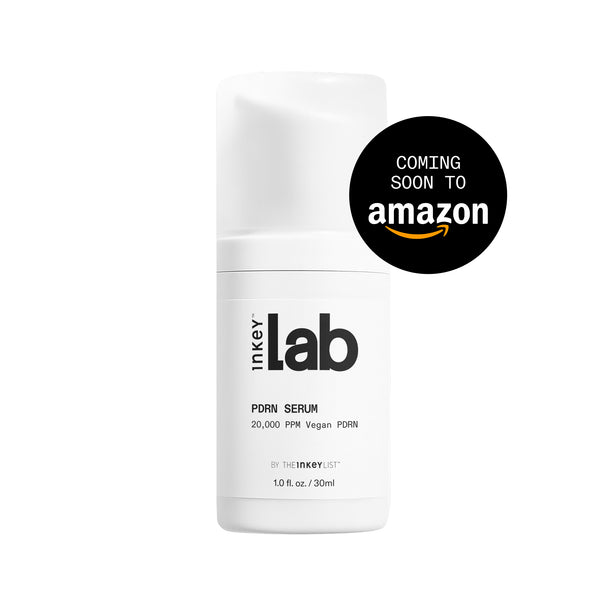
The PDRN Serum uses 20,000 PPM, or 2 percent, INJIN Vegan PDRN in a low molecular weight formula developed specifically for penetration. Molecular weight matters here for the same reason it matters with hyaluronic acid: a molecule too large to get anywhere useful is a molecule sitting on the surface being decorative.
The vegan point deserves proper attention, because it is not a marketing footnote. Traditional PDRN is derived from salmon DNA, which rules it out for a lot of people on ethical, dietary or religious grounds, and which is rarely stated clearly on packaging. This version is 100 percent vegan and plant-derived from Artemisia capillaris. No salmon involved at any stage.
What it does, in three parts. It promotes skin cell renewal, which is the process that replaces dull surface cells with fresher ones. It supports your skin’s own collagen and hyaluronic acid levels rather than only supplying them from outside. And it delivers an instant glass skin glow from first use, with visibly smoother, bouncier skin at around the four week mark.
On the data: clinical studies on 2 percent INJIN PDRN show a 25 to 35 percent increase in collagen synthesis over 8 to 12 weeks, and hydration improving by 45 percent after 4 weeks.
Those studies were run by the ingredient supplier, not by an independent lab. We are telling you that because we think you should know where a number comes from before you decide what it is worth. Supplier studies are not worthless, they are simply not neutral, and the difference matters when you are deciding how to spend your money.
Two practical details that come up constantly. PDRN Serum is safe to use during pregnancy and breastfeeding. And unlike hyaluronic acid, it does not require damp skin to work, so it fits into any routine at any point without you having to reorganize your timing around it.
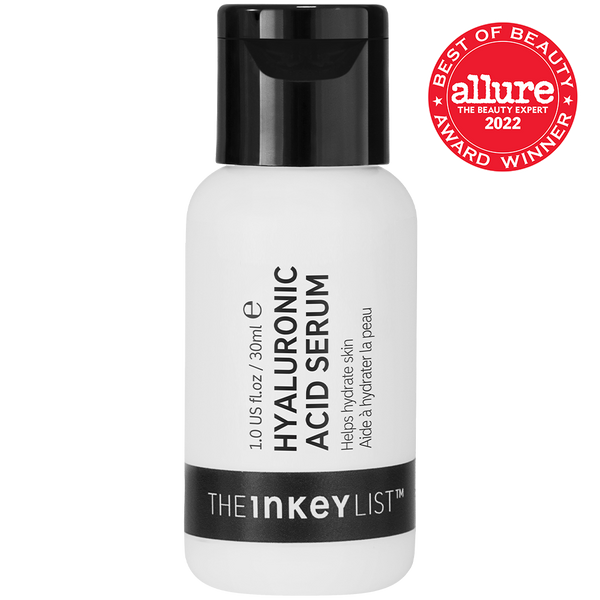
Hyaluronic Acid: The Hydration Foundation
Hyaluronic acid is a humectant, which means its job is drawing water into the skin and holding it there. The visible result is a plumper surface, softer-looking fine lines and more even light reflection, all of which are core to the glass skin finish.
Molecular weight is the part worth understanding, because it explains why formulas differ so much in how they feel and perform. Different molecular sizes hydrate at different levels of the skin’s surface. A single-weight formula hydrates at a single depth. The Hyaluronic Acid Serum combines three molecular weights rather than relying on one, which spreads hydration through the surface layers instead of concentrating it in one place.
The technique here is non-negotiable, and it is where most people lose the benefit. Apply to damp skin, then seal with moisturizer. A humectant on bone-dry skin in a dry room has very little water available to draw in, and in that situation it can end up pulling moisture from deeper in the skin rather than from the environment. The seal step matters just as much, because hydration you do not lock in is hydration on a timer.
If you are not sure whether dehydration is your issue at all, there are five fairly reliable signs you need a hyaluronic acid serum that will tell you quickly, and it is worth checking before you buy anything, because dehydration and dryness are different problems with different solutions.
Exosomes: Better Communication, Better Glow
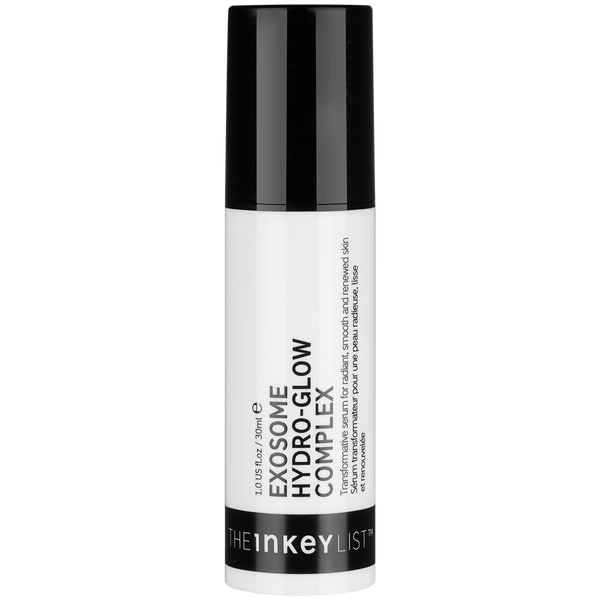
Exosomes are tiny messenger vesicles, and their entire function is communication. They help ingredients reach where they need to go and they prompt the skin’s own renewal processes to step up, which makes them less of an active in the traditional sense and more of a coordinator.
The numbers are substantial. Each application delivers 50,000 active signalling molecules. The broader science is developing quickly, and there is a growing body of work on the clinical applications of exosomes across regenerative contexts that gives the collagen story peer-reviewed grounding rather than leaving it as a marketing figure.
The Exosome Hydro-Glow Complex pairs that messaging function with calming cica, which is a deliberate combination. Renewal ingredients can be stimulating, and stimulation is not what compromised or reactive skin needs. Pairing signalling with calming makes it a good fit for skin that wants glow without being provoked into sensitivity to get there.
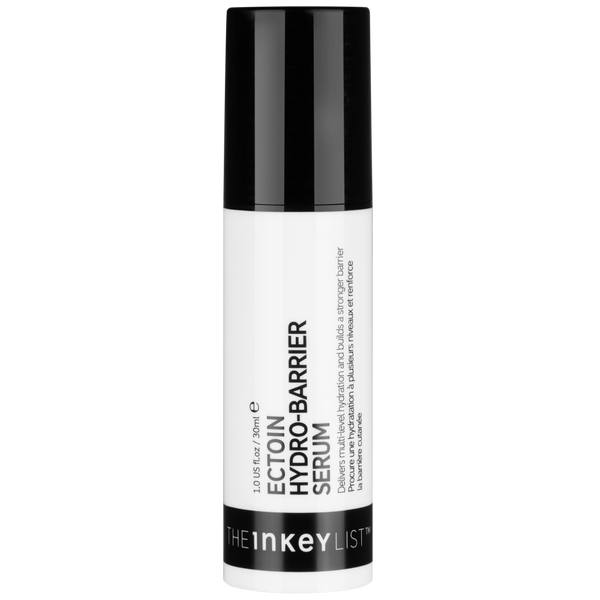
Ectoin: Hydration Plus Barrier Defence
Ectoin does two jobs at once, which is unusual and genuinely useful. It hydrates, and it strengthens the barrier, reducing water loss and calming sensitivity in the process.
That dual action makes the Ectoin Hydro-Barrier Serum the smartest pick for reactive, easily irritated or recovering skin. If your skin has been through a period of over-exfoliation, a course of strong actives, or a season of cold weather and indoor heating, this is where to start rather than with anything more ambitious.
The logic is simple: calm skin reflects light better than inflamed skin, every single time. Redness and irritation interrupt even tone, and uneven tone interrupts even light reflection. Calming skin down is not a detour from the glass skin goal. It is often the shortest route to it.
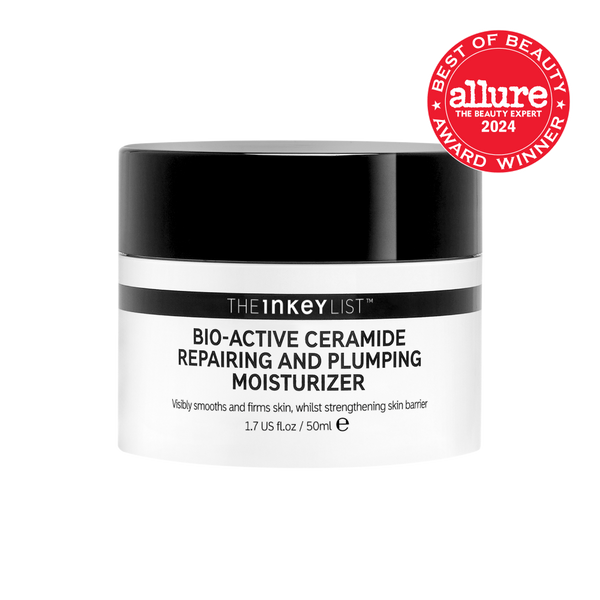
Ceramides: The Seal That Keeps It All In
Ceramides are already part of your skin. They are the lipids sitting between skin cells, holding the structure together. Back to the bricks and mortar: the cells are the bricks, ceramides are a substantial part of the mortar, and mortar is what stops a wall from being a pile of bricks.
Topping them up helps reduce water loss and smooth texture over time. A review of skin barrier function sets out how central these lipids are to keeping water in and irritants out, which is the exact two-way job described in the principles section.
The Bio-Active Ceramide Moisturizer is the step that locks in everything you applied before it. It is also, reliably, the step people skip when they are in a hurry, which is unfortunate because it is the step that makes the rest worthwhile. Serums without a seal are a short-term investment. Skipping moisturizer to save two minutes wastes the four minutes you spent on the serums.
Niacinamide: Balance, Tone and Texture
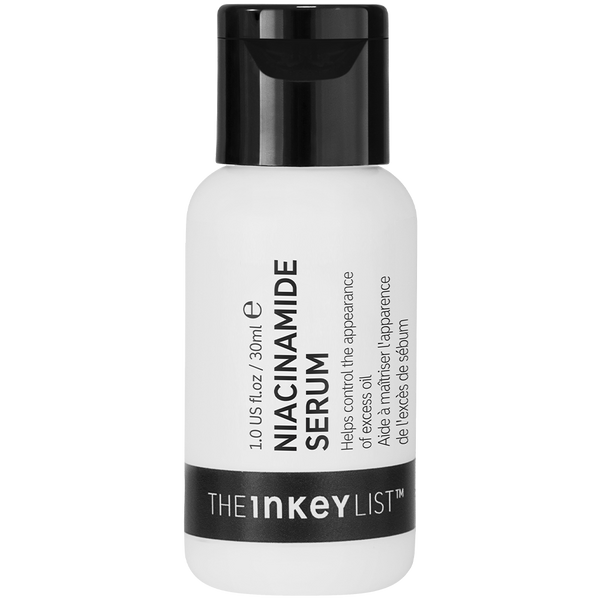
Niacinamide helps manage excess oil, supports more even tone and refines the look of surface texture. It is one of the most well-tolerated actives available, which is why it appears in so many routines without causing trouble.
There is one clarification that trips people up constantly, and it is worth stating plainly. Less oil is not the same as less hydration. Oil and water are separate things. Your skin can produce plenty of oil while still being seriously short of water underneath, and that combination is extremely common. If you have oily skin that also feels tight, that is what is happening. The Niacinamide Serum addresses the oil. It does not address the water, and you still need something that does.
For oily or breakout-prone skin specifically, Omega Water Cream works as the oil-free swap at the moisturizer step. It hydrates without the weight of a richer cream. This is a targeted recommendation rather than a general one, so if your skin is normal, dry or combination, the ceramide moisturizer remains the better default.
Vitamin C: Evening Out Tone for Cleaner Light Reflection
Uneven tone interrupts even light reflection. That is the mechanical reason hyperpigmentation can make skin look duller than it actually is: patches of darker pigment absorb light where the surrounding skin reflects it, and the resulting inconsistency reads as flatness rather than as glow.
Vitamin C works on tone over time, so light hits a more consistent surface. It is a slow ingredient with cumulative results, which puts it firmly in the consistency category rather than the instant category.
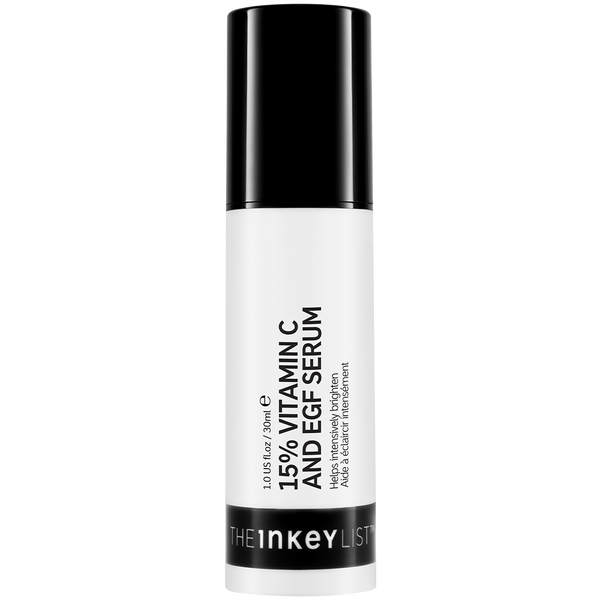
The 15% Vitamin C and EGF Serum uses ascorbyl glucoside, a stable form that is gentler than pure L-ascorbic acid while still being effective. Stability is not a technicality here. An unstable vitamin C oxidizes and degrades before it can do anything useful for you, which is why some vitamin C products turn orange in the bottle and stop working long before they are finished.
Use it in the morning, before SPF.
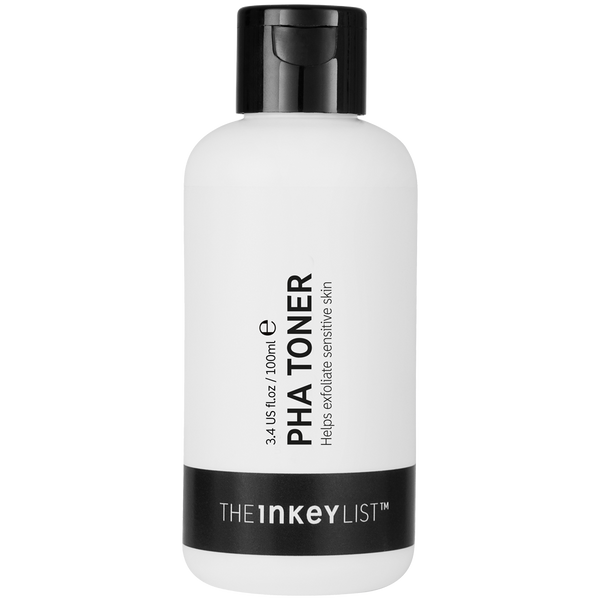
PHA: Gentle Exfoliation That Does Not Wreck Your Barrier
Dead surface cells scatter light and make skin look dull. Removing them helps, and the removal method decides whether you gain ground or lose it.
PHAs have a larger molecular size than AHAs, which means they work more gradually and sit on the surface rather than driving deep. That slower action makes them significantly better suited to sensitive skin and to anyone whose barrier is not in perfect shape.
Use the PHA Toner once or twice a week. Never daily. Exfoliation is a supporting act in a glass skin routine, not the main event, and treating it as the main event is the single fastest way to end up further from the goal than when you started. If you are layering several actives across a week, it is worth checking which products should not be layered together before you build the schedule rather than after your skin objects to it.
With the ingredients understood, the next section puts them in the right order across a day.
Your Glass Skin Routine: Morning, Evening and Weekly
This is a template, not a prescription. Skip anything your skin does not need, and add steps gradually rather than all at once, because introducing five new products simultaneously means you learn nothing about which one is responsible for whatever happens next.
Your Glass Skin Routine: Morning
- Cleanse gently. If your skin felt balanced overnight, a light cleanse is enough. Over-cleansing in the morning strips the oils your skin produced during overnight repair, which means starting the day at a deficit and spending the rest of it catching up.
- Hydrating serum on damp skin. Apply while your face is still slightly wet. Press it in with your palms rather than rubbing it across the skin.
- Treatment step. A pea-sized amount of PDRN Serum across face and neck. It does not need damp skin, so the timing here is flexible and you are not racing the clock.
- Moisturizer to seal. Ceramide moisturizer as the default. Oily or breakout-prone skin swaps in Omega Water Cream, an oil-free option that hydrates without the weight.
- SPF. Broad spectrum SPF 30 or higher, every morning, no exceptions. UV exposure breaks down collagen and drives uneven tone, which means it actively undoes the work the rest of the routine is doing. If you are unclear on what SPF actually means and how the ratings work, that is worth ten minutes of your time, because the number on the bottle is less self-explanatory than it looks.
Optional finishing touch: a dewy face mist for an instant hydration and glow top-up. It works over makeup, which makes it useful at any point in the day rather than only at the end of the routine.
The morning routine in five lines:
- Gentle cleanse
- Hydrating serum on damp skin
- PDRN Serum, face and neck
- Moisturizer to seal
- Broad spectrum SPF 30 or higher
Your Glass Skin Routine: Evening
- Double cleanse. Oat Cleansing Balm first, to melt makeup, SPF and the day’s buildup, then a gentle second cleanse with the Glycerin Gentle Purifying Cleanser. Give it a full 60 seconds rather than rushing, because the balm needs contact time to do its job. If you want the full method, there is a complete guide to double cleansingthat covers the technique properly.
- Hydrating serum on damp skin. Same technique as the morning. Damp skin, palms, press rather than rub.
- Treatment step. For an extra glow boost, apply the exosome serum first, then PDRN Serum on top.
- Moisturizer. Slightly more generously than in the morning, since nothing is going over it and skin loses more water overnight than during the day.
Optional evening addition: Caffeine Eye Cream before moisturizer if the eye area is a concern.
One note on stacking actives. If you are already using retinol, do not pile everything onto the same night. Alternate across the week instead, giving each active its own evening. This is not caution for its own sake, it is the difference between a routine that works and a routine that produces two weeks of irritation followed by a month of recovery.
Weekly Extras
- Gentle exfoliation, once or twice a week, with the PHA toner. Never daily.
- Oat Cleansing Balm as a ten minute mask. Apply a generous layer, leave it for ten minutes, then remove as normal. A genuinely nourishing hydration boost from a product you already own.
- Face mist kept in the fridge. Turns an ordinary hydrating mist into a cooling, de-puffing refresh, and it is particularly good on tired mornings when skin looks flat before you have even started.
An honest closing note on this part. Weekly extras are enhancements, not the thing that creates results. The daily basics do the heavy lifting, and if you are choosing between doing the extras and doing the basics consistently, the basics win without argument.
The next section covers what actually stalls most people, and it is rarely a missing product.
Glass Skin Mistakes to Avoid, and How Long It Actually Takes
Most people who are not getting results are not missing an ingredient. They are doing one of the following, usually with real commitment.
Glass Skin Mistakes to Avoid
Over-exfoliating. The most common and most counterproductive mistake by a wide margin. It damages the barrier, which causes water loss, sensitivity and rough texture, and that is a precise description of the opposite of glass skin. The fix if you suspect you are here: pause all actives for one to two weeks and focus purely on hydration and barrier repair. Ectoin is the gentlest way back, because it hydrates and rebuilds at the same time without asking anything of skin that is already struggling.
Over-cleansing. If your face feels squeaky and tight after washing, that is not clean, that is stripped. Squeakiness is the sound of a barrier that has had its lipids removed. It feels like an achievement and it is a setback.
Skipping SPF. This undoes progress faster than anything else on this list, and it does so slowly enough that most people never connect the two. Every day of unprotected exposure works against collagen and against the even tone you are building.
Using too many actives at once. Introduce one at a time and give it several weeks before adding another. More actives is not more results. It is usually just more irritation, arriving from a source you can no longer identify because you changed four things simultaneously.
Chasing dewiness with the wrong products. Highlighter and heavy face oils sit on top of skin and create shine. Glass skin comes from hydration inside the skin. These two things look similar in a photograph and behave completely differently in real life, which is why the finish that looked convincing at 8am has slid into greasiness by lunch.
Skipping moisturizer because your skin is oily. Oily skin can be dehydrated at the same time, and skipping hydration frequently makes oiliness worse, because skin overcompensates for the water it is not getting. The answer is a lighter, oil-free moisturizer, not no moisturizer.
Copying someone else’s exact routine. What works for oily skin in a humid summer can be entirely wrong for dry skin in winter. Start from your skin type rather than from someone else’s shelf, because the shelf you are copying was assembled for a different face in a different climate.
Quitting too early. Switching products every two weeks guarantees you never find out whether anything was working. Skin renews on a cycle measured in weeks, so a two week trial is a trial that ends before the evidence arrives.
If your skin feels tight, you have not done more. You have done too much.
How Long Does It Take to Get Glass Skin?
There is no single moment of transformation, and anyone describing one is describing marketing. What there is instead is a staged timeline, and knowing it in advance is the best defence against giving up in week three.
First few uses. Immediate surface hydration and plumping. Skin looks and feels better right away, and this effect is real. It is also entirely surface-level, which is why it disappears if you stop.
First two to four weeks. Comfort improves noticeably. Skin stops feeling tight by mid-afternoon. Texture starts to smooth, and this is usually the point at which the finish begins looking different in photographs rather than only feeling different to you.
Six to twelve weeks of consistent use. More meaningful change in tone and overall smoothness. This is where the cumulative work shows up, and where the routine stops being something you are trying and starts being something that is working.
On the three day question, which comes up constantly: yes, you can get a temporary hydrated glow in three days. Layer hydration, use the damp skin technique, seal properly and sleep. You cannot fundamentally change skin health in that time, because the renewal cycle does not accelerate to suit an event in your calendar. Both effects are real. Only one of them lasts.
Pace depends on your starting point, your consistency, your sleep, your water intake, your sun exposure and the season. Skin behaves differently in January than in July, and a routine that felt perfect in summer can feel inadequate in winter without anything having gone wrong.
The finish line is your skin at its healthiest, not someone else’s face.
None of this requires a large budget, which brings us to what glass skin actually costs.
Glass Skin on a Budget
Glass skin is a hydration and barrier outcome, and neither of those requires expensive products. Skin responds to ingredients and to consistency. It has no way of knowing what you paid.
The Minimum Viable Routine
Four things:
- A gentle cleanser that does not strip.
- A hydrating serum applied to damp skin.
- A moisturizer that seals it in.
- Daily SPF, broad spectrum, 30 or higher.
Everything beyond those four is an upgrade rather than a requirement. That is not a compromise position, it is genuinely what the science supports, and a person doing those four things daily will out-perform a person doing nine things sporadically.
What a Clinic Course Costs Against a Bottle at Home
This comparison is worth sitting with, because it reframes the entire question of what expensive means in skincare.
Professional exosome facials run to several hundred dollars per session, and practitioners typically recommend a course of four to six sessions to see the intended result, which puts the full course into the thousands. Against that, one bottle of the Exosome Hydro-Glow Complex provides approximately 60 applications. Divided across those applications, the cost of each one lands in cents rather than dollars.
That is not an argument about compromising on quality. It is the same class of signalling molecules used in professional treatments, formulated at meaningful concentrations, in a format designed for daily use at home rather than a course of appointments spread across a diary.
And here is the actual punchline, which matters more than the arithmetic. The reason affordability is relevant is not that inexpensive is inherently good. It is that a product you can afford to keep using is the only kind that compounds. Everything in this article depends on consistency, and consistency is a function of whether repurchasing is realistic. A course of clinic appointments delivers a result and then stops. A routine you can sustain for a year keeps building.
Price is not a proxy for efficacy. Price is a proxy for whether you will still be doing this in six weeks, which is exactly when the results start to show.
Getting More From What You Already Own
- Oat Cleansing Balm doubles as a ten minute nourishing mask. Same product, second use, no additional outlay. Details in the 150ml balm.
- The damp skin method gets more out of every drop of hydrating serum. Humectants need water available to draw in, so applying to damp skin means each application works harder rather than needing more product.
- Keeping the face mist in the fridge turns it into a cooling, de-puffing treatment at no extra cost.
Build Gradually
Add one product at a time and give your skin a few weeks to respond before deciding what to add next. This costs less in the obvious way, and it teaches you considerably more about what your skin actually wants, because you can attribute every change to a specific cause.
If you do not know which four products you need, the skincare quiz will narrow it down in a couple of minutes without you having to guess your way through it.
The accessibility here is deliberate rather than promotional. The hero products in a glass skin routine are priced to make consistent, long-term use realistic, because a routine nobody can sustain is not a routine, it is a purchase.
The whole approach comes back to three simple ideas.
The Takeaway on Glass Skin
Glass skin is not a filter, a face, or a finish you can buy in a single bottle. It is what healthy, deeply hydrated skin looks like when light hits it evenly.
Three principles produce it. Hydrate in layers, thinnest to thickest, on damp skin. Support the barrier so that the hydration stays where you put it. Stay consistent, because skin changes on its own timeline and not on yours.
The slow timeline is a feature rather than a disappointment. Results that build gradually are results that hold, and it means every day you show up counts toward the next one. Nothing you do today is wasted just because you cannot see it yet.
And come back to where this started. Glass skin looks different on everybody, shaped by your skin type, your tone, your age and your natural texture. The version worth chasing is your own skin at its healthiest, not a version borrowed from a screenshot.
Clear guidance, proven ingredients, real results.
Where to Start
Two steps matter more than the rest.
PDRN Serum for instant glass skin glow and skin cell renewal support from the first use.
Hyaluronic Acid Serum for the deep hydration that everything else in the routine builds on.
Not sure where you sit? Take the skincare quiz and get a routine matched to your skin in about two minutes.