

Do You Need Hyaluronic Acid? 5 Signs to Look For
Five clear signals your skin is short on hydration, and how to tell whether hyaluronic acid is the ingredient that will fix it.
Author
askINKEY skincare advisor
Published
19 January, 2023
Time to read
10 minutes
Hyaluronic acid is one of the most recommended ingredients in skincare. That does not automatically mean you need it. Popularity is not a diagnosis, and adding a product because everyone else uses one is not a strategy.
So let us answer the actual question: do I need hyaluronic acid? Start with what it is. Hyaluronic acid is a humectant, which means it draws water into the skin and holds it there. It is also a molecule your body already produces naturally, which is part of why it is so well tolerated. If you want the full breakdown of the ingredient itself, what hyaluronic acid actually is covers it properly.
It is equally worth being clear about what hyaluronic acid does not do. It does not exfoliate. It does not resurface. It is not an active in the way retinol or an acid is. It adds water. That is the job.
This article gives you five signs that your skin is short on hydration. If you recognize two or more of them, hyaluronic acid is likely worth adding to your routine. If you recognize none, you probably do not need it, and we will say so.
The first sign is the one most people notice without realizing what it means.
Sign 1: Your Skin Feels Tight After Cleansing
You know the feeling. You wash your face, you pat it dry, and for the next few minutes your skin feels slightly too small for your face. Maybe it feels like it is pulling across your cheekbones. Maybe smiling feels like it takes marginally more effort than it should.
That sensation is the single clearest everyday signal that the surface layers of your skin are short on water. It is not a personality quirk of your face. It is not something to push through until your moisturizer kicks in. It is information.
Here is the distinction that makes the rest of this article make sense. Dry skin lacks oil. It is a skin type, it tends to be consistent, and it is largely determined by how much sebum your skin produces. Dehydrated skin lacks water. It is a condition, it is usually temporary, and it can happen to absolutely any skin type. You can have oily, dry, combination or balanced skin and still be dehydrated. If you want the full comparison, dehydrated skin is the page that covers it in depth. For our purposes here, that two-line version is enough.
Tightness sits firmly on the water side of that divide. Oil does not fix it. Water does, and something that holds water in place does it better.
Why a humectant addresses tightness directly
A humectant works by attracting water molecules and binding them into the upper layers of the skin. Glycerin does it. Hyaluronic acid does it particularly well, because it is exceptionally good at holding onto water relative to its own size. If you have never thought much about how this class of ingredient behaves, what glycerin does for your skin is a useful primer using an ingredient you already have in half the products in your bathroom, and glycerin vs hyaluronic acid sets the two side by side.
The practical consequence is that a humectant treats the cause of the tightness rather than covering it up. A rich occlusive cream on dehydrated skin can feel good for an hour because it slows water escaping, but it is not adding water in. A humectant adds water in. That is a meaningfully different mechanism, and it is why hydration-focused routines tend to hold up better over a full day than heavy-cream-only routines.
The tightness triggers worth auditing
Before you buy anything, it is worth checking whether something in your existing routine is creating the problem. Common culprits:
- Cleansing with water that is too hot. Hot water strips lipids from the skin surface faster than warm water does, and lipids are part of what keeps water in.
- Over-cleansing. Twice a day is plenty for most people. Cleansing four times because your skin feels oily tends to make everything worse.
- Cleansers that strip. If your skin squeaks after washing, that squeak is not cleanliness. It is your barrier telling you something has been removed that should not have been.
- Going straight to a moisturizer on completely dry skin. You have waited too long, the surface water has evaporated, and you are sealing in less than you think.
Fixing any of those helps. Adding a humectant on top of fixing them helps more.
Oily skin can be dehydrated too
This is the point people get wrong most often, and it is the reason a lot of oily-skinned readers rule hyaluronic acid out before they have properly considered it.
Oil and water are separate variables. Your skin can produce plenty of sebum and still be short on water in its upper layers. In fact, skin that is short on water can produce more oil to compensate, which creates the genuinely confusing situation of a face that is simultaneously shiny by lunchtime and tight after cleansing. People in that position often respond by cleansing harder and using more mattifying products, which strips more water out, which prompts more oil. It is a loop, and hydration is usually the way out of it rather than the thing to avoid.
If that describes you, hyaluronic acid for oily skin goes deeper, and why oily skin gets dehydrated too approaches the same problem from a second angle.
Formulation matters here. The Hyaluronic Acid Serum is water based and oil free, so it adds hydration without adding oil to skin that is already producing enough of its own. That is precisely why it suits oily and blemish prone skin as readily as it suits dry skin.
Tightness is how dehydration feels. But dehydration does not stop at sensation. It also changes how your skin looks, and the first place most people notice it is in their fine lines.
Sign 2: Fine Lines Look More Obvious Than Usual
Some mornings your fine lines look softer than others. That is not your imagination, and it is not your skin aging and un-aging on a weekly cycle. It is hydration.
The mechanism is fairly simple once you picture it. When the upper layers of your skin are holding plenty of water, the surface is plumper and smoother. Light hits it fairly evenly. When those layers are holding less water, the surface loses a little of that fullness, and the small creases that were already there sit deeper and cast more shadow. More shadow reads to the eye as a deeper line. The line has not actually changed. The landscape around it has.
This is why a well-hydrated face can look noticeably smoother by the end of a week of consistent hydration, and why a long flight or a bad night’s sleep can make you feel like you aged in a day. Both are water stories.
How to tell a dehydration line from a wrinkle
There is a practical test here, and it matters because the two need different ingredients.
Dehydration lines tend to show up in clusters rather than as a single defined crease. They often appear across the forehead, on the cheeks or under the eyes. They can look faintly crepey, like tissue paper that has been unfolded. Most tellingly, they soften noticeably once hydration improves, often within days.
True wrinkles are structural. They relate to collagen and elastin changes over time and to repeated facial movement. They do not disappear with hydration alone. Hydration can soften how they read, but it will not erase them, and any product that tells you otherwise is selling you something.
If you want to work through this properly, dehydration lines vs wrinkles is the dedicated guide.
What the research on topical hyaluronic acid actually shows
It is worth being precise here, because hyaluronic acid gets discussed loosely and a lot of the impressive-sounding evidence relates to injectables or oral supplements rather than to a serum you put on your face.
A 2022 review published in Dermatologic Therapy looked specifically at topical hyaluronic acid, and its authors explicitly excluded injectable hyaluronic acid from their search. Across the clinical studies it gathered, topical hyaluronic acid was associated with improvements in skin hydration and elasticity. One randomized controlled trial included in the review, conducted in 65 women with periocular wrinkles, found significant improvement in hydration and elasticity against placebo after 60 days of using sodium hyaluronate formulations at a range of molecular weights.
The most interesting finding for anyone choosing a product is what happened across those different molecular weights. The two lowest molecular weight formulations were the ones that significantly reduced wrinkle depth. The reviewers attribute this to penetration: higher molecular weight hyaluronic acid largely stays on the surface, where it forms a hydrating layer and reduces water loss, while lower molecular weight hyaluronic acid is able to move past the outermost layer of skin.
Neither size is better in isolation. They do different jobs at different depths. That is the entire logic behind a multi-molecular formulation, and it is why the INKEY Hyaluronic Acid Serum uses 2% Pure Hyaluronic Acid at 3 molecular weights, delivering hydration across multiple layers of skin rather than a single weight doing one job in one place.
Clear guidance. Proven ingredients. Real results.
The peptide that makes this more than a plain hydrator
Hydration alone gets you the plumping effect described above, which is real but appearance-level. The INKEY formula also contains Matrixyl 3000, a peptide included to help plump, firm and smooth the appearance of skin.
Peptides are short chains of amino acids, and they are worth understanding as a category rather than as a buzzword, which is what peptides covers. For the specific ingredient, what Matrixyl 3000 actually is walks through the science without the marketing gloss.
The honest framing is this. Hyaluronic acid gives you hydration, and hydrated skin looks smoother and fuller. Matrixyl 3000 supports the appearance of firmness alongside it. In an in-house study, 82% agreed their skin felt firmer and smoother after 4 weeks of use. That is a meaningful, measured result. It is not a claim that lines vanish.
If your lines look worse on some days than others, hydration is very likely part of your answer. If they look consistently the same regardless of what you do, you are probably looking at structure rather than water, and a different ingredient belongs at the top of your list.
Lines are one way dehydration shows up visually. The wider complexion tells the same story, and it does it through light.
Sign 3: Your Skin Looks Dull and Flat
Dullness is the vaguest complaint in skincare and one of the most common. Your skin is not doing anything dramatic. It just looks tired, flat, a bit gray, like a photograph with the contrast turned down. And because dullness feels like a texture problem, most people reach for an exfoliant.
Sometimes that is right. Often it is not.
Dullness is a light problem before it is anything else
Radiance is optics. Well-hydrated skin has a smooth, even surface, and a smooth surface reflects light in a consistent direction. That consistency is what your eye interprets as glow.
Dehydrated skin has a rougher, more uneven surface at a microscopic level. Light hitting it scatters in different directions instead of bouncing back cleanly. Less light returns to the viewer, and the complexion reads as flat. Nothing has changed about your pigment. The surface has stopped cooperating with the light.
This is why hydration can produce a visible change in radiance faster than almost any other intervention. You are not treating tone. You are smoothing the surface so it reflects properly again.
The diagnostic that tells you which kind of dullness you have
Here is a genuinely useful distinction, and it is the one that determines whether you should buy hyaluronic acid at all.
Dullness caused by dehydration improves quickly. Add consistent hydration and you will usually see a difference within a few days. The change is in surface quality, and surface quality responds fast.
Dullness caused by tone does not. If what you are actually looking at is uneven tone, the visible effects of sun exposure, or marks left behind after breakouts, hydration will not shift it. Those are pigment-level concerns. You can hydrate that skin beautifully and it will still read as uneven, because you have fixed the surface and left the color untouched.
So: does your dullness look like a general flatness across the whole face that comes and goes? That is likely water. Does it look like specific patches, marks or a persistent unevenness that has been there for months regardless of your routine? That is tone, and hyaluronic acid is not your answer.
If it is tone, use vitamin C instead
We would rather tell you that plainly than sell you the wrong bottle.
For dullness driven by uneven tone, vitamin C is the better fit. It is an antioxidant that targets the look of uneven tone and brightens the appearance of skin. The 15% Vitamin C + EGF Serum is the relevant product, and if tone is genuinely your concern, that is where your money should go.
Plenty of people have both concerns at once, which is fine, because the two ingredients work well together. Hyaluronic acid applied first on damp skin creates a hydrated base that can help what follows absorb better. Can you use hyaluronic acid with vitamin C answers the layering question in full.
The overcorrection to avoid
One warning before you move on. The instinctive response to dullness is to exfoliate, and exfoliating dehydrated skin usually makes dullness worse rather than better.
Acids and scrubs work on the surface layer. If that layer is already struggling to hold water, removing more of it compromises the barrier further, increases water loss, and produces skin that is rougher, more reactive and duller than when you started. Then the dullness prompts more exfoliation. It is an unusually efficient way to make your skin worse while feeling productive about it.
If that sounds uncomfortably familiar, over-exfoliated skin is the recovery guide. In most cases the fix is to stop, hydrate, and give the barrier a few weeks.
Which brings us neatly to what happens when the barrier itself is the problem, and to how your skin behaves rather than how it looks.
Sign 4: Hyaluronic Acid for Sensitive Skin and Reactive Redness
If your skin has started reacting to products it used to tolerate, this section is the one that matters most.
Reactivity and dehydration are frequent travelling companions, and the connection runs through the skin barrier. That barrier is the outermost layer of your skin, and it does two jobs at once: it keeps water in, and it keeps irritants out. When it is intact, both jobs happen quietly and you never think about it. When it is compromised, both jobs fail together. Water escapes more easily, so skin becomes dehydrated. Irritants penetrate more easily, so skin stings, flushes and reacts.
That is why the person complaining about sensitivity and the person complaining about tightness are so often the same person. They are describing two symptoms of one situation. Damaged skin barrier covers the mechanics properly if you want the full picture.
This sign applies to you if
- Products you used comfortably for months have started to sting or tingle on application
- You get redness that flares and then settles, rather than being constant
- You have rough or flaky patches, sometimes alongside oiliness in the same areas
- Your skin reacts noticeably to weather changes, a cold snap or a move between climates
Two or more of those and your barrier is likely part of the story.
Why hyaluronic acid for sensitive skin is a low-risk choice
Here is the reassuring part, and it is genuinely reassuring rather than reassuring-in-a-marketing-way.
Hyaluronic acid is one of the gentlest ingredients you can add to a reactive routine. It mirrors a molecule your skin already produces, so it is not introducing something foreign into an already irritated environment. It does not exfoliate. It does not increase cell turnover. It does not thin the skin or make it more sun-sensitive. It adds water and it holds water. That is the whole mechanism.
Compare that to the ingredients that usually trigger reactivity. Acids work by dissolving bonds between surface cells. Retinoids work by accelerating turnover. Both are effective and both are legitimate, but both actively change how the skin behaves, which is exactly what a compromised barrier struggles with. A humectant does not ask anything of the skin.
The specifics on the INKEY formula support this. The Hyaluronic Acid Serum is suitable for all skin types including sensitive skin, it is fragrance-free, and it is formulated at pH 6.21. That last detail is worth a sentence: skin’s own surface sits at a mildly acidic pH, and a formula close to that range works with the skin’s natural balance rather than disrupting it. Fragrance-free matters too, because fragrance is one of the more common triggers for reactive skin, and removing it removes a variable.
For a broader routine view, how to hydrate sensitive skin without causing irritation is the most directly relevant guide, and the best ingredients for sensitive skin widens the lens further.
When hydration alone is not quite enough
There is a distinction worth drawing inside this sign, because “sensitive” covers two different situations.
If your skin is simply thirsty, hyaluronic acid on its own will do the job. Add water, hold water, done.
If your skin is thirsty and reactive, the barrier needs support as well as hydration. Hyaluronic acid fills the tank, but if the tank has a leak, you will be refilling it constantly. That is where a barrier-focused formula earns its place.
The Ectoin Hydro-Barrier Serum is built for exactly that reader. The formula combines 2% Ectoin to help strengthen the barrier while hydrating, 2.5% Hyaluronic Acid weighted to deliver hydration across multiple levels of the skin, and a 1% Barrier Blend of three ceramides to strengthen and protect. It is designed for sensitive, dry or irritated skin, and it is the step up when barrier damage rather than simple dehydration is the primary problem.
Not sure which of the two you need? Ectoin vs hyaluronic acid lays out the difference without the jargon.
And regardless of which you choose, patch test any new product first. On reactive skin that is not excessive caution, it is just sensible sequencing.
Barrier stress rarely appears from nowhere. Usually something specific and recent set it off, which leads directly to the final sign.
Sign 5: Your Skin Is Recovering From a Treatment or the Weather
Not everyone needs hyaluronic acid all year round. Some people need it intensely for three weeks and then barely notice its absence for the rest of the year. This sign is situational rather than permanent, and recognizing that is part of using it well.
Post-treatment hyaluronic acid recovery
After a facial, a chemical peel, microneedling or laser treatment, your skin is in a temporarily altered state. It is more permeable than usual and it loses water faster than usual. That is an expected part of how those treatments work, and it is also why the days afterwards are the days your routine matters most.
During that window, the priority shifts. Gentle hydration becomes more valuable than active ingredients, and most actives should be paused entirely. Hyaluronic acid is a sensible choice in that context precisely because of what it does not do. It hydrates without exfoliating, without stimulating turnover, and without asking anything of skin that is already busy.
The essential caveat: always follow the specific aftercare advice given by the practitioner who performed your treatment. They know what was done to your skin, at what depth, and what it needs. Their instructions override anything you read online, including this. And do not apply anything to broken skin.
Central heating, air conditioning and the indoor air problem
Indoor climate control is one of the most underestimated causes of dehydrated skin, and it operates in both directions.
Central heating warms air, and warm air holds more moisture, which means heated indoor air is typically much drier than the outdoor air it came from. Air conditioning actively removes moisture as part of how it cools. The result is that a heated office in February and an air-conditioned one in July produce the same effect on your face: dry air, sitting against your skin for eight hours, pulling water out of it.
This is why the seasonal pattern people describe rarely tracks the weather outside. It tracks where they spend their days. Your complete seasonal skincare routine guide covers how to adjust for it across the year.
Flights
Cabin air is exceptionally dry, considerably drier than most natural environments on the ground. Over a few hours that has a visible effect: skin looks flat, feels tight, and fine lines look more pronounced on landing than they did at the gate.
It is a temporary, entirely water-based problem, which makes it one of the clearest cases for hydration. In-flight skincare covers the practical approach.
Cold and wind
Low temperatures and wind exposure both increase water loss from the skin surface. Cold air holds less moisture to begin with, and wind physically disrupts the thin layer of still air that normally sits against your skin and slows evaporation. A weekend of walking in the cold will dehydrate skin more effectively than most things you could do to it deliberately.
The caveat that determines whether this works
This is the most useful paragraph in the article, so it is worth reading twice.
A humectant draws water from wherever water is available. In normal conditions, some of that comes from the air around you. In very dry conditions, there is little water in the air to draw from, and a humectant applied to dry skin with nothing layered over it can end up drawing moisture from deeper in your skin instead of from the environment. That water then evaporates from the surface. You have moved water upward and then lost it.
This is the single most common reason people conclude hyaluronic acid “does not work for me” or, worse, “made my skin drier”.
The fix takes no extra effort:
- Apply to damp skin. Not soaking, just not fully dry. You are giving the humectant water to work with.
- Always follow with a moisturizer. This seals the hydration in and stops it evaporating off the surface.
Those two steps are not optional refinements. In a dry environment they are the difference between the product working and the product working against you. Transepidermal water loss explains the underlying process if you want the technical version.
Why ceramides are the right sealing step
Hyaluronic acid draws water in. Ceramides help hold it there. They are lipids that occur naturally in your skin barrier, functioning as part of what holds the surface cells together and keeps water from escaping. Ceramide levels naturally decline over time, which is one reason skin tends to lose water more readily with age.
That makes the pairing straightforward: hydrate, then seal. The Bio-Active Ceramide Moisturizer is the sealing step, supporting the barrier while keeping the hydration you have just added where you put it. For a fuller comparison of the two ingredient types, hyaluronic acid vs ceramides breaks down which does what.
You now know whether you need it and when. Here is the short version of how to use it.
How to Use Hyaluronic Acid, and Where to Go Next
The short version:
- Cleanse
- Apply to damp skin
- Use a pea-sized amount (around 2-3 drops)
- Pat gently into face and neck
- Follow with a moisturizer to seal it in
- Use morning and evening
Damp skin matters for one reason: a humectant needs water available to draw in.
That is enough to start today. For the full method, including exactly where it sits in your routine and the mistakes that stop it working, read the full guide to using hyaluronic acid and hyaluronic acid: are you using it correctly.
The easiest way to get skin damp, especially when reapplying during the day, is the Hydro-Surge Dewy Face Mist. Hyaluronic acid serum and face mist together covers that pairing.
On layering: hyaluronic acid pairs well with retinol and can help buffer the dryness that often comes with it, covered in hyaluronic acid and retinol and what not to mix with retinol. It also pairs well with niacinamide if you are managing oil, visible pores and breakouts, in which case the Niacinamide Serum is the relevant product. For the wider rules, see ingredients you should never mix.
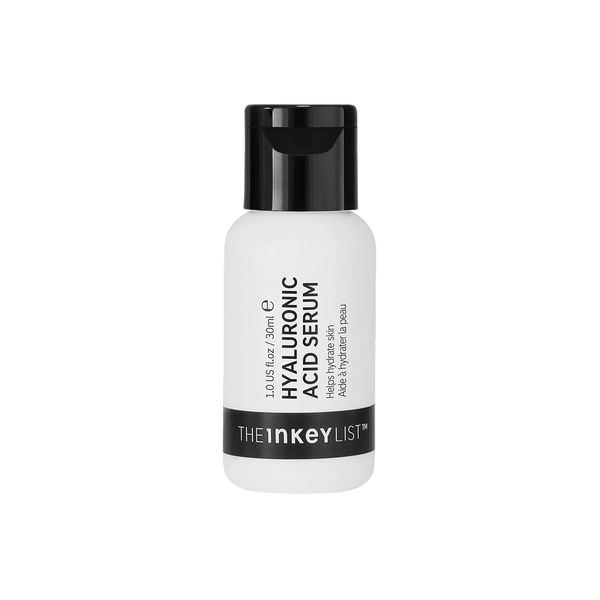
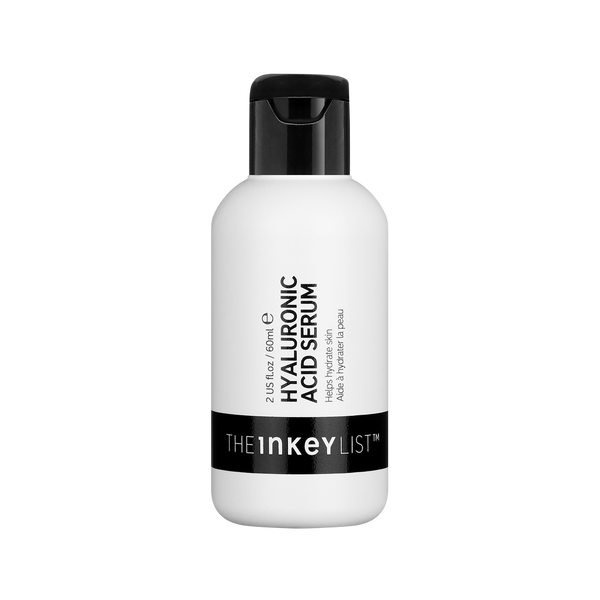
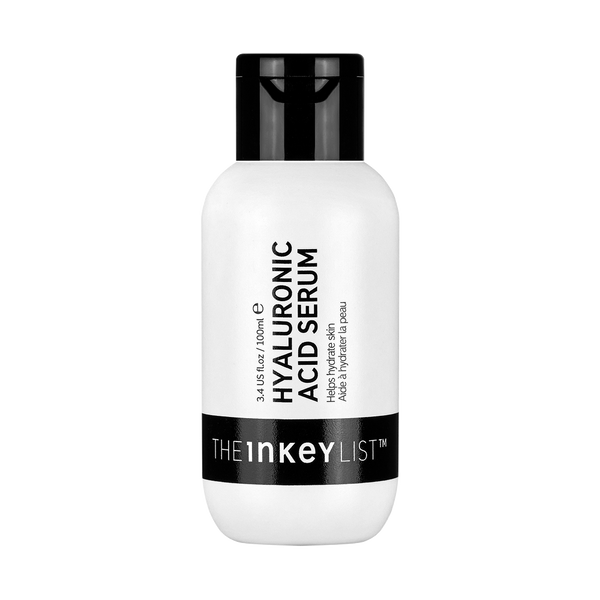
The Hyaluronic Acid Serum is available in 30ml, 60ml and 100ml.
What is in it and what it does:
- 2% Pure Hyaluronic Acid at 3 molecular weights, delivering hydration across multiple layers of skin
- Matrixyl 3000, a peptide that helps plump, firm and smooth the appearance of skin
- 82% agreed their skin felt firmer and smoother after 4 weeks
- 86% agreed the serum is quick absorbing and non-tacky
- pH 6.21
- Fragrance-free
- Vegan
- Safe to use during pregnancy and breastfeeding
The questions that come up most often are answered below.
So, Do You Need Hyaluronic Acid?
The five signs again:
- Your skin feels tight after cleansing
- Fine lines look more obvious than usual
- Your skin looks dull and flat
- Your skin is reactive, red or sensitive
- Your skin is recovering from a treatment or the weather
If two or more of those describe your skin, hyaluronic acid is a sensible, low-risk addition to your routine. If none of them do, your skin may simply not need it, and there is no benefit in adding a product for the sake of owning it.
It is also worth holding onto what hyaluronic acid is not. It is a supporting ingredient, not a cure-all. It hydrates, and hydrated skin looks and behaves better. It does not treat tone, it does not resurface texture, and it does not clear breakouts on its own. Those need different ingredients, and pretending otherwise helps nobody.
So, do you need hyaluronic acid? If your skin is short on water, yes, and you will probably notice the difference quickly. If it is not, spend your money on the thing your skin is actually asking for. Skincare works better when you understand why you are using something.
Ready to add it? Shop the Hyaluronic Acid Serum in 30ml, 60ml and 100ml. If you are still working out which concern you are actually solving, take the skin quiz for a personalized routine or start by finding your skin type. And if the barrier signs in Sign 4 sounded like you, the Ectoin Hydro-Barrier Serum is where to look.
Because at The INKEY List, We Give A Care.
Frequently Asked Questions
Got a question?
Our askINKEY team are a friendly bunch of skincare experts with deep product knowledge and zero judgement. Whether you're an ingredient obsessive or just starting out, we'll make it make sense. No question too big. No question too small. We Give A Care, Every Day.


