

Glycerin vs Hyaluronic Acid: Which Humectant Is Right for You?
Discover how these hydration heroes differ, their unique benefits, and why combining them can deliver the healthiest, most hydrated-looking complexion.
Author
askINKEY skincare advisor
Published
02 July, 2026
Time to read
15 minutes
A clear, science-backed comparison of two of skincare’s most used hydrating ingredients - what they do, how they differ, and how to use them together.
Glycerin and hyaluronic acid are two of the most widely used hydrating ingredients in modern skincare. Both are humectants - meaning they work by attracting water molecules and binding them to the skin. That shared mechanism puts them in the same functional category, but it does not make them the same ingredient. They differ in molecular size, penetration depth, water-holding capacity, how they respond to different humidity conditions, and the specific biological processes they support in the skin.
This blog covers the full picture: the science behind each ingredient individually, a thorough head-to-head comparison across every meaningful dimension, skin-type-specific guidance, and a practical framework for using both in a single routine. If you have been wondering which one your skin actually needs - or whether you need both - this is the comparison you are looking for.
A note before diving in: the question is not “which is better.” It is “which is right for your skin, and when.” Both glycerin and hyaluronic acid are non-comedogenic, fragrance-free, pregnancy-safe, and suitable for all skin types. But the nuances matter, and understanding them will help you build a significantly more effective hydrating routine.
For readers who want a complete standalone breakdown of each ingredient, see our full glycerin ingredient guide and our hyaluronic acid ingredient guide. This blog is designed to sit alongside both of those as a focused comparison.
Before comparing the two, it is worth taking a step back to understand what humectants actually do - and why that shared mechanism is the right starting point for this conversation.
What Is a Humectant - and Why Does Your Skin Need One?
The term “humectant” gets used frequently in skincare, but it is rarely explained with any precision. At its core, a humectant is an ingredient that attracts water molecules and binds them to the skin. That sounds simple, but the mechanism is more nuanced than it first appears.
Humectants draw water from two potential sources. When the surrounding environment has adequate humidity - typically above 70% relative humidity - a humectant can pull moisture from the air and deposit it into the upper layers of the skin. When ambient humidity is low, however, the humectant draws water upward from deeper skin layers, specifically from the dermis and lower epidermis, to hydrate the surface. This is why the environment you are in matters when choosing how to apply and layer humectant-containing products - a detail that becomes particularly relevant when comparing glycerin and hyaluronic acid later.
Understanding humectants also requires understanding the problem they are solving: transepidermal water loss, or TEWL. TEWL is the continuous process by which water evaporates from the skin through the outer barrier into the surrounding air. Some degree of TEWL is normal and unavoidable. But when the skin barrier is compromised - by harsh cleansing, environmental stressors, aging, or a lack of key lipids - TEWL accelerates, and the skin begins to feel and look dehydrated. Humectants help counter this by keeping water bound in the upper skin layers, slowing the rate at which it escapes.
It is also worth distinguishing humectants from the two other key moisturizing ingredient categories: occlusives and emollients. These three work differently and serve complementary purposes:
- Humectants draw water into the skin and hold it there. Examples: glycerin, hyaluronic acid, urea, lactic acid.
- Occlusives form a physical barrier on the skin’s surface that slows water evaporation. They seal moisture in rather than adding it. Examples: petrolatum, dimethicone, shea butter, squalane.
- Emollients fill in the gaps between skin cells, smoothing texture and improving the skin’s surface feel. Many oils and butters function as emollients.
The most effective hydrating routines use all three in combination - with humectants applied first to draw water in, and an occlusive-containing moisturizer layered on top to lock it in. This is the basis of the moisture sandwich method: a layering approach where humectants are applied to damp skin, immediately followed by a moisturizer that seals everything in place.
Dehydrated skin - the condition that humectants most directly address - is worth defining clearly here, because it is one of the most commonly misunderstood skin concerns. Dehydration is a skin condition, not a skin type. It affects oily skin just as readily as dry skin, and it is characterized by tightness, dullness, rough or uneven surface texture, and fine surface lines that look like crumpled tissue paper rather than deep wrinkles. If your skin has ever looked tired, flat, or congested despite a full routine, dehydration is likely a contributing factor. Learn the signs your skin is dehydrated if you are not sure whether this applies to you.
Both glycerin and hyaluronic acid sit firmly in the humectant category. Their shared mechanism is the reason this comparison is worth making in detail - because it is precisely the differences within that shared category that determine which ingredient your skin will respond to best, and how.
With the humectant framework in place, the next step is understanding glycerin specifically - starting with why it is a considerably more sophisticated ingredient than most people realize.
What Is Glycerin? The Science Explained
Glycerin is not a glamorous ingredient. It does not carry the cultural cachet of hyaluronic acid, and it rarely gets a prominent spot on product packaging. But in terms of clinical evidence and functional depth, glycerin is one of the most rigorously studied humectants in cosmetic science. Understanding what it actually does changes how you think about it.
Glycerin’s INCI name is simply Glycerin - it is also known as glycerol, and in some UK-market formulations as glycerine. What sets it apart from most humectants is its molecular size: glycerin weighs approximately 92 daltons, making it an exceptionally small molecule relative to most cosmetic actives. That small size allows it to penetrate beyond the skin’s surface and into the upper layers of the epidermis - a depth that high-molecular-weight humectants like hyaluronic acid cannot reach.
The clinical standing of glycerin is substantial. It is the third most widely used cosmetic ingredient globally, behind only water and fragrance. That prevalence reflects decades of safety data, consistent efficacy across formulation types, and a cost-efficiency profile that makes it accessible at meaningful concentrations across price points.
But glycerin’s real scientific distinction lies in three specific mechanisms that go well beyond simple surface hydration:
- AQP3 upregulation: Glycerin has been shown to upregulate aquaporin-3 (AQP3) - the protein channels embedded in skin cell membranes that regulate water transport through skin tissue. Rather than passively sitting on the surface and attracting water, glycerin actively supports the skin’s own internal water-transport infrastructure. This is a meaningful functional distinction from many other humectants.
- NMF support: The skin’s Natural Moisturizing Factor (NMF) is a collection of water-soluble compounds naturally present in the stratum corneum - the outermost layer of the skin - that keep it hydrated, flexible, and functional. NMF levels decline with age, harsh cleansing, and environmental exposure. Glycerin supports and helps replenish the NMF, reinforcing the skin barrier from within rather than simply adding water at the surface.
- Consistent performance across humidity levels: Because glycerin supports the AQP3 system and integrates with the NMF rather than relying solely on drawing moisture from the air, it performs reliably regardless of environmental humidity. In air-conditioned offices, cold winter climates, heated indoor spaces, and dry geographic regions, glycerin continues to deliver hydration where other humectants may struggle.
The clinical evidence base for glycerin is compelling. A 2016 study published in Skin Pharmacology and Physiologycompared the hydrating performance of several common humectants in a direct head-to-head trial - including hyaluronic acid, lactic acid, glycolic acid, propylene glycol, sorbitol, and urea. Glycerin outperformed all of them in increasing hydration levels in the stratum corneum. This is the most robust published multi-ingredient humectant comparison available, and it is a finding that tends to surprise people who assume hyaluronic acid is categorically the superior hydrator.
That said, “best performer on stratum corneum hydration in one clinical measure” is not the same as “universally better ingredient” - a distinction that will become clear in the head-to-head comparison section below.
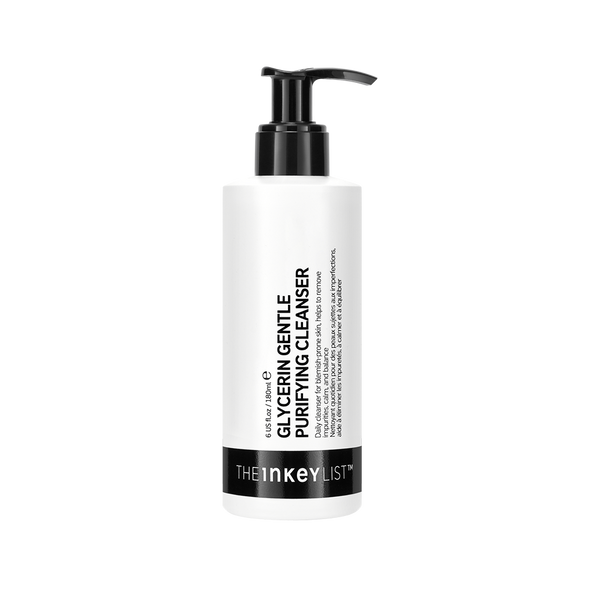
Glycerin is plant-derived, vegan, fragrance-free, non-comedogenic, and suitable for all skin types including sensitive and blemish-prone. It is formulated into INKEY’s lineup at clinically meaningful concentrations: the Glycerin Gentle Purifying Cleanser contains 20% glycerin - a high active concentration - alongside 3% Centella Complex and 2% Sea Water and Algae Complex. It is clinically proven to support the skin barrier for 24 hours and hydrate blemish-prone skin for 24 hours, oil-free. Glycerin also appears in the Omega Water Cream at 5%, combined with 5% niacinamide and a 0.2% ceramide complex, making it a strong lightweight option for oily and combination skin that needs hydration without heaviness.
For a complete standalone breakdown of glycerin’s ingredient profile, see the full glycerin ingredient guide.
Hyaluronic acid operates through the same core humectant mechanism as glycerin - but with a fundamentally different molecular profile, which changes how and where it functions in the skin.
What Is Hyaluronic Acid? The Science Explained
Hyaluronic acid (HA) is one of the best-known ingredients in modern skincare, but its reputation sometimes outpaces a genuine understanding of what it actually does and how it works. The science is worth understanding properly, because it directly informs how you should use it and what results you should realistically expect.
HA is a naturally occurring polysaccharide - a long-chain sugar molecule - found throughout the human body, including in the skin, connective tissue, joints, and eyes. Unlike glycerin, which is a single-size small molecule, hyaluronic acid exists across a wide range of molecular weights. This molecular diversity is central to how it functions in skincare formulations, and it is what separates an average HA product from a genuinely effective one.
The three main molecular weight tiers found in skincare formulations each behave differently:
- High molecular weight HA (1.8 million+ daltons): Sits on the skin’s surface and forms a moisture-retaining film. Delivers immediate visible plumping, a dewy surface finish, and a smooth, supple skin feel. Does not penetrate into the skin - it works by holding water at the surface level.
- Medium molecular weight HA (50,000 - 1.8 million daltons): Penetrates slightly more than high-MW HA, providing a bridge between surface hydration and deeper delivery.
- Low molecular weight HA (below 50,000 daltons): Penetrates into the upper layers of the skin and delivers more sustained hydration at depth. At very low molecular weights, HA has also been shown to support collagen synthesis - giving it a mild anti-aging dimension that is meaningfully different from simple surface hydration.
Multi-weight HA formulations combine more than one molecular weight tier to deliver layered hydration across multiple depths simultaneously. This is what makes them more effective than single-weight alternatives.
HA’s headline capability is its water-holding capacity: it can hold up to 1,000 times its own weight in water. This gives it an exceptional ability to deliver immediate surface plumping and a visibly hydrated appearance - benefits that have made it one of the most commercially dominant skincare ingredients of the past decade.
There is, however, an important caveat to understand about how HA performs in different environments. High-molecular-weight HA draws moisture most effectively from a humid environment. When applied in very low-humidity conditions - dry climates, heated rooms, aircraft cabins, cold winter air - without a subsequent occlusive or moisturizer, high-MW HA applied to dry skin can draw water from the skin’s own deeper layers rather than from the air. This can paradoxically worsen surface dryness rather than relieving it. The solution is straightforward: apply HA to damp skin immediately after cleansing, and always follow with a moisturizer. Read more about using hyaluronic acid correctly if you want the full practical breakdown.
The skin’s own hyaluronic acid levels naturally decline with age - by approximately half by age 50 - contributing to the loss of volume, elasticity, and the plump, bouncy quality associated with younger skin. Topical HA helps replenish surface hydration, and at low molecular weights, supports the structural processes that maintain the skin’s appearance over time.
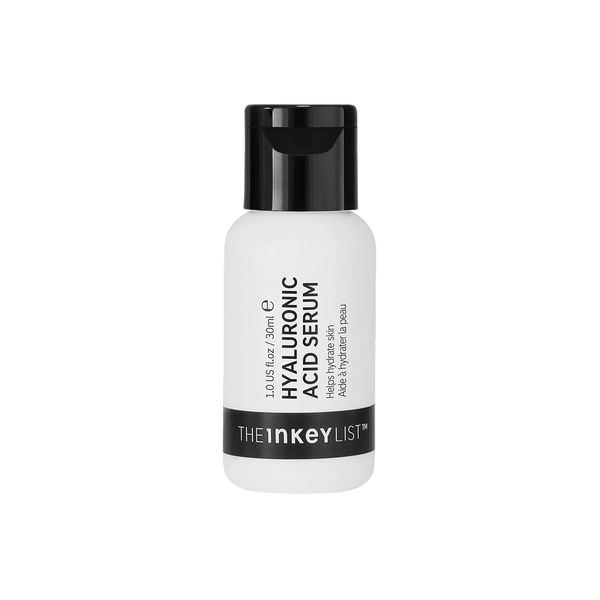
INKEY’s Hyaluronic Acid Serum contains 2% multi-molecular-weight HA across three molecular weight tiers for layered hydration, plus Matrixyl 3000 - a peptide complex that supports collagen production and helps visibly plump and firm skin. It is fragrance-free, non-comedogenic, and suitable for all skin types including sensitive, reactive, and pregnancy-safe skin.
HA also features in the Ectoin Hydro-Barrier Serum at 2.5%, alongside 2% ectoin and a ceramide blend - a formula specifically designed for barrier-compromised and sensitive skin where hydration and barrier repair need to happen simultaneously.
For readers interested in the nuances of the HA ingredient family, the comparison between sodium hyaluronate vs hyaluronic acid is worth reading - it covers how different salt forms and derivatives of HA behave in formulation, and what those differences mean in practice. For a complete standalone ingredient profile, see the full hyaluronic acid ingredient guide.
With both ingredients profiled individually, the stage is set for the direct comparison - which, now that the science is clear, will be considerably more useful than a surface-level “which is better” summary.
Glycerin vs Hyaluronic Acid - The Key Differences
This is the section most readers are here for. The comparison below covers every meaningful functional dimension - molecular size, penetration, water-holding capacity, humidity performance, biological mechanisms, clinical data, texture, and cost-efficiency. No single factor tells the whole story, which is why working through all of them matters.
Molecular Size and Penetration Depth
The most foundational difference between glycerin and hyaluronic acid is molecular size - and size determines penetration.
Glycerin sits at approximately 92 daltons. This makes it a very small molecule by cosmetic ingredient standards, small enough to penetrate the stratum corneum and work within the upper epidermis. It acts at and below the skin’s surface, delivering hydration from within the skin’s outer layers outward.
Hyaluronic acid, by contrast, ranges from approximately 50,000 daltons at the low end to over 1.8 million daltons at the high end. High-molecular-weight HA - the most common form in mainstream formulations - is too large to penetrate the skin and primarily acts as a surface film-forming agent. Only low-molecular-weight HA penetrates more meaningfully, and even then does not reach the depth that glycerin achieves.
The practical implication of this difference is significant. Glycerin works from within the upper skin layers outward. High-MW HA works from the surface down. Together, they cover hydration at multiple depths in a way that neither ingredient achieves independently.
Water-Holding Capacity
Hyaluronic acid can hold up to 1,000 times its weight in water - a figure that is frequently cited, and for good reason. The theoretical water-holding ceiling of HA is substantially higher than that of glycerin.
Glycerin holds less water per unit weight at the surface level. But here is the nuance that the headline figure misses: glycerin’s ability to penetrate the epidermis and upregulate AQP3 channels means it delivers hydration to skin layers that surface-acting HA simply cannot reach. The question of which ingredient “holds more water” matters less than the question of where and how that water is delivered.
“Holding more water at the surface” is not categorically the same as “better hydration for the skin.” The depth and mechanism of delivery matter just as much as the theoretical ceiling.
Performance in Different Humidity Conditions
This is one of the most practically important differences between the two ingredients - and one that is rarely explained clearly.
Glycerin performs consistently in both high and low humidity environments. Because it supports AQP3 channels and integrates with the NMF rather than relying purely on drawing moisture from ambient air, glycerin is a more reliable humectant in dry, cold, heated, or air-conditioned environments. It is a more forgiving ingredient in terms of application conditions.
High-molecular-weight hyaluronic acid draws water most effectively from a humid environment. In very low-humidity conditions - dry climates, airplane cabins, centrally heated rooms - HA applied to dry skin without a subsequent moisturizer can draw moisture from the skin’s own deeper layers rather than from the surrounding air. This is not a reason to avoid HA - it is a reason to use it correctly. Apply to damp skin immediately after cleansing, and always follow with a moisturizer. Both ingredients benefit from this approach, but glycerin is considerably more forgiving if the damp-skin step is missed.
AQP3 Upregulation and NMF Support
Glycerin’s ability to upregulate aquaporin-3 protein channels and support the Natural Moisturizing Factor is a functional property that hyaluronic acid does not share. This is not a minor distinction.
AQP3 channels regulate the movement of water and glycerol through skin cell membranes. When glycerin upregulates these channels, it is actively supporting the skin’s own water-transport infrastructure - not just passively attracting water and holding it at the surface. Similarly, supporting the NMF means glycerin is reinforcing the stratum corneum’s intrinsic ability to stay hydrated and function as an effective barrier.
These mechanisms give glycerin a deeper functional role in long-term skin health than its simple ingredient status might suggest. This is also why glycerin is particularly valuable for skin that is chronically dehydrated, barrier-compromised, or exposed to harsh environmental conditions.
Collagen Support
Low-molecular-weight hyaluronic acid has been shown in studies to support collagen synthesis - a benefit not shared by glycerin. At very low molecular weights, HA interacts with skin cells in ways that go beyond simple hydration, supporting the structural proteins that give skin its firmness and elasticity.
This gives multi-weight HA serums a mild anti-aging dimension that makes them particularly well-suited to skin beginning to show the first signs of aging - fine dehydration lines, a slight loss of plumpness, and reduced bounce. If dehydration lines vs wrinkles is something you are trying to understand, this distinction matters.
Clinical Performance Data
The 2016 study published in Skin Pharmacology and Physiology found glycerin to be the most effective humectant in increasing hydration in the stratum corneum in a direct multi-ingredient comparison - outperforming hyaluronic acid, lactic acid, glycolic acid, propylene glycol, sorbitol, and urea. This remains the most robust published head-to-head humectant comparison available.
That finding does not make glycerin a better ingredient overall. It makes glycerin the stronger performer on the specific measure of stratum corneum hydration. HA’s surface plumping, immediate dewiness, and collagen-supporting properties at low molecular weights are separate benefits that were not the focus of that study. The two ingredients are being measured on different things when evaluated this way - which is precisely why using them in combination makes more sense than choosing one over the other.
Texture and Sensorial Profile
Glycerin in well-formulated products is slightly viscous but absorbs quickly and cleanly, leaving no tackiness or residue on properly adjusted formulas.
Hyaluronic acid tends toward a gel-like to watery texture depending on concentration and formulation. At higher concentrations, it can leave a slightly dewy or lightly tacky finish - a sensory quality that many users interpret as a sign of effective hydration, and one that contributes to the ingredient’s popularity.
Cost-Efficiency
Glycerin is one of the most cost-efficient skincare ingredients available globally. Primarily derived as a by-product of plant oil processing (particularly during soap and biodiesel production), it is widely available at high purity levels and low cost. This is one reason why it appears at meaningfully high concentrations even in accessible formulations.
Hyaluronic acid requires a more complex and costly production process - typically through microbial fermentation - and high-purity multi-molecular-weight versions are more expensive to produce. However, HA is now widely used at accessible price points in well-formulated products, and its cost has decreased significantly as production technology has scaled.
A Summary Comparison
To distill the full comparison into a clear reference:
- Molecular size: Glycerin approximately 92 daltons / HA from 50,000 to 1.8 million+ daltons
- Penetration: Glycerin into the upper epidermis / HA primarily at the surface (high MW) to upper epidermis (low MW)
- Water-holding capacity: HA has the higher theoretical ceiling / Glycerin delivers more consistent hydration at depth
- Humidity dependency: Glycerin performs reliably in all conditions / HA performs best in humid environments or on damp skin with an occlusive follow-up
- AQP3 upregulation: Glycerin yes / HA no
- NMF support: Glycerin yes / HA no
- Collagen support: Low-MW HA yes / Glycerin no
- Best for: Glycerin - barrier health, consistent hydration, all climates, all conditions / HA - surface plumping, dewy finish, anti-aging hydration, visible immediate results
Understanding why oily skin gets dehydrated is also relevant here - because dehydration is a universal concern, and both ingredients address it through different mechanisms that are valuable regardless of skin type.
With these differences clearly established, the natural next question is: which one should you actually be using - and does the answer depend on your skin type?
Which Humectant Is Right for Your Skin Type?
The science of each ingredient only becomes useful when it translates into practical guidance. Here is how to think about glycerin vs hyaluronic acid based on your specific skin type and concerns.
Dry Skin
Both ingredients work well for dry skin - and combining them is almost always the stronger approach. The recommended routine for dry skin is to apply the Hyaluronic Acid Serum to damp skin immediately after cleansing, allowing the multi-weight HA to deliver layered surface and mid-level hydration along with a visible plumping effect. Follow immediately with a glycerin-containing moisturizer to seal in the humectant work and deliver barrier-level hydration from within.
Dry skin is particularly vulnerable to the HA humidity caveat. In cold or dry environments, HA applied without a follow-up occlusive can leave the surface feeling drier than before. The moisture sandwich approach - humectant plus moisturizer, applied to damp skin - is non-negotiable for dry skin types using HA.
Oily and Blemish-Prone Skin
Both glycerin and hyaluronic acid are non-comedogenic, oil-free, and safe for blemish-prone skin. For oily skin specifically, glycerin has a slight practical advantage: its penetration depth and AQP3 support mean it delivers meaningful hydration without any surface heaviness or occlusive feel.
The Glycerin Gentle Purifying Cleanser at $19 is specifically formulated and clinically validated for blemish-prone skin - with 20% glycerin delivering barrier hydration from the very first step of the routine, before any serum or moisturizer is applied. This is an important design choice: it means blemish-prone skin benefits from meaningful humectant activity even when the routine is kept minimal.
For oily skin needing lightweight, balanced hydration at the moisturizer step, the Omega Water Cream at $15 - with 5% glycerin, 5% niacinamide, and 0.2% ceramide complex - is the right follow-up. The HA Serum is also entirely suitable for oily skin; just ensure the follow-up moisturizer is lightweight and oil-free.
Dehydrated Skin Across All Types
Dehydrated skin is a condition, not a skin type - and it is one that both glycerin and hyaluronic acid address directly. For skin that is dehydrated across the board - tight, dull, rough-textured regardless of oil levels - layering both is the most effective approach. Apply the HA Serum first to damp skin, then follow with a glycerin-containing moisturizer to lock in what the humectant has drawn in.
If you are not sure whether your skin is dehydrated, the 7 signs you might be missing guide is a useful diagnostic starting point.
Sensitive or Reactive Skin
Both glycerin and hyaluronic acid are among the most skin-compatible ingredients in cosmetic science. Glycerin’s safety record is particularly strong - adverse reactions are exceptionally rare even in clinically sensitive, rosacea-prone, and eczema-prone skin. HA is equally well-tolerated and is routinely used in post-procedure care for its hydrating and soothing properties.
For sensitive or barrier-compromised skin, the Ectoin Hydro-Barrier Serum is specifically designed to address both hydration and barrier function simultaneously. It combines 2.5% HA with 2% ectoin - a clinically studied extremophile molecule with powerful barrier-protecting properties - and a ceramide blend. It is a strong choice for skin that is reactive, sensitized, or recovering from a disrupted barrier. For a deeper look at how ectoin compares to HA on its own terms, see the ectoin vs hyaluronic acid comparison.
Skin Showing Early Signs of Aging
Hyaluronic acid has a stronger anti-aging application for skin showing the first visible signs of volume loss, fine dehydration lines, and reduced firmness. The surface plumping effect of high-MW HA provides immediate visible improvement, while the collagen-supporting properties of low-MW HA address the structural dimension of early aging over time.
Glycerin remains a valuable supporting ingredient in any anti-aging routine - its AQP3 upregulation and NMF support contribute to long-term barrier health, which is foundational to how skin ages. But for this skin concern specifically, a multi-weight HA serum like the Hyaluronic Acid Serum at $13 - with Matrixyl 3000 to support collagen - is the primary humectant recommendation. Layer it under a glycerin-containing moisturizer for complementary depth.
Dry or Low-Humidity Climates
For readers living in dry climates, dealing with harsh winter conditions, or spending significant time in air-conditioned or centrally heated environments, glycerin is the more reliable humectant. Its AQP3 support means it is not dependent on drawing moisture from ambient air, making it a more consistent performer in conditions where environmental humidity is low.
When using HA in dry environments, the rule is simple: apply to damp skin immediately after cleansing and always follow with a moisturizer. This prevents the high-MW HA from drawing water from deeper skin layers rather than from the air.
Pregnancy
Both glycerin and hyaluronic acid are pregnancy-safe ingredients. All featured products in this guide are formulated to be safe during pregnancy and breastfeeding. For a full routine framework during pregnancy, see the pregnancy-safe skincare guide.
When each ingredient shines individually is now clear - but the most important insight in this entire comparison is that glycerin and hyaluronic acid are not rivals. They are designed to work together.
Better Together: How to Use Glycerin and Hyaluronic Acid in One Routine
The most useful takeaway from a glycerin vs hyaluronic acid comparison is this: the choice is almost never either/or. Glycerin and hyaluronic acid are complementary humectants that address different depths and mechanisms within the same hydration system. The most effective hydrating routines include both - and INKEY’s product lineup is specifically designed to make that easy.
Here is why they work so well together. Hyaluronic acid - particularly in a multi-weight formulation - delivers immediate visible plumping and surface dewiness, working at the skin’s surface and into the upper layers. Glycerin penetrates into the epidermis to support AQP3 channels, reinforce the NMF, and deliver hydration at a depth that surface-acting HA cannot reach. Together, they address hydration at multiple levels simultaneously - a layered approach that produces better results than either ingredient used alone.
Several INKEY formulas already combine both ingredients in a single product, which means the layering benefit can be achieved even with a minimal routine. The Ectoin Hydro-Barrier Serum contains both 2.5% HA and glycerin alongside ectoin and ceramides. The Omega Water Cream contains 5% glycerin and HA alongside niacinamide and ceramides. Even the Hyaluronic Acid Serum itself contains glycerin as a supporting ingredient within its formula.
For readers who want to build a complete routine that maximizes the combined benefit of both humectants, here is a practical step-by-step framework:
-
Cleanse with the Glycerin Gentle Purifying Cleanser ($19) in the morning and evening - used as the second step in a PM double cleanse. At 20% glycerin, the cleanser delivers meaningful humectant activity from the very first step, priming the skin for the layers that follow. Do not rinse immediately to dry - pat gently and move to the next step while skin is still slightly damp.
-
Apply the Hyaluronic Acid Serum ($13) to damp skin immediately after cleansing. Use 2-3 drops, patted gently onto the face and neck. The damp-skin step is non-negotiable for HA - it ensures the humectant draws moisture from the water on the skin’s surface rather than from deeper layers. INKEY Tip: if your skin has dried out between steps, mist lightly with water before applying the HA Serum.
-
Layer the Ectoin Hydro-Barrier Serum (optional) on top of the HA Serum for additional barrier reinforcement and hydration depth. This step is particularly valuable for sensitive, reactive, barrier-compromised, or very dehydrated skin. The combination of 2.5% HA, 2% ectoin, and ceramides makes it one of the most comprehensive barrier serums available at this price point.
-
Moisturize with the Omega Water Cream ($15) for oily, combination, and blemish-prone skin - or with a ceramide-rich moisturizer for dry or mature skin types. This is the occlusive step in the moisture sandwich - the layer that seals in the humectant work from the steps above and slows transepidermal water loss throughout the day or overnight. Without this step, the humectants applied beneath it are working with less efficiency.
-
Apply SPF (AM only) as the final step. Sunscreen is a non-negotiable final step in any morning routine - UV exposure is one of the primary accelerants of skin aging and barrier damage, both of which undermine everything the hydration steps are achieving.
The layering principle throughout is thinnest to thickest: water-based serums before cream moisturizers, humectants before occlusives. This order ensures each product can penetrate and function as intended without being blocked by thicker formulas applied too early.
For readers who want to extend this framework into a full skincare routine, how to build your skincare routine covers the full logic in detail. And for a deeper dive into the moisture sandwich layering approach that underpins everything here, the moisture sandwich method guide is the right next read.
The best hydrating routine is one you use consistently - and the simpler the routine framework, the more likely that consistency becomes. With glycerin and HA working together at different depths, even a three-step version of the above (cleanse, serum, moisturizer) delivers a meaningfully superior hydration outcome compared to using either ingredient alone.
Conclusion: Which One Does Your Skin Actually Need?
The glycerin vs hyaluronic acid comparison comes down to one clear conclusion: both are clinically proven, highly effective humectants, and neither is universally better than the other. They have different functional strengths, and those differences are what make them work best in combination.
Glycerin penetrates deeper, supports the skin’s aquaporin-3 water-transport channels, reinforces the Natural Moisturizing Factor, and performs consistently regardless of environmental humidity. It is the most effective single humectant for stratum corneum hydration in direct clinical comparison. It is also forgiving, widely suitable, and cost-efficient at meaningful concentrations.
Hyaluronic acid delivers an exceptional water-holding capacity at the surface, produces immediate visible plumping and dewiness, and - at low molecular weights - supports collagen synthesis in a way that gives it a genuine anti-aging dimension. Multi-weight formulations are particularly powerful because they deliver layered hydration across different skin depths simultaneously.
For most people and most skin types, the answer is to use both - HA serum on damp skin, followed by a glycerin-containing moisturizer to seal it in. INKEY’s product range is designed around exactly this logic, with glycerin and HA appearing together across multiple formulas and routine steps.
Hydration is the foundation of a functioning skin barrier, and the barrier is the foundation of virtually every other skin concern - from blemishes to sensitivity to visible aging. Getting the humectant layer right is not a minor detail. It is the cornerstone.
For standalone ingredient deep-dives, the glycerin ingredient guide and the hyaluronic acid ingredient guide cover each one in full.
Not sure where to start? Take the INKEY Skincare Quiz and get a personalized routine in 2 minutes.
Frequently Asked Questions
Got a question?
Our askINKEY team are a friendly bunch of skincare experts with deep product knowledge and zero judgement. Whether you're an ingredient obsessive or just starting out, we'll make it make sense. No question too big. No question too small. We Give A Care, Every Day.


