

Sodium Hyaluronate vs. Hyaluronic Acid
Same molecule, different size — here's how sodium hyaluronate and hyaluronic acid hydrate at different depths, and how to spot both on any label.
Author
askINKEY skincare advisors
Published
17 May, 2026
Time to read
13 minutes
You are holding a serum, turning it over, and reading the small print on the back. The front of the bottle said hyaluronic acid. The ingredients list on the back says sodium hyaluronate, and a little further down it also says hyaluronic acid. So which one did you actually buy, and is one of them a cheaper stand-in for the other?
Here is the short answer. They are not two different ingredients. Sodium hyaluronate is the sodium salt form of hyaluronic acid, derived directly from it. So if you are asking is sodium hyaluronate the same as hyaluronic acid, the honest answer is that they come from the same molecule, and the meaningful difference between them is molecular weight, which determines where in your skin each one is able to work.
This article covers what each form does, how they differ across five specific factors, the four forms of hyaluronic acid you will see on labels, and how to read an INCI list so you can judge any product for yourself without taking the front of the bottle on faith.
INKEY takes its name from the INCI list, the International Nomenclature of Cosmetic Ingredients. It is the standardized naming system used to identify ingredients on cosmetic packaging, and listing it is a legal requirement. It is a fitting name for a brand built on ingredient transparency, and it is exactly why an article about label-reading belongs here.
Shop the hero products featured in this guide:
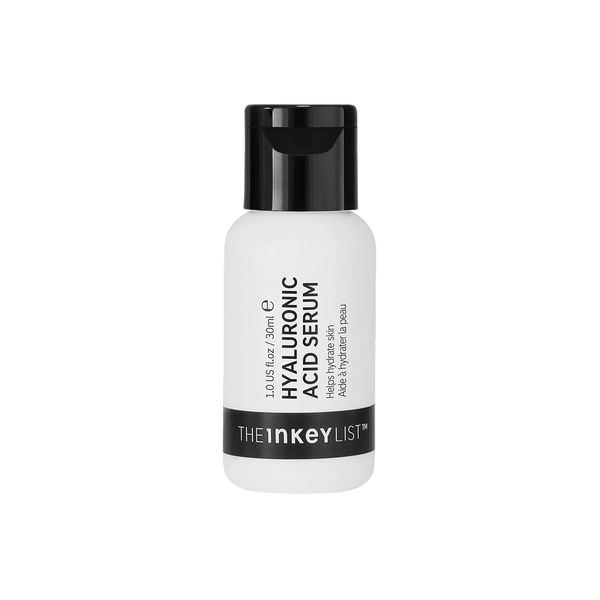
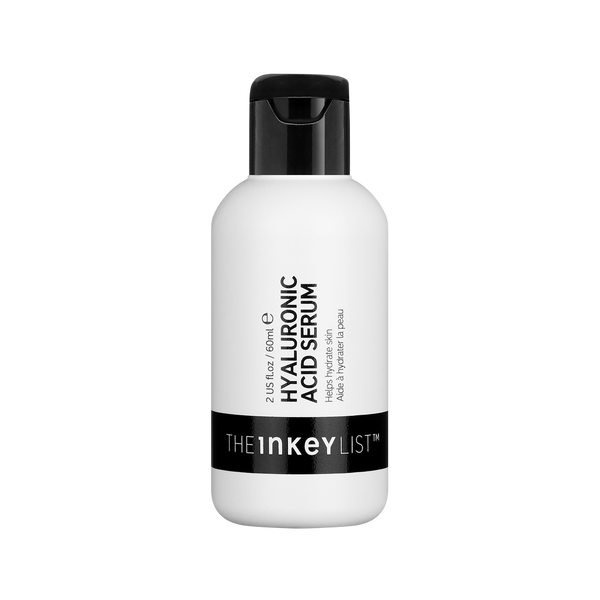
- Hyaluronic Acid Serum - from $13 / 30ml. Contains both sodium hyaluronate and hyaluronic acid in a 2% multi-molecular complex.
- Ectoin Hydro-Barrier Serum - $17 / 30ml. Contains all four forms of hyaluronic acid in a single formula.
Both names describe the same source molecule. To understand why the salt form exists at all, it helps to start with what hyaluronic acid actually is.
What Is Hyaluronic Acid and Why Does Your Skin Need It?
Hyaluronic acid is a naturally occurring polysaccharide, which simply means a large sugar molecule. Your body already makes it. It is found in your skin, in the fluid that cushions your joints, and throughout connective tissue, where its primary job is to hold water.
That water-holding capacity is the headline property. Hyaluronic acid binds up to 1,000 times its own weight in water. That is what makes it one of the most widely used hydrating ingredients in skincare, and why it turns up in everything from lightweight serums to rich creams to eye products.
In formulation terms, hyaluronic acid is a humectant. A humectant is an ingredient that attracts and holds water, drawing moisture into the skin’s surface layers and keeping it there. Glycerin is another. Humectants do not add oil, they do not add richness, and they do not form a heavy layer. They handle water, and water alone.
Hyaluronic Acid Is Not an Exfoliating Acid
This is the single most common misconception about the ingredient, and it deserves proper space rather than a footnote.
The word “acid” causes genuine hesitation, particularly for people with sensitive skin who have learned, sensibly, to approach anything with “acid” in the name carefully. That caution is well earned in general. It is misplaced here.
Hyaluronic acid is a sugar acid, a polysaccharide. It has nothing chemically or functionally in common with glycolic acid, salicylic acid or lactic acid. Those are exfoliating acids, and they work by loosening and removing dead cells from the surface of your skin. That process is useful, but it is a form of controlled disruption, and it can cause sensitivity, stinging or flaking if overdone.
Hyaluronic acid does the opposite job. It adds water. There is no exfoliation happening, no cell turnover being accelerated, no acid mantle being disturbed. There is no sting. If you have avoided hyaluronic acid because the name sounded aggressive, the name has been doing you a disservice.
Who It Works For, and Why That Includes Oily Skin
Hyaluronic acid suits every skin type. That is not a marketing generalization, it is a consequence of what the molecule does. It is non-comedogenic, meaning it does not clog pores, and it is non-irritating, meaning it does not provoke a reactive response in the vast majority of users.
Oily skin is where people hesitate most, and the reasoning is understandable but backwards. Oil and water are not the same thing, and skin can be oily and dehydrated simultaneously. A well-hydrated skin barrier is less likely to overproduce sebum in compensation for dehydration, which is why a lightweight humectant often suits oily skin better than skipping hydration altogether. If that is your skin, is hyaluronic acid good for oily skin covers it properly.
It also plays well with almost everything else in a routine. Hyaluronic acid is compatible with retinol, vitamin C, niacinamide and exfoliating acids, which makes it one of the easiest actives to slot into a routine you already like. There is no waiting period, no alternating nights, no buffering required.
What Happens as You Age
Your body’s natural hyaluronic acid production declines over time. That decline is one of the reasons skin gradually loses plumpness and bounce, alongside changes in collagen, elastin and barrier function.
Topical hyaluronic acid supplements what is happening at the surface and in the upper epidermis. It is worth being precise about this rather than overselling it: applying a serum does not permanently restore or replace your body’s own internal production. What it does is hydrate the layers it can reach, and well-hydrated skin looks and feels noticeably plumper, smoother and more comfortable. If your skin feels tight by mid-afternoon or has lost some of its bounce, 5 signs you need a hyaluronic acid serum is a useful self-check.
Hydrating and Moisturizing Are Not the Same Thing
These two words get used interchangeably in everyday conversation, and the distinction is genuinely important for getting results.
Hydrating means adding water. Moisturizing means sealing it in, by forming a protective seal on the surface that prevents transepidermal water loss. Both steps matter, and they are not interchangeable.
Applying hyaluronic acid and skipping your moisturizer is like filling a leaking bucket. The water goes in. It does not stay. If you have ever wondered why a hydrating serum did not seem to do much, this is the most likely reason, and the difference between moisturizing and hydrating goes deeper into it.
Apply to Damp Skin
Apply hyaluronic acid to slightly damp skin, immediately after cleansing, so the humectant has ambient moisture available to draw on.
This is not a nice-to-have. On completely dry skin in a low-humidity environment, a humectant may instead draw moisture from the deeper layers of your skin toward the surface, where it can then evaporate. That is the mechanism behind the occasional complaint that a hyaluronic acid serum left skin feeling tighter rather than softer. Applying to damp skin and sealing with a moisturizer is essential rather than optional.
Quick Facts: Hyaluronic Acid
What it does: humectant - attracts and holds water in the skin
Who it’s for: all skin types, including sensitive and blemish-prone
When to use: AM and PM, applied to slightly damp skin before moisturizer
Key property: holds up to 1,000x its weight in water
For a fuller breakdown of the ingredient, its uses and its place in a routine, see our complete hyaluronic acid ingredient guide. With the base molecule understood, the obvious next question is what changes when you add sodium to it.
What Is Sodium Hyaluronate and How Is It Different?
Sodium hyaluronate is the sodium salt form of hyaluronic acid, derived directly from it. It is the same molecule in a modified state, not a separate ingredient with a similar name.
Let us kill the suspicion immediately, because it is the reason most people search for this in the first place. Sodium hyaluronate is not a dupe. It is not a filler. It is not a watered-down or cheaper substitute slipped in to cut costs. In many formulation contexts it is the preferred form, chosen deliberately by formulators who could have used either.
Its INCI name is Sodium Hyaluronate. On labels you may also see it written as “hyaluronic acid (as sodium hyaluronate)”, “hyaluronate sodium”, or “hyaluronic acid sodium salt”. All of these describe the same ingredient.
Molecular Weight Is the Defining Difference
Everything else in this article hangs on this one concept, so it is worth defining plainly. Molecular weight is simply how large and heavy a molecule is. In skincare, size determines access. Larger molecules stay on the surface. Smaller molecules travel further in.
Hyaluronic acid is high molecular weight. It is too large to penetrate the stratum corneum, which is the outermost layer of your skin and functions as its protective barrier. So hyaluronic acid sits at or just above that layer. Its effect is instant surface plumping, and it forms a moisture-retaining film that reduces transepidermal water loss, which is water evaporating out through the surface of your skin.
Sodium hyaluronate is significantly lower molecular weight. It is small enough to pass through the stratum corneum and into the epidermis, which means it hydrates from within the deeper skin layers rather than only from the top. The trade-off is timing. Results are cumulative rather than instant.
“Sodium hyaluronate has a lower molecular weight than hyaluronic acid. It’s small enough to penetrate the epidermis, or top layer of the skin. In turn, it can improve hydration from the underlying skin layers.” - Healthline, medically reviewed by Dr Sara Perkins, MD
The practical implication is worth spelling out. Surface hydration gives you instant, visible, tactile results, the kind you notice within a minute of application. Deeper hydration addresses dehydration closer to its source rather than masking it at the top. That second effect is particularly valuable for chronically dehydrated skin, the kind that drinks up product and still feels tight an hour later. If that description fits, a full skincare routine for dehydrated skin will serve you better than any single product swap.
Did You Know? The ingredient listed as “hyaluronic acid” on many product labels is often sodium hyaluronate. Both names can legally and accurately describe the same source ingredient. The difference is molecular form, not quality or efficacy. A product marketed as a hyaluronic acid serum that lists sodium hyaluronate on the INCI is not mislabeling anything.
There Is a Third Level Down
Molecular weight is not a two-option choice. Below sodium hyaluronate sits hydrolyzed sodium hyaluronate, which is sodium hyaluronate broken down further into even smaller fragments. Smaller again means deeper again, reaching the lower layers of the epidermis. We break down the full family, including a fourth modified form, later in this article.
Why Formulators Reach for the Salt Form
There is a practical reason sodium hyaluronate dominates INCI lists across the entire industry, and it has nothing to do with cost.
Sodium hyaluronate is more stable in cosmetic formulas. It is less prone to oxidation and more consistent across a product’s shelf life, meaning the serum you apply in month six behaves much like the serum you applied on day one. When a formulator selects it, they are making a stability and performance decision, not a cost-cutting one.
So when people ask is sodium hyaluronate and hyaluronic acid the same, the accurate answer sits in the middle. Same origin molecule, different molecular form, different depth of action, and one of them holds up better in a bottle. Now that both forms are defined, they can be compared directly across the factors that actually affect your skin.
Sodium Hyaluronate vs. Hyaluronic Acid: The Key Differences Explained
The differences between these two are real, but they are narrower than the debate around them suggests. They come down to five factors, and once you can name all five, you can evaluate any hyaluronic acid product you encounter.
Factor 1: Source and Origin
Both come from the same origin. Hyaluronic acid occurs naturally in the human body, and the version used in skincare is produced commercially via bacterial fermentation. Sodium hyaluronate is derived directly from hyaluronic acid as its sodium salt.
Same source material, different processing and different resulting molecular form. Neither is synthetic in the sense people usually mean when they use that word as a criticism, and neither is animal-derived in standard commercial production.
Factor 2: Molecular Weight
Hyaluronic acid is high molecular weight. Sodium hyaluronate is lower. That single difference is the root cause of every other difference in this list, which is why it is worth understanding properly rather than memorizing the conclusions.
“Hyaluronic acid works better at hydrating the surface of the skin, whereas sodium hyaluronate can reach deeper layers, due to its lower molecular weight.” - Medical News Today
Factor 3: Where in the Skin Each One Works
Hyaluronic acid works at and above the stratum corneum, forming a moisture film across the surface. It is working on your skin.
Sodium hyaluronate moves through that outer layer into the epidermis below, where the skin’s own structure holds onto it. It is working in your skin. Both are legitimate places to deliver hydration, and they produce different sensations and different timelines.
Factor 4: Type and Timing of Results
Hyaluronic acid gives immediate, visible, tactile surface plumping from the very first use. You apply it, and within moments the surface of your skin looks smoother and feels softer.
Sodium hyaluronate gives deeper hydration that builds cumulatively over consistent use. The first application is less dramatic. The fourth week is where you notice it.
Neither is better in absolute terms. That is worth stating flatly, because a great deal of content on this subject tries to crown a winner and the premise is faulty. They do different jobs on different timelines, which is precisely why the best formulas use both rather than choosing.
Factor 5: Stability in Formula
Sodium hyaluronate is more chemically stable and less prone to oxidation, which means it retains its efficacy across a product’s shelf life more reliably. This is why formulators favor it and why it appears more often on INCI lists than hyaluronic acid does, even on products sold as hyaluronic acid serums.
Why the Front of the Bottle and the Back Do Not Always Match
Front-of-pack marketing language and back-of-pack INCI naming operate under different rules, and the gap between them is not deception.
The front of the bottle uses the name people recognize and search for. The back of the bottle uses the standardized INCI name, which is a legal naming convention rather than a marketing choice. “Hyaluronic acid” is the consumer-facing term for a family of related molecules. “Sodium hyaluronate” is the precise technical name for one member of that family.
What matters more than the front-of-pack claim is where the ingredient appears on the INCI list, and whether the formula contains more than one molecular form. Those two things tell you far more about a product than the largest words on the packaging ever will.
The Two Forms Side by Side
Hyaluronic Acid (High Molecular Weight). It occurs naturally in the body and is also sourced via bacterial fermentation for cosmetic use. Its molecules are large, which keeps it working at the surface of the skin, at the stratum corneum. Its primary function there is instant plumping and the formation of a moisture film that reduces surface water loss. Results are fast and visible from first use. It is best for an immediate hydration boost, smoothed texture and visible plumping.
Sodium Hyaluronate (Lower Molecular Weight). It is derived from hyaluronic acid as its sodium salt form. Its molecules are smaller, which allows it to penetrate into the epidermis. Its primary function there is deep, lasting hydration from within the skin’s layers. Results are cumulative and build over consistent use. It is best for long-term hydration, chronically dehydrated skin and stable formulation.
Can You Use Them Together?
Yes, and doing so is the gold standard rather than a compromise.
A multi-molecular formula uses several molecular weights at once so that hydration is delivered at multiple depths simultaneously. The large molecules go to work immediately at the surface while the smaller ones travel into the epidermis and build hydration over the following weeks. You get the instant result and the durable one from a single application, rather than choosing between them.
The INKEY Hyaluronic Acid Serum is a worked example you can verify yourself. Its INCI list confirms both Sodium Hyaluronate and Hyaluronic Acid as separate entries, both within the top half of the list. That is the multi-molecular principle made concrete, and we walk through that exact label later in this article.
If niacinamide is the other ingredient you are weighing up, hyaluronic acid vs niacinamide settles that comparison separately. Otherwise, you can shop hyaluronic acid across the full range.
Two forms explained, but labels routinely list four. Here is the whole family.
The Full Hyaluronic Acid Family: All Four Forms You Will See on Labels
Molecular weight is a spectrum, not a switch. There is no hard line between “big” and “small”, only a continuous range, and formulators select points along it depending on what they want the product to do.
There are four points on that spectrum you will actually encounter on a label, ordered here from largest to smallest. Once you know all four, the phrase “multi-molecular” stops sounding like marketing language and starts reading as what it is, an accurate technical description of a layered hydration strategy.
1. Hyaluronic Acid (High Molecular Weight)
The original form, and the one your body naturally produces.
This is the largest of the four and the one that stays where you put it, sitting at and above the stratum corneum. It forms a transparent, lightweight, moisture-retaining film across the skin’s surface.
That film does two things at once. It immediately plumps the appearance of skin and smooths surface texture, and it reduces water loss through the surface. This is the instant-gratification form, the one responsible for that immediately-after-application look.
2. Sodium Hyaluronate (Low-to-Medium Molecular Weight)
The salt form, and the most commonly used form in commercial skincare.
It dominates ingredient lists for two reasons working together: it penetrates deeper than high molecular weight hyaluronic acid, and it is more stable in formula across a product’s shelf life.
Being smaller, it moves into the epidermis, where the skin’s structure can hold onto it. The effect is less immediately dramatic than surface film-forming but considerably more durable. This is the form you are most likely to see on an INCI list regardless of what the front of the packaging says.
3. Hydrolyzed Sodium Hyaluronate (Very Low Molecular Weight)
Sodium hyaluronate broken down into even smaller fragments.
“Hydrolyzed” means the molecule has been broken down through hydrolysis, a process that splits larger molecular chains into shorter ones. The result is the smallest form of hyaluronic acid you will find in topical skincare.
Because of that size, it penetrates more deeply than any other topical hyaluronic acid form, reaching the lower layers of the epidermis. Its benefits are cumulative and lasting rather than instant. It is particularly valuable for persistent, deep-seated dehydration, the kind that does not resolve with surface hydration alone, as DermCollective also notes in its overview of the ingredient.
4. Sodium Hyaluronate Crosspolymer (Modified Form)
A cross-linked network that releases moisture gradually.
This is the most functionally distinct of the four, because the difference is not just size. Cross-linking means the molecular chains have been bonded together into a three-dimensional network rather than existing as separate individual chains.
That network changes how moisture is released. Instead of delivering hydration in a single burst at the moment of application, it acts as an extended-release system, gradually releasing moisture over a prolonged period. The practical effect is that skin stays hydrated for longer between applications, which matters most on long days, in air conditioning, or through a night’s sleep.
The Multi-Molecular Advantage ; A formula containing more than one form of hyaluronic acid hydrates at multiple depths simultaneously - surface, epidermal and deeper epidermal - while also extending the duration of that hydration. This is why the strongest hyaluronic acid formulas list more than one form on the INCI. You can shop hyaluronic acidby formula rather than by front-of-pack claim.
Formulas that include the full spectrum are uncommon in the mass skincare market. The Ectoin Hydro-Barrier Serumcontains all four forms in a single formula, confirmed on its INCI list as Hydrolyzed Sodium Hyaluronate, Sodium Hyaluronate, Sodium Hyaluronate Crosspolymer and Hyaluronic Acid. If you are curious about what ectoin itself contributes to that formula, what is ectoin covers the ingredient in full.
The Hyaluronic Acid Serum takes the two-form approach, using a 2% Multi-Molecular Hyaluronic Acid complex that combines both Sodium Hyaluronate and Hyaluronic Acid.
Knowing the four names is only useful if you can find them on a label and judge whether there is enough of them to matter.
How to Read Your Skincare Labels: Decoding the INCI List Like a Pro
INCI stands for the International Nomenclature of Cosmetic Ingredients. It is the standardized global naming system that makes ingredient lists readable across brands and borders, and in the US and the UK, listing it on cosmetic packaging is a legal requirement rather than a courtesy.
It is also where this brand got its name, which is a fairly direct declaration of where we think the interesting information lives.
The Rules That Actually Matter
Ingredients are listed in descending order of concentration. This is the foundational rule and almost everything else follows from it. What appears near the top of the list is present in meaningful amounts. What appears near the bottom is not.
Water is almost always first. Listed as “Aqua” or “Water/Aqua/Eau”, it heads the list of virtually every water-based serum on the market. This is completely normal and not a red flag. Water is the solvent that carries and disperses everything else, and humectants like hyaluronic acid need it to function.
The last five or so entries are typically trace levels. These are frequently present below 1%, and often well below it. Preservatives, fragrance components, pH adjusters and stabilizers live down here, which is entirely appropriate for what they do.
Position matters more than presence. This is the single most useful thing on this page. An ingredient named proudly on the front of the bottle that then appears in the final three or four positions of the INCI list is doing very little for your skin. Presence alone proves nothing. Position is the evidence.
A Real Label, Read Line by Line
Here is the actual opening of the INCI list for the Hyaluronic Acid Serum, so you can follow along and then verify it on the product page yourself.
Water (Aqua/Eau), Propanediol, Sodium Hyaluronate, Glycerin, Butylene Glycol, Phenoxyethanol, Ammonium Acryloyldimethyltaurate/VP Copolymer, Leuconostoc/Radish Root Ferment Filtrate, Hyaluronic Acid…
Water comes first, as expected. Then propanediol, a solvent and texture agent. Then, in third position, Sodium Hyaluronate. Third is a strong placement for an active in a water-based serum, and it tells you this is a meaningful concentration rather than a token inclusion for the sake of the front label.
Glycerin follows in fourth. Glycerin is another humectant, so this formula is stacking two water-attracting ingredients rather than relying on one, which is a common feature of well-built hydrating serums.
Then, further along but still in the top half of the list, Hyaluronic Acid appears as its own separate entry. That is the point worth pausing on. Both forms are listed independently, both sit in the top half, and that is the multi-molecular principle from the previous section visible on a real label rather than asserted in marketing copy.
The Ectoin Hydro-Barrier Serum extends the same approach further, with all four forms of hyaluronic acid appearing on its INCI, covering every molecular size the skin can make use of.
How to Spot Hyaluronic Acid Derivatives on Any Label
- Scan for these names: Hyaluronic Acid, Sodium Hyaluronate, Hydrolyzed Sodium Hyaluronate, Sodium Hyaluronate Crosspolymer, Hyaluronate Sodium and Hyaluronic Acid Sodium Salt.
- Check where they appear on the list, not just whether they appear at all.
- Count how many distinct forms are present.
- If only one form appears, and it appears near the bottom, the actual active concentration is likely minimal regardless of what the front of the bottle promises.
About That “Bait and Switch” Feeling
Let us address the suspicion head-on, because it is the reason many people start reading INCI lists in the first place.
A product marketed as a “hyaluronic acid serum” that lists only “sodium hyaluronate” on the INCI is not misleading you and it is not a bait-and-switch. It is accurate labeling, using the form of the molecule best suited to that particular formula. The front of the bottle uses the recognizable category name. The back uses the precise technical one. Both are true at the same time.
The thing genuinely worth being skeptical about is not which name appears. It is where the ingredient sits on the list and whether the formula bothered to include more than one molecular weight.
Your 4-Point Checklist for Any Hydrating Product
- Does the formula contain more than one form of hyaluronic acid or sodium hyaluronate?
- Where do the hyaluronic acid family ingredients appear on the INCI list?
- Does your routine also include a moisturizer as a follow-up step to seal the hydration in? If you are unsure why that matters, the difference between moisturizing and hydrating explains it.
- Is sodium hyaluronate listed in the last three to four ingredients, suggesting a negligible concentration regardless of front-of-pack claims?
That is the whole skill. If you can read the back of the bottle, you do not have to take the front of the bottle on faith, and you do not have to take our word for anything either. For the full ingredient breakdown, our complete hyaluronic acid ingredient guide is the deeper reference.
With label-reading covered, here is what a well-built multi-molecular formula looks like in practice.
INKEY Serums That Use Both: Building a Hydration-First Routine
Theory is only useful if it survives contact with a real bottle. Here are two formulas that apply everything above, along with a straight answer on which one suits which skin.
Hyaluronic Acid Serum - from $13 / 30ml
The Hyaluronic Acid Serum is the foundational hydration step for all skin types, and one of the most accessible entry points into multi-molecular hyaluronic acid skincare.
The formula. A 2% Multi-Molecular Hyaluronic Acid complex containing both Sodium Hyaluronate and Hyaluronic Acid as distinct entries in the top half of the INCI list. That is the label you just decoded, and it is the reason this serum delivers immediate surface plumping and hydration that continues building underneath it.
It also contains Matrixyl 3000 Peptide, a well-researched peptide complex that supports the appearance of firmer, smoother-looking skin over time. Note the framing there. Appearance of. That is the honest claim.
The results.
82% of users agreed their skin felt firmer, smoother and more elastic after four weeks.
86% agreed the serum is quick-absorbing, lightweight and non-tacky.
The recognition. Allure Best of Beauty 2022, CEW 2023, Glamour, and Get The Gloss Gold.
How to use it. AM and PM, applied to slightly damp cleansed skin. A pea-sized amount covers the full face. Pat it in rather than rubbing. Follow with any targeted treatments, then your moisturizer, then SPF in the morning.
Right for: all skin types wanting reliable daily hydration; anyone new to hyaluronic acid who wants a proven formula rather than an experiment; skin that feels dehydrated, tight or short on bounce; and anyone building a simple, high-performance routine without added complexity.
Ectoin Hydro-Barrier Serum - $17 / 30ml
The Ectoin Hydro-Barrier Serum is the more specialized of the two. It targets compromised, sensitive or barrier-disrupted skin from several angles at once rather than focusing on hydration alone.
The formula. It contains all four forms of hyaluronic acid - Hydrolyzed Sodium Hyaluronate, Sodium Hyaluronate, Sodium Hyaluronate Crosspolymer and Hyaluronic Acid - in a 2.5% Multi-Molecular Hyaluronic Acid complex. That is the entire four-form family from earlier in this article, in one bottle.
Alongside it sits 2% Ectoin. Ectoin is a naturally occurring extremolyte, which is a protective molecule originally found in microorganisms that survive extreme environmental conditions such as high salinity, intense UV and severe dehydration. Its action here is dual: it strengthens the skin barrier while it hydrates. That combination is particularly valuable for skin that is reactive, sensitized, or showing signs of a compromised barrier, including redness, tightness, flaking, or sudden sensitivity to products that were previously well tolerated. What is ectoin covers the ingredient in more depth.
The formula also includes a 1% Barrier Blend of three ceramides, which reinforces your skin’s natural lipid barrier structure, reducing moisture loss and improving long-term resilience.
The results.
Clinically proven to hydrate and strengthen the skin barrier in as little as 15 minutes.
Visible bounce restored in three days.
Visibly improves five signs of a compromised skin barrier across four weeks.
4.6-star average across over 400 reviews.
How to use it. AM and PM, to cleansed skin, as the first serum step. If you are layering with additional serums, the Ectoin Hydro-Barrier Serum goes on first, because its lighter molecular structure allows maximum absorption before heavier formulas are applied on top.
Right for: sensitive, reactive or easily irritated skin; visibly damaged skin barrier concerns such as flaking, redness or persistent tightness; dehydrated skin that needs deep hydration alongside structural barrier support; and anyone using strong actives such as retinol or exfoliating acids who wants a hydration and barrier buffer in the routine.
Which One, or Both?
These two are complementary rather than redundant, and you do not need both to see results. Here is the plain recommendation.
Choose the Hyaluronic Acid Serum if you want dependable daily hydration and your barrier is in reasonable shape. This is the right answer for most people, most of the time.
Choose the Ectoin Hydro-Barrier Serum if your skin is sensitive, reactive, or currently showing signs of a compromised barrier. Repair the barrier first and everything else in your routine works better.
Use both if you want hydration at every depth your skin can access alongside active barrier support. Apply the Ectoin Hydro-Barrier Serum first, then follow with the Hyaluronic Acid Serum.
Whichever route you take, apply to slightly damp skin straight after cleansing, and always seal with a moisturizer. That leaking bucket does not fix itself. For a full step-by-step, see our skincare routine for dehydrated skin.
If you came here with a related question, these cover it directly: hyaluronic acid and retinol, can you use hyaluronic acid with vitamin C, is hyaluronic acid good for oily skin, and hyaluronic acid vs niacinamide.
Two products chosen and a routine in place. The remaining loose ends are best handled as direct questions and answers.
What You Now Know About Sodium Hyaluronate vs. Hyaluronic Acid
Sodium hyaluronate is the sodium salt form of hyaluronic acid, derived from it and closely related to it, but distinct in one critical respect: molecular weight. Hyaluronic acid’s larger molecules work at the surface, delivering immediate plumping and a moisture-retaining film, while sodium hyaluronate’s smaller molecules penetrate the epidermis for deeper, longer-lasting hydration. Below those two sit hydrolyzed sodium hyaluronate, which goes deepest of all, and sodium hyaluronate crosspolymer, which extends how long hydration lasts through gradual release. None of the four is better than another in isolation, and used together they are the gold standard.
So seeing “sodium hyaluronate” on the back of something sold as a hyaluronic acid serum is not mislabeling and not a downgrade. It is often the most stable and effective form of the molecule for cosmetic use. What actually matters is where it appears on the INCI list and how many forms the formula contains.
That is the takeaway worth keeping. Product recommendations date, formulas get reformulated, and trends move on. The ability to turn a bottle over and read the back of it does not expire, and it works in any store aisle on any brand, including this one. For more on the ingredient itself, hyaluronic acid is the full hub.
Shop the products featured in this guide:
- Hyaluronic Acid Serum - from $13 / 30ml. Contains both Sodium Hyaluronate and Hyaluronic Acid in a 2% multi-molecular complex. For all skin types, daily use.
- Ectoin Hydro-Barrier Serum - $17 / 30ml. Contains all four forms of hyaluronic acid, plus 2% Ectoin and three ceramides. For sensitive, reactive or barrier-compromised skin.
Not sure where to start? Answer a few questions about your skin and get a routine built around what it actually needs. Take the INKEY Skincare Quiz.
Ready to shop? You now know which molecular weights you are looking for and how to spot them on a label. Browse the full Hyaluronic Acid collection and read the formulas for yourself.
Frequently Asked Questions
Got a question?
Our askINKEY team are a friendly bunch of skincare experts with deep product knowledge and zero judgement. Whether you're an ingredient obsessive or just starting out, we'll make it make sense. No question too big. No question too small. We Give A Care, Every Day.


