

Is Hyaluronic Acid Good for Acne-Prone Skin? Everything You Need to Know
Hyaluronic acid cannot clog pores or cause acne. Here is what it actually does for acne-prone skin, why some people think it breaks them out, and how to use it.
Author
askINKEY skincare advisor
Published
17 May, 2026
Time to read
12 minutes
Yes. Hyaluronic acid is good for acne-prone skin, and it does not clog pores.
That is the direct answer. The rest of this article explains why, and how to actually make it work in your routine.
If you have been avoiding hyaluronic acid because you assumed it was only for dry or aging skin, you are not alone. The idea that acne-prone skin does not need hydration is one of the most persistent myths in skincare, and it leads a lot of people to build routines that make their skin worse rather than better.
One thing worth saying up front: when people say hyaluronic acid broke them out, the cause is almost always something else in the formula, or how they applied it. Rarely the hyaluronic acid itself. We will get into exactly why.
This article covers four things:
- What hyaluronic acid actually does, and why acne-prone skin needs it
- Whether it can cause acne, breakouts or purging
- What it does for acne scars and post-acne marks
- How to use it properly in an acne-prone routine
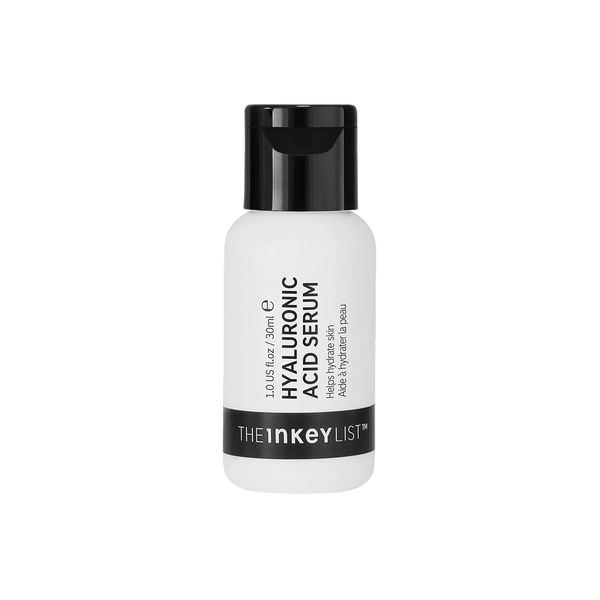
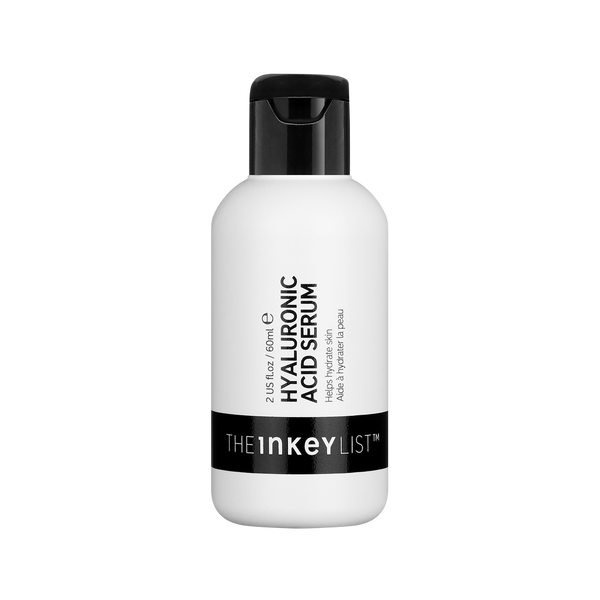
The product referenced throughout is the Hyaluronic Acid Serum, $13 for 30ml. Water-based, fragrance-free and non-comedogenic. You can also browse the full acne and breakouts collection, or start with the acne guide if you want the foundational picture first.
What Hyaluronic Acid Does, and Why Acne-Prone Skin Needs It
Most of the confusion around this ingredient starts with not knowing what it actually is.
Hyaluronic acid is a humectant. It is a water magnet. It draws water into the upper layers of your skin and holds it there. It is not an oil. It is not an exfoliant. It is not an acne treatment, despite the word “acid” in the name.
Oily skin and dehydrated skin are two different things
This distinction is the key to the whole article.
Oily skin means excess sebum production. Dehydrated skin means a lack of water in the upper layers. They are separate conditions, and they frequently show up together on the same face.
Acne-prone skin that is being managed with active treatments is almost always dehydrated, even when it looks shiny. That shine is often your skin overcompensating, not evidence that it has enough moisture.
More on this on the dehydrated skin and oily skinpages, and in Is Hyaluronic Acid Good for Oily Skin?.
The dehydration and oil feedback loop
When skin is dehydrated, oil glands can increase output to compensate. The result is skin producing more oil than it otherwise would, not because of hormones or genetics alone, but because it is dry underneath.
If your skin has ever gotten oilier and more congested right in the middle of an active treatment cycle, this loop may be part of what is happening. There is published research indicating hyaluronic acid influences lipid synthesis in sebaceous glands, which supports the idea that proper hydration helps with oiliness rather than worsening it.
You can read more in our guide to dry skin and acne.
Why acne-prone skin gets dehydrated in the first place
Look at what acne treatment involves. Salicylic acid dissolves the bonds between surface skin cells. Retinoids dramatically accelerate cell turnover. Benzoyl peroxide is an oxidizing agent that is highly effective against acne-causing bacteria and also highly drying.
Every one of those works. And every one of them costs your skin water as a side effect.
Your skin barrier depends on adequate hydration to function. As it weakens, it becomes more permeable to bacteria and irritants, more inflamed, and more reactive. Understanding your damaged skin barrier is foundational to managing acne-prone skin well.
The formula
The Hyaluronic Acid Serum contains 2% multi-molecular hyaluronic acid at three molecular weights:
- High molecular weight sits at the surface and forms a hydrating film
- Medium molecular weight works through the middle layers of the epidermis
- Low molecular weight reaches the deepest layers of the outer skin
It also contains Matrixyl 3000, a peptide complex that supports firmness and elasticity. The formula is water-based, fragrance-free, non-comedogenic and dermatologically tested, and it helps support your skin barrier by maintaining hydration in the upper layers.
In consumer testing, 82% agreed their skin felt firmer, smoother and more elastic after four weeks, and 86% agreed it was quick-absorbing, lightweight and non-tacky. That last point matters when your skin cannot tolerate heavy textures.
Go deeper on the hyaluronic acid guide, or browse the full hyaluronic acid collection.
Can Hyaluronic Acid Cause Acne, Breakouts or Clogged Pores?
No. And this is not a hedged “probably not.”
Hyaluronic acid is a water-binding polysaccharide. It contains no oils, no waxes, no occlusive compounds and no comedogenic materials of any kind. By its molecular nature it has no mechanism by which it could block a pore or trigger acne formation.
So why do some people break out after starting a hyaluronic acid product? There are four real explanations.
The rest of the formula. Many hyaluronic acid products are not simply hyaluronic acid in water. They include emollients, occlusives and thickeners, some of which can be comedogenic on acne-prone skin. A heavy silicone, a thick emollient oil, a cocoa butter base or a lanolin derivative is a far more likely culprit than the hyaluronic acid sitting alongside it.
Fragrance. Fragrance is a common irritant for skin already sensitized by acne actives, and irritation can look a lot like a breakout.
Applying it to dry skin with nothing on top. This is the most overlooked cause. A humectant pulls water from wherever it can find it. In a low-humidity environment, applied to bone-dry skin with no moisturizer to seal it, it can end up leaving the surface drier than before. Drier skin can mean more compensatory oil, and more congestion.
Coincidence. Acne fluctuates with hormones, stress and your cycle. A product started mid-flare tends to take the blame for something that was already happening.
Does hyaluronic acid cause purging?
No.
Purging is a real phenomenon, but it is specific to ingredients that accelerate cell turnover and bring existing congestion to the surface faster: retinoids, alpha hydroxy acids and beta hydroxy acids. Hyaluronic acid does not exfoliate and has no effect on turnover rate, so it has no purging mechanism at all.
Worth being honest here: purging as a concept is not rigorously defined in clinical literature. But whichever way you look at it, hyaluronic acid has no pathway to cause it. If new spots appear after adding a hyaluronic acid product, it is not a purge.
How to choose one for acne-prone skin
- Water-based - water should be the first ingredient listed
- Non-comedogenic - verified through testing, not just claimed
- Fragrance-free
- Lightweight texture - gel or thin serum, not a cream or balm
- Free of heavy occlusives - no coconut oil, cocoa butter, lanolin or isopropyl myristate alongside it
The Hyaluronic Acid Serum meets all five. Water is the primary base, it is non-comedogenic and dermatologically tested, completely fragrance-free, and absorbs quickly without residue.
If your skin is reactive as well as acne-prone, sensitive skin and breakouts covers a gentler approach.
How Hyaluronic Acid Supports Acne-Prone Skin
Here is the most important disclaimer in this article: hyaluronic acid does not treat acne. It does not kill acne-causing bacteria. It does not unclog pores. It does not regulate hormones or reduce sebum directly. If you have active acne, hyaluronic acid alone is not the answer, and any product claiming otherwise is overclaiming.
What it does is indirect, and substantial. Its real value is that it makes everything else in your routine work better.
It protects your barrier while your treatments work. The most effective acne treatments all work in ways that stress the skin barrier. Salicylic acid strips natural moisturizing factors from the surface. Retinoids cause dryness and flaking. Benzoyl peroxide causes significant dryness and barrier disruption. The more effective your treatment protocol, the more aggressively it is depleting your skin’s water content. Hyaluronic acid maintains the hydration that barrier needs to hold together.
It helps you stay consistent. This is the practical benefit nobody talks about. People abandon acne treatments because of dryness, tightness and irritation, not because the treatments stopped working. Keeping skin hydrated makes those treatments tolerable enough to keep using, and consistency is what actually clears skin.
It helps break the oil feedback loop. Adequate hydration reduces the compensatory signal telling your oil glands to overproduce. You are not adding oil. You are removing the reason your skin was making extra.
It creates a better surface for your actives. When the skin surface is properly hydrated and the barrier is intact, actives like niacinamide, salicylic acid and retinol penetrate more evenly. Applying hyaluronic acid first is not a compromise. It is a performance strategy.
It supports post-breakout recovery. A breakout is an episode of acute inflammation. Skin that is well hydrated with an intact barrier recovers from that faster and more completely than skin that is dry and compromised.
Worth knowing: hyaluronic acid draws water in, and ceramides help hold it there. They complement each other.
For skin with a significantly compromised barrier, the Ectoin Hydro-Barrier Serum at $17 is the step-up option. It combines 2% ectoin with multi-molecular hyaluronic acid and three ceramides, and is clinically proven to strengthen a compromised barrier in as little as 15 minutes. See Ectoin vs Hyaluronic Acid if you are choosing between them.
Hyaluronic Acid, Acne Scars and Post-Acne Marks
“Acne scars” is a catch-all term covering three different concerns that respond to completely different treatments. Getting this right saves you money and disappointment.
Post-inflammatory hyperpigmentation (PIH)
Flat brown, tan or dark marks left after a breakout resolves, caused by excess melanin produced in response to inflammation.
Hyaluronic acid does nothing directly here. It does not interfere with melanin production and will not fade pigmentation on its own. What works is niacinamide, vitamin C, azelaic acid and tranexamic acid.
The 15% Vitamin C + EGF Serum at $20 is a strong option for this. It uses 15% ascorbyl glucoside, a stable form of vitamin C that converts on the skin to target dark marks, sun damage and uneven tone, plus 1% Epitensive EGF, a plant-based peptide that supports skin renewal. Because it uses a stable form rather than pure L-ascorbic acid, it is gentler, which matters when your skin is already being worked hard by acne actives.
More on the vitamin C, tranexamic acid and hyperpigmentation pages.
Post-inflammatory erythema (PIE)
Flat pink or red marks. Not pigment at all, but dilated capillaries near the surface that have not settled after inflammation.
The 10% Azelaic Acid Serum for Redness Relief is the targeted option, since azelaic acid has documented anti-inflammatory activity that addresses the redness component directly. See the azelaic acid guide.
Textural scarring
Ice pick, boxcar and rolling scars that create physical depressions in the skin.
This is where hyaluronic acid makes a visible, though temporary, difference. Its plumping effect, particularly from the high molecular weight component sitting at the surface, creates a fuller, smoother appearance. Shallow textural scarring looks less pronounced on hydrated skin because the surface is physically more even.
Be clear on what that is: a genuine cosmetic improvement in appearance, not structural repair of the scar itself.
The niacinamide pairing
The 10% Niacinamide Serum at $13 contains 10% niacinamide alongside 1% hyaluronic acid. Used after your hyaluronic acid serum, it works on post-acne marks, oil production, pore appearance and redness. Layer hyaluronic acid first, then niacinamide. See the niacinamide guide.
One more thing on marks
Daily sunscreen matters here more than almost anything else. UV exposure deepens post-acne pigmentation and will quietly undo the work your other products are doing. Use a non-comedogenic, broad-spectrum sunscreen every morning. See What is SPF? for how to choose one, and sunscreen for oily, acne-prone skin for more detail.
For everything on post-acne marks, see the acne scars guide, the acne scars collection and how to reduce acne scars.
How to Use Hyaluronic Acid in an Acne-Prone Routine
Rule one: apply to damp skin
This is the most important instruction here.
Hyaluronic acid is a humectant, so it draws water from its environment. On fully dry skin in a low-humidity space, air-conditioned offices and heated rooms in winter being the obvious examples, it has no external water source to draw from. Applied to damp skin, it has an immediate one.
Two to three drops for face and neck. Pat with fingertips. Do not rub.
More on technique in hyaluronic acid: are you using it correctly?
If your skin dries before you get your serum on, or you want to top up hydration during the day, the Hydro-Surge Dewy Face Mist is the simplest fix. It contains 3% Aquaxyl to help strengthen the moisture barrier and reduce water loss, 3% Hydroviton cucumber fruit extract for instant hydration, and 2% Earth Marine Water.
Rule two: always seal with a moisturizer
Hyaluronic acid draws water in. It does not seal it. Without a moisturizer on top, that water evaporates, particularly in dry indoor environments.
This is not optional. It is what makes the hyaluronic acid step work at all, and skipping it is the reason some people conclude hyaluronic acid leaves their skin tight.
Morning routine
- Cleanse. Salicylic Acid Cleanser, $15 for 150ml. 2% salicylic acid for the treatment of acne, 1% zinc compound for oil control, 0.5% allantoin to soothe. See the salicylic acid guide.
- Hyaluronic Acid Serum. $13, 30ml. Two to three drops on damp skin, patted in, allowed to absorb.
- Treatment serum. 10% Niacinamide Serum at $13 for oil control, mark fading and pore appearance, or 360° Acne Clearing Serum at $18 during active breakout phases. Simple rule: niacinamide for maintenance and recovery, the 360° serum when you are actively breaking out.
- Moisturize. Omega Water Cream, $15 for 50ml. Oil-free and non-comedogenic, with a 0.2% ceramide complex, 5% niacinamide and 3% betaine.
- Sunscreen. A non-comedogenic, broad-spectrum sunscreen, every morning without exception. See What is SPF?
Evening routine
- First cleanse. Oat Cleansing Balm, $17 for 150ml. 1% colloidal oatmeal and 3% oat kernel oil break down sunscreen and makeup without stripping.
- Second cleanse. Salicylic Acid Cleanser, $15. Now working on genuinely clean skin, where the salicylic acid can penetrate properly.
- Hyaluronic Acid Serum. $13. Damp skin, two to three drops, patted in.
- Spot care. Succinic Acid Treatment applied directly to individual spots, or Hydrocolloid Invisible Pimple Patches at $10 for a pack of 22. The patches absorb fluid from individual blemishes and whiteheads, protect them from picking, and are virtually invisible under makeup.
- Treatment serum. 360° Acne Clearing Serum, $18. 1% dioic acid, 2% salicylic acid and 0.4% Dendriclear. Clinically proven: 91% had visibly clearer skin after 2 weeks, and 94% had fewer spots after 8 weeks.
- Moisturize. Omega Water Cream at $15, or Bio-Active Ceramide Moisturizer at $22 if your skin is dry or your barrier feels compromised.
A note on layering
Hyaluronic acid always goes first after cleansing. And you do not need every active every night. If you are rotating your stronger products rather than layering them all nightly, the skin cycling guideoutlines a structured way to do it.
To build the full routine and save up to 20%, use the Bundle Builder.
What to Pair Hyaluronic Acid With
With benzoyl peroxide. A smart pairing. Benzoyl peroxide is effective against acne-causing bacteria and also causes real dryness, redness and flaking, which is one of the main reasons people stop using it. Layering hydration underneath helps your skin tolerate it. Order: cleanse, hyaluronic acid on damp skin, benzoyl peroxide once absorbed, then moisturizer. We do not make a benzoyl peroxide product, so this is general guidance for anyone using one alongside their routine.
With salicylic acid. Complementary. Salicylic acid works inside the pore, hyaluronic acid replaces the surface moisture it removes. Hyaluronic acid first, on damp skin. See the complete guide to salicylic acid.
With niacinamide. No conflict at all. Hyaluronic acid first, niacinamide second. See does niacinamide help with acne? and hyaluronic acid vs niacinamide.
With retinol. Hyaluronic acid buffers the dryness and flaking that come with retinoid use, which makes it far easier to stay consistent.
With vitamin C. No conflict. Vitamin C in the morning for marks and tone, hyaluronic acid at any point.
The mistakes worth avoiding
- Applying it to completely dry skin
- Skipping moisturizer afterward
- Using far too much, on the assumption more hydration is better
- Expecting it to clear acne on its own
- Blaming the hyaluronic acid for a reaction caused by a heavy or fragranced base formula
Hydration Is Not Optional for Acne-Prone Skin
The core argument is simple: acne-prone and dehydrated are not opposites. For most people managing acne with active treatments, they arrive together.
The treatments that work strip moisture as a byproduct of working. The barrier weakens. Reactivity increases. Oil glands compensate by producing more. Inflammation becomes more frequent. And the cycle continues.
Hyaluronic acid is not the hero of an acne-prone routine. It is not what clears breakouts or fades dark marks. Those jobs belong to the targeted actives built for them. What hyaluronic acid does is keep those actives working, and keep them tolerable enough that you actually stick with them.
Three things to take away: apply it to damp skin, always seal it with a moisturizer, and judge a product by its whole formula rather than its star ingredient.
Clear guidance, proven ingredients, real results. Because at The INKEY List, We Give A Care.
Start Building Your Routine
- Shop the hero. The Hyaluronic Acid Serum at $13, the hydration step your routine has been missing.
- Build the full routine. Use the Bundle Builder to save up to 20%.
- Not sure where to start? The Skincare Quizbuilds a personalized routine in under two minutes.
- Dealing with acne specifically? Try Acne Analyzer Pro, our AI-powered, dermatologist-backed skin scanner.
Frequently Asked Questions
Got a question?
Our askINKEY team are a friendly bunch of skincare experts with deep product knowledge and zero judgement. Whether you're an ingredient obsessive or just starting out, we'll make it make sense. No question too big. No question too small. We Give A Care, Every Day.


