



Can You Mix Vitamin C and Retinol? The AM/PM Method
Vitamin C and Retinol are not enemies. Use one in the morning, one at night, and you get brighter, smoother skin around the clock.
Author
askINKEY skincare advisor
Published
17 May, 2026
Time to read
14 minutes
Yes, you can use Vitamin C and Retinol together. The simplest and most reliable way to do it is to use Vitamin C in the morning and Retinol at night, which gives you the benefits of both without asking your skin to handle two powerful actives at the same moment.
That is the short answer, and for most people it is the only answer they need. But the question keeps getting asked, and it keeps getting answered badly, because somewhere along the way “use them at different times of day” mutated into “never let these two ingredients near each other”. Those are very different statements. One is practical routine advice. The other is a myth that has cost a lot of people a lot of good skincare results.
This guide covers what each ingredient actually does for your skin, where the “do not mix” rule came from and why it does not apply to the Vitamin C formula INKEY uses, the exact AM and PM routine to follow, what else you can layer alongside them, how to start without irritation, and how long results realistically take. There are eleven FAQs at the end covering the specific versions of this question people search for most.
What Vitamin C and Retinol Actually Do for Your Skin
Before you can sequence two ingredients sensibly, you need to know what each one is for. A surprising amount of skincare confusion comes from people using two products that do broadly similar things, or from expecting one ingredient to deliver a benefit that belongs to another entirely.
Vitamin C and Retinol are not doing the same job. They are not competing for the same slot in your routine. They are closer to two different shifts in a twenty four hour cycle, and understanding that is what makes the whole AM and PM structure click into place rather than feel like an arbitrary rule you have been told to follow.
Vitamin C: your morning brightening and antioxidant step
Vitamin C is a daytime ingredient. That is not a formality, it is the entire logic of how it earns its place in your routine.
Across the day your skin is exposed to things that dull it. Daylight, pollution, city air, central heating, the general environmental grind of being outside and being alive. Vitamin C is an antioxidant, which means its role is to help defend the look of your skin against that daily environmental exposure. Using it in the morning puts the protection in place before the exposure happens rather than after.
The second reason people reach for Vitamin C is brightness. Not brightness in the sense of lightening your natural skin tone, but in the sense of reviving skin that has gone flat, tired and uneven. If your complexion looks gray by Wednesday, if your skin tone is patchy, if you have leftover marks from old breakouts that have faded to a stubborn shadow, Vitamin C is the ingredient most likely to help even things out and give you back some life.
Here is what a good Vitamin C step visibly delivers over time:
- A more even looking skin tone, with less contrast between marked areas and the rest of your face
- Visibly brighter, less dull skin, particularly noticeable if your complexion has been looking tired
- A fresher, more awake appearance first thing, which is often the first thing people notice
- Antioxidant support that helps defend the look of your skin against daily environmental stress
- A better base under makeup, because even tone reads as smoother even before you touch a foundation
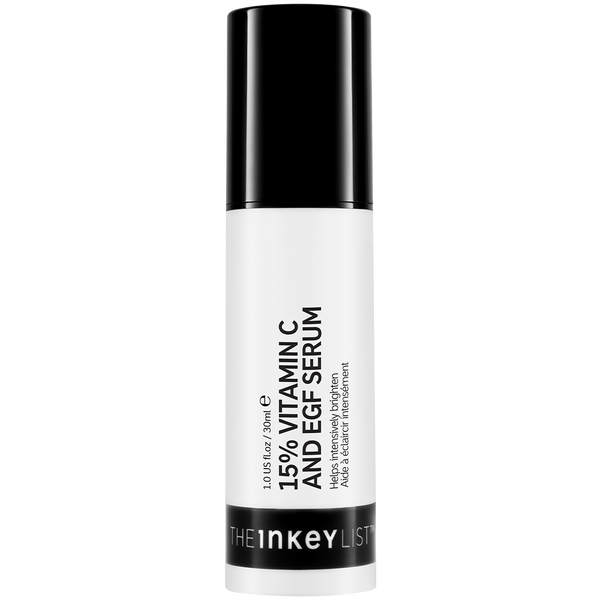
The 15% Vitamin C + EGF Serum is INKEY’s Vitamin C step, and the form of Vitamin C it uses matters enormously for this article, because it is the reason the old mixing rule does not apply here. We will come back to that in detail in the next section. If you want the full background on the ingredient itself, the Vitamin C guide covers how it works, who it suits and what to expect. There is also a dedicated piece on when to use Vitamin C if timing is your main question.
For anyone whose primary concern is dark marks and uneven patches specifically, rather than general dullness, the hyperpigmentation guide is the more targeted starting point. It explains why marks form, why they are so slow to fade, and which ingredients realistically help.
Retinol: your overnight renewal step
Retinol works the other shift. It is the ingredient you apply at night, and again, that is not arbitrary.
Retinol is sensitive to light. It performs best when it is not being exposed to daylight, which is the single most practical reason it belongs in your evening routine. Night time is also when you are not layering makeup or SPF over the top, and when your skin has an uninterrupted stretch to get on with things.
What Retinol offers is renewal. Over consistent use it helps skin look smoother and more refined, softens the appearance of fine lines, and helps improve the look of texture and uneven patches. It is one of the most researched and most trusted ingredients in skincare, and its reputation is earned. It is also, and this is the part people skip, an ingredient that rewards patience and punishes impatience.
A realistic picture of what Retinol does with time:
- Smoother looking skin texture, especially across the cheeks and forehead
- Softened appearance of fine lines, most visibly around the eyes and mouth
- A more refined, even looking surface as tone and texture settle
- Fewer visible congested areas for acne-prone skin
- A generally more polished finish that builds slowly and then becomes obvious
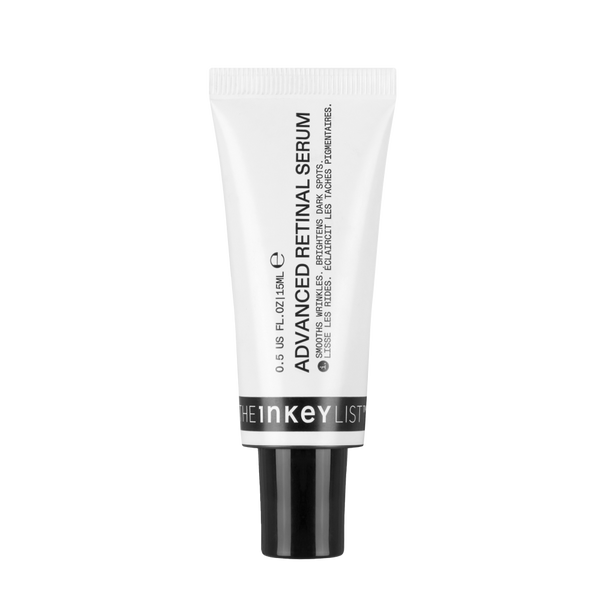
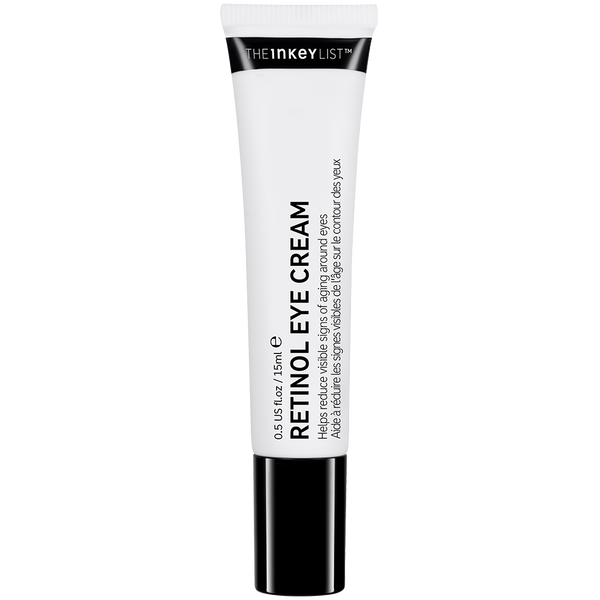
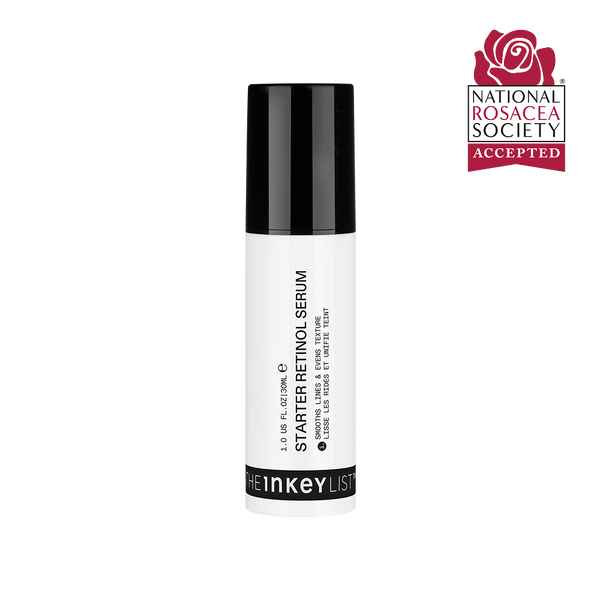
INKEY makes more than one Retinol option because tolerance is genuinely individual. The Starter Retinol Serum is the gentler entry point and the right choice if you have never used a retinoid. The Advanced 0.2% Retinal Serum steps things up for skin that is already comfortable with retinoids. There is also the Retinol Eye Cream, formulated for the thinner, more reactive skin around the eyes, which should never simply be treated with whatever you are using on the rest of your face.
Two quick signposts, both of which have their own dedicated articles so we will not duplicate them here. If you are trying to work out whether Retinol or Retinal is right for you, retinol vs retinal breaks down the difference properly. And if you are assuming a higher percentage means faster results, this myth is worth unlearning before you buy anything. The Retinol guide is the broader reference point.
Why the split makes sense before you even consider mixing
Put those two profiles side by side and the AM and PM structure almost designs itself.
One ingredient is an antioxidant that helps defend against daytime environmental exposure and brightens dull skin. The other is light sensitive and works on renewal overnight. Even if there were no chemistry discussion at all, even if nobody had ever raised a concern about combining them, you would still arrive at Vitamin C in the morning and Retinol at night purely on practical grounds.
That is worth holding onto, because it means the routine we are about to lay out does not depend on the myth being true. The myth is largely false, as we are about to explain. The routine is good anyway.
Vitamin C and Retinol are not rivals competing for the same slot. They are two shifts, covering the same skin across twenty four hours.
Understanding what each ingredient is for is half the battle. The other half is understanding why so many people have been told to keep them apart entirely, and where that instruction actually came from.
Yes, You Can Use Them Together: Where the Myth Came From
The instruction not to mix Vitamin C and Retinol is one of the most repeated pieces of skincare advice on the internet. It is also one of the most distorted. It started from something real, then got flattened into a rule that no longer describes most of the products people are actually using.
Understanding the original concern is genuinely useful, because once you see how narrow it was, you can judge for yourself whether it applies to what is in your bathroom cabinet.
The original concern was about pH, and only one form of Vitamin C
The concern began with a specific form of Vitamin C called L-Ascorbic Acid, which is the pure form of the ingredient.
L-Ascorbic Acid has a formulation requirement. To remain effective and to work properly on skin, it needs to sit in a low pH environment, generally below around 3.5. That is quite acidic. It is a formulation constraint that chemists work around constantly, and it is well understood.
Retinol formulations, by contrast, are typically built in a milder environment, closer to neutral. Two ingredients with different preferred formulation conditions, applied one after the other, raised a reasonable question in people’s minds. If one product is strongly acidic and the next is not, does the pairing compromise one or both of them?
From that reasonable question, a much less reasonable conclusion spread. The idea took hold that Vitamin C and Retinol chemically cancel each other out, deactivating both and leaving you with nothing but wasted product and irritated skin.
What the “cancelling out” claim actually gets wrong
The cancellation story is the part that does not hold up.
There is no demonstrated pathway by which applying Vitamin C to your face destroys the Retinol you apply afterwards. Retinol’s real vulnerabilities are well documented and they are light, heat and air. That is why Retinol products come in opaque packaging, why you are told to keep them out of direct sunlight, and why they are recommended for night time use. The presence of an acidic product on the skin nearby is not on that list of genuine threats.
There is also a practical point that gets lost in the chemistry debate. Skincare does not sit on your face as a set of separate chemical layers waiting to react in a beaker. It absorbs, it interacts with your own skin, and your skin has its own pH which reasserts itself over time. The laboratory framing that produced the original worry does not map neatly onto a real face in a real bathroom on a real Tuesday morning.
So the pH concern was narrow, applied to one specific form of Vitamin C, and the leap from “these have different formulation preferences” to “these destroy each other” was never properly earned.
Why this does not apply to the Vitamin C in INKEY’s serum
Here is the part that resolves the question for anyone using INKEY.
The 15% Vitamin C + EGF Serum does not use L-Ascorbic Acid. It uses Ascorbyl Glucoside, which is a stable derivative of Vitamin C. Derivatives were developed precisely because pure L-Ascorbic Acid is difficult to work with, prone to degrading, and demanding about the conditions it needs.
Ascorbyl Glucoside is considerably more stable across a wider pH range than pure L-Ascorbic Acid, which is a very different profile from the fragile, strongly acidic formulation that started this entire debate.
The consequence is straightforward. The original objection was built entirely on the low pH requirement of L-Ascorbic Acid. If your Vitamin C is not L-Ascorbic Acid, and does not need that low pH, the objection has nothing left to stand on. It is a rule written about a different product.
This is also why the two are gentler in combination than their reputation suggests. Ascorbyl Glucoside tends to be better tolerated by skin that finds pure Vitamin C harsh, which matters a great deal when you are also running a Retinol step.
So why still recommend morning and night?
Fair question. If the chemistry objection collapses, why does this article still tell you to split them?
Three practical reasons, none of which have anything to do with the myth.
- Retinol is light sensitive. It simply performs better in your evening routine. This is the strongest reason and it stands entirely on its own.
- Vitamin C earns its keep during daylight hours. Its antioxidant role is most useful when your skin is actually facing daily environmental exposure. Applying it at 10pm is not harmful, it is just less useful.
- Two strong actives at once is a lot to ask of your skin. Not because they clash with each other, but because your skin has a finite tolerance for being worked on. Spreading them across the day is the easiest way to get the benefits of both while keeping your barrier comfortable.
That third point is the one worth internalizing. Most people who get into trouble with actives are not the victims of a bad ingredient combination. They have simply asked their skin to do too much, too quickly, all at once.
The genuinely useful version of the rule
If you want a single sentence to replace the myth, it is this. You do not need to keep Vitamin C and Retinol apart because they will destroy each other. You separate them because doing so gets the best out of each one and keeps your skin comfortable while you do it.
Retinol does have combinations that genuinely deserve caution, which is a separate topic covered properly in what not to mix with retinol. Vitamin C is not on that list of real concerns.
With the myth dismantled, the practical question becomes the interesting one. Not whether you can use both, but exactly how to structure your days so both actually work.
The AM and PM Method: Your Step by Step Routine
This is the part to bookmark. Everything above explains why the routine looks like this. What follows is the routine itself, in order, morning and evening.
The principle underneath the whole thing is simple. Apply products from thinnest to thickest, so lighter formulas go on first and richer ones seal them in. If you want the full logic behind layering order across any routine, not just this one, the how to layer skincare guide is the deeper dive.
Your morning routine with Vitamin C
Five steps. Ten minutes at the absolute outside, and realistically closer to three once it becomes habit.
-
Cleanse. Start with a clean face. Overnight your skin has been in contact with your pillowcase and whatever you applied the evening before. A gentle morning cleanse gives your Vitamin C a clear surface to work on. If your skin is dry or you cleansed thoroughly last night, a splash of water and a light cleanse is plenty.
-
Apply your Vitamin C serum. Use the 15% Vitamin C + EGF Serum on dry skin, before anything heavier. A few drops covers the whole face. Press it in rather than dragging it around, and pay attention to the areas where tone is most uneven. Give it a moment to settle before the next step.
-
Add hydration if you want it. This step is optional but most people benefit. A Hyaluronic Acid Serum layered over your Vitamin C adds a cushion of hydration and helps everything sit more comfortably. Apply it to slightly damp skin for the best result.
-
Moisturize. Seal everything in. The Vitamin B, C and E Moisturizer is a natural partner to a Vitamin C morning because it continues the antioxidant theme. If your skin runs dry or your barrier feels fragile, the Bio-Active Ceramide Moisturizer is the more supportive choice.
-
SPF, every single morning. This is the step that protects everything else you just did. No exceptions, no weather based negotiations. More on this shortly.
A note on the order of steps two and three. Vitamin C goes on first because it is your active treatment step and you want it on clean skin with nothing between it and your face. Hydration and moisture go over the top. That sequence holds regardless of which specific products you own.
Your evening routine with Retinol
Six steps, and the discipline here matters more than in the morning because this is where irritation tends to start.
-
Cleanse thoroughly. Evening cleansing is doing real work. It removes SPF, makeup, and the day’s accumulated grime. If you have worn makeup or a substantial SPF, cleanse twice. Retinol applied over an incompletely cleansed face is Retinol working at a disadvantage.
-
Wait until your skin is completely dry. This is the most skipped step in the entire routine and the one most responsible for unnecessary irritation. Retinol applied to damp skin absorbs faster and more intensely than intended. Give it a few minutes. Brush your teeth, put your laundry on, do something else entirely. Come back when your face is genuinely dry.
-
Apply your Retinol. A pea sized amount for the whole face. Not per section, for the whole face. Start with the Starter Retinol Serum if you are new to retinoids, or the Advanced 0.2% Retinal Serum if your skin is already comfortable with them. Avoid the immediate eye area and the corners of your nose and mouth, which are the most reactive spots on most faces.
-
Eye care if you use it. The Retinol Eye Cream is formulated for that thinner skin. Use it instead of taking your face serum up to your lash line, not in addition to it.
-
Moisturize. Seal it all in and support your barrier while your Retinol gets on with things. The Bio-Active Ceramide Moisturizer is the strongest choice here. Ceramides are part of what keeps your skin barrier resilient, and a Retinol routine asks more of your barrier than a routine without one. The ceramides collection has the full range if you want to explore.
-
Nothing else. Resist the urge to add. An evening with Retinol in it is not the evening to also try an exfoliating acid, a strong new treatment, or a mask you have been curious about. One active per evening is the rule that keeps people out of trouble.
The buffering technique for sensitive skin
If your skin is reactive, or if you are early in your Retinol journey, buffering makes a real difference.
Buffering means applying your moisturizer before your Retinol rather than after, so the Retinol goes onto skin that is already cushioned. It moderates the intensity. Some people go further and mix a small amount of Retinol into their moisturizer directly for the first few weeks.
Yes, buffering slightly softens the effect. That is the entire point. A softened Retinol step you use consistently for six months beats an aggressive one that leaves you peeling and abandoning the product in week three. Consistency is the variable that actually determines your results.
How often, and building up sensibly
Nobody should start Retinol nightly. Here is a sensible progression:
- Weeks one and two: twice a week, with at least two nights between applications
- Weeks three and four: three times a week, if your skin has stayed comfortable
- Weeks five and six: every other night
- Beyond that: nightly, but only if your skin genuinely wants it, and plenty of people are perfectly happy staying at every other night indefinitely
Vitamin C, by contrast, can generally be used every morning from the start. It is the gentler of the two, particularly in the stable Ascorbyl Glucoside form, and daily consistency is where its benefits come from.
On your non Retinol evenings, do not leave your skin unattended. Cleanse, hydrate, moisturize. Those recovery nights are part of the program, not a gap in it.
The realistic version, for real lives
A confession that no skincare article makes often enough. You will not run this perfectly.
There will be nights you fall asleep in your makeup. Weeks where you forget entirely. Mornings where you are out of the door in four minutes and your Vitamin C stays in the cupboard. That is normal and it does not undo your progress.
What matters is the overall pattern across months, not any individual day. Two thirds compliance sustained for a year comprehensively outperforms perfect compliance for five weeks followed by giving up. Build a routine you can actually maintain on a bad week, not one that only works on your best days.
The routine you will actually follow on a Tuesday in November beats the perfect routine you will abandon by October.
With the core structure in place, the natural next question is what else belongs in the routine, and where.
What to Layer Alongside, and Where the Exosome Fits
Vitamin C and Retinol are the two actives doing the heavy lifting. But they perform noticeably better when the supporting cast around them is right, and a routine built entirely from strong actives with no support is a routine heading for trouble.
Think of it as two halves. The actives create change. The supporting ingredients keep your skin comfortable and resilient enough to keep receiving it.
Hydration is not optional
Hyaluronic Acid is the most straightforward addition to a routine that includes both Vitamin C and Retinol, and it works alongside both without any complications at all.
Its job is to draw water into the upper layers of your skin and hold it there, which does two things. It makes skin look plumper and fresher immediately, and it keeps your skin more comfortable while a Retinol routine is asking more of it.
The Hyaluronic Acid Serum works in both routines. Morning, over your Vitamin C. Evening, either before your Retinol as part of a buffering approach or after it, depending on how your skin prefers it. There is no ingredient conflict in either direction. The Hyaluronic Acid guide covers the detail.
One application note that catches people out. Hyaluronic Acid draws in water, so apply it to slightly damp skin and always seal it with a moisturizer on top. Applied to bone dry skin in a dry room with nothing over it, it can end up working against you.
The moisture sandwich, and when to reach for it
The moisture sandwich is the single most useful technique for anyone finding Retinol drying, and it is worth knowing properly rather than approximately.
The method is to hydrate, apply your active, then hydrate again, so your Retinol sits between two layers of moisture rather than on bare skin. It keeps the active working while significantly reducing the tight, dry, flaky feeling that makes people quit.
It is particularly worth using in winter, during your first weeks on Retinol, after a night your skin felt sensitized, or any time your barrier feels compromised. The full technique is laid out in the moisture sandwich method guide, which is worth reading before you improvise it.
Niacinamide and barrier support
Niacinamide is one of the most cooperative ingredients in skincare and slots into a Vitamin C and Retinol routine without drama.
It helps with the appearance of enlarged pores, supports a more even looking tone, and helps keep skin balanced, which is particularly welcome for anyone with acne-prone skin who is also running a Retinol step. The Niacinamide Serumcan go in either routine. Many people prefer it in the morning alongside Vitamin C, though evening works equally well.
There was a period when people worried about combining Niacinamide with Vitamin C. Like the Retinol myth, it was a formulation era concern that got flattened into a rule and then outlived its usefulness. The Niacinamide guide has the current position.
Beyond that, two ingredient families are worth knowing about for barrier support. Ceramides help maintain the resilience of your skin barrier, which matters more the more actives you use, and the ceramides collection is where to start. Peptides support firmer, smoother looking skin and sit comfortably alongside both actives, covered in the peptides collection.
A word on exfoliating acids
Exfoliating acids can coexist with a Vitamin C and Retinol routine, but they need their own night and a degree of restraint.
Glycolic Acid works on surface texture and dullness. Salicylic Acid gets into pores and suits skin prone to breakouts and congestion. Both are useful. Neither belongs on the same night as your Retinol.
The workable pattern is to give acids their own slot once or twice a week on a non Retinol evening, and to reduce or pause them entirely if your skin starts feeling tight, reactive or sensitized. If you are already running Vitamin C every morning and Retinol several nights a week, you may find you need very little additional exfoliation at all. Retinol is already refining your skin’s surface. Adding aggressive exfoliation on top is one of the most common routes to an irritated, unhappy barrier.
Where the Exosome Hydro-Glow Complex fits
The Exosome Hydro-Glow Complex is the glow boosting step in this routine, and it is genuinely one of the easier products to place because it layers alongside both actives rather than competing with either.
Here is what it has been shown to do:
- 100% saw more glowing skin, clinically proven*
- Clinic worthy rejuvenated skin in 14 days*
- 55% reduction in visible signs of skin stress (redness, puffiness, visible irritation)**
- 63% increase in skin renewal activity in 8 hours**
- 6-in-1 skin rejuvenation: clinically proven to visibly improve radiance, hydration, tone, firmness, elasticity, and texture*
- Proven to deliver up to 12-hours of hydration**
- Helps support natural collagen production
\4-week clinical study of 26 people*
\*Clinical study of 31 people*
\**In-vitro testing of Cica Exosomes showed a 55% reduction in pro-inflammatory markers and a 63% increase in markers associated with skin renewal after 8 hours.*
That reduction in visible signs of skin stress is the reason it pairs so naturally with a Retinol routine. Redness, puffiness and visible irritation are exactly the things that surface when you are building Retinol tolerance, and they are the reason a lot of people give up before they see results.
Placement is flexible. Use it in the morning before your Vitamin C for a glow focused start, or in the evening as part of your Retinol night. The exosomes guide explains the ingredient properly, and there is a dedicated piece on boosting your retinol results with exosome if that is the specific combination you are interested in.
Putting it together without overloading
A complete routine using everything above might look like this:
Morning: cleanse, Exosome Hydro-Glow Complex, Vitamin C, Hyaluronic Acid, moisturizer, SPF.
Evening, Retinol nights: cleanse, dry completely, Retinol, eye cream, ceramide moisturizer.
Evening, non Retinol nights: cleanse, Exosome Hydro-Glow Complex or Niacinamide, Hyaluronic Acid, moisturizer. Occasionally an exfoliating acid in place of the treatment step.
You do not need all of it. Vitamin C in the morning, Retinol at night, moisturizer and SPF is a genuinely complete routine. Everything else is refinement, and adding one product at a time is always better than assembling a full shelf in one go.
Which brings us to the step that protects the entire investment.
SPF and Starting Safely
There is one step that determines whether everything else in this article was worth doing, and it is not glamorous.
SPF is what protects the work
Vitamin C helps defend the look of your skin against daily environmental exposure. Retinol renews it overnight and can leave it more sensitive to daylight while it does. Neither of those things works properly without SPF over the top every morning.
Skip SPF and you are running two active ingredients while continuing the exposure that contributes to the appearance of aging in the first place. It is the skincare equivalent of a very slow leak. You will still be doing the routine, but you will be spending months to get somewhere the sun undoes at a comparable rate.
The rules are simple and there are no seasonal exemptions:
- Every morning, all year round. Not just summer, not just on sunny days.
- Generously. Most people apply significantly less than the amount products are tested with.
- Reapplied if you are outside for extended periods.
- Broad spectrum, so you are covered for both UVA and UVB.
- Even on cloudy days, and yes, even in the depths of January.
Choose an SPF that layers comfortably over a Vitamin C morning without pilling or leaving a cast, because that practical detail is what determines whether people actually use their sunscreen or quietly abandon it. The SPF guidecovers application amounts, the difference between filter types and how to choose. There is also a specific article on why Vitamin C and SPF work best together, which is the pairing that matters most in the morning.
Patch testing, properly
Before any new active joins your routine, patch test it. It takes almost no effort and it is the difference between discovering a reaction on a small patch of skin and discovering it across your entire face.
The method:
- Apply a small amount to a discreet area, such as behind the ear, along the jawline or on the inner forearm
- Leave it for twenty four hours without washing the area
- Check for redness, itching, stinging or any unexpected reaction
- If nothing happens, repeat once or twice more before committing to full face use
Patch test one new product at a time. Introducing Vitamin C and Retinol together in the same week means that if something goes wrong you have no way of knowing which product caused it. Space new introductions at least two weeks apart. The full method is in why do I need to do a patch test.
The adjustment period, and how to tell the difference
Many people go through a short adjustment period when they start Retinol. Mild dryness, some flaking, a bit of tightness. This is common in the first two to four weeks and usually settles as your skin acclimatizes.
What is normal:
- Slight dryness or light flaking, particularly around the nose and mouth
- A mild feeling of tightness after cleansing
- Skin that feels a little more sensitive than usual
What is not normal and means you should stop:
- Persistent stinging or burning
- Angry, spreading redness rather than mild pinkness
- Raw, weeping or genuinely painful skin
- Swelling or hives, which suggest a reaction rather than adjustment
- Anything that is getting worse rather than better after two weeks
If you land in the second list, stop the Retinol. Go back to cleanse, hydrate, moisturize only for a week or two until your skin is calm, then reintroduce more slowly at a lower frequency, or with buffering, or both. Pushing through genuine irritation does not build tolerance. It sets you back.
Reading your own skin
The most useful skill in skincare is not product knowledge, it is noticing.
Your skin’s needs change. Winter is not summer. A stressful month is not a calm one. Hormonal cycles, travel, illness, central heating and air conditioning all shift what your skin can comfortably handle.
So treat the routine in this article as a framework, not a fixed prescription. If your skin feels tight and reactive, pull back on frequency and lean into hydration and barrier support. If it feels robust and comfortable, that is when you can consider increasing. Neither direction is failure. Both are just paying attention.
Which leads to the question everyone eventually asks. How long is this going to take?
Results Timelines: What to Expect and When
Skincare marketing has trained people to expect transformation in a fortnight. Real results run on a slower and more honest schedule, and knowing that in advance is what stops people quitting three weeks before it would have worked.
The first two weeks
Not much, visibly, and that is entirely expected.
You may notice your skin looking a little fresher in the mornings, mostly from the hydration steps. If you have started Retinol you may be in the adjustment period with some dryness or light flaking. Vitamin C users sometimes report skin looking slightly brighter, though this is subtle and easy to miss.
This is the phase with the highest dropout rate. Nothing dramatic is happening on the surface, and it is tempting to conclude that nothing is working. It is working. The changes both ingredients drive are gradual by nature.
Weeks four to six
This is where things start becoming visible.
Vitamin C users typically notice a more even looking skin tone and a genuine improvement in brightness. Skin that looked persistently dull starts looking alive again. If you have marks left over from old breakouts, they may be looking slightly less prominent, though this is a slow process.
Retinol users usually notice texture first. Skin feels smoother to the touch and looks more refined. If you have been prone to congestion or breakouts, you may notice fewer visible congested areas. Fine lines have not changed much yet.
By this point the adjustment period should have settled. If you are still experiencing significant dryness at week six, you are likely going too fast and should reduce frequency.
Three months in
Three months is where a consistent routine really pays.
Tone should be visibly more even. Brightness is no longer a subtle effect but something you and other people notice. Texture is genuinely smoother, and fine lines, particularly around the eyes, should be softer in appearance.
This is also the point where photographs become useful. Day to day change is imperceptible because you see your face constantly. A photograph from three months ago, in the same light, is often the moment the progress becomes undeniable.
Six months and beyond
At six months and past it, results compound.
Marks that seemed permanent have faded further. Skin quality has improved in a general, hard to pin down way that shows up as skin simply looking better rested and better cared for. Fine lines continue to soften gradually.
Retinol in particular is an ingredient that rewards years, not months. People who have used it consistently for a long time tend to have visibly better skin quality than people who have cycled through it repeatedly in short bursts.
What affects your timeline
Results vary genuinely between people, and the main variables are:
- Consistency, which is by far the most important factor
- Your starting point, since more significant concerns take longer to shift
- Age and skin type, which affect the pace of visible change
- Sun protection, because inconsistent SPF actively works against your progress
- The concern itself, as brightness responds faster than deep set lines
- Sleep, stress and general health, which show on your face whether or not that is fair
Being honest about limits
Vitamin C and Retinol are two of the most effective ingredients available without a prescription. They are not miracles, and it is worth being clear about that.
They will improve the appearance of your skin’s tone, texture and fine lines. They will not eliminate deep set wrinkles, resolve significant hyperpigmentation entirely, or replace what clinical treatments do. If you have persistent concerns that skincare is not shifting, a qualified professional is the right next step rather than an increasingly aggressive routine.
Setting accurate expectations is not pessimism. It is what allows you to recognize real progress when it arrives, rather than dismissing genuine improvement because it did not match an unrealistic promise.
The Bottom Line on Using Vitamin C and Retinol Together
You can use Vitamin C and Retinol together. Use Vitamin C in the morning for antioxidant support and brightness, use Retinol at night for renewal, and wear SPF every single day to protect what you are building.
The rule you were warned about was never quite what it became. It started as a narrow formulation concern about one specific form of Vitamin C, and it grew into a blanket prohibition that has kept people from two of the most effective ingredients they could be using. The stable Ascorbyl Glucoside in INKEY’s Vitamin C serum was never part of that conversation to begin with.
What is worth keeping from the old advice is the practical half. Separating your actives across the day is genuinely the better approach, not because they are enemies, but because Retinol prefers the dark, Vitamin C earns its keep in daylight, and your skin appreciates not being asked to do everything at once.
Beyond that, the things that actually determine your results are unglamorous. Starting slowly. Building up gradually. Moisturizing properly. Patch testing before you commit. Wearing SPF in November. Continuing on the weeks when nothing appears to be happening, because that is precisely when the work is being done.
The most valuable realization in skincare is that the best routine is not the most sophisticated one. It is the one you will still be doing in six months. Two actives, correctly timed, used consistently, will outperform an elaborate ten step regimen abandoned in week four every single time.
Ready to build it? Start with the 15% Vitamin C + EGF Serum for your mornings and the Starter Retinol Serum for your evenings, then add the Exosome Hydro-Glow Complex when you want to layer in more glow. If you would rather understand the ingredients before you choose, the Vitamin C and Retinol guides are the place to begin.
Frequently Asked Questions
Got a question?
Our askINKEY team are a friendly bunch of skincare experts with deep product knowledge and zero judgement. Whether you're an ingredient obsessive or just starting out, we'll make it make sense. No question too big. No question too small. We Give A Care, Every Day.


