

Does Niacinamide Help With Acne? The Science-Backed Answer
Niacinamide calms inflammation, controls oil and fades post-acne marks. Here is what the science says and how to use it.
Author
askINKEY skincare advisor
Published
17 May, 2026
Time to read
15 minutes
Yes, niacinamide is good for acne. It is one of the few ingredients that works on multiple causes of breakouts at the same time without drying, stripping or irritating your skin, which is why it appears in so many acne routines and why it suits people who cannot tolerate harsher actives. If you are asking “is niacinamide good for acne” because you want a straight answer before you spend money, here it is in one sentence: niacinamide calms the inflammation that makes pimples red and swollen, supports your skin’s own defenses against acne-causing bacteria, regulates oil production at the gland, and rebuilds the skin barrier that most acne treatments damage.
There is a limit worth stating immediately, because it is the difference between a product working and you thinking it failed. Niacinamide fades post-acne dark marks, the flat brown or pink patches left behind after a pimple heals. It does not resurface indented scars. No topical ingredient does. Anyone telling you otherwise is selling you something.
This article covers the evidence behind those four mechanisms, a realistic week-by-week timeline so you know when to expect results, how niacinamide controls oil, what to pair it with, which percentage you actually need, and the specific situations people ask about most, including hormonal acne, fungal acne, pregnancy and active inflamed pimples. If you want the broader ingredient overview rather than the acne-specific detail, start with our full niacinamide ingredient guide. If you want the causes and types of acne explained from scratch, our complete acne guide is the better destination.
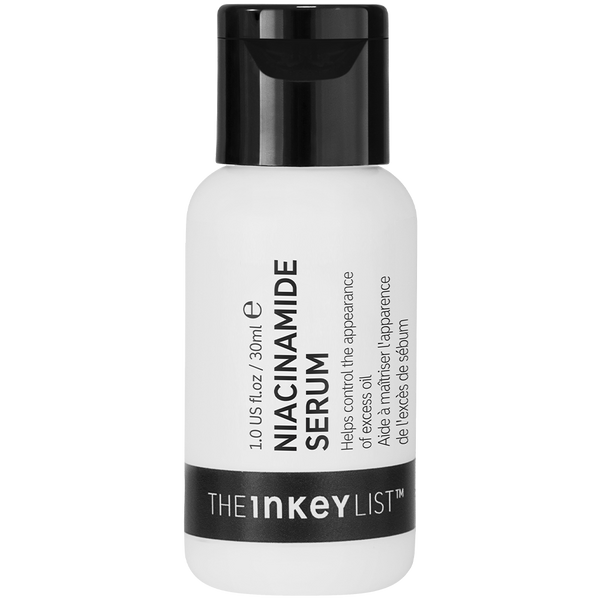
Throughout, the product doing the heavy lifting is our 10% Niacinamide Serum at $13. It is fragrance-free, built for daily use, and formulated to be non-stripping, which matters more for acne-prone skin than most people realize.
Understanding the four mechanisms is what makes every piece of advice that follows make sense, so that is where we will start.
What Niacinamide Actually Does for Acne-Prone Skin
Most skincare actives do one job. Salicylic acid clears pores. Benzoyl peroxide targets bacteria. Retinoids speed up cell turnover. Each of them is good at its single task and each of them tends to come with a cost, usually dryness, flaking or sensitivity.
Niacinamide is unusual because it does four separate things relevant to acne, at the same time, and does them without compromising your skin in the process. That combination is what makes it worth understanding properly rather than just adding to a cart. Acne is not caused by one thing, which is exactly why acne is a multifactorial condition and why an ingredient that addresses several drivers at once has an advantage over one that addresses a single driver very well.
It Calms the Inflammation Behind Red, Angry Breakouts
Acne is an inflammatory condition at its core. The redness, the swelling, the tenderness when you press a spot, all of that is your immune system responding inside a blocked follicle. Reduce the inflammatory signaling and you change how a breakout looks and how quickly it settles.
Niacinamide does this through documented pathways. A 2024 peer-reviewed review published in Antioxidants sets out how niacinamide inhibits COX-2, the enzyme central to producing inflammatory prostaglandins, and suppresses pro-inflammatory cytokines including TNF-alpha, IL-1, IL-6 and IL-8. It also acts on NF-kB, a master switch that turns inflammatory genes on, and engages the HCA2 receptor on skin cells.
In plain English: cytokines are chemical messengers that tell your skin to swell, redden and recruit more immune activity. NF-kB is the control panel those messages run through. Niacinamide turns the volume down on both. The practical result is that pimples look less angry, feel less sore, and calm down faster than they otherwise would.
This is also why niacinamide is useful for people whose main complaint is not the number of spots but how inflamed and obvious each one looks. You are not waiting for a pimple to disappear so much as reducing how loudly it announces itself while it heals.
It Supports Your Skin’s Own Defenses Against C. acnes
Here is where precision matters, because this mechanism is frequently misdescribed. Niacinamide is not an antibacterial. It does not kill Cutibacterium acnes, the bacteria involved in inflammatory acne, the way benzoyl peroxide or an antibiotic does.
What it does instead is strengthen your skin’s own defense system. Niacinamide stimulates the production of antimicrobial peptides, the small proteins your skin manufactures to control microbial populations on its own, and supports neutrophil activity, part of the immune response inside the follicle. You are not applying a weapon, you are reinforcing the security your skin already has.
The most striking finding in this area, documented in the same 2024 peer-reviewed review, is that topical 4% niacinamide showed anti-inflammatory activity comparable to 1% clindamycin, a prescription antibiotic, in the studies assessed. That is a meaningful result. It does not make niacinamide a replacement for prescription treatment, and it should not be read that way.
Why it matters is practical. Long-term topical antibiotic use carries real problems, including bacterial resistance, which is why dermatologists limit courses and avoid indefinite use. Niacinamide offers no resistance risk, which makes it viable as a daily, ongoing, years-long part of a routine in a way antibiotics are not. For people managing acne over the long term rather than clearing a single flare, that distinction is the whole point.
It Regulates Oil at the Sebaceous Gland
Excess sebum is one of the primary drivers of acne. When your sebaceous glands overproduce, that oil mixes with dead skin cells inside the follicle, the follicle blocks, and you have created the exact environment where acne-causing bacteria multiply. Reduce sebum output and you reduce the raw material breakouts are built from.
Clinical work has consistently shown that niacinamide preparations in the 2 to 5% range meaningfully reduce sebum production. That is a relatively modest concentration producing a measurable result, which tells you the effect is real rather than marginal.
Oil control is also almost always the first thing people notice. Most users report skin feeling less greasy within one to two weeks, well before any broader reduction in breakout frequency. That gap matters psychologically, because early visible feedback is what keeps people using a product long enough to see the slower benefits arrive.
Our 10% Niacinamide Serum sits at double the upper end of the concentration used in most sebum research. That supports faster, more noticeable oil control while remaining well tolerated for daily use, which is the balance we were aiming for rather than pushing the percentage as high as possible for the sake of the number on the bottle.
It Rebuilds the Skin Barrier Instead of Wrecking It
This is niacinamide’s genuine differentiator and the reason it belongs in acne routines that already contain other actives.
Your skin barrier is the outermost layer, held together by lipids including ceramides. When it is intact, it holds water in and keeps irritants out. When it is compromised, you get tightness, stinging, redness, flaking and a skin surface that reacts to everything, including the products meant to be helping.
Almost every conventional acne active compromises the barrier to some degree. That is the trade-off people accept when they start treatment, and it is the single most common reason routines get abandoned in week three.
Niacinamide runs in the opposite direction. It stimulates ceramide production by activating mRNA expression of serine palmitoyl transferase, the rate-limiting enzyme in ceramide synthesis. Translated: it tells your skin to manufacture more of the lipids that hold the barrier together. Stronger barrier means less water loss, less reactivity, and less susceptibility to the irritation that can itself trigger new breakouts.
This is why niacinamide can honestly be described as an acne active that does not make your skin worse before it makes it better. If you recognize tightness, stinging or persistent redness in your own skin, our damaged skin barrier guide is worth reading before you add anything else to your routine.
Four mechanisms are only useful if they translate into something you can see in the mirror, so let us look at what the evidence says actually happens, and how long it takes.
Is Niacinamide Good for Acne? What the Evidence Shows
Yes, niacinamide is good for acne, specifically for inflammatory acne, oiliness and post-acne dark marks, with realistic limits on what a topical ingredient can achieve.
The evidence base is genuinely solid rather than promotional. Multiple clinical studies support sebum reduction and improvement in inflammatory lesions. The 2024 peer-reviewed review consolidates the mechanistic evidence across inflammation, barrier function, pigmentation and antimicrobial support. And the comparison between 4% topical niacinamide and 1% clindamycin on anti-inflammatory activity is a serious data point, not marketing language.
Now the caveat, stated plainly. Niacinamide is not a replacement for prescription treatment in severe or cystic acne. If you have deep, painful nodules under the skin, acne that scars, or acne that has not responded to over-the-counter routines, you should see a dermatologist. Niacinamide may still form a useful supporting part of that routine, and it pairs well with most prescription regimens, but it is not the primary treatment for severe disease. We would rather tell you that than take the sale.
For mild to moderate acne, oily skin, congestion, and the marks left behind afterwards, niacinamide is one of the best-evidenced ingredients available at an accessible price.
A Realistic Week-by-Week Timeline
Expectations are the reason most people quit. Here is what typically happens, in order:
- Weeks 1 to 2. Less shine. Oil control becomes noticeable first, and skin usually feels less greasy by mid-afternoon. Makeup, if you wear it, tends to sit better and last longer.
- Weeks 4 to 6. Visible reduction in active breakouts and, just as importantly, in how often new ones appear. Existing spots settle faster than they used to.
- Weeks 6 to 8. Pores look more refined and overall texture feels smoother to the touch.
- Weeks 8 to 12. Post-acne dark marks visibly fade. This is the slowest change and the one that requires the most patience.
There is a biological reason the timeline runs this way. Skin’s turnover cycle takes roughly 28 days. Changes to oil production, barrier integrity and pigmentation each need multiple complete cycles before the difference is visible at the surface. Slow results are the biology working correctly, not the product failing.
If you want the practical mechanics of fitting it into your routine rather than the evidence behind it, our guide on how and when to use niacinamide covers application in detail. And if you are unsure whether your acne type fits this advice at all, Acne Analyzer Pro gives you a personalized read before you commit to a routine.
The timeline above describes results from the 10% Niacinamide Serum at $13, used consistently, twice daily, as part of a complete routine.
The Most Common Mistakes That Slow Results
- Stopping the moment a breakout appears. This is the most self-defeating mistake. A breakout is precisely when the anti-inflammatory action is doing its most valuable work. Stopping removes the thing that is helping.
- Expecting overnight change. Nothing topical reorganizes sebum production and pigmentation in a week. Judge results at eight weeks, not eight days.
- Mixing serums in the palm. Combining products in your hand before application dilutes concentrations and changes how each one penetrates. Layer them as separate steps.
- Using far more than a pea-sized amount. Excess product does not accelerate anything. It sits on the surface, pills under makeup, and empties the bottle faster.
- Skipping sunscreen. UV exposure directly darkens post-inflammatory marks. Without daily SPF you are undoing the pigmentation work niacinamide is doing.
Consistency, not quantity, is the variable that decides your results. Two applications a day of a modest amount beats sporadic heavy use every time.
Since oil control is the first thing most people notice, it deserves a closer look.
Niacinamide for Oily Skin: Controlling Shine and Refining Pores
The link between oil and acne is mechanical, not mysterious. Sebaceous glands produce sebum. Sebum mixes with dead skin cells inside the follicle. That mixture blocks the follicle. A blocked, oil-rich follicle is the ideal environment for C. acnes to multiply, which triggers the inflammatory response you see as a pimple.
Reduce oil at the source and you reduce the raw material for new breakouts. That is why niacinamide for oily skin is not a separate concern from niacinamide for acne. They are the same intervention viewed from two angles.
Regulating Oil Is Not the Same as Stripping It
This distinction is worth internalizing because getting it wrong makes oily skin worse.
Niacinamide regulates sebum production, meaning it moderates output at the gland. Stripping means removing oil from the surface with harsh cleansers, alcohol-heavy toners or aggressive scrubbing. Those two things feel similar in the moment and produce opposite outcomes.
When you strip skin, you damage the barrier and remove the lipids your skin depends on. Skin frequently responds by producing more oil to compensate, which is the rebound effect. You end up shinier at 3pm than you were before you started, and you have a compromised barrier on top of it.
This is why the “squeaky clean” instinct backfires so reliably for oily, acne-prone skin. If your face feels tight after cleansing, the cleanser is too harsh, not effective. Our oily skin guide goes deeper if oil is your primary concern rather than acne itself.
What Actually Happens to Your Pores
Let us be accurate here, because this is where a lot of skincare marketing overpromises.
Pore size is largely determined by genetics and it does not meaningfully change with topical products. What does change is how visible your pores are. A pore filled with oil and dead skin appears larger and darker. Empty that pore, reduce the oil flowing into it, and improve the condition of the surrounding skin, and it looks visibly smaller and less congested.
That is a real, noticeable, worthwhile improvement. It is not pore shrinking, and we are not going to call it that.
When 10% Is Not Quite Enough
For most people, 10% niacinamide is the right concentration and there is no reason to go higher. But some people have persistently oily skin that does not respond adequately at that level, particularly across the T-zone.
For those cases, the 20% Niacinamide Excess Oil Solution is a targeted step-up. It is deliberately not the default starting point. Beginning at 20% when 10% would have done the job increases the chance of irritation without a proportional gain, and you lose your headroom if you ever need it later. Start at 10%, give it eight weeks, and step up only if oil remains a genuine problem.
Oily Skin Can Still Be Dehydrated
This surprises people, but oily and dehydrated is one of the most common skin states we see, and it is frequently self-inflicted through over-cleansing.
Oiliness is about sebum production. Dehydration is about water content. You can have plenty of the first and not enough of the second. Skin that is oily and dehydrated often looks shiny while feeling tight, and it can flake in patches even while the T-zone is slick.
Niacinamide addresses both sides, regulating oil while supporting the barrier that holds water in. Pairing it with a lightweight, oil-free moisturizer completes the picture. Our Omega Water Cream at $15 is built for exactly this scenario, delivering hydration without heaviness alongside 5% niacinamide and a ceramide complex.
In a consumer study, 100% of participants said skin felt deeply hydrated after 14 days, and 95% agreed skin tone looked more even after 28 days.
If you have read this far and realized your skin may not actually be oily at all, our piece on whether niacinamide is good for dry skin will serve you better than this section will.
Knowing what an ingredient does well is only half the picture. Knowing where it stops is what protects you from disappointment.
What Niacinamide Will Not Do: Marks, Purging and Breakouts
Niacinamide and Acne Scars
True acne scars are structural. They are either indented, where tissue was lost during healing, or raised, where too much formed. No topical ingredient reverses dermal damage of that kind, and treating it requires in-clinic procedures.
Post-inflammatory hyperpigmentation is a different thing entirely. These are the flat brown, pink or purple marks left on the surface after a pimple heals, with no change to skin texture. Niacinamide does fade these, by limiting the transfer of melanosomes, the pigment packages, into surface skin cells.
Expect visible fading over 8 to 12 weeks with consistent use and daily sunscreen. For the full picture on structural scarring, see our acne scars guide, and for marks and uneven tone specifically, our hyperpigmentation guide.
Can Niacinamide Cause Acne?
No. Niacinamide is non-comedogenic and anti-inflammatory, and there is no established mechanism by which it would trigger breakouts. If you broke out after starting it, another new product, a hormonal shift, or a breakout cycle that was already underway are all far likelier explanations, and our dedicated piece on whether niacinamide can cause acneworks through how to identify the real culprit.
Does Niacinamide Cause Purging?
No. Purging requires accelerated cell turnover pushing existing congestion to the surface faster, and the 2024 peer-reviewed review confirms niacinamide has no effect on keratinocyte proliferation. Without that mechanism, purging cannot occur, though our guide to what skin purging actually is will help you tell it apart from irritation if you are using other actives.
The value of knowing these limits is simple: you stop blaming the wrong product.
Limits established, the more useful question is what genuinely extends niacinamide’s results, and that comes down to what you pair it with.
What to Pair With Niacinamide for Acne
Niacinamide works perfectly well as a standalone. Plenty of people use nothing else and see real improvement. But acne is multifactorial, and a routine that addresses more of those factors will always outperform a single product used in isolation.
The good news is that niacinamide is one of the most cooperative ingredients in skincare. It plays well with almost everything, which is not true of most actives.
Niacinamide and Salicylic Acid, the Core Acne Pairing
If you only add one thing, add this one.
Salicylic acid is oil-soluble, which means it can dissolve through sebum and get inside the pore itself. Once there, it breaks down the plug of dead skin and oil causing the blockage, which is why it is the standard recommendation for blackheads, whiteheads and general congestion. Our salicylic acid guide covers the ingredient in full, and salicylic acid for blackheads covers its most popular application.
Niacinamide works upstream of all that. It reduces how much oil is produced in the first place and calms the inflammatory response. One clears what is already there, the other reduces how much gets created. They are complementary rather than competitive, and there is a reason salicylic acid and niacinamide are the best duo for oily, blemish-prone skin.
In practice this is not complicated. Cleanse with our Salicylic Acid Cleanser at $15, then apply the 10% Niacinamide Serum at $13. No pH waiting periods, no alternate-day scheduling, no separating them across morning and evening. The old advice about pH conflicts between these two has not held up.
If congestion rather than inflammation is your main issue, our blackheads guide is the more targeted read.
Which Is Better for Acne, Niacinamide or Salicylic Acid?
The honest answer is that the versus framing misses the point, because they solve different problems. Asking which is better is like asking whether a lock or an alarm is better for your house.
That said, if you genuinely have to pick one:
- Choose niacinamide if you want the broader daily benefit, you have sensitive or reactive skin, your acne is inflammatory rather than congestive, or you are also dealing with post-acne marks and oiliness. It is more universally tolerated across skin types.
- Choose salicylic acid if your primary problem is visible congestion, blackheads and clogged pores, and your skin tolerates actives comfortably. It is more targeted, and more likely to irritate if overused.
- Recommended order of adoption: start with niacinamide, use it consistently for four to six weeks, then introduce salicylic acid in a cleanser once your skin has adjusted. Adding it in a rinse-off format gives you the benefit with less exposure time, which is the gentler entry point.
Niacinamide and Retinol, the PM Pairing
Retinol accelerates cell turnover and helps prevent comedones from forming, which makes it genuinely valuable for acne-prone skin over the long term. It also irritates, particularly in the first several weeks, and that irritation is why so many people abandon it.
Niacinamide buffers exactly that. Its barrier support and anti-inflammatory action reduce the dryness and reactivity that make retinol difficult to stick with. This pairing is well established, and both whether you can use niacinamide with retinol and what not to mix with retinol are worth reading before you start.
The layering order at night:
- Cleanse.
- Apply the 10% Niacinamide Serum.
- Allow it to absorb fully before the next step.
- Apply your Retinol Serum.
- Finish with moisturizer.
Niacinamide going first buffers the skin before retinol makes contact, without blunting the retinol’s efficacy. Our retinol guide covers strengths and starting frequency if you are new to it.
Niacinamide and Azelaic Acid, for Acne With Redness
Azelaic acid is an excellent partner when your acne comes with persistent redness or uneven tone. Both ingredients are anti-inflammatory, both suit sensitive skin, and azelaic acid adds antibacterial action alongside its effect on pigmentation. Together they are a sensible combination for anyone whose skin flushes as much as it breaks out. Our azelaic acid guide covers the ingredient, and azelaic acid and niacinamide, can you use them together covers the pairing specifics.
Niacinamide and Glycolic Acid
Compatible, provided you space them sensibly rather than layering them back to back at full strength. Glycolic acid works on the surface while niacinamide works deeper, and the mechanics of scheduling them are covered properly in niacinamide and glycolic acid, can you use them together.
Barrier Support Is Not Optional
Acne routines fail for one reason more than any other: the barrier gets compromised, skin becomes reactive, and the whole routine becomes unsustainable.
Niacinamide helps here, but it is not a substitute for moisturizing. Pairing it with a moisturizer suited to your skin type is what turns an active routine into one you can actually maintain for months. For oily and acne-prone skin, Omega Water Cream at $15 is the right weight, oil-free and non-comedogenic, with an additional 5% niacinamide built in.
A Note on Brightening and Glow Ingredients
Some readers weighing up ingredients are thinking about overall radiance as much as acne. If you want to understand how niacinamide sits alongside other glow ingredients, our comparison of brightening and glow ingredients covers it.
With pairings settled, what remains are the specifics people ask about most: strength, timing, and their own particular situation.
Percentages, Timing and Specific Situations
What Percentage of Niacinamide Is Best for Acne?
For most people, 10%. That is the direct answer, and here is the reasoning:
- 2 to 5% is the range used in much of the sebum research and it demonstrably works. If you are using a moisturizer with 5% niacinamide, you are getting a real, evidence-backed dose.
- 10% is the sweet spot of efficacy and tolerability for daily use. High enough to deliver noticeable oil control and anti-inflammatory benefit, low enough to be comfortable twice a day for most skin types.
- 20% is a targeted step-up for persistently oily skin, not a default. The 20% Niacinamide Excess Oil Solutionexists for people whose oiliness has not responded adequately at 10%.
The “more is better” assumption deserves confronting directly, because it costs people money and comfort. Higher percentages do not improve results in a linear way. Past a certain point you get diminishing returns on efficacy and increasing returns on irritation, particularly for sensitive skin. Choosing 20% as a starting point is not being thorough, it is skipping a step.
How Much Niacinamide Should I Actually Apply?
A pea-sized amount covers your face and neck. That is it.
More product does not accelerate results. Your skin can only absorb so much at once, and the excess sits on the surface, pills under makeup or sunscreen, and runs the bottle down faster than necessary.
Apply it as its own separate step rather than mixing it into another serum or your moisturizer in your palm. Mixing dilutes the concentration and changes how it behaves on the skin. Our guide on how and when to use niacinamidecovers application technique in more detail.
Should You Use Niacinamide in the Morning or at Night?
Both, ideally. Twice daily gives the fastest visible results for oily and acne-prone skin, and niacinamide is stable and gentle enough that there is no reason to restrict it to one.
Once daily still works. It will simply take longer.
If you can genuinely only manage one application, choose based on your priority. Morning suits oil control, because you get the benefit across the hours your skin is producing most visibly. Evening suits anyone pairing it with retinol, since that is when the buffering effect matters.
Is Niacinamide Good for Hormonal Acne?
Niacinamide does not act on hormones. It does not affect androgen levels, it does not influence your cycle, and it will not address the underlying hormonal driver. Anyone claiming otherwise is overstating it.
What it does do is manage the consequences well. Hormonal fluctuation drives sebum production up, and niacinamide reduces sebum output. Hormonal breakouts along the jaw, chin and lower cheeks tend to be deep, red and stubbornly persistent, and niacinamide’s anti-inflammatory action directly targets that redness and swelling.
So the honest position is this: for hormonal acne, niacinamide manages the visible symptoms effectively while leaving the hormonal cause untouched. That is genuinely useful, and it is not a cure. If hormonal acne is your primary concern, our guide to hormonal acne, what causes it and how to manage it covers the fuller picture, including when to seek medical input.
Can Niacinamide Help With Fungal Acne?
Fungal acne is not really acne. Its proper name is malassezia folliculitis, and it is driven by an overgrowth of yeast rather than C. acnes bacteria. That is why it looks different, presenting as uniform small bumps, often itchy, clustered on the forehead, chest, shoulders or back, and why it does not respond to standard acne treatment no matter how diligently you apply it.
Niacinamide is generally well tolerated by people with fungal acne and does not feed malassezia, which is more than can be said for many common skincare ingredients. Its oil regulation and barrier support may help improve the environment on the skin.
But it is not an antifungal and it will not clear fungal acne on its own. Treating it requires antifungal ingredients. If the description above sounds like your skin, read what fungal acne is, its symptoms, causes and how to treat it before spending more on conventional acne products.
Is Niacinamide Safe During Pregnancy?
Niacinamide is widely considered pregnancy-safe and is one of the more useful actives available when retinoids are off the table. For anyone who has had to strip their routine back during pregnancy, it covers a lot of ground: oil control, inflammation, barrier support and pigmentation.
As always, confirm with your healthcare provider, since individual circumstances vary. Our guide to pregnancy-safe skincare covers what stays and what goes.
Can You Use Niacinamide on Active, Inflamed Pimples?
Yes, and this is precisely when it earns its place in your routine. The anti-inflammatory action is most valuable during an active breakout, which makes stopping at the first sign of one exactly the wrong instinct.
Apply it across your whole face rather than dabbing it on individual spots. Niacinamide is a preventive and regulating ingredient, not a spot treatment, and the goal is reducing overall oil and inflammation rather than attacking one pimple.
For individual raised spots, Hydrocolloid Invisible Pimple Patches at $10 absorb fluid, protect the area and, importantly, stop you touching it. For skin that will not stay clear and keeps cycling through breakouts, the 360° Skin Clearing Serum at $18 targets all three stages of a breakout rather than just the visible one.
Every variable is now covered, so here is what all of it looks like as a routine you can start tomorrow.
Your Niacinamide Routine for Acne-Prone Skin
This is what the science looks like once it becomes something you can actually keep up. Three core steps, one non-negotiable fourth, and no complexity that will cause you to abandon it by week two.
Morning Routine
- Cleanse with the Salicylic Acid Cleanser, $15. It combines 2% salicylic acid to clear inside the pore with zinc for oil control and allantoin to soothe, so it clears congestion without leaving skin tight. Our guide to the best cleanser for acne-prone skin covers alternatives if your skin needs something different.
- Treat with the 10% Niacinamide Serum, $13. A pea-sized amount across face and neck. Let it absorb before moving on.
- Moisturize with Omega Water Cream, $15. Oil-free and non-comedogenic, and it delivers an additional 5% niacinamide alongside its ceramide complex.
- Protect with Dewy Sunscreen SPF 30. This step is not optional. UV exposure worsens active acne and darkens post-acne marks, which means skipping sunscreen actively undoes the pigmentation work niacinamide is doing. If you want to understand ratings and application amounts properly, read what SPF actually means.
Evening Routine With Retinol
- Cleanse.
- Apply the 10% Niacinamide Serum first and let it absorb fully.
- Apply your Retinol Serum.
- Finish with Omega Water Cream.
Applying niacinamide first buffers the skin before retinol makes contact, reducing the dryness and irritation that derail most retinol routines, without blunting how well the retinol works.
Evening Routine Without Retinol
- Cleanse.
- Apply the 10% Niacinamide Serum.
- Finish with Omega Water Cream.
- Add a pimple patch overnight on any individual raised spots.
Making It Stick
- Damp or dry skin both work for application. Use whichever you prefer, consistency matters more than technique.
- Apply each product as its own separate step. No palm mixing.
- Twice daily gives the fastest visible results, but once daily still delivers.
- Do not stop when a breakout appears. That is when it is working hardest.
The three core steps come to $43 in total, which covers cleansing, treatment and moisturizer for an acne-prone routine. If you want to explore the full range, browse our acne and breakouts collection, and if you are unsure which of these routines suits your skin, Acne Analyzer Pro will point you in the right direction.
A few specific questions come up repeatedly, so here are the direct answers.
The Bottom Line on Niacinamide for Acne
Yes, niacinamide is good for acne, and that answer is backed by four distinct, peer-reviewed mechanisms operating at the same time.
It calms the inflammation that makes breakouts red and swollen. It supports your skin’s own defenses against C. acneswithout antibiotic resistance risk. It regulates oil at the sebaceous gland, reducing the raw material breakouts are built from. It rebuilds the skin barrier rather than degrading it, which is what makes it sustainable alongside other actives. And it fades post-acne dark marks by limiting pigment transfer to the surface.
It also will not resurface indented scars, it does not act on hormones, and it is not an antifungal. Repeating the limits at the close is deliberate, because being clear about what an ingredient cannot do is what makes the claims about what it can do worth believing.
The one thing that decides your results is not which products you own or how much you spent on them. It is whether you keep using them. Oil control arrives in a couple of weeks, clearer skin in a month or two, and faded marks somewhere around week twelve. Every one of those milestones requires you to still be applying the serum when you get there, including on the mornings you wake up with a fresh breakout and want to blame something.
A complete niacinamide-led acne routine starts at $13. That is not a boast about being cheap, it is the point: the evidence-backed option should be the one you can actually afford to use every day for a year.
Start with the 10% Niacinamide Serum at $13 and give it eight weeks.
If you are not sure what your skin needs, Acne Analyzer Pro gives you a personalized, dermatologist-backed recommendation in a few minutes.
If you want the complete routine, shop acne and breakouts or build your own routine around the ingredients your skin actually needs.
Because at The INKEY List, we give a care.
Frequently Asked Questions
Got a question?
Our askINKEY team are a friendly bunch of skincare experts with deep product knowledge and zero judgement. Whether you're an ingredient obsessive or just starting out, we'll make it make sense. No question too big. No question too small. We Give A Care, Every Day.


