

Is Niacinamide Good for Dry Skin? Benefits & How to Use
Niacinamide isn’t just for oily skin, here’s how it rebuilds ceramides, strengthens a dry skin barrier, and exactly how to layer it for lasting hydration.
Author
askINKEY skincare advisor
Published
17 May, 2026
Time to read
8 minutes
Yes, niacinamide is good for dry skin. If you have been skipping it because you read somewhere that niacinamide is an oily skin ingredient, that advice was incomplete. The question “is niacinamide good for dry skin” comes up constantly, and the answer is a clear yes: niacinamide supports your skin’s natural production of ceramides, helps strengthen the skin barrier and helps reduce how much water escapes from the surface of your skin. That is precisely what dry and dehydrated skin needs.
Below we cover what niacinamide actually is, the mechanism that makes it work on dry skin, how to tell whether your skin is dry or dehydrated (they are not the same thing), why niacinamide and hyaluronic acid work better together than apart, and exactly how to layer everything morning and night.
What Niacinamide Actually Is, and Why Dry Skin Gets Told to Avoid It
Niacinamide is a form of vitamin B3. It is water-soluble, which means it dissolves in water rather than oil, and it is one of the most widely studied ingredients in modern skincare. If you want the complete breakdown of how it works and everything it does, our ingredient page on what is niacinamide? goes deeper than we will here. For the purposes of this article, the short version is what matters.
Niacinamide is a genuine multitasker. In plain English, here is what it does:
- Helps balance oil production rather than stripping oil away
- Supports the skin barrier, the layer responsible for holding moisture in
- Helps improve the look of enlarged pores
- Helps calm the appearance of redness
- Works toward a more even-looking tone over time
That is a wide brief for one ingredient, and it is a large part of why niacinamide shows up in so many formulas at so many price points. It is also why the ingredient has developed a slightly confused reputation.
Why Niacinamide Is Not Just for Oily Skin
The “oily skin only” label came from that first bullet. Niacinamide earned an early reputation as an oil-balancing ingredient, and somewhere in the long game of telephone that is online skincare advice, “helps balance oil” got flattened into “for oily skin.” From there it became shorthand. Oily skin? Niacinamide. Dry skin? Look elsewhere.
The correction is small but it changes everything. Niacinamide helps balance oil. It does not strip it, degrease it or shut sebum production down. Balance is a two-way idea. It is useful if your skin produces more oil than you would like, and it is equally useful if your skin produces less than it needs, because balance means moving toward equilibrium from whichever direction you are approaching it. Nothing about that mechanism is hostile to dry skin.
There is a second reason the myth stuck, which is that a lot of oily skin content is written as a separate universe from dry skin content. If you have ever gone down that rabbit hole, our full guide to oily skin covers that side properly. But ingredient reputations built inside one category tend to stay locked there, even when the underlying science travels perfectly well.
Here is the framing straight from our own product page, and it is the sentence that matters most for anyone with dry skin: niacinamide strengthens your skin barrier and improves moisture retention. Read that again with dry skin in mind. Moisture retention is the entire problem you are trying to solve.
Niacinamide for dry skin also has a practical advantage that gets underrated. It is well tolerated by most people, it is fragrance-free in our formula, and it is suitable for sensitive skin. That matters more than it might sound, because dry skin and reactive skin frequently travel together. When your barrier is compromised, irritants reach deeper and your skin responds more sharply to things it would otherwise shrug off. An ingredient that delivers real benefit without demanding a tolerance-building period is genuinely valuable in that situation.
If you want general guidance on fitting it into your routine beyond the dry skin angle, we have a dedicated piece on how and when to use niacinamide serum.
So niacinamide supports the barrier. That is the claim. Now let’s look at exactly how it does that, because the mechanism is the real answer to the headline question.
How Niacinamide Supports Ceramide Production and Your Skin Barrier
Your skin barrier is the outermost layer of your skin, and it has two jobs: hold moisture in and keep irritants out. When it is working well you do not think about it at all. When it is not, you get tightness, flaking, stinging and skin that reacts to products it used to tolerate. If you want the full picture of what goes wrong and why, we cover it on our damaged skin barrier page.
The most useful way to picture that barrier is as a brick wall. The skin cells are the bricks. The mortar holding them together is made of lipids, and the most important of those lipids are ceramides.
Ceramides make up a substantial share of the lipid matrix between your skin cells. They are the reason the wall is watertight rather than a loose stack of bricks. When ceramide levels drop, the mortar thins out. Gaps open. The wall stops sealing properly, and water that should be staying inside your skin starts escaping through those gaps instead.
That is a very common driver of dry, tight, flaky skin, and it explains something a lot of people find confusing: why slathering on more moisturizer sometimes only helps for an hour or two. If your barrier is leaking, topping up the water is a temporary fix. You are refilling a container that has holes in it. The lasting solution is to help the container hold water again.
The Mechanism, Without the Jargon
This is where niacinamide earns its place in a dry skin routine. Niacinamide supports your skin’s own natural production of ceramides and other barrier lipids. It does not simply sit on the surface and deposit a layer of something. It helps your skin build more of the mortar itself.
The logic chain from there is short and worth spelling out:
- Niacinamide supports natural ceramide and lipid production
- More lipids means denser, better-sealed mortar between skin cells
- A better-sealed barrier holds onto water more effectively
- Skin that holds onto water feels less tight, looks less dull and flakes less
That is the entire answer to “is niacinamide good for dry skin” in four steps. It is not a hydrator in the way a humectant is a hydrator. It is not pulling water into your skin. It is improving your skin’s ability to keep the water it already has, which is a different and arguably more durable kind of help.
Be Realistic About the Pace
We are going to be straight with you here, because setting the wrong expectation is how good ingredients get abandoned at week two.
Niacinamide is a support-and-strengthen ingredient, not an instant transformation. It works by nudging processes your skin is already running, and those processes operate on your skin’s timeline, not on yours. You will likely notice improved comfort fairly early. The structural improvements take longer.
Consistency matters more than concentration. A 10% niacinamide serum used every day for three months will do considerably more for your barrier than a higher strength used sporadically for three weeks.
This is also worth knowing: ceramide levels naturally decline as we age. It is a normal part of how skin changes over time, and it is one reason barrier support becomes more relevant with each passing decade rather than less. Skin that held moisture effortlessly at twenty-two often needs a little structural help at forty-two, and that shift is not a failure of your routine. It is biology, and it is a good argument for building barrier support into your routine before you feel you urgently need it.
Two things worth reading next if this section landed for you. First, not all ceramides behave the same way in a formula, and our piece on bio-active ceramides vs regular ceramides explains the difference before you pick a moisturizer. Second, if your dry skin is also reactive, how to hydrate sensitive skin without causing irritation covers that overlap in detail.
All of this raises an obvious question. If moisture loss is the issue, is your skin actually dry, or is it dehydrated? Those are different problems with different solutions.
Dry vs Dehydrated Skin: What’s the Difference?
Here is the one-line version: dry skin lacks oil, dehydrated skin lacks water.
That distinction sounds academic until you realize it changes what you should be buying. Reaching for a rich, occlusive balm when your actual problem is a lack of water is a bit like putting a lid on an empty pot. Reaching for a lightweight water-based serum when your skin genuinely does not produce enough oil leaves you with nothing holding that water in place.
Dry skin is a skin type. It is largely persistent, it is influenced by genetics, and it means your skin produces less oil than it needs to stay comfortable. It tends to feel rough, tight or flaky as a baseline state rather than as a temporary flare.
Dehydrated skin is a condition. It is temporary, it can happen to anyone, and crucially it can happen to oily and combination skin just as easily as to dry skin. It is usually driven by external factors: cold weather, over-cleansing, over-exfoliating, indoor heating, air conditioning, long hot showers, travel, or a barrier that has been stripped by a routine that is doing too much. Our dehydrated skin page covers the causes in more depth.
Signs Your Skin Is Dry
- Feels rough or textured to the touch, consistently rather than occasionally
- Visible flaking, especially around the nose, brows and hairline
- Tightness that persists throughout the day, not just after cleansing
- Little to no visible shine, even in the T-zone by late afternoon
- Makeup can look patchy or cling to dry areas
- Fine lines look more etched, particularly in colder months
Signs Your Skin Is Dehydrated
- Dullness and a general lack of radiance
- Tightness immediately after cleansing that eases once you apply product
- Makeup clinging, sitting oddly or breaking up faster than usual
- Fine lines looking more pronounced than they did a week ago
- Skin feeling oily and tight at the same time, which is the tell-tale combination
- Skin looks a little deflated or lacks bounce when you press it
That last sign on the dehydrated list is the one people misread most often. Oily and tight simultaneously feels contradictory, so many people conclude their skin is “combination” and leave it there. Frequently what is actually happening is that dehydrated skin has responded by producing more oil to compensate, which is why why oily skin gets dehydrated too is one of our most-read pieces. If you want to work through this properly, how to tell if your skin is dehydrated: 7 signs you might be missing is the deeper diagnostic.
Practically, the distinction points you in different directions. Dry skin benefits from richer, lipid-rich moisturizers that supply the oils your skin is not producing. Dehydrated skin benefits from water-binding humectants that pull moisture into the upper layers. Plenty of people have both at once, which is entirely normal and means you want both approaches running together.
Niacinamide is useful in either case, which is part of why it deserves a place in the conversation regardless of which camp you fall into. Whether your issue is too little oil or too little water, the barrier is what determines how long any of it stays put. Strengthen the barrier and you improve the outcome from both directions.
Niacinamide and Water Loss (TEWL), Explained
Transepidermal water loss, usually shortened to TEWL, is the water that continuously evaporates from the surface of your skin. It happens to everyone, all day, every day. It is a normal process, not a malfunction.
The issue is the rate. A healthy, well-sealed barrier keeps that evaporation at a manageable level. A weakened barrier lets far more water escape than it should, and that elevated loss is a large part of what dry and dehydrated skin actually feels like from the inside.
Niacinamide supports the barrier, which helps reduce how much water escapes. That is the connection between the ingredient and the symptom, stated as simply as it can be. If you want the full explanation of how TEWL is measured and what raises it, what is TEWL (transepidermal water loss) is the dedicated explainer.
Now that you know whether you need water, oil or both, let’s look at the pairing that handles the water side properly.
Niacinamide and Hyaluronic Acid: The Pairing for Dry Skin
If there is one ingredient combination worth understanding for dry skin, it is niacinamide and hyaluronic acid. They are frequently discussed as alternatives, as though you have to pick a side. You do not. They solve different halves of the same problem.
Hyaluronic acid is a humectant. Humectants are water magnets: they attract and bind water molecules, drawing moisture into the upper layers of your skin and holding it there. Hyaluronic acid is exceptionally good at this, which is why it has become the default hydrating ingredient across the entire industry.
Niacinamide, as we covered above, works on the container rather than the contents. It helps strengthen the barrier that keeps that water where you put it.
One brings water in. The other helps hold it there. That is the whole logic of the pairing, and once you see it that way the “which one should I use” question mostly answers itself. For dry skin, the honest answer is usually both.
Can You Use Them Together? Yes, and There Is No Catch
Let’s kill this worry properly, because it generates a lot of unnecessary anxiety.
Niacinamide and hyaluronic acid are entirely compatible. You do not need to alternate days. You do not need to use one in the morning and one at night. You do not need to wait twenty minutes between them or worry about pH conflicts. Apply them in the same routine, one after the other, every single day if you want to.
The confusion around layering actives is understandable given how much conflicting advice exists, and some combinations genuinely do need care. This is not one of them. If layering anxiety is a broader issue for you, what products should I not layer together sorts the real conflicts from the internet myths.
Hyaluronic acid is not the only humectant worth knowing. Glycerin is one of the most established and best-evidenced humectants in skincare, and it appears across an enormous range of formulas, often quietly in the ingredient list rather than on the front of the bottle. If a moisturizer you like feels reliably hydrating without making a fuss about it, glycerin is often part of the reason.
It is also worth knowing that our 10% Niacinamide Serum already contains 1% Hyaluronic Acid, so a version of this pairing is built into the formula. For dry skin specifically, a dedicated hydrating serum layer on top adds meaningfully more water-binding capacity than the niacinamide serum alone can carry.
There is a third hydrator worth having on your radar. Ectoin is a natural molecule that helps skin hold onto water while supporting the barrier, and it has become a particularly strong option for dehydrated and sensitive skin. It is not a replacement for hyaluronic acid so much as a different approach to the same goal. If you are weighing them up, ectoin vs hyaluronic acid: what’s the difference breaks it down.
Applying Niacinamide to Damp Skin
This is the part that most affects whether the pairing actually works for you, and it is the step people skip.
Apply hyaluronic acid to damp skin. Not soaking, not dripping, just not fully dried off after cleansing.
The reason comes back to what a humectant does. Hyaluronic acid draws water toward itself. If your skin is damp, it pulls from the moisture sitting on the surface and binds it into your skin. If your skin is bone dry and the air around you is also dry, which describes most heated rooms in winter and most air-conditioned offices in summer, a humectant has less surface water available to work with. Applying hyaluronic acid to a completely dry face in dry air is the single most common mistake people make with the ingredient, and it is why some people conclude it “does nothing” for them.
You have two easy options. Pat your face partially dry after cleansing and apply straight away, or use a facial mist to re-dampen the skin before your serum. Either works.
The practical rule: apply hyaluronic acid to damp skin, follow with niacinamide, then seal everything with moisturizer.
That order is not arbitrary. The humectant goes on first while there is water available to bind. Niacinamide follows to support the barrier. Moisturizer goes last to lock the whole arrangement in place and slow evaporation. Skip the final step and you have essentially set up a system with no lid on it.
Now let’s put the full routine together, step by step, morning and night.
How to Layer Niacinamide in a Dry Skin Routine
There is one principle that governs almost all skincare layering: go thinnest to thickest. Lightweight, water-based products first, richer and more occlusive products last. Thin products cannot penetrate through a heavy cream, but a heavy cream will happily sit on top of a serum and do its job.
The second principle is patience between steps. Let each layer absorb before applying the next. You do not need to time it precisely, but rushing is the main cause of pilling, those little rolls of product that appear when layers have not settled. Thirty seconds of absorption usually solves it.
AM Routine for Dry Skin
- Cleanse gently, or skip it. If your skin feels tight and dry when you wake up, rinsing with lukewarm water alone is a perfectly legitimate morning cleanse. You cleansed last night. There is not much on your skin that needs stripping off.
- Hydrating serum on damp skin. Apply while your face is still slightly damp so the humectants have water to bind.
- Niacinamide. Apply over the hydrating layer, a few drops pressed across the face and neck.
- Moisturizer. This seals the previous two steps and supplies the lipids dry skin needs.
- Broad-spectrum sunscreen. Every morning, all year, regardless of weather. UV exposure contributes directly to barrier degradation, which undermines everything the previous four steps are working toward. If you want the full explanation of ratings and how sun protection works, what is SPF covers it.
PM Routine for Dry Skin
- Cleanse thoroughly. Evening cleansing has a real job: removing makeup, sunscreen and the day. For dry skin, starting with a balm-to-oil cleanser is a noticeably gentler approach than going straight in with a foaming formula, because it dissolves what needs removing without stripping the lipids you are trying to protect. Follow with a gentle second cleanse if you wear heavy makeup.
- Hydrating serum on damp skin. Same principle as the morning.
- Niacinamide. Same application.
- Moisturizer. Go richer at night than you do in the morning. There is no makeup to sit on top of, no sunscreen to layer over, and overnight is when transepidermal water loss tends to be at its highest. A more substantial moisturizer earns its place in the PM slot.
How Often, and What About Retinol
Niacinamide is gentle enough for twice-daily use, and it does not build tolerance the way some actives do. You do not need to cycle it or take breaks from it. Daily use is the point.
If your skin is currently reactive or you are introducing niacinamide for the first time, start once daily in the evening for a week or two, then add the morning application once you know how your skin responds. There is no rush and no penalty for building slowly.
On retinol: yes, you can use them together, and it is often a good idea. Apply niacinamide before retinol to help reduce potential irritation. We have a full piece on the details at can you use niacinamide with retinol, which is worth reading before you combine them.
One note for anyone with dry-combination skin who wants something lighter: Omega Water Cream is an oil-free formula positioned for oily and breakout-prone skin, and while some dry-combination skin gets on well with it, it will likely be too light on its own for genuinely dry skin, and if this is your situation, why oily skin gets dehydrated too is relevant reading.
With the routine mapped out, here are the specific products that fill each step.
The Best INKEY Products for Dry Skin
These are the formulas we would point toward for dry, dehydrated and barrier-compromised skin specifically. Not the whole range, just the ones doing the relevant work.
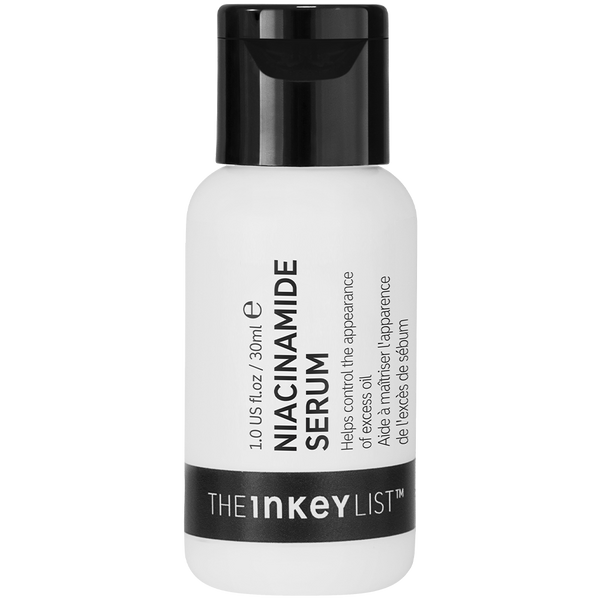
10% Niacinamide Serum - $13
The ingredient this whole article is about, at the concentration the evidence supports. Find it at 10% Niacinamide Serum.
- 10% Niacinamide plus 1% Hyaluronic Acid
- Fragrance-free and suitable for sensitive skin
- Safe to use during pregnancy and breastfeeding
- Helps calm the look of redness, which often accompanies a compromised barrier
Who it is for: anyone with dry skin who wants barrier support and better moisture retention, and who wants a lightweight layer that fits into an existing routine without rearranging it.
Hyaluronic Acid Serum - 30ml - $13
The water-binding half of the pairing. Find it at Hyaluronic Acid Serum.
- 2% pure Hyaluronic Acid at 3 different molecular weights
- Contains Matrixyl 3000, a well-established peptide complex
- Apply to damp skin for best results
Who it is for: dry and dehydrated skin that feels tight, looks dull or has lost some bounce. The three molecular weights matter because different sizes hydrate at different depths rather than all sitting on the surface.
Ectoin Hydro-Barrier Serum - $17
If you are dry and sensitive, start here. Find it at Ectoin Hydro-Barrier Serum.
- 2% Ectoin
- 2.5% multi-molecular Hyaluronic Acid
- 1% Barrier Blend containing 3 ceramides
- Clinically proven to hydrate and strengthen the barrier in 15 minutes*
- Visibly restores bounce in 3 days*
- Visibly improves 5 signs of a compromised skin barrier**
Who it is for: this is a core recommendation for dry and sensitive skin, and the combination of ectoin, multi-molecular hyaluronic acid and three ceramides in one formula covers hydration and barrier support simultaneously. If you only add one new product after reading this article and your skin is both dry and reactive, make it this one.
Bio-Active Ceramide Moisturizer - $22
The lipid-rich seal that dry skin needs at the end of the routine. Find it at Bio-Active Ceramide Moisturizer.
- Clinically proven to repair and strengthen the skin barrier from first use*
- Clinically proven to deliver 24-hour hydration*
- Up to 4X greater visible wrinkle reduction than standard ceramide formulations**
- 100% saw a clinical improvement in 6 signs of aging in 28 days: fine lines, wrinkles, plumpness, firmness, lift, elasticity and barrier function*
Who it is for: dry skin that needs a moisturizer doing structural work rather than just sitting comfortably on the surface. Given everything covered above about ceramides being the mortar in your skin barrier, a ceramide-led moisturizer is the most direct way to support that structure topically while niacinamide supports it from the production side.
Oat Cleansing Balm - 150ml - $17
Where the PM routine should start for dry skin. Find it at Oat Cleansing Balm.
- 5% Oat Kernel Oil
- Melts makeup and sunscreen in 30 seconds
- Supports skin barrier function
- Clinically proven 12hr hydration
Who it is for: anyone with dry skin whose cleanser has been quietly undoing the rest of their routine. Cleansing is where a lot of barrier damage originates, and a balm removes the day without stripping the lipids you are working to build.
Clinical study of 31 people.
4-week clinical study of 26 people. 4-week clinical study of 20 people.
**12-week independent clinical study of 30 people.
Products chosen, let’s set realistic expectations for how quickly you should expect to see anything.
How Long Niacinamide Takes to Work on Dry Skin
Skincare marketing has trained everyone to expect results by Friday. Niacinamide does not work like that, and knowing the real timeline is the difference between sticking with it and abandoning a product that was working perfectly well.
Here is a realistic progression with consistent daily use:
- Weeks 1 to 2: Improved comfort and hydration. Less of that tight feeling after cleansing. This is the early win, and it comes from better moisture retention rather than structural change.
- Weeks 4 to 6: Improved texture. Skin feels smoother, tightness is less frequent, flaking reduces. The barrier is genuinely in better shape by this point.
- Weeks 8 to 12: More even-looking tone, and visibly stronger, more resilient skin. This is where the cumulative barrier work becomes obvious rather than subtle.
Niacinamide is a slow-and-steady ingredient, and we would rather tell you that upfront than have you conclude at week three that it failed. Consistency beats concentration every time. Daily use of a well-formulated 10% serum will outperform occasional use of anything stronger. If you want more on building the habit, how and when to use niacinamide serum is a useful companion read.
One thing should happen quickly, though: your skin should not feel worse. Niacinamide is not an ingredient that requires a purge or an adjustment period of discomfort. If it stings, or your skin feels tighter and more irritated after using it, pause and reassess rather than pushing through. Persisting through irritation is how a manageable situation becomes a compromised barrier.
Two habits that make troubleshooting far easier:
- Patch test anything new on a small area before applying it to your whole face.
- Introduce one product at a time, ideally with a week or two between additions. If you add three products on the same day and your skin reacts, you have no way of knowing which one caused it.
Finally, resist the pull of higher percentages. More is not better with niacinamide, and for dry skin it can actively work against you. The clinical evidence supports 5-10% as the sweet spot: enough to deliver real benefit, gentle enough to tolerate long term. Higher strengths do not scale the benefit proportionally and can feel uncomfortable on skin that is already compromised.
An Optional Glow Step
If your barrier is in good shape and you want to add a radiance step, the Exosome Hydro-Glow Complex - $24 - is worth knowing about. It is 6-in-1 skin rejuvenation: clinically proven to visibly improve radiance, hydration, tone, firmness, elasticity and texture. It delivers clinic worthy rejuvenated skin in 14 days, with 100% saw more glowing skin, clinically proven. It is also proven to deliver up to 12-hours of hydration* and helps support natural collagen production. Treat it as an addition once your routine is settled, not a replacement for the barrier work above. Learn more about exosomes.
4-week clinical study of 26 people.
*Clinical study of 31 people.
Here are the remaining questions people ask most often.
Conclusion
So, is niacinamide good for dry skin? Yes, and the oily-skin-only label was always too narrow. To recap:
- It supports your skin’s natural production of ceramides
- It helps strengthen the skin barrier
- It helps reduce how much water escapes from your skin
- It pairs perfectly with hyaluronic acid, no alternating required
Work out whether you are dry, dehydrated or both, because that determines whether you lean toward richer, lipid-rich moisturizers or water-binding hydrators. Most people need some of each. Then give it time. Consistency will always beat intensity with an ingredient like this one.
Not sure where to start? Take our skincare quiz for a personalized routine built around what your skin actually needs. If you want the full ingredient deep dive first, our niacinamide page has it, and the 10% Niacinamide Serum is there when you are ready.
Because at The INKEY List, We Give A Care.
Frequently Asked Questions
Got a question?
Our askINKEY team are a friendly bunch of skincare experts with deep product knowledge and zero judgement. Whether you're an ingredient obsessive or just starting out, we'll make it make sense. No question too big. No question too small. We Give A Care, Every Day.


