



Vitamin C for Sensitive Skin: The Best Gentle Vitamin C Serum
Vitamin C does not have to sting. Here is how to get brighter, more even skin when your skin is sensitive.
Author
askINKEY skincare advisor
Published
17 May, 2026
Time to read
10 minutes
This guide covers using Vitamin C when your skin is sensitive or reactive. You will learn which form of Vitamin C causes irritation and which does not, what ascorbyl glucoside is, how to build Vitamin C into your routine step by step, and how it works alongside niacinamide and tranexamic acid.
Shop our gentle brightening serum: 15% Vitamin C + EGF Serum | Explore all Vitamin C: Vitamin C Collection | Not sure where to start? Take the Skin Quiz
Can You Use Vitamin C on Sensitive Skin?
Yes. The irritation people associate with Vitamin C comes from the form used, not from Vitamin C itself. Choose a stable derivative at a skin-friendly pH and you get the brightening without the stinging.
That distinction is what the rest of this guide is about.
What Does Vitamin C Actually Do for Skin?
Vitamin C is one of the most clinically researched brightening ingredients in skincare.
Its primary function is as an antioxidant. Your skin faces UV, pollution and environmental stress daily, all of which generate free radicals that damage skin cells and accelerate visible signs of aging. Vitamin C neutralizes these before they cause lasting harm, which is why morning application makes sense.
It also inhibits tyrosinase, the enzyme that triggers melanin production. This is what makes it effective for hyperpigmentation, dark spots, uneven tone and post-blemish marks. It reduces pigmentation at the source rather than masking it.
Vitamin C also helps support natural collagen production, which supports the look of firmness and elasticity over time.
For the full breakdown, visit our Vitamin C ingredient guide.
What Is Ascorbyl Glucoside?
Ascorbyl glucoside is Vitamin C bonded to a glucose molecule. That bond makes it stable. Your skin's own enzymes break it apart on contact, releasing active Vitamin C gradually.
Why this matters for sensitive skin:
- It does not need a low pH. L-ascorbic acid needs pH 2.5 to 3.5 to stay active. That acidity is what stings.
- It does not oxidize quickly. No turning brown in the bottle, no irritation from a degraded product.
- It releases gradually rather than hitting your skin with a high dose at once.
If a Vitamin C serum has stung before, ascorbyl glucoside is the switch worth making.
Why Does Vitamin C Sometimes Irritate Sensitive Skin?
The most potent form is L-Ascorbic Acid. It works, but it needs a very low pH to stay stable, and that acidity is usually the source of stinging and redness.
It is also unstable. It oxidizes rapidly in air and light, which is why those products turn yellow or orange. An oxidized Vitamin C product loses effectiveness and can irritate without giving you the brightening benefit.
The answer is not to avoid Vitamin C. It is to choose a better form.
What to Look for in a Vitamin C Serum for Sensitive Skin
For sensitive skin the form matters more than the percentage.
- Ascorbyl Glucoside rather than L-ascorbic acid
- A skin-compatible pH, not a formula that relies on acidity
- Fragrance-free, one of the most common irritation triggers
- Supportive ingredients such as EGF, hyaluronic acid or peptides
- Tested on sensitive skin specifically
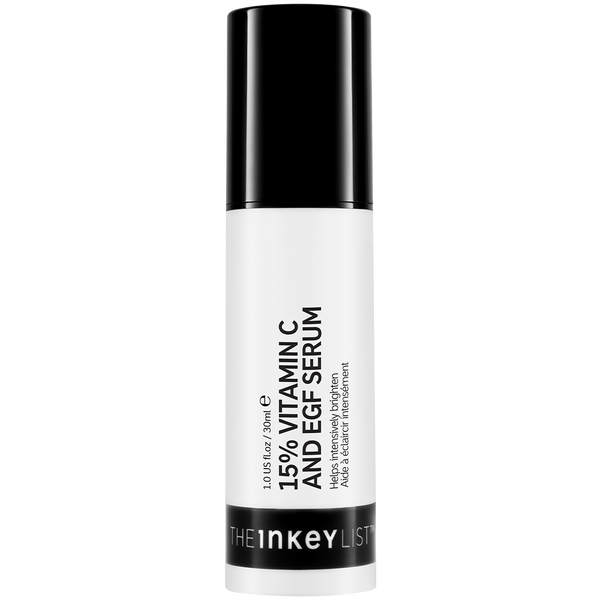
Our 15% Vitamin C + EGF Serum
Shop now: 15% Vitamin C + EGF Serum
It uses 15% Ascorbyl Glucoside rather than L-Ascorbic Acid. The pH sits at 6.8 to 7.2, close to skin's own, compared with pH 2.5 to 3.5 for typical L-ascorbic acid formulas.
It is also powered by 1% Epitensive EGF, a plant-based peptide that supports skin renewal and boosts elasticity. Certified vegan and fragrance-free. Read more on what EGF is.
Clinical results (4-week independent consumer trial, 64 people):
- 87% agreed skin looks brighter
- 88% saw visible improvement in tone and texture
- 84% agreed skin looks healthier and less dull
Suitable for: All skin types | Sensitive skin | Pregnancy and breastfeeding safe | Fragrance-free | Vegan Society certified
New to Vitamin C entirely? Start with our beginner's Vitamin C routine.
How to Introduce Vitamin C into a Sensitive Skin Routine
Step 1 - Cleanse
Start with Oat Cleansing Balm - 150ml. 1% colloidal oatmeal to visibly soothe, 3% oat kernel oil to support moisture without stripping.
Step 2 - Apply Vitamin C
On slightly damp skin, apply a pea-sized amount of 15% Vitamin C + EGF Serum to face and neck. Pat gently, do not rub. Allow 60 seconds.
Step 3 - Hydrate
Layer Hyaluronic Acid Serum on top if your skin needs more hydration. More on layering Vitamin C with hyaluronic acid.
Step 4 - Moisturize
Seal everything in with Vitamin B, C and E Moisturizer.
Step 5 - SPF
Finish with a broad-spectrum SPF every morning. SPF protects the brightening results you are building. See our guide to SPF and why Vitamin C and SPF work together.
Serums go thinnest to thickest, actives on freshly cleansed skin. More on how to layer skincare.
INKEY tip: Always patch test first.
Introduction schedule:
- Weeks 1 to 2: every other morning
- Weeks 3 to 4: daily if tolerating well
- Week 5 onwards: every morning
Vitamin C for Redness and Reactive Skin
If your skin flushes easily, the near-neutral pH of ascorbyl glucoside is far less likely to trigger a reaction than an acidic formula.
For persistent redness, 10% Azelaic Acid Serum for Redness Relief works well as an evening step alongside morning Vitamin C. Learn more about azelaic acid or read our full guide to redness.
If your barrier feels compromised, tight, or reacts to everything, address that first. See damaged skin barrier.
Can You Use Vitamin C with Niacinamide?
Yes. The myth that they cannot be combined comes from research on L-ascorbic acid at high temperatures, irrelevant to normal skincare. With ascorbyl glucoside it is not a concern.
Layer Niacinamide Serum after your Vitamin C, or use Vitamin C in the morning and niacinamide at night. Full detail: using niacinamide and Vitamin C together and our niacinamide guide.
Vitamin C for Hyperpigmentation on Sensitive Skin
Reactive skin is often more prone to post-inflammatory hyperpigmentation, the marks left after blemishes or irritation.
For a targeted approach, Tranexamic Acid Serum works on a different part of the pigmentation pathway, so the two complement rather than duplicate each other. Learn more about tranexamic acid. Vitamin C in the morning, tranexamic acid in the evening.
To identify your type: what type of hyperpigmentation do I have?
Want to Add Glow Without Adding Stress?
Our Exosome Hydro-Glow Complex is a lightweight, glow-boosting layer that sits comfortably alongside Vitamin C.
In-vitro testing of Cica Exosomes showed a 55% reduction in pro-inflammatory markers and a 63% increase in markers associated with skin renewal after 8 hours.*** It delivers 6-in-1 skin rejuvenation, clinically proven to visibly improve radiance, hydration, tone, firmness, elasticity and texture,* with clinic worthy rejuvenated skin in 14 days.* 100% saw more glowing skin, clinically proven.* Proven to deliver up to 12-hours of hydration.**
Learn more about exosomes, or compare in Vitamin C vs Niacinamide vs Exosomes vs PDRN.
*4-week clinical study of 26 people
**Clinical study of 31 people
***In-vitro testing of Cica Exosomes showed a 55% reduction in pro-inflammatory markers and a 63% increase in markers associated with skin renewal after 8 hours.
Build Your Routine
Not sure what is right for your skin? Take the INKEY Skin Quiz.
Frequently Asked Questions
Got a question?
Our askINKEY team are a friendly bunch of skincare experts with deep product knowledge and zero judgement. Whether you're an ingredient obsessive or just starting out, we'll make it make sense. No question too big. No question too small. We Give A Care, Every Day.


