


Hyaluronic Acid vs. Niacinamide: Which One Does Your Skin Need?
One hydrates instantly, the other rebalances over time. Here is how to tell which your skin actually needs, and why you probably want both.
Author
askINKEY skincare advisors
Published
17 May, 2026
Time to read
17 minutes
Hyaluronic acid and niacinamide sit side by side on almost every shelf, get recommended for almost every concern, and are described in almost identical language. That makes it genuinely difficult to work out which one your skin actually needs, or whether you need both.
Here is the short version, before any of the explanation. Hyaluronic acid is a hydrator. It pulls water into the surface layers of your skin and you feel the difference the same day you use it. Niacinamide is a multi-tasking active. It works on oil, tone, texture and barrier strength, and it builds those results progressively over weeks. They are solving two completely different problems, which is exactly why they work so well together.
If you already know which one you are here for:
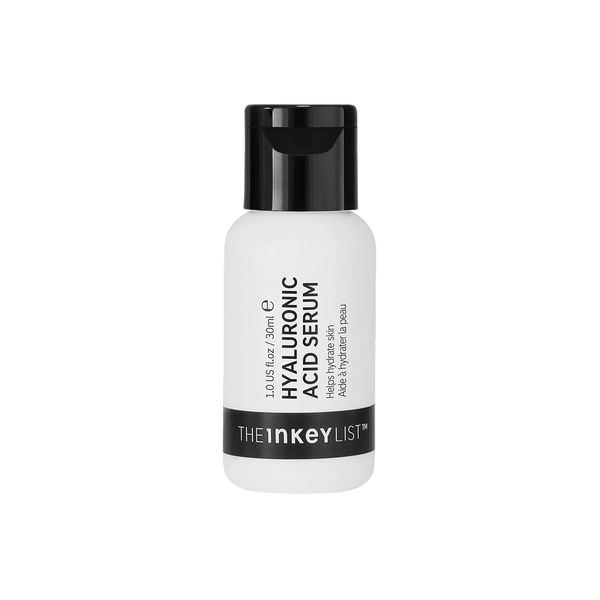
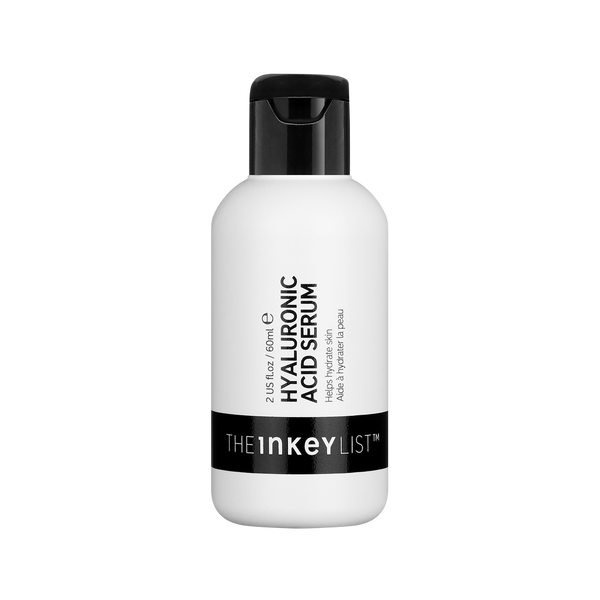
- Hyaluronic Acid Serum - from $13
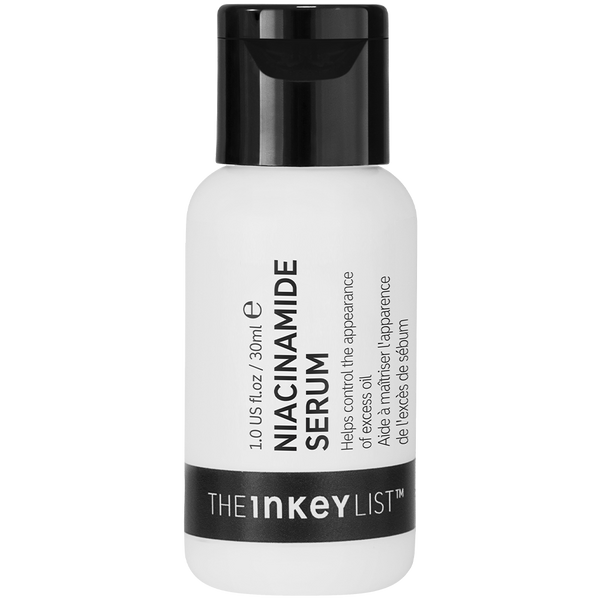
- 10% Niacinamide Serum - $13
Everything below explains what each ingredient does, what it does not do, and how to decide between them based on your skin type and concern rather than on marketing language. There is a routine order for morning and evening, and a 12-question FAQ at the end covering layering, vitamin C, retinol, exfoliating acids, pregnancy and more.
Understanding what each ingredient actually does is what makes the choice obvious. So let us start with hyaluronic acid.
Hyaluronic Acid: The Skin’s Essential Hydrator
The name is the first problem. Hyaluronic acid has “acid” in it, which puts it in the same mental category as glycolic acid or salicylic acid. It does not belong there. Hyaluronic acid does not exfoliate, it does not resurface, and it does not chemically alter your skin’s surface in any way. It is a humectant, which means its job is to attract water and hold onto it.
That distinction matters because it tells you what to expect. An exfoliating acid changes your skin over time by removing dead surface cells. A humectant changes how your skin looks and feels almost immediately by increasing its water content. Different mechanism, different result, different place in your routine.
Hydration and moisturizing are not the same thing
This is the second misunderstanding, and it is the one that causes people to conclude hyaluronic acid “did not work” for them.
Hydration refers to the water content in your skin. Moisturizing refers to the oils and lipids that sit on top and stop that water from evaporating away. Hyaluronic acid does the first job extremely well. It does not do the second job at all.
If you apply a hyaluronic acid serum and leave your skin bare, you have added water to your skin without giving it anything to hold that water in place. In a dry room, on a windy day, or in air conditioning, that water can leave again. The serum is not failing. It is simply doing one half of a two-part process. A moisturizer over the top completes it.
Why molecular weight matters more than percentage
Percentages are the easiest thing to put on a bottle and the least useful thing to compare between products. A high percentage of hyaluronic acid at a single molecular size does not necessarily do more for your skin. Larger molecules sit on the very surface and form a hydrating film. Smaller molecules can travel a little further into the upper layers.
If a formula only contains one size, it can only work in one place.
Our Hyaluronic Acid Serum uses 2% Multi-Molecular Hyaluronic Acid at three molecular weights, so hydration is delivered across multiple layers of the skin’s surface rather than pooling at the very top. That is a formulation decision aimed at how the hydration is distributed, not at how big a number we can print.
The peptide doing the second job
The serum is not only hyaluronic acid. It also contains Matrixyl 3000, one of the better-studied peptides in skincare, which helps to plump, firm and smooth skin.
That is the claim, and it is worth stating plainly rather than dressing up. In an independent consumer study of 22 people under dermatological control, 82% agreed their skin felt firmer, smoother and more elastic after four weeks.
Two things are worth noticing about that. First, it is a four-week result, not an overnight one. The hydration is immediate. The firmness and smoothness build. Second, it is a consumer study, and we are telling you the sample size rather than hiding it behind a percentage.
What hyaluronic acid does not do
Being clear about limits is more useful than being enthusiastic about benefits, so here is the honest list.
Hyaluronic acid will not control oil production. It will not fade dark marks or post-blemish pigmentation. It will not clear breakouts. It will not, on its own, rebuild a compromised skin barrier, because a barrier needs lipids and ceramides, not water.
If any of those are your primary concern, hyaluronic acid is a supporting player in your routine rather than the answer to your problem. That is not a criticism of the ingredient. It is a very good hydrator that has been asked to be a great many other things by people who wanted it to be.
Dehydrated skin lacks water. Dry skin lacks oil. They are not the same thing, and they need different fixes.
Dehydrated skin and dry skin are two different problems
This is the single most correctable misconception in skincare, and it changes what you should buy.
Dry skin is a skin type. It means your skin produces less oil than it needs, and it tends to be a long-term characteristic rather than a passing state. It usually needs richer lipids and ceramides.
Dehydrated skin is a condition. It means your skin is short on water, and it can happen to anyone, at any time, for reasons ranging from weather to air travel to over-cleansing. Crucially, it can happen to oily skin. Skin that produces plenty of oil can still be running low on water, and it often shows up as a tight feeling that does not match the shine you can see.
If you have been buying rich creams for oily-but-tight skin and finding them heavy, dehydration rather than dryness may be what you were dealing with all along.
One application tip that changes the result
Apply hyaluronic acid to damp skin. A humectant works by binding water, so give it water to bind. Cleanse, leave your skin slightly damp rather than towel-dry, apply the serum, then seal it with a moisturizer.
That is genuinely the whole technique, and it makes a noticeable difference to how the product feels.
Where hyaluronic acid does one job extremely well, niacinamide does several at once. That is precisely why it ends up recommended for so many different concerns, and why it needs a much longer explanation.
Niacinamide: The Skin’s Multi-Tasking Active
Before anything else, a clarification that saves a lot of confusion: niacinamide is not niacin. They are related forms of vitamin B3, but they behave differently. Niacin taken orally is associated with flushing, that warm red sensation across the face and chest. Niacinamide applied topically does not cause it. If you have avoided niacinamide because of something you read about flushing, you were reading about a different compound.
Five things niacinamide is doing at once
The reason niacinamide gets recommended for oily skin, dull skin, uneven skin, red skin and congested skin is not that it is a marketing catch-all. It is that a single ingredient is genuinely working on several fronts simultaneously.
- Helps regulate oil at the source rather than simply absorbing or blotting it away after it appears
- Helps interrupt pigment transfer, which is the mechanism behind its effect on uneven tone
- Calms the look of visible redness, which is why it turns up in routines for reactive skin
- Supports the skin’s own ceramide production, strengthening the barrier over time
- Reduces the look of enlarged pores, largely as a downstream effect of better-regulated oil
That third and fourth point are the ones people underestimate. Niacinamide is not only a corrective ingredient. It is also a maintenance ingredient, quietly supporting the ceramides your skin makes for itself.
What is inside our 10% Niacinamide Serum
Transparency is more useful than mystique, so here is the specification of the 10% Niacinamide Serum in full.
It contains 10% niacinamide, formulated at pH 6.09. It also contains 1% Hyaluronic Acid, which we will come back to shortly because it settles one of the most common questions about these two ingredients. It is fragrance-free. It is safe to use during pregnancy and while breastfeeding.
The pH figure is there for a reason. Niacinamide is most comfortable in a near-neutral formulation, and publishing the number lets you compare rather than guess.
The transparency note on vegan certification
The 10% Niacinamide Serum is not vegan certified. That is because of a single egg-derived phospholipid in the formula.
We would rather tell you that directly than let you discover it later. If a vegan formulation is a requirement for you, the 20% Niacinamide Serum is the option to look at instead.
A realistic timeline, honestly stated
The most common reason people abandon niacinamide is that they expected hyaluronic acid speed from a progressive active. This is where the niacinamide vs hyaluronic acid comparison matters most in practice, because the two ingredients run on completely different clocks.
Here is what to reasonably expect, assuming consistent daily use:
- 1-2 weeks: less visible oil through the day
- 3-4 weeks: fewer breakouts
- 6-8 weeks: refinement in the look of pores
- 6-8 weeks: more even-looking tone
Nothing on that list happens in three days. If you have been using niacinamide for a week and concluded it is not working, you have not yet reached the point where it would be. Consistency is the active ingredient as much as the niacinamide is.
For a fuller breakdown of when to apply it, how much to use and how to introduce it without overwhelming your routine, our guide on how and when to use niacinamide serum goes deeper than we can here.
Who niacinamide is really for
The default assumption is that niacinamide belongs to oily skin, and it is true that excess oil is where its effects are most immediately visible. But the barrier support and redness points mean it earns a place in plenty of routines that are not oily at all.
The clearest way to think about it: hyaluronic acid answers a question about comfort and water. Niacinamide answers a question about behavior, meaning how much oil your skin produces, how evenly it pigments, how easily it reddens and how well it holds itself together.
With both ingredients understood individually, the differences that actually matter when you are standing in front of the shelf become much clearer.
Hyaluronic Acid and Niacinamide: The Key Differences Explained
This is the comparison, laid out in the way that is actually useful rather than as a list of features.
What each one does best
Hyaluronic acid is the better choice for immediate surface hydration, visible plumping and physical comfort. If your skin feels tight after cleansing, looks flat or dull by mid-afternoon, or drinks up everything you apply, this is the category you are shopping in.
Niacinamide is the better choice for oil balance, uneven tone, the look of pores, visible redness and long-term barrier support. If your concerns are about how your skin behaves rather than how it feels, this is your ingredient.
The timeline difference is the most useful distinction
If you remember one thing from this section, make it this.
Hyaluronic acid is immediate and maintained. You feel the result on day one, and it keeps delivering for as long as you keep using it. Stop, and you lose the effect fairly quickly, because you have stopped supplying the water.
Niacinamide is progressive and cumulative. Very little happens on day one. Results build across weeks and hold as long as you stay consistent. It rewards patience in a way hyaluronic acid does not require.
That single difference explains most of the disappointment people report with each ingredient. Hyaluronic acid disappoints when it is expected to fix oil or pigmentation. Niacinamide disappoints when it is expected to work by Friday.
How each one feels on the skin
Hyaluronic acid feels like something. A light, watery layer that sinks in and leaves skin feeling cushioned and plump. That immediate sensory feedback is part of why people like it.
Niacinamide feels like almost nothing. It absorbs, it disappears, and there is no satisfying moment of transformation. This is not a sign that it is not working. It is simply an active with no sensory signature, and judging it by feel will always undersell it.
What they have in common
More than the comparison suggests, actually.
- Both are well tolerated by most skin types
- Both are fragrance-free in our formulas
- Both are suitable for daily use, morning and evening
- Both are safe during pregnancy and while breastfeeding
- Both support, in different ways, a healthier-looking damaged skin barrier over time
One caveat worth stating plainly: well tolerated does not mean universally tolerated. Any ingredient can disagree with any individual. Patch test anything new on a small area before applying it across your whole face, and introduce one new product at a time so you know what is responsible if something does not suit you.
So which one is better?
Neither. They are answering different questions, and the honest answer to “which is better” is “better at what”.
If your skin feels tight, looks dull and seems dehydrated, that is a hyaluronic acid question. If your skin is oily, congested, uneven in tone or prone to redness, that is a niacinamide question. If you recognized yourself in both descriptions, you are not confused. That combination is extremely common, and it is the reason most people end up using both.
The fastest way to apply all of this is to stop comparing the ingredients in the abstract and match them to your own skin type and concern.
Which One Does Your Skin Need? Choosing by Skin Type and Concern
Find yourself below. Each block ends with a single clear instruction, so you can stop reading at the point you recognize your skin and go straight to doing something about it.
Dry or dehydrated skin
Hyaluronic acid is your starting point, but only half the job. Dry skin needs water and lipids. Dehydrated skin needs water and something to hold it there. In both cases, a hydrating serum without a moisturizer over the top is an incomplete routine.
Apply the Hyaluronic Acid Serum to damp skin, then seal it. For dry skin specifically, the Bio-Active Ceramide Moisturizer, $22, is the more supportive choice, because ceramides address the lipid side of the equation rather than only the water side.
If your skin feels tight within a minute of cleansing, that is your signal.
Your instruction: Hyaluronic acid on damp skin, always followed by a moisturizer. Never leave it unsealed.
Oily or combination skin
Niacinamide is the priority here, and the reason is mechanism. Mattifying products manage oil after it has arrived. Niacinamide helps regulate it closer to the source, which is a more sustainable approach than absorbing shine all day.
The 10% Niacinamide Serum, $13, is the straightforward place to start. Pair it with something lightweight rather than skipping moisturizer entirely, which is the most common mistake oily skin makes. The Omega Water Cream, $15, is oil-free and light enough that it will not undo the work.
And a reminder from earlier: oily skin can absolutely be dehydrated. If your skin is shiny by noon but still feels tight, hyaluronic acid is not off limits. It is probably exactly what is missing. Explore the full excess oil range if oil control is your main concern.
Your instruction: Niacinamide daily, with a lightweight moisturizer. Add hyaluronic acid if your skin feels tight as well as oily.
Blemish-prone skin
Niacinamide is the more relevant of the two, for two reasons that work together.
The first is oil regulation. Excess oil contributes to congestion, blackheads and the conditions in which breakouts form, so addressing oil addresses part of the cause rather than only the symptom.
The second is what happens after a breakout clears. Post-blemish marks are pigmentation, and niacinamide’s effect on pigment transfer is why it helps reduce the look of them over time. If your frustration is less about active breakouts and more about the marks they leave behind, this is the ingredient that speaks to that.
Give it the timeline it needs. Fewer breakouts at around three to four weeks, marks fading in appearance across a longer stretch. Our blemishes and breakouts collection covers the wider routine if you want to build around it.
Your instruction: Niacinamide daily for at least eight weeks before judging results.
Sensitive or reactive skin
Good news first: both ingredients are generally well tolerated, and neither is an aggressive active in the way an exfoliating acid or a retinoid can be. Niacinamide in particular has a reputation for calming the look of visible redness rather than provoking it.
The rule for sensitive skin is not about which ingredient. It is about pace. Introduce one product at a time, use it for at least two weeks before adding anything else, and patch test first. If you add two new things at once and your skin objects, you have no way of knowing which one to remove.
Your instruction: Introduce one ingredient at a time, patch test first, and wait two weeks before adding the second.
Aging or mature skin
Use both, because they contribute in different timeframes.
Hyaluronic acid delivers the immediate effect. Hydrated skin looks plumper and fine lines look softer when the surface is well hydrated, which is why the difference is visible the same day. The Matrixyl 3000 in our formula helps to plump, firm and smooth skin alongside it.
Niacinamide contributes over the longer term, working on the evenness of tone and the look of texture, both of which shift with age. Neither ingredient is a replacement for the other here.
Seal both with something substantial. The Bio-Active Ceramide Moisturizer, $22, supports the barrier, which tends to need more help as skin matures.
Your instruction: Use both daily. Hyaluronic acid for immediate plumping, niacinamide for tone and texture over time.
Uneven tone or post-blemish marks
Niacinamide is the ingredient to reach for, and it works by interrupting the transfer of pigment rather than bleaching anything that is already there. That is why the timeline is six to eight weeks rather than immediate.
Now the part that is genuinely load-bearing, and it is not about a product at all.
Without daily sun protection, this will not work. Ultraviolet exposure triggers new pigment production continuously, and unprotected skin deposits new pigment faster than niacinamide can reduce the look of the existing marks. You end up running to stand still. Wearing SPF every day, including on overcast days and indoors near windows, is not an optional extra alongside a tone-evening routine. It is the condition under which the routine has a chance of working.
If uneven tone is your main concern, the hyperpigmentation collection is the right starting point.
Your instruction: Niacinamide daily, with daily SPF without exception. One does not work without the other.
A closing note on niacinamide and dry skin
There is a persistent belief that niacinamide is only for oily skin, and it costs dry skin a genuinely useful ingredient.
The oil regulation benefit is the headline, but it is one of five things niacinamide does. The barrier point is the one that matters for dry skin. By supporting your skin’s own ceramide production, niacinamide helps strengthen the structure that stops water escaping in the first place, which is a dry skin problem as much as an oily skin one.
Dry skin does not become drier from using niacinamide. It gains barrier support. We have written about this in more detail in is niacinamide good for dry skin if you want the full argument.
Many readers will have recognized themselves in more than one block above, which raises the obvious question.
Can You Use Niacinamide and Hyaluronic Acid Together?
Yes. You can use niacinamide and hyaluronic acid together, every day, morning and evening, without any special precautions. This is one of the most searched questions about either ingredient and the answer is refreshingly simple.
Why they work together rather than against each other
The concern behind the question usually comes from a general anxiety about layering actives, which is reasonable in principle and misapplied here.
These two ingredients are not competing for the same job. Hyaluronic acid manages water content in the surface layers. Niacinamide works on oil regulation, pigment transfer, redness and barrier support. There is no overlap and no mechanism by which one cancels out the other. Layering them means you get hydration and correction in the same routine rather than choosing between them.
If anything, they are complementary in a practical sense. Niacinamide addresses concerns that often come with a slightly compromised barrier, and hyaluronic acid keeps the skin comfortable while that longer process plays out.
The proof is in the formulation
The most persuasive evidence is not a study. It is the bottle.
Our 10% Niacinamide Serum already contains 1% Hyaluronic Acid. We formulated the two ingredients together, in a single product, deliberately. No formulator would do that if the combination were unstable or self-defeating.
So if you are asking whether it is safe to layer them, we have already answered the question by putting them in the same bottle.
The wider layering question
If your question is really about layering in general rather than these two specifically, hyaluronic acid and niacinamide are among the easiest actives in any routine to combine. Neither is pH-sensitive in a way that causes problems, neither requires a buffer, and neither needs to be kept apart from the other.
For the fuller picture on which combinations do need thought, our guide to what products should I not layer togethercovers the pairings worth being careful with.
An optional step up
If you want a single step that brings hydration and radiance together, the Exosome Hydro-Glow Complex, $24, contains both Hyaluronic Acid and Ectoin, which is why it sits naturally alongside this pairing. It is a glow boosting option offering 6-in-1 skin rejuvenation: clinically proven to visibly improve radiance, hydration, tone, firmness, elasticity, and texture* and is proven to deliver up to 12-hours of hydration**.
Since both can be used together, the only remaining question is what order they go in.
Should I Use Niacinamide or Hyaluronic Acid First? The Layering Order
Should you use niacinamide or hyaluronic acid first? Hyaluronic acid goes first, applied to damp skin, with niacinamide layered on top.
The principle behind the order
The general rule for any routine is thinnest to thickest, water-based before oil-based. That gets you the right answer most of the time and it gets you the right answer here.
There is a second reason specific to this pairing. Hyaluronic acid needs water available to bind, which means it needs to go on skin that is still slightly damp from cleansing. Wait until you have applied another product and that window has closed. Applying it first is not just about texture, it is about giving the humectant something to work with.
Niacinamide has no such requirement. It absorbs comfortably into skin that already has a hydrating layer beneath it, and it does not need to touch bare skin to do its job.
Your morning routine
- Cleanse
- Hyaluronic Acid Serum on damp skin
- 10% Niacinamide Serum
- Moisturizer
- SPF
That final step is not negotiable, particularly if uneven tone is one of the things you are working on. Daily SPF is what allows the rest of the routine to make progress instead of holding ground.
Your evening routine
- Cleanse
- Hyaluronic Acid Serum on damp skin
- 10% Niacinamide Serum
- Moisturizer
For the moisturizer step, choose based on skin type rather than time of day. The Bio-Active Ceramide Moisturizer, $22, is the more supportive option for dry, mature or barrier-compromised skin. The Omega Water Cream, $15, is the lighter, oil-free choice for oily and combination skin.
Where retinol fits in
Retinol is an evening step, and it slots in after your serums and before or alongside your moisturizer depending on the formulation you use.
The relevant point for this article is that niacinamide pairs well with retinol. The old advice about keeping them apart has not held up, and there is a practical benefit to using them together: niacinamide’s barrier support can help offset the dryness and irritation retinol can cause, particularly in the early weeks of use. Hyaluronic acid contributes to the same effect by keeping the skin comfortable while it adjusts.
If you are building a routine around retinol, can you use niacinamide with retinol answers the question in more depth than we can here.
Two things to avoid
Do not mix your serums together in your palm. It feels efficient and it is not. Combining two formulas dilutes both, changes how each one behaves, and means neither is applied at the concentration it was designed for. Apply them in sequence, one after the other, and give the first a moment to absorb.
Do not skip moisturizer. This is the most common error with hyaluronic acid and it undermines the whole point of using it. A humectant draws water into the surface of your skin. Without something over the top to seal it in, that water can simply leave again. If you have oily skin and dislike the feel of cream, use a lighter one rather than none.
The questions that come up most often are answered below.
Conclusion: The Final Verdict
This was never really an either/or. Hyaluronic acid solves a hydration problem and solves it immediately. Niacinamide solves oil, tone, pore and barrier concerns and solves them progressively. Most people have both kinds of problem, which is why most people benefit from both ingredients.
If you genuinely have to pick one, go back to the concern rather than the ingredient. Tight, dull and dehydrated points to hyaluronic acid. Oily, congested, uneven or red points to niacinamide.
At $13 for each, neither answer requires a compromise. These are proven ingredients at a price that does not gatekeep, because effective skincare should be available to everyone rather than to the people who can afford to guess expensively.
Clear guidance, proven ingredients, real results. That is the whole idea.
Shop the Duo
- Hyaluronic Acid Serum - from $13. Multi-molecular hydration for skin that feels tight, dull or dehydrated.
- 10% Niacinamide Serum - $13. Daily oil balance, clearer-looking tone and refined-looking pores.
Use them together if both descriptions sound like your skin. They were formulated to work that way.
Footnotes
*4-week clinical study of 26 people
**Clinical study of 31 people
***In-vitro testing of Cica Exosomes showed a 55% reduction in pro-inflammatory markers and a 63% increase in markers associated with skin renewal after 8 hours.
Frequently Asked Questions
Got a question?
Our askINKEY team are a friendly bunch of skincare experts with deep product knowledge and zero judgement. Whether you're an ingredient obsessive or just starting out, we'll make it make sense. No question too big. No question too small. We Give A Care, Every Day.


