


Why Oily Skin Gets Dehydrated Too
Oily and dehydrated at the same time? Here's the science behind oily dehydrated skin, how to spot it, and the routine that actually fixes it.
Author
askINKEY skincare advisor
Published
06 June, 2026
Time to read
15 minutes
If you’ve ever stood in front of a mirror, blotted the shine off your forehead, and then felt your cheeks pull tight like paper the moment you smiled, you already know the confusion we’re talking about. Shiny but tight. Breakout-prone but flaky. Oily in the T-zone but somehow still dehydrated. It sounds like a contradiction, but it’s one of the most common skin experiences out there, and it has a name: dehydrated oily skin.
Here’s the short version, because you deserve a straight answer before anything else: oil and hydration are controlled by two completely different systems in your skin. Oil, or sebum, comes from your sebaceous glands. Hydration is about the water content inside your skin cells. One has almost nothing to do with the other, which means your skin can absolutely be producing plenty of oil while still being thirsty for water underneath. In fact, excess oil is sometimes a sign that your skin doesn’t have enough water, not too much of it, as your skin tries to compensate for what it’s missing.
This article is going to walk through exactly what dehydrated oily skin looks like, why it happens, and how to build a routine that treats both issues at once, without over-stripping your skin or drowning it in heavy products it doesn’t need. No fear-based scare tactics, no 12-step routines, just clarity you can actually use. Think of this as the explanation from the skincare-obsessed friend who always seems to have the right answer, minus the overwhelm.
Before we get into fixing anything, it helps to understand what’s actually going on underneath that shine. So let’s start where every good skincare explanation should: with the real difference between oily skin and dehydrated skin.
Oily Skin vs. Dehydrated Skin: What’s the Real Difference?
The confusion around dehydrated oily skin almost always comes down to one simple mix-up: people treat “oily” and “dehydrated” as opposites, when they’re not even measuring the same thing. Oily skin is about oil. Dehydrated skin is about water. They operate independently, and understanding that distinction is the single most useful thing you can learn if you’re trying to figure out what’s happening with your complexion.
Oily skin is largely determined by your sebaceous glands, the tiny oil-producing factories embedded in your skin. How much sebum they produce is influenced by genetics, hormones, and in some cases environmental factors like heat and humidity. If you have oily skin, you were more or less built this way. Your glands are simply more active than someone with naturally dry or balanced skin, which is why oiliness tends to show up consistently, especially in the T-zone, rather than coming and going unpredictably.
Dehydrated skin, on the other hand, isn’t about oil at all. It’s a lack of water in the outer layers of your skin. And this is the part that trips people up: dehydration is a skin condition, not a skin type. That distinction matters more than it might seem. Skin types, like oily, dry, or combination, are relatively fixed and largely genetic. Skin conditions, like dehydration, sensitivity, or dullness, are temporary states that can affect any skin type and can be improved with the right care. In other words, you don’t “have” dehydrated skin the way you “have” oily skin. You can develop dehydration, address it, and prevent it going forward.
This is exactly why dehydration can show up on oily skin just as easily as it can on dry skin. Producing more sebum doesn’t mean your skin is automatically holding onto water properly underneath that oil. Oil sits on the surface. Water lives deeper in the skin cells. A layer of sebum on top of your skin says nothing about whether the structure underneath is doing its job of locking moisture in. You can have a shiny surface and a parched interior at the same time, and plenty of people do.
If you’re still not sure which category describes you, What’s Your Skin Type? is a useful starting point for separating your underlying skin type from whatever temporary condition might be layered on top of it. Knowing the difference between the two is often the “aha” moment that makes everything else about your routine make sense.
So if oil and water are separate systems, what does it actually look like when both are present at once, oiliness on the surface and dehydration underneath? That’s exactly what we’ll break down next.
What Does Dehydrated Oily Skin Actually Look Like?
Once you understand that oil and hydration are separate, the next logical question is: how do you actually know if this is happening to you? The good news is that dehydrated oily skin tends to show a fairly consistent set of signs, and once you know what to look for, it becomes easy to spot.
The most telling sign is the “shine without comfort” paradox. Your skin looks shiny or greasy on the surface, especially by midday, but it feels tight, rough, or flaky when you touch it or try to smile. That combination, visible oil paired with a feeling of tautness, is the clearest signal that your skin is producing excess sebum while still lacking adequate water underneath.
A few other signs tend to show up alongside that core contradiction:
- Increased sensitivity or reactivity. When skin is dehydrated, the outermost barrier is often compromised, which can make your skin more prone to stinging, redness, or irritation from products that never used to bother you.
- More visible fine lines, particularly around the cheeks. Hydrated skin cells are plump; dehydrated ones are not, so the absence of water can make texture and fine lines more noticeable than they would be otherwise.
- Flaking or rough patches, often in the same areas where you’re also seeing shine, which is part of what makes this skin presentation so confusing to deal with.
- Breakouts that seem to worsen instead of improve, even as you try to manage oil more aggressively. This happens because your skin may ramp up oil production even further to try to compensate for the water it’s missing.
If any of this sounds familiar, take a breath: this combination is extremely common, and it isn’t a sign that something is fundamentally wrong with your skin. It’s a sign that your routine, not your skin itself, needs adjusting. Dehydrated oily skin is one of the most misunderstood skin presentations out there, largely because the instinct when skin looks oily is to strip it further, which, as we’re about to explain, usually makes things worse rather than better.
Understanding what dehydrated oily skin looks like is useful, but understanding why it happens is what actually lets you fix it. That means getting into the science of water loss and the skin barrier, which explains virtually every symptom we just covered.
Why Oily Skin Loses Water: TEWL and the Skin Barrier Explained
To really understand dehydrated oily skin, you need to understand two things: Transepidermal Water Loss, commonly abbreviated as TEWL, and the skin barrier. Don’t let the terminology intimidate you. The concepts are simple once you see them laid out plainly, and they explain almost everything about why oily skin can still feel parched.
TEWL is the natural, ongoing process by which water evaporates from your skin through its outer layer and into the air around you. Some amount of this is completely normal; your skin is never a perfectly sealed container. But when TEWL happens too quickly, water leaves your skin faster than your body can replace it, and the result is dehydrated skin. That’s really the whole mechanism in a sentence: dehydration happens when water is leaving your skin faster than it should.
What controls how fast that water escapes is your skin barrier, sometimes called the moisture barrier or the stratum corneum. Think of it as a brick wall: your skin cells are the bricks, and a mixture of lipids, including ceramides, fatty acids, and cholesterol, act as the mortar holding everything together. When that mortar is intact, it forms a seal that keeps water in and keeps irritants, pollution, and bacteria out. When the barrier is compromised, that seal develops gaps, and water escapes through them far more quickly than it should, which is precisely the mechanism behind TEWL spiking.
Here’s the part that surprises a lot of people with oily skin: having excess sebum does not mean your barrier is automatically healthy. Oil sits on the surface of your skin. The barrier is a structural layer underneath that surface oil. You can have plenty of sebum sitting on top of your skin while the deeper barrier structure is compromised and leaking water. These are two different locations and two different jobs. One doesn’t protect the other.
In fact, several habits that are extremely common among people with oily skin are specifically the kinds of habits that damage the barrier and accelerate TEWL:
- Using harsh, stripping, foaming cleansers to try to “cut through” oil, often multiple times a day.
- Over-exfoliating, whether through physical scrubs, strong acids, or both used too frequently.
- Skipping moisturizer entirely, out of a fear that adding more product will only make skin shinier or trigger more breakouts.
Each of these habits chips away at the lipid layer that’s supposed to be sealing water in. And here’s the key insight that sets up everything else in this article: the real fix for dehydrated oily skin isn’t stripping the skin further to manage oil. It’s strengthening the barrier so it can do its job of retaining water in the first place. Once the barrier is supported, both sides of the equation, oil production and water retention, tend to improve together.
Understanding this mechanism naturally raises an uncomfortable question: if barrier damage is the root cause, what exactly are we doing day to day that’s causing it? That’s worth looking at honestly before we get into solutions.
The Over-Cleansing Trap: Common Habits That Make Oily Dehydrated Skin Worse
If there’s one single habit most responsible for dehydrated oily skin, it’s over-cleansing, and specifically, cleansing with the wrong type of product too often. This deserves its own honest conversation, not because anyone is doing something wrong on purpose, but because the instinct to scrub oily skin clean is so intuitive that almost everyone with oily skin has fallen into this trap at some point.
Here’s how the cycle typically plays out. Skin looks shiny, so the instinct is to reach for a strong, surfactant-heavy foaming cleanser, sometimes used two or three times a day, in hopes of “cutting through” the oil for good. That cleanser does remove oil, but it often removes too much, stripping away the lipids that make up the skin barrier in the process. The skin senses that it’s lost oil and moisture, and in response, the sebaceous glands ramp up production to compensate. A few hours later, skin looks oily again, which reinforces the belief that even more aggressive cleansing is needed. This is the rebound cycle, and it’s a loop that can run for months or years without the person realizing their cleanser is the actual root cause of the oiliness they’re trying to fix.
A few other common habits feed into the same problem:
- Over-exfoliating, whether that means harsh physical scrubs with large, jagged particles, or using chemical exfoliants like salicylic acid too frequently or in too high a concentration for your skin’s tolerance. Salicylic acid is an excellent ingredient for oily, blemish-prone skin when used appropriately, since it works within the pore to help clear congestion, but more is not better, and overuse can compromise the very barrier you’re trying to protect.
- Skipping moisturizer altogether, based on the understandable but misguided belief that oily skin doesn’t need it. In reality, skipping moisturizer tends to worsen both dehydration and oil production, since the skin has even less support in retaining water and may overcompensate with more sebum.
- Environmental factors that have nothing to do with your routine but still accelerate water loss, including air conditioning, indoor heating, hot showers, and dry climates. These factors increase TEWL regardless of your skin type, which means even a technically “correct” routine can be undermined by your environment if you’re not accounting for it.
If some combination of these habits sounds familiar, you’re far from alone, and none of this is about shaming the way you’ve been caring for your skin. Most of these habits exist because they feel logical in the moment: oily skin, strip the oil, dry it out. The problem is that skin doesn’t work that way, and breakouts are often part of this same cycle, since a disrupted barrier and compensating oil production can both contribute to congestion. You can learn more about how breakouts relate to this process on our acne resource page if that’s part of what you’re navigating.
The fix isn’t to eliminate cleansing, exfoliating, or any particular step from your routine. It’s to rebalance how and how often you’re doing each one. That rebalancing is exactly what the next section lays out, step by step.
How to Build a Routine for Dehydrated Oily Skin
This is the part where everything comes together: the science, the symptoms, and the habits, into an actual, usable routine. The goal here is simple and specific. You want to gently cleanse without stripping, replace lost water immediately, support the barrier where needed, regulate oil without over-drying, and moisturize consistently, every single day, regardless of how oily your skin feels in the moment.
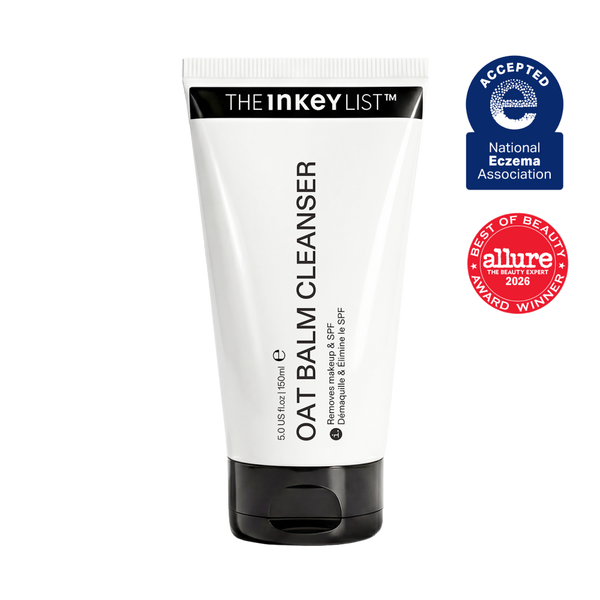
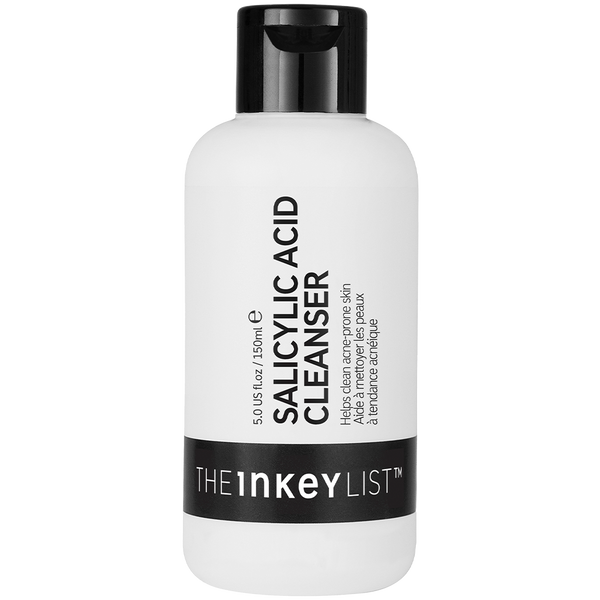
Step 1: Cleanse gently. The goal of cleansing dehydrated oily skin is to remove excess oil, makeup, and impurities without tearing away the lipids your barrier depends on. If your main concern is blemish-prone, oily skin, the Salicylic Acid Cleanser ($15) is formulated to clear pores and help manage breakouts without the harsh, over-drying effect of typical acne cleansers. If your symptoms lean more toward sensitivity or visible flaking alongside the oiliness, the Oat Cleansing Balm ($17) offers a gentler, non-foaming alternative that cleanses thoroughly while being far kinder to a compromised barrier.
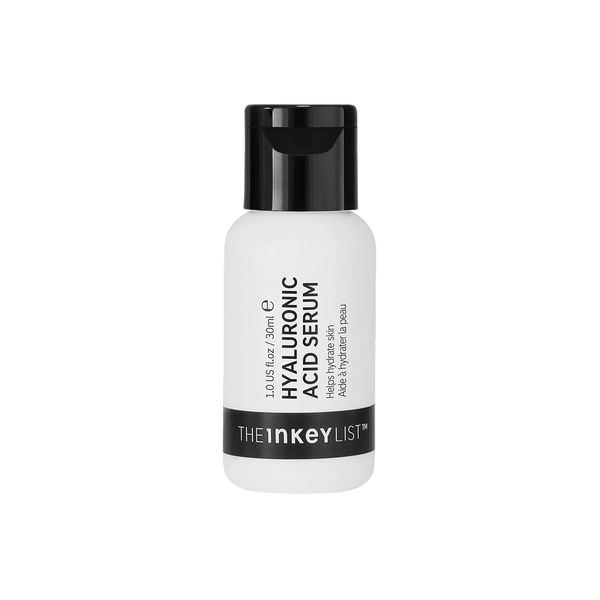
Step 2: Hydrate first. Immediately after cleansing, while skin is still slightly damp, apply a lightweight, water-based hydrator to replace the water that was just lost during cleansing, before locking anything in. The Hyaluronic Acid Serum ($13) is ideal here, delivering instant, oil-free hydration that works with oily skin rather than against it.
Step 2.5: Support the barrier, if needed. If you’re noticing visible signs of barrier compromise, tightness, sensitivity, or redness, layer in the Ectoin Hydro-Barrier Serum ($17) after your hydrating serum. This step is specifically about reinforcing the structure that’s supposed to be sealing water in, directly addressing the TEWL issue discussed earlier.
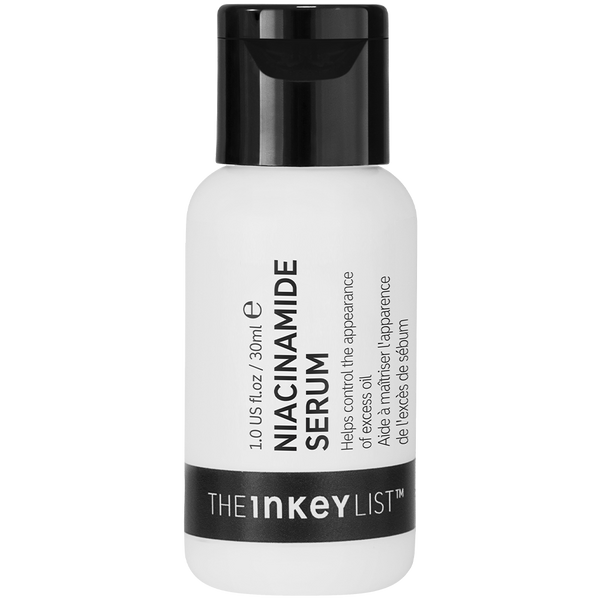
Step 3: Balance oil without stripping. This is where the Niacinamide Serum ($13) comes in. Niacinamide helps regulate the appearance of oil production and calm the look of blemishes, all while supporting the skin’s hydration rather than depleting it further. It’s one of the few ingredients that genuinely addresses both sides of the oily-and-dehydrated equation at once. If you want to go deeper on how niacinamide and salicylic acid work together, Salicylic Acid and Niacinamide: The Best Duo for Oily, Acne-Prone Skin breaks down that pairing in more detail. You can also learn more about the ingredient itself on the niacinamide pillar page.
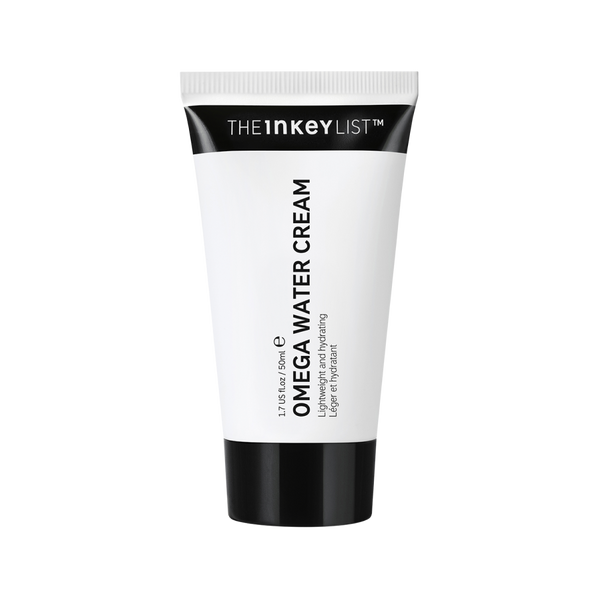
Step 4: Moisturize, always. This is the step most people with oily skin are tempted to skip, and it’s exactly the step that makes the biggest difference. The Omega Water Cream ($15) is an oil-free, lightweight moisturizer built specifically for oily and combination skin, sealing in hydration without adding shine or heaviness. For skin that needs more comfort and barrier repair alongside hydration, the Bio-Active Ceramide Moisturizer ($22) replenishes the exact lipids, ceramides, that make up your barrier’s structure.
Step 5: Don’t forget the eyes and daily protection. The eye area is thin and delicate, and often shows the effects of dehydration first, through fine lines or puffiness. The Caffeine Eye Cream ($14) helps hydrate and depuff this area as part of a complete routine. And regardless of skin type or condition, a daily sunscreen is a non-negotiable final step, since UV exposure accelerates both water loss and visible signs of aging.
Here’s the full routine summarized:
- Cleanse gently (Salicylic Acid Cleanser or Oat Cleansing Balm)
- Hydrate first (Hyaluronic Acid Serum)
- Support the barrier if needed (Ectoin Hydro-Barrier Serum)
- Balance oil (Niacinamide Serum)
- Moisturize always (Omega Water Cream or Bio-Active Ceramide Moisturizer)
- Protect the eye area and skin overall (Caffeine Eye Cream, daily SPF)
Notice that nothing here is complicated, and nothing requires a dozen products stacked on top of each other. Each step has a clear purpose, and together they address both the oil and the dehydration simultaneously, rather than treating them as competing problems. But a great routine only works if you stick with it, which brings us to the part of this conversation that matters most for long-term results.
Protecting Your Barrier for the Long Term
Fixing dehydrated oily skin isn’t a one-time product swap. It’s an ongoing relationship with your skin barrier, and treating it that way is what separates short-term improvement from lasting results. The products in the routine above matter, but how consistently and gently you use them matters just as much.
A strong barrier is genuinely the foundation for both sides of this issue. When your barrier is intact, it holds water in effectively, which reduces the dehydration side of the equation, and it also tends to calm down excessive oil production, since your skin no longer needs to overcompensate for lost moisture. In other words, barrier care isn’t just one part of the solution; it’s the thing that makes the rest of the solution work.
A few simple daily habits go a long way in protecting that barrier over time:
- Use lukewarm water, not hot, when cleansing. Hot water feels satisfying, especially on oily skin, but it accelerates water loss and can strip the very lipids your barrier depends on.
- Limit double cleansing to once a day, and only if your skin tolerates it. If your skin feels tight or uncomfortable after cleansing, that’s a sign to scale back, not push through.
- Keep moisturizing, even if skin feels oilier during the adjustment period. It’s common for skin that’s been under-moisturized for a while to go through a short transition as it recalibrates. Staying consistent is what gets you through that phase.
- Wear a daily sunscreen. Beyond protecting against UV damage, sunscreen is part of maintaining an intact barrier overall, since sun exposure is itself a stressor that can weaken skin’s natural defenses over time.
- Resist the urge to add too much, too fast. Layering multiple new actives at once, especially several acids together, can undo barrier progress even if each ingredient is beneficial on its own. Consistency with a few well-chosen products outperforms an aggressive, ever-changing routine.
If you want a broader framework for building out your full daily and nightly routine beyond this specific concern, the Ultimate Skincare Routine Guide is a useful resource for structuring everything in the right order and at the right pace.
The bigger philosophy here, and one worth internalizing well beyond this particular skin concern, is that skincare doesn’t need to be complicated to be effective. A few well-chosen, science-backed products, used consistently and gently, will consistently outperform a sprawling ten-step routine stacked with ingredients fighting against each other. Clarity beats complexity, every time.
With the science and the routine fully covered, it’s worth addressing a few specific questions that tend to come up again and again around this exact topic.
The Bottom Line on Dehydrated Oily Skin
If you take away one thing from everything above, let it be this: oily skin can absolutely be dehydrated, and recognizing that is the first real step toward fixing the shine, tightness, and breakouts you’ve been dealing with, often all at once. This isn’t a rare edge case. It’s an extremely common presentation that simply gets misunderstood and mistreated far more often than it gets correctly identified.
The fix was never about adding more products or reaching for harsher ones. It’s about rebalancing: cleansing gently instead of stripping, hydrating with oil-free, water-based formulas, supporting the barrier when it needs it, and moisturizing consistently, even on the days your skin feels oilier than you’d like. Each of those steps works with your skin’s natural systems instead of fighting against them.
Skincare has become needlessly complicated in a lot of corners of the industry, full of ten-step routines and conflicting advice. But the truth, backed by how your skin actually functions, is much simpler. A handful of well-chosen, well-formulated products, used consistently, will do more for dehydrated oily skin than an overwhelming routine ever could. That’s clarity you can trust, not another trend to keep up with.
Take a moment to look honestly at your current routine. Are you cleansing more often than your skin actually needs? Are you skipping moisturizer out of fear it’ll make things worse? Small shifts in those two habits alone are often enough to start seeing a real difference.
If you’re ready to put this into practice, the Hyaluronic Acid Serum and Omega Water Cream are the two essential starting points for addressing dehydrated oily skin, oil-free hydration paired with a lightweight moisturizer that locks it in. And if you’re still not entirely sure whether your skin is oily, dehydrated, or both, our oily skin and dehydrated skinpages are the best place to start before you shop, because understanding your skin will always come before buying for it.
Frequently Asked Questions
Got a question?
Our askINKEY team are a friendly bunch of skincare experts with deep product knowledge and zero judgement. Whether you're an ingredient obsessive or just starting out, we'll make it make sense. No question too big. No question too small. We Give A Care, Every Day.


