Hyaluronic Acid vs Ceramides: Key Differences Explained

07.07.2026

Hyaluronic acid vs ceramides is one of the most searched skincare comparisons out there right now. But the framing sets up a false choice - because these two ingredients are not competing with each other. They are not alternatives. They are partners.

Both are hydration ingredients, but they work at completely different stages of the hydration process. Hyaluronic acid draws moisture into the skin. Ceramides seal that moisture in. One fills the glass. The other is the glass. Neither does the other’s job, which means choosing between them is not only unnecessary - it is counterproductive.

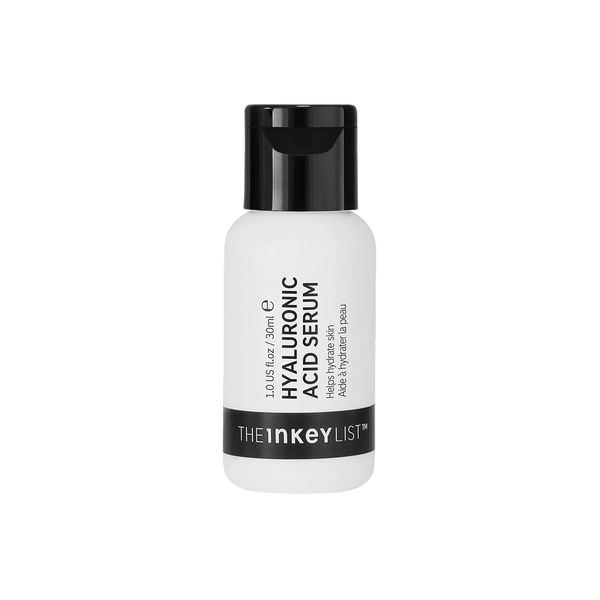
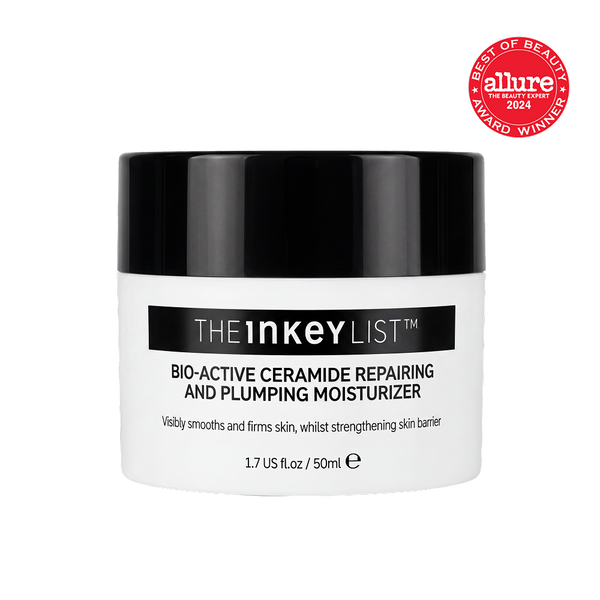
This blog covers exactly what hyaluronic acid and ceramides are, how they differ at a functional level, why they are more effective together than either is alone, and how to use both in your everyday routine. Two INKEY products sit at the center of this: our Hyaluronic Acid Serum at $13 and our Bio-Active Ceramide Moisturizer at $22. By the end of this guide, you will know exactly how - and why - to use them together.


What Hyaluronic Acid Actually Does for Your Skin

Hyaluronic acid is one of those ingredients that almost everyone has heard of, but far fewer people genuinely understand. Strip away the marketing and the science becomes surprisingly straightforward - and genuinely impressive.

Hyaluronic acid (commonly abbreviated to HA) is a naturally occurring molecule found throughout the human body. It exists in the skin, the joints, and the connective tissues, and its primary role everywhere it shows up is the same: attracting and retaining water. Your skin already produces HA naturally. It is not a foreign substance or a synthetic creation - it is something your skin recognizes and uses as part of its own hydration system.

The reason HA has become such a cornerstone of modern skincare is its extraordinary capacity for water retention. A single hyaluronic acid molecule can hold up to 1,000 times its own weight in water. That is not a figure borrowed from marketing copy - it is a well-documented property of the molecule that makes it one of the most effective humectants available in cosmetic formulation. A humectant, to be precise, is an ingredient that draws water molecules toward it - either pulling moisture from the environment or drawing it upward from the deeper layers of the skin to the surface.

The problem is that your skin’s natural HA supply does not last forever. Production begins to decline in your mid-twenties. By around age 50, roughly half of the skin’s total hyaluronic acid stores may have been depleted. This gradual reduction is one of the key reasons why skin becomes drier, less plump, and more visibly lined with age - the skin simply has less capacity to hold onto the water it needs.

This is where topical HA becomes valuable. Applying it directly to the skin allows you to replenish what the body produces less of over time - and the most effective formulations do something that older, simpler versions could not: they use multiple molecular weights of HA to work at different depths in the skin. Large HA molecules sit on the surface of the skin and hydrate the outermost layers. Smaller molecules are able to penetrate more deeply, delivering hydration below the surface rather than just on top of it.

Our Hyaluronic Acid Serum ($13) uses 2% multi-molecular hyaluronic acid for exactly this reason. It also contains Matrixyl 3000 Peptide, which supports firmer-looking skin over time, making it not just a hydration product but one with longer-term skin benefits. Clinically, it has been shown to deliver instant hydration, with 82% of users reporting firmer, smoother skin after just four weeks of use. If you are wondering whether your skin is sending you signals that it needs more HA, these five signs are worth reading.

One critical point that is easy to overlook: hyaluronic acid is a hydrator, not a moisturizer. This distinction matters more than it might sound. HA draws water into the skin - it does not lock it there. Applied without a sealant on top, HA can actually work against you in dry or cold environments, drawing moisture up and allowing it to evaporate before it has a chance to benefit the skin. The second half of the equation - sealing that moisture in - is where ceramides come in.

HA is non-comedogenic, water-based, and oil-free, making it suitable for all skin types including oily and acne-prone skin. For best results, it should be applied to damp skin immediately after cleansing - the surface moisture gives the HA molecules something to bind to and amplifies their effect.

Understanding what hyaluronic acid does sets up the next question naturally: if HA brings the water in, what stops it leaving?


What Ceramides Actually Do for Your Skin

If hyaluronic acid is the ingredient that fills your skin with water, ceramides are the infrastructure that keeps it there. They are not a trend ingredient. They are a fundamental component of healthy skin - one that your skin already depends on and one that becomes increasingly important to support as you age.

Ceramides are lipid molecules - fats - that occur naturally in the outermost layer of the skin, known as the stratum corneum. They make up approximately 50% of the lipid content of this layer, and their role is structural. The simplest way to visualize it is a brick wall: the skin cells are the bricks, and the ceramides are the mortar holding them together. When the mortar is intact, the wall holds. Water stays in. Irritants, pollutants, and allergens stay out. When ceramide levels drop - through aging, environmental damage, or the use of stripping products - the structure weakens. Water escapes through a process called transepidermal water loss (TEWL). Irritants get through more easily. Skin becomes dry, reactive, tight, and visibly more fragile.

You can read more about transepidermal water loss and why preventing it matters for long-term skin health - but the short version is this: a compromised barrier is the root cause of many skin concerns that people attribute to other things. Sensitivity, redness, chronic dryness, and even accelerated signs of aging can all trace back to a lipid barrier that is not functioning as it should.

Ceramide levels naturally decline with age, starting in the 30s and becoming more pronounced through the 40s and 50s. But aging is not the only threat. Harsh cleansers, over-exfoliation, UV exposure, cold weather, and dry indoor air all deplete ceramide levels - meaning that even younger skin can have a compromised barrier if it has been exposed to these conditions repeatedly.

Not all ceramide formulations are created equal. Our Bio-Active Ceramide Moisturizer ($22) uses Bio-Active Ceramide NP, a next-generation ceramide with a shorter molecular chain than standard ceramide ingredients. This shorter chain allows it to penetrate multiple skin layers rather than sitting exclusively on the surface, which is where most standard ceramides remain. The result is barrier repair and reinforcement that goes deeper than conventional ceramide products. In clinical testing, 100% of participants saw improvement in their skin, and the formula has been shown to reduce six signs of aging in just 28 days. For a detailed breakdown of why this type of ceramide performs differently, the Bio-Active Ceramides vs Regular Ceramides guide is worth reading.

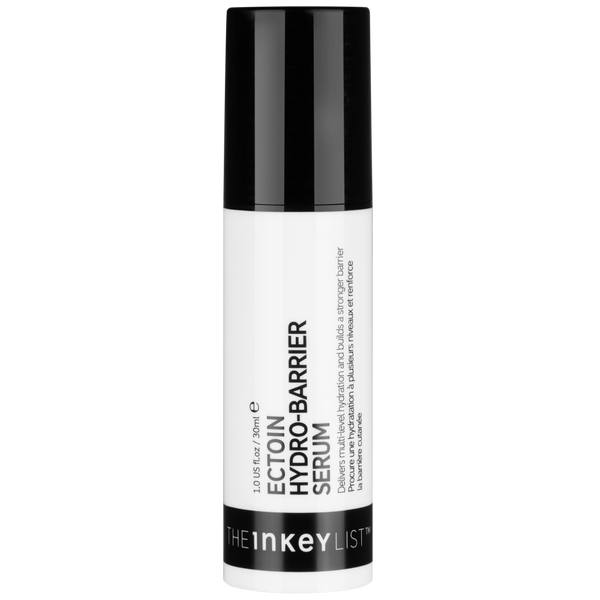
For those with a seriously damaged or sensitized barrier - whether from over-exfoliation, harsh weather, or a chronic skin condition - our Ectoin Hydro-Barrier Serum offers a targeted step that combines ceramides with ectoin and hyaluronic acid. It is designed specifically for skin that needs intensive barrier recovery alongside hydration, and it sits neatly between the HA serum and the ceramide moisturizer in a full routine.

Ceramides are not humectants. They do not draw water into the skin. Their job is entirely different: they repair and reinforce the barrier that prevents water from escaping, and they protect the skin from the environmental factors that would otherwise degrade it. That is not a limitation - it is a specialization. And it is exactly why ceramides and hyaluronic acid need each other.


Hyaluronic Acid vs Ceramides: The Key Differences Explained

This is the section that most people come to this blog for: a direct, honest comparison of ceramides vs hyaluronic acid. The most important thing to say upfront is this: neither is better than the other. They are not in the same category. Comparing them as alternatives is like comparing a faucet to a sink - one delivers the water, the other holds it.

Here is how they differ across the dimensions that actually matter:

Type of ingredient: Hyaluronic acid is a humectant - a molecule that attracts and binds water. Ceramides are lipids - fats that form part of the skin’s structural barrier. These are completely different functional categories. One works by chemical attraction; the other works by forming a physical seal.

What they do: HA draws moisture into the skin from its environment and from deeper skin layers. Ceramides seal moisture into the skin by reinforcing the lipid matrix of the stratum corneum and reducing transepidermal water loss. One is an input mechanism; the other is a retention mechanism.

Where they work: HA is effective at multiple depths depending on the molecular weight of the formula. Multi-molecular serums like our Hyaluronic Acid Serum deliver hydration both at the surface and deeper into the skin. Ceramides work primarily in the stratum corneum - the outermost skin layer - where they reinforce the lipid matrix that acts as the skin’s waterproofing system.

Texture and format: HA is typically water-based and lightweight - it is well-suited to serums because it dissolves in water and absorbs quickly without leaving residue. Ceramides are lipid-based and are most commonly found in richer moisturizers and creams, where they can form part of a protective layer on the skin’s surface.

What skin conditions they address best: HA is most visibly beneficial for skin that feels tight, dull, or dehydrated - skin that looks flat rather than plump. Ceramides are most critical for skin that is dry, sensitive, easily irritated, visibly aged, or compromised by actives, environment, or lifestyle.

Who they suit: Both are suitable for all skin types. But ceramides are particularly important for those in their 30s and beyond, those using active ingredients like retinol or acids, and those with a skin barrier that has been weakened by any means. HA is almost universally well-tolerated from the first use.

Here is the analogy that puts it most plainly: HA is the water. Ceramides are the glass. Pour water without a glass, and it goes everywhere. Hold a glass with nothing in it, and you have nothing to drink. HA without ceramides on top can actually draw moisture upward and allow it to evaporate - particularly in dry climates or air-conditioned environments - rather than keeping it locked in where skin needs it most.

One common misconception worth addressing directly: many people assume that a good moisturizer is all they need for hydration. A moisturizer can do a lot - but a serum-plus-moisturizer approach, where HA draws moisture in before a ceramide moisturizer seals it, creates a more effective and targeted hydration system than any single product can replicate. If you are searching for an answer to “is ceramide better than hyaluronic acid” or “which is better ceramides or hyaluronic acid” - the honest answer is that the question does not have a useful answer. The useful question is: how do I use both?

The answer to that question has a name, and it is straightforward enough to build into any routine in two products.


The Moisture Sandwich: How to Use Hyaluronic Acid and Ceramides Together

The Moisture Sandwich is the simplest, most effective framework for combining hyaluronic acid and ceramides - and it is exactly what it sounds like. Apply HA first to draw moisture into the skin. Apply a ceramide moisturizer on top to seal that moisture in. Those two steps, in that order, create a hydration system that is more effective than either product used alone.

The reason the order matters is not arbitrary. Hyaluronic acid is a humectant - it needs surface moisture to bind to. This is why applying HA to damp skin - not dry skin, damp skin, immediately after cleansing or after a quick mist of water - is the correct technique. If the skin is completely dry when you apply HA, it has very little to work with and may draw moisture upward from deeper layers, which can backfire - particularly in dry or low-humidity environments where that moisture can then evaporate from the surface. Applying HA to damp skin gives the molecules something to grab onto immediately. You can explore the full science of why transepidermal water loss matters here - but the short version is that HA without a sealant on top is an incomplete system.

The ceramide moisturizer applied immediately after creates that seal. It reinforces the lipid barrier that prevents the moisture HA has drawn in from escaping. The two products work in sequence - not in competition - to do two different things that together produce a complete result.

Here is how to build this into your routine without overcomplicating it:

Morning Routine:

  1. Cleanse
  2. Apply our Hyaluronic Acid Serum ($13) to damp skin - press gently into the face and neck, do not rub
  3. Follow immediately with our Bio-Active Ceramide Moisturizer ($22) to seal in the hydration
  4. Apply SPF of your choice as a final protective step

Evening Routine:

  1. Cleanse
  2. Apply our Hyaluronic Acid Serum ($13) to damp skin
  3. Apply any targeted treatments (retinol, vitamin C, or acids at this stage if using them)
  4. Finish with our Bio-Active Ceramide Moisturizer ($22) to lock everything in overnight

This answers “can you use hyaluronic acid with ceramides” definitively: yes, and this is precisely how. Both are gentle enough for twice-daily use. Neither causes irritation or reactive sensitivity with consistent daily application. The combination is appropriate for all skin types and all life stages.

For oily or combination skin: You do not need to skip the ceramide step because your skin is oily. Oily skin can absolutely be dehydrated - lacking water, not oil - and the barrier still needs support. The texture of your ceramide product just needs to match your skin. Our Omega Water Cream ($15) is the lighter alternative: it contains 0.2% ceramide complex and 5% niacinamide in a gel-cream texture that sits comfortably on oilier skin without feeling heavy or contributing to congestion.

For skin that needs extra barrier support: If your skin is genuinely sensitized, dehydrated, or has a compromised barrier - perhaps from over-exfoliation, harsh weather, or the start of a retinol routine - our Ectoin Hydro-Barrier Serum can be added as an intermediate step between the HA serum and the ceramide moisturizer. It combines hyaluronic acid, ceramides, and ectoin in a targeted formula designed for barrier recovery, giving the routine triple-layer support when the skin needs it most.

If you are building a full routine from scratch or want to understand how these products fit into a broader regimen, the how to build your skincare routine guide is a practical next read.


Which Skin Types Need Hyaluronic Acid, Ceramides, or Both?

The short answer: most people need both. Your skin type affects which specific products and textures will work best for you - not whether to use both ingredients at all. Here is a direct breakdown.

Dry skin needs both, without question. Dry skin struggles to maintain its own lipid barrier, which means ceramides are not just beneficial - they are close to essential. Our Bio-Active Ceramide Moisturizer ($22) is the priority here, with its richer texture providing the barrier reinforcement that dry skin is chronically lacking. Pair it with the HA serum underneath for a complete hydration system.

Oily or acne-prone skin still needs both - but the misconception runs deep. Oily skin is frequently also dehydrated skin. The skin produces excess oil partly as a compensatory response to a lack of water, not an excess of it. Hyaluronic acid is ideal for oily skin: it is lightweight, water-based, oil-free, and non-comedogenic. It hydrates without adding grease or triggering breakouts. For the ceramide step, our Omega Water Cream ($15) is a better fit than the richer Bio-Active Ceramide Moisturizer - it delivers 0.2% ceramide complex in a gel-cream texture that provides barrier support without heaviness.

Sensitive or reactive skin benefits enormously from ceramides in particular. In many cases, a compromised skin barrier is the root cause of chronic sensitivity - the wall has gaps, and irritants get through that an intact barrier would deflect. Both HA and ceramides are extremely well-tolerated, with no known irritation risk for sensitive skin. Our Ectoin Hydro-Barrier Serum is a strong recommendation here - the combination of ceramides, ectoin, and HA makes it specifically suited to sensitized, reactive, or post-procedure skin.

Mature skin with anti-aging priorities should use both. HA addresses the immediate, visible dehydration that makes fine lines more prominent - plumping the skin so that surface lines are less noticeable throughout the day. The Bio-Active Ceramide Moisturizer addresses the longer-term picture: clinically proven to reduce six signs of aging in 28 days, with Bio-Active Ceramide NP delivering up to four times greater visible wrinkle reduction compared to standard ceramides. This is not just moisturization - it is targeted anti-aging barrier work.

Skin using active ingredients - retinol, AHAs, BHAs, or prescription tretinoin - needs both urgently. Active ingredients accelerate cell turnover and can significantly compromise the skin barrier in the process, leading to dryness, flaking, redness, and sensitivity. HA soothes and rehydrates. The ceramide moisturizer buffers the barrier-disrupting effects of actives and helps maintain integrity during exfoliation cycles. Applying a ceramide moisturizer after retinol directly reduces the risk of irritation without diminishing the active’s effectiveness. For more on pairing ingredients safely, this guide to what not to mix with retinol is a useful reference.

All skin types should note: both HA and ceramides are safe during pregnancy and breastfeeding, and both are appropriate for use on skin with rosacea, eczema-prone conditions, and other chronic sensitivities. Neither ingredient carries the contraindications that actives like retinol or acids do.


Common Questions About Hyaluronic Acid and Ceramides Answered

Is ceramide better than hyaluronic acid?

No - and the question itself is the problem. HA and ceramides do completely different things. HA draws moisture into the skin. Ceramides seal moisture into the skin and repair the barrier that holds it there. Neither is superior. Choosing between them is choosing between filling a glass and having a glass to fill. Both are necessary for skin that holds onto moisture effectively and stays resilient over time.

Can you use hyaluronic acid with ceramides?

Yes - and this is precisely the combination that works. Apply HA to damp skin first to draw moisture in, then follow with a ceramide moisturizer to seal it. This is the Moisture Sandwich. It is safe for twice-daily use and appropriate for all skin types. There are no compatibility issues, no risk of reaction, and no need to alternate between them.

Which is better, ceramides or hyaluronic acid?

Neither is better - they work in sequence. HA without a ceramide sealant means water is drawn in but not retained, particularly in dry environments. Ceramides without HA means barrier support without the humectant hydration that draws moisture to the surface in the first place. Together, they create a complete and functional hydration system.

Can I use ceramide with hyaluronic acid every day?

Yes. Both ingredients are gentle, non-irritating, and well-suited to twice-daily use. Apply HA in the morning and evening to damp skin after cleansing. Follow with a ceramide moisturizer. Neither ingredient requires cycling or rest days - consistency is what delivers results.

Do I need both a HA serum and a ceramide moisturizer, or can one product do both?

Both formats serve a clear purpose. Some products do combine HA with ceramides in a single formula - our Ectoin Hydro-Barrier Serum contains HA, ceramides, and ectoin and is a good option for those who want targeted barrier recovery in one step. However, layering a dedicated HA serum under a ceramide moisturizer typically delivers more concentrated, targeted benefits at each stage of the hydration process.

What does hyaluronic acid and ceramides do for skin together?

Together they create the Moisture Sandwich: HA draws water into the skin, ceramides seal it in and strengthen the barrier that prevents it from escaping. The combined result is skin that stays hydrated for longer, feels more resilient, shows less visible dehydration, and is better protected from the environmental stressors that deplete moisture over time.

Can ceramides and hyaluronic acid be used with retinol?

Yes - they are an ideal pairing alongside retinol. Apply retinol first, follow with HA serum to rehydrate, and finish with a ceramide moisturizer to buffer dryness and support barrier integrity. This reduces the likelihood of irritation and peeling without compromising retinol’s effectiveness. For a full breakdown of what does and does not work with retinol, this guide covers the combinations in detail.

Once you are clear on your specific questions, building your full skincare routine around these two ingredients becomes a straightforward process.


The Takeaway: Your Skin Needs Both, and the System Is Simple

Hyaluronic acid and ceramides are not rivals. They are two halves of a working hydration system - one draws water in, the other seals it in. Neither does the other’s job. Neither replaces the other. And no skin type - dry, oily, sensitive, mature, or anything in between - is better served by choosing one over the other.

The Moisture Sandwich is the practical expression of this: apply our Hyaluronic Acid Serum to damp skin, follow with our Bio-Active Ceramide Moisturizer, and let the two ingredients do what they are each built to do in the right order. Two products. One sequence. A hydration system that works at every level of the skin.

Your skin type determines which specific textures and products suit you best - but it does not change whether you need both. Almost everyone does. The only variable is whether you build that system now, or wait until dehydration, sensitivity, or visible aging makes the need harder to ignore.


Shop the Moisture Sandwich

Start with our Hyaluronic Acid Serum ($13) and our Bio-Active Ceramide Moisturizer ($22). The complete Moisture Sandwich, starting from $13.

Not sure where to start? Take the INKEY Skincare Quiz for a personalized routine in under 2 minutes.

Want to go deeper on either ingredient? Read the full guides: What is Hyaluronic Acid? and What are Ceramides?.