

Ectoin vs Hyaluronic Acid: What’s the Difference and Which Does Your Skin Need?
Ectoin and hyaluronic acid are both hydrating heroes, but they work in completely different ways — here's how to tell which one your skin actually needs.
Author
askINKEY skincare advisor
Published
30 May, 2026
Time to read
9 minutes
Both ectoin and hyaluronic acid are hydrating skincare ingredients. Both are well-tolerated, widely used, and backed by clinical evidence. If you have seen them side by side on a shelf or in a routine recommendation and wondered which one you actually need, you are not alone. But the question is not quite as simple as picking a winner, because these two ingredients work in fundamentally different ways and address different dimensions of skin health.
This blog covers exactly that: what ectoin is, what hyaluronic acid is, how each one works, what sets them apart at a scientific level, who each ingredient is best suited to, and whether you can use both. By the end, you will have a clear enough understanding of each to make an informed decision for your own skin, rather than guessing based on marketing language.
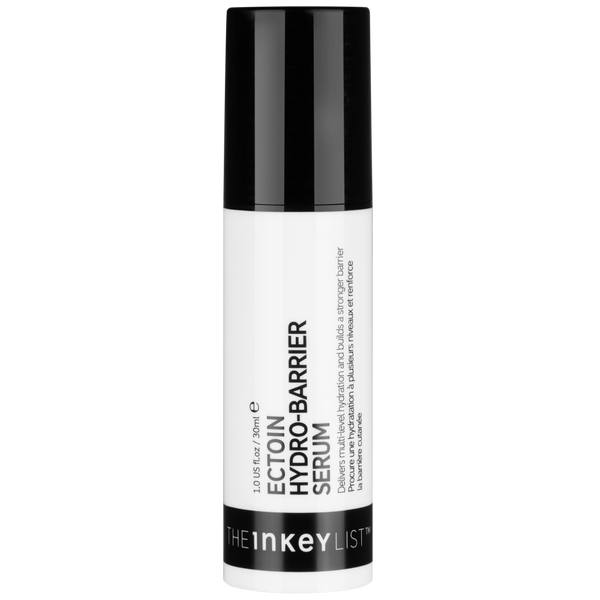
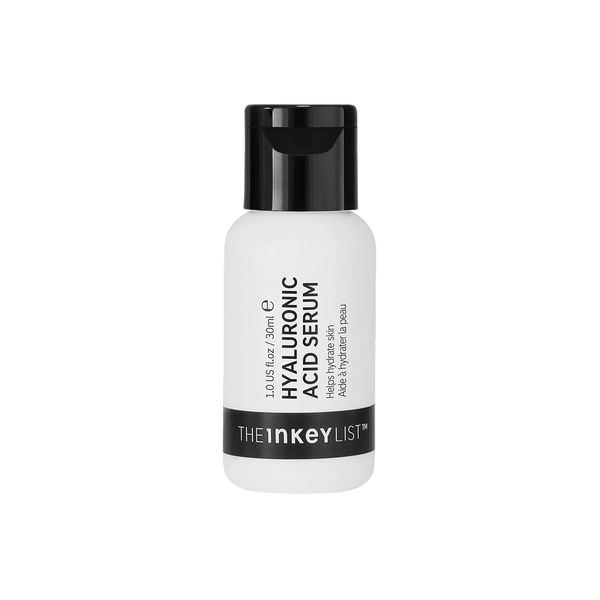
If you want to get straight to the products: the Ectoin Hydro-Barrier Serum ($17) is the barrier-focused, cellular-level hydration option, and the Hyaluronic Acid Serum ($13) is the high-performance surface hydration and plumping option. Both are covered in detail below.
What is Ectoin - and How Does It Work in Skincare?
Ectoin is a naturally occurring small organic molecule. It is produced by extremophile bacteria - microorganisms that have evolved to survive in environments that would destroy most living things: salt lakes, hot springs, polar ice, and sun-scorched deserts. In order to survive these conditions, these bacteria produce ectoin as a form of molecular self-defense. It belongs to a class of compounds called extremolytes, which protect cellular structures from extreme environmental stress, including dehydration, UV radiation, temperature fluctuations, and oxidative damage.
In skincare, ectoin is biotechnologically derived from these bacteria and applied topically. What makes it distinct from most other hydrating ingredients is the mechanism it uses: rather than simply attracting water to the skin surface, ectoin forms stable hydration shells directly around skin cells. These shells bind water molecules to the cell membrane itself, anchoring moisture at a cellular level and creating a protective layer that shields the cell from external stressors. This means the hydration ectoin delivers is not easily lost to evaporation, even in low-humidity environments such as air-conditioned offices or dry climates.
Beyond hydration, ectoin actively strengthens the skin barrier. It does this by stabilizing the lipid bilayers that form the structural foundation of cell membranes, which in turn reduces transepidermal water loss (TEWL) - the process by which moisture escapes passively through the skin surface. A compromised barrier allows more moisture to escape and more environmental irritants to penetrate. Ectoin works to reinforce that barrier architecture, not just hydrate above it. If you want to understand TEWL in more depth, our guide to transepidermal water loss breaks down exactly how your skin loses - and can retain - moisture.
Ectoin also has meaningful anti-inflammatory properties. It stabilizes cellular structures that, when destabilized, can trigger inflammatory responses. This makes it particularly well-suited for sensitive, reactive, and rosacea-prone skin - skin types that often cannot tolerate many active ingredients without flaring.
The Ectoin Hydro-Barrier Serum is clinically proven to hydrate and strengthen the barrier in as little as 15 minutes from first application, visibly restore bounce in 3 days, and improve five signs of a compromised barrier across four weeks of consistent use. It is safe for all skin types, including pregnant and breastfeeding skin, and carries no photosensitivity risk.
For a complete overview of ectoin as an ingredient - including how it is made, how it works, and which products contain it - visit the ectoin ingredient page. For a complete scientific deep-dive, our full guide to ectoin covers the biochemistry, the clinical research, and the extremophile origin story in full. If you are also interested in understanding what the skin barrier actually is and how to protect it, this guide to skin barrier function is a useful companion read. You can also browse the full ectoin skincare range to see how the ingredient appears across the line.
With ectoin clearly defined, the next step is understanding hyaluronic acid with the same level of precision - so that when the comparison happens, it is genuinely useful.
What is Hyaluronic Acid - and How Does It Work?
Hyaluronic acid is one of the most studied ingredients in skincare and one of the most widely used. Unlike ectoin, it is not derived from extremophile organisms. It is a polysaccharide - a type of sugar molecule - that occurs naturally in the human body, primarily in the skin, joints, and connective tissue. Topically applied hyaluronic acid is typically produced through bacterial fermentation and processed to specific molecular weights for skincare formulation. For a complete overview of how it works across the body and in formulations, see our hyaluronic acid ingredient page.
Its mechanism of action is well understood: hyaluronic acid is a humectant. Humectants work by attracting water molecules and binding them, drawing moisture both from the environment and from deeper layers of the skin towards the surface. Hyaluronic acid is exceptionally good at this. It can hold up to 1,000 times its own weight in water, which is what gives it that characteristic ability to deliver immediate, visible plumping and hydration from the first application.
The concept of multi-molecular hyaluronic acid is worth understanding. Hyaluronic acid molecules come in different sizes - referred to as molecular weights. High molecular weight hyaluronic acid is a larger molecule that sits on the skin surface, forming a film that delivers instant plumping and helps reduce surface water loss. Low molecular weight hyaluronic acid is smaller and able to penetrate more deeply into the skin, providing more lasting hydration at deeper levels. The Hyaluronic Acid Serum uses 2% multi-molecular hyaluronic acid - combining multiple molecular weights to address hydration at more than one depth simultaneously. It also contains Matrixyl 3000 peptide, which provides additional firming and smoothing support. In clinical testing, 82% of users saw firmer, smoother skin after four weeks of use.
There is one important behavioral characteristic of hyaluronic acid that is worth flagging: in low-humidity environments, it can draw moisture from the deeper layers of the skin rather than from the air. If it is applied and then not sealed with a moisturizer, it can - in very dry conditions - contribute to moisture loss from the dermis rather than preventing it. This is not a reason to avoid hyaluronic acid; it is a reason to always follow it with a moisturizer. It is also one of the key functional differences between HA and ectoin. For more on getting the balance right, our guide to dehydrated skin covers how to spot and correct this.
Hyaluronic acid does not offer environmental protection or active barrier repair. It is a highly effective hydrator, but it works at the level of water attraction and retention rather than barrier architecture or cellular defense. For readers who are unsure whether hyaluronic acid is the right priority for their skin, 7 signs your skin is dehydrated is a helpful reference. And if you have ever wondered whether hyaluronic acid works for oily skin, this complete guide to hyaluronic acid for oily skin explains why it's often a better fit than people expect.
Now that both ingredients are properly defined, it is time to place them directly side by side.
Ectoin vs Hyaluronic Acid - The Core Differences That Matter
This is the section that most readers are here for: a clear, thorough, practical breakdown of how these two ingredients actually differ. Not just at a surface level - but in terms of mechanism, depth of action, barrier impact, environmental interaction, anti-inflammatory behavior, and clinical timelines. Understanding these differences is what makes it possible to use both intelligently.
How Each Ingredient Hydrates the Skin
The most fundamental difference between ectoin and hyaluronic acid is the type of hydration each one delivers and the mechanism it uses to deliver it.
Hyaluronic acid hydration is attracted. It draws water molecules towards the skin and holds them there through its exceptional water-binding capacity. The result is rapid, high-volume surface hydration with immediate visible plumping. This is the kind of hydration you can feel and see within minutes of application. It is responsive to the environment - which is both its strength and its limitation.
Ectoin hydration is anchored. Rather than pulling water in from outside, ectoin wraps water molecules directly around skin cells, binding them to the cell membrane in a stable shell. This hydration is not dependent on external humidity - it is held in place at a cellular level. You are not seeing the same instant dramatic plumping as you would with hyaluronic acid, but the moisture is more structurally secure and resistant to evaporation. It is a slower, deeper kind of hydration that builds in effect with consistent use.
In short: hyaluronic acid hydrates by volume and speed; ectoin hydrates by depth and stability.
Depth of Action
Hyaluronic acid, through multi-molecular formulations, can address hydration from the skin surface down to mid-layer. High molecular weight HA acts at the surface for immediate plumping; low molecular weight HA penetrates further for lasting hydration in the upper dermis.
Ectoin operates at the cellular membrane level - it engages with the lipid bilayer of individual skin cells, which is the structural foundation of the barrier rather than the water content visible on the surface. This is a meaningfully different target. Ectoin is not competing with hyaluronic acid for the same skin layer; it is working in a different dimension altogether.
Barrier Function and Repair
This is one of the most significant differences between the two ingredients and the one that most directly affects product selection.
Hyaluronic acid does not repair or strengthen the skin barrier. It hydrates effectively, but it does not act on the barrier architecture itself - it does not address lipid bilayer stability, reduce TEWL, or repair the structural integrity of a compromised barrier.
Ectoin, by contrast, is a barrier-active ingredient. It stabilizes the lipid bilayers that form cell membranes, which reduces TEWL and actively works to restore barrier function. For skin that feels tight, uncomfortable, or reactive - or for skin that has been compromised by over-exfoliation, prescription treatments, or environmental stress - this barrier-strengthening action is the more pressing priority. The Ectoin Hydro-Barrier Serum is clinically proven to improve five signs of a compromised barrier in four weeks.
Environmental Protection
Ectoin was born from environmental extremity. The same molecular mechanism that protects extremophile bacteria from UV radiation, dehydration, pollution, and temperature extremes also provides measurable environmental protection for skin cells. For anyone living or working in urban environments - with exposure to pollution, central heating, air conditioning, and daily UV - this is a practically relevant benefit.
Hyaluronic acid provides no active environmental protection. It is a hydrator, not a shield.
Anti-inflammatory Properties
Ectoin has documented anti-inflammatory action. It stabilizes the cellular and molecular structures that, when disrupted by environmental or chemical stressors, can initiate inflammatory responses. This is why it is particularly effective for sensitive, rosacea-prone, and reactive skin - it addresses the root structural causes of sensitivity rather than just sitting on top of it.
Hyaluronic acid is very well-tolerated and unlikely to cause irritation, but it does not have meaningful anti-inflammatory properties.
Speed and Timeline of Results
Hyaluronic acid is immediate. Skin looks and feels more plump and hydrated within minutes of application. This is one of its most commercially compelling characteristics and one of the main reasons it became such a dominant skincare ingredient.
Ectoin has a different timeline. Barrier strengthening begins in as little as 15 minutes from first application - but the most meaningful results in terms of bounce, resilience, and barrier repair build over three days and four weeks of consistent use. It is an ingredient that rewards commitment.
At a Glance: Ectoin vs Hyaluronic Acid
Primary function
- Ectoin: Barrier repair and cellular hydration
- Hyaluronic acid: Surface hydration and plumping
How it works
- Ectoin: Forms hydration shells around cells
- Hyaluronic acid: Attracts and binds water molecules
Depth of action
- Ectoin: Cellular membrane level
- Hyaluronic acid: Surface to mid-layer
Hydration type
- Ectoin: Anchored
- Hyaluronic acid: Attracted
Environmental protection
- Ectoin: Yes
- Hyaluronic acid: No
Anti-inflammatory
- Ectoin: Yes
- Hyaluronic acid: No
Best for
- Ectoin: Sensitive, reactive, barrier-compromised skin
- Hyaluronic acid: Dehydrated, normal, oily or combination skin
Pregnancy safe
- Both ectoin and hyaluronic acid are safe to use during pregnancy and while breastfeeding
INKEY product
- Ectoin: Ectoin Hydro-Barrier Serum - $17
- Hyaluronic acid: Hyaluronic Acid Serum - $13
Compatibility With Different Skin Types and Concerns
Both ectoin and hyaluronic acid are suitable for all skin types, including sensitive and pregnant skin. Neither carries photosensitivity risk. Both are fragrance-free and highly well-tolerated.
Where they diverge is in their particular strengths:
- Ectoin is the stronger choice for sensitive, reactive, rosacea-prone, or barrier-compromised skin. It is also the better option for skin regularly exposed to environmental stressors and for those using potent actives like retinolwho need barrier support.
- Hyaluronic acid is the better choice for straightforward dehydration, immediate plumping, or as a lightweight hydrating foundation in a basic routine, and pairs well with niacinamide and vitamin C if you want to layer in brightening or oil-balancing actives.
For a fuller understanding of how to approach hydration as part of a complete routine, this guide to hydrating skin is worth reading alongside this comparison.
The comparison now provides a clear framework. The next logical step is translating that framework into a personal decision.
Which One Does Your Skin Actually Need?
Knowledge about ingredients is only useful when it is applied. This section translates the ectoin versus hyaluronic acid comparison into practical, skin-type-specific guidance. The aim is to help you identify where you sit, what your skin is actually asking for, and which product - or combination of products - will address it most effectively.
Choose the Hyaluronic Acid Serum if:
- Your skin feels tight, dull, or dehydrated but is not particularly reactive or sensitive.
- You are new to serums and want an easy, well-tolerated starting point that works across all skin types.
- You want immediate visible plumping and surface hydration from day one.
- You have oily or combination skin that needs hydration without heaviness or occlusion.
- You are building a basic hydration routine and want to address surface-level dehydration first.
- You are in your late teens or early twenties and your skin barrier is generally intact and functioning well.
- Price accessibility is a priority - at $13, the Hyaluronic Acid Serum is one of the most effective entry points into hydration-focused skincare available.
The Hyaluronic Acid Serum is the right choice when dehydration is your primary concern and your barrier is not the limiting factor. It delivers results quickly, fits easily into any routine, and does exactly what it promises.
Choose the Ectoin Hydro-Barrier Serum if:
- Your skin is sensitive, reactive, or prone to redness, flushing, or rosacea.
- Your skin feels tight, uncomfortable, or stripped after cleansing - classic signs of a compromised barrier that is losing moisture faster than it should.
- You live or work in environments that are particularly harsh on skin: urban pollution, air-conditioned offices, centrally heated homes, or frequent air travel.
- You are using actives such as retinol, AHAs, or prescription treatments and your skin needs barrier support to stay resilient alongside them.
- Your skin has become reactive to products it previously tolerated without issue - a common indicator of barrier compromise.
- You are post-procedure or recovering from a course of prescription treatment and need to restore barrier integrity as part of the recovery process.
- You are pregnant or breastfeeding and need a safe, clinically studied hydration and barrier support option.
- You want your daily hydration step to double as environmental protection.
The Ectoin Hydro-Barrier Serum is the right choice when your skin needs more than surface hydration - when what is actually required is structural support, cellular protection, and barrier restoration.
Consider Using Both if:
- You want to address hydration at every depth simultaneously: surface plumping from hyaluronic acid and cellular-level anchored hydration plus barrier repair from ectoin.
- You are using retinol or other potent actives and need both surface hydration and barrier protection as part of your support strategy.
- Your skin is dehydrated and sensitive at the same time - a combination where ectoin handles the barrier and cellular dimension while hyaluronic acid handles the visible surface dryness.
- You have mature skin, where both barrier integrity and volume loss are relevant concerns.
A Quick-Reference Skin Type Guide
- Dry skin: Both, with the Ectoin Hydro-Barrier Serum as the priority first step - barrier support before surface hydration.
- Dehydrated (but not dry or sensitive): The Hyaluronic Acid Serum is an excellent starting point; add ectoin if sensitivity is also present.
- Oily or combination skin: The Hyaluronic Acid Serum for lightweight daily hydration; introduce ectoin if the barrier starts to feel compromised.
- Sensitive or reactive skin: Ectoin first - reinforce the barrier before layering additional hydration.
- Mature skin: Both - ectoin for barrier integrity and environmental defense; hyaluronic acid for plumping and surface smoothing.
- Retinol users: Ectoin before retinol to buffer sensitivity; hyaluronic acid as an optional surface hydration addition. For step-by-step guidance, see how to use ectoin with retinol and other actives, or if you'd rather pair retinol with hyaluronic acid instead, this guide to using retinol and hyaluronic acid together covers that combination.
If you are unsure whether your barrier is actually compromised or simply dehydrated, this guide to the skin barrier will help you work it out. For those who want to understand where each ingredient sits within a complete skincare routine, the skincare routine guide maps out a full approach.
The most common follow-up question after this kind of guidance is whether you can - or should - use ectoin and hyaluronic acid at the same time. The answer is yes, and the science behind why is worth understanding.
Can You Use Ectoin and Hyaluronic Acid Together?
Yes. Not only are these two ingredients compatible - they are genuinely complementary. They operate through different mechanisms, at different depths, for different functional purposes. Using them together does not create redundancy; it creates comprehensive coverage.
Why They Work Better Together
Hyaluronic acid works at the skin surface and upper layers, attracting and binding water where it is most visibly impactful. Ectoin works at the cellular level, anchoring moisture within the cell membrane and reinforcing the structural architecture of the barrier. These are not competing approaches to the same problem - they are two layers of a more complete hydration strategy.
Think of it this way: hyaluronic acid fills the surface; ectoin fortifies the foundation. One is a volume provider, the other is a structural protector. Together, they deliver hydration and protection across every depth simultaneously.
The most efficient way to use both ingredients is already built into a single product: the Ectoin Hydro-Barrier Serumcombines 2% ectoin, 2.5% multi-molecular hyaluronic acid, and a 1% barrier blend (three ceramides) in a single formulation. It was designed precisely around this complementary relationship - so that one step delivers ectoin's barrier-strengthening and cellular hydration alongside hyaluronic acid's surface plumping and moisture binding, with ceramides reinforcing the barrier further.
For those who want to use the Hyaluronic Acid Serum as a separate product alongside the Ectoin Hydro-Barrier Serum, the layering is straightforward. Apply from thinnest to thickest, and always finish with a moisturizer to seal both products in and prevent any moisture loss.
Neither ingredient conflicts with other common skincare actives. Retinol, niacinamide, vitamin C, AHAs, and BHAs can all be used alongside ectoin and hyaluronic acid without concern.
If your focus is less about hydration and barrier repair and more about overall radiance and visible rejuvenation, it's also worth knowing about the Exosome Hydro-Glow Complex ($24). It's a different kind of product to the two compared in this article - rather than hydrating or repairing the barrier as its primary job, it's formulated as a 6-in-1 treatment clinically proven to visibly improve radiance, hydration, tone, firmness, elasticity, and texture, with 100% of users in a clinical study seeing more glowing skin. It can be layered in after your hydrating serums as an additional glow-boosting step, rather than a replacement for either ectoin or hyaluronic acid.
How to Layer: AM Routine
- Cleanse
- Ectoin Hydro-Barrier Serum - apply to damp skin for optimal absorption
- Hyaluronic Acid Serum - optional additional step for extra surface hydration
- Targeted serums (niacinamide, vitamin C, or others)
- Bio-Active Ceramide Moisturizer - to seal in and support barrier function
- SPF - apply a broad-spectrum sunscreen such as the Dewy Sunscreen SPF 30 as the final step every morning
How to Layer: PM Routine
- Cleanse
- Ectoin Hydro-Barrier Serum - apply to damp skin
- Hyaluronic Acid Serum - optional additional step
- Treatment actives (retinol, niacinamide, or others)
- Bio-Active Ceramide Moisturizer
The key principle in both routines is consistent application of the Ectoin Hydro-Barrier Serum on damp skin, where it can form its hydration shells most effectively. The Hyaluronic Acid Serum follows as an optional amplifying step rather than an essential one - particularly useful for skin that is very dehydrated or for anyone who wants maximum surface plumping.
For a broader look at how hydration fits into a complete skincare approach, this guide to hydrating skin expands on the principles at work across a full routine.
If you still have questions about whether ectoin is right for you, our complete ectoin guide is the most thorough resource available. For readers whose questions point more towards barrier concerns specifically, this guide to the skin barrier is the right next step.
What to Take Away From This Comparison
Ectoin and hyaluronic acid are not rivals. They address different layers of the same fundamental need - healthy, well-hydrated, resilient skin - through entirely different mechanisms.
Hyaluronic acid hydrates through attraction: it draws water to the surface and holds it there, delivering immediate, visible plumping and surface softness. Ectoin hydrates through anchorage: it binds water directly to skin cells at a molecular level, stabilizes the lipid bilayer, reduces moisture loss through the barrier, and provides active protection against the environmental stressors that degrade skin health over time.
If dehydration and immediate plumping are your primary concern, the Hyaluronic Acid Serum ($13) is an exceptionally effective and accessible starting point.
If your skin is sensitive, reactive, barrier-compromised, or regularly exposed to environmental stress, the Ectoin Hydro-Barrier Serum ($17) addresses the structural causes rather than just the surface symptoms.
If you want both - comprehensive hydration at every depth, with barrier repair and environmental protection built in - the Ectoin Hydro-Barrier Serum already combines ectoin, multi-molecular hyaluronic acid, and ceramides in a single step. It is the most complete hydration and barrier product available from the range, and it removes the need to decide between the two ingredients at all.
Knowing what each ingredient does, and what your skin actually needs, is what separates a routine that works from one that simply takes up shelf space.
Shop by Concern
Barrier repair, sensitivity, and environmental protection:
Ectoin Hydro-Barrier Serum - $17
Surface hydration, plumping, and firming:
Hyaluronic Acid Serum - $13
Overall radiance and 6-in-1 rejuvenation:
Exosome Hydro-Glow Complex - $24
Build a complete routine and save up to 20%:
Build Your Own Routine
Not sure where to start?
Take the Skin Quiz
Keep reading:
Ectoin Ingredient Page | What is Ectoin? | What Is TEWL? | How to Hydrate Skin
* Based on clinical study data. Results may vary. ** Based on clinical study with 4 weeks of consistent use. Results may vary. Exosome Hydro-Glow Complex claims: 100% saw more glowing skin and clinic-worthy rejuvenated skin in 14 days, based on a 4-week clinical study of 26 people.
Frequently Asked Questions
Got a question?
Our askINKEY team are a friendly bunch of skincare experts with deep product knowledge and zero judgement. Whether you're an ingredient obsessive or just starting out, we'll make it make sense. No question too big. No question too small. We Give A Care, Every Day.


