

What Is a Humectant? The Complete Skincare Guide
Discover how ingredients like glycerin and hyaluronic acid attract and retain moisture, why they're essential for healthy skin, and how to use them for long-lasting hydration
Author
askINKEY skincare advisor
Published
03 July, 2026
Time to read
16 minutes
A humectant is a class of skincare ingredient that attracts water molecules and binds them to the skin. It is one of three functional categories of moisturizing ingredients - the others being emollients and occlusives - and understanding how all three work together is the foundation of effective skin hydration.
This blog covers everything you need to know about humectants: the humectant definition, how they work at the level of the skin, the difference between humectants, emollients, and occlusives, the best humectant ingredients to look for (including glycerin and hyaluronic acid), how to apply them correctly for maximum results, and the most common myths that prevent people from getting those results.
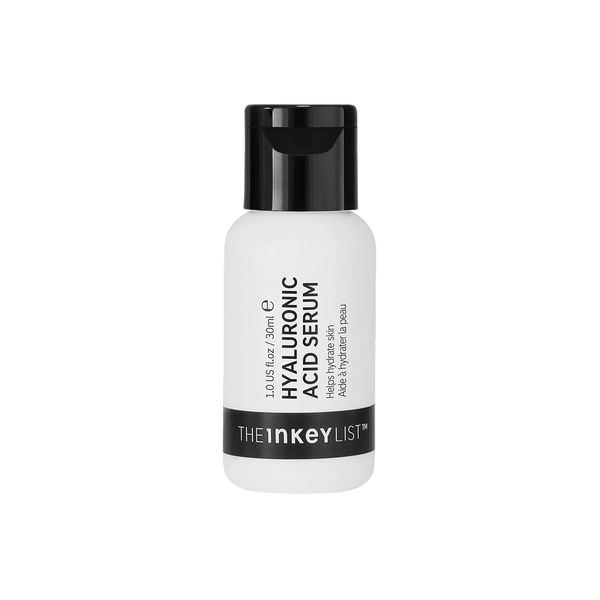
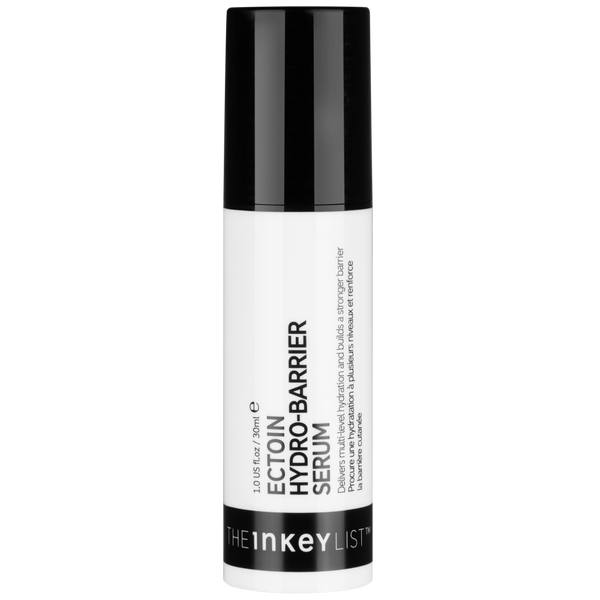
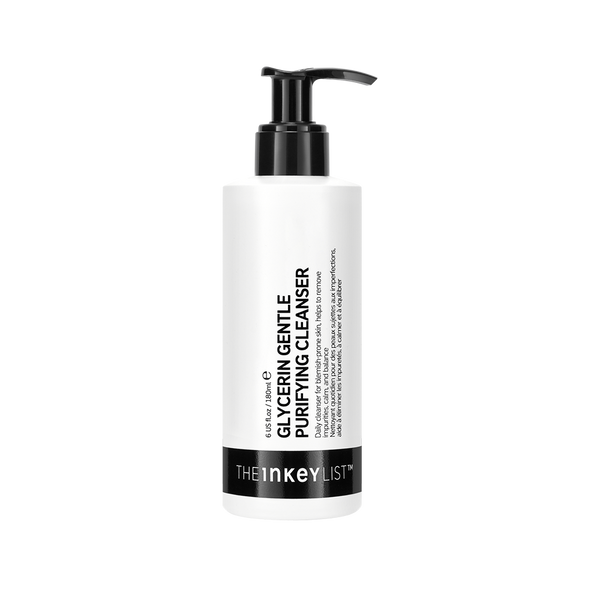
Two of the clearest examples of humectants in action are our Hyaluronic Acid Serum ($13 / 30ml) and our Glycerin Gentle Purifying Cleanser ($19 / 180ml) - both formulated around well-researched, proven humectant ingredients. For anyone dealing with persistent dehydrated skin, the Ectoin Hydro-Barrier Serum ($18 / 30ml) functions as a barrier-humectant hybrid, addressing dehydration at depth while supporting the skin’s structural integrity simultaneously.
If you are not yet familiar with transepidermal water loss and how it connects to skin dehydration, our guide on what is TEWL is a useful companion to this one.
Humectant Definition: What the Word Actually Means
A humectant is an ingredient that attracts water molecules and binds them to the skin, drawing moisture from the surrounding environment and from the deeper layers of the skin up into the stratum corneum - the outermost layer of the skin that you can see and touch. That single function, performed consistently and correctly, is what makes humectants one of the most foundational categories in skincare.
The word itself comes from the Latin humectare, meaning to moisten. It is a fitting origin - direct, functional, and free of any mysticism. Humectants do exactly what the word describes. They moisten. What makes them scientifically interesting is the precise mechanism by which they do it, which goes considerably further than simply “adding water.”
Humectants are one of three functional categories of moisturizing ingredients. The other two - emollients and occlusives - serve different but equally important roles, and effective skin hydration genuinely requires all three. This framework will be covered in detail shortly. For now, the most important distinction to establish early is this: humectants draw water in, but they do not seal it in. That is not a flaw in how they work - it is simply where their job ends and the next ingredient category’s job begins. Understanding this distinction is what makes layering your skincare correctly possible.
Humectants are not confined to a single product type. They appear in serums, cleansers, moisturizers, toners, and face mists - which means most routines already include at least one humectant ingredient without the person using it necessarily knowing. Hyaluronic acid and glycerin are the two most widely used and well-studied examples. Both will be covered in depth in the ingredient section below.
It is also worth knowing that the skin naturally produces its own humectants. The Natural Moisturizing Factor, or NMF, is a collection of water-attracting compounds found within the cells of the stratum corneum - including amino acids, lactic acid, urea, and pyrrolidone carboxylic acid (PCA). These endogenous humectants work continuously to keep the skin’s outermost layer hydrated from within. When NMF is depleted - through harsh cleansing, over-exfoliation, environmental stress, or the natural effects of aging - the skin loses its ability to retain moisture efficiently. Topical humectants step in to compensate for exactly this kind of depletion. They are not a workaround. They are a direct continuation of what healthy skin already does for itself.
Understanding what a humectant is and understanding how one actually works in practice are two different things - and the difference between them is where most application mistakes are made.
How Humectants Work: The Science of Skin Hydration
Humectants work through a process called hygroscopy - the ability of a substance to attract and absorb water molecules from its surrounding environment through hydrogen bonding. When a humectant is applied to the skin, it pulls water toward itself and holds it in place, creating a reservoir of moisture within the upper layers of the stratum corneum. That is the core mechanism. What makes it more nuanced - and more important to get right - is where that water comes from.
There are two possible sources. The first is the ambient humidity in the air around you. In a high-humidity environment - a warm, humid climate in summer, or a bathroom immediately after a shower - humectants can draw effectively from the moisture in the surrounding air. The second source is the deeper layers of your own skin, specifically the dermis and deeper epidermis. When ambient humidity is low - in a heated room in winter, an air-conditioned office, or a dry climate - the humectant has less atmospheric moisture to draw from and begins pulling from within the skin instead. In these conditions, without something to seal the moisture at the surface, that water can migrate upward through the skin layers and then evaporate, leaving the surface no better hydrated than before - and sometimes worse.
This is why the application rule matters so much: always apply a humectant to damp skin, within 30 to 60 seconds of cleansing. Freshly cleansed, slightly damp skin provides a readily available surface source of water for the humectant to interact with immediately. Our Hyaluronic Acid Serum is clinically proven to deliver better hydration results when applied to damp skin - this is not a general industry tip, it is a formulation-specific recommendation built into how the product was tested and validated.
Think of it like a sponge. A dry sponge placed on a dry surface absorbs very little. The same sponge placed on a surface with a thin layer of water absorbs effectively and holds moisture throughout its structure. The damp-skin window is the equivalent of that surface layer - the immediate source of water that allows the humectant to do its job from the moment of application.
The connection to the skin’s Natural Moisturizing Factor is also relevant here. When NMF compounds are depleted - which happens progressively through harsh cleansing products, aggressive exfoliation, aging, and environmental stress - the stratum corneum loses its built-in capacity to regulate its own water content. The skin becomes increasingly dependent on topical hydration to compensate. This is precisely the situation that dehydrated skin describes - not a lack of oil on the surface, but a failure to retain water within the skin structure. Humectants address this directly, but they cannot do it alone.
That last point leads naturally to one of the most practically important concepts in this guide: the relationship between humectants and transepidermal water loss. Humectants draw water in, but without an emollient or occlusive layer on top, that water is still subject to evaporation through transepidermal water loss - the continuous, passive process by which water exits the skin’s surface into the surrounding air. If you want to know how to tell if your skin is dehydrated, that guide covers the full picture of what elevated TEWL looks and feels like in practice.
The mechanism is complete only when humectants are used as part of a layered system - and that system has three components.
Humectant vs Emollient vs Occlusive: The Three Categories of Moisturization
Skincare education tends to use the word “moisturizer” as though it describes a single thing. It does not. Effective skin moisturization is a three-part system, and each category of ingredient within that system serves a distinct function. Getting all three right - and applying them in the correct order - is the difference between hydration that lasts and hydration that disappears within an hour of application.
Humectants attract and bind water to the skin. They draw moisture from the environment and from the deeper skin layers into the stratum corneum, increasing the skin’s water content directly. Without a source of water to draw from, they are limited. Without something to seal in what they attract, they are incomplete. Common humectant examples include glycerin, hyaluronic acid, ectoin, polyglutamic acid, sodium hyaluronate, panthenol, urea, and aloe vera.
Emollients fill in the microscopic gaps between skin cells within the stratum corneum. The stratum corneum is often described using a “bricks and mortar” model - the corneocytes (dead skin cells) are the bricks, and the lipid matrix between them is the mortar. Emollients effectively repair and reinforce that mortar, smoothing skin texture, improving flexibility, and reducing the roughness and flaking that come with a depleted lipid matrix. They make skin feel soft and conditioned. They do not, however, add water to the skin - that is the humectant’s role. Common emollient examples include plant oils, squalane, fatty alcohols, shea butter, and cetearyl alcohol. Our Omega Water Cream ($15) contains omega 3, 6, and 9 fatty acids as part of its emollient profile, making it an excellent choice for oily and combination skin types that need a lightweight but effective emollient layer.
Occlusives form a physical or semi-physical barrier on the skin’s surface that slows the rate at which water evaporates through transepidermal water loss. They do not add moisture and they do not draw moisture in - their sole function is retention. An occlusive layer applied over a humectant is what converts a short-term hydration hit into lasting moisture. Common occlusive examples include ceramides, petrolatum, dimethicone, and beeswax. Ceramides are worth singling out here because they are not just occlusives - they directly replenish the lipid matrix of the stratum corneum, making them both structurally restorative and functionally sealing. Our Bio-Active Ceramide Moisturizer ($22) delivers a ceramide complex specifically formulated to repair the skin barrier and seal in the hydration that humectants attract.
The three must work as a system. A humectant without an occlusive is like filling a glass with water and leaving it uncovered - evaporation will undo much of the work. An occlusive without a humectant seals in whatever moisture is already present, but does not actively add more. An emollient without either leaves texture improved but moisture management incomplete. The correct sequence is humectant first - because it is water-based and thinnest in consistency - followed by any emollient layers, sealed finally with an occlusive or ceramide-rich moisturizer.
It is also worth noting that many products contain ingredients from more than one category. A well-formulated moisturizer often contains humectants, emollients, and occlusives in a single formula - which is why a moisturizer by itself can provide meaningful hydration, even if a dedicated humectant serum applied underneath it will always produce a more targeted result.
The three categories of moisturization - humectants, emollients, and occlusives - are not competing schools of thought. They are a system. Effective hydration requires all three, applied in sequence.
Now that the framework is clear, the next logical step is understanding which specific ingredients belong in the humectant category - and what each one actually does differently.
The Best Humectant Ingredients in Skincare
To answer two of the most commonly searched questions directly: yes, glycerin is a humectant, and yes, hyaluronic acid is a humectant. Both are among the most well-researched, widely used, and reliably effective humectant ingredients available in modern skincare. But they are not the only ones worth knowing about.
Glycerin - also listed on ingredient labels as glycerol or glycerine; all three names refer to the same compound - is one of the oldest and most extensively studied humectants in cosmetic science. Its safety and efficacy are not in dispute. Glycerin attracts water effectively, is compatible with virtually every other skincare ingredient, suits all skin types including sensitive and acne-prone, and is present in a wide range of product formats from cleansers to moisturizers to serums. Our Glycerin Gentle Purifying Cleanser ($19 / 180ml) is formulated with glycerin as a primary ingredient, meaning it cleanses while simultaneously delivering humectant hydration to the skin - a particularly useful quality in a cleanser, where many conventional formulas strip more than they give. For a deeper look at how glycerin functions and why it is so consistently included in well-formulated products, the glycerin ingredient guide covers the full science.
Hyaluronic acid is the benchmark high-performance humectant in contemporary skincare. A single molecule of hyaluronic acid has the capacity to hold up to 1,000 times its own weight in water - a statistic that reflects genuinely exceptional hygroscopic capability. In well-formulated serums, hyaluronic acid is delivered across multiple molecular weights, which allows it to interact with the skin at different depths rather than simply sitting on the surface. Larger molecules hydrate the uppermost skin layers; smaller molecules penetrate more deeply. Our Hyaluronic Acid Serum($13 / 30ml) uses a multi-molecular approach for exactly this reason. For everything you need to know about getting the best results from this ingredient specifically, Hyaluronic Acid: Are You Using It Correctly? is the definitive practical guide. The full ingredient background is at the hyaluronic acid pillar page.
Sodium hyaluronate is the salt form of hyaluronic acid. It performs the same humectant function, typically carries a lower molecular weight, and appears commonly on INCI ingredient lists as an alternative to hyaluronic acid. They are functionally comparable; the naming distinction is primarily chemical.
Ectoin is a naturally derived extremolyte - a compound originally produced by bacteria that survive in extreme environments including salt deserts and volcanic conditions. As a skincare ingredient, ectoin functions as both a humectant and a barrier-strengthening active simultaneously. It draws moisture into the skin while also reinforcing the structural stability of the skin barrier against environmental stressors - a dual-action profile that most standalone humectants do not offer. Our Ectoin Hydro-Barrier Serum ($18 / 30ml) combines 2% ectoin with 2.5% multi-molecular hyaluronic acid and a ceramide barrier blend, making it the most comprehensively hydrating formula in the range. For a direct comparison of these two humectant-adjacent ingredients, Ectoin vs Hyaluronic Acid: What’s the Difference? is worth reading. The full ectoin science is at the ectoin ingredient guide.
Polyglutamic acid (PGA) is a high-performance humectant with a moisture-holding capacity that rivals - and in some studies exceeds - that of hyaluronic acid. It also forms a light film on the skin surface that provides a secondary occlusive benefit, making it an unusually versatile humectant ingredient.
Panthenol (provitamin B5), aloe vera, and urea round out the broader humectant category. All three are well-established, broadly tolerated, and effective contributors to skin hydration across a range of product types.
One clarification worth making explicitly: niacinamide is not a humectant. It is a multi-functional active with significant evidence behind it for sebum regulation, pore appearance, barrier support, and skin tone - but it does not attract or bind water to the skin in the way humectant ingredients do. If niacinamide is part of your routine for those reasons, it continues to be an excellent choice; just do not rely on it for humectant function. The niacinamide ingredient guide covers exactly what it does and does not do.
With the ingredient landscape established, the practical question becomes: how do you actually use humectants in a daily routine to get the best results?
How to Use Humectants in Your Skincare Routine
Knowing which ingredients are humectants is only half of the equation. The other half is applying them correctly - in the right order, on the right skin surface, and followed by the right steps. This section maps the humectant framework directly to a practical daily routine.
Step 1 - Cleanse without stripping. Cleansing is where most hydration problems begin. A harsh, surfactant-heavy cleanser can strip the skin’s lipid matrix and deplete the Natural Moisturizing Factor before a single hydrating product has been applied. The goal at this step is to remove impurities without compromising the barrier you are about to support. Our Glycerin Gentle Purifying Cleanser ($19 / 180ml) is worth calling out specifically here: it is formulated with glycerin as a primary humectant, meaning it actively adds moisture to the skin at the cleansing step rather than simply removing it. This is a relatively rare quality in a cleanser and a meaningful one - it sets the skin up for the subsequent routine steps rather than working against them. For acne-prone skin readers who may be hesitant about adding any hydrating step: glycerin is non-comedogenic and adds water, not oil. It is appropriate for all skin types, including those prone to breakouts. More on that specific misconception in the myths section below.
Step 2 - Apply your humectant serum to damp skin. After cleansing, pat the skin gently with a clean towel to remove excess water - but do not dry it completely. Leave a faint residue of surface moisture on the skin, then apply your humectant serum within 30 to 60 seconds. That timing window is not arbitrary. It is the period during which surface moisture is still present for the humectant to interact with immediately on contact. Our Hyaluronic Acid Serum($13 / 30ml) should be applied in 2 to 3 drops across the face and neck. More than that does not improve results - hyaluronic acid has a practical saturation point, and excess product tends to leave a slight tackiness without additional hydration benefit. Press the serum into the skin gently rather than rubbing; this preserves the surface moisture rather than displacing it.
Step 3 - Layer a barrier-strengthening serum if needed. For anyone dealing with persistent dehydration lines, a compromised barrier, or skin that does not respond adequately to a single hydrating serum, a second serum step is worth incorporating. Our Ectoin Hydro-Barrier Serum ($18 / 30ml) can be applied as a second serum directly after the Hyaluronic Acid Serum, while the skin is still slightly tacky. The ectoin and ceramide blend works at a structural level - reinforcing the barrier while the hyaluronic acid addresses surface hydration - making this combination more effective than either product used alone.
Step 4 - Seal with a moisturizer. This step is non-negotiable. A humectant serum applied without an occlusive seal on top will attract moisture to the skin surface, but that moisture remains vulnerable to evaporation - particularly in any environment where the air is dry or climate-controlled. The moisturizer is what converts a temporary hydration effect into lasting skin comfort. For oily and combination skin: our Omega Water Cream ($15 / 50ml) provides an oil-free, lightweight seal with omega fatty acids that balances the skin without adding heaviness. For dry or more mature skin: our Bio-Active Ceramide Moisturizer ($22 / 50ml) delivers a richer ceramide barrier seal that both locks in hydration and actively supports barrier repair over time. For guidance on choosing the right moisturizer for your skin type, how to build your skincare routine covers the full decision framework.
Optional step - Face mist as a pre-serum boost or mid-day reset. Our HydroSurge Dewy Face Mist can be used before applying the hyaluronic acid serum to recreate the damp skin surface in environments where the air is particularly dry - such as during winter months in a heated room - or as a mid-day hydration reset between applications. If you are choosing a face mist for hydration purposes, what to look for in a hydrating face mist is a useful guide to understanding which ingredients actually deliver results.
Frequency. Humectants carry no use-frequency restriction. They can be applied morning and evening without any build-up risk, tolerance adjustment period, or photosensitivity concern. There is no such thing as using a humectant too often - the only variables that determine effectiveness are application technique and what you apply on top.
A note for oily and acne-prone skin readers. One of the most persistent misconceptions in skincare is that oily skin does not need humectants. This is incorrect. Oily skin describes sebum production - not water content. Oily skin can be simultaneously and significantly dehydrated, and humectants add water to the skin, not oil. Skipping humectant hydration in an attempt to control shine can actually worsen sebum production as the skin attempts to compensate for dehydration. The full explanation is at why oily skin gets dehydrated too.
The routine is now clear. But humectants come with a significant amount of misinformation attached to them - and some of that misinformation leads directly to the kind of application mistakes that produce poor results.
Common Humectant Myths and Misconceptions
The humectant category is relatively straightforward in terms of the science. The misinformation around it, however, is not. These are the five most common myths - and the plain-language correction for each.
Myth 1: “Humectants dry your skin out if the air is dry.”
This is an application problem, not an ingredient problem. Humectants do not cause dryness - incorrectly applied humectants can fail to retain moisture effectively in low-humidity conditions, which can feel like dryness. The solution is two-step: apply to damp skin (providing an immediate water source for the humectant to draw from), and always follow with a moisturizer (providing an occlusive seal that slows evaporation from the surface). When both of those steps are in place, the air’s humidity level is a much smaller factor. If you have sensitive skin and are concerned about moisture balance, how to hydrate sensitive skin without causing irritation is a practical guide to managing hydration without triggering reactivity.
Myth 2: “Hyaluronic acid is a moisturizer.”
Hyaluronic acid is a humectant. It attracts water. It does not seal water in. A complete, well-formulated moisturizer contains humectants, emollients, and occlusives working together in one formula. Using a hyaluronic acid serum without a moisturizer on top is using only one-third of the hydration system. The serum does its part; the moisturizer does the sealing. Both are required. For the full guide on this distinction specifically, Hyaluronic Acid: Are You Using It Correctly? addresses this misconception in depth.
Myth 3: “More humectant means more hydration.”
Humectants have a saturation point on the skin surface. Applying five drops of hyaluronic acid serum instead of two does not deliver proportionally more hydration - it typically leaves a slightly tacky residue and can actually impede the absorption of whatever product is applied on top. Two to three drops per application, spread across the face and neck, is the correct amount. Technique matters more than quantity here.
Myth 4: “Oily or acne-prone skin doesn’t need humectants.”
This is one of the most widespread and genuinely harmful myths in skincare. Oily skin and dehydrated skin are not mutually exclusive - they describe entirely different skin characteristics. Oiliness relates to sebum production; dehydration relates to water content. Oily skin can be simultaneously dehydrated, and when it is, the skin often responds by producing even more sebum in compensation. Humectants add water, not oil, and are non-comedogenic - meaning they do not clog pores. For a full breakdown of why this skin type specifically benefits from humectant hydration, why oily skin gets dehydrated too covers the complete picture. The dehydrated skin guide provides additional diagnostic context.
Myth 5: “Drinking more water will fix dehydrated skin.”
Internal hydration and topical hydration serve related but distinct functions. Drinking water is important for overall health and does support systemic function. However, the water you drink does not directly and efficiently reach the stratum corneum in quantities that resolve surface dehydration. Topical humectants deliver hydration directly to the skin layer where it is needed - the stratum corneum - in a way that internal hydration simply cannot replicate at the surface level. If your skin is dehydrated, topical humectants applied correctly are the direct, targeted solution.
With the myths addressed, the final section consolidates everything covered so far into a concise FAQ format - designed to answer the most commonly searched questions about humectants clearly and directly.
What You Now Know About Humectants
Humectants are not a complicated category, but they are an important one. The three takeaways from everything covered above are consistent and clear.
First: humectants attract water into the skin - they do not seal it in. That job belongs to the emollient and occlusive layers that follow. Skipping the moisturizer step means skipping the step that makes the humectant’s work last.
Second: application to damp skin is not optional. It is what makes humectants work as intended. The 30 to 60 second window after cleansing is when the ingredient is most effective, because a surface source of water is available for it to interact with immediately. Miss that window consistently and results will consistently disappoint.
Third: humectants, emollients, and occlusives are a system - not three separate options to choose between. Effective skin hydration requires all three, in the right order. Understanding that framework changes how you read a moisturizer label, how you layer your routine, and how you interpret what your skin is telling you when it feels tight, dull, or uncomfortable.
The products that deliver these principles most directly: our Hyaluronic Acid Serum as the core humectant step, the Glycerin Gentle Purifying Cleanser as a cleanser that adds rather than strips, and the Ectoin Hydro-Barrier Serum for anyone whose skin needs hydration and barrier repair working together.
Skincare does not need to be complicated. Knowing what each ingredient category does - and what it does not do - is what makes a routine genuinely work rather than simply feel like it should.
Shop the Routine
Hyaluronic Acid Serum - $13 / 30ml. Apply to damp skin after cleansing, morning and evening, in 2 to 3 drops across the face and neck.
Glycerin Gentle Purifying Cleanser - $19 / 180ml. A glycerin-formulated cleanser that removes impurities while delivering humectant hydration at the first step of your routine.
Ectoin Hydro-Barrier Serum - $18 / 30ml. Pairs with the Hyaluronic Acid Serum as a second serum step to deliver deep barrier repair and hydration simultaneously. Apply after HA serum, while skin is still slightly tacky.
Bio-Active Ceramide Moisturizer - $22 / 50ml for dry or mature skin, or Omega Water Cream - $15 / 50ml for oily or combination skin. The non-negotiable sealing step that locks in everything the humectant attracts.
Bundle Builder - select your routine products together and save up to 20%.
Not sure where to start? Take the Skincare Quiz for a personalized routine built around your specific skin concerns in under 2 minutes.
Frequently Asked Questions
Got a question?
Our askINKEY team are a friendly bunch of skincare experts with deep product knowledge and zero judgement. Whether you're an ingredient obsessive or just starting out, we'll make it make sense. No question too big. No question too small. We Give A Care, Every Day.


