

Is Glycerin Good for Oily and Acne-Prone Skin?
Think oily skin doesn't need hydration? Discover why glycerin is one of the best ingredients for oily and blemish-prone skin, how it delivers weightless hydration without clogging pores, and why it can help support a healthier skin barrier.
Author
askINKEY skincare advisor
Published
02 July, 2026
Time to read
12 minutes
If you have oily or acne-prone skin, you have probably approached anything labeled “hydrating” with suspicion. The assumption is logical on the surface: oily skin already produces too much of its own sebum, so why would you add more moisture? This is the core misconception that follows glycerin around, and it is one worth correcting directly.
Glycerin is a humectant - not an oil. It draws water molecules into the skin and holds them there. It does not add sebum, it does not interact with pore openings, and it does not trigger breakouts. For oily and acne-prone skin specifically, the distinction between water-based hydration and oil-based hydration matters enormously, and glycerin sits firmly in the former category.
This blog covers what glycerin is and how it works, whether glycerin clogs pores or causes acne, why oily skin still needs water-based hydration, which INKEY products formulate glycerin for acne-prone skin, and how to build a complete routine around it. For deeper background on the ingredient itself, the glycerin ingredient guide covers the full science. This blog is the oily and acne-prone skin-specific answer.
What Is Glycerin, and Why Does It Matter for Oily Skin?
To understand why glycerin is appropriate for oily and acne-prone skin, you first need to understand what category of ingredient it belongs to - because skincare ingredients are not all doing the same job, and lumping them together is where most of the confusion starts.
Skincare ingredients that affect moisture generally fall into one of three functional categories: humectants, emollients, and occlusives. Each has a distinct mechanism, and each carries a different risk profile for acne-prone skin.
Humectants draw water from the environment and from deeper layers of the skin up into the outer skin layer, called the stratum corneum. They increase the water content of the skin without adding oil. Glycerin is a humectant. So is hyaluronic acid. So is urea. None of these ingredients add oil to the skin - they add water.
Emollients fill in the gaps between skin cells, making the skin surface feel smoother and softer. Some emollients are oils or oil-derived, and certain ones carry a higher risk of contributing to congestion in pore-prone skin. The risk with emollients is ingredient-specific, not category-wide.
Occlusives form a physical seal over the skin surface to prevent water from evaporating. Heavy occlusives like petroleum jelly are the most effective at locking in moisture, but they can also trap debris and sebum in pores if used incorrectly. This is where genuine pore-clogging risk can exist - not with humectants like glycerin.
This distinction is not semantic. When someone says they are worried that a moisturizing ingredient will clog their pores or worsen their acne, they are usually thinking of heavy, oily, or occlusive formulas - the kind that sit heavily on the skin. Glycerin is none of those things. It is water-soluble, lightweight, and draws moisture in rather than sealing anything out.
The Comedogenicity Scale - Where Glycerin Scores
The comedogenicity scale is a rating system running from 0 to 5 that assesses how likely an ingredient is to block pores. A score of 0 means an ingredient has been assessed and confirmed to have no pore-blocking risk. A score of 5 represents the highest possible risk. Glycerin scores 0 - the lowest possible rating on the scale.
This is not a marketing claim. It is the result of ingredient-level assessment by the cosmetic science community, and it reflects what the molecular behavior of glycerin actually does: it interacts with water, not with the lipid environment inside a pore where congestion builds.
The Cosmetic Ingredient Review (CIR) Expert Panel - the independent scientific body that evaluates cosmetic ingredient safety - has confirmed glycerin is safe for cosmetic use at concentrations up to 79% in leave-on products. That is one of the widest safety margins granted to any skincare ingredient, and it includes leave-on formulations used directly on acne-prone skin.
Glycerin vs. Oil - Why the Distinction Is So Important for Oily Skin
Oily skin produces excess sebum through the sebaceous glands. Sebum is a lipid-rich substance. When excess sebum combines with dead skin cells inside a pore, it creates the blockage that leads to congestion and breakouts. Glycerin, as a water-attracting molecule, has no role in this process. It does not increase sebum production, does not interact with the lipid environment in the pore, and does not contribute to the conditions that create a blocked pore.
The fear around glycerin and oily skin comes from conflating “moisturizing” with “adding oil.” But hydration and oiliness are not the same thing. A skin cell can be dehydrated - meaning it lacks water - while the skin’s surface is simultaneously producing too much oil. In fact, as we will explore in the next section, that exact combination is extremely common in acne-prone skin, and it is part of what makes glycerin such a well-suited ingredient for this skin type.
It is also worth noting that in the UK, “glycerine” and “glycerin” are both used interchangeably. They refer to the same compound, glycerol. The INCI name used on all cosmetic ingredient labels globally is Glycerin.
For a full breakdown of what glycerin is and how it works across all skin types, the glycerin ingredient guide covers this in depth. To understand how oily skin functions and why excess sebum production happens in the first place, the oily skin guide provides the full context.
Having established what glycerin is and why it is categorically different from pore-clogging ingredients, the next question is the one that most acne-prone skin readers are actually searching for: does glycerin clog pores?
Does Glycerin Clog Pores? The Comedogenicity Question Answered
The direct answer is no. Glycerin does not clog pores. It is non-comedogenic, and that determination is backed by clinical evidence, ingredient-level assessment, and independent product testing.
This is the question that brings most readers to this topic, because it is the fear that stops people with acne-prone skin from using an ingredient that would genuinely benefit them. So let us go through the full picture.
What Actually Causes Pore Congestion
Pore congestion - the kind that leads to blackheads, whiteheads, and inflamed breakouts - is caused by a specific chain of events. Excess sebum mixes with dead skin cells inside the hair follicle. That mixture oxidizes or becomes trapped, and the resulting plug blocks the pore opening. When bacteria become involved, inflammation follows.
The ingredients that contribute to this process are those that add oil to the skin’s surface or pore environment, those that are heavy enough to prevent the natural shedding of dead skin cells, and occasionally those that trigger sensitivity and inflammation. Glycerin participates in none of these mechanisms. It is a water-soluble humectant that evaporates or is absorbed into the skin. It leaves no oily residue. It does not sit on the pore opening. It does not interact with sebum.
For a thorough breakdown of the full congestion process, What Causes Clogged Pores? covers the complete mechanism in detail.
The Clinical Evidence That Settles the Question
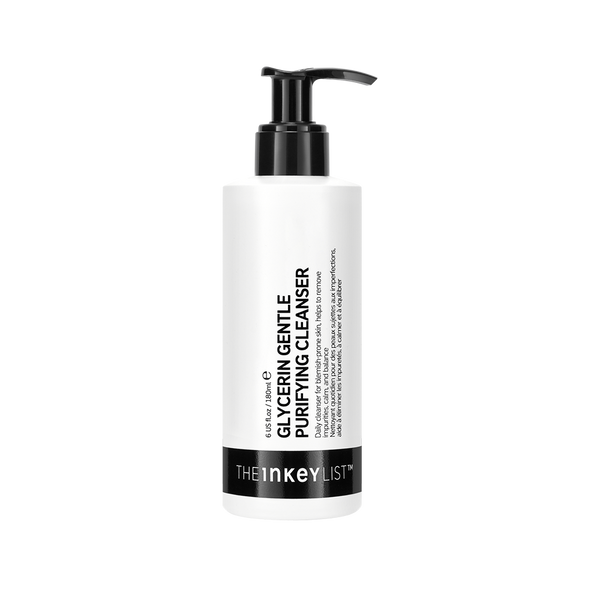
A 2001 study published in the International Journal of Cosmetic Science examined a 20% glycerin cream and found it significantly improved skin barrier properties over time. That concentration - 20% - is precisely the concentration used in the INKEY Glycerin Gentle Purifying Cleanser (available for $19.00 / 180ml). The study’s findings are directly applicable to a real-world product formulated for acne-prone skin, and the results support both the safety and the skin barrier benefit of glycerin at this level.
This is not an ingredient being used speculatively. It is one of the most studied and validated humectants in cosmetic science, with decades of real-world use data confirming its safety profile across skin types - including acne-prone.
The Dehydration Misconception That Makes Oily Skin Avoid Hydration
Here is where the logic of “my skin is oily, so I do not need moisture” breaks down in a way that actually makes acne worse, not better.
When oily and acne-prone skin is stripped of its water content - through over-cleansing, harsh foaming surfactants, aggressive exfoliation, or simply skipping moisturizer - the skin registers a deficit. The sebaceous glands respond by increasing oil production as a compensatory mechanism. The result is more shine, more congestion, and more breakouts - the exact opposite of what the overcleaning approach was trying to achieve.
Glycerin addresses this directly. By delivering water-based hydration without any oil, it stabilizes the skin’s water content and reduces the signal that triggers compensatory sebum overproduction. The skin gets the hydration it needs through water, not oil, and the overcorrection cycle begins to calm.
This is why both the Glycerin Gentle Purifying Cleanser at $19.00 and the Omega Water Cream at $15.00 / 50ml are specifically formulated and clinically tested for oily and acne-prone skin. Both carry non-comedogenic certification. Both are oil-free and fragrance-free. These are not adaptations of formulas originally made for dry skin - they are built from the ground up for skin types that need hydration delivered without any risk of congestion.
Is glycerin comedogenic? No. Is glycerin good for acne-prone skin? Yes - and the science is clear on both answers. The next section explains the deeper reason why.
Why Oily Skin Still Needs Hydration - and How Glycerin Helps
One of the most counterproductive ideas in skincare is that oily skin does not need hydrating ingredients. It is understandable where the logic comes from - if your skin is already producing oil, adding anything moisturizing feels redundant at best and aggravating at worst. But oiliness and hydration are two separate things, and conflating them is one of the most common mistakes people with acne-prone skin make.
Oily Skin and Dehydrated Skin Are Not the Same Thing
Oiliness refers to the level of sebum produced by the sebaceous glands. Hydration refers to the water content within the skin cells themselves. These are entirely different biological systems. A person can have oily, sebum-producing skin on the surface while the skin cells in the outer layer are simultaneously dehydrated and lacking water. This combination - oily and dehydrated - is extremely common, particularly in people who manage their oiliness through stripping cleansers, mattifying products, or frequent exfoliation.
Dehydrated acne-prone skin often presents as skin that looks shiny but feels tight or uncomfortable. Pores may appear larger. Texture can feel rough or uneven. Breakouts may be persistent because the compromised skin barrier is less able to protect against the bacteria and irritants that trigger inflammation.
Glycerin addresses the dehydration half of this equation without touching the oiliness half. It draws water into the skin cells and holds it there. It does not add sebum. It does not occlude the skin. It hydrates through a completely different mechanism than the one that creates oiliness.
The Research on Glycerin as a Humectant
The scientific literature consistently identifies glycerin as one of the most effective humectants available in skincare. A 2016 study published in Skin Pharmacology and Physiology compared multiple humectants head-to-head for their ability to increase hydration in the stratum corneum - the outermost skin layer where dehydration is most apparent and where acne-prone skin often suffers. Glycerin outperformed hyaluronic acid, lactic acid, glycolic acid, propylene glycol, sorbitol, and urea in direct comparison.
This matters for acne-prone skin for a specific reason. Many people who experience acne already include exfoliating actives like salicylic acid, glycolic acid, and BHA serums in their routines. These actives can deplete the skin’s water content over time if not balanced with adequate hydration. Glycerin restores that balance at the humectant level, which is the most direct way to address water-layer dehydration, without interfering with the clearing work that the actives are doing.
The oily skin guide explains this compensatory sebum cycle in detail and covers the full range of causes behind excess oil production. If you are trying to understand why your skin overproduces oil in the first place, Why Is My Skin So Oily? addresses the root causes directly.
The Humectant Comparison: Glycerin and Hyaluronic Acid
Both glycerin and hyaluronic acid are humectants. Both draw water into the skin. Neither adds oil. Neither is comedogenic. The same logic that applies to glycerin for oily and acne-prone skin applies equally to hyaluronic acid - and yet both ingredients are routinely avoided by people who assume any hydrating ingredient will worsen their acne.
Is Hyaluronic Acid Good for Oily Skin? addresses exactly this misconception for HA. The hyaluronic acid guidecovers how HA works as a humectant and how it compares to glycerin in terms of molecular weight and skin penetration depth.
How to Apply Glycerin Products for Maximum Effectiveness
One practical point that significantly affects how well humectants perform: apply glycerin-containing products to slightly damp skin immediately after cleansing. Humectants draw water from wherever water is available - and if the environment is dry, they will draw from the deeper layers of the skin rather than from the air. Applying to damp skin gives glycerin the water source it needs to function optimally, maximizing the hydration delivered to the outer skin layer.
The INKEY Glycerin Gentle Purifying Cleanser is clinically proven to hydrate acne-prone skin for 24 hours, oil-free, in a tested population of 28 participants over 24 hours. The Omega Water Cream - combining 5% glycerin with 5% niacinamide - showed that 100% of users said their skin felt deeply hydrated after 14 days in a four-week independent consumer study of 22 people. These are not aspirational claims - they are measured outcomes on the skin types this blog is specifically addressing.
With the foundational science established and the dehydration-sebum cycle clearly explained, the next step is looking at exactly which INKEY products put glycerin to work for acne-prone skin - and what the clinical data behind each one says.
INKEY Products with Glycerin for Oily and Acne-Prone Skin
Knowing that glycerin is safe and beneficial for acne-prone skin is one thing. Knowing which formulas actually deliver it effectively - and at what concentration, with what supporting ingredients, and with what clinical backing - is where the practical value lives. INKEY has two core products built specifically for oily and acne-prone skin that use glycerin as a central ingredient.
Glycerin Gentle Purifying Cleanser - $19.00 / 180ml
The Glycerin Gentle Purifying Cleanser is the highest-glycerin cleanser in the INKEY range, formulated at 20% glycerin - a clinically significant concentration that directly mirrors the level used in the 2001 International Journal of Cosmetic Science study that demonstrated meaningful skin barrier improvement.
What it contains and what each ingredient does:
The 20% glycerin is the hydration driver - drawing water into the skin and maintaining the skin’s water balance even through the cleansing step, which in lower-quality cleansers is often where dehydration begins. The 3% Centella Complex supports barrier integrity and soothes redness - relevant for acne-prone skin where inflammation is frequently present. The 2% Sea Water and Algae Complex adds a secondary layer of hydration and smoothing without any comedogenic risk.
The clinical data:
This cleanser is clinically proven to support the skin barrier for 24 hours after a single application. It is clinically proven to hydrate acne-prone skin for 24 hours, oil-free, tested on 28 participants over 24 hours. It carries non-comedogenic certification - meaning it has been independently assessed and confirmed not to contribute to pore congestion. It is fragrance-free and vegan.
How to use it:
Apply a raspberry-sized amount to damp face and neck. Massage gently for a full 60 seconds - contact time matters for the glycerin to begin its work on the skin surface. Rinse thoroughly. It can be used morning and evening, and works effectively as the second cleanse in a double-cleanse PM routine after an oil-based first step removes sunscreen and makeup.
Who it is for:
All skin types, with specific formulation and clinical validation for acne-prone and oily skin. This is not a dry-skin formula adapted to be inoffensive to other skin types - it is built and tested for the skin type it claims to address.
For a broader comparison of cleanser options for acne-prone skin, the Best Cleanser for Blemish-Prone Skin guidecovers the full range of options across different skin concerns.
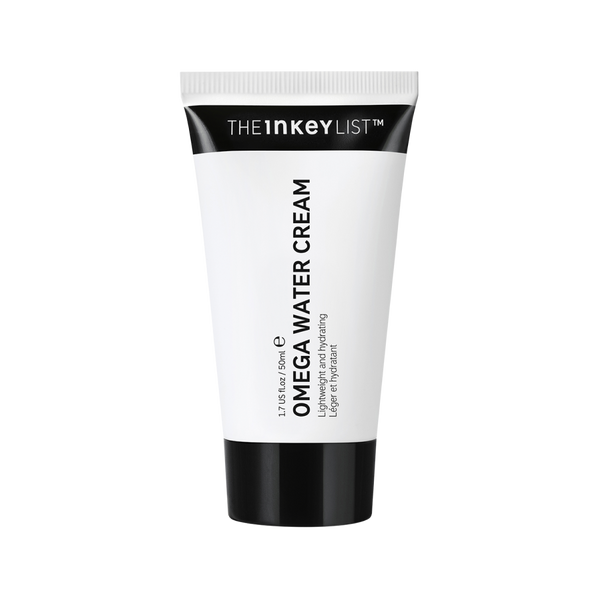
Omega Water Cream - $15.00 / 50ml
The Omega Water Cream is an oil-free, non-comedogenic moisturizer that pairs glycerin with niacinamide and ceramides to deliver hydration, oil regulation, and barrier support in a single lightweight step - without adding any congestion risk.
What it contains and what each ingredient does:
The 5% glycerin draws moisture into the skin without any oil. The 5% niacinamide works at the sebaceous gland level to regulate oil production and even skin tone - addressing the oiliness side of the equation that glycerin specifically does not touch. The 0.2% Ceramide Complex reinforces the skin barrier, helping to reduce the permeability that makes acne-prone skin reactive and easily irritated. The 3% Betaine provides moisture balance and a soothing effect on sensitized or post-breakout skin.
The clinical data:
In a four-week independent consumer study of 22 people: 95% said their skin tone looked more even after 28 days; 100% said their skin felt deeply hydrated after 14 days; the formula is clinically proven to help balance oil production. Non-comedogenic certified. Oil-free. Fragrance-free. Vegan.
How to use it:
Apply a pea-sized amount after cleansing and any targeted serums. Smooth onto face and neck. The lightweight texture sits comfortably under makeup or SPF in the morning and absorbs cleanly as the final step in an evening routine.
The niacinamide guide covers how niacinamide regulates oil and how it works alongside glycerin in the same formula. For a broader look at moisturizer options for oily skin, The Best Moisturizer for Oily Skin compares the full range of options.
These two products anchor the glycerin routine for acne-prone skin. The next step is understanding exactly how to build that routine - and where the blemish-targeted actives fit around them.
How to Build a Routine for Oily and Acne-Prone Skin Using Glycerin
Glycerin is the hydration foundation - the ingredient that stabilizes the skin’s water balance so that the acne-targeted actives in the rest of the routine can do their work without tipping the skin into dehydration and compensatory oil overproduction. An effective routine for acne-prone skin has two simultaneous goals: keep the skin hydrated enough to prevent the sebum-overproduction cycle, and keep pores clear with exfoliating and oil-regulating ingredients. Glycerin handles the first goal. The ingredients below handle the second.
AM Routine for Oily and Acne-Prone Skin
-
Cleanser - Glycerin Gentle Purifying Cleanser - $19.00 / 180ml: Apply to damp skin, massage for 60 seconds, and rinse. This step cleanses gently without stripping and delivers 24-hour water-based hydration from the very first step.
-
Serum - Niacinamide Serum - $13.00: Apply after cleansing to regulate oil production, refine pore appearance, and even skin tone throughout the day. Niacinamide is fully compatible with glycerin and addresses the oil-regulation side of acne-prone skin that glycerin does not target.
-
Moisturizer - Omega Water Cream - $15.00 / 50ml: Apply a pea-sized amount over the serum. The combination of 5% glycerin and 5% niacinamide in a single oil-free formula consolidates the hydration and oil-regulation steps efficiently.
-
SPF: Finish with a broad-spectrum SPF as the final morning step to protect skin from UV damage, which can worsen post-acne marks and hyperpigmentation.
PM Routine for Oily and Acne-Prone Skin
-
First cleanse (if wearing makeup or SPF): Use an oil-based cleanser to dissolve and remove sunscreen and makeup from the skin surface first.
-
Second cleanse - Glycerin Gentle Purifying Cleanser - $19.00 / 180ml: The active glycerin step, now working on a thoroughly clean skin surface. This is where the skin barrier benefit and 24-hour hydration are most fully delivered.
-
Treatment serum - 360° Acne Clearing Serum - $18.00 / 30ml (2-3 times per week for active acne): This serum combines 1% Dioic Acid, 2% Salicylic Acid, and 0.4% Dendriclear to target active breakouts at multiple levels. Clinical results: 91% of users had visibly clearer skin after 2 weeks; 94% of users had fewer spots after 8 weeks, in a clinically tested group of 26 participants over 9 weeks. Use 2-3 times per week on nights when active breakouts are the priority.
-
Optional - BHA Serum - $14.00 (leave-on, 2-3 times per week): A leave-on beta hydroxy acid serum for deeper pore clearing and ongoing congestion prevention. Alternate this with the 360° Acne Clearing Serum rather than stacking both on the same night.
-
Niacinamide Serum - Niacinamide Serum - $13.00: Apply after actives, nightly. Niacinamide is gentle enough for daily use and helps regulate oil overnight while the skin repairs.
-
Moisturizer - Omega Water Cream - $15.00 / 50ml: Finish with a pea-sized amount as a lightweight seal over the routine, locking in the humectant hydration from the glycerin steps.
INKEY Tip: For visible, active breakouts, Hydrocolloid Invisible Pimple Patches ($10.00, pack of 22) can be applied over individual blemishes overnight or under makeup during the day. They work independently from the glycerin routine and add a targeted, protective healing step for active spots.
Key Routine Notes
Apply the Glycerin Gentle Purifying Cleanser to damp skin - not dry - and give it a full 60 seconds of contact time before rinsing. This is where the hydration work begins. Follow up by applying any glycerin-containing products, including the Omega Water Cream, to slightly damp skin after cleansing for maximum humectant effectiveness.
The BHA Serum and the 360° Acne Clearing Serum should be alternated on separate nights, not applied together on the same evening. Both are exfoliating and active - stacking them increases the risk of irritation without adding proportional benefit.
For a complete guide to managing acne at every stage of the breakout cycle, the acne guide covers the full picture. If your skin is both acne-prone and sensitive, Sensitive Skin and Acne covers how to build a routine that treats without stripping.
With the full routine established, the remaining question for most readers is compatibility - specifically whether glycerin works with the acne-targeted actives already in their lineup.
Glycerin and Acne-Fighting Ingredients - What Works Together
Oily and acne-prone skin routines tend to be more active-heavy than routines for other skin types. Salicylic acid, BHA, niacinamide, retinol - these are the workhorses of a blemish-clearing approach, and each of them raises a natural question about compatibility with glycerin. The short answer is that glycerin is compatible with all of them. The longer answer explains why - and why that compatibility is actually part of what makes glycerin so useful in an acne-prone routine.
Glycerin and Salicylic Acid - a Natural Pairing
Salicylic acid is a beta hydroxy acid that penetrates the pore lining and exfoliates from inside, dissolving the sebum-and-dead-cell plugs that create congestion. It is one of the most effective acne-fighting ingredients available, but it can also dry out the skin with repeated use - particularly in people who are already managing dehydration alongside oiliness.
Glycerin counterbalances this drying effect directly. By maintaining the skin’s water-layer hydration around the salicylic acid step, a glycerin-based cleanser or moisturizer prevents the cycle where salicylic acid use leads to dehydration, which triggers compensatory sebum production, which leads to more congestion - the exact outcome that the salicylic acid was supposed to prevent.
One effective approach: use the Salicylic Acid Cleanser ($15.00 / 150ml) in the evening to actively target pore congestion, and follow with the Glycerin Gentle Purifying Cleanser in the morning to restore hydration. Alternatively, use the Glycerin Gentle Purifying Cleanser as the sole AM cleanser and reserve the salicylic acid step for the PM routine. The Salicylic Acid Cleanser has its own strong clinical track record: in a four-week independent consumer trial of 66 people, 90% agreed skin looked visibly clearer after 3 days, and 92% agreed skin did not feel tight or stripped.
The two cleansers complement each other across a routine rather than competing.
Glycerin and Niacinamide - Complementary Mechanisms
These two ingredients are not just compatible - they are functionally complementary in a way that makes them an ideal pairing for oily and acne-prone skin. Glycerin addresses water content. Niacinamide addresses oil production. They operate through different biological mechanisms and do not interfere with each other at any level.
Niacinamide (vitamin B3) acts on the sebaceous glands to regulate sebum output, works on melanin transfer to even post-acne marks, and supports the skin barrier through ceramide synthesis. Glycerin draws water into the skin cells without adding any oil. Together, they address both dimensions of the dehydrated-yet-oily skin profile - which is why the Omega Water Cream combines both at 5% each in a single oil-free formula.
The niacinamide guide covers how niacinamide targets oil regulation in detail. For a specific answer to whether niacinamide helps with acne, Does Niacinamide Help With Acne? has the full science-backed breakdown.
Glycerin and BHA - Working Different Layers
Leave-on BHA serums work inside the pore at the lipid level, dissolving the sebum and dead cell mixture that builds up to create congestion. Glycerin works at the surface and upper skin layers, addressing water content in the stratum corneum. These are entirely different sites of action, and they do not interfere with each other.
Using the BHA Serum ($14.00) on alternate evenings alongside a glycerin-based cleanser and moisturizer is a well-structured approach: the BHA clears congestion inside the pore, and the glycerin maintains the skin’s water balance so that the BHA activity does not tip into dehydration and irritation.
Glycerin and Hyaluronic Acid - Layering Two Humectants
Both glycerin and hyaluronic acid are humectants working through the same water-drawing mechanism. They are fully compatible and can be layered in the same routine without any conflict. The typical approach is to apply a hyaluronic acid serum first, allowing its larger molecular weight to work in the upper skin layers, and then follow with a glycerin-containing moisturizer to reinforce and maintain that hydration layer.
Neither glycerin nor hyaluronic acid adds oil, and neither carries any comedogenic risk. The hyaluronic acid guidecovers how HA compares to glycerin in terms of molecular function and skin penetration.
What Glycerin Does Not Conflict With
Glycerin is compatible with retinol, vitamin C, AHAs, and PHAs. In fact, glycerin is a particularly useful inclusion in a routine that features retinol or other actives that can initially cause dryness or sensitivity. By maintaining the skin’s water balance through a glycerin cleanser and moisturizer, the barrier stays more stable as new actives are introduced - reducing the likelihood of the initial purge or irritation phase that causes many people to abandon effective ingredients prematurely.
If your skin sits in the combination category rather than fully oily, the Guide to Combination Skin has specific routine guidance tailored to managing both oily and drier zones simultaneously.
Glycerin’s compatibility profile is essentially unrestricted when it comes to acne-focused routines. With that confirmed, the final section addresses the specific questions that bring most readers to this topic in the first place.
Glycerin Is Not the Enemy of Oily Skin - It Is the Answer
The core idea driving this blog is simple but important: glycerin does not clog pores, does not cause acne, and does not worsen oiliness. It is a water-drawing humectant with a comedogenicity score of 0, a safety profile confirmed by independent scientific review, and clinical evidence showing it is effective on acne-prone skin specifically.
The misconception that oily skin does not need hydrating ingredients is one of the most counterproductive ideas in skincare. It leads to the exact problem it is trying to avoid - more oil, more congestion, more breakouts - by stripping the skin of the water balance it needs to regulate itself. Glycerin breaks that cycle by delivering hydration through water, not oil.
For oily and acne-prone skin, the Glycerin Gentle Purifying Cleanser at 20% glycerin is the most direct way to put this ingredient to work, clinically validated on the skin type it is designed for. The Omega Water Cream brings glycerin into the moisturizer step alongside niacinamide and ceramides for a complete, oil-free hydration layer. Together, they provide the hydration foundation that makes every other active in an acne-prone routine perform better.
For a full background on the ingredient itself, the glycerin ingredient guide is the definitive resource.
Ready to Start?
Shop the Glycerin Gentle Purifying Cleanser - $19.00 / 180ml
Shop the Omega Water Cream - $15.00 / 50ml
Not sure where to start? Take the Skincare Quiz for a personalized routine recommendation in 2 minutes.
Want AI-powered skin assessment? Try the Acne Analyzer Pro - backed by dermatologists.
Save on your full routine: Build Your Own Bundle and save up to 20%.
Explore More
Frequently Asked Questions
Got a question?
Our askINKEY team are a friendly bunch of skincare experts with deep product knowledge and zero judgement. Whether you're an ingredient obsessive or just starting out, we'll make it make sense. No question too big. No question too small. We Give A Care, Every Day.


