

Sensitive Skin and Acne: How to Treat Without Stripping
Sensitive skin and breakouts don't have to be a trade-off—discover what causes acne in sensitive skin, how to calm irritation while treating blemishes, and the best routine to support a clearer, healthier skin barrier.
Author
askINKEY skincare advisor
Published
07 June, 2026
Time to read
14 minutes
If you have sensitive skin and acne, you already know the frustration. Every time you reach for something strong enough to clear a breakout, your skin retaliates with redness, dryness, or a fresh wave of irritation. The products formulated to fight acne are often the very ones most likely to destabilize a sensitive complexion - and that tension is exactly what this blog is here to resolve.
This guide covers the core relationship between your skin barrier and acne, the ingredients that genuinely work for sensitive acne-prone skin, the mistakes most people make, how to cleanse and treat without stripping, and a full step-by-step AM and PM routine you can start using right away. Two ingredients you will hear a lot about throughout are niacinamide ($10.50) and salicylic acid ($14.00) - both effective, both barrier-compatible, and both central to a sensitive-skin-friendly approach to treating acne. For a broader look at the concern, our acne guide is a strong place to start.
Why Sensitive Skin and Acne So Often Appear Together
At first glance, sensitive skin and acne seem like they should be mutually exclusive. One suggests skin that is easily irritated, reactive, prone to dryness. The other conjures images of oily, congested pores. Yet for millions of people, both show up at once - and there is a very clear biological reason why.
The answer lies in the skin barrier.
The Skin Barrier: Your First Line of Defense
The skin barrier - technically known as the stratum corneum - is the outermost layer of your skin. Think of it as a brick wall: skin cells are the bricks, and a mixture of lipids (ceramides, fatty acids, cholesterol) act as the mortar holding everything together. When this wall is intact, it does two things well: it keeps moisture locked in and it keeps bacteria, allergens, and environmental irritants locked out.
When the barrier is compromised - whether through genetics, environmental exposure, over-cleansing, or the wrong skincare products - it starts to fail at both jobs simultaneously. Moisture escapes through a process called transepidermal water loss (TEWL), leaving skin dehydrated, tight, and reactive. At the same time, the gaps in the barrier allow bacteria and irritants to penetrate the deeper layers of skin more easily.
This is where the connection to acne becomes clear.
How a Weakened Barrier Contributes to Breakouts
Sensitive skin is often a signal - sometimes subtle, sometimes not - that the skin barrier is already in a weakened or reactive state. And a weakened barrier does not just cause dryness and redness. It actively creates conditions that make acne more likely and more severe.
Here is why: when the barrier is compromised, Cutibacterium acnes (the bacteria associated with acne) can proliferate more easily in the follicle environment. Simultaneously, the skin’s inflammatory response becomes heightened - meaning that the same level of bacterial activity that might cause a minor, short-lived blemish on healthy skin can trigger a significantly more inflamed, longer-lasting breakout on barrier-compromised skin.
The American Academy of Dermatology describes acne as involving excess sebum production, clogged pores, bacterial activity, and inflammation. In people with sensitive or reactive skin, the inflammatory stage is amplified. The immune response fires harder, redness spreads further, and the healing timeline extends. This is why acne on sensitive skin so often looks angrier and takes longer to resolve than it does on less reactive complexions.
The Acne Cycle in Sensitive Skin
The classic acne cycle goes like this: sebaceous glands overproduce oil, which combines with dead skin cells to clog the follicle opening. Bacteria colonize the blocked follicle, triggering an immune response. The immune response creates inflammation, which we see as a red, raised, often painful blemish. For people with a compromised barrier, every stage of this cycle is more disruptive. The skin cannot regulate oil production efficiently when dehydrated, often overcompensating with more sebum. The inflammatory response is more aggressive. And because the barrier cannot repair itself as quickly, breakouts take longer to heal.
Treating acne without first addressing the skin barrier is like trying to fill a leaking bucket. You can keep adding water - but until you fix the leak, the problem persists.
This is the foundational principle behind everything in this blog. Acne treatment for sensitive skin is not about using the strongest available actives. It is about repairing and supporting the barrier while simultaneously addressing the drivers of breakouts - in a sequence, with the right ingredients, at the right concentration. You can learn more about your skin type and its specific needs by visiting our skin type guide, and for a deeper dive into how the barrier works and how to protect it, this breakdown on the skin barrier is worth reading alongside this guide.
The good news? Once you understand the connection between barrier health and acne, the path forward becomes a lot clearer - and a lot less aggressive than you might expect. But before we get to what works, it is worth understanding what does not.
The Biggest Mistakes People Make with Sensitive Acne-Prone Skin
Most people with sensitive acne-prone skin arrive at their routine having already made a few of these mistakes. This section is not about blame - it is about understanding why common acne advice so often backfires on sensitive skin, so you can stop doing the things that are making the situation worse.
Reaching for the Strongest Actives
The instinct when dealing with acne is to go hard. High-percentage benzoyl peroxide. Maximum-strength salicylic acid. Daily glycolic acid exfoliation. For skin that is already sensitized or barrier-compromised, this approach accelerates the damage rather than addressing it. Strong actives strip away the lipid-rich components of the skin barrier, disrupt the skin’s microbiome, and increase TEWL - all of which worsen both the sensitivity and the acne over time.
The goal with sensitive skin is not to assault acne into submission. It is to create the conditions in which acne cannot thrive - and that requires a gentler, more strategic approach.
Over-Cleansing and Using Harsh Surfactants
Cleansing too frequently, or using cleansers that contain harsh surfactants like sodium lauryl sulfate (SLS) or sodium laureth sulfate (SLES), is one of the fastest ways to compromise the skin barrier. These surfactants are effective at removing oil - so effective, in fact, that they remove the skin’s naturally occurring protective lipids along with it. The result is a feeling of “squeaky clean” that actually signals significant barrier disruption.
If your face feels tight, dry, or uncomfortable immediately after cleansing, your cleanser is stripping your barrier.
Layering Multiple Acne Actives Without Barrier Support
There is a popular idea in skincare that more actives equals faster results. For sensitive skin, the opposite is usually true. Layering salicylic acid, benzoyl peroxide, retinol, and a glycolic acid toner in the same routine - even across multiple steps - creates a cumulative load that sensitized skin cannot handle. The result is irritation, inflammation, and a compromised barrier that makes acne worse, not better.
For a detailed look at how to use acids responsibly, our guide to using acids in your skincare routine is an essential read before layering any exfoliating actives.
Skipping Moisturizer Out of Fear
This is one of the most counterproductive habits in acne-prone skin care. The logic seems reasonable: moisturizer adds oil, oil causes acne, therefore moisturizer causes acne. But this reasoning is wrong on multiple levels.
First, dehydrated skin overproduces sebum as a compensatory mechanism - meaning that skipping moisturizer often leads to oilier skin, not drier skin. Second, a hydrated, barrier-supported skin environment is less inflamed and better equipped to manage and resolve breakouts. Moisturizer is not optional for acne-prone skin. It is foundational.
Spot-Treating Aggressively and Picking
Squeezing or picking at blemishes pushes bacteria deeper into the follicle, spreads infection to surrounding skin, and causes post-inflammatory hyperpigmentation (PIH) - the dark marks that linger long after the breakout itself has resolved. Aggressive spot treatments - particularly high-percentage benzoyl peroxide applied liberally across the face - can cause significant localized irritation on sensitive skin.
Ingredients to Actively Avoid
If you have sensitive acne-prone skin, these are the ingredients and formulations most likely to cause problems:
- Sodium lauryl sulfate (SLS) and sodium laureth sulfate (SLES) - harsh surfactants that strip the barrier
- High-strength AHAs used daily - glycolic acid at 10% or above, applied every day, is too aggressive for compromised skin
- Alcohol-based toners - particularly those that list denatured alcohol (alcohol denat.) high on the ingredients list
- High-percentage benzoyl peroxide (5% and above) - effective for acne but too aggressive for sensitive skin as a standalone treatment
- Fragrance in skincare - both synthetic fragrance (parfum) and natural fragrance (essential oils) are among the most common causes of contact sensitization
- Physical scrubs used on active breakouts - physical exfoliation on inflamed skin spreads bacteria and worsens irritation
For more on which ingredients work and which to sidestep for reactive skin, our sensitive skin ingredients guide goes deeper on this topic.
Now that you know what not to do, it is time for the more useful half of the picture - the ingredients that genuinely work.
The Best Ingredients for Sensitive Acne-Prone Skin
Not every acne-fighting ingredient is too harsh for sensitive skin. The key is knowing which ones target acne effectively while respecting the barrier - and understanding how to use them correctly. The following ingredients form the foundation of a smart, gentle, results-driven approach to acne treatment for sensitive skin.
Salicylic Acid: The BHA That Clears Without Catastrophizing
Salicylic acid is a beta-hydroxy acid (BHA) and one of the most well-researched ingredients in acne treatment. Unlike alpha-hydroxy acids, which are water-soluble and work on the skin’s surface, salicylic acid is oil-soluble - meaning it can penetrate into the pore itself and dissolve the excess sebum and dead skin cells that cause congestion.
Used at the right concentration (typically 0.5% to 2%) in a well-formulated product, salicylic acid is effective without being aggressive. It is anti-inflammatory, making it more compatible with sensitive skin than many people assume. The key is in the formulation - a salicylic acid cleanser is particularly well-suited to sensitive skin because the active is rinsed away rather than left on the skin for extended periods.
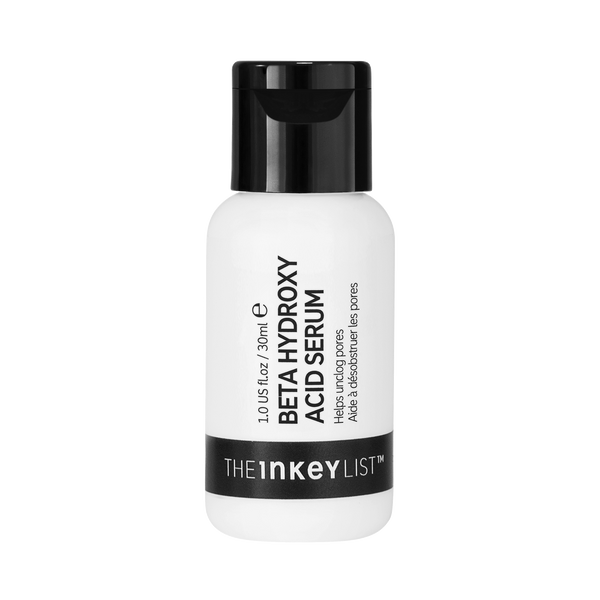
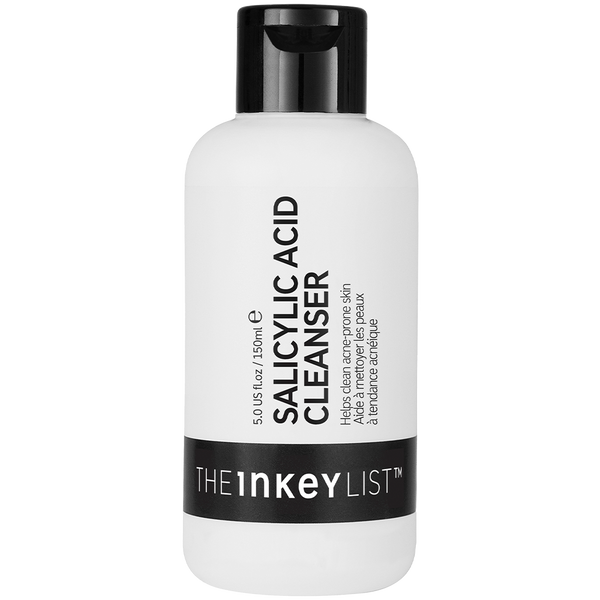
The Salicylic Acid Cleanser ($14.00) is a solid starting point: it delivers the pore-clearing benefits of BHA in a rinse-off format that limits irritation potential. For those who want a leave-on BHA option, the BHA Serum ($11.00) provides more sustained contact time with the skin. You can explore the full range of salicylic acid formulations to find the right format for your routine.
Niacinamide: The Multi-Tasker That Sensitive Skin Loves
Niacinamide - also known as vitamin B3 - is one of the most versatile and well-tolerated actives in skincare. It is not an exfoliant, it is not a retinoid, and it does not strip the barrier. Instead, it works by strengthening the barrier, regulating sebum production, reducing redness and post-inflammatory hyperpigmentation, and calming inflammation.
For people wondering whether niacinamide helps with acne specifically, the answer is yes - through multiple mechanisms. It inhibits the transfer of melanin (reducing the dark marks left behind by breakouts), reduces sebum excretion rates, and has documented anti-inflammatory effects in the follicle. Our niacinamide and acne blog goes into this in detail.
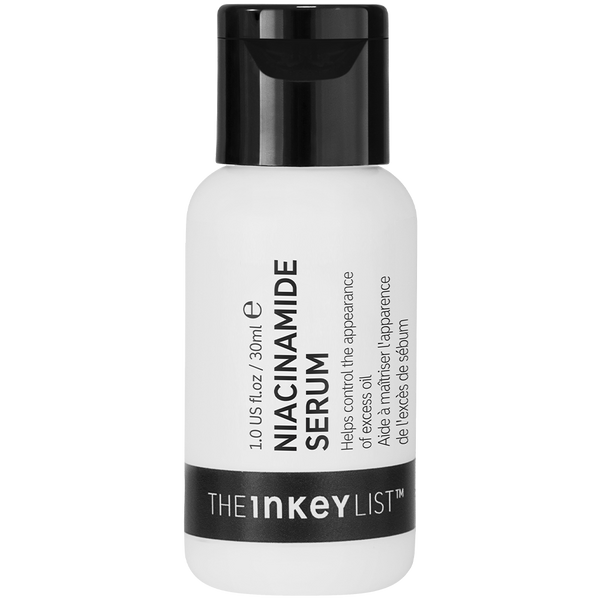
The Niacinamide Serum ($10.50) is a well-established option for daily use, morning and evening, and is suitable for sensitive skin because it strengthens rather than disrupts the barrier. Learn more about the ingredient on our niacinamide ingredient page.
Succinic Acid: The Gentle Spot Treatment You May Not Have Heard Of
Succinic acid is a naturally occurring dicarboxylic acid with antibacterial and sebum-regulating properties. It is less well-known than salicylic acid or benzoyl peroxide, but it is precisely this lower profile that makes it interesting for sensitive skin - it is effective against acne-causing bacteria while being significantly less irritating than higher-profile alternatives.
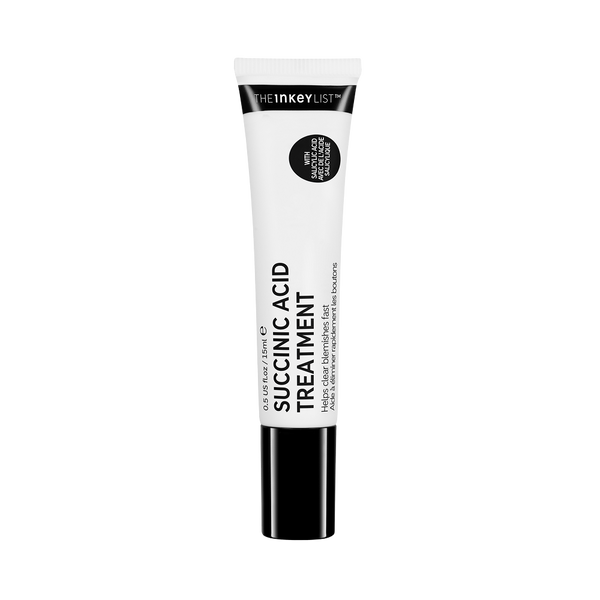
The Succinic Acid Acne Treatment ($16.00) is designed for targeted application on active breakouts and is a strong alternative to high-percentage benzoyl peroxide for people whose skin cannot tolerate more aggressive spot treatments.
The 360° Acne Clearing Serum: Comprehensive, Leave-On Acne Support
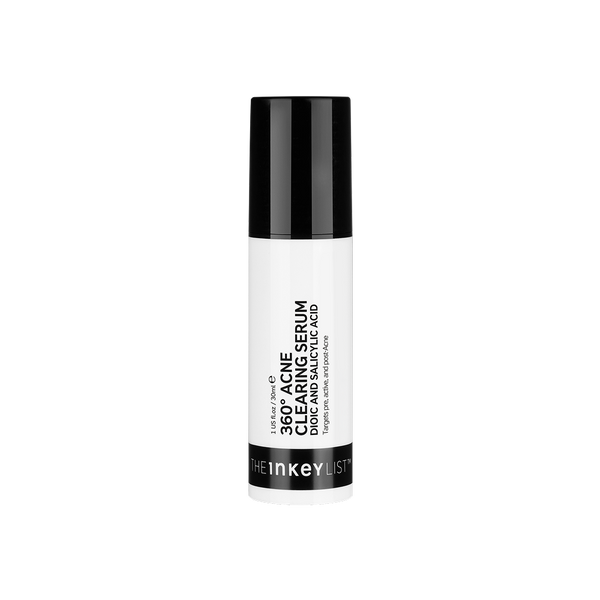
For those who want a single serum that addresses multiple drivers of acne in one step, the 360° Acne Clearing Serum($18.00) is formulated to target excess sebum, bacteria, and post-breakout marks simultaneously. It is designed as a leave-on treatment compatible with a layered routine, making it a practical choice for evenings when you want comprehensive acne support without the complexity of multiple actives.
Azelaic Acid: The Inflammation Specialist
Azelaic acid works differently to most acne actives. It targets the bacteria involved in acne, reduces the keratin buildup that leads to blocked pores, and has anti-inflammatory properties that make it particularly effective for inflamed, sensitive skin. It also addresses hyperpigmentation - the reddish or brownish marks that remain after breakouts resolve. For those with rosacea alongside acne, azelaic acid is one of very few ingredients recommended for both concerns. Explore the full breakdown of this ingredient on our azelaic acid page.
Gentle Retinol: The Long-Game Ingredient for Acne and Barrier Health
Retinol is one of the most evidence-backed ingredients in skincare for both acne and aging - it accelerates cell turnover, prevents the follicle blockages that lead to breakouts, and stimulates collagen production. However, it is also one of the most likely to cause irritation if introduced too quickly or used at too high a concentration on sensitive skin.
The key phrase for sensitive skin is gentle retinol - meaning a low concentration, used two to three times per week at night, with a full moisturizer applied afterward. This allows the skin to adjust gradually while still delivering results over time. For a comprehensive look at how to use retinol without triggering sensitivity, our retinol and sensitive skin guide is essential reading. The retinol ingredient page also covers concentration guidance in detail.
The Retinol Serum is available in multiple concentrations - starting with the lowest concentration is strongly recommended for sensitive skin.
Hydrocolloid Pimple Patches: Low-Tech, High-Effectiveness Spot Treatment
Hydrocolloid patches work on a simple principle: they create a moist healing environment over an active blemish that draws out fluid, reduces inflammation, and protects the spot from contamination (including picking). They are one of the most gentle, non-irritating spot treatment options available.
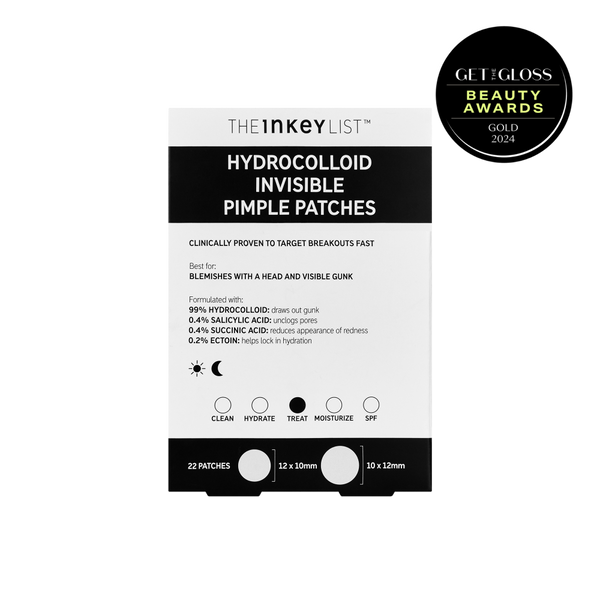
The Hydrocolloid Invisible Pimple Patches (Pack of 22) ($9.50) are designed to be discreet enough to wear during the day and effective enough to use overnight. For sensitive skin, they offer the benefit of targeted treatment without any risk of causing broader skin irritation.
The American Academy of Dermatology’s skincare guidance for acne consistently emphasizes the importance of gentle, non-abrasive approaches - and every ingredient in this section aligns with that principle. With the right actives identified, the next question is how to get them onto the skin without stripping the barrier in the process.
How to Cleanse Sensitive Acne-Prone Skin Without Stripping
Cleansing is the step most likely to compromise the skin barrier - and therefore the step where sensitive acne-prone skin needs the most care. Done correctly, cleansing sets up every subsequent step in your routine to work better. Done incorrectly, it undermines everything that follows.
The 60-Second Cleansing Rule
One simple adjustment that makes a meaningful difference for sensitive skin is giving your cleanser enough time to work. The 60-second cleanse - spending a full minute massaging cleanser gently across the face before rinsing - allows active ingredients to make proper contact with the skin, reduces the temptation to scrub harder to compensate for insufficient contact time, and tends to produce a more thorough cleanse with less mechanical friction.
Use fingertips only. Cleansing brushes, sponges, and washcloths add unnecessary abrasion to skin that is already reactive. Rinse with lukewarm - not hot, not cold - water. Hot water disrupts the skin’s lipid matrix; cold water does not rinse away surfactants as effectively. After cleansing, pat the skin dry with a clean towel rather than rubbing.
The Double Cleanse: Why It Matters for Acne-Prone Skin
Double cleansing - using an oil-based or balm cleanser first, followed by a water-based cleanser - is particularly relevant for acne-prone skin because it allows each cleanser to do its specific job without requiring either to work as hard. The first cleanse removes SPF, makeup, pollution, and surface-level sebum. The second cleanse addresses the skin itself with an active ingredient.
Our complete guide to double cleansing explains the method in detail, but the essential steps for sensitive acne-prone skin look like this:
Step 1 - First Cleanse (evening): Use the Oat Cleansing Balm 150ml ($17.00) or the Hydrating Cream-to-Milk Cleanser 240ml ($19.00). Both are designed to remove surface-level impurities without stripping. The Oat Cleansing Balm is particularly well-suited to drier or more reactive skin; the Cream-to-Milk Cleanser works well for those who prefer a lighter texture. Massage in gentle circular motions, then rinse thoroughly.
Step 2 - Second Cleanse (evening): Follow with the Salicylic Acid Cleanser ($14.00). Because the first cleanse has already removed surface residue, the salicylic acid can work more effectively on the pore level without having to compete with SPF or makeup. Leave it on for 60 seconds before rinsing.
Morning Cleansing for Sensitive Skin
In the morning, a double cleanse is not necessary - the skin has not been exposed to SPF, pollution, or makeup overnight. A single cleanse with either the Oat Cleansing Balm or the Cream-to-Milk Cleanser is sufficient to remove overnight product residue and prepare the skin for morning actives. If your skin is particularly reactive, some people with sensitive skin benefit from simply rinsing with water in the morning rather than cleansing at all - this is a valid approach if cleansing twice daily is causing noticeable dryness or tightness.
For more guidance on finding the right cleanser format for acne-prone skin, our cleanser guide for acne-prone skincovers the topic in full.
With cleansing covered, the next question becomes what to apply afterward - and how to treat active acne while keeping the barrier intact.
Treating Acne While Protecting Your Skin Barrier
The treatment step is where most people with sensitive skin get into trouble. The instinct to apply the most powerful spot treatment available to an active breakout is understandable - but on sensitized skin, aggressive treatment often makes breakouts more inflamed, not less. The principle here is barrier first, treatment second.
What “Barrier-First” Actually Means in Practice
Treating acne on sensitive skin is not about choosing between a healthy barrier and clear skin. It is about sequencing your routine so that your barrier is supported even as you apply active ingredients. This means:
- Using actives at appropriate concentrations (not maximum strength)
- Applying treatment products on top of a prepared, slightly damp skin surface
- Always following active treatments with a moisturizer that includes barrier-supportive ingredients
- Alternating high-activity nights with recovery nights - a concept covered in depth in our skin cycling guide
Treating Active Breakouts
For active breakouts, targeted treatment is more effective and less disruptive than full-face aggressive application. The Succinic Acid Acne Treatment ($16.00) is designed for this purpose - applied directly to a blemish, it targets bacteria and sebum without affecting the surrounding skin.
The Hydrocolloid Invisible Pimple Patches ($9.50) offer a different approach: they physically cover a blemish and draw out fluid while you sleep, protecting the area from both picking and additional bacterial contamination. For those with multiple active breakouts across a broader area, the 360° Acne Clearing Serum ($18.00) provides more comprehensive coverage as a leave-on treatment.
Explore the full approach to managing acne at every stage - prevention, treatment, and post-breakout care - on our acne guide.
Why Moisturizing Is Non-Negotiable for Acne-Prone Skin
This point cannot be overstated: moisturizing is not a step that acne-prone skin can afford to skip. A dehydrated skin barrier is a more porous, more reactive, more inflammation-prone environment. Moisturizer does not cause acne - an appropriate, non-comedogenic moisturizer actively supports the conditions needed for fewer breakouts and faster healing.
For sensitive acne-prone skin, the ideal moisturizer is lightweight, hydrating, and formulated with ingredients that reinforce the barrier rather than occlude it. Two strong options sit at opposite ends of the texture spectrum:
The Omega Water Cream 50ml ($13.00) is a lightweight, gel-cream formula that delivers hydration and barrier support without heaviness. It is well-suited to mornings and to skin that tends toward oiliness or congestion.
The Bio-Active Ceramide Moisturizer ($21.50) is a richer, ceramide-forward formula that is particularly well-suited to evenings, recovery nights, or periods when the barrier is under more stress - such as when retinol is in the routine. Ceramides are the lipids that make up the barrier’s “mortar,” and replenishing them topically is one of the most direct ways to support barrier repair.
For further reading on how to hydrate sensitive skin without triggering additional sensitivity, this guide on hydrating reactive skin is a useful companion to this section.
With the individual steps clearly defined, it is time to bring them together into a full, functional daily routine.
Your Full AM and PM Routine for Sensitive Acne-Prone Skin
The routine below is designed around the barrier-first, treatment-second principle. It is layered, progressive, and structured to deliver real results without overwhelming sensitive skin. Expect meaningful improvement over 6 to 12 weeks of consistent use - acne treatment is a long game, particularly for sensitive skin where the pace of change needs to stay gentle.
For a broader framework on building a routine around your specific skin concerns, our skincare routine guide and complete skincare concerns guide are both worth bookmarking.
Morning Routine
Step 1 - Cleanse
Use the Oat Cleansing Balm ($17.00) or the Hydrating Cream-to-Milk Cleanser ($19.00). A single gentle cleanse is sufficient in the morning. Spend 60 seconds massaging the product across the face, rinse with lukewarm water, and pat dry.
Step 2 - Treat
Apply the Niacinamide Serum ($10.50) to the full face. Niacinamide is an excellent morning active because it is non-photosensitizing, works well under SPF, and addresses both active acne and the pigmentation that follows. Pat gently into the skin and allow it to absorb before moving to the next step.
Step 3 - Moisturize
Apply the Omega Water Cream ($13.00) as a lightweight barrier-supporting finish. A small amount goes a long way - press gently into the skin rather than rubbing.
Step 4 - Protect
Apply an SPF 30 or higher of your choice as the final step in your morning routine. Sun protection is non-negotiable for acne-prone skin - UV exposure worsens post-inflammatory hyperpigmentation and slows healing. Choose a formula that suits your skin texture and apply generously.
Evening Routine
Step 1 - First Cleanse
Begin with the Oat Cleansing Balm 150ml ($17.00) or the Hydrating Cream-to-Milk Cleanser 240ml ($19.00) to remove SPF, makeup, and surface buildup. This step prepares the skin for the active second cleanse.
Step 2 - Second Cleanse
Follow with the Salicylic Acid Cleanser ($14.00). Allow it 60 seconds of contact time to clear pores before rinsing.
Step 3 - Treat (Active Nights)
On active treatment nights (four to five nights per week initially), apply either the 360° Acne Clearing Serum ($18.00) for comprehensive acne support, or the Niacinamide Serum ($10.50) if the focus is on barrier support and post-breakout pigmentation. These two can be rotated rather than layered.
Step 4 - Treat (Retinol Nights, Two to Three Times Per Week)
On retinol nights, apply the Retinol Serum in place of Step 3. Start with two nights per week and build to three as your skin adjusts. Do not use retinol on the same night as your 360° Acne Clearing Serum - alternate them instead, following the skin cycling approach detailed in our skin cycling guide.
Step 5 - Spot Treat
Apply the Hydrocolloid Pimple Patches ($9.50) directly over individual blemishes, or use the Succinic Acid Acne Treatment ($16.00) as a targeted overnight spot treatment on any active breakouts not covered by a patch.
Step 6 - Moisturize
On regular treatment nights, finish with the Omega Water Cream ($13.00). On retinol nights or recovery nights, use the Bio-Active Ceramide Moisturizer ($21.50) for additional barrier reinforcement. The ceramide-rich formula helps buffer retinol sensitivity and supports overnight repair.
A note on results: the 6-to-12 week timeline is realistic and worth committing to. Acne treatment for sensitive skin requires patience - the skin is adjusting, repairing, and recalibrating, and visible improvements accumulate gradually rather than overnight. Track your skin’s response week by week and adjust based on how your skin feels, not just how it looks.
Treating Acne on Sensitive Skin Is About Strategy, Not Strength
Here is the reframe that changes everything: effective acne treatment for sensitive skin is not about finding the strongest possible product that your skin can just barely tolerate. It is about finding the right ingredients, at the right concentrations, in the right sequence - and then applying them consistently over a realistic timeline.
When the skin barrier is supported, it becomes less reactive, less inflamed, and less prone to the conditions that allow acne to develop and persist. When you cleanse gently, treat strategically, and moisturize without fail, the entire cycle - excess sebum, clogged pores, bacterial activity, inflammation - becomes easier to interrupt and manage.
Sensitive skin does not mean you have to choose between comfort and clear skin. It means you need to be a little smarter about how you pursue both at the same time. The routine, ingredients, and approach laid out in this guide are designed to help you do exactly that.
For the fullest picture of how to manage acne from every angle, our acne guide is the place to continue your research.
Ready to Build Your Routine?
Start with the approach that makes the most sense for where you are right now - whether that is exploring the full breakdown of acne causes and solutions, understanding which products are right for your specific skin, or getting a personalized read on what your skin actually needs.
- Explore our Acne Guide - the complete resource for managing acne at every stage.
- Take the Acne Analyzer Pro - get a personalized analysis of your acne and a recommended routine.
- Take the Skincare Quiz - answer a few questions and get a full routine built around your skin.
Your skin can be both sensitive and clear. It just needs the right approach.
Frequently Asked Questions
Got a question?
Our askINKEY team are a friendly bunch of skincare experts with deep product knowledge and zero judgement. Whether you're an ingredient obsessive or just starting out, we'll make it make sense. No question too big. No question too small. We Give A Care, Every Day.


