


Best Anti-Aging Skincare Routine: Complete Step-by-Step Guide
A dermatologist-informed, step-by-step anti-aging skincare routine for morning and night, built around proven ingredients like retinol, peptides, ceramides and SPF, at prices that make sense.
Author
askINKEY skincare advisor
Published
12 December, 2025
Time to read
20 minutes
A step-by-step anti-aging skincare routine for morning and night, built around proven ingredients like retinol, peptides, ceramides and SPF, at prices that make sense.
Skin aging is normal. It happens to everyone, it starts earlier than most people expect, and it is not a problem that needs solving so much as a process that responds well to support. What has become genuinely complicated is the response. Walk through any beauty aisle or scroll any feed and you will find hundreds of products promising to turn back time, most of them expensive, many of them redundant, and a fair number of them built on ingredients with very little evidence behind them.
Here is the honest position: an effective anti aging skincare routine does not require fifteen steps or a four-figure budget. It requires a small number of proven ingredients, used in the right order, consistently, over months. Most people do not need more products. They need the right ones.
Four things move the needle more than everything else combined:
- Daily broad-spectrum sunscreen, which is the single most effective anti-aging step available
- A retinoid at night, the most evidenced active for lines, texture and tone
- Barrier support, because skin that is dry, reactive and compromised shows lines more readily
- Consistency, which is unglamorous and non-negotiable
Everything else is refinement. Useful refinement, often, but refinement.
It is also worth setting expectations up front. Skincare works on a timescale of weeks and months, not days. You may notice hydration and glow within the first fortnight. Texture and tone tend to shift around the four to eight week mark. Fine lines respond over twelve weeks and beyond. Anyone promising more than that in less time is selling you something.
This guide covers the complete routine: morning and evening, step by step. It goes deep on the areas people most often skip, namely the eyes, neck and decolletage, which is where the biggest gains usually sit. It covers advanced boosters for anyone ready to go further, the mistakes that quietly stall progress, and how to adapt everything to your own skin. There is a full FAQ at the end.
On cost, a complete starter routine comes in under $75, and shipping is free on US orders over $40. Ready to shop rather than read? Start with Anti-Aging Essentials. If you are newer to skincare and want the fundamentals of order and layering first, our complete skincare routine guide is the better starting point, then come back here.
An effective routine starts with understanding what is actually happening in aging skin, so that is where we will begin.
Understanding Skin Aging: What Actually Changes
Skin aging is driven by two separate processes, and telling them apart matters because only one of them is genuinely outside your control.
Intrinsic aging is the chronological kind. Genetics, time, hormones. It happens quietly and steadily regardless of what you do, and it accounts for a relatively small share of what you see in the mirror. Extrinsic aging is everything environmental: ultraviolet exposure above all, plus pollution, smoking, sleep, stress and diet. The widely cited split puts extrinsic factors at roughly 80% of visible facial aging, with intrinsic factors making up the remaining 20%.
That ratio is the most encouraging statistic in skincare. It means the majority of what most people describe as aging skin is influenced by things you can act on, starting today. Sunscreen is not a nice-to-have in that context. It is the intervention with the largest effect size available to you without a prescription pad.
Collagen, Elastin and Why Skin Loses Its Bounce
Collagen provides structure. Elastin provides recoil, the quality that lets skin snap back after you smile or squint. Both are produced abundantly in youth and both decline gradually from the mid-20s onward, at a rate commonly estimated at around 1% per year, accelerating after menopause.
What that looks like in practice is subtle at first and cumulative over time:
- Skin feels less firm along the jaw and cheeks
- Expression lines that used to disappear start to settle in
- Skin takes longer to bounce back after being pressed or creased
- The face looks slightly less full through the midface
This is where skin firmness as a concern begins, and it is the reason peptides and firming-focused formulas exist. They cannot rebuild what has gone, but they can meaningfully improve how firm and smooth skin looks and feels.
The Barrier Weakens, and Everything Shows More
Your skin barrier is the outermost layer, and it functions roughly like mortar between bricks. The mortar is made largely of lipids, and ceramides are the most important of them. Natural ceramide levels fall with age.
When ceramide levels drop, the barrier holds water less efficiently and defends less effectively against irritants. Skin becomes drier, more reactive, more prone to stinging when you apply an active, and quicker to look dull. Critically, dry skin shows lines more readily than well-hydrated skin does. Some of what people read as wrinkling is barrier dysfunction wearing a convincing disguise.
If your skin has become tight, flaky, itchy or unpredictably sensitive, read our guide to a damaged skin barrier before you add another active. Repairing the barrier first makes everything you layer on top work better.
Cell Turnover Slows Down
Young skin renews its surface roughly every 28 days. That cycle lengthens with age, sometimes considerably. Dead cells linger, and the result is the specific kind of dullness that no amount of highlighter quite fixes, along with rougher, less even texture and slower fading of post-blemish marks.
Retinoids are the best-evidenced answer here, which is why they occupy the treat step of the evening routine.
Dehydration Lines Versus True Wrinkles
This distinction is genuinely useful and almost nobody makes it.
Dehydration lines are fine, shallow, often appearing in a crosshatch pattern across the cheeks or under the eyes. They show up quickly, sometimes overnight, and they respond quickly. Apply a humectant like hyaluronic acid and a decent moisturizer and they soften within days.
True wrinkles are deeper, follow a consistent pattern related to muscle movement, and are present whether your skin is hydrated or not. They respond to retinoids and peptides over months, not to hydration over days.
The practical test: hydrate properly for a week. Whatever softens was dehydration. Whatever remains is a wrinkle, and needs a different tool. Our guide to dehydration lines vs wrinkles walks through how to tell them apart in more detail.
How to Prevent Wrinkles, Realistically
There is no way to prevent wrinkles entirely, and any article claiming otherwise is not worth your time. What you can do is slow their development and soften their appearance considerably:
- Wear broad-spectrum SPF every day, including winter and cloudy days
- Use a retinoid at night, starting low and building slowly
- Keep the barrier intact with ceramides and consistent moisturizing
- Do not smoke, and manage sleep and stress where you can
- Start earlier than feels necessary, because prevention outperforms correction
On timing, the mid-20s is a sensible point to begin prevention, though there is no age at which starting stops being worthwhile. We cover this properly in when to start using anti-aging products.
Now that you know what is changing, here are the ingredients with real evidence behind addressing each of those changes.
The Anti-Aging Ingredients That Are Actually Proven
Not every ingredient marketed for aging skin deserves your money. These do. Each entry covers what it does, who it suits and when to use it. The deeper science lives on our ingredient pages, linked throughout.
Sunscreen: The Most Effective Anti-Aging Product You Own
If you only adopt one thing from this article, adopt this. Daily broad-spectrum sunscreen prevents the ultraviolet damage responsible for the large majority of visible aging: pigmentation, loss of firmness, rough texture and lines.
Use a broad-spectrum SPF 30 or higher every morning, all year, and reapply if you are outdoors for extended periods. UVA passes through window glass, so indoor desk work near a window still counts. Whichever formula you will genuinely wear daily is the right one. Our SPF guide covers how to choose and apply it properly.
Retinoids: The Most Evidenced Active for Lines and Texture
Retinoids are vitamin A derivatives, and they are the most rigorously studied topical ingredient for fine lines, uneven texture and tone. They work by encouraging faster cell turnover and supporting the skin’s own renewal processes.
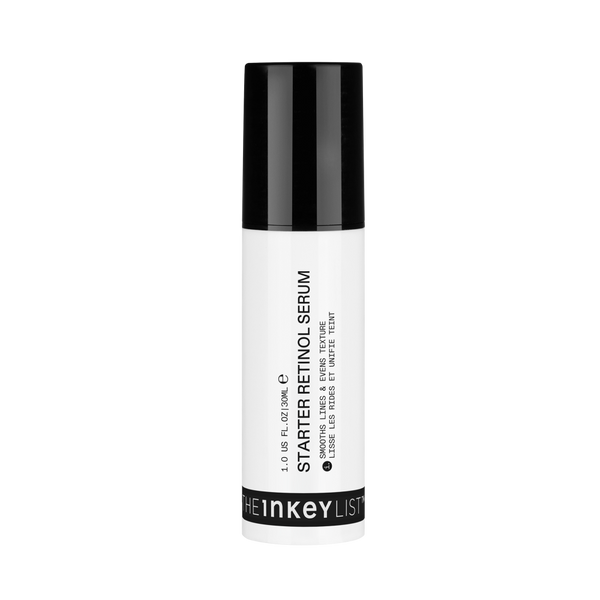
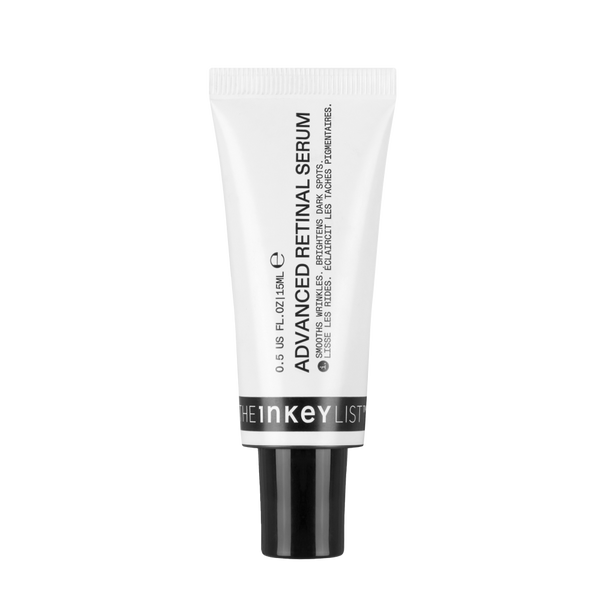
Starter Retinol ($15 / 30ml) is the entry point, formulated to be tolerable for people new to vitamin A. Experienced users who have built tolerance can step up to Advanced 0.2% Retinal Serum ($22 / 15ml), which uses retinaldehyde, a form that converts more efficiently. Retinoids are evening only.
If you are deciding between them, retinol vs retinal breaks down the difference. For the full picture on how retinoids work and how to introduce them, see our retinol page.
Peptides: Support for Firmness and Smoothness
Peptides are short chains of amino acids that act as messengers within the skin. In cosmetic terms, they support the appearance of firmness, elasticity and smoothness, which makes them one of the most useful categories for anyone whose main concern is a loss of bounce rather than pigmentation or breakouts.
They are gentle, they do not cause the adjustment period retinoids often do, and they layer comfortably with almost everything. If you cannot tolerate retinoids, or you are pregnant or breastfeeding, peptides are the most sensible alternative.
Real examples from our range: the 4% Tetrapeptide Complex in Bio-Active Ceramide Eye Cream and Matrixyl 3000 in Caffeine Eye Cream. For more on how peptides for wrinkles actually work, see our peptides page.
Ceramides: Barrier Repair, and Why Bio-Active Matters
Ceramides make up roughly half of the skin barrier’s lipid content, and levels decline with age. Replacing them is one of the highest-return, lowest-risk things you can do for aging skin.
Not all ceramides perform equally. Many sit on the surface and provide a temporary occlusive effect. Bio-active ceramides, specifically Ceramide NP, are structurally identical to those the skin produces itself, which allows them to integrate into the barrier rather than simply coating it.
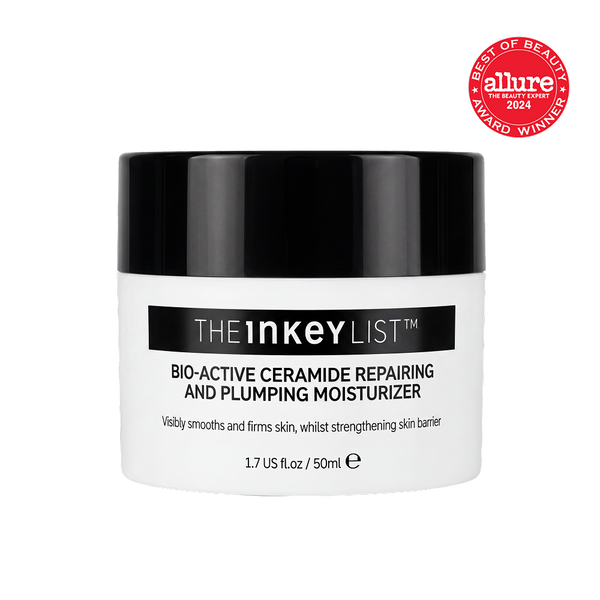
Bio-Active Ceramide Moisturizer ($22 / 50ml) is built around this. It is clinically proven to repair and strengthen the skin barrier from first use, delivers 24-hour hydration, is suitable for dry and sensitive skin, and shows 4X visible wrinkle reduction.
\12-week independent clinical study of 30 people comparing Ceramide NP at 0.2% vs placebo.*
For the detail, read what is Ceramide NP and bio-active ceramides vs regular ceramides, or start with our ceramidespage. A well-chosen ceramide moisturizer is the quiet backbone of a good routine.
Vitamin C and Antioxidants: Daytime Defense
Antioxidants neutralize free radicals generated by UV exposure and pollution, which reduces the cumulative oxidative load on your skin. Vitamin C additionally brightens, evens tone and supports the appearance of firmness.
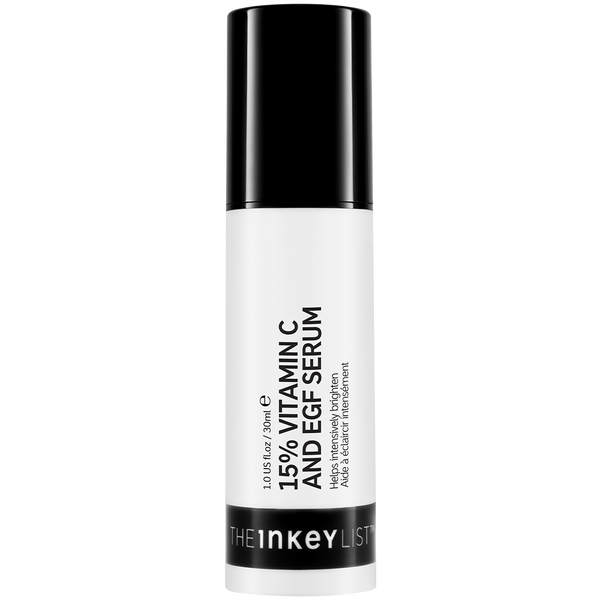
15% Vitamin C + EGF Serum ($20 / 30ml) uses ascorbyl glucoside, a stable derivative that is considerably gentler than pure L-ascorbic acid and far less prone to oxidizing in the bottle. That stability matters more than headline percentages. Use it in the morning, under sunscreen, where it complements UV protection. Learn more about how antioxidants protect your skin on our vitamin C page.
Hyaluronic Acid: Because Dehydrated Skin Shows Lines More
Hyaluronic acid is a humectant, meaning it draws and holds water. It does not treat wrinkles, but well-hydrated skin looks plumper and reflects light more evenly, which makes fine lines less noticeable.
Hyaluronic Acid Serum ($13) works in both routines. Apply it to damp skin and seal with moisturizer, which is the step most people miss. Applied to bone-dry skin in a dry room, a humectant can pull moisture out of the skin rather than into it. More on this on our hyaluronic acid page.
Niacinamide: Tone, Texture and Pore Appearance
Niacinamide is one of the most versatile ingredients in skincare. It supports barrier function, helps regulate oil, improves the look of enlarged pores, evens tone and is well tolerated by most skin types.
10% Niacinamide Serum ($13) is a particularly good fit for oily and combination skin that also wants anti-aging benefits without heavy textures. See our niacinamide page for more.
Exosomes: The Newer Arrival
Exosome skincare has moved from clinical settings into everyday routines over the past few years, and it has become one of the most searched newer categories in the space.
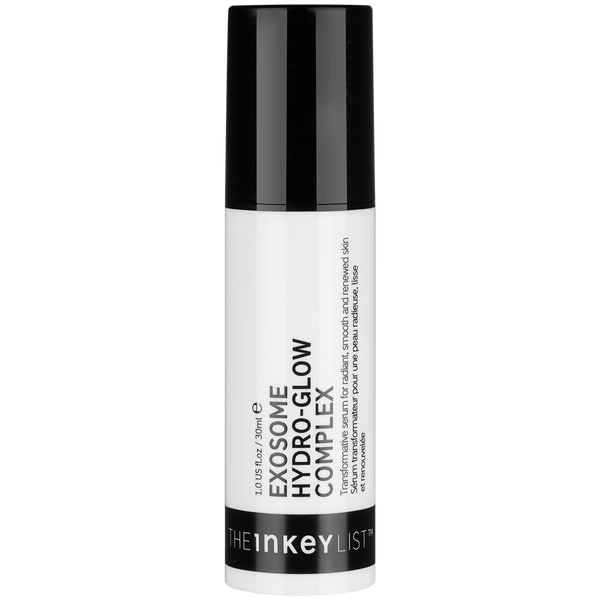
Exosome Hydro-Glow Complex ($24 / 30ml) offers 6-in-1 skin rejuvenation, clinically proven to visibly improve radiance, hydration, tone, firmness, elasticity, and texture.*
\4-week clinical study of 26 people*
We cover this properly in its own section below, and the underlying science lives on our exosomes page.
Clear guidance. Proven ingredients. Real results.
That is the honest ingredient hierarchy. Now for exactly when to use each one, starting with the morning.
Your Morning Anti-Aging Routine, Step by Step
The morning routine has one job: protect. You are shielding your skin from the UV, pollution and oxidative stress it will encounter over the next twelve hours. Repair happens overnight. Keep the morning efficient and do not skip the last step.
Step 1. Cleanse gently. Your skin has been on a clean pillowcase for eight hours. It does not need stripping. Use a gentle cleanser, or if your skin runs dry or mature, rinsing with lukewarm water alone is entirely acceptable and often better. Harsh morning cleansing is a common own goal.
Step 2. Apply your antioxidant serum. Two to three drops of 15% Vitamin C + EGF Serum ($20 / 30ml) on clean skin, pressed in rather than rubbed. This adds a layer of daytime defense and brightens over time. Let it settle for thirty seconds before the next step.
Step 3. Hydrate. Apply Hyaluronic Acid Serum ($13) to skin that is still slightly damp. This is the detail most people get wrong. Damp application gives the humectant water to bind to, and the moisturizer that follows locks it in.
Step 4. Eye cream. Bio-Active Ceramide Eye Cream ($16 / 18ml) is the morning and evening pick. Use a pea-sized amount for both eyes, applied with your ring finger, patted gently around the orbital bone from the inner corner outward. Never on the eyelid itself and never near the waterline. Wait thirty to sixty seconds before concealer. More technique detail in how to apply eye cream the right way.
Step 5. Moisturize. Bio-Active Ceramide Moisturizer ($22 / 50ml) seals in the serums and supports the barrier. It is clinically proven to repair and strengthen the skin barrier from first use, provides 24-hour hydration, suits dry and sensitive skin, and delivers 4X visible wrinkle reduction.*
\12-week independent clinical study of 30 people comparing Ceramide NP at 0.2% vs placebo.*
Step 6. Broad-spectrum SPF. Every single day. Winter, cloudy days, working from home near a window, all of it. Use a broad-spectrum SPF 30 or higher and apply enough, which is roughly a quarter teaspoon for the face and more for the neck. Reapply every two hours outdoors. This step protects the investment you just made in the previous five. Our SPF guide has the detail.
A few notes on making this stick. The whole routine should take under three minutes once it is habit. If it takes longer, you will skip it, and a skipped routine outperforms nothing but underperforms a simpler one you actually complete. If you want to understand the reasoning behind the order, our guide on how to build your skincare routine covers layering properly. The short version: thinnest to thickest, water-based before oil-based, SPF always last.
Morning protects. Evening is when the real repair work happens.
Your Evening Anti-Aging Routine, Step by Step
Overnight, skin shifts into recovery mode. Cell turnover increases, barrier repair accelerates, and there is no UV exposure to work against. This is when actives earn their place.
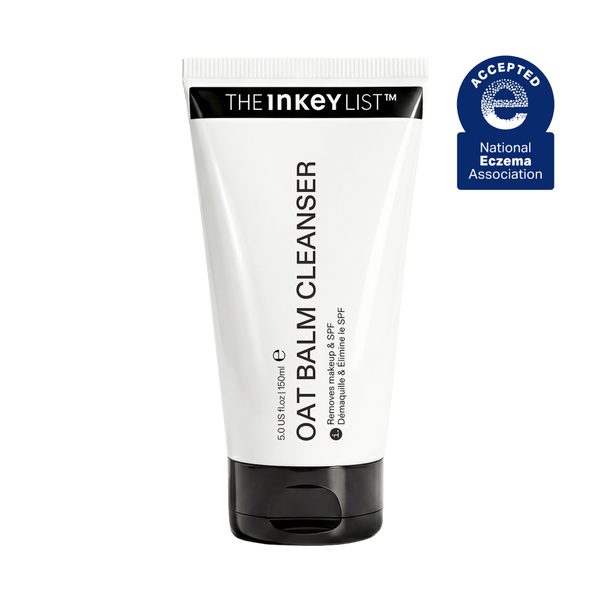
Step 1. Remove the day. Oat Cleansing Balm ($17 / 150ml) melts makeup, sunscreen and the day’s grime without stripping. Massage it into dry skin, add water to emulsify, then rinse. If you wear SPF and makeup daily, following with a gentle water-based cleanser is worth it. That is double cleansing, covered properly in how to build your skincare routine.
Step 2. Second cleanse if needed. Skip it on light days. Over-cleansing does more harm than under-cleansing.
Step 3. Treat. This is the retinoid step and the most important active decision in the routine. Starter Retinol ($15 / 30ml) if you are beginning. Advanced 0.2% Retinal Serum ($22 / 15ml) if you have built tolerance. Evening only, always.
Starting retinol without irritation. Begin twice a week, not nightly. Apply to completely dry skin, because damp skin increases absorption and irritation. Use a pea-sized amount for the entire face. If your skin feels tight, apply moisturizer first and layer the retinoid over it, which is called buffering and reduces irritation without eliminating benefit. Build to three or four nights a week over six to eight weeks, and only go nightly if your skin is comfortable. Some initial dryness and flaking is normal in the first fortnight. Persistent stinging, burning or redness is not, and means you should scale back. Before you start, read what not to mix with retinol.
Step 4. Hydrate and support. Follow with Hyaluronic Acid Serum if hydration is your priority, or a peptide serum if firmness is. If your skin is running dry or tight, our guide to dehydrated skin is worth a read.
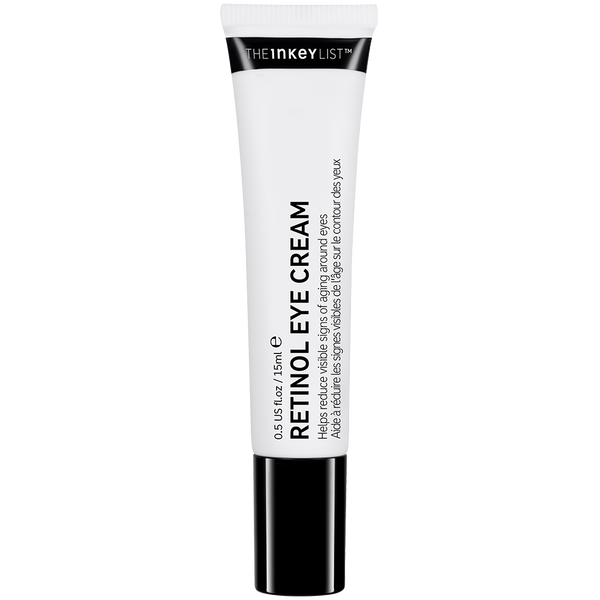
Step 5. Eye care. Bio-Active Ceramide Eye Cream is the primary evening pick, same technique as the morning. Experienced users who specifically want a vitamin A around the eyes can use Retinol Eye Cream ($15 / 15ml) instead. These are alternatives, not a stack. Pick one for any given night.
Step 6. Seal everything in. Finish with Bio-Active Ceramide Moisturizer to lock in hydration and support your barrier overnight, or reach for Exosome Hydro-Glow Complex when you want a glow-focused finish.
One tip worth flagging, because it solves the most common retinoid complaint: layering ceramides after your retinoid meaningfully buffers the dryness that often comes with vitamin A. The barrier support offsets the adjustment period, and the two work well together.
On vitamin C and retinol, the answer is that you can absolutely use both, you just split them across the day. Vitamin C in the morning, retinoid at night. Full reasoning in can you use vitamin C and retinol together.
Retinoids reward patience above all else. Twelve weeks of consistent, moderate use beats three weeks of nightly enthusiasm followed by an irritated barrier and a month off.
With the core routine established, here are the boosters for anyone ready to go further.
Exosome Serum and Advanced Targeted Boosters
Once the fundamentals are in place, boosters are where you tailor the routine to what your skin specifically needs. The most talked-about addition in this category is the exosome serum.
Exosome Hydro-Glow Complex
Exosome Hydro-Glow Complex ($24 / 30ml) is our glow-boosting step, designed to layer into any existing routine without displacing anything.
It offers 6-in-1 skin rejuvenation, clinically proven to visibly improve radiance, hydration, tone, firmness, elasticity, and texture. In testing, 100% saw more glowing skin, clinically proven. Users reported clinic worthy rejuvenated skin in 14 days. It is also proven to deliver up to 12-hours of hydration,* and helps support natural collagen production.
Further testing on the Cica Exosomes showed a 55% reduction in visible signs of skin stress (redness, puffiness, visible irritation) and a 63% increase in skin renewal activity in 8 hours.
\4-week clinical study of 26 people*
\*Clinical study of 31 people*
\**In-vitro testing of Cica Exosomes showed a 55% reduction in pro-inflammatory markers and a 63% increase in markers associated with skin renewal after 8 hours.*
How to use it. After cleansing, apply to damp skin, before moisturizer. It is lightweight and compatible with any routine, morning or evening. If you are using it in the evening alongside a retinoid, apply the retinoid first on dry skin, then follow with the complex and your moisturizer.
Who it suits. Anyone whose primary concern is dullness rather than deep lines, anyone wanting a visible pre-event glow, and anyone looking to add a step that improves multiple markers at once rather than targeting a single concern. It sits comfortably in a routine that already includes retinoids and ceramides.
For the science behind exosomes skincare, our exosomes page covers it in full. We would rather point you to a proper explanation than compress it into a paragraph here.
Other Targeted Boosters
Three more worth knowing, each solving a specific problem:
- Collagen Peptide Serum for anyone whose main concern is firmness and bounce rather than pigmentation or texture. Peptide-led, gentle, and a sensible retinoid alternative for sensitive skin.
- Tranexamic Acid Serum for uneven tone, dark marks and patchy pigmentation. Pigmentation is one of the strongest visual signals of aging skin, often more so than lines, and it responds well to consistent targeted treatment alongside daily SPF.
- Polyglutamic Acid Serum for hydration, holding significantly more water than hyaluronic acid and layering well over or instead of it for very dry skin.
A word on restraint. Boosters are additions, not replacements, and adding three at once is the fastest route to an irritated barrier and no clear idea of what caused it. Introduce one, give it four to six weeks, then assess.
The face is only part of the picture, and the areas that give age away most are often the ones people skip entirely.
Beyond the Face: Eyes, Neck and Decolletage
Here is advice you may have read elsewhere and should ignore: just extend your face products down your neck and you are covered.
It is not wrong exactly, but it is lazy, and it misses why these areas age differently in the first place. The skin around the eyes is among the thinnest on the body, some estimates put it at a fraction of the thickness of facial skin. It has very few oil glands, so it retains moisture poorly. And it moves constantly, tens of thousands of times a day between blinking and expression. Neck skin is similarly thin, similarly low in oil glands, and subject to constant flexion plus significant UV exposure that people routinely forget to protect.
Thin skin, constant movement, few oil glands, frequent sun exposure. That combination is why the eyes and neck show fine lines, crepiness and loss of firmness earlier and more visibly than the face does, and why purpose-built formulas outperform leftovers from your face routine.
Choosing an Eye Cream for Wrinkles and Fine Lines
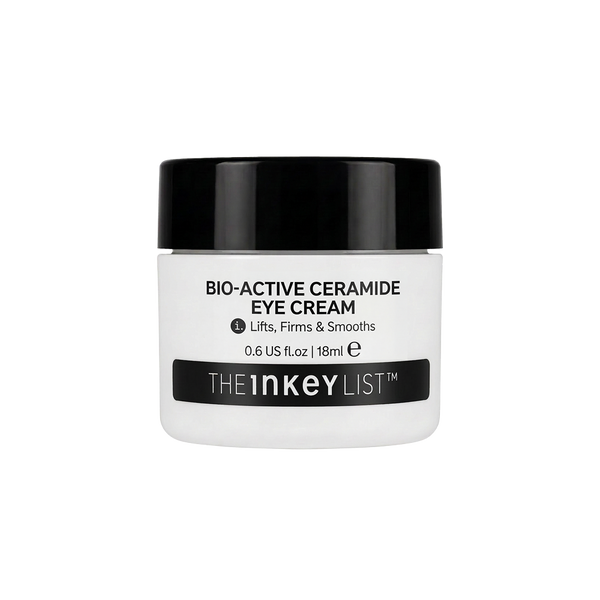
Bio-Active Ceramide Eye Cream ($16 / 18ml) is our lead recommendation for lines, firmness and lifting. Morning and evening, suitable for sensitive eyes, and retinol-free, which makes it suitable during pregnancy and breastfeeding.
The clinical results:
- Up to 4x wrinkle reduction*
- Clinically proven to lift eyelids by 29% in 4 weeks**
- 89% saw fine lines smoothed and blurred instantly*
- Proven to lift eyelids by 51% in 12 weeks*
- 94% agreed the eye area looked visibly firmer and more sculpted** (12 weeks)
- Clinically proven to improve skin firmness and elasticity**
It is also dermatologist and ophthalmologist approved, fragrance-free and alcohol-free.
\12-week independent clinical study of 30 people comparing Ceramide NP at 0.2% vs placebo.*
\*Clinically tested on 32 participants over 28 days.*
\**Clinically tested on 32 participants over 12 weeks.*
\***Tested on 32 participants over 12 weeks.*
\****Tested on 32 participants.*
Those eyelid lift figures are worth pausing on, because hooded eyelids are a concern people search for constantly and find very few honest answers to. A topical cream is not a surgical result. What the data shows is a measurable improvement in how lifted the eye area appears over four and twelve weeks, which for many people is exactly what they were looking for.
The formula. Three actives doing distinct jobs. Bio-Active Ceramide NP rebuilds barrier lipids in an area that loses them fast. A 4% Tetrapeptide Complex supports firmness and smoothness, which is the peptides-for-wrinkles mechanism at work in a real product rather than in theory. And 0.5% LIFTILIENCE® drives the lifting and sculpting results. More on the peptide side on our peptides page, and on the lipid side on our ceramides page.
Being honest about what it does not do. This eye cream targets lines, firmness and lifting. It is not the product for puffiness or dark circles. If those are your primary concerns, Caffeine Eye Cream ($14) is the right pick, formulated with caffeine and Matrixyl 3000 for a de-puffing, brightening effect.
You can layer them. Caffeine Eye Cream first, allow it to absorb for a minute, then Bio-Active Ceramide Eye Cream over the top. Morning puffiness and long-term firmness are different problems and it is more useful to tell you that than to claim one product solves both.
Retinol Eye Cream ($15 / 15ml) remains the evening option for experienced retinoid users who specifically want a vitamin A formulated for the eye area. It is not the default recommendation and it is not suitable during pregnancy or breastfeeding. See our pregnancy-safe skincare guide for the full list of what to avoid.
Application technique matters more than people think:
- Pea-sized amount for both eyes, no more
- Use your ring finger, which applies the least pressure of any digit
- Pat, never rub or drag
- Work around the orbital bone from the inner corner outward
- Never on the eyelid itself, never near the waterline
- Wait 30 to 60 seconds before concealer
Too much product migrates into the eyes and causes irritation and, ironically, puffiness. Full walkthrough in how to apply eye cream the right way.
Neck Firming Cream and Treating Crepey Neck
The neck is the most consistently neglected area in skincare, and it is often the first place people notice age. Decades of sunscreen stopping at the jawline, combined with constant downward flexion from looking at screens, produces horizontal neck lines, crepey texture and loss of definition along the jaw.
Crepey neck is specifically the thin, finely wrinkled, tissue-paper texture that develops as collagen and elastin decline in already-thin skin. It is distinct from deeper neck lines, and it responds well to consistent barrier support and firming actives.
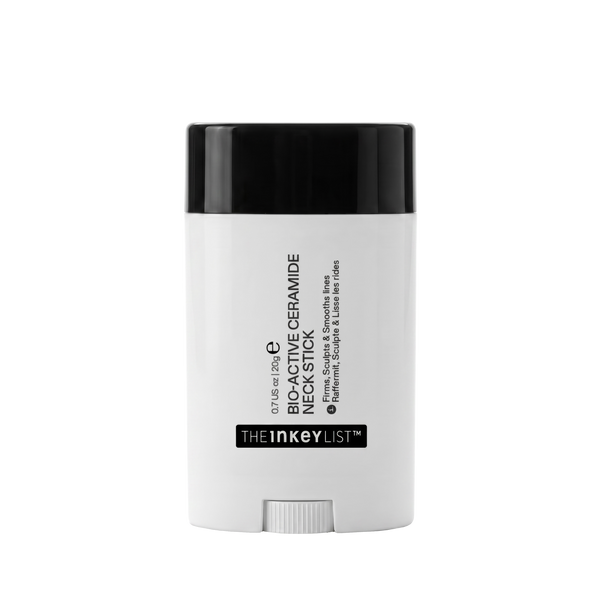
Bio-Active Ceramide Neck Stick ($17.00) targets neck lines, crepey skin and loss of firmness. It is a lightweight stick format that lifts, smooths and sculpts the neck and decolletage in 14 days. The stick format solves a genuine adherence problem: neck care fails because people cannot be bothered to open another jar, and a swipe takes five seconds.
How to use it properly:
- Apply upward, from the collarbone toward the jawline, always working against gravity
- Extend down onto the decolletage, which gets significant sun exposure and is frequently forgotten entirely
- Use both morning and evening for best results
- Carry your SPF down the neck and decolletage every single morning, without exception
That last point deserves emphasis. Applying firming products to a neck that receives unprotected daily UV exposure is filling a bath with the plug out. Sunscreen on the neck is not optional.
For the complete system, The Bio-Active Ceramide Trio ($52.25) brings together the face moisturizer, eye cream and neck stick, covering all three areas with the same bio-active ceramide technology. Buying the areas together tends to work better than treating them as separate projects, partly because the results look more consistent and partly because you are more likely to actually do it.
With the full territory covered, here are the mistakes that quietly undermine an otherwise good routine.
Common Anti-Aging Mistakes and How to Personalize Your Routine
Most routines fail for predictable reasons. These are the five we see most often.
Mistake 1: Skipping Daily SPF
The most common and by far the most costly. People invest in a retinoid and a vitamin C serum, then skip the one product with the largest effect on visible aging. Wear broad-spectrum SPF every day, all year, indoors near windows included. If your routine budget is limited, protect this step first and build around it.
Mistake 2: Doing Too Much, Too Fast
The enthusiasm phase, where three new actives arrive at once and get applied nightly. What follows is redness, stinging, flaking and a compromised barrier, which sets progress back by weeks and makes you conclude the products do not work.
- Add one new product at a time
- Give it four to six weeks before adding another
- Patch test on the inner forearm or behind the ear first
- Start actives at low frequency and build
Read what not to mix with retinol before combining anything with vitamin A.
Mistake 3: Inconsistency
Skincare compounds. Three weeks of dedication followed by two weeks of nothing produces roughly the results of doing nothing. Realistic timelines: hydration and glow within days to a few weeks, texture and tone around four to eight weeks, fine lines at twelve weeks and beyond. A simple routine you complete every day beats an elaborate one you manage twice a week.
Mistake 4: Ignoring the Barrier
Chasing actives while your barrier is compromised is counterproductive. Signs it needs attention: tightness after cleansing, unusual sensitivity or stinging, flaking, redness, or products that used to be fine suddenly causing irritation.
The recovery protocol is straightforward. Pause all actives for one to two weeks. Cleanse gently. Use a ceramide moisturizer twice daily. Keep wearing SPF. Reintroduce actives one at a time at reduced frequency. Our damaged skin barrier guide covers this in full.
Mistake 5: Expecting a Cream to Do a Procedure’s Job
Topical skincare improves the appearance, health and resilience of skin. It slows visible aging, softens lines, evens tone and supports firmness. It does not replicate what in-clinic treatments do, and no amount of marketing changes that. Understanding the ceiling means you can appreciate real results rather than feeling let down by imagined ones.
Personalizing Your Routine
The framework is the same for everyone. The specifics should not be. Adjust by need rather than by decade, because a sensitive 45-year-old and a sensitive 25-year-old need more in common than two 45-year-olds with opposite skin types.
Sensitive skin. Fragrance-free formulas throughout. Introduce one active at a time with generous gaps. Consider peptides in place of retinoids, or buffer retinoids with moisturizer. Prioritize ceramide support. Patch test everything.
Dry and mature skin. Richer ceramide support and layered hydration. Hyaluronic acid on damp skin, sealed with Bio-Active Ceramide Moisturizer. Skip the morning cleanse and rinse with water instead. Do not neglect the neck, which runs drier still.
Oily and combination skin. Lighter textures, but do not skip moisturizer. 10% Niacinamide Serum ($13) manages oil and pore appearance while supporting the barrier. Gel-textured hydration works better than heavy creams. Retinoids are usually well tolerated here.
Pregnancy and breastfeeding. Retinoids are out. Peptides, ceramides, hyaluronic acid, niacinamide and vitamin C are generally considered suitable, and Bio-Active Ceramide Eye Cream is retinol-free. Always confirm with your healthcare provider.
Uneven tone as a primary concern. Combine daily SPF with targeted treatment. Our hyperpigmentation guide explains the options, and our 10 most common skincare concerns guide is a good starting point for anything not covered here.
On budget. A complete starter routine of Starter Retinol, 15% Vitamin C + EGF Serum, Hyaluronic Acid Serum and Bio-Active Ceramide Moisturizer comes to $70, so everything you need to begin is under $75. Add broad-spectrum sunscreen and you have a genuinely evidenced routine. US shipping is free on orders over $40.
Building an Anti-Aging Routine That Actually Lasts
Strip away the noise and the hierarchy is short. Wear broad-spectrum sunscreen every day. Use a retinoid at night. Support your barrier with ceramides. Do it consistently for months rather than weeks. Everything else in this article, and everything else on any shelf, is refinement layered on top of those four things.
Give the eyes, neck and decolletage purpose-built care rather than whatever is left on your fingers after the face. Those areas are thinner, move more and have fewer oil glands, so they show change earlier. They are also, for exactly that reason, where a well-chosen product tends to make the most visible difference.
Be patient with the timeline. Hydration responds in days. Texture and tone in weeks. Lines and firmness over months. The people who see the best results are almost never the ones with the most products. They are the ones who found a routine they can complete on a tired Tuesday night and then simply kept going.
Cost should not be the barrier. A complete, evidenced starter routine comes in under $75, and US shipping is free on orders over $40.
Clear guidance. Proven ingredients. Real results. Because at The INKEY List, We Give A Care.
Ready to start? Shop Anti-Aging Essentials, or cover face, eyes and neck in one go with The Bio-Active Ceramide Trioat $52.25.
Not sure where to begin? Take the skincare quiz for a personalized routine in two minutes.
Want the fundamentals of layering and order first? Read our complete skincare routine guide.
Free US shipping on orders over $40.