



How to Apply Eye Cream: The Right Way, The Right Order, The Right Amount
Discover the right technique, how much to use, where to apply it and the simple mistakes to avoid for the best results.
Author
askINKEY skincare advisor
Published
16 June, 2026
Time to read
10 minutes
This blog covers everything you need to know about how to apply eye cream correctly - where to put it, which finger to use, how much to apply, when in your routine it belongs, and how to get the best possible results from every use. If you have ever wondered whether you are doing it right, you are probably not alone. Most people apply eye cream the same way they apply face moisturizer, and that is one of the most common reasons it does not work as well as it should.
Eye cream is a targeted treatment. It requires a specific technique, a specific placement zone, and a specific amount. Get those three things right and the results follow. Get them wrong and you are either wasting product, irritating the area, or simply not giving the formula a fair chance to work.
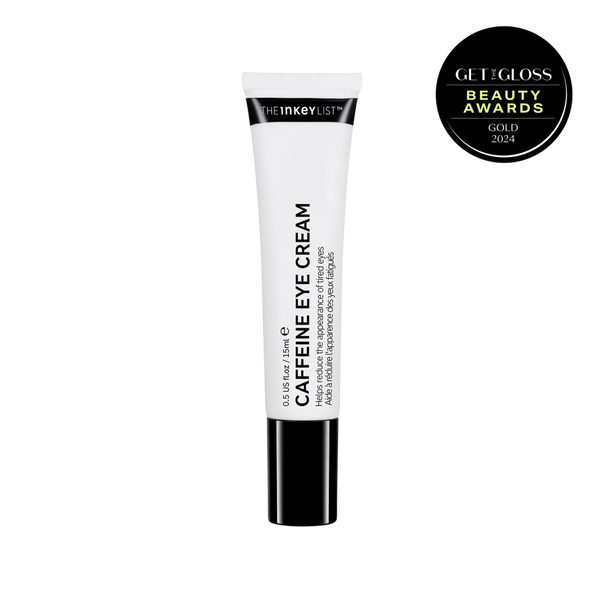
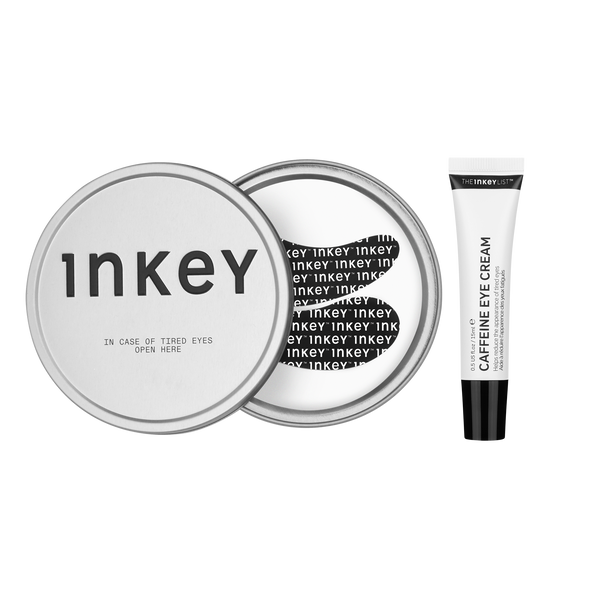
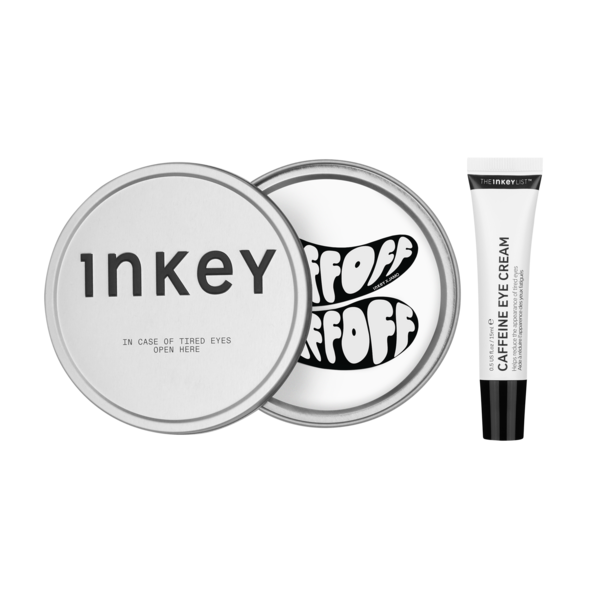
Throughout this guide, we will reference our Caffeine Eye Cream ($14.00) as the product being guided - it targets dark circles and puffiness, works morning and evening, and suits all skin types including sensitive skin and those who are pregnant or breastfeeding. If you want to take results further, the Reusable Eye Patches + Caffeine Eye Cream Duo pairs both products for boosted absorption. More on that in Section 5.
Before getting into technique, it helps to understand what eye cream is actually doing - and why the under-eye area needs its own dedicated product in the first place.
What Eye Cream Actually Does - And Why Technique Matters
The question "what does eye cream do" is one of the most searched in skincare, and the honest answer starts with anatomy. The skin around the eye is the thinnest on the entire face - approximately 0.5mm thick, compared to roughly 2mm elsewhere. That is not a small difference. It is a fourfold difference in structural support, and it changes everything about how this skin behaves and what it needs.
Because periorbital skin - the technical term for the skin surrounding the eye socket - is so thin and delicate, it has far fewer oil glands than the rest of the face. It also has lower collagen density and very little subcutaneous fat beneath it to provide cushioning. The result is a zone that is disproportionately prone to visible concerns: fine lines appear earlier and more deeply than on thicker-skinned areas, dehydration shows up quickly as creasing or dullness, and puffiness develops easily because fluid pools readily in the loose connective tissue beneath the eye. If you want to understand the difference between dehydration lines and true wrinkles in this area, the dehydration lines vs wrinkles guide is worth reading alongside this one.
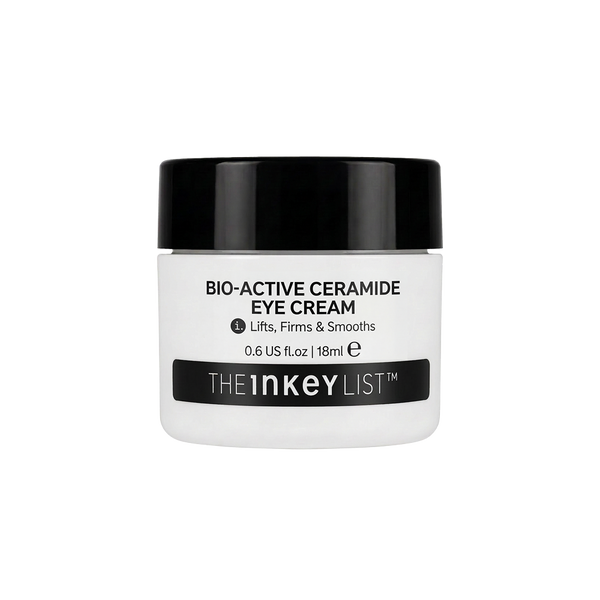
This is where a second formula earns its place. Our Bio-Active Ceramide Eye Cream ($16.00) targets the structural side of the equation: Bio-Active Ceramide NP penetrates multiple skin layers to strengthen the barrier, while a Tetrapeptide Complex visibly lifts and firms the eye contour. It is clinically proven to lift eyelids by 29% in 4 weeks** with up to 4x wrinkle reduction*.
Dark circles are another direct consequence of periorbital skin being so thin. Blood vessels sit very close to the surface, and when they are dilated or congested - as they are during poor sleep, allergies, or general fatigue - the bluish discoloration beneath the skin becomes visible. This is the vascular type of dark circle, and it is the type that caffeine directly addresses. By vasoconstricting blood vessels and reducing fluid retention, caffeine temporarily tightens the area and reduces both the shadow and the swelling that contribute to a tired appearance. For a deeper understanding of dark circle causes and types, the dark circles and puffiness hub covers the full picture.
This is exactly why standard face products are not a substitute for eye cream. Face serums and moisturizers are formulated at concentrations and textures appropriate for thicker, more resilient facial skin. Applied to the orbital zone, they can be too active, too heavy, or too occlusive - causing sensitivity, congestion, or even milia, those small white bumps that form when keratin becomes trapped beneath the skin's surface.
Eye creams are formulated specifically for periorbital skin - lighter textures, gentler actives, appropriate concentrations. Our Caffeine Eye Cream contains 0.3% caffeine alongside Matrixyl 3000 peptide, which supports collagen production to firm and smooth the delicate skin over time, and Albizia Julibrissin Bark Extract, which specifically targets signs of under-eye fatigue for a brighter, more awake appearance. It is clinically proven to improve the appearance of puffiness and dark circles from first use - not after weeks of hoping.
Results from eye cream are cumulative. Consistency is the real active ingredient for long-term improvement in dark circles. Allow 4 to 6 weeks of daily use to see full cumulative results. However, because caffeine's vasoconstrictive effect is immediate, visible improvement in puffiness can be seen from the very first application. That is a meaningful distinction: you are not waiting weeks to see any change at all.
One final point on why technique matters so much in this zone. The periorbital skin is uniquely vulnerable to mechanical damage. Rubbing, dragging, or applying excessive pressure repeatedly over time stimulates melanin production - which darkens the area - and damages the fine capillaries beneath the skin. The way you apply eye cream is as important as which eye cream you use.
With that foundation in place, the most natural next question is: where exactly does eye cream go?
Where to Apply Eye Cream - The Orbital Bone and the Right Technique
"Where to apply eye cream" is one of the most commonly searched eye cream questions, and it is also one of the most commonly misunderstood steps. Most people dab product directly under the lash line or, worse, onto the eyelid. Neither is correct, and both can cause problems.
The correct application zone is the orbital bone - the bony ridge that encircles the eye socket. You can locate it by gently pressing a finger around your eye area until you feel the firm ridge of bone beneath the skin. That ridge is your guide. Eye cream belongs along this boundary, not on the soft tissue directly beneath or above your eye.
Here is why this works so well: product applied to the orbital bone naturally migrates inward as it warms to skin temperature. Skin is warm, and a cream applied to the bone will creep toward the eye as it absorbs - meaning it ends up precisely where it needs to be without you ever needing to apply it directly to the most delicate zones. Starting at the orbital bone is a built-in safety mechanism.
The correct placement guide:
- Begin beneath the eye at the inner corner, near the bridge of the nose
- Work outward along the lower orbital bone toward the outer corner of the eye
- Continue around the outer corner to address the area where crow's feet develop
- You can also dot product along the upper orbital bone (brow bone) if targeting crow's feet across the upper area
- Never apply directly to the eyelid
- Never apply directly on or close to the waterline
The reason to avoid the eyelid is straightforward. Eyelid skin is even more delicate than periorbital skin, and any cream applied there will migrate into the eye through the natural action of blinking and perspiration. This can cause stinging, irritation, and redness - none of which mean the product is "working." It means it is in the wrong place.
The ring finger rule is the other fundamental technique point. Always use your ring finger to apply eye cream. This is not an arbitrary preference - it is biomechanical logic. The ring finger is the weakest finger on your hand and exerts the least natural pressure. Using your index finger or middle finger applies significantly more force to tissue that simply cannot tolerate it. The ring finger minimizes mechanical stress on the orbital zone with every application.
The motion matters too. Use the pad of the ring finger to tap or pat the product gently around the orbital bone. Do not rub. Do not drag. Do not smooth in circles. Tapping is the only appropriate motion for this area because it delivers product to the skin without pulling or stressing the delicate tissue beneath. Work from the inner corner outward beneath the eye, and from the outer corner inward above the eye along the brow bone.
This tapping motion also serves a secondary purpose. Gentle tapping from the inner corner of the eye outward follows the natural direction of lymphatic drainage - the system responsible for moving fluid away from the face. Encouraging fluid outward in this direction, even very gently, helps to shift fluid accumulation that contributes to puffiness. It is a subtle benefit, but a real one that compounds over daily use.
It is also worth noting that rubbing the periorbital area over time does measurable damage. Repeated friction stimulates melanin production in this zone, which progressively darkens the skin. If dark circles are a concern, understanding what causes them and being disciplined about technique is part of the long-term solution.
Now that placement and technique are clear, the next logical question is how much product to use - and how often.
How Much Eye Cream to Use and How Often to Apply It
More product does not mean better results. In the eye area, more product almost always means worse outcomes. This is one of the clearest and most honest things to say about eye cream, and it directly contradicts the instinct many people have to be generous with skincare products.
How much: a pea-sized amount is the correct quantity for both eyes combined. That is it. A single pea-sized drop on the tip of your ring finger is enough to cover both orbital areas when applied correctly. Using more than this does not increase the concentration of active ingredients reaching the skin - it increases the volume of product sitting on the surface, raising the risk of it migrating onto the eyelid, seeping into the eye, or causing puffiness from product buildup rather than relieving it.
A practical method for dividing product evenly between both eyes is the tap-and-split technique. Squeeze a pea-sized amount onto the ring finger of one hand, then gently touch the ring fingers of both hands together to split the product evenly. Each hand now has approximately the right amount for one eye. Apply to each orbital area with the tapping motion described above.
For our Caffeine Eye Cream, applying to slightly damp skin can improve absorption. After cleansing, patting skin mostly dry but leaving it just a little damp before applying helps the formula penetrate more effectively.
How often: our Caffeine Eye Cream is formulated for daily use, morning and evening. It is appropriate for twice-daily application and effective at both ends of the day - in the morning to address overnight fluid accumulation and under eye bags, and in the evening to support the skin's overnight repair and hydration. There is no need to rotate or take rest days with this formula.
How long to wait: after applying eye cream, wait approximately 30 to 60 seconds before applying your moisturizer over the top. You do not need to wait for full absorption - the brief pause allows the eye cream to begin settling into the skin so it is not immediately displaced by the next product. There is no benefit to waiting longer than a minute.
Consistency is what delivers results. Visible reduction in under eye bags from our Caffeine Eye Cream is noticeable from first use, thanks to caffeine's immediate vasoconstrictive effect. Full cumulative results for dark circles develop over 4 to 6 weeks of consistent daily application. The product works - but it works across time, not in a single use. Building it into a morning and evening routine is the most effective approach.
With quantity and frequency addressed, it is time to place the eye cream step in the context of a full skincare routine.
Caffeine or Ceramide? Choosing the Right Eye Cream
Two different concerns, two different formulas.
- Under eye bags, puffiness, vascular dark circles → Caffeine Eye Cream ($14.00). 0.3% caffeine, immediate vasoconstrictive de-puffing, visible from first use.
- Fine lines, loss of firmness, crepey texture → Bio-Active Ceramide Eye Cream ($16.00). 89% saw fine lines smoothed and blurred instantly*****. Fragrance-free, suitable for sensitive eyes, ophthalmologist approved.
- Both → apply Caffeine Eye Cream first, then Bio-Active Ceramide Eye Cream on top.
The application technique is identical for both: ring finger, orbital bone, tapping motion, pea-sized amount.
Where Eye Cream Fits in Your Skincare Routine - AM and PM
Eye cream before or after moisturizer is the most searched skincare order question in the eye cream category, and the answer is simple: eye cream always goes before moisturizer. Always. The full rule is that eye cream follows serums and precedes moisturizer in both your morning and evening routines.
Understanding why this order works helps you stick to it without second-guessing. Skincare layering follows a general principle of thinnest to thickest texture. Serums are the thinnest, most penetrating formulations. Eye cream sits in the middle - lighter than moisturizer but richer than a serum. Moisturizer is the final facial step, typically the thickest and most occlusive layer.
If moisturizer goes on before eye cream, it creates a semi-occlusive layer over the periorbital skin that prevents the eye cream's active ingredients from making full contact with the skin. The caffeine, peptides, and other actives in your eye cream need direct access to the skin to work. Applying eye cream first ensures that contact. Applying it after moisturizer partially defeats the purpose of the formula.
The same principle applies to serums: apply treatment serums across your face first, then apply your eye cream to the orbital area. One important caveat here - avoid applying high-strength active serums directly onto the orbital bone. If you use an AHA, BHA, or high-concentration Vitamin C serum, keep those away from the eye area. They are formulated for facial skin that is several times thicker than periorbital skin. Applying them to 0.5mm-thin eye skin can cause irritation, sensitivity, and compromised barrier function. Apply those serums to the face, avoiding the orbital zone entirely, and then follow with your eye cream in the dedicated eye area.
Your full AM routine with eye cream in position:
- Cleanse
- Hydrating serum, such as a Hyaluronic Acid Serum - apply to damp skin
- Treatment serum, such as a Niacinamide Serum - apply away from the eye area
- Eye cream - Caffeine Eye Cream ($14.00) for under eye bags, or Bio-Active Ceramide Eye Cream ($16.00) for fine lines and firmness, using the ring finger and orbital bone tapping technique
- Moisturizer
- SPF daily - broad-spectrum sun protection is the single most important anti-aging step in any morning routine
Your full PM routine with eye cream in position:
- Cleanse - double cleanse if you have worn SPF or makeup
- Hydrating serum
- Treatment serum, if using actives on the face in the evening
- Eye cream - Caffeine Eye Cream ($14.00) for under eye bags, or Bio-Active Ceramide Eye Cream ($16.00) for fine lines and firmness, same ring finger and orbital bone application
- Moisturizer
Our Caffeine Eye Cream is appropriate for both AM and PM use - the caffeine in it works topically as an antioxidant and circulation-booster, not as a stimulant. Despite the name, it will not keep you awake. Using it overnight gives the formula extended contact time with the skin, which is particularly valuable for the cumulative results around dark circles.
Now that the full routine context is established, here is the specific step-by-step application for our Caffeine Eye Cream - including the techniques that amplify its results.
How to Apply Our Caffeine Eye Cream - Step-by-Step
Knowing how to apply caffeine eye cream specifically - not just eye cream in general - makes a meaningful difference to the results you see. Our Caffeine Eye Cream ($14.00) has specific characteristics that shape the ideal application approach, and there are techniques that amplify caffeine's de-puffing action beyond what standard application achieves.
Best for: under eye bags, dark circles - particularly the vascular, bluish kind - and general under-eye fatigue. Also suitable for anyone wanting to brighten and smooth the under-eye area as part of their daily routine.
When to use: AM and PM, every day.
Step-by-step application:
- After cleansing and applying any serums to the face, squeeze a pea-sized amount of Caffeine Eye Cream onto the tip of your ring finger
- Split the product between both ring fingers using the tap-and-split method
- Starting at the inner corner beneath one eye, use the pad of the ring finger to gently tap the cream outward along the lower orbital bone
- Continue around the outer corner and along the upper orbital bone if targeting crow's feet
- Repeat on the other eye
- Use minimal pressure throughout - tapping, never rubbing
- Apply to skin that is slightly damp after cleansing for better absorption
- Follow with moisturizer once the eye cream has had 30 to 60 seconds to begin absorbing
- Finish with SPF in your morning routine
The fridge tip - and why it matters: store our Caffeine Eye Cream in the refrigerator. Using it cold meaningfully amplifies the vasoconstrictive, de-puffing effect of caffeine. A cold application causes blood vessels to constrict more efficiently than at room temperature, making it particularly effective on mornings when under eye bags are significant - after disrupted sleep, during allergy season, or after a long flight. The cold genuinely enhances the mechanism of action of the key ingredient.
The drainage technique: as you tap from the inner corner outward beneath the eye, you are naturally following the direction of lymphatic drainage. The lymphatic system does not have a pump like the cardiovascular system - it relies on movement and gentle pressure to shift fluid. Tapping outward from the nose toward the outer corner of the eye encourages the movement of fluid that has pooled overnight, which is the primary cause of morning under eye bags. It is a gentle technique but a physiologically sound one.
What to avoid: do not apply to the eyelids. Do not apply close to the waterline. Do not rub or drag. Do not use more than a pea-sized amount in the hope of faster results.
Skin compatibility: our Caffeine Eye Cream is suitable for all skin types, including sensitive skin. It is also confirmed safe for use during pregnancy and breastfeeding.
Taking Results Further With Under-Eye Patches
For days when your under eyes need more - after poor sleep, during a stressful period, or simply as a weekly treatment - the Reusable Eye Patches + Caffeine Eye Cream Duo takes application to the next level.
The silicone patches work by creating an occlusive seal over the Caffeine Eye Cream after you apply it. Most skincare products lose a significant portion of their formula to evaporation before it fully absorbs - this is a real limitation of open-air application. The patches prevent that evaporation entirely, locking the active ingredients directly against the skin and driving deeper absorption. The result is more caffeine, more peptide complex, and more Albizia Extract making contact with the periorbital skin than standard application alone can achieve.
How to use them together:
- Apply our Caffeine Eye Cream to the orbital area using the ring finger tapping technique as described above
- Press the silicone patches over the under-eye area with the narrow end positioned at the inner corner, near the nose
- Leave the patches in place for 10 to 20 minutes
- Remove and gently tap any remaining cream into the skin - do not wipe it away
- Rinse the patches with water and a small amount of hand soap, pat dry, and store flat on the plastic insert inside the tin
- Chill the patches in the fridge for 10 minutes before use for an additional de-puffing boost
The patches are 100% silicone and fully reusable - a significantly more sustainable option than single-use hydrogel patches. For more on the science behind why occlusion boosts skincare absorption, the do under eye patches actually work blog goes deep on the mechanism.
With a clear picture of correct application technique, it is worth addressing the specific errors that prevent even the best eye cream from delivering results.
Common Eye Cream Mistakes That Undermine Results
Knowing how to apply eye cream correctly is one part of the picture. Knowing what not to do is equally important - and often more useful, because most application errors are so common they feel like normal practice. If your eye cream has not been delivering results, one of the following is very likely the reason.
Using too much product. This is the most widespread mistake. More than a pea-sized amount for both eyes is too much. The temptation to use more is understandable, but over-application does not increase results. It increases the risk of product migrating onto the eyelid and into the eye, and it can contribute to puffiness from product buildup rather than relieving it. Less is genuinely more in this zone.
Applying to the eyelid or too close to the waterline. Eye cream is formulated for the orbital bone zone, not the eyelid itself. Applying to the eyelid means the product will migrate through blinking and perspiration - potentially into the eye, where it can cause stinging and irritation. The orbital bone is the boundary. Stay behind it.
Rubbing or dragging instead of tapping. This is perhaps the most damaging long-term mistake. The periorbital skin is the thinnest on the face - approximately 0.5mm. Repeated dragging and rubbing over months and years progressively damages the fine capillaries beneath the skin and stimulates melanin production. Both outcomes worsen the appearance of dark circles over time. Every application should use only a tapping motion with the ring finger.
Applying face serums directly over the orbital bone. High-strength active formulas - AHAs, BHAs, high-percentage Vitamin C - are designed for facial skin several times thicker than periorbital skin. If these formulas reach the orbital zone during application, they can cause significant irritation, stinging, and barrier damage. Keep actives away from the eye area and apply your dedicated eye cream to that zone instead.
Expecting results in one or two uses and then stopping. Our Caffeine Eye Cream shows visible improvement in under eye bags from first use - that is a real, immediate effect. But cumulative improvement in dark circles takes 4 to 6 weeks of consistent daily application. Stopping after a few days because you cannot yet see dark circle results is like stopping a gym program after two sessions because you have not built muscle yet. Consistency is the variable that delivers.
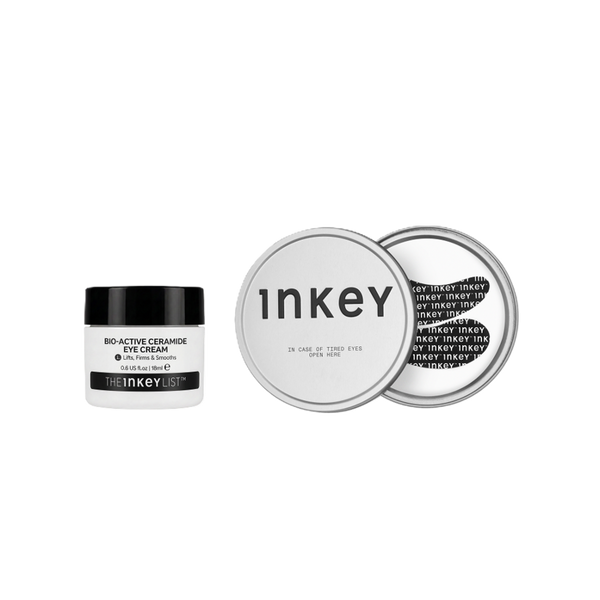
Assuming face moisturizer does the same job. It does not. Face moisturizers are formulated at concentrations and textures appropriate for thicker facial skin. Applied to the orbital zone, they can be too heavy, clog the pores in this area, or cause sensitivity and milia. Eye cream exists because the periorbital zone genuinely needs a different formulation. It is also why our Bio-Active Ceramide Eye Cream exists alongside the Bio-Active Ceramide Moisturizer - the same ceramide technology, reformulated with a lighter texture and an eye-specific Tetrapeptide Complex.
Not refrigerating our Caffeine Eye Cream. Cold application meaningfully amplifies caffeine's vasoconstrictive de-puffing effect. A chilled application constricts blood vessels more effectively than a room-temperature one. If you are leaving our Caffeine Eye Cream at room temperature, you are getting results, but you are leaving some of the product's potential unrealized.
The good news about all of these mistakes is that they are immediately correctable. Fix the technique today and your existing eye cream will start working harder from the very next application.
Eye Cream Application Comes Down to a Few Non-Negotiables
Everything covered in this guide returns to the same core principles. Ring finger. Orbital bone. Pea-sized amount. After serums, before moisturizer. Morning and evening, every day. Get those five things right and you have the foundation for real results.
The under-eye area is uniquely delicate and uniquely demanding. It has thinner skin, fewer oil glands, lower collagen density, and almost no structural support beneath it. That is why it shows fatigue, dehydration, and age before anywhere else on the face, and why it needs its own dedicated product and dedicated technique.
Our Caffeine Eye Cream ($14.00) is the most versatile starting point for addressing under eye bags and dark circles. It suits all skin types, it is safe during pregnancy and breastfeeding, it works morning and evening, and it delivers visible improvement in under eye bags from the very first application. Cumulative results on dark circles build over 4 to 6 weeks of consistent daily use. If fine lines and firmness are your priority, our Bio-Active Ceramide Eye Cream ($16.00)is the better match - and the technique is exactly the same.
Technique is straightforward. Consistency is what delivers results. Both are entirely in your control.
For anyone who wants to go deeper on the causes behind dark circles and puffiness - the different types, what drives them, and how to target each one - the dark circles and under-eye puffiness hub is the full resource.
Ready to Start?
- Our Caffeine Eye Cream - $14.00 - for under eye bags and dark circles, AM and PM
- Our Bio-Active Ceramide Eye Cream - $16.00 - for fine lines, firmness and lifting. Fragrance-free, suitable for sensitive eyes, ophthalmologist approved
- Our Reusable Eye Patches + Caffeine Eye Cream Duo - for boosted absorption and amplified results
- Dark Circles and Under-Eye Puffiness - understand the root causes before choosing your approach
- Do Under Eye Patches Actually Work? - the science behind occlusion and why the patches make your eye cream work harder
- Not sure where to start? Take our Skincare Quiz for a personalized routine recommendation built around your skin's specific needs
Frequently Asked Questions
Got a question?
Our askINKEY team are a friendly bunch of skincare experts with deep product knowledge and zero judgement. Whether you're an ingredient obsessive or just starting out, we'll make it make sense. No question too big. No question too small. We Give A Care, Every Day.


