

Dehydration Lines vs Wrinkles: How to Tell Them Apart
Think you’re seeing early wrinkles? They may be dehydration lines. Here’s how to tell them apart.
Author
askINKEY skincare advisor
Published
01 June, 2026
Time to read
17 minutes
Dehydration lines are a temporary surface condition caused by water loss. Wrinkles are a structural change in the skin’s collagen and elastin. That single distinction is the whole of dehydration lines vs wrinkles, and it is the reason two people can look in the mirror at what appears to be the same fine line and need two completely different answers.
Here is the reassuring part, and we want to lead with it: most people who think they are seeing early wrinkles are looking at dehydration lines. Fine texture that shows up after a cold week, a long flight or a few too many active ingredients is usually dehydrated skin asking for water and a working barrier, not a permanent change to your face. This page will help you work out which one you actually have, using a test you can do in the next thirty seconds.
What Dehydration Lines Actually Are
Dehydration lines are fine, shallow lines that appear at the surface of the skin when it is not holding enough water. They sit in the uppermost layers. They are not a change to the deeper architecture of your skin, which is precisely why they behave so differently from wrinkles and why they respond so quickly when you give them what they need.
Visually, they have a signature. Dehydration lines look fine and crinkly, like crumpled tissue paper or light cross-hatching laid over the skin. They have no real depth and no carved edges. They tend to appear in clusters rather than as one defined crease, and they shift through the day depending on the weather, the room you are sitting in and what you last applied.
The mechanism behind them is called Trans-Epidermal Water Loss, usually shortened to TEWL. Your skin barrier is designed to hold water in. When that barrier is not working properly, water evaporates from the surface faster than it can be replaced, and the surface layers start to look crepey and deflated. Understanding your skin barrier and how to protect it is genuinely the whole game here, because a barrier that holds water does not produce dehydration lines.
They show up first where the skin is thinnest and least supported. Under the eyes is the classic location, because the skin there is the thinnest on the face — roughly 0.5mm, compared with around 2mm on the cheeks. That area also has the fewest oil glands and the least structural support, so it registers water loss before anywhere else. The forehead is next, thanks to constant exposure to wind, cold, central heating and air conditioning. Cheeks and the area around the mouth join in during low humidity or after skincare that has disrupted the barrier.
None of this is permanent, and none of it is a sign that you are aging prematurely. Dehydration lines are a condition your skin is in right now, not a record of anything. The question is how to be certain that is what you are looking at.
The Pinch Test: How to Check Your Skin at Home
There is a simple skin dehydration test you can do at home, right now, with no products and no mirror lighting tricks. It takes seconds and it is the fastest way to separate surface texture from structural change.
Here is how to do it:
- Choose a spot on your cheek, just below the cheekbone, or the skin directly under your eye.
- Gently take a small section of skin between your thumb and forefinger. Gently is the operative word — you are lifting, not squeezing.
- Hold for a second, then release.
- Watch closely at what happens in the moment after you let go.
A positive result for dehydration looks like this: the skin stays slightly tented or crinkled for a beat before settling back down. While you are holding it, the lines crinkle and multiply, fanning out into fine cross-hatching that was not visible a second earlier. Skin that is short of water has lost some of its bounce, and the pinch test skin response makes that immediately obvious.
A negative result is just as clear. True wrinkles do not change under pressure. They hold their depth and their shape whether the skin is pinched, stretched or left alone, because the line is set into the structure rather than sitting on the surface. If the line looks identical before, during and after the pinch, you are almost certainly looking at a structural line.
Cheeks and the under-eye area are the most reliable places to test, because both show water loss early. The forehead works too, though it can be harder to read if you have naturally expressive brows — try to keep your face relaxed while you test.
There is a second, more reliable version of this test, and honestly it is the one that settles the argument. Run the pinch test again after two to four weeks of consistent, barrier-focused hydration. If the lines have visibly softened in that window, that is your confirmation: they were dehydration lines. If nothing has moved after a month of doing everything right, you have your answer in the other direction.
Now that you know how to test, it is worth understanding exactly what separates the two on every measure that matters.
Dehydration Lines vs Wrinkles: The Differences That Matter
Cause. Dehydration lines are caused by a water deficiency at the surface and by skin that has lost its ability to retain what it has. Wrinkles are caused by the breakdown of collagen and elastin over time, driven by age, cumulative UV exposure and repeated muscle movement. One is a supply problem. The other is a structural one.
Appearance. Dehydration lines are fine, shallow, cross-hatched and diffuse. They spread across an area rather than sitting in one place, and they lack defined edges. Wrinkles are deeper and more defined, with set edges, and they follow the patterns of the muscles beneath them. A wrinkle looks drawn on. A dehydration line looks crumpled in.
Behavior. This is the most useful difference on the list, and if you remember one thing from this page, make it this: dehydration lines change with hydration and wrinkles do not. Water them and they soften. Neglect them and they multiply. A structural wrinkle stays exactly where it is regardless of how much moisture you put on it.
Permanence. Dehydration lines are fully reversible. Restore the water and the barrier, and they go. Wrinkles are structural and permanent in the sense that the collagen change has already happened — their appearance can absolutely be improved, but they are not something hydration alone reverses.
Who gets them. Dehydration is a condition, not a skin type, and that catches a lot of people out. Oily skin can be dehydrated at the same time, because oil production and water content are two separate things. If you are unsure what your skin type is, it is worth knowing, but do not assume an oily reading rules dehydration out. Wrinkles, by contrast, develop with age and cumulative exposure.
Location overlap. Both appear under the eyes, which is exactly why that area causes the most confusion and generates the most worried searches. Use the texture as your guide: diffuse and crinkly points to dehydration, while set creases that are clearly visible when your face is completely at rest point to something structural.
One note on ingredients before we move on. Hyaluronic acid is the humectant that addresses dehydration — it binds water into the surface layers and plumps them back up. It has very little effect on structural wrinkles on its own, because there is no water shortage to correct there. That is not a failure of the ingredient. It is simply the wrong tool for that particular job.
What Causes Dehydration Lines
The encouraging thing about this list is how much of it sits within your control.
A compromised skin barrier is the root cause in most cases. When the barrier is weakened, TEWL increases, water escapes faster than it is replaced, and the surface dries out and starts to crinkle. Almost every other cause on this list works by damaging the barrier first. If you suspect a damaged skin barrier is behind your lines, fixing that is the fastest route to fixing the texture.
Environmental triggers do a lot of the damage. Cold air, wind, low humidity, central heating and air conditioning all pull moisture out of the skin’s surface. This is why dehydration lines flare in winter, why they appear after a long flight in pressurized cabin air, and why they can show up in a heavily air-conditioned office in the middle of summer.
Lifestyle factors contribute too. Alcohol is dehydrating throughout the body, including the skin. Poor sleep interrupts the overnight window when skin does most of its barrier repair. Chronic stress has a measurable effect on barrier function.
The water myth deserves its own paragraph, because it is the most repeated piece of bad advice in skincare. Drinking more water alone will not fix dehydration lines. Increasing your fluid intake does not resolve them, because this is a topical and barrier issue rather than a hydration-of-the-body issue. Your skin needs the right ingredients applied directly to it — humectants to draw water in and lipids to stop it escaping. Drink water because it is good for you. Do not expect it to change your under-eye texture.
Over-cleansing and harsh cleansers strip protective lipids from the surface with every wash. A cleanser that leaves your face feeling tight and squeaky has removed more than it should have, and doing that twice a day compounds fast.
Over-exfoliation and using actives without barrier support is the modern version of the same problem. Vitamin C, acids and other actives are genuinely worthwhile ingredients, but used at high frequency without hydration alongside them, they thin out the surface and trigger exactly the texture you were trying to treat. Supportive ingredients like niacinamide help, but the real fix is pairing actives with proper hydration rather than stacking them. If you are seeing several of these at once, these 5 signs you need a hyaluronic acid serum will look familiar.
Skipping moisturizer leaves the whole thing unsealed. You can apply the best hydrating serum available, and without something on top to hold it in place, the water you just added evaporates.
How to Get Rid of Dehydration Lines
The governing principle is simple: attract water into the skin, then seal it in. Both steps are required, and skipping either one is why most routines underperform.
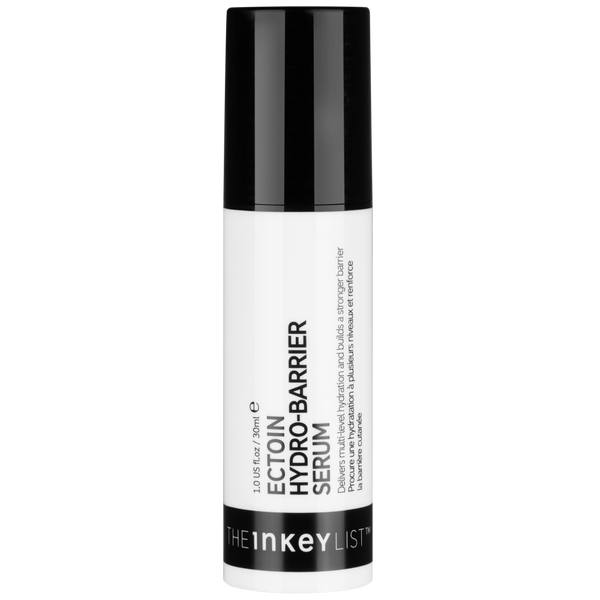
Ectoin is the hero here. It is a naturally occurring molecule produced by microorganisms that survive in extreme salt, heat and drought, and it works by forming protective hydration shells around cells. Research on topical ectoin, including a 2022 systematic review published in Dermatology and Therapy, describes it forming a water shell around proteins, improving the mobility of the skin’s lipid layer and reducing TEWL. What makes it unusual is that it works protectively as well as correctively — it defends the barrier as well as repairing it. Our Ectoin Hydro-Barrier Serumcombines 2% Ectoin with 2.5% multi-molecular Hyaluronic Acid and a 1% ceramide barrier blend. Apply it to damp skin as your first serum step. If you want the deeper explanation of how ectoin works, we have written it up separately.
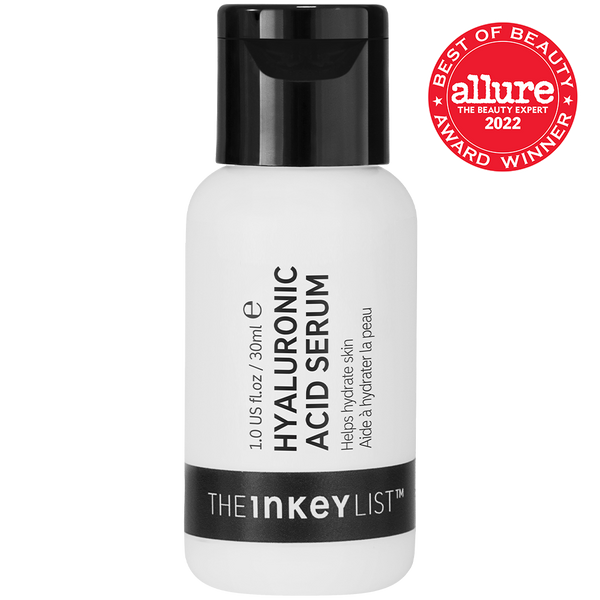
Hyaluronic acid and glycerin are your humectants — the ingredients that bind water into the skin and restore visible plumpness. Glycerin is one of the most well-established humectants in skincare and does quiet, reliable work. The application note matters more than people realize: always apply hyaluronic acid to damp skin, because a humectant needs surface moisture to draw from. On a dry face it has less to work with. Our Hyaluronic Acid Serum also includes Matrixyl 3000, a peptides complex, which is why it earns its place as a second hydrating layer rather than a duplicate of the first.
Ceramides and omega fatty acids are the sealing step. Ceramides are the mortar between your skin cells, holding the surface together, and they make up roughly half of the barrier’s lipid content — which tells you how much of your skin’s water-holding ability depends on them. Ceramides restore that mortar. Omegas 3, 6 and 9 rebuild the surrounding lipid matrix. Which one you reach for depends on your skin:
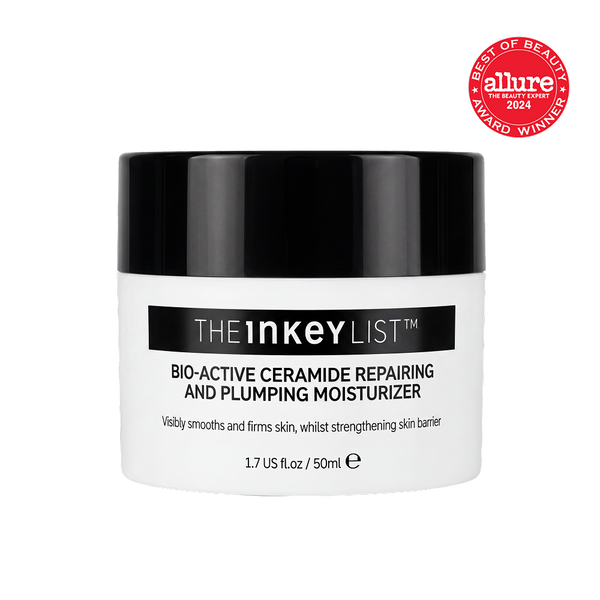
- Dry or more mature skin: the Bio-Active Ceramide Moisturizer, for a richer seal.
- Oily or combination skin: the Omega Water Cream, which is lightweight and includes 5% niacinamide.
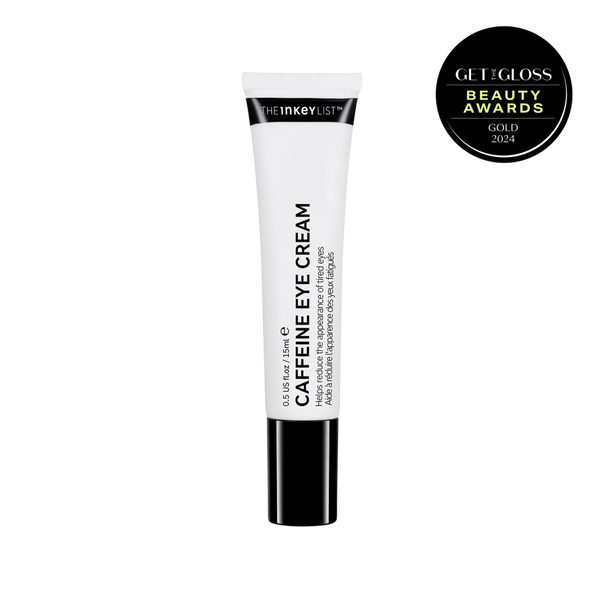
For the eye area, the Caffeine Eye Cream is for puffiness and dark circles. That is its job and we will not oversell it. Our Caffeine Eye Cream targets puffiness, the look of dark circles and tired-looking eyes. Apply it with your ring finger, tapping gently along the orbital bone rather than dragging across the delicate skin, and keep it in the fridge if you want an extra de-puffing hit in the morning. For technique, see how to apply eye cream the right way, and if morning puffiness is your main concern, why are my eyes puffy in the morning covers it properly.
Put together, the routine is short:
- Cleanse gently. Nothing stripping, nothing that leaves skin feeling tight.
- Hydrate on damp skin. Ectoin Hydro-Barrier Serum first, optionally layered with the Hyaluronic Acid Serum.
- Eyes. Caffeine Eye Cream for puffiness and dark circles.
- Seal. Omega Water Cream or Bio-Active Ceramide Moisturizer, depending on your skin.
- AM only. Finish with a broad-spectrum SPF, every single morning.
Give this two to four weeks of consistency before you judge it. Then run the pinch test again.
If Hydration Has Not Worked: These May Be Wrinkles
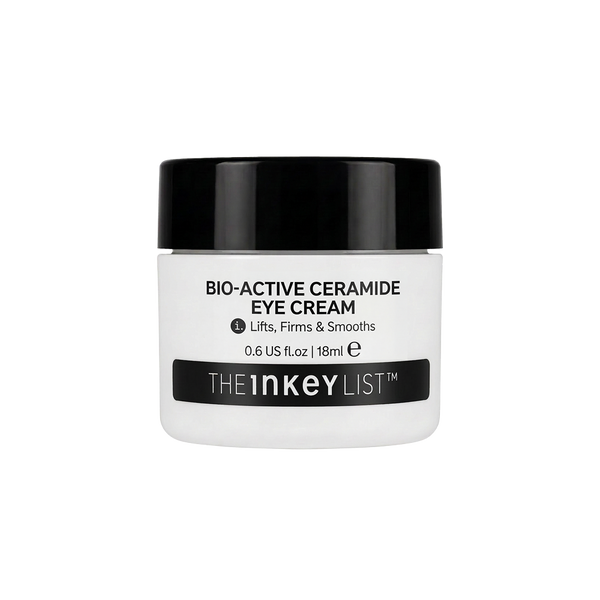
If your lines have not softened after two to four weeks of consistent hydration, they are likely structural — collagen and elastin breakdown rather than water loss. Hydration alone will not resolve them, and that is not a setback, it simply means a different approach. Our Bio-Active Ceramide Eye Cream pairs Bio-Active Ceramides with a Tetrapeptide Complex, is clinically proven to lift the appearance of eyelids by 29% in 4 weeks, smooths fine lines, firms the eye contour and hydrates, and is dermatologist and ophthalmologist approved. For the full approach, including retinol, read how to treat under-eye wrinkles.
The Bottom Line
Dehydration lines are temporary, reversible, and they respond within weeks. Wrinkles are structural and need a different approach entirely. Test your skin, hydrate consistently for a month, then look again — and remember that most people who go searching for early wrinkles find dehydration lines instead. That is genuinely the better answer. If you are still working out what you are looking at, our guide to the 10 Most Common Skin Concerns is a good place to start.
Start Here: Shop the Dehydration Routine
- Ectoin Hydro-Barrier Serum — the hero for barrier-related dehydration
- Hyaluronic Acid Serum — layered humectant hydration
- Omega Water Cream — oily and combination skin
- Bio-Active Ceramide Moisturizer — dry and mature skin
- Caffeine Eye Cream — puffiness and dark circles
- Bio-Active Ceramide Eye Cream — under-eye lines that have not responded to hydration
Not sure where to begin? Take the Skincare Quiz or build your routine with the Bundle Builder.
Frequently Asked Questions
Got a question?
Our askINKEY team are a friendly bunch of skincare experts with deep product knowledge and zero judgement. Whether you're an ingredient obsessive or just starting out, we'll make it make sense. No question too big. No question too small. We Give A Care, Every Day.


