



Under-Eye Wrinkles: What Causes Them and How to Treat Them
The skin under your eyes is the thinnest on your face — here's what really causes under eye wrinkles, and the routine that visibly smooths them.
Author
askINKEY skincare advisor
Published
25 August, 2026
Time to read
14 minutes
The skin directly under your eyes is the thinnest on your entire face. Depending on where you measure and how old you are, it sits at roughly 0.3 to 0.5mm thick, compared to roughly 2mm across the rest of your face. That single fact explains almost everything about why under eye wrinkles show up first, deepen fastest, and feel so stubborn once they arrive.
It also explains why so much generic anti aging advice falls flat here. The eye area is not a smaller version of your cheek. It has fewer oil glands, less structural support, and it moves constantly, every time you blink, smile, squint or read something on a screen in bad lighting. A routine that works beautifully across the rest of your face can do very little for the skin around your eyes, simply because it was never built for it.
This guide covers what actually causes under eye wrinkles, which ingredients have real clinical evidence behind them, and how to build a simple AM and PM eye routine that fits into what you already do. We will be specific about timelines, honest about what topical skincare can and cannot change, and clear about which products do which job. No hype, no fear, no promises that a cream will do the work of a clinic.
Let’s start where every good routine starts, with understanding the problem.
What Causes Under Eye Wrinkles in the First Place
Under eye wrinkles are not one thing with one cause. They are the visible result of several separate processes happening at once, some structural, some behavioural, some environmental. Knowing which is driving your particular lines tells you which ingredients are worth your money and which are not.
Collagen and Elastin Loss: The Structural Story
Collagen is the protein that gives skin its density and resilience. Elastin is what lets it snap back after it moves. Together they form the scaffolding underneath your skin’s surface, and when that scaffolding thins, the surface above it has less to hold it taut.
Collagen production begins declining as early as your mid-twenties, and it keeps declining year on year. This is normal biology, not a failure of skincare. What makes the eye area different is that it had less collagen to begin with, so a proportionally similar loss shows up far more visibly here than it does on your forehead or cheeks.
Elastin has an additional problem. Your body produces very little new elastin after adolescence, and existing elastin fibres degrade over time with UV exposure and repeated mechanical stress. That combination, less structural protein plus less recoil, is why the skin under the eyes can start to look loose and finely lined even when the rest of the face still looks firm.
There is a mechanism worth understanding here, because it changes how you think about ingredients. Collagen levels are not just about how much your skin makes. They are also about how much gets broken down. Enzymes called matrix metalloproteinases actively degrade collagen, and their activity increases with UV exposure and inflammation. A dermatology review of eye cream ingredients notes that topical retinoids can increase collagen content in the upper dermis by working on both sides of that equation, stimulating synthesis while suppressing the enzymes that break collagen down.
That two-way action is why retinoids remain the most evidenced topical option for lines, and we will come back to them properly later.
UV Damage and Photoaging: The Biggest Modifiable Factor
If collagen loss is the mechanism, UV exposure is the accelerant. Ultraviolet radiation penetrates the dermis, generates free radicals, triggers inflammation, and ramps up exactly those collagen-degrading enzymes described above. Dermatologists use the term photoaging to separate this from intrinsic, chronological aging, and the distinction matters because photoaging is largely preventable.
The eye area takes a disproportionate share of this damage. It is rarely covered by clothing, it is often the first place people stop applying sunscreen because they worry about stinging, and it is exactly where we squint against bright light, which folds already-thin skin repeatedly under UV load.
The practical takeaway is uncomfortable but useful: a meaningful proportion of what most people read as ageing around the eyes is accumulated sun exposure. If you want the full breakdown of how UV drives visible skin change and how to choose and apply protection properly, our SPF guide covers it in depth.
Repeated Facial Movements and Dynamic Wrinkles
Every expression you make folds the skin. Smile, squint, frown, concentrate. In younger skin with intact collagen and elastin, those folds release completely and leave nothing behind. As structural support declines, the skin loses the ability to fully rebound, and the fold starts to persist even when your face is at rest.
This is the difference between dynamic wrinkles, which appear on movement, and static wrinkles, which are visible when your face is still. Most under eye lines begin dynamic and gradually become static over years.
Directly beneath the eye, this shows up as fine horizontal lines that become most obvious when you smile, and that slowly remain faintly visible afterwards. Because this area also carries the mechanical load of blinking, estimated in the tens of thousands of times per day, the volume of repeated movement here is unmatched anywhere else on the face.
You cannot stop blinking, and you should not want to stop smiling. What you can do is support the structural quality of the skin that is doing all that folding, and reduce the unnecessary movement that comes from squinting.
Skin Thinning Over Time and the Rise of Crepey Skin Under the Eyes
As collagen and elastin decline, the dermis physically thins. At the same time the epidermis becomes less efficient at retaining moisture, partly because the eye area has very few sebaceous glands to supply lipids. Thinner skin plus poorer moisture retention produces a specific texture that people recognise instantly but often struggle to name.
Crepey skin under the eyes is that texture. It looks like very fine tissue paper, a network of shallow lines running in multiple directions rather than a few distinct creases, and it tends to catch the light in a way that makes the whole area look dull and tired. It is a surface-quality issue layered on top of a structural one.
The encouraging part is that crepiness is one of the more responsive concerns in this whole category. Because a significant component of it is moisture loss and a compromised barrier rather than pure collagen depletion, consistent hydration and proper barrier support can visibly improve it, often faster than deeper structural lines respond to anything. Crepey skin under the eyes rewards consistency more than it rewards intensity.
Lifestyle Factors That Speed Up Collagen Loss
Some of what accelerates under eye ageing has nothing to do with what you put on your skin.
- Sleep. Skin carries out much of its repair activity overnight. Chronic short sleep reduces the time available for that work and is associated with poorer skin barrier recovery.
- Smoking. Smoking restricts blood flow to the skin and introduces free radicals that degrade collagen, and the periorbital area is one of the first places it shows.
- Glycation. Excess sugar in the bloodstream can bind to collagen fibres and stiffen them, making them more brittle and less able to recover from movement.
- Cortisol. Sustained stress elevates cortisol, which interferes with collagen production and impairs barrier function over time.
None of this requires a lifestyle overhaul. It simply means that if you are doing everything right topically and seeing slow progress, there may be a non-topical factor working against you.
Dehydration Lines Versus True Wrinkles
Not every line under your eye is a wrinkle. Dehydration lines are shallow, fine, often appear quite suddenly, and characteristically look worse in the morning, in dry air, or after a night of poor sleep. They can vanish within days of proper hydration.
True wrinkles are structural. They are consistent day to day, they do not disappear with a glass of water and a hydrating serum, and they respond to ingredients that act on collagen rather than water content.
The reason this distinction matters commercially as well as practically is that dehydration lines are the single most over-treated concern in the eye category. People buy retinol for something a hydrating serum would have fixed in a week. If you are not sure which you are dealing with, our guide to dehydration lines versus wrinkles walks through how to tell them apart, and our dehydrated skin pillar explains the underlying skin state in more detail.
Once you know what is actually driving your lines, the next question is how much of it you can stop from getting worse.
How to Prevent Under Eye Wrinkles Before They Deepen
Prevention is the least glamorous part of this article and by some distance the highest return. Every hour of UV exposure you avoid is collagen you do not have to try to rebuild later. Think of it as leverage rather than restriction.
Daily SPF Is the Most Effective Anti Aging Step Available
Daily SPF is the single most effective anti-aging intervention available over the counter. Not the most exciting, not the most talked about, but the most effective. Given that photoaging drives such a large share of visible change around the eyes, protecting this area consistently does more for long-term results than any active you can layer on afterwards.
The eye area is one of the first places UV damage becomes visible, which makes it one of the last places you should skip. Apply your sunscreen right up to the orbital bone, and reapply through the day when you are outdoors. If you find sunscreen migrates and stings, choose a formula designed for the face and apply it with a gentle patting motion rather than dragging it across the skin.
One clarification worth making, because it comes up constantly through askINKEY: an eye cream is not a substitute for sunscreen. Eye products layer under SPF, not instead of it. Treatment and protection are two different jobs and you need both.
Vitamin C as Daytime Antioxidant Defense
Sunscreen blocks and absorbs a large proportion of UV radiation, but no sunscreen is a complete barrier. Antioxidants handle what gets through.
Vitamin C neutralizes free radicals generated by UV exposure and pollution before they can trigger the inflammatory cascade that degrades collagen. Used in the morning underneath sunscreen, it functions as a second line of defense rather than a replacement for the first. It also supports overall brightness and evenness, which tends to make the whole eye area read as fresher.
Our 15% Vitamin C + EGF Serum is formulated for daily morning use. Apply it across the face and allow it to absorb before moving on to your eye products. For the full explanation of how the ingredient works and what concentrations mean in practice, see our Vitamin C pillar.
Start Retinol Proactively, Not Reactively
There is a persistent belief that retinoids are something you begin once lines have arrived. The logic runs backwards. Retinoids work partly by supporting collagen production and partly by suppressing collagen breakdown, and both of those are easier to influence before significant loss has occurred.
Starting a retinoid in your late twenties or early thirties, used carefully and infrequently, is a fundamentally different proposition to starting one at fifty with substantial photoaging already established. Both are worthwhile. The first is simply more efficient.
That said, proactive does not mean aggressive. Around the eyes especially, low frequency and high consistency beat high frequency and inevitable irritation. If you are trying to work out when to begin, our guide on when you should start using anti-aging products covers the timing question properly.
Everyday Habits That Genuinely Move the Needle
Three practical habits, all low effort, all meaningful over years rather than weeks.
- Wear sunglasses in bright light. This is not only about UV. Reducing squinting frequency reduces the repetitive creasing that drives lines around and under the eyes. Large lenses that cover the orbital area do double duty.
- Watch your sleep position. Sleeping face-down or heavily on one side compresses and folds the eye area for hours at a time. If you consistently see more pronounced lines on one side, this is often why.
- Use your ring finger. The eye area does not tolerate dragging, rubbing or firm pressure. Your ring finger is the weakest of your fingers and naturally applies the lightest touch, which makes it the right tool for anything you apply here.
That third point deserves more attention than it usually gets, because application technique around the eyes genuinely affects outcomes. We break the method down step by step in our guide on how to apply eye cream the right way.
Sleep, Repair and Realistic Expectations
Your skin does a meaningful proportion of its repair work while you sleep. Barrier recovery, cellular turnover and the processes that support collagen all run more efficiently during rest, which is why consistently short or disrupted sleep tends to show up around the eyes before anywhere else. Protecting your sleep is not a skincare tip in the conventional sense, but it supports everything else you are doing.
Prevention protects what you have. The next question is what actually improves what is already there.
The Ingredients That Actually Improve Under Eye Wrinkles
This is where evidence matters most, because the eye area is small, sensitive, and heavily marketed to. Below are the four ingredient categories with genuine support behind them, in order of how much they can realistically change.
Retinoids: The Most Evidenced Option for Fine Lines
Retinol is a vitamin A derivative. Once applied, your skin converts it through several steps into retinoic acid, the active form that binds to receptors in skin cells and signals fibroblasts, the cells responsible for producing collagen, to increase their output. At the same time it helps suppress the matrix metalloproteinase activity that breaks existing collagen down.
That dual action is what separates retinoids from almost everything else in the category. They are not just adding something to the surface. They are changing how the skin behaves underneath it.
The clinical record supports this. A 2024 vehicle-controlled analysis published in the Journal of Drugs in Dermatologypooled data from six trials covering 352 participants aged 30 to 72, measuring outcomes at weeks 4, 8 and 12. The undereye area was among the regions specifically assessed.
Topical retinol produced significantly greater improvement than vehicle across all measured signs of photoaging, including fine lines and wrinkles in the undereye area, with improvement visible as early as week 4 and continuing through week 12. Journal of Drugs in Dermatology, 2024
Two things are worth drawing out of that. First, week 4 is when improvement started becoming visible, which is a useful anchor for realistic expectations. Second, and this is the part most brands leave out: the broader dermatology literature is noticeably thinner on retinoids formulated specifically for the eye area. The review of eye cream ingredients cited earlier explicitly flags the shortage of clinical trials focused on periorbital application, even while confirming retinoids’ effectiveness on facial skin generally.
We think that gap is worth telling you about rather than glossing over, because it shapes sensible use. Retinoids work. The eye area is also where they are most likely to cause dryness, flaking and irritation, and that risk scales with concentration and frequency.
So the guidance is deliberately conservative. Introduce a retinoid gradually, 1-2 nights per week to begin with, applied to the orbital bone area rather than right up to the lash line, and always in the PM. Increase only if your skin is comfortable. If you are new to retinoids, Starter Retinol is formulated as an entry point. If your skin is already accustomed to them, Advanced Retinal uses retinaldehyde, which converts to retinoic acid in fewer steps.
Retinoids also do not play well with everything else in your bathroom cabinet. Before you start layering, read our guide on what not to mix with retinol, and get the fundamentals from our retinol pillar.
Hyaluronic Acid: Immediate Plumping and Surface Smoothing
Hyaluronic acid is a humectant. It binds water and holds it in the upper layers of the skin, which increases apparent volume and makes fine lines look shallower almost immediately. It is not doing anything structural, and it will not rebuild collagen. What it does do is address the moisture-loss half of the crepiness equation, and it does it fast.
Molecular weight matters here. Larger molecules sit nearer the surface and provide immediate smoothing and a hydrated finish. Smaller molecules penetrate further and hydrate at a deeper level. A multi-molecular-weight formulation covers both, which is how our Hyaluronic Acid Serum is built.
One application detail changes the result significantly: apply it to damp skin. Humectants draw water from whatever is available. On damp skin they pull from the moisture sitting on the surface. On completely dry skin in a dry environment, they can draw from deeper in the skin instead, which is the opposite of what you want. Apply within a minute of cleansing, then seal with your moisturizer.
More on the ingredient itself in our hyaluronic acid pillar.
Peptides and Ceramides: Signalling and Structure
Peptides are short chains of amino acids. Amino acids are the building blocks of proteins, including collagen and elastin, and certain peptide sequences act as signalling molecules that communicate with skin cells and support the skin’s own renewal processes. They are considerably gentler than retinoids, which makes them well suited to the eye area and to anyone whose skin will not tolerate a retinoid. This is why peptide eye cream has become such a well-searched category: it offers a route to smoothing without the irritation trade-off.
Ceramides are a different proposition. They are lipids that occur naturally in your skin and make up a substantial share of the barrier that keeps moisture in and irritants out. When ceramide levels drop, the barrier becomes leaky, moisture escapes, and skin becomes drier, more reactive and more prone to that fine crepey texture. Replenishing them is less about adding a new capability and more about restoring one that has degraded.
For the eye area specifically, the peptide and ceramide combination is a strong pairing. Peptides support the smoothing and firming side. Ceramides handle barrier integrity and moisture retention. Neither carries meaningful irritation risk, which matters when you are treating the thinnest skin on the face.
Learn more via our peptides and ceramides pillars.
Why Ceramide NP Behaves Differently
Not all ceramides are equivalent. Ceramide NP is one of the specific ceramide subtypes found naturally in human skin, which means it integrates into the existing barrier structure rather than simply sitting on top of it as an occlusive layer.
The distinction between a bio-active ceramide and a standard one comes down to how the ingredient is processed and delivered. A bio-active ceramide is formulated to be more readily used by the skin, so more of what you apply ends up doing the structural job it is meant to do. In practice that means better barrier support at lower concentrations, and a more meaningful effect on the moisture retention that underpins smooth-looking skin.
If you want the full explanation, we have written about what Ceramide NP is and how bio-active ceramides compare to regular ceramides.
Our Bio-Active Ceramide Moisturizer is built on this technology and is clinically proven to reduce 6 signs of aging in 28 days.
Caffeine: A Supporting Role, Honestly Framed
Caffeine is a vasoconstrictor. Applied topically, it temporarily narrows blood vessels and helps reduce fluid retention in the tissue around the eyes. The visible result is less puffiness, and because puffiness casts shadows that make lines and hollows look deeper, reducing it can make the whole area look smoother.
That is a real benefit and it is worth having. But it is important to be precise about what it is. Caffeine is not acting on collagen, elastin or skin structure. It is reducing swelling and improving how the area catches light. For under eye wrinkles specifically, it is a supporting player rather than the answer.
Which brings us to the product that is actually built for this job.
The Best Eye Cream for Under Eye Wrinkles
There is a reasonable question underneath this whole category: why does a dedicated eye cream need to exist at all? If you already own a good moisturizer, why not just use it a little closer to your eyes?
The answer comes back to the anatomy we started with. The skin around your eyes is a fraction of the thickness of the skin on your cheeks, it has far fewer oil glands to produce its own lipids, and it is in near-constant motion. A face moisturizer is formulated for a different substrate entirely. It may be too heavy, sitting on the surface and migrating into the eye through the day, or too lightweight to provide adequate lipid support to skin that produces very little of its own. Neither is a formulation failure. It is simply a product doing the job it was designed for, in the wrong place.
A formula built for the eye contour accounts for the mobility, the thinness and the sensitivity of the area, and delivers actives at a level appropriate to skin that reacts more readily than the rest of the face.
What Is in Bio-Active Ceramide Eye Cream
Bio-Active Ceramide Eye Cream is built around two actives that address the two halves of the under eye wrinkle problem.
Bio-Active Ceramide NP strengthens the skin barrier and supports renewal in the most delicate area of the face. This is the foundation. Without an intact barrier, the eye area loses moisture continuously, and that moisture loss is a direct contributor to the crepey, finely lined texture described earlier. Ceramide NP restores what has been depleted rather than masking the consequences.
Tetrapeptide Complex visibly smooths the look of fine lines and lifts and firms the eye contour. This is the peptide side of the pairing, providing the signalling support that targets the appearance of lines and the slackness that develops as structural proteins decline.
Together they deliver the wrinkle result. Barrier plus peptide, structure plus surface.
The Clinical Results
- Up to 4x wrinkle reduction*
- Clinically proven to lift eyelids by 29% in 4 weeks**
- 89% saw fine lines smoothed and blurred instantly*
- Clinically proven to improve skin firmness and elasticity**
- Suitable for sensitive eyes. Fragrance-free and alcohol-free
- Dermatologist and ophthalmologist approved
The eyelid result is worth pausing on, because it addresses something people notice but rarely find products for. As skin loses firmness, the upper eyelid area can begin to feel heavier and sit lower, which changes how open and rested the whole eye looks. In clinical testing this formula was shown to lift eyelids by 29% in 4 weeks**, which is a measurable change to the eye contour rather than a purely surface effect. If heaviness around the lid is part of what is bothering you, that is a genuinely relevant number.
The instant result is a different mechanism to the long-term one, and both are honest. On first application, 89% saw fine lines smoothed and blurred instantly*, which is the immediate hydration and optical smoothing effect. The firming and lifting results build over weeks of consistent use. One is what you see in the mirror on day one. The other is what you see at the four week mark.
A Real Option During Pregnancy
Retinoids are generally advised against during pregnancy and breastfeeding, which leaves a lot of people who had an established anti aging routine suddenly without their most effective ingredient.
Bio-Active Ceramide Eye Cream is free from retinol and other pregnancy-restricted actives. That makes it a genuine option when retinoids are off the table, rather than a compromise. The ceramide and peptide combination does not rely on vitamin A derivatives to work.
As always, check with your healthcare provider before adding any new product during pregnancy or breastfeeding. Our guide to pregnancy-safe skincare covers the wider routine question in detail.
Because the eye area is sensitive by nature, a patch test is sensible before you begin, even with a fragrance-free, ophthalmologist-approved formula.
How to Apply It
Use a pea-sized amount for both eyes. Warm it briefly between your fingertips, then use your ring finger to pat gently around the orbital bone, working from the inner corner outward. Do not apply to the eyelid itself or anywhere near the waterline, and do not rub or drag.
Use it AM and PM, after cleansing and serum, before your moisturizer. Full technique in our guide on how to apply eye cream the right way.
Which Eye Cream Should You Use, and Can You Use Both
We make two eye creams and they do different jobs. Being clear about this saves you money and gets you better results.
- Bio-Active Ceramide Eye Cream is for fine lines, firmness and lifting. This is the wrinkle product.
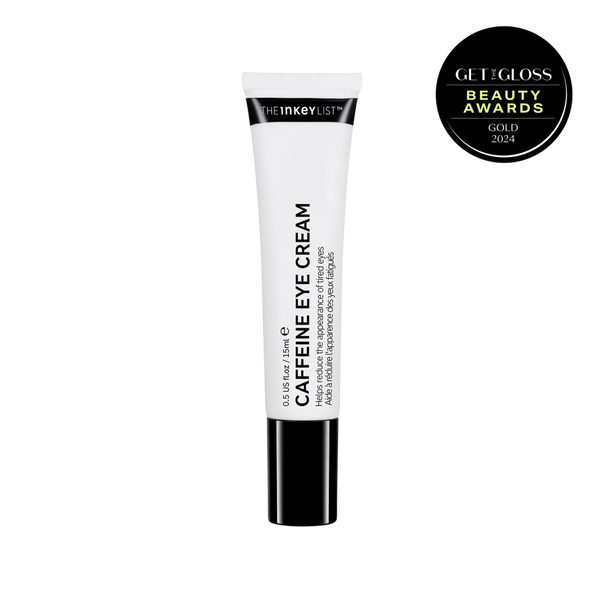
- Caffeine Eye Cream is for puffiness and dark circles. This is the tired-eyes product.
If your concern is lines and loss of firmness, the ceramide formula is the one you want. If your concern is that your eyes look puffy and shadowed in the morning, caffeine is the more relevant choice, and our dark circles pillar goes deeper on that side of things.
If both apply to you, use both. The layering order is Caffeine Eye Cream first, then Bio-Active Ceramide Eye Cream on top. Lighter formula first, richer formula second.
One honest note. Caffeine Eye Cream does contain Matrixyl 3000, a peptide complex that offers some support for fine lines over time. So it is not doing nothing for texture. But it was formulated primarily around puffiness and the appearance of dark circles, and if under eye wrinkles are your main concern, it is not the product we would point you to first. We would rather tell you that than sell you the wrong thing.
With the products sorted, here is exactly where each one sits in your day.
Your AM and PM Under Eye Routine
The logic of the split is straightforward. Mornings are for protection and hydration, since that is when your skin faces UV, pollution and environmental stress. Evenings are for repair and renewal, since that is when your skin does its regenerative work and when light-sensitive actives can be used safely. Retinoids are PM only, without exception.
If you want the full-face version of this framework, start with our skincare routine guide.
The Morning Routine
- Cleanse. Gentle, non-stripping. Lukewarm water, not hot.
- Hyaluronic Acid Serum on damp skin. Apply within a minute of cleansing while skin is still slightly wet.
- 15% Vitamin C + EGF Serum. Antioxidant defense for the day ahead. Allow it to absorb.
- Caffeine Eye Cream, if you are targeting puffiness. Optional. Skip if puffiness is not a concern for you.
- Bio-Active Ceramide Eye Cream. Pea-sized amount, ring finger, patted around the orbital bone.
- Bio-Active Ceramide Moisturizer. Across the face, over the top of your eye products.
- SPF. Every day, including cloudy days and days spent mostly indoors near windows. Apply up to the orbital bone.
The Evening Routine
- Cleanse. Remove sunscreen, makeup and the day. Double cleanse if you wear heavy SPF or long-wear makeup.
- Hyaluronic Acid Serum on damp skin. Same principle as the morning.
- Starter Retinol or Advanced Retinal. Start with 1-2 nights per week and build up only as your skin tolerates it. Apply to the orbital bone, not the lash line.
- Bio-Active Ceramide Eye Cream. Applied after your retinoid, where the ceramides help buffer potential dryness around the eyes.
- Bio-Active Ceramide Moisturizer. Seal everything in.
On the nights you are not using a retinoid, simply skip step 3. Everything else stays the same.
Key Application Tips to Get Results
- Eye cream goes before moisturizer, not after. Thinnest to thickest is the general rule, and the targeted product should reach the skin first.
- Your face moisturizer is not a substitute for an eye product. Different skin, different formulation requirements.
- Ring finger only. Pat, never drag. The eye area does not need pressure to absorb product.
- Less product than you think. A pea-sized amount covers both eyes. Excess migrates into the eye and causes irritation.
- Keep Caffeine Eye Cream in the fridge. The cooling effect adds to the de-puffing benefit in the morning. This is a puffiness tip, not a wrinkle tip.
- Consistency beats intensity. Twice daily at a moderate strength outperforms aggressive use followed by a two-week recovery break.
When to Expect Results, Honestly
This is where most eye cream marketing becomes unreliable, so here are realistic timeframes.
- Immediately. Hydration effects from hyaluronic acid and the instant smoothing from the eye cream. 89% saw fine lines smoothed and blurred instantly*.
- 2 to 4 weeks. Visible firming and lifting from consistent AM and PM use of the eye cream.
- 4 to 6 weeks. Retinoid-driven improvement in fine lines and texture begins to show, consistent with the week 4 findings in the clinical literature.
- 3 to 6 months. Deeper structural change, where collagen support has had time to produce a measurable difference in more established lines.
If you are three weeks in and looking for transformation, you are looking too early. If you are five months in with consistent use and seeing nothing at all, it is worth reviewing your routine rather than adding more products.
Worth saying plainly: topical skincare improves the appearance and quality of the skin. It does not replace volume loss in the deeper tissue, and it will not eliminate deep static lines entirely. Anyone claiming otherwise is selling you something.
For a broader routine framework that works alongside this one, our men’s skincare routine guide covers the same principles in a simplified structure.
Under Eye Wrinkles Versus Dark Circles and Other Lookalikes
Three different concerns get grouped under “my eyes look tired,” and they need three different approaches.
Under eye wrinkles are a texture and structure concern, driven by collagen loss, skin thinning, repeated movement and UV damage. Dark circles are a color and tone concern, whether vascular, pigmentary or caused by shadowing from hollowness. They frequently co-exist, and they respond to entirely different ingredients. A retinoid will not lighten pigmentation, and a brightening ingredient will not firm slack skin.
- Lines and loss of firmness are addressed in this article, with Bio-Active Ceramide Eye Cream as the primary step.
- Darkness, puffiness and shadowing are covered in full in our dark circles guide.
- Dehydration lines, the third thing people commonly mistake for wrinkles, are covered in dehydration lines versus wrinkles.
Lines at the outer corners of the eyes are a related but distinct concern with their own causes and treatments. We cover those in full in our dedicated crow’s feet guide.
Putting It All Together
Under eye wrinkles happen because the thinnest skin on your face is asked to do the most work with the least structural support. Collagen and elastin decline, UV exposure accelerates the process, constant movement folds the skin, and moisture loss adds a crepey surface texture on top of it all.
The response splits cleanly into three parts. Protect with daily SPF and morning antioxidants, because preventing damage is more efficient than reversing it. Treat with a retinoid at night, used conservatively at 1-2 nights per week around the eyes, plus hyaluronic acid for immediate hydration. Target with a formula built specifically for the eye contour, which is where Bio-Active Ceramide Eye Cream sits, morning and night, delivering Ceramide NP for barrier strength and a Tetrapeptide Complex for smoothing and firmness.
And be clear about which product does what. Caffeine for puffiness. Bio-Active Ceramide Eye Cream for lines and firmness. A retinoid at night for long-term collagen support. Three jobs, three products, no overlap and no guesswork.
The honest version of the timeline is that you will notice hydration and smoothing immediately, firming at two to four weeks, fine line improvement at four to six, and structural change over three to six months. That is slower than most advertising suggests and considerably faster than doing nothing. Consistency is the variable that matters most, and it is the one entirely within your control.
Here is the thought worth leaving with. The most effective thing in this entire article costs nothing extra and takes fifteen seconds: applying the sunscreen you already own all the way up to your orbital bone, every single day. Everything else improves what has already happened. That one habit changes what happens next.
Shop the Under Eye Wrinkle Routine
- Bio-Active Ceramide Eye Cream, $16 / 18ml. The hero step for fine lines, firmness and lifting.
- Starter Retinol. PM retinoid for beginners.
- Advanced Retinal. PM retinoid for experienced users.
- Caffeine Eye Cream, $14 / 15ml. For puffiness and the appearance of dark circles.
- Hyaluronic Acid Serum, $13 / 30ml. Multi-molecular-weight hydration, AM and PM.
- Bio-Active Ceramide Moisturizer, $22 / 50ml. Barrier support across the face.
- 15% Vitamin C + EGF Serum, $20 / 30ml. Morning antioxidant defense.
- Daily SPF. The most important anti aging step there is.
Not sure where to start? Take the Skincare Quiz for a routine built around your skin, or use the Bundle Builder to put your eye routine together in one go. And if you still have questions, askINKEY is free and staffed by real skincare experts. No question is too small.
You Might Also Find These Useful
- How to Apply Eye Cream: The Right Way
- Dehydration Lines vs Wrinkles
- Bio-Active Ceramides vs Regular Ceramides
- How to Treat Crow’s Feet
*12-week independent clinical study of 30 people, comparing the performance of the ingredient Ceramide NP at 0.2% vs a placebo formulation.
**Clinically tested on 32 participants over 28 days.
*Tested on 32 participants.
Frequently Asked Questions
Got a question?
Our askINKEY team are a friendly bunch of skincare experts with deep product knowledge and zero judgement. Whether you're an ingredient obsessive or just starting out, we'll make it make sense. No question too big. No question too small. We Give A Care, Every Day.


