


Why Are My Eyes Puffy in the Morning? Causes & Fixes
Waking up with puffy, swollen eyes comes down to overnight fluid build-up, here is why it happens and how to fix it fast.
Author
askINKEY skincare advisor
Published
16 June, 2026
Time to read
15 minutes
You wake up, look in the mirror, and your eyes are puffy. Sometimes swollen enough that your lids feel heavy and your whole face looks tired before the day has started. The reason is simple physics. While you sleep you are lying flat, so the fluid that gravity normally pulls down and away from your face during the day has nowhere to go. It collects in the loose tissue around your eyes and stays there until you get up.
The medical term for this is periorbital edema, which sounds far more serious than it is. It just means fluid has gathered in the tissue around the eye area. It is not a disease and, for most people, it is not a sign that anything is wrong. It is fluid doing exactly what fluid does when you spend seven or eight hours horizontal.
The good news is that it is temporary. For most people, morning puffiness settles within 20 to 60 minutes of standing up and moving around. This article covers what is happening overnight, what makes it worse, how to depuff quickly tomorrow morning, and how to reduce how often it happens at all. It starts with anatomy, because the reason your eye area reacts this way while the rest of your face does not comes down to how the skin there is built.
What Actually Happens to Your Skin Overnight
The eye area is not a smaller version of the rest of your face. It is structurally different, and those differences are the entire reason puffiness shows up here first and most obviously.
Start with thickness. The skin around your eyes, known as the periorbital area, is around 0.5mm thick. Across the rest of your face it is roughly 2mm. That is a fourfold difference, and it matters more than any number on a page suggests. Thin skin is translucent skin. Everything sitting underneath it, fluid, blood vessels, the shadows they cast, shows through in a way it simply cannot on your cheeks or forehead. When a small amount of fluid gathers under thin skin, you see it. When the same amount gathers under thick skin, you do not.
Then there is what sits beneath that skin. The eye area has very little supporting fat and the connective tissue there is loose and stretchy rather than dense and firm. Think of it as a fabric with a lot of give. When fluid arrives, the tissue expands to accommodate it easily, with almost no resistance. Elsewhere on your face, firmer tissue holds its shape and fluid has to work much harder to make a visible difference. Around the eyes, it barely has to try.
This combination of thin skin and loose tissue is also why fine lines tend to appear here before anywhere else, and why the eye area can look creased and crepey when the rest of your face looks fine. If you are not sure whether what you are seeing is a permanent line or a temporary one, our guide to dehydration lines vs wrinkles breaks down the difference and how to tell them apart.
Understanding Periorbital Edema in Plain English
Periorbital edema is the medical name for fluid build-up in the tissue around the eyes. Edema in general is what happens when fluid accumulates in your tissues faster than your body drains it away, and the periorbital version is simply that process happening in the specific area under and around your eyes.
It is worth separating the term from the alarm it can cause. Edema is a description, not a diagnosis. It describes swelling caused by trapped fluid. That fluid can be there because of an underlying health condition, which we cover later in this article, but far more often it is there because you were lying down and your body had no particular reason to move it anywhere else.
The Lymphatic System Has No Pump
Here is the detail that explains almost everything else in this article. Your lymphatic system is the network responsible for clearing excess fluid out of your tissues and returning it to your bloodstream. It runs throughout your body, including a dense network around your face and neck.
Unlike your circulatory system, which has a heart driving it, your lymphatic system has no pump of its own. Nothing is actively pushing that fluid along. It moves because you move. Muscle contraction, breathing, walking, even the small movements you make sitting at a desk all squeeze the lymphatic vessels and keep fluid traveling in the right direction. Gravity helps too, drawing fluid downward and away from your head while you are upright.
Remember that, because it is the reason morning is different from every other time of day.
Why Some People Wake Up Swollen and Others Do Not
Two people can live identically and only one of them wakes up with swollen eyes. That is usually genetics, and it is worth being honest about.
Some people inherit more prominent under eye fat pads. Some inherit thinner periorbital skin. Some inherit both. Under eye bags can run in families, and if one of your parents consistently wakes up puffy, there is a reasonable chance you will too. This is not something skincare can undo, and anyone telling you otherwise is selling something. What you can do is manage it well, reduce how pronounced it is, and stop the avoidable triggers from stacking on top of your baseline.
Age plays a similar role. Over time, the tendons, muscles and connective tissue supporting the eyelids gradually weaken and loosen. Fat that was once held neatly in place can shift forward, and the looser surrounding tissue allows fluid to pool more readily and take longer to clear. This is a slow, normal structural change rather than something that happens overnight, but it does mean the puffiness that used to fade in fifteen minutes at 25 might take closer to an hour at 45.
None of this is a personal failing or a sign you are doing your skincare wrong. The eye area is built in a way that makes it swell easily and show that swelling clearly. The question is why the swelling peaks specifically when you wake up.
Why Morning Is the Worst Time for Puffy and Swollen Eyes
Everything about being asleep works against fluid drainage in the eye area. Not dramatically, and not dangerously, but consistently. Five things happen at once.
Gravity stops helping. For every hour you spend upright, gravity is quietly doing you a favor, pulling fluid down and away from your face. Lie flat for seven or eight hours and that assistance disappears completely. Fluid that would normally drain downward instead settles into whichever tissue is loosest and most willing to hold it. Around your eyes, that is exactly what the tissue is built to do.
Your lymphatic system slows right down. This is the payoff from the previous section. No pump, driven almost entirely by movement. You barely move while you are asleep. Lymphatic clearance slows considerably overnight, so fluid that arrives in the eye area tends to sit where it lands rather than being moved along. Eight hours of minimal drainage adds up to a visible difference by morning.
Cortisol is at its overnight low. Cortisol has a well-established daily rhythm, dropping to its lowest levels in the early part of the night and rising again toward the time you wake. Among many other jobs, cortisol contributes to regulating fluid balance and inflammation in the body. Lower overnight levels mean slightly less of that regulatory influence during exactly the hours when you are horizontal and immobile. It is a contributing factor rather than a cause on its own, and it is entirely normal.
Fluid from your lower body redistributes. Over the course of a day spent standing, walking and sitting, fluid gradually pools in your legs, ankles and feet. It is why shoes feel tighter at 6pm than at 8am and why staying in one position for a long stretch leaves you swollen. When you lie down, that fluid is no longer held at the bottom of your body. It redistributes, and a share of it makes its way to your head and face, arriving in the eye area at precisely the point when nothing is efficiently clearing it.
Blood flow to the head increases. Lying flat brings your head level with your heart, which increases blood flow to the face. Under skin that is only around half a millimeter thick, dilated vessels are visible. They contribute to the swollen appearance and to the darker, shadowed look that often arrives alongside it.
For most people, morning puffiness resolves within 20 to 60 minutes of getting upright. Standing up restores gravity’s drainage assistance, and moving around restarts the muscle activity your lymphatic system depends on.
That reassurance is the part most people came here for, so it is worth stating clearly. The moment you stand up, the two things that were missing overnight come back. Gravity resumes pulling fluid away from your face, and movement restarts lymphatic flow. Within twenty minutes to an hour, most morning swelling has visibly settled. Add a shower, breakfast and the general activity of getting ready and it often goes faster.
If your puffiness reliably outlasts that window, or if it is present all day rather than fading, that is a different situation and we cover it further down. And if what you are dealing with is under eye bags that persist regardless of the time of day, our broader guide on how to get rid of bags under eyes is the better place to start, since this article stays focused on the morning specifically.
What we have described so far is the baseline. It is what happens to everyone, every night, to some degree. The difference between mild puffiness that vanishes before you leave the house and swollen eyes that dominate your morning usually comes down to what happened in the hours before you went to bed.
What Makes Morning Puffiness Worse
This is the diagnostic section. Most people reading it will recognize at least one of these, and often the culprit is obvious the moment it is named. None of this is about doing anything wrong. It is about understanding the mechanism so you can decide what is worth changing and what is not.
Sodium. A salty dinner makes your body hold onto extra water to keep sodium concentration balanced. That retained fluid distributes throughout your tissues, and thin, loose eye area tissue is where it becomes visible first. Timing matters more than total quantity here. Salt at lunch has hours of upright, active time to work through your system. Salt at 9pm does not, because you are horizontal by 11pm. This is not an argument for a low-salt life. It is an explanation for why the morning after takeout looks the way it does.
Alcohol. Alcohol does two things at once, and both show up around the eyes. It acts as a diuretic, which is dehydrating, and dehydration prompts your body to retain the fluid it has. It also dilates blood vessels, which under very thin skin means more visible vessels and a puffier, darker appearance. Alcohol additionally disrupts sleep quality even when it helps you fall asleep faster, which compounds the effect through the next mechanism on this list.
Poor sleep quality. This is not just about short sleep. Broken, restless or low-quality sleep disrupts circulation and the body’s fluid regulation, and it tends to mean more tossing and turning without the restorative depth that a good night provides. Six solid hours will usually leave you looking better than eight fragmented ones.
Sleep position. Sleeping face-down presses your face into the pillow and encourages fluid to pool in the eye area for hours. Consistently sleeping on one side does the same thing asymmetrically. If you wake up with one eye noticeably more swollen than the other, you have almost certainly found your answer, and you can confirm it by paying attention to which side you woke up on.
Crying before bed. Tears are salty. When you cry, that salt draws additional fluid into the surrounding tissue through simple osmosis, and rubbing your eyes while crying adds mechanical irritation on top. Combine that with lying down immediately afterward and the morning result is predictable.
Seasonal allergies. Histamine, released as part of an allergic response, increases capillary permeability. In plain terms, it makes the walls of your small blood vessels leakier, so more fluid escapes into the surrounding tissue. Around the eyes, that fluid has loose tissue waiting to hold it. Then there is the rubbing. Itchy eyes get rubbed, rubbing irritates already-inflamed tissue, and the swelling gets worse. Allergy-driven puffiness often feels different too, more itchy and tight than simply heavy.
Hormonal fluctuations. Cycle-related fluid retention is extremely common and it does not confine itself to your abdomen. Many people notice their eyes look more swollen at particular points in the month, and if your puffiness follows a monthly pattern rather than a random one, this is likely why.
The dehydration paradox. This one catches people out. It seems logical that drinking less water would mean less fluid available to pool around your eyes. The opposite happens. When you are consistently under-hydrated, your body responds by holding onto the water it has rather than releasing it. Chronic mild dehydration tends to make fluid retention worse, not better, and it leaves skin looking flatter and more tired at the same time. Our guide to dehydrated skin covers what that actually looks like and how to address it, but the short version is that cutting water intake to reduce puffiness is a strategy that backfires.
Why Are My Eyelids Puffy or Swollen in the Morning
Eyelid skin is the thinnest on the entire body. Fluid settling here is visible immediately, which is why swollen eyelids can make your eyes look smaller, hooded or heavy first thing in the morning even when the rest of your face looks normal. Lids can also feel physically heavy, which is fluid weight rather than tiredness.
Allergies are a particularly common cause of eyelid-specific swelling, because the histamine response concentrates in this delicate tissue. Dust mites in pillowcases are a frequently overlooked trigger. If your eyelids are consistently swollen on waking and then settle as the day goes on, your bedding is genuinely worth investigating. Washing pillowcases weekly is a free fix that works surprisingly often.
One important usage note. Eye cream is applied around the eye contour, along the orbital bone, which is the bony ridge you can feel circling your eye socket. Do not apply it on the eyelids themselves or anywhere near the waterline. Product migrating into the eye causes irritation and can make swelling worse rather than better. Our guide on how to apply eye cream the right way walks through the placement properly.
Once you know which triggers apply to you, the next question is practical. What do you actually do about the morning you are already having?
How to Depuff Your Eyes in the Morning
Depuffing works by addressing the two things causing the swelling: fluid sitting in the tissue and dilated blood vessels underneath thin skin. Anything that moves fluid or calms the area will help. Here is what genuinely does both, starting with the mechanism rather than the product.
Why Caffeine Works on Puffy Eyes
Caffeine is an antioxidant from coffee that tackles water retention, which is the main cause of under eye puffiness. Water retention is exactly what has been building up in the tissue around your eyes all night, so an ingredient that targets it directly is the right tool for the morning specifically.
This is a temporary effect, which is exactly what you want at 7am. You are not trying to permanently change your anatomy before breakfast. You are trying to reduce the look of fluid that gathered overnight so your face looks like itself again.
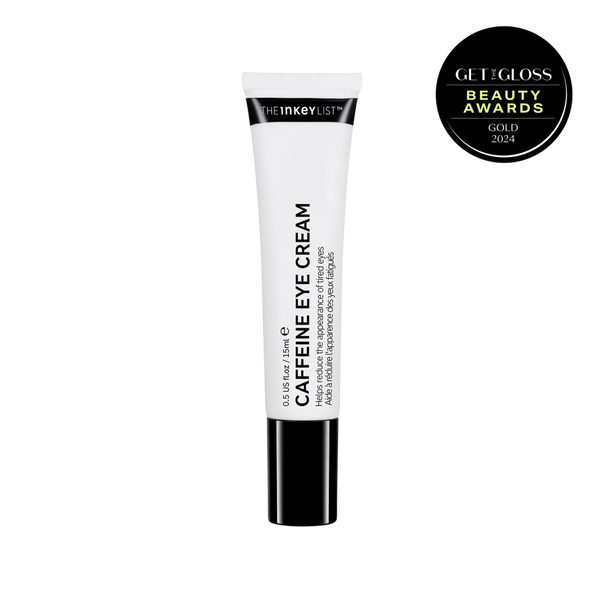
Our Caffeine Eye Cream is formulated at 0.3% caffeine for precisely this. It is clinically proven to improve the appearance of puffiness and dark circles from 1st use.* Alongside the caffeine, it contains Matrixyl 3000, a peptide complex that helps support natural collagen production, and Albizia Julibrissin bark extract, which helps reduce the appearance of under eye fatigue. If you want to understand the peptide side of the formula in more depth, our peptidescollection explains how they work.
In testing, 95% agree skin feels instantly smoother and deeply hydrated. It is currently rated 4.1 from 1,008 reviews.
The Application Technique That Makes the Difference
How you apply eye cream matters as much as what is in it, because bad technique can add irritation to tissue that is already swollen.
- Use your ring finger. It is the weakest finger on your hand, so it naturally applies the least pressure. This is not a folk tip, it is a practical way of stopping yourself from pressing too hard on tissue that bruises and stretches easily.
- Use a small amount. A rice grain sized dot per eye is enough. More product does not mean more result, it means more migration toward your eye.
- Tap, do not drag. Start at the inner corner and tap gently outward along the orbital bone toward your temple. Tapping encourages fluid to move in the direction your lymphatic system drains. Dragging stretches the skin and achieves nothing.
- Stay on the bone. Along the orbital ridge only. Not on the eyelid, not near the waterline. Product warmth and natural spread will carry it close enough to where it needs to be.
- Let it absorb before makeup. Thirty seconds to a minute is usually enough.
Add Cold
Cold has a temporary tightening effect on the skin, which stacks on top of what the caffeine is already doing. Keeping your eye cream in the refrigerator means it arrives cold and delivers both at once. We have covered whether this is genuinely worth doing in more detail in should you keep your caffeine eye cream in the fridge.
The Duo Protocol for Mornings That Matter
When you need a bigger result, occlusion is the lever to pull. Apply Caffeine Eye Cream first using the technique above, then press silicone patches on top and leave them in place for 10 to 20 minutes while you shower, make coffee or get dressed.
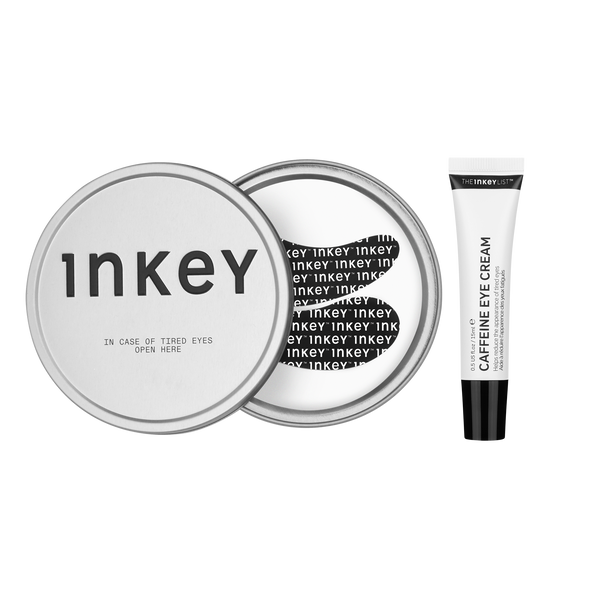
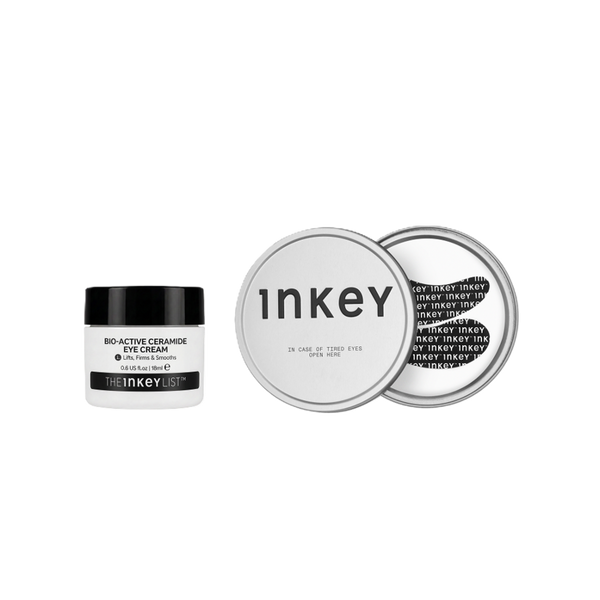
The Reusable Eye Patches & Caffeine Eye Cream Duo pairs the eye cream with 100% silicone patches designed for exactly this. The silicone creates an occlusive seal over the product, which stops it evaporating off the surface of your skin and means more of it absorbs into the area instead. It also holds the product in consistent contact with the skin rather than letting it settle unevenly. Afterward, rinse the patches and store them in the travel tin they come with.
If you are skeptical about whether patches do anything at all, that is a fair question and we have answered it honestly in do under eye patches actually work.
Depuffing Tactics That Cost Nothing
Product is not the only lever, and some of the most effective morning tactics involve no product at all.
- A cold compress. Two to three minutes with a cold washcloth or chilled spoons makes a real difference. Never apply ice directly to the skin.
- Lymphatic drainage massage. Using light pressure, sweep from the inner corner of the eye outward toward the temple, then down toward the ear and neck. Repeat gently for a minute or two. You are manually doing the job movement usually does. Pressure should be feather-light, since lymphatic vessels sit close to the surface.
- Get upright and move. The single most effective thing available. Standing restores gravity, walking restarts muscle-driven lymphatic flow. A short walk beats sitting on the edge of the bed.
- Drink water on waking. Rehydrating after seven or eight hours without fluid signals to your body that it does not need to hold onto what it has.
- Splash cold water on your face. Cheap, fast and effective.
All of this fixes the morning you are already in. Reducing how often those mornings happen is a different job.
How to Prevent Morning Eye Puffiness Long-Term
Prevention is less dramatic than depuffing and considerably more effective. The habits below change the baseline rather than the individual morning.
Move your sodium earlier in the day. You do not need to cut salt out of your diet. Shifting the saltiest meal away from the evening gives your body several upright, active hours to process it before you lie down. The dinner you eat at 8pm has far more influence on tomorrow’s eye area than the lunch you ate at 1pm.
Be deliberate about evening alcohol. Particularly the night before something that matters. The dehydration, vessel dilation and disrupted sleep quality arrive together, which is why the effect is so reliably visible.
Hydrate steadily across the day. Consistent intake spread through the day works better than a large volume right before bed, which can itself contribute to overnight fluid retention and morning swelling. Aim for steady rather than heroic.
Sleep on your back, or elevate your head. This is the highest-impact free change available. An extra pillow, or raising the head of the bed slightly, keeps gravity partially assisting drainage all night instead of switching it off entirely. If you are a committed side or front sleeper, elevation still helps even if you cannot change position. Give it a week before judging the results.
Manage allergens in your bedroom. Wash pillowcases weekly in hot water. Consider a hypoallergenic pillow cover. Keep windows closed on high pollen nights and shower before bed during pollen season so you are not transferring pollen from your hair to your pillow. If your swelling is seasonal and itchy, this is where your effort belongs.
Be consistent with your eye cream. One application is a quick fix. A routine changes the baseline. Using Caffeine Eye Cream twice daily, morning and evening, over 4 to 6 weeks gives you the cumulative benefit rather than just the instant one. Skincare rewards consistency far more than intensity.
The Longer-Term Option for a Firmer-Looking Eye Contour
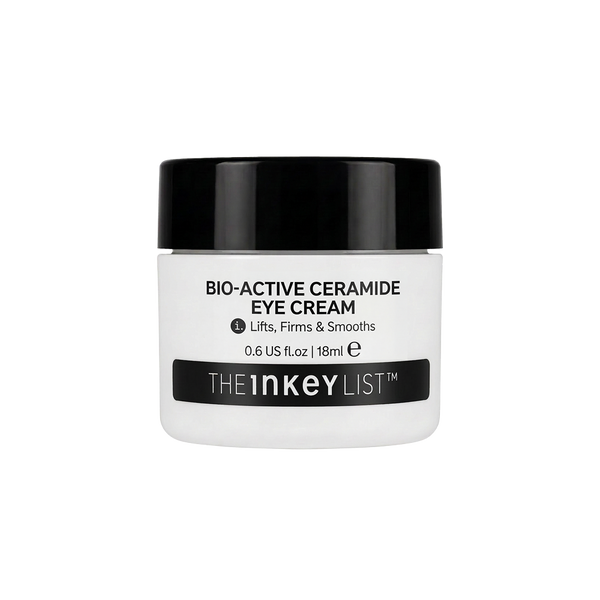
There is a meaningful difference between reducing today’s swelling and improving how the eye area holds up over time. Caffeine Eye Cream is the instant morning depuff. Bio-Active Ceramide Eye Cream is the longer-term choice, formulated for a firmer-looking eye contour and heavier-looking lids over 4 weeks.
It works on the structural side rather than the fluid side, smoothing the appearance of fine lines, firming the eye contour and visibly refreshing tired-looking eyes. Ceramides are lipids naturally found in the skin barrier, and supporting that barrier in an area this thin matters, because a compromised barrier loses water more readily and shows every line and shadow more clearly. It is rated 4.6 from 288 reviews.
Choose based on what you actually want. If your issue is waking up swollen and needing it gone by 9am, the caffeine route is the answer. If your issue is that the eye contour looks less firm than it used to and your lids feel heavier year on year, the ceramide route is the better fit. Plenty of people use both, one in the morning and one at night.
When It Is Not Fluid at All
Worth naming honestly. Sometimes what looks like puffiness is actually the opposite, volume loss beneath the eye creating a hollow that casts a shadow and reads as a shadowed, tired eye area. This is a structural change rather than a fluid one, and no amount of depuffing will address it because there is no excess fluid to move. Our guide to under eye hollows and tear troughs explains how to tell the difference, which matters because the two concerns need completely different approaches.
Protect the Structure You Have
UV exposure degrades collagen and elastin, the proteins that give skin its structure and support. In skin that is already only around half a millimeter thick, that degradation has an outsized effect. Weaker supporting structures mean tissue that holds fluid more readily and clears it more slowly as the years pass. Daily sun protection around the eye area, along with sunglasses, is one of the few genuinely preventative things you can do for the long-term appearance of this area. You can learn more about daily SPF and how to approach it.
Set realistic expectations. If your puffiness is largely genetic, these habits will reduce how pronounced it is and how long it lasts. They will not erase your anatomy, and anything promising that is overpromising. If you want to explore the full range of options, our eye treatments collection covers the different concerns and formulas.
Most morning puffiness is entirely straightforward. A small number of cases are worth a professional opinion.
When to See a Doctor About Swollen Eyes
Almost all morning puffiness is normal fluid movement responding to gravity, sleep position and the previous evening. Occasionally, swelling around the eyes points to something that deserves proper medical attention. Knowing the difference is useful, and none of the following is cause for panic.
Talk to your doctor or a dermatologist if you notice any of the following:
- Swelling that does not reduce as the day goes on, or that is present consistently rather than fading after you have been up and about
- Sudden and severe swelling, particularly if it appears rapidly or affects only one eye
- Swelling elsewhere in your body at the same time, such as in your hands, ankles or feet
- Accompanying symptoms including persistent fatigue, noticeable changes in urination, or difficulty breathing
- Swelling that began shortly after starting a new medication, supplement or skincare product
- Pain, redness, heat, discharge or any change in your vision alongside the swelling
The reason these matter is that persistent or widespread fluid retention can occasionally reflect an underlying issue rather than an overnight one. Possibilities include thyroid dysfunction, kidney dysfunction, iron-deficiency anemia and allergic reactions. Some of these are common, most are very manageable, and all of them are better identified early. Listing them is not a suggestion that you have any of them. It is context for why a doctor is the right person to ask if the pattern of your swelling does not match what this article describes.
The distinction worth remembering is pattern rather than severity. Morning puffiness that appears overnight and fades through the morning is behaving exactly as fluid should. Swelling that persists all day, spreads to other parts of your body, or arrives with other symptoms is behaving differently, and different behavior is what warrants a conversation.
If a new product coincided with the onset of swelling, stop using it and let your skin settle before reintroducing anything. Patch testing new formulas, particularly around the eyes, is always worth the two days it takes.
Everything else tends to come down to the same handful of questions, which the FAQs below answer directly.
Conclusion
Puffy and swollen eyes in the morning come down to one thing. Overnight, fluid gathers in thin, loose tissue that has lost gravity’s help and whose drainage system has slowed to a crawl. Everything else, the salty dinner, the wine, the pillow you sleep face-down on, the pollen count, simply adds to that baseline.
That gives you a two-part approach. In the moment, depuff with cold, caffeine and correct application technique, then get upright and move so your body restarts the drainage it paused overnight. Over time, reduce how often it happens by elevating your head, moderating evening sodium and alcohol, keeping bedding clean, hydrating consistently and staying with a routine long enough for it to work.
Be realistic about the limits. Genetics and anatomy set a baseline you can work with rather than erase, and anyone promising to eliminate morning puffiness entirely is not being straight with you. What you can do is understand exactly what is happening, use ingredients that have been proven to help, and stop guessing. Clear guidance, proven ingredients, real results.
Shop the Routine
Three products, depending on whether you need the morning fixed or the baseline changed.
Caffeine Eye Cream. The instant morning depuff, formulated with 0.3% caffeine to visibly reduce the look of swelling and shadowing. For anyone who wakes up puffy and needs it gone before they leave the house. Rated 4.1 from 1,008 reviews.
Reusable Eye Patches & Caffeine Eye Cream Duo. The step-up morning routine, pairing the eye cream with 100% silicone patches that seal the product in while you get ready. For mornings that matter and for anyone who wants more from the same ten minutes.
Bio-Active Ceramide Eye Cream. The 4-week option for a firmer-looking eye contour and heavier-looking lids. For anyone whose concern is the structure of the eye area over time rather than today’s swelling. Rated 4.6 from 288 reviews.
Browse all eye treatments to compare the full range.
*4-week independent clinical study of 22 people under dermatological and ophthalmological control
Because at The INKEY List, We Give A Care.
Keep Reading
- Do Under Eye Patches Actually Work? An honest look at what patches do and do not deliver.
- Dehydration Lines vs Wrinkles How to tell temporary lines from permanent ones.
- How to Apply Eye Cream the Right Way Placement, pressure and the mistakes to avoid.
- How to Get Rid of Bags Under Eyes The broader guide for bags that stay all day.
- Under Eye Hollows and Tear Troughs When the issue is volume loss rather than fluid.
- Should You Keep Your Caffeine Eye Cream in the Fridge? Whether cold storage is worth the shelf space.
Frequently Asked Questions
Got a question?
Our askINKEY team are a friendly bunch of skincare experts with deep product knowledge and zero judgement. Whether you're an ingredient obsessive or just starting out, we'll make it make sense. No question too big. No question too small. We Give A Care, Every Day.


