



When Should I Start Using Anti-Aging Products? Your Complete Guide to Ageless Skin
Up to 80% of visible facial aging is sun damage. Here's what to use in each decade — and the two areas people always miss.
Author
askINKEY skincare advisor
Published
25 January, 2024
Time to read
20 minutes
Here is the number that surprises most people. From your mid-twenties onward, your skin loses roughly 1% of its collagen every single year. That decline begins quietly, long before you see a line in the mirror, and it does not pause while you decide whether you are ready to think about it. By the time a wrinkle is visible and permanent, the structural change underneath it has been building for years.
This is not about being afraid of getting older. Aging is not a flaw to be corrected, and there is nothing wrong with a face that shows it has lived. What this guide is actually about is choice. When you understand the biology, you get to decide what you protect and what you let go, rather than reacting to changes you did not see coming. Skin that has been looked after consistently simply has more options available to it later on.
There is also a plain financial argument. Sunscreen is the single most effective anti-aging product ever formulated, and using it daily costs a fraction of what people spend chasing the damage it would have prevented. Prevention is cheaper than correction, it is more effective than correction, and it is available to everyone right now. That asymmetry sits underneath everything else in this guide.
In this guide, we will walk through how skin actually ages, what to use in each decade of life, when to start retinol and how to introduce it without wrecking your barrier, how to extend your routine beyond the face to the eye area and the neck, how your local climate changes what your skin needs, and how to build something you will realistically keep doing. But to know when to start, you first need to understand what you are actually starting against: the biology of how skin ages.
Understanding How Your Skin Ages: The Science Behind the Timeline
Skin aging is not one process. It is several overlapping processes running on different clocks, some written into your DNA and some entirely dependent on how you live and where you live. Understanding which is which tells you exactly where your effort is worth spending.
Intrinsic vs Extrinsic Aging: What You Can and Cannot Control
Intrinsic aging is the chronological kind. It is genetically programmed, it happens to everyone, and it proceeds at a fairly steady pace regardless of what you do. Cell turnover slows. The skin’s own repair processes become less efficient. Fat pads in the face redistribute and shrink. Bone density in the facial skeleton changes the scaffolding underneath. None of this is preventable, and no product reverses it.
Extrinsic aging is everything else, and it is the larger share by a wide margin. Ultraviolet radiation, pollution, smoking, sleep deprivation, chronic stress, blood sugar spikes and mechanical stress all accelerate visible aging well beyond your chronological age. The most widely cited estimate holds that up to 80% of visible facial aging is attributable to sun exposure alone, a phenomenon dermatology calls photoaging. That figure is worth sitting with, because it means most of what people describe as looking older is not aging in the biological sense at all. It is accumulated environmental damage.
There is one modern extrinsic stressor that older skincare advice never accounted for, because it barely existed. Tech neck is the mechanical creasing that comes from repeatedly angling your head down toward a phone or a laptop, hour after hour, day after day. Skin folds in the same place thousands of times a week, and thin neck skin with limited structural support does not spring back the way facial skin does. It is a genuinely new contributor to how quickly the area below the jawline shows age.
Collagen and Elastin: The Structural Proteins That Decline
Collagen provides tensile strength and elastin provides the ability to snap back. Together they form the supportive mesh that keeps skin firm and springy. Research published in the peer-reviewed literature documents the steady decline in collagen content that begins in early adulthood and continues throughout life.
The decline is not only about quantity. The quality of the collagen your skin produces changes too. Newly synthesized collagen becomes more fragmented and disorganized, and the enzymes that break collagen down become more active, particularly after UV exposure. You end up producing less and destroying more at the same time. This is precisely why collagen-supporting peptides and retinoids matter so much, because both influence this balance rather than simply sitting on the surface.
Cell Turnover Slows Down
In your twenties, skin cells make the journey from the deepest layer of the epidermis to the surface in roughly 28 days. By your forties and fifties, that cycle can stretch considerably longer. Dead cells linger, which is why mature skin often looks duller and rougher even when it is well hydrated. Slower turnover also means slower healing, slower fading of dark marks, and slower response to any active ingredient you introduce. Patience becomes a genuine requirement rather than a platitude.
Sun Damage Accumulates Silently
UV damage is cumulative and it is largely invisible until it is not. UVA rays penetrate deep into the dermis, degrade collagen and elastin, and trigger pigment changes. They also pass straight through window glass, which the American Academy of Dermatology confirms, and they reach skin on overcast days. The AAD notes that up to 80% of the sun’s harmful UV rays penetrate cloud cover.
The damage you can see today was set in motion years ago. The damage you are accruing right now will not surface for another decade. This delayed feedback loop is exactly what makes sunscreen so easy to skip and so important not to.
Hormones: The Acceleration Nobody Warns You About
Estrogen plays a direct role in maintaining skin thickness, collagen density, hydration and wound healing. As estrogen declines through perimenopause and menopause, skin can change faster in a handful of years than it did across the preceding two decades. Dryness increases, elasticity drops, and previously stable skin can become reactive and unpredictable. It is often described as feeling like your skin changed overnight, and while that is not literally true, the acceleration is real and it deserves to be talked about honestly rather than treated as a niche concern.
Ceramides: The Barrier Lipids That Quietly Disappear
There is one more decline that rarely gets named, and it explains a great deal about why skin behaves differently as it ages.
Picture the outermost layer of your skin as a brick wall. The skin cells are the bricks. Ceramides, along with cholesterol and fatty acids, are the mortar holding them together. Ceramides make up a substantial share of that mortar, and their job is deceptively simple: keep water in and keep irritants, allergens and pollution out. A well-mortared wall is comfortable, resilient and quiet. A crumbling one is not.
Ceramide levels fall naturally with age, and several everyday habits strip them faster. Over-exfoliating, using harsh foaming cleansers that leave skin feeling squeaky, long hot showers, cold outdoor air and dry indoor air all deplete barrier lipids more quickly than your skin can replace them.
As ceramides fall, transepidermal water loss rises. Water escapes through the gaps in the mortar faster than it can be replenished, and the consequences stack up. Skin feels tight and drier. It becomes more reactive, stinging at products it once tolerated. Most relevant here, lines look deeper than they actually are, because dehydrated skin creases far more readily than well-hydrated skin does. A meaningful proportion of what people interpret as new wrinkles is really dehydration lines rather than true wrinkles, and those respond quickly to barrier repair.
If you want the full picture on the specific ceramide your skin recognizes and how bio-active forms differ from standard ones, we have covered both in depth: start with what Ceramide NP actually is and then how bio-active ceramides compare to regular ceramides.
That is the biology. The next question is what you can realistically do about it, and that requires being honest about the difference between preventing a change and reversing one.
Prevention vs Correction: Two Approaches to Aging
Every anti-aging product on the market sits somewhere on a spectrum between two jobs. Preventive products slow the rate at which visible change accumulates. Corrective products attempt to improve something that has already happened. Both are legitimate. They are not equally effective, and being clear about which is which will save you a lot of money and disappointment.
Prevention is where the leverage is. Daily broad-spectrum sunscreen, antioxidant protection, barrier support and consistent hydration do not produce dramatic before-and-after photographs. What they do is change the trajectory. Ten years of consistent sun protection produces a visibly different outcome from ten years without it, but the difference shows up as an absence of damage, which is inherently hard to photograph and easy to undervalue.
Correction is harder and more limited. Retinoids genuinely increase collagen production and improve fine lines and texture over months of consistent use. Vitamin C brightens and helps with uneven tone. Peptides support the skin’s own repair signaling. Exfoliating acids improve surface texture and radiance. These are real, measurable effects backed by decades of research, and they are worth using.
But here is the part the industry prefers to skip: no over-the-counter product fully reverses deep-set wrinkles. A topical product cannot rebuild the volume of a lost fat pad, it cannot reverse bone remodeling, and it cannot erase a deep static line that is present when your face is completely at rest. It can soften the appearance, improve the surrounding skin quality, and slow further progression. That is meaningfully valuable. It is not the same as reversal, and any brand promising otherwise is selling you a story rather than a result.
Understanding this distinction changes how you shop. It stops you spending heavily on a corrective miracle for something that only a clinical procedure could address, and redirects that budget toward the preventive habits that actually compound. It also sets expectations that products can meet, which is the difference between a routine you stick with and a routine you abandon in frustration after six weeks.
The practical conclusion is simple. Start earlier, keep it consistent, and prioritize prevention while adding correction as concerns actually appear. Which brings us to the question of what that looks like at each stage of life.
Your Anti-Aging Timeline: What to Use When
There is no universal starting age, but there are sensible defaults. The following is a decade-by-decade framework, and the same sequencing logic applies throughout: cleanse, water-based serums, eye cream, neck treatment, moisturizer, and sunscreen in the morning. Eye and neck care belong in both your morning and evening routines from the beginning.
In Your 20s: Foundation and Prevention
This is the decade with the highest return on the least effort. Collagen decline has begun but visible change has not, which means everything you do now is pure prevention.
Sunscreen first, and it is not close. If you do one thing in your twenties, make it a broad-spectrum SPF 30 or higher, worn daily, all year, regardless of weather or season. The AAD recommends applying it 15 minutes before going outside and reapplying every two hours when you are outdoors, or after swimming or sweating. Nothing else in this article will do as much for how your skin looks at fifty. If you want to understand the mechanism properly, our guide to SPF covers why daily use matters far more than the number on the bottle.
Beyond that, keep it genuinely simple. A gentle cleanser that does not leave skin tight. Hyaluronic acid for hydration. A moisturizer that supports the barrier rather than just sitting on top of it. Optionally, niacinamide if you are dealing with congestion or oiliness alongside prevention.
Morning:
- Gentle cleanse
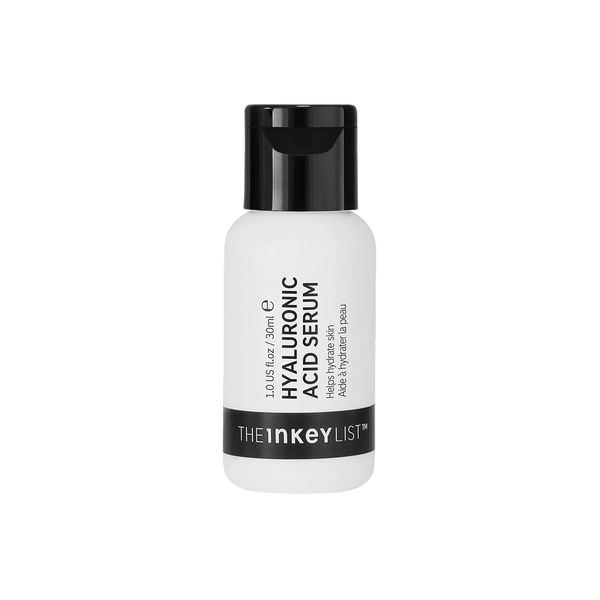
- Hyaluronic Acid Serum, $13.00 / 30ml, on damp skin
- Bio-Active Ceramide Eye Cream
- Bio-Active Ceramide Neck Stick
- Bio-Active Ceramide Moisturizer, $22.00 / 50ml
- Broad-spectrum SPF 30 or higher
Evening:
- Cleanse thoroughly, double cleansing if you have worn makeup or sunscreen
- Hyaluronic Acid Serum
- Bio-Active Ceramide Eye Cream
- Bio-Active Ceramide Neck Stick
- Bio-Active Ceramide Moisturizer
Two areas deserve attention earlier than most people give them, and the reason is structural rather than cosmetic.
The skin around your eyes is the thinnest on your entire face. It has fewer oil glands, less structural support, and it is in near-constant motion. Every blink, squint, smile and frown folds it, and it does this tens of thousands of times a day. That combination of thin, dry and constantly moving is why the eye area shows dehydration, sun damage and expression lines before anywhere else. Starting an eye cream in your mid-twenties is not premature, it is proportionate. Technique matters as much as the product, so it is worth reading how to apply eye cream the right way before you start.
The neck has a similar structural disadvantage. Neck skin can be up to 40% less thick than facial skin, with fewer oil glands and lower collagen density. It receives sun exposure comparable to the face and a fraction of the care. Add tech neck, which is very much a problem of this decade rather than a later-life concern, and the area below your jawline is quietly aging faster than the area above it while receiving none of the attention.
In your twenties, both of these are prevention rather than correction. You are not fixing anything. You are protecting thin, vulnerable skin before it needs help, which is the entire thesis of this decade. Worth noting too: both the Bio-Active Ceramide Eye Cream, $16.00 / 18ml, and the Bio-Active Ceramide Neck Stick, $17.00 / 20g, are safe to use during pregnancy and breastfeeding. That is a genuine practical advantage over retinoids, which are off the table entirely during those periods.
In Your 30s: Introduce Starter Retinol
Fine lines start becoming static rather than dynamic. Cell turnover has measurably slowed. Sun damage from your teens and twenties begins surfacing as uneven tone. This is the decade to add the most evidence-backed active in skincare.
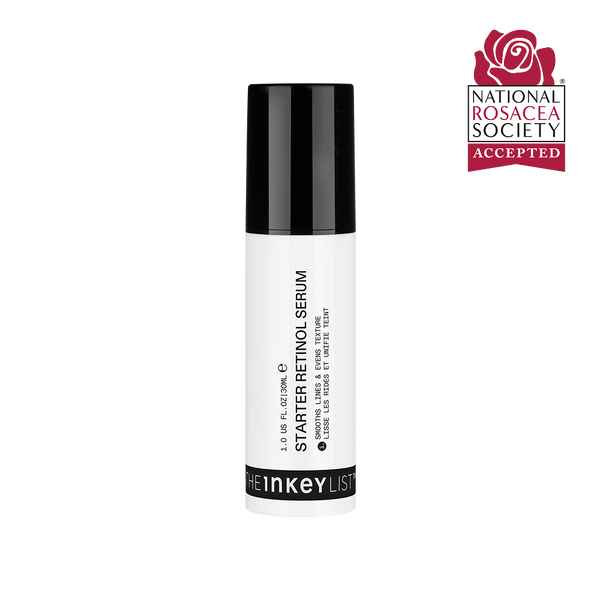
Retinol is the headline change here, and nothing else in this decade matters as much. Starting with a low-strength, well-buffered formula gives your skin the best chance of tolerating it. Starter Retinol Serum, $15.00 / 30ml, is formulated for exactly this transition. If retinol does not suit you, bakuchiol is the best-studied gentler alternative, and we compare them directly in retinol vs bakuchiol and in our roundup of natural alternatives to retinol.
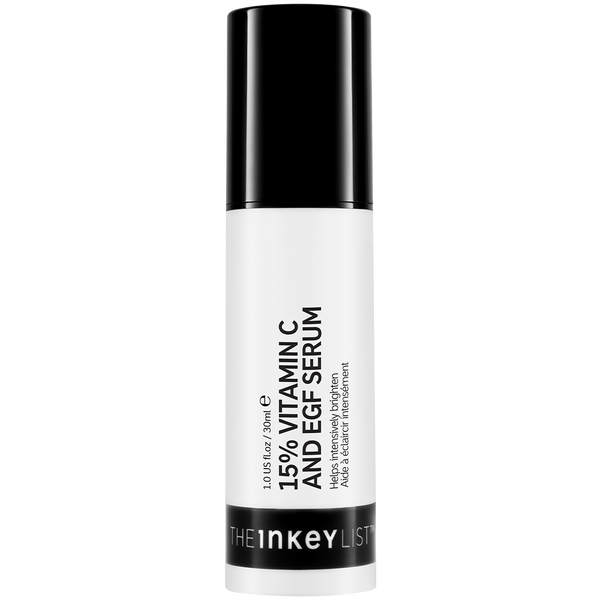
Morning antioxidant protection also earns its place now. Vitamin C defends against free radical damage and helps with the uneven tone that starts appearing in this decade. The 15% Vitamin C + EGF Serum, $20.00 / 30ml, pairs antioxidant protection with growth factor support.
Morning:
- Gentle cleanse
- 15% Vitamin C + EGF Serum
- Hyaluronic Acid Serum
- Bio-Active Ceramide Eye Cream
- Bio-Active Ceramide Neck Stick
- Bio-Active Ceramide Moisturizer
- Broad-spectrum SPF 30 or higher
Evening:
- Double cleanse
- Starter Retinol Serum, building up gradually
- Bio-Active Ceramide Eye Cream
- Bio-Active Ceramide Neck Stick
- Bio-Active Ceramide Moisturizer
Around the eyes, there are two products and they do genuinely different jobs. It is worth being plain about this, because the names sound similar and the functions are not.
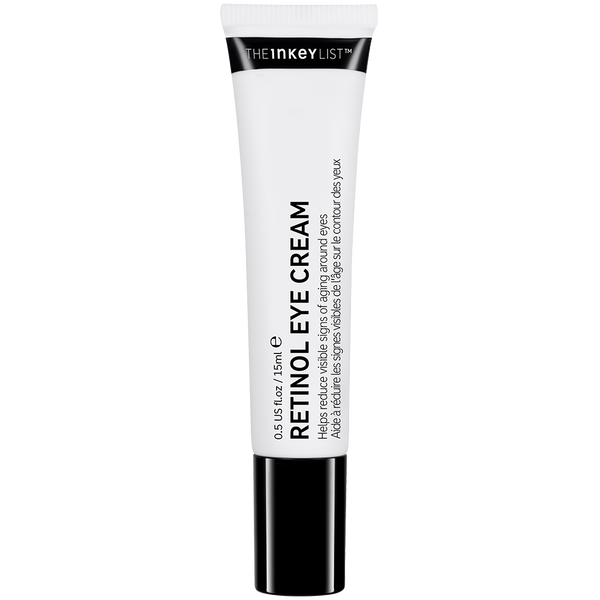
Retinol Eye Cream, $15.00 / 15ml, is a retinoid treatment formulated at a strength appropriate for the eye area. It targets fine lines through the same collagen-stimulating mechanism as any retinoid, and like any retinoid it needs to be introduced slowly.
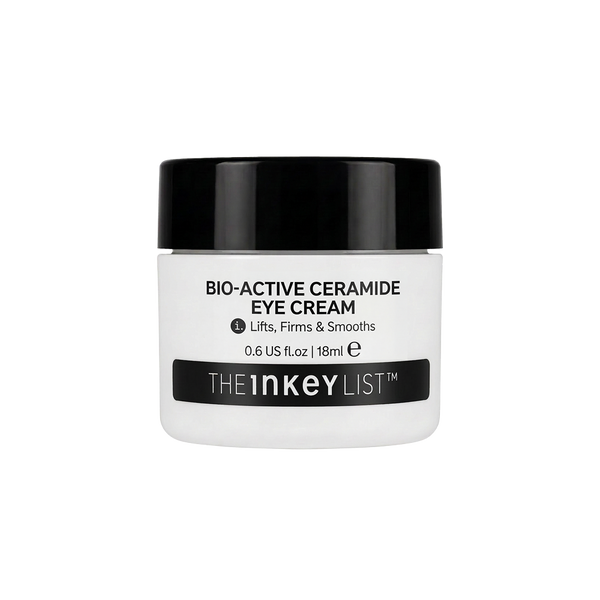
Bio-Active Ceramide Eye Cream, $16.00 / 18ml, is not a retinoid. It is a ceramide and peptide formula targeting lines, firmness and lift, and it is the gentler of the two. It is also the better buffering choice if you are using a retinoid elsewhere. On retinoid nights, apply your retinoid first and layer the ceramide eye cream on top. The ceramides offset the dryness a retinoid causes without switching off what the retinoid is doing.
Different jobs, and you do not need both. Choose based on whether your priority is active correction or comfortable, well-supported prevention.
The neck stick continues morning and evening throughout this decade. It is anhydrous, meaning water-free, so there is no pH to balance and no compatibility problem. It sits happily alongside retinol, vitamin C, and AHAs or BHAs, which means there is no reason to skip your neck on any night of the week.
In Your 40s: Upgrade to Advanced Retinal
Volume loss becomes noticeable. Static lines are established. Skin is drier and slower to bounce back. This is the decade where the ceramide story stops being theoretical and becomes the thing you feel every morning.
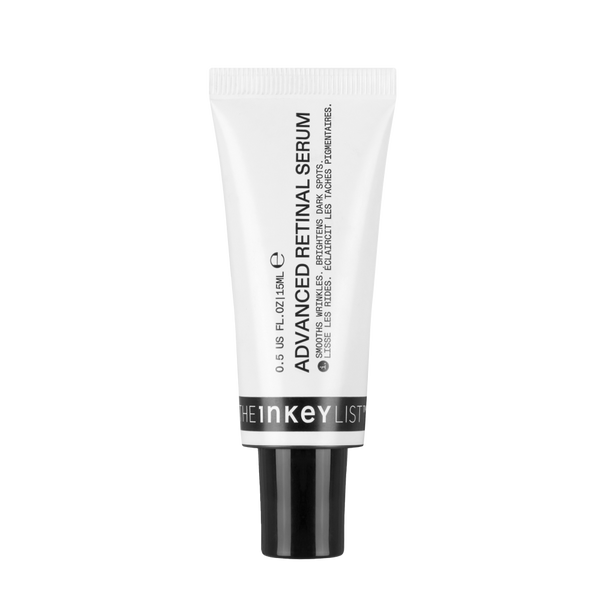
Retinal, the more potent cousin of retinol, converts to retinoic acid in fewer steps and therefore works faster. Advanced 0.2% Retinal Serum, $22.00 / 15ml, is the appropriate upgrade if your skin has comfortably tolerated retinol for a year or more. The difference between the two is worth understanding properly, and our comparison of tretinoin and retinolcovers where prescription strength fits in.
Perimenopause typically begins during this decade, and it changes the calculation. Declining estrogen does not only affect collagen. It directly accelerates the loss of barrier lipids, ceramides included. This is the specific, mechanistic reason ceramides move from optional to essential in your forties rather than a vague assertion about mature skin needing more moisture. Your skin is losing its mortar faster than it can rebuild it, and replacing it topically addresses the actual deficit. If hormonal change is driving your skin concerns, bakuchiol for menopausal skin is worth reading alongside this.
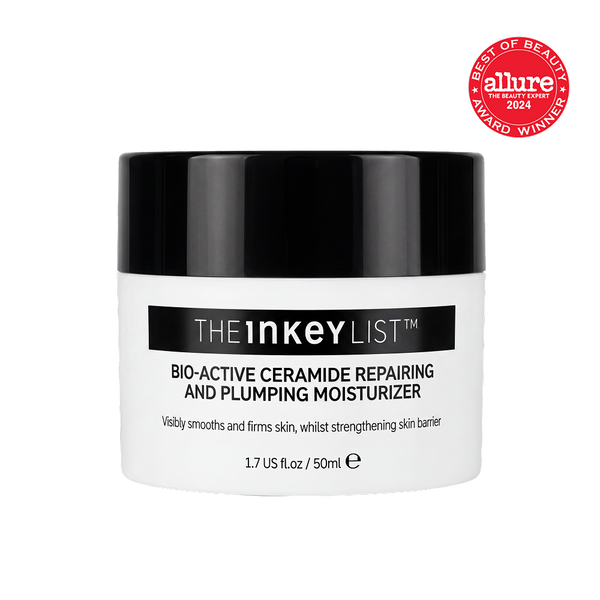
The Bio-Active Ceramide Moisturizer, $22.00 / 50ml, is built around Ceramide NP, clinically shown to improve barrier function and deliver 24-hour hydration.†‡ It also contains Gransil Blur for immediate optical softening of fine lines, which is an honest cosmetic effect working alongside the longer-term barrier repair.
Morning:
- Gentle cleanse
- 15% Vitamin C + EGF Serum
- Hyaluronic Acid Serum
- Bio-Active Ceramide Eye Cream
- Bio-Active Ceramide Neck Stick
- Bio-Active Ceramide Moisturizer
- Broad-spectrum SPF 30 or higher
Evening:
- Double cleanse
- Advanced 0.2% Retinal Serum
- Bio-Active Ceramide Eye Cream
- Bio-Active Ceramide Neck Stick
- Bio-Active Ceramide Moisturizer
The clinical data on targeted eye and neck care is worth stating precisely. The Bio-Active Ceramide Eye Cream was clinically proven to lift eyelids by 29% in four weeks.§ The Bio-Active Ceramide Neck Stick was clinically proven to lift, tighten and firm the neck and chest area in only 14 days,# and to improve tightness of the jawline by 32% in 56 days.#
In Your 50s and Beyond: Comfort-Focused Intensive Care
Post-menopausal skin is structurally different. It is thinner, drier, slower to repair and often more reactive than it has ever been. The goal shifts from aggressive correction toward comfort, barrier integrity and steady maintenance, and that shift is a strategy rather than a surrender.
Crepey texture on the neck and décolletage becomes an explicit concern in this decade. The mechanism is the same combination as before, thin skin with few oil glands and reduced collagen, but now with decades of accumulated sun exposure layered on top. If this is your primary concern, what causes crepey skin explains the process in detail.
It is genuinely never too late to start. The twelve-week clinical data on the eye cream makes that case better than any reassurance can: eyelids lifted by 51%,|| and 94% of participants agreed the eye area looked visibly firmer and more sculpted.|| For immediate effect, 89% experienced instant smoothing.¶ These are appearance-level improvements achieved on real participants, and the twelve-week figures are notably stronger than the four-week ones, which tells you something important about consistency.
Morning:
- Gentle cream or balm cleanse
- Hyaluronic Acid Serum on damp skin
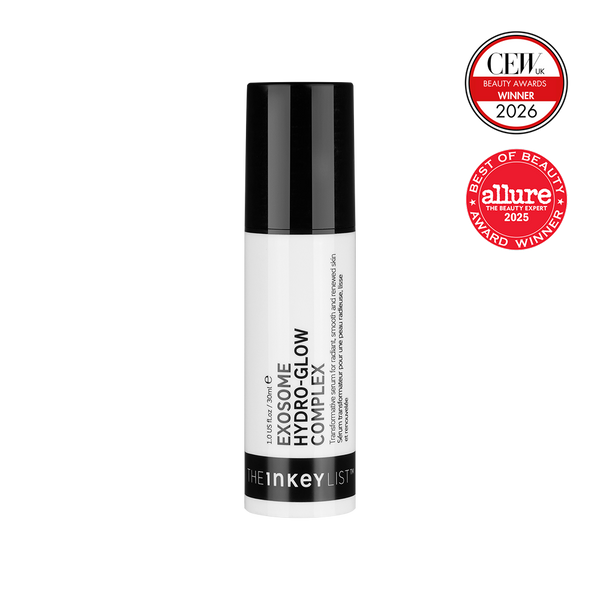
- Exosome Hydro-Glow Complex, $24.00 / 30ml, if radiance is a priority
- Bio-Active Ceramide Eye Cream
- Bio-Active Ceramide Neck Stick
- Bio-Active Ceramide Moisturizer
- Broad-spectrum SPF 30 or higher
Evening:
- Cleanse gently
- Retinoid on alternate nights rather than daily
- Bio-Active Ceramide Eye Cream
- Bio-Active Ceramide Neck Stick
- Bio-Active Ceramide Moisturizer
Note the sequence in that evening list. Eye cream and neck treatment both come before moisturizer, not after. This is the correct order in every decade, and it applies just as much when your routine is at its most pared back.
One honest note. Mature skin repairs more slowly, which means results take longer to appear. Where a thirty-year-old might see retinoid results in eight weeks, sixty-year-old skin may need sixteen. That is not failure, it is biology, and the answer is patience rather than escalation.
Across all four decades, one theme keeps repeating itself, and it points somewhere most routines never go.
The Neck and Décolletage: The Zone Every Anti-Aging Routine Forgets
Most people stop at the jawline. Serum, moisturizer, sunscreen, done, with an invisible line drawn just below the chin as though skin simply ends there. It does not, and the skin on the other side of that line is in worse shape to begin with.
Neck skin can be up to 40% less thick than the skin on your face. It has fewer oil glands, which means less natural lubrication and a weaker built-in defense against water loss. Its collagen density is lower, so it has less structural support to start with and less to lose before the loss becomes visible. Then there is exposure. Your neck and chest catch sunlight all day, often at angles your face is shielded from, and they receive a small fraction of the protection.
Neck skin can be up to 40% less thick than facial skin, with fewer oil glands and lower collagen density. It is the most exposed and least protected skin on the upper body.
Tech neck accelerates all of this. Every time you look down at a phone or angle your head toward a laptop, the skin at the front of your neck folds. Repeated thousands of times a week across years, that mechanical creasing produces premature horizontal lines, crepey texture and a loss of firmness in skin that has limited structural resilience to begin with. This is not a hypothetical future problem. It is showing up in people in their twenties and thirties who have never had a line anywhere else.
The visible signs are consistent and easy to recognize. Horizontal bands across the front of the neck. Crepey, finely wrinkled texture, particularly on the décolletage. Reduced elasticity, where pinched skin takes longer to settle back. And a gradual softening of jawline definition as the supporting skin below loses tension. If you are seeing any of these, how to get rid of neck lines goes deeper on causes and what actually helps, and our guide to treating tech neck and crepey skin covers the treatment side in detail.
None of this is anything to feel self-conscious about. Tech neck is the predictable result of how modern life is arranged, not evidence of neglect, and the fix is straightforward.
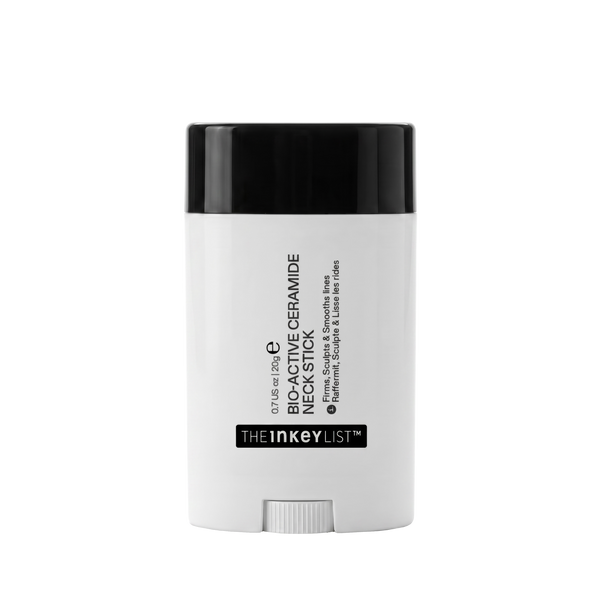
The Bio-Active Ceramide Neck Stick, $17.00 / 20g, is a solid stick with a gua sha-inspired shape, designed so that applying it delivers a sculpting massage rather than just depositing product. Use upward glides, starting at the base of the neck and working up toward the jawline, then outward along the jaw. Morning and evening, after your serums and before your moisturizer. Sunscreen goes over the top in the morning. One stick lasts roughly two to three months with twice-daily use.
Practically, it is about as easy to integrate as a product gets. Because it is anhydrous there is no pH to think about, so it will not interfere with anything else in your routine. It is compatible with retinol, vitamin C, and AHAs or BHAs. It is safe during pregnancy and breastfeeding, it is vegan, and it is suitable for sensitive skin.
The clinical results are specific. It was clinically proven to lift, tighten and firm the neck and chest area in only 14 days.# It reduced tech neck by 30% in eight weeks.# It improved tightness of the jawline by 32% in 56 days,# and improved the lifted appearance of the neck and jawline by 26% in eight weeks.#
To be clear about what those numbers mean: this firms and smooths the appearance of the neck. It is not a substitute for a clinical procedure, and it will not address significant laxity that has structural rather than surface causes. What it does is improve the quality, texture and apparent firmness of the skin, and slow the progression of the mechanical creasing that tech neck causes.
The same logic extends to sun protection, and this is the part most people skip entirely. Your neck and décolletage need a broad-spectrum SPF 30 or higher every bit as much as your face, arguably more given they have less natural defense. Whatever sunscreen you use, take it down past the jawline and across the chest. It is the single highest-value change you can make to how this area ages.
With the face, the eye area and the neck all accounted for, the obvious risk is ending up with a routine that takes forty minutes. It does not have to, and the next two sections deal with exactly that.
When to Start Retinol: The Complete Guide
Retinol is the most researched anti-aging ingredient available without a prescription, and it is also the one people most often abandon after a bad first fortnight. Almost every one of those failures is a pacing problem rather than a product problem.
Most people should start in their early to mid-thirties. Start earlier if you have significant sun damage, persistent congestion or early textural change. Start later, or not at all, if your skin is highly reactive or if you are pregnant or breastfeeding, in which case retinoids are off the table entirely and bakuchiol is the sensible alternative. For a fuller comparison of the options, peptides vs retinol and PDRN vs retinol are both worth your time.
The Week-by-Week Introduction Schedule
Weeks 1 and 2: Apply once, on one evening in the first week and two in the second. Pea-sized amount for the entire face, on completely dry skin.
Weeks 3 and 4: Move to twice weekly, then three times weekly if there is no persistent irritation. Some mild flaking is normal. Stinging, burning and raw patches are not.
Weeks 5 to 8: Build toward every other night. Most people find this is the sustainable ceiling and there is no need to go beyond it.
Weeks 9 to 12: Nightly use if your skin is comfortable at every-other-night. Plenty of people never reach nightly and still get excellent results.
Beyond 12 weeks: Reassess. If you have been comfortable at your current level for three months, you can consider a step up in strength. If not, stay where you are. There is no prize for intensity.
The Non-Negotiable Retinoid Rules
- Sunscreen every single day, without exception. Retinoids increase photosensitivity. Using one without daily broad-spectrum SPF 30 or higher actively undermines the point.
- Apply to dry skin. Damp skin increases penetration and irritation in equal measure. Wait a few minutes after cleansing.
- Less is genuinely more. A pea-sized amount covers the whole face. Using more will not speed results, it will only increase irritation.
- Do not layer with other strong actives on the same night. Keep exfoliating acids and high-strength vitamin C to different evenings.
- Buffer when needed. If your skin is struggling, apply moisturizer before your retinoid, or mix them together in your palm.
That fifth rule is where a well-formulated ceramide product earns its keep. The Bio-Active Ceramide Moisturizerbuffers retinoid dryness effectively, replacing the barrier lipids the retinoid is depleting while it works.†‡ Around the eyes, the same approach applies with the order reversed from what people often assume: retinoid first, then Bio-Active Ceramide Eye Cream layered over the top.
The neck stick is fully compatible with retinol, so there is no reason to skip your neck on retinoid nights. Applying it as normal keeps your routine consistent rather than alternating.
Above all, consistency beats intensity. Three nights a week for two years will produce better results than seven nights a week for two months followed by giving up. If you find yourself with dehydrated skin or a damaged skin barrier, the answer is always to pull back and repair, never to push through.
Building Your Routine: Putting It All Together
Knowing which ingredients work is one thing. Assembling them into something you will actually do every morning is another, and it is where most routines quietly fall apart.
The Universal Layering Order
Apply products from thinnest to thickest, giving water-based products the closest contact with skin:
- Cleanse. Oat Cleansing Balm, $17.00 / 150ml, for a first cleanse or a gentle single cleanse.
- Water-based serums. Hyaluronic acid, niacinamide, vitamin C, retinoid treatments.
- Eye cream, if you use one.
- Neck treatment. Upward glides from the base of the neck to the jawline.
- Moisturizer. Seals everything beneath it and delivers barrier lipids.
- SPF, morning only. Always the final step before makeup.
The Universal Foundation Four
If you strip everything back, four products handle the overwhelming majority of the work at every age:
- A gentle cleanser that does not strip your barrier
- A hydrating serum with hyaluronic acid
- A barrier-supporting moisturizer with ceramides
- A broad-spectrum SPF 30 or higher worn daily
That is a complete, effective anti-aging routine. Nothing on this list is optional and nothing else is mandatory.
Targeted eye and neck care is the natural next step once those four are genuinely habitual, not a replacement for any of them. Add them when the foundation is automatic and you have the appetite for two more steps that take thirty seconds combined. Adding them before the foundation is solid is building the roof before the walls.
Simplicity Beats Complexity, Every Time
This deserves emphasis, particularly in an article that has just introduced several products.
Four to six well-chosen products used consistently will beat a twelve-step routine used sporadically, every time, without exception. More products means more expense, more decisions, more opportunities for irritation and more reasons to skip the whole thing on a tired Tuesday. The most common reason routines fail is not that they were badly designed. It is that they were too much effort to sustain.
If all you can manage is the foundation four, you have a complete routine. Not a compromised one, not a beginner one, a complete one. The eye cream and the neck stick are additions for people who want to target specific areas, not a tax on doing skincare properly. Anyone telling you that you need more than this is selling something.
The Mistakes That Undo Good Routines
- Over-exfoliating. Twice a week is plenty for most people. Daily acids strip the ceramides you are trying to protect.
- Switching too often. Actives need eight to twelve weeks minimum to show results. Judging a product after two weeks tells you nothing.
- Skipping sunscreen on cloudy days or in winter. UV penetrates cloud and reaches you year-round.
- Using too many actives at once. Introduce one new product at a time, with two weeks between additions.
- Ignoring the neck and chest while treating the face meticulously.
How to Tell You Have Overdone It
Tightness that does not resolve after moisturizing. Stinging from products you previously tolerated. Persistent redness. Unusual flaking or rough patches. Breakouts in unusual places. If you recognize two or more, stop all actives for a week or two and use only a gentle cleanser and a ceramide moisturizer. Your barrier will recover, and so will your tolerance.
A routine also has to survive the environment it is used in, and in a country this size that varies enormously.
Climate, Water and Why Ceramides Matter More by Region
There is no single American climate, which means there is no single American skincare routine. What your skin needs in Phoenix in July and what it needs in Minneapolis in January are not the same thing, even if the products on the shelf are identical.
UV exposure is not evenly distributed, and it is not seasonal everywhere. In Florida, Arizona, southern California, Texas and Hawaii, the UV index stays meaningfully high essentially year round. EPA data shows Miami sitting at moderate levels through winter and climbing to 10 or 11 in summer, while northern states like Minnesota, Montana and Maine drop to a UV index of 0 to 2 in deep winter before rising to 5 to 8 in summer. If you live in the Sun Belt, daily sunscreen is not a summer habit, it is a year-round one. If you live in the north, the seasonal swing is real but it does not make winter sunscreen optional, because UVA levels are far more stable across the year than the UV index headline suggests, and UVA is the wavelength driving photoaging.
Altitude changes the math significantly. UV intensity rises roughly 5 to 6% for every 1,000 feet of elevation, according to the EPA’s UV index guidance. Denver, at 5,280 feet, receives approximately 25% more UV radiation than a city at sea level on the same day. Salt Lake City, Albuquerque, Boise and every mountain town in between are in the same position. If you live at altitude, you are getting a materially larger UV dose than your latitude alone would suggest, and reflected UV off snow adds to it in winter.
Humidity works in both directions. In the humid Southeast, high outdoor moisture slows transepidermal water loss, which sounds helpful and largely is, right up until you step into an air-conditioned building. In the arid Southwest, the outdoor air itself is pulling moisture from your skin all day, and low ambient humidity is directly associated with increased water loss through the skin barrier.
Air conditioning is the summer equivalent of winter central heating. This is the point most skincare advice misses entirely. Both dehumidify indoor air, just by different routes: air conditioning strips moisture through condensation as it cools, forced-air heating dries it as it warms. The effect on your skin is the same. Low indoor humidity raises transepidermal water loss, and as covered earlier, that is precisely the mechanism that depletes barrier lipids and makes lines look deeper than they are. Which means that in much of the country there is no genuinely easy season for your skin barrier. Phoenix in August and Chicago in January are different problems producing the same result.
Hard water is a regional variable rather than a national given. Water hardness varies dramatically by metro area. Much of the Great Plains, the Mountain West and the Midwest sits at the harder end, with the Dakotas, Utah, Indiana and Iowa among the hardest, while plenty of coastal and Pacific Northwest metros are considerably softer. If your cleanser leaves a residue, if soap never quite rinses clean, if your skin feels tight after washing in a way it did not in your last apartment, it may genuinely be your zip code rather than your product. A balm cleanser like the Oat Cleansing Balm rinses more cleanly in hard water than a foaming cleanser and does not strip barrier lipids on the way out.
Hard water affects the neck and chest as much as the face, and those areas have fewer oil glands to compensate for what gets stripped.
Practical seasonal adjustments. Lean harder on the Bio-Active Ceramide Moisturizer and the Hyaluronic Acid Serumwhenever indoor air is doing the most damage, which for northern readers means winter and for southern readers often means peak air conditioning season. Fall and winter are the ideal time to start a retinoid anywhere in the country, because lower UV exposure and less time outdoors reduce the risk during the sensitive adjustment period.
For authoritative, non-commercial guidance on sun protection, the American Academy of Dermatology is the reference worth bookmarking. Their position is consistent and unambiguous: broad-spectrum, SPF 30 or higher, water-resistant, applied 15 minutes before exposure and reapplied every two hours outdoors, year-round, in every state.
With the science, the timeline and the environment covered, here is what it actually costs and what people most commonly ask.
Making the Decision: Your Anti-Aging Journey Starts Now
If you take one thing from this guide, make it this: the best time to start was yesterday, and the second best time is today. Not because your skin is in crisis, but because everything in skincare compounds, and the earlier you begin the less you have to ask of any individual product.
Effective anti-aging skincare does not require a large budget. Here is a genuinely complete foundation:
- Oat Cleansing Balm, $17.00 / 150ml
- Hyaluronic Acid Serum, $13.00 / 30ml
- Bio-Active Ceramide Moisturizer, $22.00 / 50ml
- A broad-spectrum sunscreen, SPF 30 or higher, worn every day
Four products. That is a complete anti-aging routine at any age, and it will outperform an expensive twelve-step routine used inconsistently.
If you want to add targeted care for the two areas that age fastest, these are the additions, and they are additions rather than part of the foundation:
- Bio-Active Ceramide Eye Cream, $16.00 / 18ml
- Bio-Active Ceramide Neck Stick, $17.00 / 20g
Add them when the foundation is habitual, not before. If you want to understand the ingredient doing the heavy lifting across three of these products, our ceramides explainer is the place to go.
Good skincare should not be a luxury, and effectiveness has never correlated neatly with price. What it correlates with is consistency. The best anti-aging routine is the one you will actually do, every day, for years.
The Real Answer to When You Should Start
The honest answer to when you should start using anti-aging products is that you probably already have. Sunscreen is an anti-aging product. A moisturizer that keeps your barrier intact is an anti-aging product. Cleansing without stripping your skin is an anti-aging behavior. Most people are further along than they think, and the question is less about starting from zero than about building deliberately on what is already there.
What changes with each decade is not whether you should be doing something, but what that something should be. Twenties are for protection. Thirties are for adding your first real active. Forties are for supporting a barrier that is losing lipids faster than it can replace them. Fifties and beyond are for comfort, consistency and patience. At every stage, the fundamentals stay the same, and the fundamentals are not expensive.
The face, the eye area and the neck age at different speeds, which is why a complete routine covers all three, but it still only needs to be a routine you will actually keep.
Because consistency, not intensity, is what actually works.
Ready to build yours? Explore the full anti-aging collection to see everything in one place. Not sure where to start? Take the skincare quiz for a personalized routine built around your skin, not a trend. And if you would rather just ask someone, reach out to askINKEY for free one-to-one advice from real skincare experts.
No hard sell, no hype, just the answers your skin actually needs. Because at The INKEY List, we give a care.
† 12-week independent clinical study of 30 people, comparing the performance of the ingredient Ceramide NP at 0.2% against a placebo formulation.
‡ 4-week clinical study of 20 people.
§ Clinically tested on 32 participants over 28 days.
|| Clinically tested on 32 participants over 12 weeks.
¶ Tested on 32 participants.
# Clinically tested on 28 participants over 8 weeks.
Frequently Asked Questions
Got a question?
Our askINKEY team are a friendly bunch of skincare experts with deep product knowledge and zero judgement. Whether you're an ingredient obsessive or just starting out, we'll make it make sense. No question too big. No question too small. We Give A Care, Every Day.


