



How to Get Rid of Bags Under Eyes: Causes, Treatments and What Actually Works
Looking to reduce under-eye bags? Discover what causes puffiness, the lifestyle factors that can make it worse, and the best skincare ingredients and techniques to help refresh and brighten tired-looking eyes.
Author
askINKEY skincare advisor
Published
16 June, 2026
Time to read
16 minutes
If you’ve landed here, you already know what you’re dealing with - that persistent puffiness beneath the eyes that no amount of concealer fully hides and no single good night of sleep seems to fix. This guide is specifically about bags under eyes: the fluid-driven swelling that accumulates in the loose connective tissue beneath the eye. Not dark circles. Not fine lines. Those are separate concerns driven by entirely different mechanisms, and they need different solutions.
That distinction matters - a lot - and we’ll get into it immediately. But to orient you: this blog covers what actually causes under eye bags (specifically), which ingredients the science most strongly supports, what works and what absolutely doesn’t, a step-by-step AM and PM routine, the lifestyle changes that genuinely move the needle, and honest expectations about what topical treatment can and cannot do.
If you’re also dealing with dark circles - the discoloration, the hollowing, the shadows - the complete guide to dark circles and under-eye puffiness covers all three under-eye concerns together in one place.
And if you want the short answer on the best starting point for reducing eye bags: our Caffeine Eye Cream ($14) is clinically proven to minimize puffiness from first use. But the why behind that matters as much as the what - so let’s get into it.
Eye Bags, Dark Circles and Wrinkles: Why the Difference Matters
Here’s the problem with most under-eye advice on the internet: it treats the area beneath the eye as one homogenous concern. It isn’t. There are three distinct issues that commonly affect the under-eye zone, each with its own biological mechanism, and each requiring its own targeted approach. Using the wrong product for the wrong concern is exactly why so many people feel like “nothing works” for their eyes.
Under eye bags and puffiness are what this blog is entirely focused on. They are caused by fluid retention and swelling in the periorbital tissue - the loose connective tissue directly beneath the eye. The mechanism is vascular and lymphatic: fluid pools, capillaries dilate, and the tissue swells visibly. It tends to be worst in the morning and improve through the day as movement and gravity help the lymphatic system do its job.
Dark circles, by contrast, are a discoloration concern - not a swelling concern. They can be vascular in origin (blood vessels visible through thin skin), pigmentary (excess melanin from sun exposure or post-inflammatory hyperpigmentation), or structural (hollow shadowing caused by volume loss). A brightening ingredient like Vitamin C targets pigmentation. A caffeine-based formula targets vascular dark circles. Neither alone will address swelling. For the full breakdown of dark circle types and treatments, the complete dark circles and under-eye puffiness guide is the resource you need.
Fine lines and wrinkles are a skin texture and structure concern - the result of collagen loss, reduced elasticity, and repeated muscle movement over time. Retinol and peptides are the evidence-backed ingredients here. If under-eye wrinkles are your primary concern alongside puffiness, how to treat under-eye wrinkles covers that territory directly.
Why does this matter so much in practice? Because a product formulated to brighten pigmentation will not reduce fluid retention. A product targeting fine lines will not reduce swelling. And a general face moisturizer - however good - is not formulated for periorbital skin, which is approximately 0.5mm thick: the thinnest skin on the entire body. The tissue beneath it has minimal structural support, which is precisely why fluid pools there so easily and why standard facial products aren’t sufficient for this zone.
Some people experience all three concerns at once - bags, dark circles, and wrinkles - and that’s worth acknowledging without judgment. If that’s where you are, the Caffeine Eye Cream addresses the puffiness and vascular component, and the complete dark circles guide covers the full multi-concern approach.
Now that the distinction is clear, let’s go deep on what’s actually driving the swelling beneath your eyes.
What Actually Causes Bags Under Eyes
Understanding your specific triggers is the single most useful thing you can do before reaching for any product. Eye bags aren’t caused by one thing - they’re a response to several overlapping factors, some of which you can directly address and some of which are written into your biology. Here’s what the science actually says.
Sleep and Lymphatic Drainage
This is the primary mechanism behind the classic “morning eye bags” experience. When you’re lying flat during sleep, gravity is no longer helping your lymphatic system drain fluid away from the delicate periorbital tissue. The lymphatic system - which is responsible for clearing excess fluid from tissue throughout the body - significantly slows its activity during rest. Fluid pools beneath the eyes overnight, and bags appear most prominently when you first wake up.
As you move through the morning and spend time upright, gravity and resumed lymphatic activity gradually clear that fluid - which is why eye bags often look noticeably better by afternoon. Poor sleep quality compounds the problem: even when total sleep hours are adequate, disrupted or low-quality sleep increases systemic inflammation, including in the periorbital zone.
Sodium Intake and Fluid Retention
High sodium intake causes cells throughout the body to retain water. The under-eye area - with its loose, largely unsupported connective tissue - is one of the first places excess retained water becomes visible. Salt-heavy evening meals are a particularly common trigger for exaggerated morning puffiness, simply because the body is retaining fluid precisely during the hours it’s most prone to pooling beneath the eyes.
Alcohol
Alcohol contributes to under eye bags through two compounding pathways. First, it significantly disrupts sleep architecture - particularly REM sleep - reducing the restorative quality of rest even when total hours look adequate on paper. Second, alcohol is dehydrating, and the body responds to dehydration by compensating with increased fluid retention in tissues. The result is a double-impact on morning puffiness.
Allergies - The Most Overlooked Cause
Allergic reactions are one of the most significant and most frequently missed triggers for under eye bags. When the immune system responds to an allergen - seasonal pollen, dust mites, pet dander, certain cosmetic ingredients - it releases histamine. Histamine causes capillary dilation and increases vessel permeability, allowing plasma to leak from capillaries into the surrounding connective tissue. The result is swelling, often accompanied by itching, watering, or redness of the eyes.
According to the American Academy of Ophthalmology, allergic reactions are a well-documented cause of periorbital swelling that is frequently underestimated. If your puffiness intensifies at specific times of year, or consistently accompanies eye irritation, an allergic mechanism is almost certainly involved - and addressing it at the root (rather than just topically) is essential.
Hormonal Fluctuations
Estrogen directly influences the body’s fluid retention dynamics. Puffiness that intensifies at predictable points in the menstrual cycle - particularly in the days immediately before menstruation - is hormonal in origin, and topical treatment alone won’t override a hormonal mechanism during peak fluctuation.
Dehydration
This is counterintuitive but consistent with the science: when the body is dehydrated, it compensates by retaining water in tissues - including the under-eye area. Inadequate daily water intake can therefore worsen the very puffiness it might seem to have nothing to do with. This is one of the reasons increasing water consumption often produces a visible improvement in morning eye bags. For more on how dehydration shows up across skin, the dehydrated skin guidecovers the full picture.
Genetics
One of the most significant - and most honestly underacknowledged - factors in under eye bags is inheritance. The depth of your orbital socket, the thickness of your periorbital skin, the structural composition of the connective tissue beneath your eyes: these are largely determined by genetics. If persistent eye bags have been a family trait across generations, that is anatomy - not a skincare failure.
This doesn’t mean topical treatment has no value. It absolutely does - and the clinical evidence supports that. But it does mean that expectations should be calibrated to your starting point, not to someone else’s anatomy. We’ll come back to this in the expectations section.
Aging
As the Mayo Clinic notes, the muscles and connective tissue supporting the eye gradually weaken over time. The orbital fat pad - which cushions the eye within the socket - can shift forward and downward with age, creating a structural component to under-eye puffiness that is meaningfully different from acute fluid retention. This type of structural puffiness is more persistent, less variable through the day, and less responsive to lifestyle changes alone, though the right topical routine still supports hydration and firmness meaningfully.
Screen Time and Eye Strain
Prolonged screen use reduces blink rate and increases blood flow to the periorbital area over time. The resulting vascular congestion beneath the thin periorbital skin contributes to visible puffiness, particularly toward the end of long days spent in front of screens.
With the causes mapped clearly, the next step is understanding which ingredient the science most strongly supports for actively treating the swelling - and precisely why it works at the biological level.
The Ingredient Science: Why Caffeine Works for Eye Bags and Puffiness
The skincare market is crowded with eye creams making bold claims about puffiness. Most of them are not backed by strong science. Caffeine is. Here’s what the research actually says - and why caffeine’s mechanism maps so directly to the causes laid out above.
Vasoconstriction: The Primary Mechanism
When caffeine is applied topically to the under-eye area, it causes the temporary narrowing - vasoconstriction - of the blood vessels in the periorbital tissue. This does two things simultaneously and meaningfully.
First, it reduces the volume of blood pooling in the fragile capillaries beneath the thin periorbital skin. Less pooled blood means less visible vascular congestion and less swelling from the inside.
Second - and critically - it reduces capillary permeability: the degree to which vessel walls allow plasma to leak out into the surrounding connective tissue. Reduced permeability means less fluid escaping into the tissue. Less fluid in the tissue means visibly reduced swelling.
If you look back at the causes in the section above, the connection becomes immediately clear. The allergy-triggered mechanism? Histamine causes vessel dilation and increased permeability - caffeine directly counters both. The sleep-related pooling? Caffeine helps clear overnight fluid accumulation. The general fluid retention mechanism? Same pathway.
Caffeine as an Antioxidant
Beyond vasoconstriction, caffeine functions as a meaningful antioxidant. It neutralizes free radicals generated by UV exposure and environmental stressors - providing additional protection to periorbital skin that, at 0.5mm thick, has very little natural defense against oxidative damage.
What the Research Supports
A study published in the Journal of Cosmetic Dermatology demonstrated caffeine’s efficacy as a topically applied active for reducing the appearance of under-eye puffiness. Research published via ScienceDirect on topical caffeine delivery further supports caffeine’s ability to penetrate the skin barrier and reach the underlying vascular structures - which is the mechanism that makes it work.
Internally, the Caffeine Eye Cream was assessed in an independent 4-week clinical study under dermatological and ophthalmological control with 22 participants. The results: clinically proven to improve the appearance of puffiness from first use. 95% of participants agreed that skin felt instantly smoother and deeply hydrated.
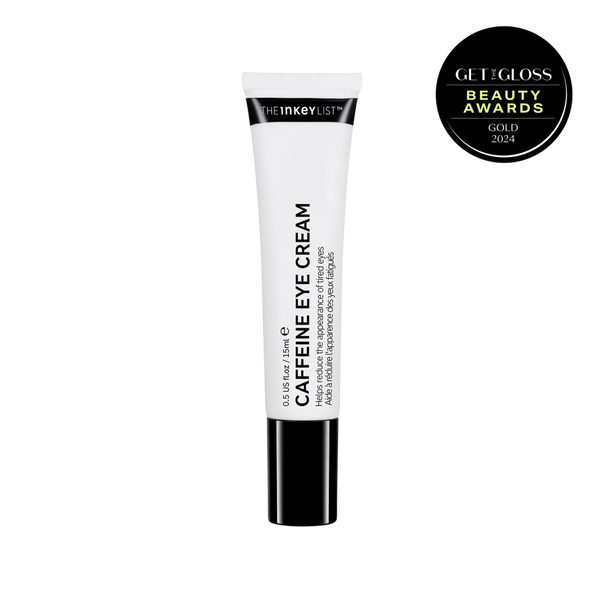
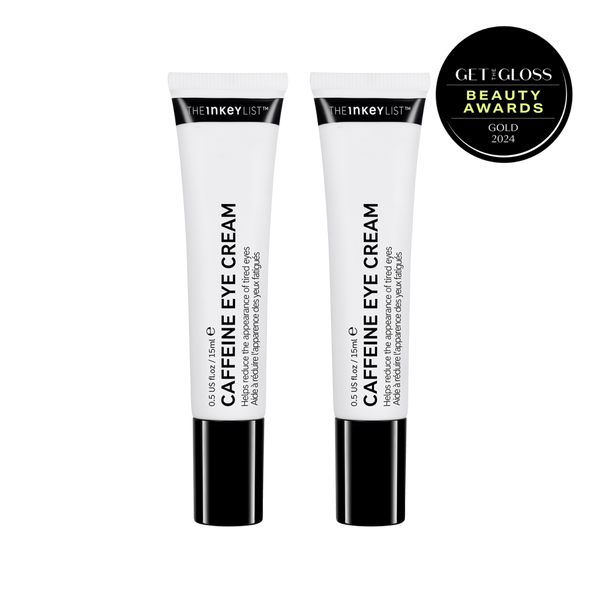
Our Caffeine Eye Cream ($14)
Our Caffeine Eye Cream delivers 0.3% caffeine directly targeting fluid retention - the primary mechanism driving under eye bags. The formula also includes Matrixyl 3000, a peptide complex that boosts collagen production for firmer, smoother skin over time, and Albizia Julibrissin Bark Extract, which reduces the visible appearance of under-eye fatigue.
It is lightweight, fast-absorbing, and suitable for all skin types - including sensitive skin, and safe during pregnancy and breastfeeding. Apply AM and PM, after cleansing and serums, before moisturizer. Pro tip: store it in the fridge. Cold temperature adds a mild vasoconstrictive effect that compounds caffeine’s own mechanism - particularly effective for tackling morning puffiness.
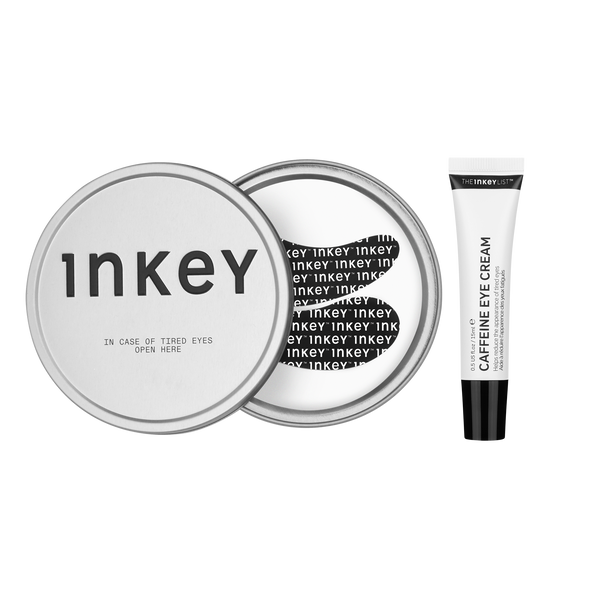
The Reusable Eye Patches & Caffeine Eye Cream Duo ($21.85, save 5%)
For those who want to push results further, the Reusable Eye Patches & Caffeine Eye Cream Duo takes the treatment to another level. The silicone patches create an occlusive seal over the applied Caffeine Eye Cream, preventing evaporation and pressing the active ingredients directly against the skin. This drives deeper ingredient absorption and produces stronger, faster depuffing results than cream alone. The patches are reusable - no single-use waste.
For real-world evidence of results, Caffeine Eye Cream before and after photos show what consistent use looks like across different skin types and starting points.
The science makes the case clearly. But the internet is still full of myths and home remedies. The next section is about what the evidence actually supports - and what it does not.
What Actually Works for Eye Bags - and What Doesn’t
This is the section people actually need. If you’ve tried cucumber slices, cold spoons, a random eye cream from a pharmacy shelf, and a week of drinking more water - and you’re still here - you deserve a straight answer about what the evidence actually supports and what it doesn’t.
What Works
Topical caffeine, applied consistently. The evidence is clear. Used twice daily in a formula specifically designed for the periorbital area, caffeine makes a measurable and visible difference to puffiness. A single application provides temporary improvement; consistent twice-daily use is what builds cumulative, lasting results. Our Caffeine Eye Creamdelivers this in the right concentration, the right formulation, and at the right price point to make daily consistency easy.
Cold application. Cold temperature does temporarily constrict blood vessels and reduce swelling - the vasoconstriction mechanism is real and immediate. A chilled Caffeine Eye Cream or the Reusable Eye Patches & Caffeine Eye Cream Duo stored in the fridge gives you the temperature benefit and the sustained active ingredient benefit working in tandem. Cold alone - ice cubes, teaspoons - provides only a brief, surface-level effect with no lasting impact once the temperature equalizes.
Sleeping with the head slightly elevated. Elevating the head during sleep assists gravity rather than working against it, reducing the degree of overnight fluid pooling beneath the eyes. Even a modest elevation - an extra pillow - makes a noticeable difference for fluid-driven morning puffiness.
Reducing sodium intake, particularly in the evening. This directly targets one of the primary causes. High-sodium evening meals load fluid retention during the exact hours the body is most prone to pooling it beneath the eyes. Reducing sodium in the hours before sleep is one of the most immediately impactful lifestyle adjustments available.
Adequate hydration. Counterintuitive but consistent with the science - drinking sufficient water through the day reduces the body’s compensatory fluid retention response, which in turn reduces puffiness.
Managing allergies at source. For allergy-triggered under eye bags, addressing the allergic response directly - antihistamines, reducing allergen exposure, appropriate eye drops for allergic conjunctivitis - is the highest-value intervention. Topical caffeine still plays a meaningful role in managing the vascular response, but it cannot resolve the root allergic mechanism on its own.
Eye patches with active ingredients. Silicone patches used over a caffeine eye cream work through an occlusive mechanism: they prevent evaporation and press the active ingredients directly against the skin, driving deeper penetration and stronger results. Do under-eye patches actually work? covers the full science behind the patch mechanism if you want the detail.
What Doesn’t - Or Barely Does
Cucumber slices. The mild cooling effect provides very brief, temporary vasoconstriction. This is technically real - but it’s extremely short-lived and provides no active ingredient benefit whatsoever. Not harmful. Not a treatment.
Cold teaspoons and ice packs directly on skin. The same temperature-driven vasoconstriction as cucumber - fleeting, surface-level, no sustained effect. Chilled Caffeine Eye Cream delivers exactly the same temperature benefit plus the caffeine ingredient benefit. There’s no reason to choose the spoon.
Regular face moisturizer applied under the eye. Standard facial moisturizers are formulated at concentrations and textures appropriate for general facial skin - not for the 0.5mm periorbital skin beneath the eye. They won’t deliver the targeted actives needed for puffiness, and heavier facial moisturizers can cause congestion (milia - small white cysts) when applied around the orbital area.
Hemorrhoid cream (yes, this is still circulating). A widely repeated but genuinely misguided tip. While some formulations contain vasoconstrictors, these products are not formulated for periorbital use and carry a real risk of irritation, sensitivity reactions, and damage to some of the most delicate skin on the body. Not recommended.
Expecting results from a one-week test. Meaningful cumulative results from a caffeine eye cream require consistent twice-daily use for a minimum of four to six weeks. Testing a product for a few days and concluding it doesn’t work is not a reliable assessment - it’s an incomplete one.
Expecting topical treatment to resolve structural or genetic bags entirely. Honest expectation management is part of good skincare education. Fluid-driven puffiness responds well to topical treatment and lifestyle changes. Structural puffiness from orbital fat pad displacement - or puffiness that is largely genetic in origin - has limits in terms of what topical products alone can achieve. That is biology, not a product failure. We’ll address this more fully in the expectations section.
Now that we’re clear on the evidence, the next step is translating all of it into a concrete routine - exactly what to use, in what order, and when.
The INKEY Routine for Eye Bags: AM and PM, Step by Step
Knowing what works is one thing. Knowing exactly how to use it, in what order, and with what technique is what actually produces results. Here is the step-by-step routine for reducing under eye bags - morning and evening - with the boosted treatment option for when you want to go further.
Morning Routine (AM)
Step 1 - Cleanse. Start with a gentle, non-stripping cleanser. The AM cleanse removes overnight product residue and prepares the skin for actives without disrupting the delicate periorbital skin barrier.
Step 2 - Serum. Apply a lightweight serum to hydrate and prep the skin before targeted eye treatment. A well-hydrated surface supports better absorption of what follows.
Step 3 - Eye Treatment: Caffeine Eye Cream ($14). This is the core step. Use your ring finger - it’s the weakest finger, which means the least pressure on the most delicate skin on your face. Gently tap - never drag - a small amount of product around the orbital bone, working from the inner corner outward beneath the eye and from the outer corner inward above it. Do not apply directly to the eyelid or too close to the waterline.
The fridge tip: For best morning results, store your Caffeine Eye Cream in the fridge overnight and apply it cold. The temperature adds a vasoconstrictive boost that compounds caffeine’s own mechanism - particularly powerful for the puffiness that’s at its worst right after waking.
Step 4 - Moisturize. Seal hydration and support the skin barrier with your facial moisturizer, applied after the eye cream has absorbed.
Step 5 - SPF. Sun protection is a non-negotiable final step in any morning routine. UV exposure contributes to collagen breakdown and can deepen pigmentary dark circles over time. Apply a broad-spectrum SPF 30 or higher as the final step, carefully avoiding the immediate eye area.
Evening Routine (PM)
Step 1 - Double Cleanse. Remove makeup, SPF, and the day’s buildup with a thorough cleanse. For days involving heavier makeup or SPF, a double cleanse ensures the skin is properly prepared for overnight actives.
Step 2 - Eye Treatment: Caffeine Eye Cream again. Twice-daily application is what builds cumulative results. The PM application compounds the AM vasoconstriction with overnight hydration support from the Matrixyl 3000 peptide complex and Albizia Julibrissin Bark Extract. Caffeine applied topically in the evening will not affect sleep - it doesn’t enter the bloodstream at the concentrations applied topically.
Step 3 - Moisturize. Apply a barrier-supporting moisturizer overnight to lock in the day’s hydration work and support overnight skin repair.
Boosted Treatment (AM or PM - Optional)
When you want stronger, faster results - before an important event, during a week of poor sleep, or as a regular intensive treatment - reach for the Reusable Eye Patches & Caffeine Eye Cream Duo ($21.85, save 5%).
Apply your Caffeine Eye Cream as normal. Then press the silicone patches over the cream with the narrow end positioned at the inner corner of the eye. Leave the patches in place for 10 to 20 minutes. Remove them and gently tap in any remaining product with your ring finger.
The silicone creates an occlusive seal that prevents the cream from evaporating, instead pressing the caffeine and peptide actives directly into the skin. This drives meaningfully deeper absorption and stronger depuffing results than cream alone.
Store the patches in the fridge alongside your eye cream for a combined temperature-plus-ingredient effect that delivers the maximum vasoconstrictive response. The patches are reusable and produce zero single-use waste - a sustainable upgrade to disposable patch alternatives.
For the full science on why this mechanism works, do under-eye patches actually work? covers the occlusion research in detail.
Expectation timeline, honestly stated:
- Visible puffiness reduction from first use with cold application
- Cumulative, sustained improvement within 2-4 weeks of consistent twice-daily use
- Full, fair results assessment at the 4-6 week mark
For a personalized routine beyond what’s covered here - factoring in your specific skin type, concerns, and current regimen - askINKEY is available for one-to-one advice, and the Skincare Quiz generates a personalized routine recommendation. If you want to build a full routine and save, the Bundle Builder lets you create a customized set at up to 20% off.
The routine covers what to apply and how. But the other side of the equation - and the half that is most often skipped - is lifestyle. The next section maps specific habits to the specific causes they address.
Lifestyle Changes That Actually Help Reduce Eye Bags
Skincare and lifestyle are not separate conversations. Every cause identified above has a corresponding lifestyle intervention that either amplifies or undermines the results of your topical routine. Here are the changes that genuinely make a difference - mapped directly to their mechanisms.
Sleep position and quality (lymphatic drainage). Sleeping with the head slightly elevated - even just an additional pillow - assists lymphatic drainage overnight rather than working against it. Beyond position, sleep quality matters as much as quantity. Poor-quality sleep increases systemic inflammatory markers, including in the periorbital tissue. The most effective lifestyle interventions for sleep quality in the context of eye bags: reducing alcohol before bed and reducing screen time in the final hour before sleep.
Reducing sodium, especially in the evening (fluid retention). The timing of sodium intake matters. High-sodium meals late in the day are the most likely to translate directly into pronounced morning under eye bags. Practical swaps: choose whole foods over processed snacks in the evenings, opt for lower-sodium condiments, and season at the table rather than during cooking where portions accumulate.
Consistent hydration (dehydration-triggered retention). Drinking adequate water through the day reduces the body’s compensatory retention response. A practical tactic: front-load your hydration earlier in the day rather than drinking heavily in the evening - this maintains overall hydration without increasing fluid loading in the hours before sleep. For a deeper look at how dehydration manifests across the skin, the dehydrated skin guide and dehydration lines vs wrinkles are both useful reads.
Reducing alcohol consumption (sleep architecture + dehydration). Alcohol’s double mechanism - disrupting sleep quality and causing dehydration-driven retention - means that even moderate reduction, particularly in the days before an event or important morning, can produce noticeable results. This is one of the highest-impact lifestyle adjustments available for fluid-driven under eye bags.
Allergy management (histamine-driven puffiness). For seasonal or consistently allergy-triggered puffiness, managing the allergic response at source is the highest-value intervention available. This means antihistamines if appropriate, reducing exposure to known triggers (dust, pet dander, specific cosmetic ingredients), and targeted eye drops for allergic conjunctivitis where relevant. Topical caffeine helps manage the vascular response locally, but it cannot address the upstream histamine release on its own.
Screen breaks (vascular congestion). Regular breaks from screens reduce periorbital blood flow overload and help prevent the vascular congestion that contributes to puffiness during long working days. The 20-20-20 rule is a well-established guideline for reducing eye strain: every 20 minutes, focus on something 20 feet away for 20 seconds.
Cold application as a morning quick-fix (vasoconstrictive boost). Applying cold Caffeine Eye Cream or using fridge-stored Reusable Eye Patches in the morning delivers a temperature-driven vasoconstrictive boost that compounds caffeine’s own mechanism. It’s the most effective immediate intervention available for peak morning puffiness.
An honest word about genetics. Some degree of under-eye puffiness is structural or genetic and genuinely will not resolve fully through lifestyle changes or topical treatment alone. The right approach is to address everything that can be addressed - through the right routine, the right habits, and the right expectations - and to understand that your outcome is relative to your starting anatomy, not to someone else’s. That framing is not a defeat. It’s the difference between a frustrating, unwinnable battle and an achievable, satisfying improvement.
Temporary vs Persistent Eye Bags: What to Expect From Treatment
Being honest about what topical treatment can and cannot achieve is not a disclaimer - it’s a core part of knowledge-powered skincare. Here’s the clear breakdown of what different types of under eye bags respond to, and what the realistic timeline and ceiling of treatment looks like.
Temporary, lifestyle-driven bags are the most responsive to both topical treatment and lifestyle adjustments. If your puffiness is clearly linked to identifiable triggers - a salty dinner, a night of poor sleep, a glass of wine, allergy season - it is fluid-driven and acutely responsive. The right topical routine (consistent twice-daily Caffeine Eye Cream, cold-applied in the morning) combined with the relevant lifestyle adjustments will produce visible and sustained improvement. Timeline: some improvement from first use; meaningful cumulative results within 2-4 weeks of daily use; full assessment at 4-6 weeks.
Persistent or frequent bags - where puffiness is present to some degree most mornings regardless of the previous night’s habits - often reflect a combination of lifestyle triggers and underlying genetic predisposition. The orbital anatomy you inherit influences your baseline significantly. Consistent topical treatment still makes a meaningful difference, and the clinical evidence for the Caffeine Eye Cream applies here too. The improvement is real - but it’s measured relative to your own starting point, not relative to a puffiness-free baseline that may not be biologically available to your anatomy.
Structural bags from fat pad displacement or age-related changes present differently: they are more persistent throughout the day, less variable with lifestyle, and less dramatically reduced by topical treatment. As the orbital fat pad shifts forward and downward over time, it creates a physical protrusion beneath the eye that topical products - including caffeine and Matrixyl 3000 - cannot reverse structurally. What topical treatment can do is improve hydration, firmness, and surface-level appearance meaningfully. For a full discussion of how the eye area changes with aging and what the evidence supports, how to treat under-eye wrinkles covers the structural aging territory directly.
The key takeaway: most people experience a combination of at least two of the above. The right approach is to address what is addressable - through the right ingredients, the right routine, and the right habits - and to calibrate expectations honestly based on what type of bags you’re dealing with.
For men reading this: under eye bags are just as common in men as in any other group, and the same products and routine steps apply. The men’s skincare routine guide provides broader routine context if you’re building from the ground up.
What You Now Know - And Where to Start
Under eye bags are a fluid retention problem. Not a dark circles problem. Not a wrinkles problem. Treating the right concern with the right ingredient is the difference between a routine that produces results and one that doesn’t.
The science most strongly supports caffeine as the topical ingredient for puffiness - for its ability to temporarily vasoconstrict, reduce capillary permeability, and limit fluid accumulation in the periorbital tissue. Used twice daily in a formula designed for the eye area, consistently, it makes a visible difference. The lifestyle changes that address your specific triggers - sleep position, sodium, hydration, allergy management - compound those results meaningfully.
And honest expectations matter. Fluid-driven bags respond well to treatment and lifestyle. Structural or genetic bags have limits, but still benefit from the right routine. Knowing which you’re dealing with - and calibrating accordingly - is knowledge-powered skincare in practice.
The starting point is simple.
Use our Caffeine Eye Cream ($14) twice daily, store it in the fridge, and give it four to six weeks. That’s it.
For stronger results: the Reusable Eye Patches & Caffeine Eye Cream Duo ($21.85, save 5%) delivers the occlusion boost that drives deeper absorption and faster, more dramatic depuffing.
For the broader picture - dark circles, puffiness, and all three under-eye concerns together: the complete dark circles and puffiness guide has everything you need in one place.
No BS. Just better skin.
Shop the Routine
Shop Caffeine Eye Cream - $14
The core treatment. Clinically proven to minimize puffiness from first use. Apply twice daily, cold for best results.
Shop the Duo - Reusable Eye Patches + Caffeine Eye Cream, Save 5% - $21.85
The boosted treatment option. Occlusive silicone patches drive deeper caffeine absorption for stronger, faster results.
Take the Skincare Quiz for a personalized routine
Not sure where your eye cream fits in the bigger picture? Get a full personalized routine recommendation.
Build your own bundle and save up to 20%
Create your complete routine and save.
Chat to askINKEY for one-to-one skincare advice
Personalized guidance beyond the blog - whenever you need it.
Read the complete dark circles and under-eye puffiness guide
For the broader picture on all three under-eye concerns together.
Frequently Asked Questions
Got a question?
Our askINKEY team are a friendly bunch of skincare experts with deep product knowledge and zero judgement. Whether you're an ingredient obsessive or just starting out, we'll make it make sense. No question too big. No question too small. We Give A Care, Every Day.


