


The Moisture Sandwich Method (aka the Retinol Sandwich): Your Gentle Guide to Using Retinol
A simple 3-step layering technique that lets you get real retinol results without the irritation.
Author
askINKEY skincare advisor
Published
08 January, 2026
Time to read
9 minutes
Retinol has more evidence behind it than almost any other ingredient in skincare. It smooths fine lines, improves skin texture, evens tone, and supports healthy skin cell turnover. And yet, for a huge number of people, the retinol story goes like this: buy the serum, use it for a week, wake up flaky and red, quit. The ingredient works. The experience of starting it is what pushes people away.
The retinol sandwich method fixes that experience. Known in the US as the “retinol sandwich method” and elsewhere as the “moisture sandwich,” it is a simple layering technique: you apply your retinol serum between two thin layers of moisturizer. Moisturizer first, retinol second, moisturizer third. That first layer softens how quickly the retinol absorbs, and the top layer locks in hydration, so your skin gets the benefits of retinol with far less of the dryness and irritation that usually come with it.
You may also see this technique called buffering, which is the term dermatologists often use when they recommend applying moisturizer before a retinoid to reduce its initial intensity. Different names, same idea: slow the delivery down so your skin can keep up.
In this guide, we will cover exactly what the moisture sandwich method is, why it works, the exact 3-step nighttime routine to follow, how to get the best results over time, and answers to the questions we hear most - including the big one, whether retinol goes before or after moisturizer. If retinol has ever felt intimidating, this is the gentlest possible way in. And honestly, it is easier than it sounds.
What is the Moisture Sandwich Method? (aka the Retinol Sandwich)
The moisture sandwich method is a skincare technique that sandwiches your retinol serum between two layers of moisturizer to buffer its effects and minimize irritation. That is the whole definition. One thin layer of moisturizer goes on first, your retinol goes on second, and a final thin layer of moisturizer goes on top to seal everything in.
If you have spent any time researching retinol routines, you have probably run into both names for this technique. American readers usually search for the “retinol sandwich method” or “sandwich method retinol,” while readers in the UK and elsewhere tend to call it the “moisture sandwich.” They are the same thing. The retinol is the filling, the moisturizer layers are the bread, and the goal in every case is identical: get the proven benefits of retinol into your skin without the flaking, stinging, and redness that make so many people give up in week one.
The technique earns its keep because of how retinol behaves on skin. Retinol speeds up cell turnover, which is exactly what you want for smoother, firmer, more even skin. But when it absorbs quickly into bare skin, especially skin that has never used a retinoid before, that acceleration can outpace what your skin barrier can handle. The result is what people often call the “retinization” period: dryness, tightness, visible flaking, and general grumpiness from your face. The sandwich method does not stop retinol from working. It simply slows the rate at which it absorbs, giving your skin time to adapt instead of forcing it to adapt overnight.
Who the Retinol Sandwich Method Is Really For
This method is for you if:
- You are brand new to retinol and want to start on the easiest possible setting.
- You have sensitive skin that tends to react to new actives with redness or stinging.
- You have dry skin and worry that retinol will make dehydration worse.
- You tried retinol before and quit because the flaking or irritation felt unmanageable.
- You are restarting retinol after a break and want to rebuild tolerance gently.
If your skin is on the more reactive end of the spectrum, it is worth reading our dedicated deep dive, Retinol for Sensitive Skin: Your Complete Guide, which covers ingredient strengths, patch testing, and how to build a full sensitive-skin routine around retinol. This article stays focused on the sandwich technique itself.
What the Moisture Sandwich Is Not
One important clarification, because it is the most common objection to the technique: the moisture sandwich does not dilute your retinol into ineffectiveness. This worry comes up constantly, and it is understandable. If moisturizer sits between your skin and your active ingredient, surely less of the active gets through?
Not quite. The moisturizer layer slows delivery; it does not block it. Think of it as a speed bump, not a wall. The retinol still reaches your skin and still does its work on cell turnover. It just arrives at a pace your skin can tolerate. In fact, slowing things down is often what makes the difference between someone who quits retinol in two weeks and someone who uses it consistently for two years. And in skincare, the person who stays consistent always wins.
There is also a meaningful difference between softening a harsh formula and adding a comfort margin to a gentle one. Some retinol products practically require buffering just to be usable. A well-formulated beginner retinol should not. The sandwich, used with a gentle formula, is not damage control - it is simply the smoothest possible on-ramp.
So why does putting moisturizer under an active ingredient actually help? Here’s the science, simply.
Why the Moisture Sandwich Method Works
The moisture sandwich is not a social media hack that happens to feel nice. It is grounded in how skin absorbs topical ingredients and how the skin barrier responds to retinoids. Buffering retinoids with moisturizer is a strategy dermatologists have recommended for years: the American Academy of Dermatology notes that applying moisturizer first is a common approach when retinoids feel irritating, and the Cleveland Clinic similarly advises that moisturizer can be used before or after retinol to improve tolerance. Clinical research backs this up too: a randomized split-face study found that pairing a barrier-strengthening moisturizer with tretinoin reduced irritation during the adjustment period without undermining the retinoid’s effectiveness.
Here is what that means in practice, broken into the four benefits that matter most.
A Gentler Introduction to Retinol
The first moisturizer layer changes the speed of the whole experience. When retinol is applied to completely bare, dry skin, it penetrates quickly, and the initial intensity is at its highest. With a thin layer of moisturizer underneath, absorption happens more gradually. Your skin still receives the retinol; it just receives it over a longer window. For a first-time user, that difference is often what separates “my skin feels a bit different” from “my face is peeling and I am never doing this again.” The benefit is not cancelled. The shock is.
A Built-In Hydration Boost
Retinol can be drying, particularly in the first several weeks as your skin adjusts. The sandwich method attacks this problem from both sides: the bottom layer of moisturizer hydrates before the retinol goes on, and the top layer seals water into the skin afterward. Two layers of hydration in a single routine is a meaningful upgrade for anyone whose skin already runs dry. If your skin often feels tight, dull, or thirsty regardless of retinol, it may be worth understanding dehydrated skin more broadly, because retinol will amplify whatever hydration deficit already exists.
Real Support for Your Skin Barrier
Your skin barrier is the outermost layer of your skin, held together by lipids - and ceramides are among the most important of those lipids. Retinoids can temporarily deplete barrier lipids while your skin adapts, which is a major reason irritation shows up in the first place. Using a ceramide-rich moisturizer in both layers of the sandwich actively replenishes what retinol temporarily draws down. If your barrier is already compromised - think persistent stinging, redness, or products suddenly “burning” when they never did before - start with our guide to a damaged skin barrierbefore introducing any retinoid at all. A healthy barrier is the foundation the entire sandwich rests on.
Less Irritation Means Better Long-Term Results
This is the benefit that quietly matters most. Redness, flaking, and stinging are not just uncomfortable - they are the number one reason people abandon retinol before results arrive. Retinol is a long game. The visible payoff builds over weeks and months of consistent use. Any technique that reduces irritation enough to keep you in the game is, in effect, a results multiplier. The sandwich method’s real superpower is not comfort for its own sake. It is consistency.
One more point on the evidence-based angle. Our Starter Retinol Serum was deliberately formulated for low irritation, with a gradual-release retinol designed for beginners. That means the sandwich method is not compensating for a harsh formula - it is adding an extra safety margin on top of one that is already gentle. Belt and suspenders, for your face.
One Non-Negotiable: Daily SPF
Here is the part of retinol education that too many articles bury: retinol increases your skin’s sensitivity to the sun. The Cleveland Clinic is direct about this, advising that retinol users apply it at night and protect their skin with sunscreen during the day. So while your sandwich happens in the evening, your mornings need daily broad-spectrum SPF, every single day, no exceptions, even when it is cloudy. Skipping sunscreen while using retinol does not just risk sunburn - it actively works against the results you are using retinol to achieve. If you want the full picture on sun protection, read why SPF matters daily.
Now that you know why it works, here’s exactly how to do it - it takes three steps and about two minutes.
How to Use: The 3-Step Moisture Sandwich (Retinol Sandwich Routine)
This is a nighttime routine. Retinol belongs in your PM lineup only, both because sunlight can degrade it and because of the sun-sensitivity point above. Start from freshly cleansed skin, pat it mostly dry, and you are ready to build your sandwich. The entire process takes about two minutes of active effort, plus a couple of short waits.
Step 1: Apply Your First Layer of Moisturizer
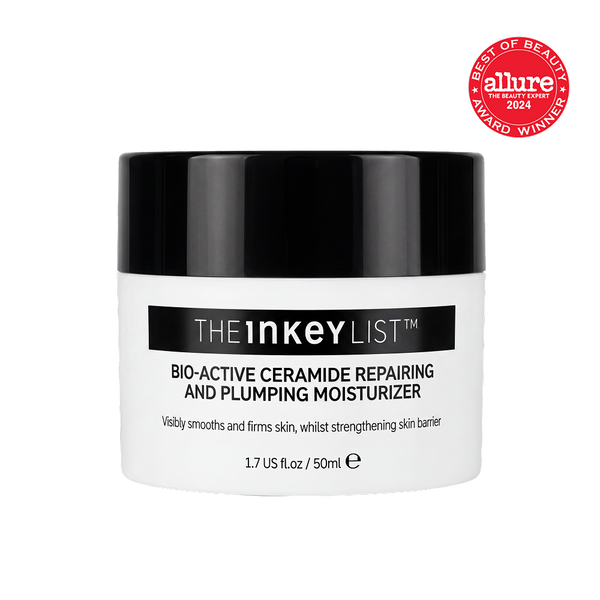
After cleansing, apply a thin layer of Bio-Active Ceramide Moisturizer ($22.00, 50ml) across your face. Thin is the operative word here - you are creating a light buffer, not frosting a cake. Then wait a minute or two to let it settle into the skin before moving on.
Why this moisturizer specifically? Because the sandwich works best when the “bread” actively supports your barrier rather than just sitting on top of it. Bio-Active Ceramide Moisturizer is built around bioactive ceramides that visibly firm, smooth, and strengthen the skin barrier - which, as we covered above, is exactly the system retinol puts under temporary pressure. You are not just cushioning the retinol; you are restocking the barrier lipids it will draw on. If you want to go deeper on why ceramides are such a big deal for barrier health, discover everything about ceramides in our ingredient guide.
Step 2: Apply Your Retinol
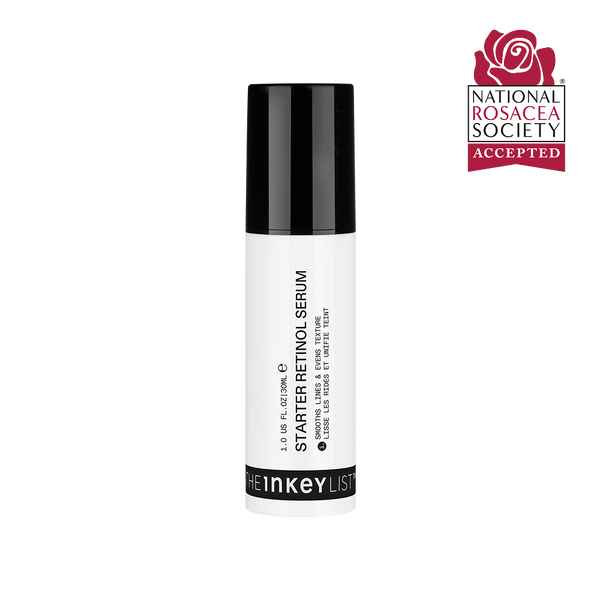
Once your first layer has settled, apply a pea-sized amount of Starter Retinol Serum ($15.00, 30ml) over your whole face, avoiding the immediate eye area and lips.
A pea-sized amount sounds small. It is enough. Using more retinol does not accelerate results - it accelerates irritation, which slows your results by forcing you to take breaks. Dot the serum on your forehead, cheeks, and chin, then smooth it evenly across the skin.
This is also where the results case gets specific. Starter Retinol Serum is clinically proven to smooth fine lines in as little as 7 days without irritation. In a 12-week consumer study of 130 participants, over 80% saw improved firmness and evenness within 2 weeks, and 90% saw significant wrinkle improvement by 4 weeks. Those numbers matter for one simple reason: they tell you the sandwich method is not costing you the payoff. Gentle and effective are not opposites here.
Step 3: Seal It With Your Second Layer of Moisturizer
Give the retinol a minute to absorb, then finish with another thin layer of Bio-Active Ceramide Moisturizer over the top. This is the lid of the sandwich: it locks in hydration overnight, reduces transepidermal water loss while the retinol works, and leaves your skin feeling comfortable rather than tight when you wake up.
That is the entire method. Moisturizer, retinol, moisturizer. Done.
Quick Pointers Before Your First Sandwich Night
- A pea-sized amount of retinol is enough for your whole face. Resist the urge to use more.
- Avoid the eye area and lips. The skin there is thinner and more reactive.
- Start with 2-3 nights per week. Nightly use is a goal for later, not a starting requirement.
- Keep both moisturizer layers thin. Two light layers outperform one heavy one.
- Total routine cost: under $40. One retinol, one moisturizer, that is the whole shopping list.
The routine itself is deliberately simple. What determines your results from here is not adding more products - it is what you do around the routine, week after week.
Once the routine feels comfortable, a few small adjustments help you get even more from it.
Getting the Best Results: Frequency, Consistency, and What to Avoid
The sandwich method solves the irritation problem. Consistency solves everything else. Here is how to manage frequency, pairings, and expectations so the next three months go smoothly.
Build Up Gradually - Consistency Beats Intensity
For your first month, use the moisture sandwich 2-3 nights per week. That is genuinely enough to start seeing changes, and it gives your skin recovery time between retinol nights. If your skin stays calm after three to four weeks, add a night. Over a couple of months, many people work up to nightly or near-nightly use.
The principle worth tattooing on your bathroom mirror: three retinol nights a week for a year beats nightly use for three weeks followed by quitting. Retinol rewards the tortoise, every time. If a week goes badly - your skin feels tight, or you notice flaking - drop back a night. That is not failure; that is calibration.
What Not to Layer on Retinol Nights
While your skin is adapting, keep retinol nights boring. Specifically:
- Skip vitamin C in the evening routine on retinol nights. Save it for your mornings instead.
- Skip AHAs and BHAs the same evening. Exfoliating acids plus retinol is the fastest known route to an angry face.
- Skip anything new. Introduce one variable at a time so you always know what caused what.
- Do keep it simple: cleanser, moisturizer, retinol, moisturizer. That is a complete routine.
Pairing rules generate more confusion than almost any other retinol topic, so we wrote a full guide: What Not to Mix With Retinol breaks down every major ingredient combination in detail. And if you are wondering about the single most-asked pairing question, the short answer is that niacinamide and retinol are actually a great team - our guide Can You Use Niacinamide With Retinol? explains why.
Hydrating Ingredients Are Always Welcome
Not every addition is off-limits. Hydrating, barrier-friendly ingredients pair beautifully with retinol because they support exactly what retinol stresses. Hyaluronic acid is the standout: it draws water into the skin and adds a plumping layer of hydration without any irritation risk. If you want extra moisture, apply Hyaluronic Acid Serum ($13.00) to damp skin right after cleansing, before your first moisturizer layer. Think of it as adding lettuce to the sandwich - purely optional, entirely compatible.
If Even the Sandwich Feels Like Too Much
Some skin needs an even slower on-ramp, and that is completely fine. Skin cycling is a schedule-based alternative: instead of buffering each retinol application, you rotate your nights - one exfoliation night, one retinol night, then two full recovery nights of just hydration and barrier care, repeating on a four-night loop. It is another legitimate, dermatologist-endorsed way to get actives into your routine gently. Our full skin cycling guide walks through the schedule night by night. You can even combine the approaches: sandwich your retinol on its designated cycling night for maximum gentleness.
The Morning-After Rule
What you do the morning after a retinol night matters almost as much as the night itself:
- Cleanse gently. No scrubs, no acids, no aggressive foaming cleansers.
- Moisturize. Your barrier is doing overnight construction work; keep supplying materials.
- Apply broad-spectrum SPF. Retinol-using skin is more sun-sensitive, and this is the step that protects both your skin and your results.
That is it. Simple mornings, sandwiched evenings, patience in between.
Still have questions? These are the ones we hear most.
The Takeaway: Gentle Retinol Results, No Guesswork
Moisturizer, retinol, moisturizer. That is the entire moisture sandwich method - three layers, two products, about two minutes a night.
What makes it worth doing is not the technique itself but what it unlocks: consistency. Retinol rewards the people who keep showing up, and the sandwich removes the irritation that stops most people from showing up at all. With Starter Retinol in the middle, fine lines can look smoother in as little as 7 days, and the results keep compounding from there.
Skincare does not need to be complicated. It needs clarity you can trust, a routine you will actually stick to, and ingredients that do what they claim. Clear guidance. Proven ingredients. Real results.
Ready to build your sandwich? Start with Starter Retinol Serum ($15.00) and Bio-Active Ceramide Moisturizer($22.00) - everything you need for the full routine, for under $40, with free delivery on your first order. And if you would like to read a little more before diving in, our sensitive skin retinol guide is the perfect next stop.
Frequently Asked Questions
Got a question?
Our askINKEY team are a friendly bunch of skincare experts with deep product knowledge and zero judgement. Whether you're an ingredient obsessive or just starting out, we'll make it make sense. No question too big. No question too small. We Give A Care, Every Day.


