



What is Matrixyl 3000? The Science Behind INKEY’s Most-Used Peptide
Discover the science behind Matrixyl 3000, one of skincare's most researched peptide complexes, and learn how it helps support collagen, smooth fine lines and improve skin firmness - without the irritation often associated with retinoids.
Author
askINKEY skincare advisor
Published
13 July, 2026
Time to read
14 minutes
If you have spent any time reading skincare ingredient labels, you have almost certainly encountered Matrixyl 3000 - or more accurately, its INCI names: Palmitoyl Tripeptide-1 and Palmitoyl Tetrapeptide-7. This blog covers exactly what Matrixyl 3000 is, how it works at a cellular level, what the clinical evidence actually shows, and which products contain it. No fluff. Just the science you need to make an informed decision about your routine.
Matrixyl 3000 is a signal peptide complex developed by cosmetic ingredient company Sederma, a subsidiary of Croda International. It is one of the most studied peptide ingredients available in cosmetic science, with a body of published in-vitro, ex-vivo, and clinical research that few other topical peptide complexes can match. It is not a trendy newcomer. It is an ingredient with decades of formulation history and a track record that has made it a fixture in serious skincare.
The INKEY List includes Matrixyl 3000 across several products in its range:
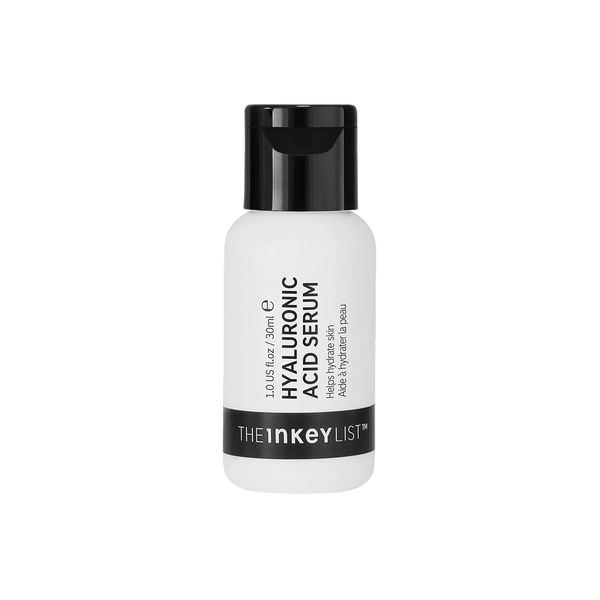
- Hyaluronic Acid Serum 30ml - from $13
- Hyaluronic Acid Serum 60ml - $23
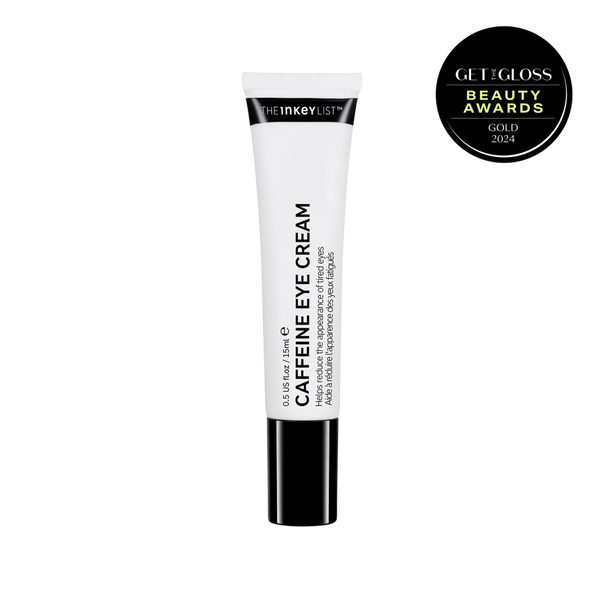
- Caffeine Eye Cream 15ml - $14
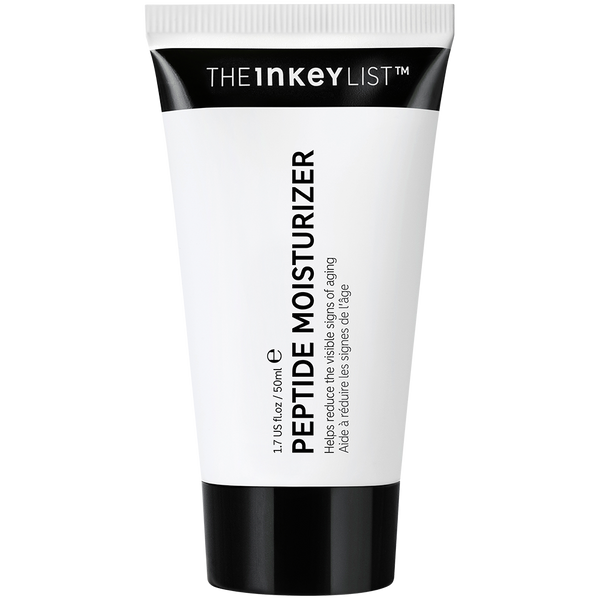
- Peptide Moisturizer - $18
Each of these products serves a distinct role in a complete routine. By the end of this guide, you will know exactly how to use them and why the science supports it.
What is Matrixyl 3000?
The name sounds like it belongs in a materials science lab, and in a way, that is exactly where it originated. Matrixyl 3000 is a branded peptide complex - meaning the “Matrixyl 3000” you see on packaging and in product descriptions is a trade name, not a single molecule. The name is owned by Sederma, a French cosmetic ingredient company that has been developing peptide actives since the 1990s and is now part of Croda International, one of the world’s leading specialty chemical companies.
The “Matrixyl” name itself derives from “matrikine” - a term from cell biology describing small peptide fragments that are naturally released when collagen in the extracellular matrix breaks down. These fragments do not simply dissipate. They act as signals. The skin reads them as a message that collagen has been damaged and that production needs to ramp up to compensate. Matrixyl 3000 was designed to mimic this process - to send those same collagen-synthesizing signals without requiring any actual collagen breakdown to trigger them.
The “3000” distinguishes this generation of Matrixyl from earlier versions. The original Matrixyl formula contained a single peptide - Palmitoyl Pentapeptide-4. When Sederma developed the 3000 generation, they added a second peptide with a complementary mechanism, creating a more targeted two-part system. This is a meaningful distinction and the reason that Matrixyl 3000 consistently outperforms single-peptide alternatives in comparative research.
The two peptides in Matrixyl 3000 are:
- Palmitoyl Tripeptide-1 (Pal-GHK) - a three-amino-acid peptide chain (glycine-histidine-lysine) attached to a palmitoyl group (a fatty acid chain that improves skin penetration through the lipid barrier)
- Palmitoyl Tetrapeptide-7 (Pal-GQPR) - a four-amino-acid chain (glycine-glutamine-proline-arginine) also attached to a palmitoyl group for the same penetration benefit
On any INCI ingredient list, these are the two names you are looking for. When a product lists Palmitoyl Tripeptide-1 and Palmitoyl Tetrapeptide-7, it contains Matrixyl 3000. This is why The INKEY List - a brand built on the principle that everyone deserves to understand their ingredient labels - names these compounds directly on packaging. INKEY stands for ingredient transparency, and Matrixyl 3000 is a clear demonstration of that commitment.
It is also worth noting what Matrixyl 3000 is not. It is not a retinoid. It is not an exfoliating acid. It does not accelerate cell turnover or strip the skin’s surface in any way. It is a signaling molecule - a messenger. Its job is to communicate with the cells deep in the dermis that are responsible for structural repair, and to do so without any irritation, purging, or sensitivity period. Understanding this distinction is the key to understanding why Matrixyl 3000 occupies such an important place in the broader peptide skincare conversation.
To understand why this signaling process produces such meaningful skin changes, it helps to look closely at the mechanism - specifically at what each of the two peptides does once it reaches the dermal layer.
How Does Matrixyl 3000 Work? The Mechanism Explained
Most skincare ingredients work on a single pathway. They brighten, or they hydrate, or they exfoliate. Matrixyl 3000 is distinctive because it works on two pathways at once - one focused on collagen production and one focused on collagen protection - and because those pathways are genuinely complementary rather than redundant.
Palmitoyl Tripeptide-1: Telling the Skin to Build
Palmitoyl Tripeptide-1 functions as a matrikine mimic. When collagen naturally breaks down in the dermis - a process that accelerates after the mid-20s and continues throughout life - it releases small peptide fragments that signal fibroblasts (the cells responsible for producing collagen and other structural proteins) to increase production. The skin is essentially running a repair cycle based on damage signals.
Palmitoyl Tripeptide-1 mimics those damage signals without any actual damage occurring. It binds to fibroblast receptors and instructs those cells to synthesize more:
- Collagen I - the most abundant collagen in the dermis, responsible for tensile strength
- Collagen III - a more elastic collagen that provides flexibility and resilience
- Collagen IV - found at the dermal-epidermal junction, supporting skin structure at the boundary between layers
- Fibronectin - a structural glycoprotein that helps anchor cells within the extracellular matrix
Palmitoyl Tripeptide-1 also stimulates the production of hyaluronic acid within the skin - not just topically applied HA sitting on the surface, but intrinsic HA synthesis occurring within the tissue itself. This is why using it alongside hyaluronic acid in a formula creates a dual hydration effect: surface hydration from the HA itself, and structural hydration support from the peptide signaling that HA production should increase.
The palmitoyl group attached to the peptide chain is not a cosmetic addition - it is functional. Peptides on their own are hydrophilic (water-loving) molecules that struggle to penetrate the skin’s lipid-rich outer barrier. The palmitoyl group is a fatty acid that makes the molecule lipophilic (fat-loving), allowing it to pass through the stratum corneum and reach the fibroblast layer in the dermis where it can actually do its work. Without this modification, the peptide would largely remain on the surface and produce minimal clinical effect.
Palmitoyl Tetrapeptide-7: Telling the Skin to Protect What It Has
While Tripeptide-1 focuses on new collagen production, Palmitoyl Tetrapeptide-7 takes a different angle. Its primary mechanism is the inhibition of interleukin-6 (IL-6) - a cytokine involved in the chronic low-grade inflammatory processes that are a significant driver of collagen degradation and visible skin aging.
Chronic inflammation - sometimes referred to in research as “inflammaging” - is a persistent, low-level immune response that gradually breaks down collagen and other structural proteins in the dermis. It is not the acute redness of a sunburn; it is a subtle, ongoing background process that accumulates over time. Palmitoyl Tetrapeptide-7 works by interfering with this process at the cytokine level, reducing the inflammatory signal that accelerates breakdown.
Tetrapeptide-7 also acts on glycation - a process where sugar molecules in the bloodstream attach to collagen fibers and cause them to cross-link and stiffen. Glycated collagen loses flexibility, becomes more brittle, and breaks down more rapidly. This is a particularly important mechanism because glycation is one of the less-discussed contributors to visible skin aging, and very few topical ingredients address it directly.
The Synergy That Makes Matrixyl 3000 More Than the Sum of Its Parts
Together, the two peptides create a two-way mechanism: stimulate production AND reduce degradation - addressing aging from both angles simultaneously.
This is the core insight behind Matrixyl 3000’s clinical performance. Most collagen-supporting ingredients work on one side of the equation. Retinol, for example, primarily works by accelerating cell turnover and stimulating fibroblast activity through a keratinocyte signaling pathway - a production-focused mechanism. Matrixyl 3000’s Tripeptide-1 also drives production, but the addition of Tetrapeptide-7 means that while production is being stimulated, the rate of breakdown is simultaneously being reduced. The net result on collagen density is therefore larger than either mechanism could achieve independently.
Published research supports this. An ex-vivo study (conducted on living skin tissue outside the body) found a 2.5x increase in procollagen I production in skin treated with Matrixyl 3000 compared to untreated controls. A separate two-month clinical study conducted on a panel of 23 women showed a 33% reduction in wrinkle volume with consistent twice-daily use. These are meaningful, measurable numbers - not vague directional claims.
With the mechanism clearly established, the natural next question is: what does this actually look like on skin? What can someone using a Matrixyl 3000 product realistically expect to see and when?
What Does Matrixyl 3000 Do For Your Skin? Benefits and Clinical Results
Understanding the mechanism is one thing. Understanding what it translates to in lived experience is another. The clinical evidence on Matrixyl 3000 is more robust than most peptide complexes available in cosmetic formulation - and the results are consistent across study types, which is a meaningful indicator of genuine efficacy.
Visible Reduction in Fine Lines and Wrinkles
The headline clinical finding is the 33% reduction in wrinkle volume observed in the two-month study of 23 women using Matrixyl 3000 twice daily. Wrinkle volume is a precise measurement - it captures the total three-dimensional size of a wrinkle, not just its surface appearance in flat photography. A 33% reduction means wrinkles genuinely shrank in depth and width, not simply that skin looked temporarily smoother under favorable lighting.
This is a gradual, cumulative improvement. The mechanism requires consistent use because fibroblast signaling is a biological process that takes time to translate into measurable structural change. Collagen synthesis, rebuilding, and remodeling do not happen overnight. Four to eight weeks of consistent twice-daily use is the realistic timeframe for meaningful fine line and wrinkle improvement.
Firmer-Looking Skin Supported by Increased Procollagen
The 2.5x increase in procollagen I production referenced in ex-vivo research is particularly significant because procollagen is the direct precursor to collagen. When the skin produces more procollagen, it has the raw material to build denser, more structured collagen networks. The result is skin that looks and feels firmer - less like it is losing structural support from below.
In an independent consumer study of our Hyaluronic Acid Serum, 82% of users agreed that skin felt firmer, smoother, and more elastic after four weeks of use - a study of 22 people conducted under dermatological control. Four weeks is earlier than the two-month mark for wrinkle volume, which reflects the fact that some firmness improvements become perceptible before wrinkle depth changes are fully measurable.
Improved Skin Texture and Smoothness
As collagen fiber networks are renewed and inflammatory activity is reduced, the surface of the skin begins to reflect these structural changes. Texture improves as the irregular collagen architecture that contributes to roughness and uneven tone is gradually replaced with more organized structure. Skin feels more cushioned and smooth to the touch - something that is often one of the first perceived changes users report in the early weeks of consistent use.
Structural Hydration Support
Because Palmitoyl Tripeptide-1 also stimulates intrinsic hyaluronic acid synthesis, Matrixyl 3000 contributes to hydration at a structural level that goes beyond what topically applied humectants alone can achieve. This is not the same as applying a hydrating serum and observing temporary plumping. It means the skin’s own capacity to produce and retain moisture is gradually being supported. Over consistent use, the skin becomes better at holding water from within.
Suitability and Safety Profile
Matrixyl 3000 has no established irritation risk at cosmetic concentrations. There is no purging period, no photosensitivity, and no adjustment window. It is compatible with sensitive skin, can be used in both morning and evening routines, and is considered safe during pregnancy and breastfeeding. This makes it one of the most accessible anti-aging actives available - particularly for those who cannot tolerate retinol or exfoliating acids.
For the eye area specifically, our Caffeine Eye Cream ($14) - which combines 0.3% Caffeine with Matrixyl 3000 - showed in its clinical study that 95% of users agreed skin feels instantly smoother and deeply hydrated, with clinically proven improvement in the appearance of puffiness and dark circles from first use. The eye area is where collagen declines fastest due to the exceptional thinness of periorbital skin, making the inclusion of Matrixyl 3000 in an eye formula particularly relevant.
Matrixyl 3000 vs Retinol, Vitamin C, and Hyaluronic Acid: Compatibility Explained
One of the most valuable qualities of Matrixyl 3000 is that it is genuinely compatible with essentially every other skincare active. Understanding where it sits relative to the other major actives - and why those pairings work - takes the guesswork out of building an effective routine.
Is Matrixyl 3000 Better Than Retinol?
This is one of the most common questions about Matrixyl 3000, and the honest answer is that it is the wrong question. They are not competing for the same role in a routine - they work through distinct mechanisms and address different aspects of skin aging.
Retinol is a vitamin A derivative that works by accelerating epidermal cell turnover. It encourages the skin to shed surface cells more rapidly, which improves texture, unclogs follicles, and triggers indirect collagen stimulation through keratinocyte signaling pathways. Retinol is powerful, but it requires a careful introduction period because it can cause initial dryness, peeling, and sensitivity - particularly in reactive or sensitive skin types.
Matrixyl 3000 works entirely differently. It does not touch the surface renewal process. It communicates directly with fibroblasts in the dermis to drive collagen synthesis and reduce inflammatory degradation. There is no irritation period because the mechanism does not involve any disruption to the skin barrier or accelerated cell turnover.
The optimal approach is to use both: Matrixyl 3000 in the morning to support collagen production and barrier integrity throughout the day, retinol in the evening to drive overnight cell renewal. They work simultaneously on two different layers and two different mechanisms, which is why this pairing consistently appears in evidence-based routine recommendations.
For those who find retinol difficult to tolerate, or who are new to anti-aging actives, Matrixyl 3000 is the clear starting point. No purging, no sensitivity risk, no sun exposure concerns.
Can You Use Matrixyl 3000 With Vitamin C?
Yes - and this is one of the most functionally well-matched pairings in skincare. Vitamin C works at the surface and antioxidant level: it neutralizes free radicals generated by UV and pollution exposure, inhibits melanin production for a brightening effect, and supports collagen cross-linking as a cofactor in collagen synthesis. Matrixyl 3000 works at the structural signaling level, instructing fibroblasts to produce more collagen from within.
Together, they address aging from two directions simultaneously: external protection and internal structural repair. Apply Vitamin C serum first (it has a thinner texture and slightly acidic pH), then the Matrixyl 3000-containing product on top. No interaction concerns - they work on completely separate pathways.
Can You Use Matrixyl 3000 With Retinol?
Yes. The recommended approach is the AM/PM split: Matrixyl 3000 in the morning, retinol at night. This separation is not because they interact negatively - it is simply because retinol performs best in a nighttime-only routine (given its light sensitivity), while peptides are equally effective at any time of day. Using them at separate times of day also means each gets a clean application window.
Can You Use Matrixyl 3000 With Hyaluronic Acid?
Yes - and this is the combination that forms the foundation of our Hyaluronic Acid Serum. It is not a coincidence that these two ingredients are paired in the same formula. Hyaluronic acid delivers immediate surface hydration by attracting and binding water molecules to the skin’s outer layers. Matrixyl 3000 works below the surface to stimulate intrinsic HA synthesis and structural collagen rebuilding. They are complementary at every level and do not interfere with each other in any way.
Is Matrixyl 3000 Safe?
Yes. Matrixyl 3000 has no established side effects at cosmetic concentrations. It is suitable for all skin types including sensitive skin, is non-photosensitizing, and is considered safe during pregnancy and breastfeeding.
INKEY Products Containing Matrixyl 3000 and What Sets Each Apart
Matrixyl 3000 appears in three core INKEY products, each formulated to address a specific concern and designed to work together as a complete routine. Here is what each one contains, what it does, and how to use it.
Our Hyaluronic Acid Serum - from $13 (30ml) or $23 (60ml)
Our Hyaluronic Acid Serum is the most-reviewed product in the INKEY range, with over 3,100 five-star reviews - and the most accessible entry point for Matrixyl 3000 in a daily routine. The formula combines 2% multi-molecular hyaluronic acid (which hydrates at multiple skin depths) with the full Matrixyl 3000 complex (Palmitoyl Tetrapeptide-7 and Palmitoyl Tripeptide-1).
The multi-molecular HA is intentional: lower molecular weight HA penetrates deeper to hydrate below the surface, while higher molecular weight HA sits at the surface to form a moisture-retaining film. Add the Matrixyl 3000 to this, and you have a serum that hydrates immediately at the surface and structurally over time. This is why the 82% firmer, smoother, more elastic skin result at four weeks is so consistent - the two actives are reinforcing each other from different directions.
The serum is available as a 30ml at $13 or a 60ml supersize at $23 - the larger size offering meaningful value for twice-daily use. It has won the Allure Best of Beauty Award and the CEW 2023 Award. Apply to slightly damp skin after cleansing, using a pea-sized amount. Damp skin maximizes both HA absorption and the spreading of the serum across the face without wastage.
Our Caffeine Eye Cream - $14 (15ml)
Our Caffeine Eye Cream addresses the periorbital area - the skin around the eyes - which is where collagen loss is both most visible and most accelerated. Periorbital skin is among the thinnest on the body, has fewer sebaceous glands to support the barrier, and is subject to constant mechanical movement from blinking and expression. Collagen depletion here shows up as dark circles, hollowing, puffiness, and fine lines earlier than almost anywhere else on the face.
The formula contains 0.3% Caffeine - a well-established vasoconstrictor that reduces the appearance of puffiness by temporarily constricting dilated blood vessels under the eye - alongside Matrixyl 3000 and Albizia Julibrissin Bark Extract, an ingredient with published data on reducing the appearance of dark circles. The Matrixyl 3000 in this formula provides the same collagen-signaling function it does in the serum, but targeted to the area where structural support matters most for visible aging signs.
The clinical data is striking: 95% of users agreed skin feels instantly smoother and deeply hydrated, and it is clinically proven to improve the appearance of puffiness and dark circles from first use. For broader context on treating dark circles and how to approach them from multiple angles, the supporting guides go into significant depth on the different underlying causes.
Apply AM and PM after serums and before moisturizer. Use a pea-sized amount for both eyes, applied gently with the ring finger (which applies the least pressure of any finger) by tapping along the orbital bone - not dragging. For extra depuffing, store the eye cream in the refrigerator. The cooling effect on application amplifies the caffeine’s vasoconstrictive action.
Peptide Moisturizer - $18 (50ml)
The Peptide Moisturizer is a daily moisturizer built on a dual-peptide system. It is worth being precise here: this product does not contain Matrixyl 3000 itself. It uses a different peptide complex - Royal Epigen P5 and Diffuporine - which targets barrier support and epigenetic anti-aging mechanisms. It belongs in a Matrixyl 3000 routine as the final sealing step that locks in everything layered underneath while contributing its own peptide activity.
Layering the Peptide Moisturizer over the Hyaluronic Acid Serum means you are delivering Matrixyl 3000 signal peptides at the serum step, then sealing with a moisturizer that adds barrier-supporting peptides on top. It is a complete peptide approach from first serum to final moisturizer, suitable for all skin types, AM and PM.
How to Build a Matrixyl 3000 Routine That Actually Works
One of the genuine advantages of Matrixyl 3000 is how little complication it introduces into a routine. There is no special pH window to manage, no waiting time between products, and no sensitivity period to navigate. The key variables are layering order and consistency of use.
The Full Routine - Morning and Evening
Step 1 - Cleanse. Start with a clean face. Matrixyl 3000 serums absorb best when the skin is free of the barrier that daytime SPF, sebum, and surface residue creates.
Step 2 - Hyaluronic Acid Serum (Matrixyl 3000). Apply to slightly damp skin immediately after cleansing. The damp skin is important - hyaluronic acid draws water from its immediate environment, and if the skin is dry when you apply it, it may draw moisture upward from the dermis rather than from the external environment. A pea-sized amount is sufficient. Pat gently - do not rub.
Step 3 - Treatment serums. In the morning, this is where Vitamin C fits. In the evening, hold Vitamin C and apply retinol here instead. Matrixyl 3000 is fully compatible with both but is best applied first given its lighter texture.
Step 4 - Caffeine Eye Cream (Matrixyl 3000). After serums, before moisturizer. Pea-sized amount for both eyes. Ring finger only. Tap along the orbital bone from inner to outer corner - never drag or pull.
Step 5 - Moisturizer (Peptide Moisturizer). Seal the routine with the moisturizer, which also locks in the Matrixyl 3000 and HA from the serum step while contributing its own barrier-supporting peptide action.
Step 6 (AM only) - SPF. Sunscreen is the final step of every morning routine. This is non-negotiable regardless of which actives you are using - UV damage is the single largest external driver of collagen degradation and visible aging.
Morning vs Evening: Does Timing Matter for Matrixyl 3000?
Not inherently. Matrixyl 3000 is not photosensitizing and not time-of-day dependent in its mechanism. It works around the clock. The reason to use it in both AM and PM - rather than just once daily - is simple: more frequent signaling means more consistent fibroblast activity, which compounds results over time. The clinical studies producing the most robust data (the 33% wrinkle volume reduction, the 82% firmness consumer study) were both conducted with twice-daily use.
In the morning, Matrixyl 3000 pairs naturally with Vitamin C - peptides building structural collagen while antioxidants protect it from free radical damage during the day. In the evening, it pairs with retinol - peptides continuing their collagen signaling work while retinol drives overnight cell turnover at the surface.
What to Expect and When
The results timeline for Matrixyl 3000 is predictable if you know what to look for:
- Immediately: The Hyaluronic Acid Serum delivers visible surface hydration from application. The Caffeine Eye Cream provides mild cooling and reduction in the appearance of puffiness.
- Within 1-2 weeks: Skin texture begins to improve. The surface feels smoother and more cushioned. This is partly the ongoing HA hydration effect and partly early-stage collagen signaling beginning to influence the extracellular matrix.
- At 4 weeks: This is when the 82% firmness, smoothness, and elasticity data point is reached. Most users will notice measurable changes in how skin feels to the touch and how it responds to expression.
- At 8 weeks: The 2-month mark is where wrinkle volume data was captured in the Sederma clinical study. Consistent twice-daily use from the beginning is the most important variable in reaching this outcome.
The results from Matrixyl 3000 are not dramatic and instantaneous in the way that an exfoliating acid produces visible change after a single use. They are cumulative and structural - the way genuine collagen support works. That is also what makes them durable.
For a deeper look at how Matrixyl 3000 fits into the broader family of peptide ingredients available in skincare - and how to think about building a peptide-led routine beyond these three products - the complete peptide guide covers the full category in detail.
Matrixyl 3000 Is Exactly What Skincare Should Be: Evidence, Clarity, and Results
Matrixyl 3000 earns its place as one of the most consistently recommended peptide complexes in cosmetic science because it delivers on both the science and the clinical outcomes. It stimulates collagen production through one peptide while simultaneously reducing collagen degradation through another - addressing aging from two angles at once, rather than one. It is compatible with every major skincare active. It requires no complicated introduction. And the clinical data behind it is more robust than almost any other peptide ingredient available in cosmetic formulation.
The INKEY List has built its entire brand philosophy around the principle that clear information leads to better decisions - that when people understand what an ingredient actually does and why, they make smarter choices about their routines. Matrixyl 3000 is a perfect expression of that philosophy: an ingredient with real science behind it, accessible pricing, and no unnecessary complexity in how to use it.
Our Hyaluronic Acid Serum (from $13) and our Caffeine Eye Cream ($14) make Matrixyl 3000 one of the most affordable routes to a clinically validated peptide complex in a complete daily routine. You do not need to spend significantly to access proven ingredients. You just need to know what you are looking for - and now you do.
Shop the Matrixyl 3000 Range
- Shop Hyaluronic Acid Serum 30ml - from $13
- Shop Hyaluronic Acid Serum 60ml - $23
- Shop Caffeine Eye Cream - $14
- Shop Peptide Moisturizer - $18
Build Your Routine
- Take our Skincare Quiz - personalized routine recommendation
- Build Your Own Routine - save up to 20%
- Chat to askINKEY - expert skincare advice, available 24/7
You Might Also Find Helpful
Frequently Asked Questions
Got a question?
Our askINKEY team are a friendly bunch of skincare experts with deep product knowledge and zero judgement. Whether you're an ingredient obsessive or just starting out, we'll make it make sense. No question too big. No question too small. We Give A Care, Every Day.


