

In-Flight Skincare: How to Protect and Hydrate Your Skin at 35,000 Feet
Flying can leave your skin dehydrated and dull - discover a science-backed in-flight skincare routine to protect your skin barrier, lock in hydration and keep your complexion healthy from take-off to landing.
Author
askINKEY skincare advisor
Published
02 July, 2026
Time to read
15 minutes
Aircraft cabin air contains humidity levels of just 6% to 20% — significantly lower than the 40% to 60% relative humidity found in most comfortable indoor environments, and drier than many of the world’s desert regions. This is not a minor inconvenience. It is a consistently hostile environment for your skin, and it actively accelerates moisture loss from the moment you board until the moment you land. The mechanism responsible is called transepidermal water loss, or TEWL — the process by which water evaporates from the skin’s surface into the surrounding air. In a low-humidity environment like a pressurized aircraft cabin, TEWL increases substantially. Your skin loses water faster than it can retain it, and the results are visible and felt: tightness, dullness, worsening dark circles, fine dehydration lines, and under-eye puffiness.
This affects every skin type. Oily skin, combination skin, dry skin — none are exempt. Dehydration is a skin condition, not a skin type. Cabin air depletes water content from the stratum corneum regardless of how much sebum your skin produces.
The good news is that the right in-flight skincare routine — applied in the right order, at the right times — can actively counteract what cabin air does to your skin. This guide covers exactly that, featuring five targeted INKEY List products built around the science of in-flight hydration:
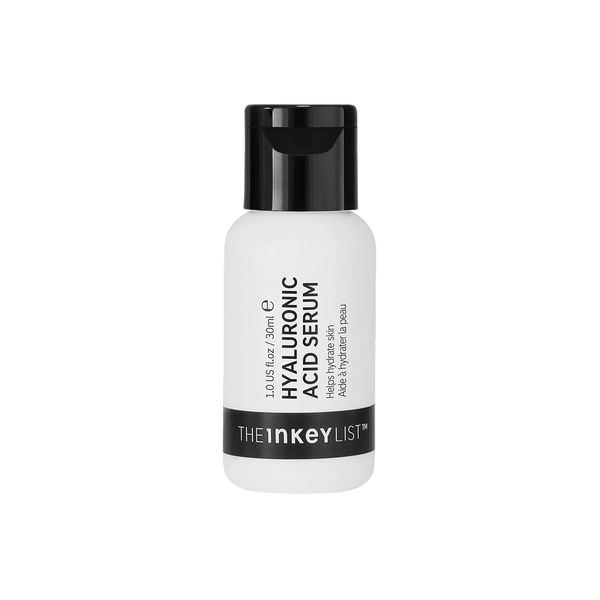
- Our Hyaluronic Acid Serum ($13) — the core humectant that draws water into the skin at multiple depths
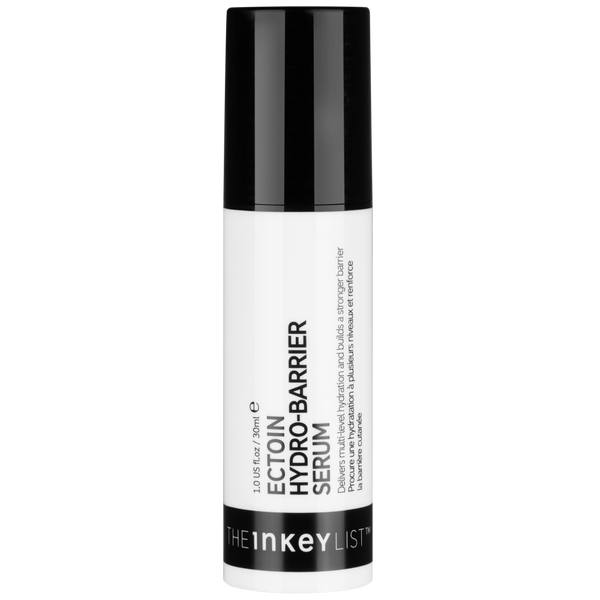
- Our Ectoin Hydro-Barrier Serum ($17) — dual-action barrier repair and deep hydration
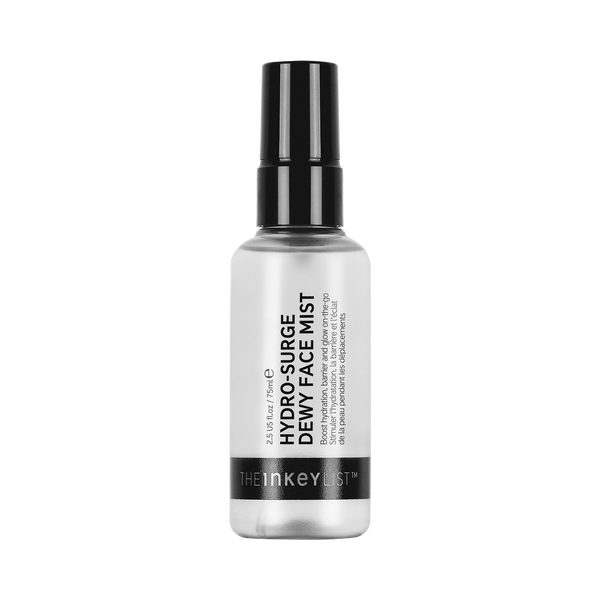
- Our HydroSurge Dewy Face Mist ($13) — clinically proven instant hydration that lasts up to 12 hours
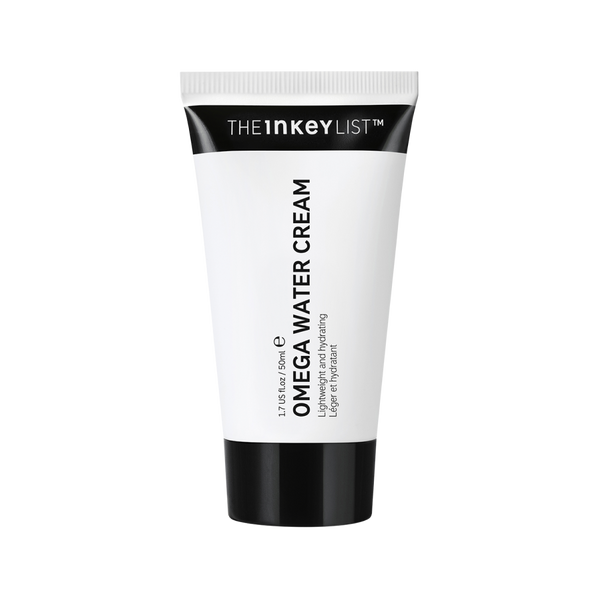
- Our Omega Water Cream ($15) — a barrier-sealing moisturizer for all skin types
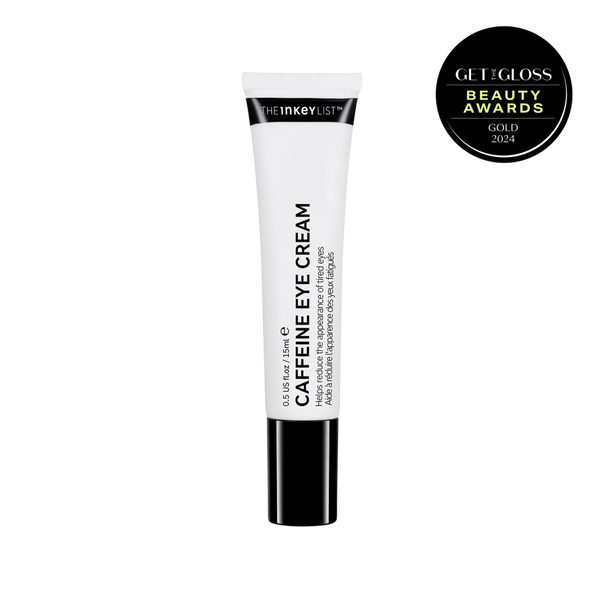
- Our Caffeine Eye Cream ($14) — targeted de-puffing and dark circle support for the under-eye area
You can explore the full Dehydrated Skin Collection for additional targeted support.
In this guide, you’ll find the science behind why flying dehydrates your skin, what skincare you can take on a plane and how to pack it, a step-by-step in-flight skincare routine covering before, during, and after your flight, and targeted advice for specific concerns including dark circles, puffiness, dullness, and dehydration lines. Start with the science — understanding why this happens is the foundation for everything that follows.
Why Flying Dehydrates Your Skin
The Science of Cabin Air and Transepidermal Water Loss
Most people know that flying leaves their skin feeling rough and parched. Far fewer understand why — and that understanding matters, because it shapes every product choice and application technique that follows.
Aircraft cabins are pressurized to simulate an altitude of approximately 6,000 to 8,000 feet above sea level, which is necessary to keep passengers safe and comfortable during cruise at 35,000 feet. That pressurization process draws in outside air, which at cruising altitude is extraordinarily dry. Research published in the NCBI’s PMC archive examining the aircraft cabin environment confirms that cabin relative humidity during commercial flights averages just 6% to 10% — rising slightly to around 15% on newer aircraft models like the Boeing 787 and Airbus A350 due to improvements in cabin materials. Even at the higher end, these figures remain well below the 20% threshold typically considered a minimum comfort level for the human body, and far below the 40% to 60% range that indoor environments typically maintain.
At these humidity levels, the moisture gradient between your skin’s surface and the surrounding air becomes extreme. Water is drawn outward from the skin’s outer layers — specifically from the stratum corneum, the uppermost layer of the epidermis — and evaporates into the dry cabin air at an accelerated rate. This is transepidermal water loss, or TEWL. Under normal conditions, the stratum corneum functions as a semi-permeable barrier that manages water retention. Its lipid matrix — a lattice of ceramides, fatty acids, and cholesterol — holds moisture within the skin and slows the rate of evaporation. But in an environment as dehydrating as a pressurized aircraft cabin, that barrier is working against a formidable moisture deficit. Water escapes faster than the skin can compensate, and the longer the flight, the more pronounced the effect.
According to the Cleveland Clinic, low cabin humidity is a documented cause of skin dryness during air travel, contributing to the tightness, dullness, and discomfort many passengers experience mid-flight. The NCBI research further notes that dry skin and mucous membrane effects from cabin air can be alleviated by applying moisturizing creams — particularly before flight, when the skin’s barrier is still intact and able to benefit most from protection.
There are additional compounding factors beyond humidity alone. Many passengers sleep with the overhead air vent directed at their face — a direct stream of already-dry cabin air that dramatically increases surface TEWL on exposed skin. Recirculated cabin air also carries trace levels of airborne particles that can irritate a barrier already under stress. And alcohol or caffeine consumed in-flight accelerates systemic dehydration, which further compounds the surface-level water loss your skin is already experiencing.
It is worth emphasizing again: this process affects all skin types equally. The sebaceous glands — responsible for oil production — and the skin’s water-retention system are governed by entirely separate biological mechanisms. An oily skin type produces more sebum; it does not produce more water. Cabin air depletes water content from the stratum corneum regardless of how oily or dry your complexion is under normal circumstances. If you’ve ever noticed your skin looking shinier mid-flight despite feeling uncomfortable and tight, that is a sign of dehydration, not adequate hydration — your sebaceous glands are compensating for water loss by ramping up oil production. For a deeper look at this phenomenon, read our guide on why oily skin gets dehydrated too.
The key takeaway from the science is this: the primary problem is elevated TEWL in a low-humidity environment. The solution is to reduce that water loss through targeted humectants applied correctly, sealed with a barrier-supporting moisturizer, and supplemented throughout the flight with hydration on demand. Everything in this guide flows from that framework. Understanding what hyaluronic acid does and why damp-skin application matters is central to getting the most from your in-flight routine.
Now that the mechanism is clear, the next step is to understand exactly how cabin-air dehydration manifests — what you will see, feel, and notice — so you can identify your specific concerns and address them directly.
How Flying Affects Your Skin: The Specific Concerns
The science of TEWL translates directly into specific, visible, and felt changes in the skin. Understanding what you are dealing with — and why it is happening — makes the product recommendations in the following sections genuinely useful rather than prescriptive. Here is what cabin air does, broken down by concern.
Dehydration and Tightness
This is the most immediate and universal effect of cabin air on skin. Within the first hour of a long-haul flight, most passengers begin to notice that their skin feels less comfortable — tighter, less supple, and slightly rough at the surface. This is the direct result of water loss from the stratum corneum. As the skin’s outermost layer loses water content, it loses its plumpness and the surface becomes uneven and less flexible. The feeling is often described as a pulling or drawing sensation, particularly around the cheeks and forehead.
Tightness is not just uncomfortable — it is a signal that your skin barrier is under stress. A dehydrated stratum corneum is a compromised stratum corneum. For a full checklist of dehydration signs, read our guide on how to tell if your skin is dehydrated.
Dullness
Well-hydrated skin reflects light evenly and consistently. This is the biological basis of the visible “glow” associated with healthy skin: the surface of the stratum corneum, when adequately hydrated, is smooth at a microscopic level, and light bounces off it uniformly. Dehydrated skin behaves differently. As water content drops, the surface of the stratum corneum becomes microscopically uneven and irregular. Instead of reflecting light, it scatters it. The result is a flat, grey, lifeless complexion that becomes increasingly pronounced the longer the flight continues. This is why a face that looked bright and fresh in the airport mirror can look dull and fatigued by the time you’re three hours into a long-haul route — and why no amount of face washing will fix it mid-flight. The answer is not cleansing. It is hydration.
Dehydration Lines
Fine, superficial lines that appear or worsen during a flight are almost always dehydration lines rather than structural wrinkles. They are caused by the contraction of the stratum corneum as water content decreases, creating a slightly crinkled surface texture — particularly around the eyes, mouth, and cheeks. These lines are fully and quickly reversible with proper hydration. They are not signs of aging. They are signs of a skin barrier that needs water. Many passengers notice their makeup settling into these lines mid-flight, which is a tell-tale indicator that the skin beneath has lost significant moisture. To understand the difference between dehydration lines and structural wrinkles, read our detailed breakdown on dehydration lines vs wrinkles.
Under-Eye Puffiness
The under-eye area has the thinnest skin on the face — approximately 0.5mm, compared to 2mm on other areas of the face. This makes it particularly vulnerable to dehydration and particularly visible when fluid balance is disrupted. During flights, two things happen simultaneously in the under-eye area: the thin skin loses moisture rapidly, and the long period of inactivity combined with low cabin pressure encourages fluid to pool in the delicate tissue beneath the eyes. This fluid redistribution — compounded by sleep in a near-upright position — is what produces the puffiness many passengers wake up to mid-flight. It is uncomfortable, it shows immediately, and the cooling, vasoconstrictive effect of caffeine is the most effective targeted response to it.
Dark Circles Worsening
Dark circles that were manageable before boarding often look significantly worse mid-flight and immediately after landing. As the under-eye skin dehydrates, it becomes more translucent — the already-thin skin thins further, making the underlying blood vessels more visible. The vascular network beneath the eyes, which produces the blue-purple discoloration of dark circles, becomes more apparent as the skin above it loses volume and opacity. This effect is compounded by poor sleep quality during flights, which independently increases under-eye darkness through increased vasodilation.
Increased Sensitivity
A dehydrated skin barrier is a compromised skin barrier. When the stratum corneum loses water content, the integrity of its lipid matrix is weakened. This allows irritants to penetrate more easily, making skin more reactive to the recirculated cabin air, to any new products applied mid-flight, and to environmental pollutants. Passengers who do not normally have sensitive skin may notice increased reactivity, redness, or tingling during or after long flights. This is not a new skin sensitivity — it is a temporary barrier impairment caused by dehydration.
For oily and combination skin: if your skin appears shinier than usual mid-flight despite feeling tight and uncomfortable, this is classic dehydration behavior. Your oil glands are overcompensating for water loss. Read our full guide on why oily skin gets dehydrated too to understand the mechanism and what to do about it.
With the specific concerns mapped clearly, the next practical question is what you can actually take on the plane with you — and how to pack it correctly.
What Skincare Can You Take on a Plane?
The TSA 3-1-1 Rule
If you are traveling from a US airport, the Transportation Security Administration (TSA) has a clear and consistent rule for liquids in carry-on baggage: all liquids, gels, creams, and aerosols must be in containers of 3.4 ounces (100ml) or less. All containers must fit within a single, clear, quart-sized zip-lock bag. One bag per passenger, presented separately at the security checkpoint.
This rule applies to all liquids in your carry-on, including skincare. The good news is that the INKEY List products featured in this guide are all designed in sizes that are compatible with carry-on travel without requiring decanting.
Your In-Flight Skincare Kit: Sizes and Packing
Here is everything you need to know about packing the featured products for carry-on travel:
- Hyaluronic Acid Serum — 30ml / 1.0 fl oz — TSA compliant
- Ectoin Hydro-Barrier Serum — 30ml / 1.0 fl oz — TSA compliant
- HydroSurge Dewy Face Mist — 75ml / 2.5 fl oz — TSA compliant
- Omega Water Cream — 50ml / 1.7 fl oz — TSA compliant
- Caffeine Eye Cream — 15ml / 0.5 fl oz — TSA compliant
All five products fit comfortably in a single quart-sized zip-lock bag alongside other travel essentials. No decanting required.
A few practical packing notes:
Keep your skincare bag in your carry-on or personal item — not your checked luggage. You need access to these products during the flight, not when you collect your bags. Apply your pre-flight skincare at home or in the airport lounge before you board, so your skin already has a layer of protection when you step into the cabin environment.
If you refrigerate your Caffeine Eye Cream for 30 minutes before leaving for the airport and pack it in a small cool bag or pouch, the cooling effect on application will enhance its de-puffing action mid-flight — a practical upgrade that requires no extra products.
One important note on actives: Leave your retinol, AHAs, and BHAs at home — or at least out of your carry-on skincare pouch. Dehydrated, barrier-stressed skin is not in the right state to tolerate exfoliating actives. Introducing these mid-flight can cause irritation, redness, and worsened sensitivity. Focus exclusively on hydration and barrier support during the flight itself. Save the exfoliants for 24 hours after landing, once your skin has had time to recover.
With your kit packed and your packing compliant, the next section covers the most important part: the actual in-flight skincare routine, step by step.
Your Step-by-Step In-Flight Skincare Routine
This is the core of the guide. A clear, sequenced routine — applied at the right times, in the right order — is the difference between landing with your skin feeling comfortable and landing feeling parched and dull. Here is exactly what to do before you board, during the flight, and after you land.
Before You Board
Everything starts before you set foot on the aircraft. The pre-flight routine is your window to prepare the skin while it still has the advantage of a normal-humidity environment — and to stack as much hydration and barrier protection as possible before the dehydrating cabin air begins its work.
Step 1: Cleanse thoroughly. Remove makeup, SPF, and the day’s environmental residue before traveling. Heading into a dehydrating environment with a barrier already compromised by product buildup and pollution is the worst possible starting point. A clean surface is an absorptive surface.
Step 2: Apply Ectoin Hydro-Barrier Serum ($17) to damp skin. This is your first line of defense. Ectoin is a naturally derived extremolyte — originally isolated from bacteria that survive in extreme desert environments — and it works by forming protective hydration shells around skin cells, physically reducing TEWL at a cellular level. Applied before boarding, while the humidity in your environment is still relatively comfortable, it begins strengthening your skin barrier before the dehydrating environment takes effect. Apply a pea-sized amount to cleansed, still-damp skin and allow it to absorb for 30 to 60 seconds.
Step 3: Apply Hyaluronic Acid Serum ($13) to damp skin. Two to three drops, patted gently into the face and neck while skin is still slightly damp. The multi-molecular Hyaluronic Acid formulation draws moisture into the skin at multiple depths simultaneously — surface hydration and deeper hydration in a single step. Applying it pre-boarding, before the skin is under cabin-air stress, gives the humectant the best possible conditions to pull moisture into the stratum corneum and hold it there.
Step 4: Apply Omega Water Cream ($15) to seal. The Omega 3, 6, and 9 fatty acids in this moisturizer replenish the lipid components of the skin barrier and form a protective seal over the hydration layers beneath — actively slowing the rate of TEWL before you are even exposed to cabin air. This seal is your most important pre-flight move. It is the difference between skin that loses hydration gradually and skin that loses it rapidly.
Step 5: Apply Caffeine Eye Cream ($14) around the orbital bone. Use your ring finger and apply with a light tapping motion — never drag the skin in the under-eye area. Pre-flight application addresses the eye area before puffiness accumulates, rather than waiting until it is already visible and more difficult to shift.
During the Flight
Once you are on board, the goal shifts from preparation to maintenance. The cabin is actively working against you — your job is to counteract it with consistent, targeted hydration throughout the flight.
HydroSurge Dewy Face Mist ($13) is your in-flight workhorse. Spritz a thin, even layer across the face as needed throughout the flight. The formulation contains 3% Hydroviton Insta for instant surface hydration lasting up to 12 hours clinically, and 3% Aquaxyl to strengthen the barrier and reduce TEWL. Use it freely. It can be applied over makeup without disrupting it — confirmed in a consumer trial of 103 people across two weeks. If you feel tightness, mist. If you notice dullness creeping in, mist. If you wake up from a nap, mist immediately.
On longer flights (over 5 hours): reapply the Hyaluronic Acid Serum mid-flight. First, spritz the face with the HydroSurge Dewy Face Mist to create a damp surface — do not wait for it to dry. Immediately apply one to two drops of the Hyaluronic Acid Serum into the damp skin. Using the face mist before the serum boosts hydration by 39% versus the serum used alone, based on a 48-hour comparative hydration and skin barrier study on 31 participants. Read more about this combination in our dedicated guide: Hyaluronic Acid Serum + Face Mist: The Power Duo That Boosts Hydration by 39%.
Reapply the Caffeine Eye Cream after sleeping or if significant puffiness develops mid-flight. The same light tapping application with the ring finger, around the entire orbital bone.
Avoid touching your face with unwashed hands. Aircraft cabins are high-contact environments. The tray table, armrests, and seat-back screens are among the most frequently touched surfaces in public travel. Touching your face with hands that have been in contact with these surfaces introduces unnecessary irritants to an already-stressed skin barrier.
Drink water consistently. Cabin air dehydrates your skin from the outside; inadequate fluid intake dehydrates it from the inside. Both work against you simultaneously on a long flight. Avoid alcohol and excessive caffeine during the flight — both accelerate systemic dehydration and compound the skin’s water loss.
After Landing
Landing is not the endpoint of recovery — it is the beginning of it. Your skin will continue to recover from TEWL-driven water loss for several hours after a long-haul flight, and the post-landing routine is as important as anything you do in the air.
Cleanse thoroughly on landing or at your destination. The combination of cabin air, skincare reapplication mid-flight, and a long period of environmental exposure means your skin needs a proper cleanse before it can fully recover. Do not simply apply more product on top of what is already on your skin — cleanse first.
Repeat the full routine: Ectoin Hydro-Barrier Serum on damp skin, Hyaluronic Acid Serum, Omega Water Cream. Skin will continue to compensate for the water loss sustained during the flight for several hours, and the full hydration sequence gives it the tools it needs to recover properly.
Avoid active exfoliants for 24 hours after a long-haul flight. Give the barrier time to recover and restabilize before reintroducing retinol, AHAs, or BHAs. A dehydrated, barrier-stressed skin is more vulnerable to irritation from actives — waiting 24 hours significantly reduces that risk.
Targeting Specific In-Flight Skin Concerns
Not everyone reading this guide has the same problem. Some people land looking puffy and red-eyed. Others notice their skin looks flat and dull. Others feel tightness and see fine lines creeping in that weren’t there at takeoff. This section addresses the four most common specific in-flight skin concerns with targeted solutions.
Dark Circles and Under-Eye Puffiness
The under-eye area is the thinnest skin on the face, and it shows the effects of cabin air first and most visibly. As the skin here loses moisture, it becomes increasingly translucent — the underlying blood vessels become more visible, intensifying the appearance of dark circles. Simultaneously, fluid redistribution from long periods of inactivity causes pooling in the delicate under-eye tissue, producing puffiness that worsens the longer the flight continues.
Our Caffeine Eye Cream ($14) is the targeted response to both concerns. Caffeine at 0.3% concentration constricts the blood vessels beneath the under-eye skin, reducing their visibility and directly improving the appearance of dark circles. Matrixyl 3000 supports the integrity of the delicate tissue around the eye contour. Apply with the ring finger using very light tapping motions — never rubbing or dragging — working from the inner corner outward around the orbital bone.
INKEY Tip: Store your Caffeine Eye Cream in a cool bag during the flight. When you apply it mid-flight, the cooling effect on the skin from the chilled product significantly enhances the de-puffing result — a noticeable difference with no extra steps.
For further reading on recognizing skin dehydration: How to Tell If Your Skin Is Dehydrated: 7 Signs You Might Be Missing.
Dehydration and Skin Tightness
Tightness is the direct, felt consequence of water loss from the stratum corneum. As water content drops, the surface of the skin contracts slightly, losing its softness and flexibility. The solution is restoring water content — not oil, not heavy occlusive cream, but water — delivered to the skin at the right depth and sealed in place.
The most effective mid-flight response to tightness:
- Mist your face with the HydroSurge Dewy Face Mist ($13).
- While the skin is still damp — within 30 to 60 seconds, before the mist dries — apply one to two drops of Hyaluronic Acid Serum ($13) and pat gently into the skin.
- Follow immediately with a thin layer of Omega Water Cream ($15) to seal.
The sequence matters. Hyaluronic Acid is a humectant — it draws moisture from its environment into the skin. Applied to damp skin, it draws from the water already on the surface of your skin. Applied to dry skin in an already-dry cabin environment, it has less moisture to work with. The face mist creates the ideal damp-skin environment for maximum humectant uptake. Do not skip this step and do not wait for the mist to dry before applying the serum.
Explore the full Dehydrated Skin Collection for additional targeted products.
Dullness
Dull, flat skin mid-flight is one of the most common and most visible effects of in-cabin dehydration. When the stratum corneum lacks adequate water content, it becomes rough at a microscopic level and scatters light rather than reflecting it. No amount of face washing will resolve this — washing removes surface residue; it does not replace water content. Dullness mid-flight requires hydration, not cleansing.
Our HydroSurge Dewy Face Mist ($13) addresses this directly. The formulation includes 2% Earth Marine Water, which delivers a natural, mineral-based glow effect that counteracts the flat, lifeless look of dehydrated skin. It works over makeup without disrupting it, making it effective at any point during a flight without requiring a full skincare reapplication. A single spritz can visibly improve the appearance of dullness within minutes.
For sustained improvement on longer flights, follow the mid-flight routine described above: mist, then serum, then moisturizer. Restored water content at the surface level is what creates lasting glow — the face mist addresses the immediate visual effect while the serum works on deeper, longer-lasting hydration.
Dehydration Lines Appearing or Worsening
Fine lines that appear or become more visible mid-flight are almost certainly dehydration lines rather than structural wrinkles. They are caused by the contraction of the stratum corneum as water evaporates, creating a slightly crinkled surface texture — commonly visible around the eyes, mouth, and across the cheeks. They are fully reversible with proper hydration.
Our Ectoin Hydro-Barrier Serum ($17) is particularly well-suited to this concern. Ectoin forms hydration shells around skin cells and actively reduces TEWL — targeting the mechanism that causes dehydration lines directly, rather than simply adding surface moisture. Applied pre-flight and again post-landing as part of the full recovery routine, Ectoin gives the barrier the structural support it needs to retain the water that prevents these lines from forming.
Mid-flight, apply the Hyaluronic Acid Serum to mist-dampened skin and follow with the Omega Water Cream to seal. Restoring water content to the stratum corneum is the only thing that resolves dehydration lines — moisturizer alone (applied without a humectant) will not deliver the same result.
For a full explanation of the difference between dehydration lines and permanent wrinkles: Dehydration Lines vs Wrinkles: How to Tell Them Apart and What Actually Works.
In-Flight Skincare for Every Skin Type
One of the most common misconceptions about in-flight skincare is that it is only relevant for people with dry skin, or that those with oily complexions can simply ignore the cabin environment without consequence. This is not the case, and this section addresses each skin type directly.
Dry and Dehydrated Skin
Dry and dehydrated skin types are already predisposed to elevated TEWL under normal conditions. In the hostile humidity environment of an aircraft cabin, those predispositions are significantly amplified. The full five-product routine — Ectoin Hydro-Barrier Serum, Hyaluronic Acid Serum, Omega Water Cream, HydroSurge Dewy Face Mist, Caffeine Eye Cream — is the recommended approach for this skin type, with no shortcuts.
On very long flights of 10 hours or more, consider a full reapplication of the serum and moisturizer steps after the first four to five hours. Dry skin loses water faster and needs more frequent intervention to maintain comfort and barrier integrity throughout the flight. Drink water consistently throughout the flight to support skin hydration from the inside out.
Oily and Combination Skin
Oily skin is not protected from in-flight dehydration. This point cannot be stated clearly enough. The sebaceous glands — which produce sebum — and the skin’s water-retention system are entirely independent. Sebum production does not compensate for water loss from the stratum corneum. Cabin air will deplete water content from an oily complexion exactly as it depletes it from a dry one.
If you have oily or combination skin and you notice your skin becoming shinier mid-flight, this is a dehydration response. Your sebaceous glands are overcompensating for water loss by producing more oil. The solution is not a mattifying product — it is hydration.
All three core in-flight products are formulated to be fully compatible with oily and combination skin:
- Our Omega Water Cream is oil-free, non-comedogenic, and lightweight. It seals in hydration without adding oil or congesting pores — specifically designed for skin types that need moisture without heaviness.
- Our Hyaluronic Acid Serum is entirely water-based. It adds no oil to the skin whatsoever.
- Our HydroSurge Dewy Face Mist is non-comedogenic and oil-free — safe and effective to use throughout the flight on oily skin without risking congestion.
For the full picture: Why Oily Skin Gets Dehydrated Too.
Sensitive Skin
Dehydrated skin is, by definition, more reactive skin. When the stratum corneum barrier is weakened by water loss, irritants penetrate more easily — making skin that might normally be only mildly sensitive significantly more reactive during and after flights. Long-haul travel in particular can trigger redness, stinging, and general reactivity that persists for 24 to 48 hours post-flight.
The key principles for sensitive skin on a flight:
- Stick to known products. Do not introduce any new skincare on a flight. Skin under barrier stress is not in a position to tolerate unfamiliar actives or fragrances.
- Simplify the routine. Hydrate, seal, and protect. That is all. Complexity introduces risk when the barrier is compromised.
- All five featured INKEY products are fragrance-free and suitable for sensitive skin. The Caffeine Eye Cream and HydroSurge Dewy Face Mist have both been tested for sensitive skin compatibility and are pregnancy and breastfeeding safe.
All Skin Types: The Three Non-Negotiables
Whatever your skin type, and regardless of how long your flight is, the in-flight skincare routine reduces to three non-negotiable steps that address the core problem — TEWL in a low-humidity environment:
-
A humectant serum: our Hyaluronic Acid Serum ($13), applied to damp skin. This is the water delivery mechanism. Every other step depends on it.
-
A barrier-sealing moisturizer: our Omega Water Cream ($15), applied immediately after. This is the seal that keeps the water in. Without it, the humectant serum has nothing to hold the moisture it has drawn in.
-
Hydration on demand: our HydroSurge Dewy Face Mist ($13), used freely throughout the flight. This is the maintenance step — the product that counteracts ongoing TEWL between serum applications.
These three products together form a complete response to in-flight dehydration. They are effective for every skin type, require no additional tools, and can be used comfortably in the confined space of an aircraft seat.
Protecting Your Skin at 35,000 Feet: What You Now Know
The core problem is straightforward: aircraft cabin humidity — typically between 6% and 20% — creates a consistently dehydrating environment that actively accelerates TEWL for the duration of every flight. This affects all skin types, regardless of whether your skin is naturally oily, dry, combination, or sensitive. Water loss from the stratum corneum is a universal consequence of cabin air, and it produces universal consequences: tightness, dullness, dehydration lines, under-eye puffiness, and worsening dark circles.
The solution framework is equally clear. Pre-flight: cleanse thoroughly, apply the Ectoin Hydro-Barrier Serum to damp skin, follow with the Hyaluronic Acid Serum on still-damp skin, seal with the Omega Water Cream, and apply the Caffeine Eye Cream to the orbital area. During the flight: use the HydroSurge Dewy Face Mist throughout — freely and often — and reapply the Hyaluronic Acid Serum to mist-dampened skin on flights longer than five hours. After landing: cleanse, repeat the full hydration routine, and avoid active exfoliants for 24 hours.
The single most important technique to take from this guide — regardless of which products you use, and regardless of your skin type — is always apply humectant serums to damp skin. Create that damp surface by misting first. The 39% hydration boost from using the HydroSurge Dewy Face Mist before the Hyaluronic Acid Serum is not a marketing claim — it is the direct result of giving a humectant the water it needs to do its job. This one technique makes a measurable difference.
Here are the five products that address every stage of the in-flight dehydration problem — practical, travel-sized, and built around the science of what cabin air actually does:
- Hyaluronic Acid Serum — $13 — the core humectant: multi-molecular HA for deep, multi-level hydration
- HydroSurge Dewy Face Mist — $13 — clinically proven hydration on demand, lasting up to 12 hours
- Omega Water Cream — $15 — oil-free barrier seal for all skin types
- Caffeine Eye Cream — $14 — targeted dark circle and under-eye de-puffing support
- Ectoin Hydro-Barrier Serum — $17 — dual-action barrier repair and deep hydration, proven effective in 15 minutes
Your skin does not have to pay the price for every flight you take. With the right routine, consistently applied, it does not have to.
Shop the In-Flight Skincare Routine
Build your routine:
- Hyaluronic Acid Serum — $13
- HydroSurge Dewy Face Mist — $13
- Omega Water Cream — $15
- Caffeine Eye Cream — $14
- Ectoin Hydro-Barrier Serum — $17
Browse the full range: Dehydrated Skin Collection
Build your routine and save up to 20%: Bundle Builder
Not sure where to start? Take the Skincare Quiz for a personalized routine in under two minutes — and get a free eye cream while you’re at it.
Have a question? Chat to askINKEY — expert skincare guidance, no jargon, no agenda.
Keep reading:
Got a question?
Our askINKEY team are a friendly bunch of skincare experts with deep product knowledge and zero judgement. Whether you're an ingredient obsessive or just starting out, we'll make it make sense. No question too big. No question too small. We Give A Care, Every Day.


