


The Best Face Wash for Sensitive Skin: How to Cleanse Right
Your skin should feel comfortable after washing, not tight — here's how to tell if your face wash is the problem.
Author
askINKEY skincare advisor
Published
07 June, 2026
Time to read
14 minutes
If your skin stings, tightens or flushes after you wash it, the best face wash for sensitive skin is probably not the one currently sitting on your sink. Cleanser is the most overlooked product in most routines, and it is also the one doing the most damage when it goes wrong. It touches every inch of your face, it stays on for a minute, and then it disappears down the drain. Because you never see it again, you rarely suspect it.
This guide covers what sensitive skin actually is, how to tell whether your current face wash is the problem, which ingredients genuinely help and which are worth skipping, three INKEY options and who each one suits, and the cleansing method that makes all of it work. A quick note on language: we use “face wash” and “cleanser” interchangeably here, because they mean the same thing and people search for both.
One honest expectation before we start. A gentle face wash will not fix everything. Sensitivity has many causes, and no single product resolves all of them. But the wrong face wash will quietly undo every good thing the rest of your routine is trying to do, which makes this the highest-leverage product to get right. If you are not yet sure what your skin needs, start with our guide on how to choose the right cleanser and come back here once you have a direction.
What Sensitive Skin Actually Means for Your Barrier
“Sensitive skin” gets used as a catch-all for anything from a bit of winter dryness to a full reaction. Getting more precise about it is worth the two minutes, because the definition drives every recommendation that follows.
Sensitive versus sensitized
There is a meaningful difference between skin that is sensitive and skin that has been sensitized.
Sensitive skin is largely something you are born with. The barrier is naturally thinner or more reactive, and it often travels alongside conditions such as eczema, rosacea or contact dermatitis. It is a baseline, not an event.
Sensitized skin is something that happens to you. It is the result of over-cleansing, over-exfoliating, layering too many strong actives, cold weather, central heating, or friction from cloths and brushes. Skin that was previously unbothered starts reacting to products it tolerated for years.
The distinction matters enormously, because sensitized skin is frequently reversible. Stop doing the thing that caused it, support the barrier, and skin often settles within a few weeks. Genuinely sensitive skin needs ongoing management rather than a fix. Many people are dealing with both at once: an inherently reactive baseline that has been pushed further by an aggressive routine.
The barrier, explained as bricks and mortar
The outermost layer of your skin, the stratum corneum, works like a brick wall. The skin cells are the bricks. The lipids packed between them are the mortar, and that mortar is made up of ceramides, cholesterol and free fatty acids. In healthy skin, ceramides make up roughly 40 to 50 percent of those barrier lipids, with cholesterol at around a quarter and fatty acids making up most of the rest.
When the mortar is depleted, the wall gets leaky. That is the whole model, and it explains almost everything about reactive skin. If you want to go deeper on how that damage happens and how to recover from it, our guide to a damaged skin barrier breaks it down properly.
Water escaping, irritants entering
Dermatologists measure barrier health partly through something called transepidermal water loss, which is simply the water that evaporates out through your skin. Elevated water loss through the epidermis is a hallmark of barrier dysfunction and correlates with dryness, increased permeability and greater susceptibility to irritants.
Translated into everyday terms: a leaky wall lets water out and lets irritants in. That is precisely why compromised skin manages the confusing trick of feeling parched and stinging at the same time. It is not two separate problems. It is one problem with two symptoms.
Why cleansing is the highest-risk step in your routine
Every other step in a skincare routine is additive. Serums add hydration, moisturizers add lipids, treatments add actives. Cleansing is the only step whose entire job is subtraction.
That is not a criticism, it is a necessity. You need to remove sunscreen, makeup, sweat, pollution and excess oil, and water alone will not do it. Removal requires surfactants, the cleansing agents that grab onto oil and let water rinse it away.
The problem is that surfactants are not selective. A surfactant system aggressive enough to strip a full face of long-wear makeup will also happily strip the barrier lipids you need to keep. Your mortar and your mascara are both, chemically speaking, fair game. The art of a good cleanser for reactive skin is removing one while leaving the other largely intact.
Sensitive skin is not a single skin type
This is the point that trips people up in store. Sensitivity is not a skin type, it is a behaviour that any skin type can have.
You can be oily and sensitive. You can be dry and sensitive. You can be blemish-prone and sensitive, which is one of the most frustrating combinations, because the products marketed at breakouts tend to be the harshest on the shelf. Sensitivity describes how your skin responds. Your base type describes what it produces. If you want to pin down your baseline, our guide to what’s your skin type walks through it.
One boundary before we go further. If you have diagnosed eczema, rosacea, perioral dermatitis or any other skin condition, your doctor or dermatologist leads and skincare supports. Nothing in this article treats a medical condition. A well-chosen face wash can make a supportive difference to comfort and barrier health, and that is genuinely valuable, but it sits alongside medical advice rather than in place of it.
Now that the mechanism is clear, here is how to recognize when your own face wash is the thing causing the damage.
Signs Your Face Wash Is the Problem
Cleanser is hard to convict, because the evidence disappears down the drain. Here is what to look for instead. None of these signs is cause for alarm. They are just information, and each one points somewhere useful.
Tightness after rinsing
This is the classic misread, and it is the one worth unlearning first. That squeaky-clean, slightly stretched feeling has been marketed as proof of a job well done for decades. It is nothing of the sort.
Tightness is the sensation of your skin having lost more of its natural oil than it wanted to. Skin should feel comfortable within a minute of patting dry, not taut, not tingling, not like it is pulling when you smile. If you find yourself rushing to apply moisturizer because your face feels uncomfortable bare, your cleanser is over-delivering.
Stinging or burning while you wash
Never normal. Not for sensitive skin, not for any skin.
Immediate discomfort during the wash itself usually points to one of three culprits: added fragrance, a highly alkaline pH, or a surfactant system that is simply too aggressive for your barrier. Discomfort is not the product working. There is nothing in a well-formulated face wash that needs to hurt.
Redness that lingers
Some flush after washing is perfectly ordinary. Warm water brings blood to the surface, and it should settle within a few minutes.
The signal is duration. If you are still visibly pink twenty or thirty minutes after cleansing, that is not circulation, that is a response. Persistent post-cleanse redness is one of the more reliable indicators that a product is not agreeing with you.
Flaking and rough patches
Watch the areas where skin is thinnest and where product tends to sit: around the nose, at the corners of the mouth, through the eyebrows and along the hairline.
The timing here is what makes this sign easy to miss. Flaking from a cleanser rarely shows up on day one. It tends to appear three to seven days into using something new, by which point most people have stopped connecting it to the change. If you introduced a face wash last week and you are flaking this week, that is your answer.
Everything else suddenly stings
Your serum used to be fine. Your moisturizer used to be fine. Now both sting for thirty seconds after application.
The instinct is to blame the leave-on products, because those are the ones causing the sensation. Usually they are innocent. A compromised barrier lets ingredients penetrate faster and further than intended, so formulas that were previously comfortable start registering. You have not suddenly developed an allergy to your entire routine. Your wall has gaps in it, and the cleanser is often the reason why.
Oiliness getting worse
Counterintuitive, and extremely common.
Strip the skin thoroughly and repeatedly, and it can respond by producing more oil to compensate for what keeps being removed. You wash, you feel tight, you get shiny faster than before, so you wash again or reach for something stronger. That cycle sends people steadily toward harsher products while the underlying problem gets deeper. If oiliness has increased since you changed cleansers, the cleanser is a prime suspect. Our guide to oily skin covers the combination of oily and sensitive in more depth, because it is more common than the shelves suggest.
The practical test
Here is the most useful thing in this section. If several of these signs sound familiar, simplify.
For two weeks, use a gentle face wash and a moisturizer. That is it. No acids, no retinol, no new serums, no masks. Two weeks is roughly how long it takes to see whether skin settles when you stop provoking it, and it gives you a clean baseline to reintroduce things against.
When you do reintroduce, add one product at a time and leave several days between additions, so that if something does not agree with you, you know exactly what it was. And patch test anything new, which takes almost no effort and prevents most bad outcomes. Our guide on why do I need to do a patch test explains how to do it properly.
With the symptoms identified, the next question is what a face wash for sensitive skin should actually contain.
What to Look For in a Face Wash for Sensitive Skin
The goal of this section is not to get you to buy a specific product. It is to make you good at reading labels, so you can assess anything on any shelf. That skill outlasts any single bottle.
What to look for
Fragrance-free. Fragrance is among the most common causes of contact reactions in cosmetics, and it delivers no benefit to your skin whatsoever. It exists for the experience of using the product.
One important distinction: “unscented” and “fragrance-free” are not the same thing. An unscented product can contain a masking fragrance added specifically to neutralize the smell of the base formula. That masking agent is still fragrance, and your skin can still react to it. A genuine fragrance free cleanser says fragrance-free on the label.
Sulfate-free and SLS-free. Sulfates are efficient cleansing agents. On a healthy, resilient barrier, plenty of people use them without issue. On a compromised barrier, that efficiency becomes the problem, because the same power that lifts away oil lifts away lipids. A sulfate free cleanser is a sensible default for reactive skin.
Non-foaming or low-foaming. A non-foaming cleanser, meaning a balm, milk, cream or oil texture, generally cleanses with a lower surfactant load.
Let us be fair about this, though, because the anti-foam messaging has gotten sloppy. Foam is not the villain. Foam is a visual side effect of the surfactants present, and some gentle surfactant systems produce a light lather while remaining perfectly comfortable. What matters is which cleansing agents are generating the lather, not the lather itself. Low-foaming is a useful heuristic, not a law.
A skin-compatible pH. Healthy skin sits on the acidic side, roughly pH 4.7 to 5.75, and research on the role of pH in skin cleansing shows that acidity is not incidental. It supports the enzymes involved in lipid processing, regulates normal shedding, and helps keep the skin’s microbial balance in order. Highly alkaline products disrupt all three. A face wash formulated near skin’s own pH is meaningfully less disruptive than a traditional high-pH bar soap.
A short ingredient list. Fewer ingredients means fewer variables. If you do react to something, a formula with fifteen ingredients is far easier to interrogate than one with fifty. Simplicity is a feature for reactive skin.
Hypoallergenic and non-comedogenic, with a caveat. Both terms are useful signals. Neither is a strictly regulated guarantee. A hypoallergenic cleanser is one the manufacturer has formulated to reduce the likelihood of an allergic response, and there is no universal standard defining exactly what that requires. Treat these terms as an indication that a brand has thought about reactivity, not as a promise that you personally will not react. Your own patch test remains more informative than any label.
Hero ingredients worth seeking out
- Oat kernel oil. Naturally rich in ceramides and omega 3 and 6 fatty acids, which means it supports the barrier at the same moment it is cleansing. This is the foundation of a good oat cleanser and the reason oat has been a mainstay in sensitive skincare for generations.
- Glycerin. A humectant that pulls water into the upper layers of skin. In a cleanser it does something quietly clever: the formula hydrates while it cleans, rather than only taking things away. Read more on glycerin if you want the full picture.
- Ceramides. The mortar between your bricks. Including ceramides in a formula helps replace some of what the cleansing process inevitably depletes.
- Centella. A botanical with a long history in soothing, comforting formulations for stressed-looking skin.
- Hyaluronic acid. Holds water in the upper layers, which is why skin feels cushioned rather than tight after rinsing. Our guide to hyaluronic acid explains how molecular weight changes what it does.
What to avoid
- Added fragrance and essential oils. Essential oils deserve a specific mention, because “natural” reads as gentle and often is not. Several common essential oils are well-documented sensitizers.
- Harsh sulfate-based surfactant systems, particularly as the first or second ingredient after water.
- Denatured alcohol high in the ingredient list. Small amounts as a formulation aid are ordinary. Alcohol denat near the top of the list in a product you use twice daily is worth avoiding on reactive skin.
- Physical scrubs and gritty textures. Rough particles plus friction plus a compromised barrier is a poor combination. If you exfoliate at all with sensitive skin, do it deliberately as its own step, not accidentally during every wash.
- Strong actives in the cleansing step. This one deserves its full explanation.
A cleanser sits on your face for roughly sixty seconds and is then rinsed off. That is not enough contact time for most actives to do meaningful work, but it is more than enough for them to irritate. You get a fraction of the benefit and most of the risk. Actives belong in leave-on steps, where the concentration, the frequency and the layering are all under your control, and where you can stop immediately if something goes wrong.
This is exactly why this guide does not recommend an acid-based face wash for sensitive skin, including our own. If breakouts are your primary concern and your skin tolerates more, that is a different decision with a different answer, and our guide to the best cleanser for acne-prone skin covers it properly.
- Very hot water and rough washcloths. These are method problems rather than product problems, and they undo good products routinely. More on that shortly.
Squeaky-clean is not a measure of clean. It is a measure of how much of your own oil went down the drain with everything else.
With the criteria set, here are the three INKEY face washes that meet them, and how to tell which one is yours.
The Best INKEY Face Washes for Sensitive Skin
Three options, and the differences between them are real. All three are fragrance-free. All three are formulated without sulfates. All three remove what needs removing without stripping the barrier in the process. The choice between them comes down to texture and to what you need taken off your face at the end of the day.
You will notice there is no acid-based cleanser in this list. That is deliberate, for the reason set out above: a rinse-off step is a poor delivery vehicle for a potent active and a very effective way to irritate reactive skin. We would rather point you somewhere useful than sell you something likely to backfire.
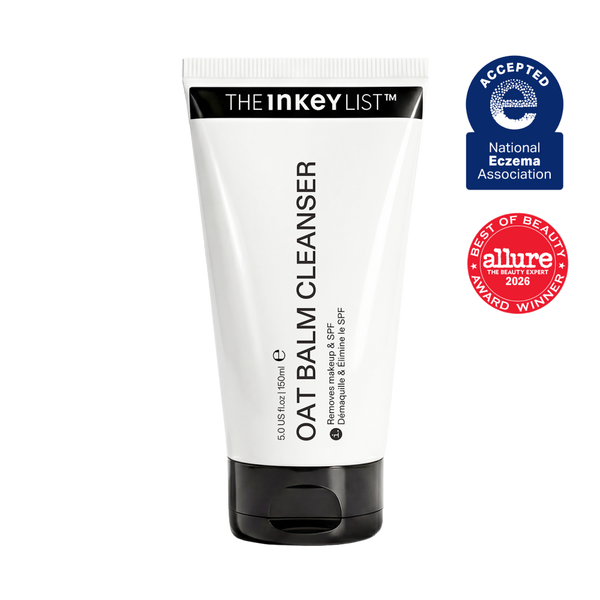
Oat Cleansing Balm, $17.00, 150ml
What it is and how it feels. A solid balm that melts on contact with skin, turns milky when you add water, and rinses away without leaving a film. That last part matters, because the common objection to balms is the residue, and a well-formulated balm does not leave one. This is a genuine cleansing balm for sensitive skin rather than a rich cleanser being marketed at one.
The ingredients that make it work. 5% Oat Kernel Oil does the heavy lifting, delivering ceramides and omega 3 and 6 fatty acids so the formula dissolves makeup while supporting the barrier. Sea Buckthorn Oil adds antioxidant and antibacterial support to help soothe, balance and protect.
Worth flagging: this formula has been reformulated. The oat kernel oil was increased and Sea Buckthorn Oil was introduced, so any older description you encounter will not match what is in the tub today. We wrote about exactly what changed in the new Oat Cleansing Balm, what’s changed and why.
What it is proven to do:
- Removes 100% of waterproof makeup and SPF in 30 seconds*
- Clinically proven 12hr hydration*
- Clinically proven to reduce skin redness after 4 weeks**
- Clinically proven to support skin barrier function**
- Holds the National Eczema Association Seal of Acceptance
\Based on a consumer trial with 29 participants*
\*Based on a clinical trial with 29 participants over 4 weeks*
\**Based on a clinical trial with 23 participants over 24 hours.*
One transparency note. This formula contains ingredients derived from nuts. If you have a nut allergy, please check with the askINKEY team before using it. We would rather tell you plainly than have you find out the hard way.
Who it is for. Anyone who wears makeup or sunscreen, and anyone whose current face wash leaves their skin feeling stripped. Suitable for sensitive skin and sensitive eyes.
Who it is not for. If you wear nothing on your face and prefer a fresh, light finish, a balm may feel like more product than your routine needs. That is a preference issue, not a performance one.
When and how to use it. Morning and evening. Take a raspberry-sized amount, massage it onto dry skin, then add warm water to emulsify until it turns milky and rinse thoroughly. Applying to dry skin is not a detail you can skip, because the oil phase needs to contact the makeup directly to dissolve it.
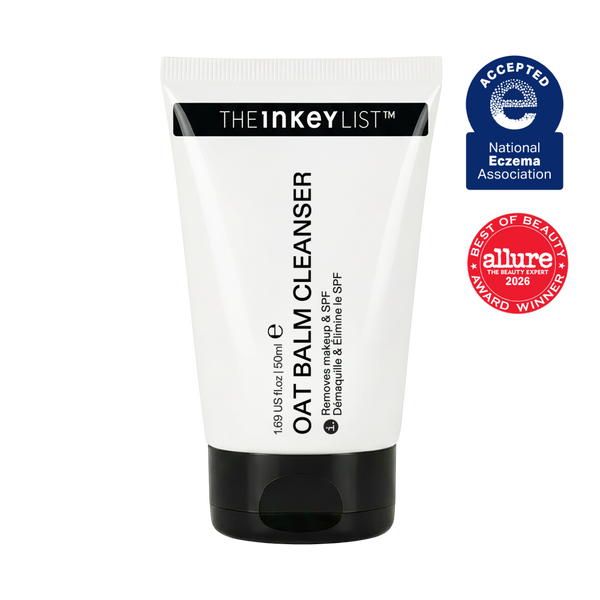
There is also a 50ml mini, which is a low-commitment way to trial it. If you have sensitive skin, you have almost certainly been burned by a full-size purchase before, and a smaller format is a reasonable way to find out before you commit.
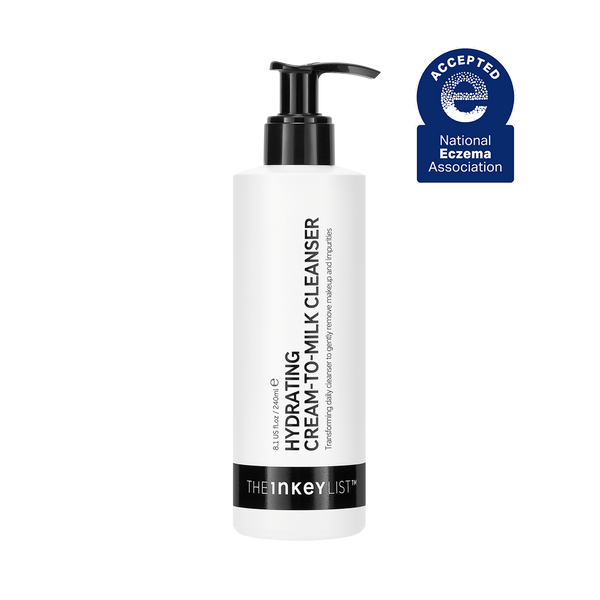
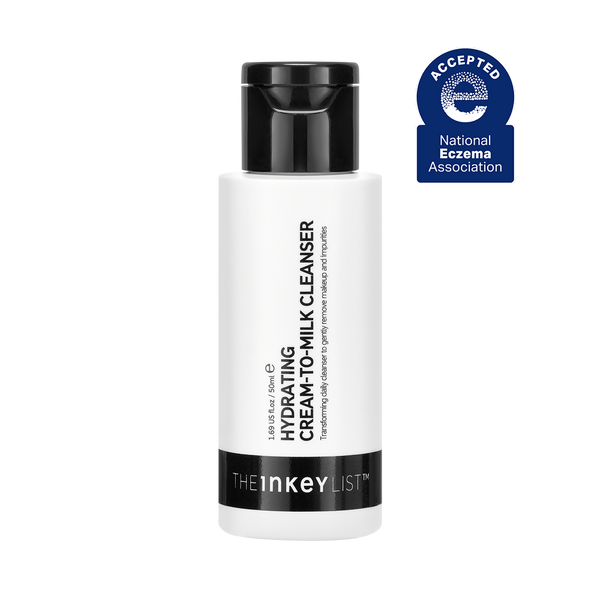
Milk Cleanser, 240ml
What it is and how it feels. A cream that turns to milk as you work it in, staying comfortable from the first second to the rinse. There is no point during the wash where it starts to feel like it is pulling.
The ingredients that make it work. 5% Rice Milk supports the skin barrier for up to 12 hours after cleansing, and Hyaluronic Acid delivers clinically proven 24-hour hydration. It is formulated at pH 5 to 6, which puts it right in the range discussed earlier, and that is not a coincidence. It is the difference between a cleanser that respects the acid mantle and one that flattens it.
Formulation credentials. National Eczema Association approved. Sulfate-free, SLS-free, alcohol-free, paraben-free, silicone-free, fragrance-free and non-comedogenic.
Who it is for. Dry, dehydrated and sensitive skin, and anyone who wants a gentle face wash that removes makeup without adding a separate balm step. If your skin is more thirsty than oily, this is likely your answer.
Who it is not for. If you want a genuinely fresh, matte finish, a milk texture will not deliver that sensation.
When and how to use it. Morning and evening. It also works as the second step after the Oat Cleansing Balm on days with heavier makeup or a full application of sunscreen. You can find it here.
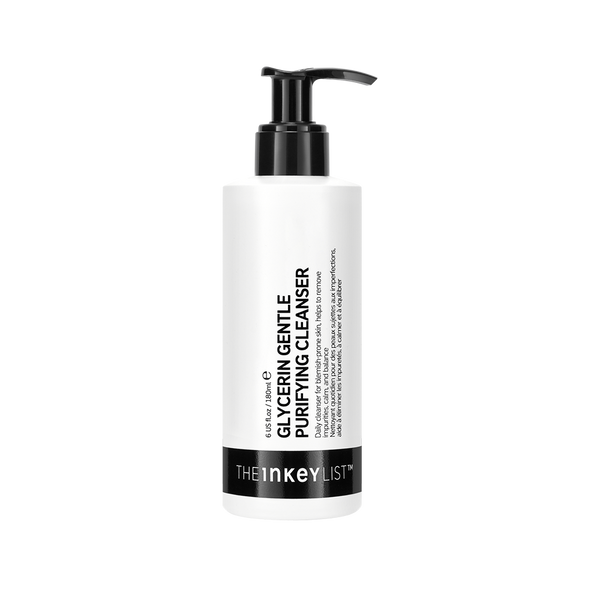
Glycerin Gentle Purifying Cleanser, $19.00
What it is and how it feels. The option for anyone who wants a properly clean, fresh finish without the stripping that usually comes attached to it. If balms and milks feel like too much on your skin, this is the answer, and it is particularly useful for skin that is both oily and reactive.
The ingredients that make it work. 20% Glycerin for humectant hydration, 3% Centella Complex for soothing and comfort, and 2% Sea Water and Algae Complex.
What it is proven to do:
- Clinically proven to support the skin barrier for 24 hours after application.*
- Clinically proven to hydrate blemish-prone skin for 24 hours, oil-free.*
\Tested on 28 participants over 24 hours.*
Formulation credentials. Formulated sulfate-free, SLS-free, fragrance-free, alcohol-free, silicone-free, paraben-free and non-comedogenic.
Who it is for. Combination, oily or blemish-prone skin that also happens to be reactive, and anyone who dislikes the feel of a balm or milk. You can find it here.
Who it is not for. Very dry or actively flaking skin will likely be more comfortable with the balm or the milk.
When and how to use it. Morning and evening, on damp skin, massaged for around sixty seconds and rinsed thoroughly.
A gentle cleanser for eczema-prone skin
If you are looking for a gentle cleanser for eczema-prone skin, cleansing is not a minor decision in your routine. It is arguably the most consequential one.
Eczema-prone skin starts from a compromised barrier. The lipid mortar is already depleted, and the skin is less able to replace what gets removed. A stripping face wash on eczema-prone skin is not simply uncomfortable in the moment, it removes material the skin will struggle to rebuild, which can extend the recovery period well beyond the wash itself.
Two of the cleansers above carry a credential worth understanding rather than skimming. The Oat Cleansing Balm holds the National Eczema Association Seal of Acceptance, and the Milk Cleanser is National Eczema Association approved. That is not a marketing badge a brand can simply buy. The Seal of Acceptance requires the full formula to be submitted, reviewed by a scientific oversight committee of dermatologists and allergists, screened against a defined exclusion list of known irritants and allergens, and supported by clinical safety testing that includes participants with sensitive skin. It is renewed annually, and a reformulated product has to reapply.
What it means in practice: the formula has been independently assessed as appropriate for eczema-prone skin. What it does not mean, and the association is explicit about this, is that it is guaranteed to suit every individual, or that it treats eczema.
Practical guidance for eczema-prone skin:
- Lukewarm water only. Hot water is one of the most reliable triggers for both dryness and flushing.
- Keep contact time short. You do not need to work a cleanser for a long time for it to do its job.
- Pat dry, never rub. A clean, soft towel, pressed rather than dragged.
- Moisturize while skin is still damp. Applying within about a minute of patting dry traps the surface water rather than letting it evaporate.
- Patch test anything new, without exception. Our guide on why do I need to do a patch test shows you how.
And the boundary, stated plainly because it matters more than any product recommendation on this page: skincare supports skin, it does not treat eczema. If you have diagnosed eczema, your dermatologist or doctor directs your care. A well-formulated cleanser can make the daily experience more comfortable and can avoid making things worse, which is genuinely worth having. It is not a treatment, and we will not describe it as one.
Choosing well is half the job. The other half is technique, which is free to fix and is more often the culprit than people expect.
How to Cleanse Sensitive Skin Properly
You can buy the gentlest face wash ever formulated and still irritate your skin with it. Water temperature, friction, contact time and what you do in the sixty seconds afterward all change the outcome. Here is the method.
-
Start with clean hands. You are about to spend a minute moving whatever is on your hands across every part of your face. It takes five seconds and it is the easiest step to skip.
-
Use lukewarm water. Hot water strips lipids and triggers flushing, and it is the single most common technique error. Cold water is not the fix either, because it does not effectively loosen oil and makeup. Lukewarm is the working middle, and it should feel unremarkable against your skin rather than pleasant or bracing.
-
Cleanse for around 60 seconds. Long enough for the formula to actually do its work, short enough not to overwork the skin. Cleansing sets the tone for everything after it. Over-strip at this stage and every subsequent product spends its effort compensating instead of contributing.
-
Fingertips only. No brushes, no rough cloths, no scrubbing motion. Friction is a direct irritant on reactive skin, and your fingertips give you far more feedback and control than any device. Use light, circular movements and let the formula do the work.
-
Rinse thoroughly. Cleanser residue is a common and badly underestimated cause of ongoing irritation. The spots people consistently miss are the jawline, the hairline, the sides of the nose and just under the chin. If your skin is irritated in a pattern rather than all over, residue is worth ruling out.
-
Pat dry, do not rub. A clean, soft towel, pressed against the skin. Dragging a towel across your face is friction you get nothing in return for. A dedicated face towel, washed regularly, is a small change that helps more than it sounds like it should.
-
Apply the next step on damp skin. Humectants such as hyaluronic acid and glycerin work by drawing in water, so they perform better when there is water available to draw on. Aim to apply your next product within about sixty seconds of patting dry, before the surface moisture has evaporated.
Morning versus evening
These are not the same job, and treating them identically is a mistake.
In the evening you are removing sunscreen, makeup, sebum, sweat and a full day of environmental buildup. That is a real cleansing task and it deserves a proper wash.
In the morning you are removing almost nothing. Overnight your skin produced some oil and you left some skincare on it. That is the entire workload.
Many people with sensitive skin do well with a thorough cleanse at night and something much lighter in the morning, whether that is a gentle face wash or simply a rinse with lukewarm water. Treat this as an experiment rather than a rule. Try a week of each and pay attention to how your skin feels by mid-morning.
Double cleansing, briefly
Double cleansing means two cleansing steps in sequence: an oil-based or balm cleanser first to break down sunscreen, makeup and sebum, then a water-based cleanser to remove everything that is left along with any residue. Order matters, because oil dissolves oil and water-based formulas cannot get through a layer of long-wear product efficiently.
It is most relevant on days when you have worn sunscreen or heavier makeup, and least relevant on a bare-faced day. For how often it makes sense and when to skip it, we have a full guide on how often should you double cleanse.
Removing sunscreen without wrecking your barrier
This deserves its own mention, because it is where a lot of sensitive-skin routines quietly break down.
Sunscreen is engineered to stay on your face. It is designed to resist water, sweat and rubbing, which is exactly what makes it effective and exactly what makes it stubborn to remove. Water and a light gel cleanser will not reliably shift a full application, and the usual response is to compensate with force: hotter water, more scrubbing, a cloth, a harsher product. Every one of those is worse for your barrier than the sunscreen ever was.
The better answer is a texture built for the job. A balm or milk cleanser dissolves sunscreen through the like-dissolves-like principle rather than through brute surfactant power, which means the removal is thorough and the barrier stays largely undisturbed. If you want to understand more about sunscreen itself and how it works, our SPF page covers the fundamentals.
Clean skin is a starting point, not a finish line. What you apply in the next sixty seconds determines whether the cleanse was worth doing.
What to Apply After Cleansing
Three principles first. Apply to damp skin, because humectants need water to work with. Work from lightest texture to richest, so nothing gets blocked. And introduce one new product at a time, leaving several days between additions, so that if you react you know precisely what caused it.
Hyaluronic Acid Serum, $13.00. 2% pure hyaluronic acid at three different molecular weights, so hydration is delivered across multiple layers rather than sitting entirely on the surface, plus Matrixyl 3000. Apply to damp skin for deeper, longer-lasting hydration. This is the simplest possible addition to a stripped-back routine and one of the least likely to cause trouble.
Ectoin Hydro-Barrier Serum. $17.00 The barrier-focused option, and the one to reach for if you recognized yourself in the section on rising reactivity and stinging. It combines 2% Ectoin to help strengthen the barrier while hydrating, 2.5% Hyaluronic Acid, and a 1% barrier blend of three ceramides. If your skin has started reacting to products it used to tolerate, this is a more targeted choice than a general hydrator.
Bio-Active Ceramide Moisturizer, $22.00. This is where you replace the mortar between the bricks. Bio-Active Ceramide NP helps visibly firm, smooth and strengthen the barrier, and Shea Butter comforts and soothes. For anyone recovering from over-cleansing, a ceramide moisturizer is not optional, it is the step doing the actual rebuilding.
HydroSurge Dewy Face Mist. $14.00 An optional comfort step rather than a necessity. Useful for topping up hydration through the day, and genuinely welcome when skin feels hot and tight, including after sun exposure. Keep it in the refrigerator for an extra cooling effect, which sounds like a small thing and is disproportionately pleasant on a flushed face.
Optional: Exosome Hydro-Glow Complex, $24.00. An optional step for sensitive-feeling, stressed-looking skin, and listed as suitable for sensitive skin. The relevant claims for this audience are the soothing-led ones:
- 55% reduction in visible signs of skin stress (redness, puffiness, visible irritation)***
- Proven to deliver up to 12-hours of hydration**
- 100% saw more glowing skin, clinically proven*
\4-week clinical study of 26 people*
\*Clinical study of 31 people*
\**In-vitro testing of Cica Exosomes showed a 55% reduction in pro-inflammatory markers and a 63% increase in markers associated with skin renewal after 8 hours.*
It helps reduce the appearance of redness, comforts reactive-looking skin and supports the skin’s natural processes. If the science behind the ingredient is new to you, our exosomes page explains what they are and how they are used in skincare. Treat this as an addition once your barrier is settled rather than a first move while skin is actively unhappy.
A note on actives
If retinol or exfoliating acids are part of your routine, they can stay, but the sequencing needs care while your barrier is recovering.
Introduce them slowly, starting once or twice a week rather than nightly. Never layer two strong actives on the same night during a recovery period. And give your skin a few weeks of consistent gentle cleansing and moisturizing before you reintroduce anything potent, because adding actives to a compromised barrier is how most people end up back where they started. Our guide on what not to mix with retinol covers the combinations to keep apart.
Sunscreen in the morning remains a normal and sensible part of a daytime routine, and as covered above, choosing a cleanser that removes it comfortably is part of making that sustainable.
That is the full routine. Here are the questions people still ask.
The Bottom Line on Cleansing Sensitive Skin
The best face wash for sensitive skin is the one that removes what genuinely needs removing and leaves your barrier where it found it. Comfortable, not squeaky.
The decision shortcut is short enough to remember at the shelf: fragrance-free, sulfate-free, a gentle texture, supportive ingredients like oat kernel oil, glycerin and ceramides, and a method that keeps heat and friction out of the equation.
Remember that technique carries as much weight as the product, and it costs nothing to fix. Lukewarm water, fingertips, a thorough rinse, a gentle pat dry, and your next step applied while skin is still damp.
Be patient with the timeline. Skin that has been over-stripped for months does not recover in a weekend. Two to four weeks of consistency is a realistic expectation, and doing less is usually the fastest route back to comfortable. If you want to work through the wider decision, our guide on how to choose the right cleanser covers every skin type and texture.
Where to start
If you want one place to begin, begin with the Oat Cleansing Balm at $17.00. It removes makeup and sunscreen thoroughly, supports the barrier while it works, and holds the National Eczema Association Seal of Acceptance. If you would rather try before committing to a full size, which is a completely reasonable position when your skin has let you down before, the 50ml mini exists for exactly that.
Not sure which of the three suits you? Our skincare quiz builds a personalized routine around your skin, or you can browse all cleansers and decide for yourself. Our askINKEY team is there if you have a question about ingredients, allergies or where to start.
Because at The INKEY List, We Give A Care.
Frequently Asked Questions
Got a question?
Our askINKEY team are a friendly bunch of skincare experts with deep product knowledge and zero judgement. Whether you're an ingredient obsessive or just starting out, we'll make it make sense. No question too big. No question too small. We Give A Care, Every Day.


