


Do Pimple Patches Work on Blackheads?
Do pimple patches work on blackheads? The honest answer is no, not really - here is why hydrocolloid struggles with blackheads, and exactly what to use on congestion instead.
Author
askINKEY skincare advisor
Published
20 October, 2026
Time to read
12 minutes
US VERSION
Do Pimple Patches Work on Blackheads?
Do pimple patches work on blackheads? It is one of the most common questions in skincare, and the honest answer is no, not really. Pimple patches, including the hydrocolloid kind, are great at one specific job, but clearing blackheads is not it. This article breaks down exactly why that is, what a blackhead actually is, how a patch works, and most importantly, what to use on blackheads and congestion instead. We would rather give you clear guidance and proven ingredients than sell you the wrong product, so here is the straight-talking version.
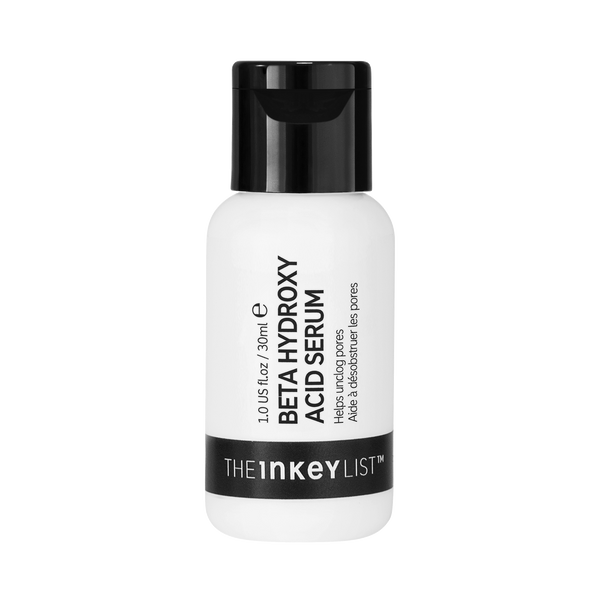
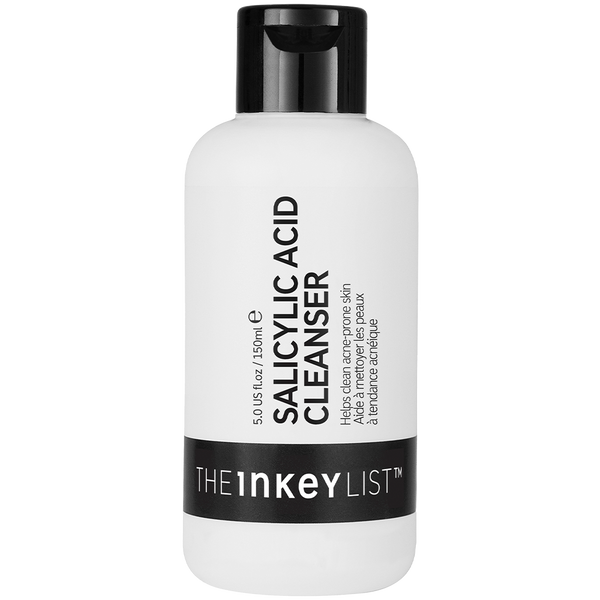
If you have ever stuck one of our Hydrocolloid Invisible Pimple Patches over a stubborn blackhead and peeled it off hoping for a dramatic reveal, you are in good company. It is a hugely popular experiment. But a patch and a blackhead are a mismatch by design, and understanding why will save you time, money and frustration. By the end of this read you will know precisely when to reach for a patch, and when to reach for something like our Salicylic Acid Cleanser or our Beta Hydroxy Acid (BHA) Serum instead. No hype, no overpromising, just what works for the blemish in front of you.
The short answer: do pimple patches work on blackheads?
The honest answer: not really - and here is why.
Pimple patches, including hydrocolloid patches, do not meaningfully work on blackheads. The reason is simple and physical. A hydrocolloid patch works by absorbing fluid at the surface of the skin. A blackhead has no surface fluid to draw out, because it is a plug of oil and dead skin sitting down inside the pore. No fluid at the top means nothing for the patch to grab. So do hydrocolloid patches work on blackheads? No, because the one thing they are built to do has nothing to act on.
It helps to draw a clean line early. Patches are genuinely excellent on surfaced spots that have come to a head, the raised whiteheads with visible fluid near the surface. That is the environment hydrocolloid loves. Blackheads and deeper congestion are a completely different scenario. They sit beneath the surface, trapped in the pore, which is exactly where a patch cannot reach.
This is not a dead end, though. If patches are the wrong tool, there are right ones. The rest of this article shows exactly what to use on blackheads instead and when, so you leave with a plan rather than a shrug. If you want the full mechanical breakdown of how patches do their thing, we have a dedicated explainer on how hydrocolloid patches work. Here, we are staying tightly focused on the blackhead question.
To really understand why a patch comes up short, you first need to know what a blackhead actually is.
What a blackhead actually is (and why that matters here)
A blackhead is a clogged pore. More specifically, it is a plug made of excess oil (sebum) and dead skin cells that has built up inside the pore and then oxidized at the point where it meets the air. That oxidation is what turns the top of the plug dark, which is why blackheads look like tiny black or gray dots rather than angry red bumps. The color is not dirt and it is not something you failed to wash off. It is simply the surface of trapped congestion reacting with oxygen.
That single detail is the hinge of this entire article, so it is worth sitting with. A blackhead is open congestion sitting inside the pore. The pore is technically open at the top, which is how the air gets in to oxidize it, but the actual blockage lives down in the pore itself. There is no pool of fluid at the surface. There is a semi-solid plug lodged below.
Now contrast that with a whitehead. A whitehead is a closed, raised spot that has come to a head, with fluid gathered near the surface. It is the kind of blemish that feels tender, looks swollen, and often has a visible white or yellowish top. That fluid at the surface is exactly what a hydrocolloid patch is designed to work with. The blackhead has no such fluid, and the whitehead does, which is the whole reason one responds to a patch and the other does not.
A blackhead is congestion trapped inside the pore. A whitehead is fluid gathered at the surface. That difference decides whether a patch can help at all.
This is why the physical facts matter more than marketing. A patch is an absorbent surface dressing. It can only interact with what is at the top of the skin. A blackhead keeps its contents locked inside the pore, where an absorbing patch simply has nothing to pull.
Blackheads tend to gather in the oiliest parts of the face, which is why you will usually notice them across the nose, chin and forehead, the classic T-zone. These areas produce more oil, so they clog more readily. That is also why the nose becomes such a specific battleground, something we will come back to shortly.
If you want to go deep on what causes blackheads and clogged pores in the first place, from oil production to skin cell turnover, we have a dedicated guide: What Causes Clogged Pores? The Complete Guide. That article is the full treatment manual. This one is about patches, so we will keep our focus there.
With a clear picture of what a blackhead is, it is worth a quick recap of how a patch works, because the mismatch becomes obvious the moment you line the two up.
How hydrocolloid pimple patches work (the short version)
Hydrocolloid is a gel-forming material that absorbs fluid and seals off the area it covers. When you place a hydrocolloid patch over a surfaced spot, it draws fluid and impurities up and away from the blemish, holds them in the gel, and protects the skin while it does so. As it absorbs, the patch typically turns from clear to white or opaque, which is the visible sign that it has been busy soaking up moisture.
The key phrase in all of that is “at the surface”. This is a surface-fluid mechanism. A patch works on what it can physically touch at the top of the skin. It is a dressing, not a vacuum. It does not reach down into a pore, apply suction, or dissolve anything embedded below.
A patch works on what it can touch. If the blemish is not offering fluid at the surface, the patch has nothing to do.
Hydrocolloid itself is not a beauty-industry invention. It comes from medical wound care, where hydrocolloid dressings have long been used to manage fluid and support healing in a protected, moist environment. The Cleveland Clinic’s explainer on how pimple patches work confirms the same core idea: patches absorb fluid, cover the blemish, and reduce the temptation to pick. For the deeper science, a peer-reviewed narrative review of hydrocolloid dressings in wound care lays out how these materials manage fluid and create the conditions for healing. That medical pedigree is exactly why hydrocolloid is so effective on the right kind of blemish.
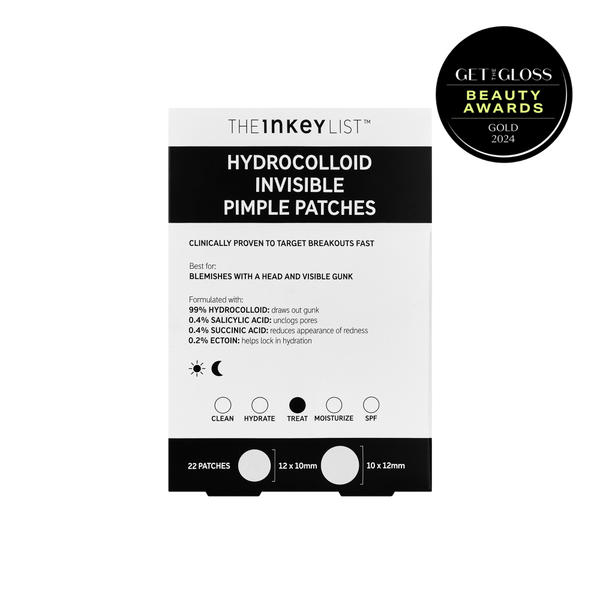
Our own patches are 99% hydrocolloid, boosted with 0.4% Salicylic Acid, 0.4% Succinic Acid and 0.2% Ectoin to support the skin as the patch does its work. We will not re-list the full detail here, because it lives on the product page and in the pillar.
We are keeping this section deliberately short, because we have a complete breakdown of the mechanism, including why patches turn white, over on how hydrocolloid patches work. Read that if you want the full explainer. For our purposes, you now have everything you need to understand the central point of this article, which is why that mechanism fails on a blackhead.
So why don’t pimple patches work on blackheads?
Here is the mismatch in plain terms. A patch needs surface fluid to absorb. A blackhead is a dry, oxidized plug sitting inside the pore. No fluid means nothing for the gel to draw out. The tool and the target are simply incompatible.
The clearest way to picture it is this: a patch is a sponge, not a magnet. A sponge soaks up whatever liquid is sitting on a surface. It cannot reach into a sealed container and pull out something solid. A whitehead presents fluid at the surface, like a spill on a counter, so the sponge works. A blackhead keeps its contents tucked inside the pore, with nothing offered up top, so the sponge has nothing to soak.
Set your expectations honestly, and the patch still has a small role. If you put one over a blackhead, it will cover the area, protect it from your fingers, and stop you picking or squeezing, which is genuinely useful because picking at blackheads tends to make things worse. What it will not do is clear the blackhead. The congestion stays put, because the patch never reaches it.
None of this makes patches bad. It makes them specific. They are a precision tool for one kind of blemish. Using them on blackheads is like using an umbrella to water the garden: not wrong exactly, just not what the object is for. For blackheads you want something that can actually get into the pore, like an oil-soluble active. Our Beta Hydroxy Acid (BHA) Serum is built for exactly that, and we will come back to it properly later.
Two versions of this question get searched constantly, so let us answer each directly.
Do pimple patches draw out blackheads?
No, not meaningfully. A patch can only draw out fluid that is already sitting at the surface, and a blackhead does not provide any. The plug is trapped inside the pore, so there is nothing for the gel to lift away.
This is where a very common myth creeps in. People peel off a patch, see a white mark where it sat, and assume it “pulled out” the blackhead. It did not. That white color is simply the hydrocolloid gel reacting with the small amount of surface moisture it absorbed, from the skin itself or from any surfaced blemish nearby. It is not extracted blackhead content. The blackhead is almost always still there once the patch comes off.
Do pimple patches work on nose blackheads?
No, and the nose is a particularly tough case for two reasons. First, nose blackheads are textbook in-pore congestion with no surface fluid, so the patch has nothing to absorb. Second, the nose is curved and one of the oiliest areas on the whole face, so patches often struggle to adhere evenly to it in the first place.
That oiliness is exactly why the nose collects so much congestion. More oil means more raw material for pores to clog with. So instead of sticking a patch on the side of your nose and hoping, a cleanse-and-treat approach will serve you far better, which brings us right to what patches genuinely do excel at, and then to what actually works on blackheads.
What pimple patches ARE great for
Here is the good news, because a patch is a hero in the right situation. Pimple patches shine on surfaced spots, the raised blemishes with a visible head or fluid near the surface, the whiteheads. In that scenario the hydrocolloid has fluid to absorb, a seal to protect the area, and a physical barrier that stops you touching and picking while the skin calms down. Right tool, right job.
Our Hydrocolloid Invisible Pimple Patches are designed to make that job effortless. They are:
- Virtually invisible on all skin tones, so you can wear them day or night
- Ultra-thin, which means they sit flat and wear comfortably under makeup
- Available in two sizes (10mm and 12mm) so you can match the patch to the spot
- Suitable for sensitive skin, vegan, and non-comedogenic
- Pregnancy and breastfeeding friendly
On the results front, we stick to what we can stand behind. In a clinical study of 20 people, our patches were clinically proven to visibly reduce breakouts in 4 hours and to reduce the appearance of redness in 8 hours. That is a real, same-day win for a surfaced spot you want gone before an event or a morning meeting.
The practical details: a pack of 22 patches is $10.00, with the two sizes included so you are covered whether it is a small blemish or a larger one. Keep a pack in your bathroom drawer and one in your bag, and you will always have the right fix for a surfaced spot the moment it shows up.
The throughline of this whole article is “right tool, right job”. Patches are the right tool for whiteheads. For blackheads, you need a different tool entirely, so let us redirect blackhead sufferers to the products that will actually help.
What actually works on blackheads instead
If a patch cannot reach into the pore, you need something that can. Blackheads call for two things: an active that gets inside the pore to clear existing congestion, and an ongoing approach that keeps oil balanced so pores re-clog more slowly. Oil-soluble actives can travel into the oily environment of the pore in a way a surface dressing never will, which is exactly why they work where a patch cannot.
We will keep this a focused summary rather than a full treatment manual. If you want the complete deep dive on causes, timelines and the full routine, head to What Causes Clogged Pores? The Complete Guide. For now, here are the three steps that do the heavy lifting, each one mapped to a single job.
Cleanse with salicylic acid
Salicylic acid is a beta hydroxy acid (BHA), and its defining trait is that it is oil-soluble. That means it can get down into the oily environment of the pore to help reduce and prevent the congestion that forms blackheads. Used at the cleansing stage, it goes to work across the whole T-zone every single day, which makes it the natural daily foundation of a blackhead-prone routine.
Just as importantly, a well-formulated salicylic cleanser does this without stripping the skin, so it suits oily, combination and congestion-prone skin without leaving it tight and uncomfortable. Our Salicylic Acid Cleanser helps reduce blemishes, blackheads and the look of visible pores as part of a daily routine, and it is $15.00. Think of it as the groundwork: the step that keeps pores clearer so congestion has less chance to build up in the first place.
Go deeper into the pore with a BHA
A cleanser rinses off, so for stubborn blackheads and congestion that the cleanse alone does not shift, you want a leave-on treatment that stays on the skin and keeps working. This is where a BHA serum earns its place. Because BHAs are oil-soluble, they work inside the pore, which is exactly the place a patch cannot reach, helping to clear and smooth congestion over time.
Set realistic expectations here, because honesty matters more than hype. This is a consistency game measured in days and weeks, not an overnight transformation. Use it regularly, give it time, and always patch-test when introducing a new active to see how your skin responds. Our Beta Hydroxy Acid (BHA) Serum is the targeted leave-on step for blackheads and congestion, priced at $14.00. It is the more focused partner to the daily cleanse.
Keep oil balanced
The final piece is maintenance, and it is the one people most often skip. The faster your skin produces excess oil, the faster pores re-clog, so managing oil over the long term is what keeps results sticking. Niacinamide is the ingredient of choice here: it helps visibly reduce excess oil, the look of blemishes and the appearance of enlarged pores, which supports fewer blackheads forming over time.
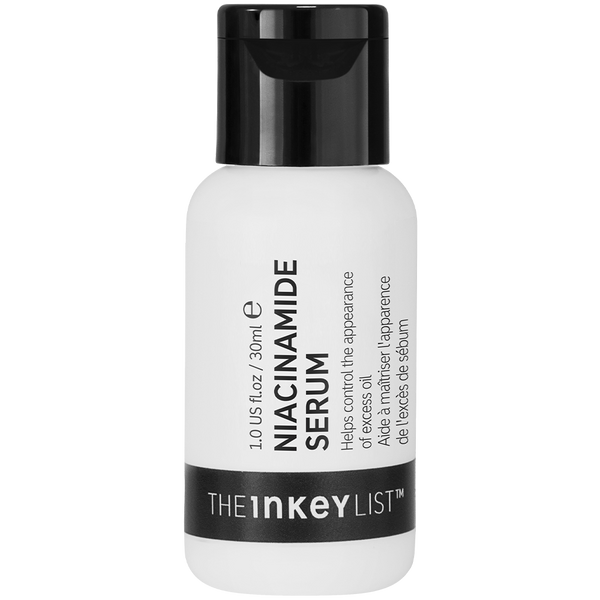
This is not a quick fix and it is not meant to be. It is the everyday balance step that complements the cleanse-and-treat approach and plays the long game. Our 10% Niacinamide Serum is the oil-balance maintenance step, at $13.00. Cleanse to clear, treat to go deeper, balance to maintain, and your pores have a much harder time clogging back up.
With both toolkits on the table, the only thing left is knowing which one to reach for in the moment.
When to reach for a patch vs a blackhead treatment
The decision is genuinely simple once you know what each tool is for. If you have a raised, surfaced spot with a visible head or fluid, a whitehead, reach for a patch. That is the moment hydrocolloid does its best work: it will protect the spot, calm its appearance, absorb the surface fluid and, just as usefully, physically stop you from picking at it. If you have a big day tomorrow and a tender whitehead tonight, a patch is exactly what you want.
If, on the other hand, you have blackheads, blocked pores or general congestion with nothing raised or fluid-filled at the surface, a patch is the wrong call. Reach instead for a salicylic acid cleanser or a BHA serum, the oil-soluble actives that can actually get into the pore and do something about the blockage. The sign to look for is simple: is there something at the surface for a patch to absorb, or is the congestion sitting down in the pore?
It is worth saying clearly that patches and pore-clearing actives are not rivals. They do completely different jobs, and they happily live together in one routine. Keep our Hydrocolloid Invisible Pimple Patches on hand as your spot fix for surfaced blemishes, and run a cleanse-treat-balance routine, starting with our Salicylic Acid Cleanser, as your ongoing strategy against congestion. One is a precise emergency tool, the other is your daily prevention.
And that is really the INKEY stance in a nutshell: we would far rather you buy the product that works for your actual concern than the wrong one that leaves you disappointed. Matching the tool to the blemish is the whole game.
The short version (recap)
If you only remember a handful of things, make it these:
- Do pimple patches work on blackheads? Not really. There is no surface fluid for the patch to absorb, because a blackhead sits inside the pore.
- What patches ARE for: surfaced spots with a visible head or fluid (whiteheads), where they protect, absorb and stop picking.
- What actually works on blackheads: cleanse with salicylic acid daily, go deeper with a BHA serum for stubborn congestion, and keep oil balanced with niacinamide over time.
- The honest bottom line: clear guidance, proven ingredients and real results beat sticking the wrong product on the wrong blemish every time.
Conclusion
So, do pimple patches work on blackheads? No, and knowing that is genuinely good news. It saves you the money and frustration of expecting a tool to do a job it was never built for. A patch cannot clear a blackhead because a blackhead keeps its contents inside the pore, and a patch only works with fluid at the surface. Once you understand that, the whole thing clicks into place.
That does not mean patches should leave your routine. Far from it. Keep our Hydrocolloid Invisible Pimple Patches on hand for exactly what they are great at: surfaced spots with a head that you want protected, calmed and off-limits to your fingers. For blackheads, reach for the oil-soluble actives that can actually get into the pore. Right tool, right job, every time.
This is how we would always rather talk to you: with clarity you can trust rather than a fix that does not fit. Proven ingredients, real results and the honest answer, even when the honest answer is “not this one”.
If blackheads and congestion are your concern, start with the routine that actually reaches into the pore: try our Salicylic Acid Cleanser daily and add our Beta Hydroxy Acid (BHA) Serum for stubborn areas. Keep a pack of our Hydrocolloid Invisible Pimple Patches nearby for the surfaced spots they were made for. And if you are not sure what is driving your breakouts in the first place, let our Breakout Analyzer Pro tool help you build the right routine for your skin.
Frequently Asked Questions
Got a question?
Our askINKEY team are a friendly bunch of skincare experts with deep product knowledge and zero judgement. Whether you're an ingredient obsessive or just starting out, we'll make it make sense. No question too big. No question too small. We Give A Care, Every Day.


