



How Long Does Tranexamic Acid Take to Work?
A week-by-week guide to tranexamic acid before and after results, from the first signs of brightening at 2 to 4 weeks to maximum fading of dark spots and melasma at 12 weeks.
Author
askINKEY skincare advisor
Published
13 May, 2026
Time to read
14 minutes
Before and after results for tranexamic acid follow a predictable pattern, and knowing that pattern is the difference between staying consistent and giving up two weeks too early. If you have just started using a tranexamic acid serum for dark spots, melasma, acne scars or general uneven skin tone, the question on your mind is almost certainly the same one that brought you here: when will I actually see something change?
Here is the short answer. Most people see early visible improvement in brightness and a softening of dark spots at 2 to 4 weeks. Significant before and after results, the kind you can see clearly when you compare photographs, typically arrive at 6 to 8 weeks. Maximum results for melasma and deeper, longer-standing pigmentation take 8 to 12 weeks of consistent twice-daily use.
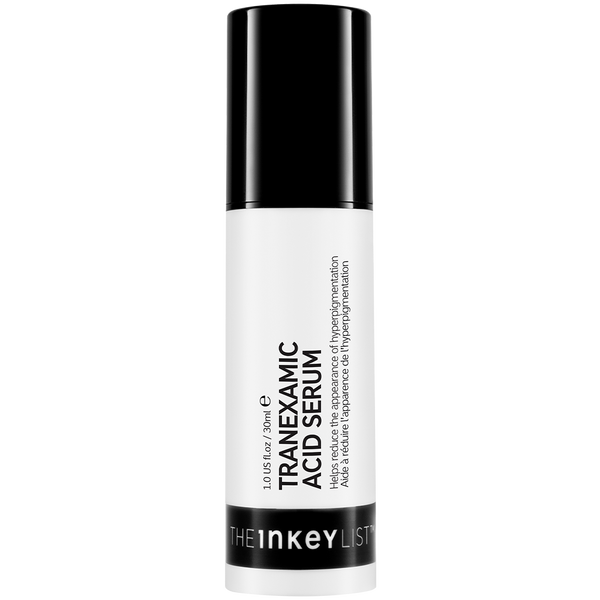
INKEY’s Tranexamic Acid Serum delivers 2% tranexamic acid in a lightweight serum at just $19 for 30ml, and it is rated 4.3 stars from 358 reviews. It is formulated for all skin types, including sensitive skin, and it is considered safe to use while pregnant or breastfeeding.
Below, we break down exactly what happens to your skin week by week, what before and after results look like for each type of hyperpigmentation, which variables speed your progress up or slow it down, and how to build a routine that gets you the fullest possible transformation. If you want the broader science on the ingredient itself, our complete tranexamic acid guide covers what it is and how it works in depth.
What Tranexamic Acid Actually Does to Your Skin
Before we get to the timeline, one myth needs clearing up, because it shapes every expectation that follows.
Tranexamic acid is not an exfoliating acid and it is not a retinol. Despite the word “acid” in its name, it does not resurface your skin, it does not shed layers, and it does not belong in the same category as glycolic, lactic or salicylic acid. There is no purging phase. There is no peeling. There is no increased photosensitivity. It behaves nothing like the actives most people associate with fading discoloration, and that difference explains both its gentleness and its pace.
So what is it doing?
Think of pigmentation as a signaling problem rather than a staining problem. Your skin contains melanocytes, the cells that produce melanin. Those cells do not act independently. They respond to instructions sent by surrounding keratinocytes, the skin cells that make up most of your epidermis. When your skin is exposed to UV light, inflammation from an acne breakout, or hormonal shifts from pregnancy or contraception, the keratinocytes release messengers that tell melanocytes to ramp up melanin production.
That keratinocyte-to-melanocyte signaling cascade depends on plasminogen activation. Tranexamic acid inhibits it. It steps into the conversation and interrupts the message before it arrives. The melanocyte never receives the instruction to overproduce, so it does not.
Less melanin at the source means less discoloration at the surface.
This is fundamentally different from how exfoliating acids approach the same problem. AHAs and BHAs work by accelerating the shedding of pigmented cells from the top layer of your skin. That is genuinely useful, and it produces fast, visible brightening. But it addresses pigment that has already been made and already travelled upward. It does nothing about the underlying instruction that keeps telling your melanocytes to produce more.
That distinction is exactly why tranexamic acid earns its place against stubborn concerns. Melasma is driven by hormonally sensitized melanocytes that keep receiving the signal no matter how diligently you exfoliate. Long-standing sun damage sits deeper than surface shedding reaches. In both cases, exfoliation alone can feel like emptying a bath without turning off the tap. Tranexamic acid turns down the tap.
It also explains the timeline. Interrupting melanin production does not retroactively remove pigment that already exists in your skin. Existing discoloration fades through your skin’s own natural cell turnover cycle, which takes several weeks in most adults and slows with age. So you are waiting on two processes at once: new pigment being suppressed, and old pigment cycling out. Neither happens overnight, and both compound over time.
The Three Actives Doing the Work
INKEY’s formula is not tranexamic acid alone. It pairs three actives at a 2% concentration each, chosen because they act at different points in the pigmentation process:
- 2% Tranexamic Acid - interrupts the signaling pathway that tells melanocytes to overproduce melanin, reducing new pigment formation at the source.
- 2% Acai Berry Extract - a potent antioxidant that helps defend skin against the environmental oxidative stress that triggers pigment production in the first place, while supporting overall radiance.
- 2% Magnesium Ascorbyl Phosphate - a stable, gentle vitamin C derivative that helps brighten existing discoloration and improve overall evenness of skin tone without the irritation risk of pure ascorbic acid.
The combination matters more than any single number on the ingredient list. One active is reducing what your skin makes going forward. Another is defending against the triggers. The third is working on what is already visible. You are addressing the problem from three directions simultaneously.
That dual action, reducing new melanin while fading existing discoloration, is precisely why consistency drives the timeline so heavily. Every application maintains the interruption in the signaling cascade. Miss several days and the signal resumes, melanocytes get back to work, and you are effectively refilling the bath you were trying to drain. The serum is not building a reservoir of results that carries you through gaps. It is holding a line that has to be held daily.
It is also why tranexamic acid is one of the few brightening actives that genuinely suits every skin type, including sensitive skin. Because it is not exfoliating, not resurfacing and not photosensitizing, it sidesteps the irritation that so often derails a pigmentation routine before it has had time to work. You can find it, and the wider routine it fits into, across our tranexamic acid ingredient guide and the full hyperpigmentation collection.
Now that the mechanism is clear, the results timeline makes complete sense.
The Tranexamic Acid Results Timeline - Before and After, Week by Week
Here is what to expect at each stage, based on clinical research and the experiences reported by people using the serum consistently. Use it as a benchmark to measure your own progress against, and take a photograph at the start so you have something honest to compare with later. Skin changes too gradually for memory to track it accurately.
Weeks 1 to 2: The Foundation Phase
In the first fortnight, most people see very little change in their pigmentation, and that is entirely expected.
What is happening beneath the surface is genuine, though. Tranexamic acid begins inhibiting plasminogen activation almost immediately on application, which means the signaling cascade telling your melanocytes to overproduce melanin is already being interrupted. New pigment formation starts slowing from the first few days. You simply cannot see it yet, because the discoloration on your face right now was produced weeks ago and has to cycle out through natural cell turnover.
A systematic review of tranexamic acid in post-inflammatory hyperpigmentation, published on PMC, examined the available evidence across different modes of delivery and confirmed that topical tranexamic acid is an effective and well tolerated option for post-inflammatory pigmentation, with a favorable safety profile compared to systemic routes. The review’s value here is that it looks across multiple studies rather than resting on one, which makes its conclusions about efficacy more robust than any single trial could be.
What you may notice in this window is a subtle improvement in skin texture and hydration, and the absence of anything unpleasant. No stinging, no flaking, no redness. For anyone who has previously tried to tackle pigmentation with aggressive actives and been forced to stop, that uneventfulness is itself meaningful. It means you will still be using this in eight weeks, which is when the results actually live.
What to expect: No visible fading yet. Comfortable wear. Possible slight improvement in overall skin feel.
Weeks 2 to 4: First Visible Lightening
This is where the first genuine before and after difference begins to show.
Around the three to four week mark, most people report that their overall complexion looks brighter and slightly more even. Dark spots have not disappeared, but their edges often look less defined and their color less saturated. Skin tone reads as fresher. It is the kind of change you notice in good daylight, or when someone comments that you look well rested.
This early response tracks with clinical findings on combination formulas. A 12-week study of a serum containing tranexamic acid, kojic acid and niacinamide found the formulation to be an effective and well tolerated treatment for hyperpigmentary conditions, with improvements building progressively across the study period rather than arriving all at once. Progressive is the operative word. The graph goes up steadily, not in a step change.
The Magnesium Ascorbyl Phosphate in the formula contributes noticeably at this stage, since vitamin C derivatives tend to deliver visible brightening faster than pigment-pathway inhibitors do. You are seeing the fast-acting component of the formula first, while the slower structural work continues underneath.
What to expect: Brighter overall complexion. Softer-edged dark spots. Early evenness returning.
Weeks 4 to 6: Noticeable Before and After Difference
By week four to six, comparison photographs start to earn their keep.
Individual dark spots are measurably lighter. Post-acne marks, which respond faster than most pigmentation types, may have faded substantially. Overall skin tone looks more uniform, and the contrast between pigmented areas and your natural base tone has narrowed, which is what your eye actually registers as “clearer skin.”
Melasma tends to lag here, and that is normal rather than a warning sign. Research comparing 5% tranexamic acid to 3% hydroquinone for melasma treatment found comparable efficacy between the two, with tranexamic acid producing significantly fewer adverse effects. Melasma is simply a deeper, more hormonally entrenched concern, and it works on a longer clock than sun spots or acne marks.
“Amazing product! I used consistently for around 2 months and saw amazing changes to my dark pigmentation and acne scarring.” — Molly, verified reviewer
Molly’s timeline, roughly two months, lines up almost exactly with where the clinical data points. This is the stage where people most often get impatient, precisely because they are close. If you are at week five and seeing partial results, the correct response is to keep going, not to change course.
What to expect: Clearly lighter dark spots. Visible evenness. Photographic difference from baseline.
Weeks 6 to 8: Significant Before and After Results - The Key Clinical Milestone
Week six to eight is the milestone the research keeps returning to, and the point at which most people say the product has obviously worked.
The systematic review on tranexamic acid in post-inflammatory hyperpigmentation concluded that tranexamic acid is efficacious in treating post-inflammatory hyperpigmentation across delivery methods, and that topical application offers meaningful improvement with mild, local and generally transient side effects, in contrast to the systemic risks associated with oral use. For anyone treating pigmentation cosmetically rather than clinically, that combination of efficacy and tolerability is the whole argument for a topical route.
At this stage, sun spots and age spots are significantly lighter. Post-inflammatory hyperpigmentation from acne has often faded to the point of being easily covered, or no longer needing coverage at all. Melasma patches show real improvement in both intensity and, frequently, in the sharpness of their borders. Overall complexion clarity is the change people tend to describe first, because evenness reads as luminosity.
If you have been consistent twice daily and used sunscreen every morning, this is the point at which your before and after comparison becomes genuinely persuasive.
What to expect: Substantially faded dark spots. Clear improvement in melasma intensity. Visibly more even tone.
Weeks 8 to 12: Maximum Before and After Results - Melasma and Deep Pigmentation
The final stretch is where deeper pigmentation catches up with everything else.
The 12-week combination serum study ran to twelve weeks for a reason: improvement in hyperpigmentary conditions continues accumulating well past the eight-week mark. Melasma, dermal pigmentation and long-standing sun damage all sit deeper in the skin and take longer to cycle out. By week twelve, many people with melasma report their most dramatic before and after difference, having seen only moderate change at week six.
This is also the point to answer a question that matters enormously and is asked constantly: how long can you keep using it?
Indefinitely. Tranexamic acid is safe for continuous long-term use. There is no cycling requirement, no tolerance build-up, no need to take breaks, and no diminishing-returns cliff. This is not a treatment you complete, it is an active you maintain.
That distinction is critical for melasma in particular, because melasma is a chronic, relapsing condition driven by hormones and UV exposure. The triggers do not disappear when your pigmentation fades. Stop treatment and the signaling cascade resumes, which is why melasma so often returns after people declare victory and quit. Continued use holds your results in place while ongoing improvement carries on more gradually. Many people use tranexamic acid as a permanent fixture in their routine, and that is exactly how it is designed to be used.
What to expect: Maximum fading of melasma and deep pigmentation. Sustained, maintainable results.
The Before and After Timeline, Summarized
- Weeks 1 to 2: Foundation phase. No visible change, mechanism already active.
- Weeks 2 to 4: First visible brightening and early evenness.
- Weeks 4 to 6: Noticeable fading of dark spots and post-acne marks.
- Weeks 6 to 8: Significant, clearly photographable results. The key clinical milestone.
- Weeks 8 to 12: Maximum results, especially for melasma and deep pigmentation.
- Beyond 12 weeks: Continued use maintains results and prevents recurrence.
Worth noting: this timeline is specific to tranexamic acid. Different actives work on entirely different schedules, and if you are layering several at once it helps to know what each one owes you and when. Our guide to how long skincare takes to work covers the wider picture across ingredient categories.
The overall timeline is the framework, but results vary by concern.
Tranexamic Acid Before and After Results - By Skin Concern
Not all pigmentation is the same, and treating it as though it were is the fastest route to disappointment. The type, depth and cause of your discoloration all determine how quickly you should expect to see change. Find yours below and measure against the right benchmark rather than a generic one. If you are not certain which type you have, our guide to identifying your type of hyperpigmentation is the place to start.
Dark Spots and Sun Damage (Hyperpigmentation)
Sun spots, age spots and general UV-induced dark patches are among the most responsive concerns to tranexamic acid, largely because UV exposure is the exact trigger the ingredient is best at interrupting.
At 2 to 4 weeks, expect early brightening. Spots look slightly less defined and your overall complexion reads fresher, though individual marks are still clearly present.
At 6 to 8 weeks, you should see clear, photographable fading. Spots are lighter, smaller in apparent size and less contrasted against your natural tone. This is where most people with sun damage report being genuinely pleased.
At 12 weeks, older and deeper sun damage that resisted early progress typically shows its most significant improvement. Pigmentation laid down over years does not lift in a month.
There is one variable here that outranks every other, and it is not negotiable. Sun exposure is the primary driver of this pigmentation type, which means using tranexamic acid without daily sun protection is genuinely self-defeating. You are suppressing melanin production with one hand and stimulating it with the other. Daily broad-spectrum SPF is not a nice addition to your dark spot routine, it is the thing that allows the rest of the routine to function. Skip it and you can expect your results to stall regardless of how diligent you are with the serum.
For a fuller breakdown of the causes and treatment routes for this concern, our guide on how to get rid of dark spots on the face goes deeper into types, triggers and treatment sequencing.
Melasma Before and After
Melasma is the most challenging pigmentation concern to treat and the one where tranexamic acid has the strongest reputation among dermatology professionals.
It presents as symmetrical patches, most commonly across the cheeks, forehead and upper lip, and it is driven primarily by hormones rather than sun exposure alone. Pregnancy, oral contraceptives and hormone therapy are common triggers, which is why melasma is sometimes called the mask of pregnancy. UV exposure and heat then aggravate what hormones have started.
Because melasma involves hormonally sensitized melanocytes that keep receiving the instruction to overproduce, surface exfoliation consistently underperforms against it. You can shed pigmented cells indefinitely and the cells beneath will simply produce more. Worse, aggressive exfoliation can trigger inflammation, and inflammation is itself a melasma trigger. Plenty of people have made their melasma visibly worse by attacking it harder.
Tranexamic acid takes the opposite approach. By interrupting the signal rather than removing the result, it addresses the mechanism that keeps melasma coming back. Research comparing 5% tranexamic acid with 3% hydroquinone in melasma found comparable efficacy with significantly fewer adverse effects, which matters a great deal for a chronic condition requiring long-term management.
The realistic melasma timeline: modest improvement at 4 to 6 weeks, clear improvement at 8 weeks, maximum results at 10 to 12 weeks and beyond.
How long can you take tranexamic acid for melasma? Indefinitely, and for melasma specifically that is the point. Topical tranexamic acid requires no cycling and no breaks. Because melasma is chronic and relapsing, and because the hormonal and UV triggers behind it persist, ongoing use is what holds your results rather than watching them return. Treat it as a permanent part of your routine, not a twelve-week course. Continued use both sustains what you have gained and allows slow further improvement over months.
Pair it with rigorous daily sun protection. For melasma, sun protection is not a supporting act, it is half the treatment.
Acne Scars and Dark Spots from Acne (Post-Inflammatory Hyperpigmentation)
The dark marks left behind after a breakout heals are post-inflammatory hyperpigmentation, and they respond well to tranexamic acid.
The mechanism is straightforward. Inflammation from an acne lesion triggers the same keratinocyte-to-melanocyte signaling cascade that UV exposure does. Your skin, responding to injury, overproduces melanin in the affected area. The breakout resolves, but the pigment remains, sometimes for many months. For many people, the marks outlast the acne by a considerable margin and are the more distressing problem.
Because this type of pigmentation is generally more superficial than melasma, it tends to be among the faster concerns to improve. Early lightening often appears at 3 to 4 weeks, with substantial fading by 6 to 8 weeks.
One important clarification: tranexamic acid treats the marks that acne leaves behind, not active acne itself. It has no antibacterial action and does not clear congestion. If you are still experiencing active breakouts, you need to address both, because every new inflamed lesion creates fresh pigmentation and you will be running to stand still. Our acne scars guide covers the distinction between pigmented marks and textural scarring, which respond very differently to treatment.
For active acne alongside your pigmentation routine, salicylic acid is the standard first port of call. It is oil-soluble, so it penetrates into the pore to clear the congestion driving breakouts. The Salicylic Acid Cleanser works it into your existing routine without adding a step, and the 360 Skin Clearing Serum targets active breakouts directly.
“I’ve been using this alongside the Succinic Acid Treatment and the Salicylic Acid Cleanser for 3 months and my skin has improved so much.” — Hycent, verified reviewer, on a three-product routine combining the Succinic Acid Treatment, Salicylic Acid Cleanser and Tranexamic Acid Treatment
Hycent’s routine illustrates the point well. Clearing active breakouts while simultaneously fading the marks left by previous ones is what produces the dramatic before and after comparisons, because it stops new pigmentation forming while the existing marks fade. You can see more community results in our real results with INKEY on scarring and hyperpigmentation round-up.
Uneven Skin Tone and Dullness
If your concern is general unevenness and lack of radiance rather than distinct spots, you are in the fastest-responding category.
Overall tone and dullness typically improve inside 2 to 4 weeks, well ahead of discrete pigmentation. The reason is simple: you are not waiting for concentrated deposits of melanin to cycle out, you are addressing diffuse, relatively superficial irregularity.
The Acai Berry Extract and Magnesium Ascorbyl Phosphate carry much of this early work. The antioxidant activity of acai helps defend against the environmental stressors that dull the complexion, while the vitamin C derivative brightens and improves clarity fairly quickly. Together they deliver the visible early payoff that keeps people using the product long enough for the tranexamic acid to do its slower, deeper work on stubborn pigmentation.
For a broader look at what causes uneven tone and how to treat its various forms, our dedicated guide to uneven skin tone covers the full picture. And to build a complete routine rather than relying on a single product, browse the hyperpigmentation collection.
Now you know what to expect for your concern, here is what influences your personal speed.
What Affects How Quickly You See Before and After Results?
Two people can use the identical serum with identical diligence and see results weeks apart. That is not a formulation inconsistency, it is the effect of variables that differ from person to person. Some are within your control and some are not. Knowing which is which turns slow progress from a mystery into something explainable.
Consistency of Application
This is the single largest controllable factor, and it is not close.
Tranexamic acid works by continuously interrupting a signaling pathway. That interruption only holds while the ingredient is present and active in your skin. Apply it twice daily and the suppression is sustained. Apply it four times a week and the pathway reactivates in the gaps, your melanocytes resume production, and you spend a meaningful portion of your effort simply undoing what happened while you were not applying it.
Most people who conclude that tranexamic acid did not work for them have not used it consistently for a full eight weeks. Not through carelessness, usually, but because life happens, bottles get left in bags, and evening routines get skipped when you are exhausted. Set a visible cue. Keep the bottle where you cannot miss it. The routine that survives your worst week is the one that produces results.
SPF - The Non-Negotiable
You cannot outwork the sun with a serum.
UV exposure directly activates the exact melanin-production pathway tranexamic acid is working to suppress. Using the serum without daily sun protection means running two opposing processes simultaneously, and the sun is considerably more powerful than any topical active. This applies year-round, on cloudy days, and indoors near windows, since UVA passes through glass.
For melasma there is a further complication: visible light and heat can aggravate it independently of UV. Sun protection is not simply a preventive measure for pigmentation, it is an active component of treating it.
Apply broad-spectrum SPF 30 or higher every morning as the final step of your routine, and reapply through the day when you are outdoors. Our complete SPF guide covers how much to use, when to reapply and how to layer it correctly over serums.
If you take only one instruction from this article, take this one. The people posting the most dramatic before and after comparisons are almost universally the people wearing sunscreen every single day.
Severity and Depth of Pigmentation
Depth determines duration.
Superficial, epidermal pigmentation, which includes most post-acne marks and recent sun spots, sits in the upper layers of the skin and clears comparatively quickly. Dermal pigmentation, including much melasma and long-standing sun damage, sits deeper and takes considerably longer to shift because your natural cell turnover has to carry it a greater distance.
Age matters here too. Cell turnover slows as we get older, so the same depth of pigmentation may take longer to fade at fifty than at twenty-five. That is biology, not a failure of the product, and it argues for patience rather than escalation.
Skin Tone
Deeper skin tones are more prone to post-inflammatory hyperpigmentation, because more active melanocytes respond more readily to inflammatory triggers. This creates a genuine problem with conventional brightening approaches: harsh actives cause irritation, irritation causes inflammation, and inflammation causes exactly the pigmentation you were trying to treat. Aggressive treatment can leave deeper skin tones worse off than when they started.
Tranexamic acid’s non-irritating mechanism is what makes it particularly well suited across all skin tones. It is not resurfacing, not stripping and not sensitizing. It interrupts a signal rather than provoking a response, which means it can be used consistently and long-term on skin that cannot tolerate harsher brightening routes. For anyone who has been caught in the cycle of treating pigmentation and inadvertently creating more of it, that gentleness is the entire value proposition.
Cause of Pigmentation
Sun-induced pigmentation generally responds fastest, because removing and blocking the trigger is straightforward once you commit to sunscreen.
Post-inflammatory hyperpigmentation responds well provided the underlying inflammation is controlled. If active acne continues, new marks keep forming and your net progress looks flat even though the serum is working on the existing ones.
Hormonally driven melasma is the slowest and most persistent, because the trigger is internal and ongoing. You cannot apply sunscreen to your endocrine system. This is why melasma requires the longest timeline and genuinely benefits from indefinite maintenance rather than a fixed course.
Concentration and Formula Quality
Percentage is not the whole story, but it matters. Clinical evidence supports topical tranexamic acid as an effective route for treating pigmentation, and 2% represents a well-established concentration that balances efficacy against tolerability.
Formulation quality is equally important. Tranexamic acid needs to remain stable and to penetrate adequately to reach its site of action, and supporting actives determine whether you are treating one aspect of pigmentation or several. INKEY’s Tranexamic Acid Serum combines 2% tranexamic acid with 2% Acai Berry Extract and 2% Magnesium Ascorbyl Phosphate specifically so that new pigment suppression, antioxidant defense and brightening of existing discoloration all happen together.
Correct Layering
Application order affects how much active actually reaches your skin.
Apply tranexamic acid after cleansing and after any hydrating serum, and before moisturizer. Lightweight, water-based products go first so that heavier occlusive layers do not block their absorption. Leave around 60 seconds between serum layers so each has time to absorb, and allow roughly 30 minutes before applying moisturizer if you want to maximize penetration.
It pairs comfortably with niacinamide, which supports the skin barrier and contributes its own brightening action without any conflict.
The single biggest factor in how quickly you see before and after results? Showing up twice, every day. And following it with SPF every morning.
Here is exactly how to set up your routine for maximum transformation.
How to Get the Best Tranexamic Acid Before and After Results - Your Routine Guide
Understanding the ingredient is one thing. Building a routine that actually delivers the transformation is another. Here is a complete, executable structure for morning and evening, plus guidance on what to pair it with.
Your Morning Routine for Dark Spots and Hyperpigmentation
- Cleanse. Start with a gentle, non-stripping cleanser such as the Fulvic Acid Cleanser. Harsh foaming cleansers compromise your barrier, and a compromised barrier slows every result that follows.
- Hydrate. Apply Hyaluronic Acid Serum to damp skin. Hyaluronic acid draws water into the upper layers and creates a well-hydrated base, which supports absorption of what comes next.
- Wait 60 seconds. Let each layer absorb before applying the next.
- Apply Tranexamic Acid Serum. Two to three drops across the whole face, not just on visible spots. Treating the entire area addresses pigmentation you cannot see yet and keeps your tone even as it develops.
- Moisturize. Lock everything in with a moisturizer suited to your skin type.
- Apply SPF. Broad-spectrum SPF 30 or higher, every single morning, without exception. This is the step that protects everything you have just done. Our SPF guide covers correct application amount and reapplication timing.
Your Evening Routine
- Double cleanse if you wear sunscreen or makeup. An oil-based first cleanse removes SPF and makeup properly, then follow with your regular cleanser. Sunscreen left on overnight is a common and avoidable cause of congestion.
- Hydrate. Hyaluronic Acid Serum again, on damp skin.
- Apply Tranexamic Acid Serum. The second daily application is what maintains continuous suppression of the pigmentation pathway. It is not optional if you want the timeline above.
- Consider retinol on alternate nights. Retinol accelerates cell turnover, which helps clear existing pigmented cells faster, and it complements tranexamic acid well. If you are new to it, start with Starter Retinol at a low frequency and build up slowly.
- Moisturize. Seal the routine and support overnight barrier repair.
Ingredient Pairing Guide
Tranexamic acid is unusually easy to combine with other actives, which is one of its practical advantages.
- Tranexamic Acid plus Vitamin C. An excellent pairing. Vitamin C brightens and provides antioxidant protection while tranexamic acid suppresses new pigment formation, hitting the problem from two directions. The 15% Vitamin C and EGF Serum, $20.00 and rated 4.5 stars from 690 reviews, is a natural partner if you want a dedicated vitamin C step alongside the Magnesium Ascorbyl Phosphate already in the tranexamic acid formula.
- Tranexamic Acid plus Retinol. Yes, these work well together. Retinol accelerates turnover so pigmented cells clear faster, while tranexamic acid reduces new pigment production. Introduce retinol gradually, and if your skin is sensitive, use them on alternate nights or apply tranexamic acid in the morning and retinol in the evening. Our guide on what not to mix with retinol covers the combinations that genuinely require caution.
- Tranexamic Acid plus Niacinamide. Niacinamide supports barrier function and contributes its own effect on pigment transfer, making it a comfortable, low-risk addition.
- Tranexamic Acid plus Hyaluronic Acid. Straightforwardly compatible. Hyaluronic acid hydrates and supports absorption, with no interaction concerns at all.
Application Tips Worth Knowing
- Treat the whole face, not just the spots. Spot-treating leaves developing pigmentation untouched and can create patchiness.
- Use it on your neck, chest and hands. These areas accumulate significant sun damage and are almost universally neglected. They respond to tranexamic acid the same way your face does, and body hyperpigmentation is one of the most commonly overlooked concerns in any routine.
- Do not increase frequency to speed things up. Twice daily is the effective ceiling. More does not mean faster.
- Take a baseline photograph. Same light, same angle, same time of day. Gradual change is nearly impossible to judge from memory.
- Patch test when introducing any new product. Even gentle formulas deserve a patch test, particularly on reactive skin. Here is why a patch test matters and how to do one properly.
What if you have been consistent and still are not seeing results?
Not Seeing Results Yet? Here’s What to Troubleshoot
If you are past the point where you expected change and your before and after comparison looks unconvincing, work through this checklist before concluding that the product has failed you. In the large majority of cases, one of these is the explanation.
Have you reached the 6 to 8 week mark? This is by far the most common issue. Significant results take six to eight weeks, and melasma takes eight to twelve. If you are at week three feeling impatient, you are right on schedule. Nothing is wrong. Keep going and reassess at week eight with a photograph rather than a memory.
Are you using it twice daily, every day? Not most days. Every day. Intermittent use allows the pigmentation pathway to reactivate between applications, and inconsistent use is the single most common reason results stall. Count back honestly over the last two weeks. If you have missed more than a couple of applications, you have your answer, and the fix is simply to restart the clock with better consistency.
Are you wearing SPF every morning? Without daily broad-spectrum sun protection, UV exposure continuously restimulates the melanin production you are working to suppress. This is the second most common reason for stalled results, and it is entirely fixable. Add it tomorrow.
Is your application order correct? Tranexamic acid should go on after cleansing and hydrating serum, before moisturizer. Applying it over a heavy cream or a thick occlusive layer significantly reduces how much reaches your skin. Reorder your steps and give it another four weeks.
Is your pigmentation deep or hormonally driven? Melasma and dermal pigmentation simply take longer, often ten to twelve weeks for meaningful change and longer still for maximum results. If you have hormonally driven melasma, your realistic benchmark is different from someone treating a few sun spots. Measure against the right one.
Is your skin barrier compromised? A damaged barrier impairs both absorption and your skin’s ability to repair, and it can keep low-grade inflammation running, which itself drives pigmentation. If your skin feels tight, stings on application, looks red or has become newly reactive, prioritize barrier repair before adding anything else. Our guide to a damaged skin barrier explains how to identify and rebuild one. Restore the barrier and your actives start working properly again.
Is it time to see a professional? If you have used tranexamic acid consistently with daily sun protection for twelve weeks and seen genuinely no change, or if your melasma is severe or spreading rapidly, consult a board-certified dermatologist. Some pigmentation requires prescription treatment or in-clinic procedures, and there is nothing defeatist about that. Topical skincare is one tool among several, and knowing when to escalate is part of using it well.
Still unsure whether your expectations are calibrated correctly? Our guide to how long skincare takes to work sets realistic timelines across ingredient categories, and identifying your type of hyperpigmentation will help you confirm you are treating what you think you are treating.
Conclusion: The Bottom Line on Tranexamic Acid Before and After Results
Tranexamic acid is not a quick fix, and that is not a criticism of it. It is a description of how it works.
Ingredients that produce instant visible change generally do so by removing something from the surface of your skin. Tranexamic acid does something more durable: it interrupts the biological instruction that creates pigmentation in the first place. That takes longer to become visible, and it is also why the results hold. You are not repeatedly clearing away a symptom, you are turning down the process generating it.
The before and after timeline is consistent and worth committing to memory. Early visible brightening at 2 to 4 weeks. Significant, clearly photographable results at 6 to 8 weeks. Maximum results for melasma and deeper pigmentation at 8 to 12 weeks, with continued use maintaining and gradually extending what you have achieved.
Three things determine whether you get there:
- Consistent twice-daily application. Not most days. Every day, morning and evening, without gaps.
- Daily SPF without exception. Sun exposure directly reverses the work the serum is doing. This is the single most common reason results stall.
- Patience measured against the right benchmark. Judge your progress at week eight, not week three, and against a photograph rather than a memory. If you are treating melasma, judge at week twelve.
At $19, INKEY’s Tranexamic Acid Serum delivers a clinically supported 2% concentration alongside Acai Berry Extract and Magnesium Ascorbyl Phosphate, in a formula suitable for all skin types including sensitive skin, and safe to use during pregnancy and breastfeeding. It is rated 4.3 stars from 358 real reviews.
The most useful reframe we can offer is this: stop thinking of pigmentation treatment as a project with an end date and start thinking of it as maintenance. The people with the most impressive before and after comparisons are rarely the ones who found a more powerful product. They are the ones who kept using a good one, protected it with sunscreen, and gave it long enough to show what it could do.
Your brighter skin is already in progress. You just have to stay consistent.
Shop the Tranexamic Acid Serum - $19 | 30ml | All Skin Types
4.3 stars from 358 reviews · Safe for pregnancy and breastfeeding · Free from parabens
Learn more about tranexamic acid →
Learn more about hyperpigmentation →
Build your complete dark spot routine →
Frequently Asked Questions
Got a question?
Our askINKEY team are a friendly bunch of skincare experts with deep product knowledge and zero judgement. Whether you're an ingredient obsessive or just starting out, we'll make it make sense. No question too big. No question too small. We Give A Care, Every Day.


