



How to Get Rid of Dark Spots: A Science-Backed Guide to Fading Hyperpigmentation
A science-backed guide to fading dark spots with proven ingredients, a simple AM/PM routine, and the daily habit that protects your results.
Author
askINKEY skincare advisor
Published
31 May, 2026
Time to read
13 minutes
If you are searching for how to get rid of dark spots, you have probably already scrolled through a dozen conflicting opinions, a few miracle-cure ads, and at least one influencer promising overnight results. Dark spots, also known as hyperpigmentation, are one of the most common skin concerns people deal with, and they are caused by your skin producing more melanin than it needs in a specific area. That overproduction can look like small brown marks, patches of uneven tone, or lingering shadows left behind after a breakout.
This guide is here to cut through the noise. You will learn what actually causes dark spots, how they differ from related concerns like melasma and post-inflammatory marks (just a light touch, since that deserves its own deep dive), which ingredients have real evidence behind them, and how to build a routine that uses those ingredients correctly. We will also set honest expectations on timelines, because fading dark spots is a process, typically 8 to 12 weeks of consistent use, not something that happens in a weekend.
Before we go further, it helps to know this guide follows the same philosophy behind everything we do: clear guidance, proven ingredients, and real results, with most products priced under $27. If you want the full category breakdown first, our dark spots pillar page is the central hub for this topic, and our hyperpigmentation pillar page covers the broader umbrella this concern falls under.
No airbrushing, no miracle claims, just a plain, honest look at what is actually happening on your skin and what you can do about it. The first step to getting rid of dark spots is not a product. It is understanding exactly why they show up in the first place.
What Causes Dark Spots on the Face?
Dark spots form because of a biological process called melanin overproduction. Melanin is the pigment that gives skin, hair, and eyes their color, and it is produced by cells called melanocytes. When something triggers those cells into overdrive in a specific area, you end up with a visible patch of extra pigment sitting in the skin. That is a dark spot, in plain terms.
Several different triggers can set this process into motion, and understanding which one applies to you can help you choose the right approach.
Sun exposure and UV damage is the most common trigger by far. Ultraviolet light stimulates melanocytes as a defense mechanism, which is why spots often appear on areas that get the most sun, like the cheeks, forehead, nose, and backs of the hands. These are sometimes called sunspots, or solar lentigines in clinical terms, and they tend to deepen in color with repeated sun exposure over time.
Post-inflammatory marks from acne or injury are another major cause. When skin experiences inflammation, whether from a popped pimple, a cut, a burn, or even aggressive extractions, the skin can respond by producing excess pigment in that exact spot as it heals. This is often called a post-acne mark, and it is different from a true acne scar in that it is a flat, discolored mark rather than a textural indentation. If this is your main concern, our acne scars pagebreaks down post-acne marks and texture changes in more depth.
Hormonal fluctuations can also trigger pigment changes, particularly during pregnancy, with certain medications, or with shifts in hormone levels over time. This is closely related to, but distinct from, melasma.
Natural aging plays a role too. Over the decades, cumulative sun exposure and slower cell turnover can lead to what are commonly called age spots, which are essentially a longer-term buildup of the same sunspot process.
It is worth pausing here on one quick but important distinction: dark spots and melasma are not the same thing. Melasma is a distinct, hormonally driven condition that typically shows up as larger, symmetrical patches, often across the cheeks, forehead, or upper lip, rather than small, isolated marks. It behaves differently and often requires a slightly different approach. Rather than re-explain that full picture here, our hyperpigmentation pillar page covers melasma and post-inflammatory hyperpigmentation (PIH) in detail if that sounds more like what you are dealing with.
One factor that often gets overlooked in conversations about dark spots is the health of your skin barrier. When your barrier is compromised, whether from over-exfoliating, harsh products, or environmental stress, your skin becomes more reactive and prone to inflammation. Since inflammation is one of the known triggers for excess pigment production, a damaged barrier can quietly make hyperpigmentation worse or slower to fade. If you suspect barrier damage is part of your picture, our damaged skin barrier page explains the signs and how to repair it.
So when people search for a dark spot corrector or a dark spot remover for face, what they are really looking for is something that addresses one or more of these root triggers: calming inflammation, slowing excess melanin production, speeding up cell turnover so old pigment clears faster, and preventing new UV-triggered spots from forming. The good news is that there is a well-researched set of ingredients that do exactly this, and that is where we are headed next.
The Ingredients That Actually Fade Dark Spots
This is the part most people skip straight to, and understandably so. Once you know why dark spots form, the next logical question is simple: what actually works? Below are the ingredients with the most consistent evidence behind them for fading the appearance of dark spots, broken down so you understand not just what they do, but why they work and who they tend to suit best.
Tranexamic Acid
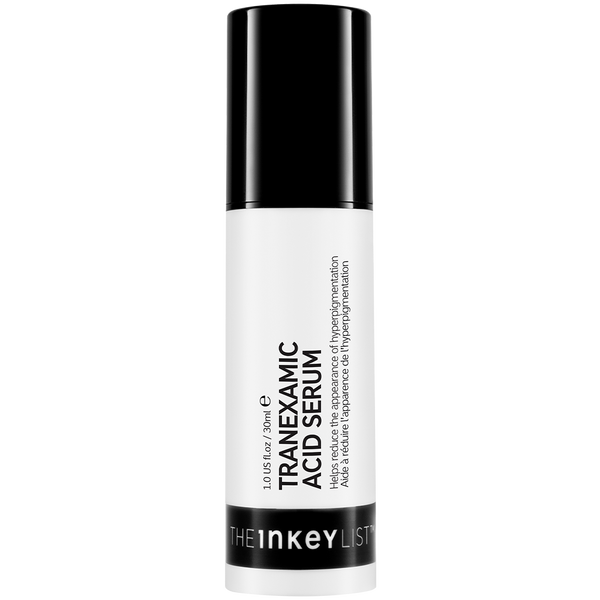
Tranexamic Acid works differently than most brightening ingredients. Instead of just addressing pigment on the surface, it interrupts the internal signaling pathway that triggers excess melanin production in the first place. This makes it especially useful for dark spots that feel stubborn or keep coming back, including pigmentation linked to hormonal triggers. Our Tranexamic Acid page goes deeper into how this ingredient works at a cellular level.
Vitamin C
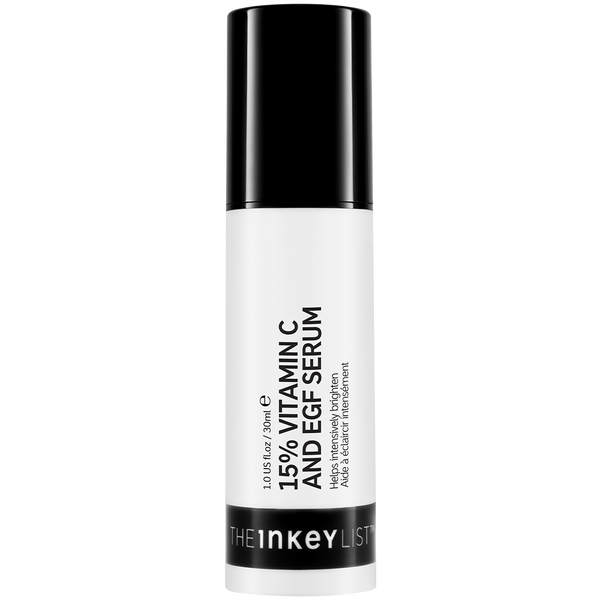
Vitamin C is a well-known brightening ingredient, and for good reason. It helps even out the appearance of skin tone, fights free radical damage caused by UV exposure, and supports the skin in warding off new spots before they form. Because UV exposure is such a major trigger for pigmentation, an antioxidant like Vitamin C plays a genuinely protective role, not just a cosmetic one. Learn more on our Vitamin C page.
Niacinamide
Niacinamide is a multitasking ingredient that helps reduce the appearance of blotchiness and works to regulate how melanin transfers to skin cells, which can help prevent pigment from settling in as visibly. It also supports the skin barrier at the same time, making it a smart pick for anyone dealing with both pigmentation and sensitivity. Visit our Niacinamide page for the full ingredient profile.
Glycolic Acid
Glycolic Acid is an AHA (alpha hydroxy acid) that works by exfoliating surface skin cells. Since dark spots sit within the skin’s upper layers, encouraging that surface turnover can help fade the look of discoloration over time while also improving overall texture and radiance. Our Glycolic Acid page has more detail on how this exfoliation process works.
Azelaic Acid
Azelaic Acid is a gentle multitasker, which makes it a favorite for people with sensitive or blemish-prone skin. It helps even the appearance of skin tone while simultaneously calming redness, so it can tackle two concerns, pigmentation and reactivity, at once without being harsh. Explore more on our Azelaic Acid page.
Retinol
Retinol speeds up cell turnover, which helps the skin shed old, pigmented cells faster and encourages fresh skin to surface. Over time, this supports fading the appearance of existing dark spots while also helping prevent new ones from settling in. Our Retinol page covers how to introduce it properly.
None of these ingredients promise to erase dark spots overnight, and anyone claiming that is overselling what skincare can realistically do. What they offer is a scientifically reasonable mechanism for helping fade the appearance of discoloration with consistent use. If you want to see how two of the most popular options work together, our blog on Vitamin C and Tranexamic Acid for dark spots walks through that pairing in detail. For deeper ingredient-specific dives, check out Glycolic Acid for dark spots and Azelaic Acid for dark spots.
When people ask how to fade dark spots fast, the honest answer is that combining the right actives correctly, rather than piling on every ingredient at once, is what gets you there with the least irritation and the best consistency. A well-formulated dark spot serum built around one or two of these ingredients, used correctly, will outperform a chaotic routine every time.
Knowing which ingredients work is only half the equation. The other half is knowing how to actually use them together without overwhelming your skin, which is exactly what we will walk through next.
Building Your AM/PM Dark Spot Routine
Understanding ingredients is one thing. Knowing how to layer them into a daily routine without overdoing it is where most people get stuck. Below is a straightforward framework for both your morning and evening routine.
Morning routine:
- Gentle cleanser
- Vitamin C or Niacinamide serum
- Moisturizer
- SPF (this is non-negotiable, and we will explain exactly why in the next section)
Evening routine:
- Cleanser
- Treatment serum, choosing one: Tranexamic Acid, Glycolic Acid, Azelaic Acid, or Retinol (not all at once)
- Moisturizer to support the skin barrier
A common mistake is trying to use every active ingredient at the same time, hoping for faster results. In practice, this usually backfires, leading to irritation, redness, or a compromised barrier, which can actually make pigmentation worse rather than better. Instead, introduce new actives gradually. If you are starting Retinol or Glycolic Acid, begin with 2 to 3 times per week and build up tolerance before increasing frequency. This slower approach protects your barrier while still giving the ingredient time to work.
Here are the most common mistakes that slow down progress:
- Layering too many actives at once instead of choosing one treatment step per routine
- Skipping SPF, which allows new pigment to form even while you are treating old spots
- Expecting visible results within days rather than committing to the realistic 8 to 12 week window
For anyone who wants an extra hydration and glow-boosting step, the Exosome Hydro-Glow Complex can be layered into either your morning or evening routine. It is important to be clear about what this product is and is not: it is a complementary hydration and radiance step, not a pigmentation treatment. In clinical testing, 100% of participants saw more glowing skin, clinically proven, and it is proven to deliver up to 12 hours of hydration*. Think of it as support for your skin’s overall glow while your dark spot actives do the targeted pigmentation work.
If you are deciding between brightening actives for your morning step, our blog comparing Vitamin C, Niacinamide, Exosomes, and PDRN breaks down which might suit your skin best. And if Retinol is already part of your evening routine, our guide on boosting Retinol results with Exosomes explains how to pair the two for added hydration support.
The flagship evening option for most people focused specifically on dark spots is the Tranexamic Acid Serum, priced at $19, designed to directly target the melanin overproduction pathway we discussed earlier.
A good routine is only as effective as the protection behind it. No matter how well you build your AM and PM steps, skipping sun protection undoes the work, which is why SPF deserves a section of its own.
Why SPF Is Non-Negotiable for Treating Dark Spots
Here is the plain truth that gets left out of a lot of skincare marketing: no dark spot treatment works long-term without daily sun protection. UV exposure is one of the single biggest triggers for melanin overproduction, which means that even the most effective serum in your routine is working against a tide of new pigment if you are skipping sunscreen.
This is not about fear, it is about physics and biology. UV rays penetrate skin whether it is sunny, cloudy, or you are sitting near a window indoors. Treating existing dark spots while leaving skin unprotected from UV is a bit like mopping a floor with the tap still running. Daily SPF, rain or shine, indoors or out, is essential both to prevent new dark spots from forming and to protect the fading process of the spots you are already treating.
A quick clarification that trips a lot of people up: SPF 30 blocks about 97% of UVB rays, while SPF 50 blocks about 98%. The difference sounds small on paper, but for anyone dealing with active pigmentation concerns, that extra margin can matter, particularly with extended outdoor time or higher sun intensity. If you want the full breakdown of which to choose, our guide on SPF 30 vs SPF 50 covers it without the confusion.
Reapplication is another commonly skipped step that quietly limits results. Applying SPF once in the morning and assuming you are covered for the whole day is one of the most common reasons people feel like their sunscreen “isn’t working.” Most dermatologists recommend reapplying roughly every two hours when you are outdoors or exposed to direct sunlight for extended periods.
There is also the mineral versus chemical sunscreen question, which matters for sensitive or blemish-prone skin in particular. Our comparison on mineral vs chemical sunscreen walks through which formula type might suit your skin type and concerns best. And if you want the deep dive specifically on how SPF interacts with pigmentation, does sunscreen help with hyperpigmentation answers that question directly.
Skip SPF and you’re working against yourself. That is not a scare tactic, it is simply how the biology works.
For a full education on sunscreen basics, our SPF pillar page is the place to start and bookmark. Think of daily sun protection less as an extra step and more as the foundation that makes every other product in your routine actually worth using.
With protection covered, the next piece of the puzzle is thinking beyond just treating the spots you already have, and toward keeping new ones from showing up in the first place.
Preventing Dark Spots From Coming Back
Treating existing dark spots is only half the job. The other half is building habits that keep new ones from forming, because without that shift, you can end up treating the same cycle of pigmentation on repeat.
The single most effective prevention habit, without question, is consistent daily SPF. We covered the why in the previous section, but it bears repeating here because it is the foundation everything else builds on. If you take away only one habit from this entire guide, make it this one.
Beyond sun protection, here are the other prevention habits worth building into your routine:
- Avoid picking at blemishes. It is tempting, but picking or popping breakouts significantly increases inflammation in the skin, which is one of the known triggers for post-inflammatory marks. Letting a blemish heal undisturbed reduces the chance it leaves a lasting mark behind.
- Introduce one new active at a time. This lets you clearly track what is working and what might be causing irritation, rather than guessing which product in a five-step routine is responsible for a reaction.
- Support your skin barrier alongside treatment. A damaged barrier makes skin more reactive, more prone to inflammation, and slower to recover, all of which can prolong discoloration. If barrier health feels like an ongoing issue, our damaged skin barrier page has practical guidance on repairing it.
- Keep skin hydrated. Well-hydrated skin tends to be more resilient during active treatment with exfoliants or Retinol. If dehydration feels like part of your skin’s story, our dehydrated skin page explains the difference between dehydrated and dry skin and how to address it.
- Set realistic expectations. Most dark spots fade gradually over 8 to 12 weeks of consistent use. That timeline is not a sign of a weak product, it reflects how skin cell turnover and melanin regulation actually work biologically.
Prevention is really just consistency wearing a different hat. The habits that fade existing dark spots, daily SPF, gentle and gradual use of actives, barrier support, are the same habits that stop new ones from forming. Bookmark the dark spots pillar page as your ongoing reference point whenever you need a refresher.
With the full practical roadmap covered, from causes to ingredients to routine to prevention, let’s address the specific questions that tend to come up once people start putting this into practice.
Final Thoughts: Clear Skin Starts With Clarity, Not Complication
Fading dark spots is absolutely achievable, but it depends on three things working together: proven ingredients, consistency, and daily SPF. Skip any one of those three, and progress slows or stalls entirely, no matter how good the product is.
If there is one belief worth repeating, it is this: skincare does not need to be complicated to be effective. It needs to be backed by real science and explained clearly enough that you actually understand what you are putting on your skin and why. That is the whole idea behind this guide, and it is the same idea behind every ingredient page linked throughout it.
Results take time. If you are three weeks into a new routine and do not see dramatic change yet, that is normal, not a sign that something is wrong. Melanin regulation and skin cell turnover operate on a biological timeline of 8 to 12 weeks, and rushing that process by over-layering actives typically causes more irritation than progress.
Clear guidance. Proven ingredients. Real results. That is the standard this entire guide was built around, and it is the same standard behind every product mentioned here. If you want a single place to come back to as you build out your routine, our dark spots pillar page is designed to be exactly that resource.
Understanding the “why” behind your routine is the first step. The next is putting it into practice.
Ready to Build Your Dark Spot Routine?
If you are ready to put this guide into action, start with the ingredients that match your skin’s specific needs. The Tranexamic Acid Serum, at $19, remains one of the most direct options for targeting stubborn or recurring dark spots, working by interrupting the melanin overproduction pathway at its source.
If you want to add a hydration and radiance boost alongside your pigmentation routine, the Exosome Hydro-Glow Complex, at $24, is a complementary glow step, not a pigmentation treatment, that pairs well with any of the actives covered in this guide.
Beyond these two, a full dark spot-focused edit exists to match different skin needs and preferences, including options built around Vitamin C, Niacinamide, Glycolic Acid, Azelaic Acid, and Retinol. Every formula is built on the same philosophy: clearly explained, science-backed skincare, with most products priced under $27.
You do not need a ten-step routine or a cabinet full of products to see real change. You need the right ingredients, used consistently, protected by daily SPF. That is how dark spots actually fade, and that is the approach this entire guide was built to walk you through.
*4-week clinical study of 26 people.
**Clinical study of 31 people.
*In-vitro testing of Cica Exosomes showed a 55% reduction in pro-inflammatory markers and a 63% increase in markers associated with skin renewal after 8 hours.
Frequently Asked Questions
Got a question?
Our askINKEY team are a friendly bunch of skincare experts with deep product knowledge and zero judgement. Whether you're an ingredient obsessive or just starting out, we'll make it make sense. No question too big. No question too small. We Give A Care, Every Day.


