



Glycolic Acid for Dark Spots: How It Works on Hyperpigmentation
Glycolic acid fades dark spots two ways at once, and only one of them is exfoliation. Here is what 10% can realistically do, and how long it takes.
Author
askINKEY skincare advisor
Published
05 August, 2026
Time to read
13 minutes
This article explains how glycolic acid works on dark spots, what a 10% formula actually achieves compared to a professional peel, how long results realistically take, and who should be cautious before starting. If you have been using an acid for three weeks and wondering why your pigmentation has not moved, the timeline section will probably be the most useful part of the page.
The short answer first. Yes, glycolic acid for dark spots works, and it works through two separate mechanisms at the same time. Most explanations only cover one of them. Glycolic acid exfoliates, which is the mechanism everybody knows, but it also directly interferes with the enzyme that produces melanin in the first place. Hyperpigmentation, the clinical term for those darker patches and spots, responds to both actions at once. That combination is what makes glycolic acid genuinely useful for uneven tone rather than just a resurfacing ingredient that happens to help a bit.
It is also worth setting the frame honestly at the top. Glycolic acid is an effective supporting active for pigmentation. It is not a standalone eraser, it works gradually, and it needs daily sun protection alongside it to deliver anything at all. Anyone telling you a toner will clear years of sun damage in a fortnight is selling you something.
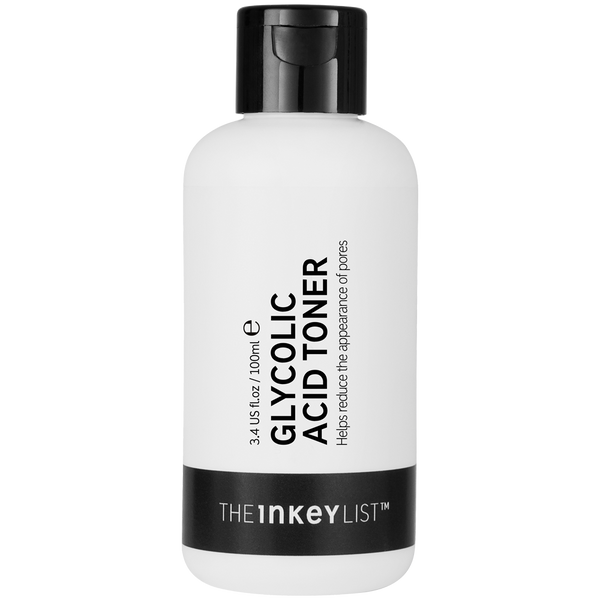
If you already know what you are looking for, our Glycolic Acid Toner is the product this article is built around, the wider glycolic acid collection covers other formats including body, the hyperpigmentation collection lets you shop the concern directly, and What is Hyperpigmentation? is the pillar guide if you need the definitional groundwork this article deliberately skips over.
The short version: glycolic acid works on dark spots two ways at once, and only one of them is exfoliation.
Let us start with the mechanism, because everything else in this article follows from it.
How Glycolic Acid Works on Dark Spots: Two Mechanisms, Not One
Glycolic acid is the smallest molecule in the alpha hydroxy acid family, derived originally from sugar cane. Molecular size matters enormously in skincare because it governs penetration. A smaller molecule moves through the upper layers of skin more efficiently, which is precisely why glycolic acid is the most studied and most widely used AHA in both cosmetic and clinical settings. If you want the fundamentals on the ingredient itself, What is Glycolic Acid? covers them properly. Here we are interested in one specific thing: what it does to pigment.
To understand that, you need a quick picture of how a dark spot forms. Something triggers your skin. It might be UV exposure, it might be inflammation from a healed breakout, it might be hormonal. That trigger prompts specialized cells called melanocytes to ramp up melanin production. Melanin is manufactured through a chain of chemical reactions, and every chain has a bottleneck. In melanin synthesis, the bottleneck is an enzyme called tyrosinase. It is the rate-limiting step, meaning the whole production line moves at the speed tyrosinase allows. Slow the enzyme, slow the pigment.
The newly made melanin is then packaged and transferred into surrounding keratinocytes, the ordinary skin cells that make up the bulk of your epidermis. Those pigment-loaded cells migrate upward toward the surface as part of normal turnover. When they arrive and cluster, you see a dark spot. Detailed causes of that whole cascade are covered thoroughly in What is Hyperpigmentation?, so we will not relitigate them here.
Glycolic acid intervenes at two different points in that process.
-
It inhibits tyrosinase directly. This is the mechanism almost nobody talks about, and it is the more interesting of the two. Research on glycolic acid and tyrosinase activity found that glycolic acid, along with lactic acid, suppresses the catalytic activity of tyrosinase without altering the enzyme’s mRNA or protein levels. That distinction sounds technical, so here it is in plain English. Your skin is still making the same amount of the enzyme. Glycolic acid is not switching off the gene that produces it or reducing how much of it exists. What it does is interfere with the enzyme’s ability to do its job while it is present. Think of it as jamming the machinery rather than shutting down the factory. Fewer melanin molecules get produced per unit of enzyme, so less new pigment enters the system.
-
It accelerates the shedding of cells that already carry pigment. This is the mechanism everyone knows, but the detail matters. Glycolic acid reduces corneocyte cohesion. Corneocytes are the flattened, hardened cells at the very surface of your skin, and they are held together by what is effectively a biological glue. Glycolic acid weakens those bonds. Cells that are already loaded with excess melanin loosen and shed sooner rather than sitting on the surface for weeks, contributing to the visible darkness of a spot. Turnover that would have happened eventually happens faster and more evenly.
Glycolic acid slows the pigment being made and clears the pigment already there. Most actives only do one.
That pull quote is the entire argument of this article, so it is worth dwelling on. Consider what the alternative looks like. An ingredient that only inhibits pigment production will eventually reduce new spots, but it does nothing about the pigment currently sitting in your upper layers, which is the pigment you can actually see in the mirror. An ingredient that only exfoliates will clear existing pigment, but if the underlying trigger is still active your melanocytes simply refill the pipeline and the spot returns. Addressing both ends of the process simultaneously is why glycolic acid punches above its weight on tone, and why it tends to produce more satisfying results than exfoliation alone would predict. Its broader effects on texture, fine lines and clarity are worth knowing about too, and Glycolic Acid Benefits: Complete Guide to Better Skin covers the full range.
The honest limitation you should know about
Here is what glycolic acid does not do, and this matters for how you build a routine around it.
Glycolic acid does not interrupt the signal that travels between keratinocytes and melanocytes, the communication that tells your pigment cells to start producing in the first place. It slows the enzyme once the instruction has been given, and it clears the output once it has arrived at the surface. But the instruction itself still gets sent.
That upstream signal is tranexamic acid’s territory. It is a genuinely different intervention point, not a marketing distinction, and it explains why some people find glycolic acid improves their overall tone beautifully while specific stubborn patches keep returning. If the signal is still firing, particularly with hormonally driven pigmentation, you are clearing evidence faster than you are reducing the cause. We will adjudicate between the two properly later in this article.
Frame glycolic acid as a complement in a pigmentation routine, never as a replacement for everything else. That framing will serve you far better than treating any single active as the answer.
Does glycolic acid lighten skin? A necessary clarification
This question comes up constantly and the phrasing causes real confusion, so let us be precise.
Glycolic acid does not bleach your skin. It does not lighten your natural complexion, alter your baseline tone, or make you paler than you are. It is not a skin-lightening agent in the sense that phrase is often used.
What it does is reduce excess pigment. There is a meaningful difference between your natural, even melanin distribution and the localized overproduction that shows up as a dark spot or patch. Glycolic acid works on the second category. The result is that your tone looks more even and more uniform, because the areas of excess move closer to your natural baseline. Your baseline itself stays exactly where it is.
This distinction is not pedantry. People who expect a lightening effect are disappointed by a product that is working correctly, and people who fear a lightening effect avoid an ingredient that would help them. Neither outcome is useful. Glycolic acid evens, it does not bleach.
Now that the mechanism is clear, the obvious next question is which kinds of dark spots that mechanism can actually reach.
Which Dark Spots Glycolic Acid Actually Fades
There is one governing principle that predicts glycolic acid’s performance better than any other factor, and it is not the name of the condition. It is depth.
Pigment that sits in the epidermis, the upper layers of skin, is within reach of a topical acid. Pigment that has settled into the dermis, the deeper structural layer, largely is not. This is a simple matter of physics and formulation. A 10% acid applied to the surface exerts its strongest effects near the surface. The glycolic acid peel therapy review makes this distinction repeatedly when comparing outcomes, and it holds true whether you are talking about a home toner or a clinical protocol.
So when you are assessing whether glycolic acid is likely to help your particular marks, the useful question is not “is this melasma or is this a sun spot” but “how deep does this pigment sit.” The label matters less than the depth. If you genuinely do not know which type you are dealing with, Types of Hyperpigmentation: Melasma, PIH, Sunspots and Freckles will help you identify it, and the underlying causes of dark spots are covered in How to Get Rid of Dark Spots.
With that principle established, here is how the common categories break down.
Sun spots and UV-driven dark spots
This is glycolic acid’s strongest territory, and if this describes your concern you should be reasonably optimistic.
Sun spots, sometimes called age spots or solar lentigines, are the accumulated consequence of UV exposure over years. Ultraviolet light is the single most reliable trigger for melanocyte activity. Every unprotected exposure prompts a defensive pigment response, and over time those responses concentrate into discrete darker marks, typically on the areas that catch the most light: the cheekbones, the forehead, the bridge of the nose, the backs of the hands, the chest and the shoulders.
Critically, this pigment usually sits in the epidermis. It is surface-weighted, which puts it exactly where glycolic acid does its best work. Both mechanisms engage productively. The tyrosinase inhibition reduces ongoing overproduction in the affected areas, while the accelerated turnover moves the already-pigmented corneocytes out faster than they would otherwise leave. You get suppression at one end and clearance at the other.
There is a caveat that applies specifically here. UV-driven pigment has a UV-driven trigger, and unlike hormonal pigmentation, that trigger is entirely within your control. Using glycolic acid on sun spots while continuing to accumulate unprotected sun exposure is genuinely counterproductive. You are clearing pigment from the surface while simultaneously instructing your melanocytes to produce more. We will cover this properly in the routine section, because it is the factor that most often separates people who see results from people who do not.
Expect gradual, cumulative improvement rather than dramatic clearance. Individual spots tend to soften at their edges first, lose definition, and then lighten toward the center. Diffuse sun damage across a larger area often improves more visibly than a small number of very concentrated, well-defined spots.
General uneven tone and dullness
This is where you will notice change first, and understanding why prevents a lot of premature disappointment.
Uneven tone and dullness are not really pigment problems in the same sense that a discrete dark spot is. They are largely surface problems. When cell turnover slows, dead corneocytes accumulate in an irregular layer across the skin. That irregular surface scatters light rather than reflecting it cleanly. The visible result reads as dullness, roughness, and a tone that looks patchy and tired even when no individual spot is especially dark.
Glycolic acid addresses this quickly because it is a purely mechanical improvement at the level of the stratum corneum. Loosen the corneocyte bonds, clear the irregular buildup, and the surface becomes smoother and more uniform almost immediately in relative terms. Light hits it evenly and bounces back. Skin looks brighter.
This is why brightness arrives weeks before pigment fading does, and why people often report their skin “looks better” long before any specific spot has measurably changed. Both things are true at once: the glow is real, and the spot has not moved yet. The full range of contributors to patchy tone is covered in Uneven Skin Tone: What Causes It and How to Even It Out.
Post-acne marks
The flat brown or reddish marks left behind after a breakout heals are post-inflammatory hyperpigmentation, and glycolic acid can help with them. The mechanism is the same, the pigment is usually epidermal, and the marks tend to respond to consistent use over a couple of months. The important nuance is that active inflammation must be under control first, because applying an exfoliating acid to skin that is still actively inflamed risks adding to the problem rather than solving it. For the full treatment approach, timelines and product guidance specific to this concern, Post-Inflammatory Hyperpigmentation (PIH): How to Treat It covers it in depth.
Melasma: proceed carefully
Melasma deserves a more cautious answer than most content gives it, and we would rather be honest than encouraging here.
Melasma presents as symmetrical patches, usually across the cheeks, forehead, upper lip and jaw. It is substantially hormonally driven, which is why it is strongly associated with pregnancy, hormonal contraception and hormonal fluctuation generally. UV exposure and heat both aggravate it. Unlike a sun spot, the trigger is often internal and ongoing, which changes the entire calculation.
Two things make melasma a difficult target for glycolic acid.
First, depth. Melasma frequently has a dermal component, and often a mixed epidermal and dermal presentation. The epidermal portion can respond to glycolic acid. The dermal portion largely does not, because the pigment sits below the level a topical acid meaningfully affects. This is why melasma so often partially fades and then plateaus, with a stubborn residual patch that will not shift no matter how consistent you are.
Second, irritation. Melasma is aggravated by inflammation, and glycolic acid is one of the more irritating acid options. A comparison study of glycolic and amino fruit acid peels in melasma patients found glycolic acid to be the more irritant of the two. In most contexts irritation is an inconvenience. In melasma it is a direct risk factor for making the condition worse, because inflammation feeds the exact process you are trying to suppress. Rebound, where pigmentation returns worse than its starting point after an aggressive intervention, is a genuine and well-documented risk.
So the honest position on glycolic acid for melasma is this. It can contribute to managing the epidermal component as part of a broader, carefully monitored approach. It is not a solution on its own, it carries real downside risk, and melasma is the one pigmentation concern where we would actively recommend professional guidance rather than self-directed experimentation. For the full picture on what melasma is and the range of treatment approaches available, What is Melasma and How to Treat It is the place to go.
What glycolic acid will not fix
Two categories are worth ruling out clearly so you do not waste months.
Deep dermal pigment. As covered above, if pigment has settled into the dermis, a topical acid is the wrong tool. This includes deeply established melasma, certain forms of long-standing pigmentation, and some post-inflammatory marks that were severe or left untreated for a very long time. These generally require professional assessment and in-clinic intervention.
Textural scarring. This is a frequent and understandable confusion. Indented scars, rolling scars, boxcar scars and raised scars are not pigmentation problems at all. They are collagen problems. The skin’s structural architecture has been altered during healing, and no amount of pigment-targeting or exfoliation rebuilds lost or excess collagen. A mark can be dark, textured, or both, and the two need addressing separately. If texture is your primary concern, the acne scars collection is the more relevant starting point.
The closer the pigment sits to the surface, the more glycolic acid can do.
Which brings us to the question everyone asks once they have decided glycolic acid is worth trying: how strong should it be?
Glycolic Acid Percentage for Hyperpigmentation: 10% at Home Versus a Professional Peel
There is a gap in the glycolic acid conversation that most brands quietly avoid mentioning, so let us name it plainly.
Over-the-counter glycolic acid formulas typically sit between 5% and 10%. Professional in-clinic glycolic peels run between 30% and 70%, according to the glycolic acid peel therapy review. That is not a small difference in degree. It is a different category of intervention, performed by a trained professional, often with a priming protocol beforehand and specific aftercare afterward.
We think you should know that before you buy anything, including from us.
Our Glycolic Acid Toner ($18) is 10% glycolic acid at pH 3.6 to 4.0, with 5% witch hazel. That sits at the top of the standard over-the-counter band. It is a genuinely effective concentration for home use, and it is not a peel.
Why pH matters as much as percentage
Percentage gets all the attention on the front of the bottle. pH does more of the actual work, and it is rarely disclosed.
Glycolic acid needs to be in its acidic, un-neutralized form to penetrate and function. In a formula with a pH that is too high, a significant proportion of the acid exists in a neutralized state where it simply cannot do the job. You can have a nominally impressive percentage on the label that underperforms a lower percentage formulated correctly.
The opposite error is worse. A very low pH increases the free acid available, which sounds appealing until you account for irritation. Too aggressive a pH compromises the barrier, and as the caution section will explain in detail, barrier damage in the context of pigmentation is actively counterproductive.
The 3.6 to 4.0 range is deliberate. It keeps enough of the acid in its active form to deliver both the exfoliation and the tyrosinase inhibition, while staying within a range that skin can tolerate on a repeated, long-term basis. Long-term tolerance is the entire point, for reasons the timeline section will make obvious.
Here is the practical comparison.
At home, 10%:
- Cumulative, gradual surface exfoliation that improves clarity and texture over weeks
- Ongoing tyrosinase inhibition with every application, which is the mechanism that requires repetition to matter
- Sustainable indefinitely, which means the pigmentation benefit compounds rather than spiking and reversing
In clinic, 30% to 70%:
- Faster and deeper change, reaching pigment a home formula cannot
- Downtime, visible peeling, meaningful cost, and repeat appointments
- Substantially higher irritation risk, and a real risk of post-inflammatory hyperpigmentation if the protocol is not matched to your skin
The clinical data supports the effectiveness of the professional route. One clinical study on glycolic peels and pigment reduction found that a series of 50% glycolic peels performed every two weeks over a six-week period produced greater than 75% reduction in post-inflammatory hyperpigmentation in around 45% of participants. That is a strong result and worth knowing about if you are weighing your options.
It is also worth reading carefully. That is a supervised clinical protocol at five times the concentration of a home toner, administered on a controlled schedule. A toner does not replicate it, and we are not going to imply otherwise. If you want peel-level results, see a professional. The American Academy of Dermatology’s chemical peel FAQs are a good, unbiased starting point for understanding what that involves, including specific considerations for skin of color.
So what percentage of glycolic acid is best for dark spots?
For at-home use, 5% to 10%. Start at the lower end if your skin is reactive or you are new to acids, and work up. Ours is 10%, which is an appropriate ceiling for unsupervised daily-life use.
Now the part that runs against intuition: more is not better, and chasing a higher number is one of the most common mistakes in pigmentation care.
Three reasons.
Diminishing returns. The melasma treatment update notes reduced additional benefit above 50% concentration. Even in professional settings there is a ceiling beyond which additional strength stops buying additional results. The curve flattens.
Rising irritation risk. Irritation risk does not flatten. It keeps climbing. So past a certain point you are accepting a steadily worse risk profile in exchange for progressively smaller gains.
Irritation itself triggers pigment. This is the one that matters most, and it is the reason the entire logic of “stronger equals faster” collapses when applied to hyperpigmentation. Inflammation is a direct trigger for melanocyte activity. An acid strong enough to inflame your skin is an acid strong enough to generate new pigment. You can quite easily end up with more discoloration than you started with, having done everything with the best of intentions.
A stronger acid is not a shortcut. With dark spots, irritation is the thing you are trying to avoid.
In pigmentation, consistency beats intensity. Not as a comforting slogan, but as a description of how the mechanism actually operates. Tyrosinase inhibition is not a one-time event. The enzyme is not permanently disabled by a single strong application. It is suppressed while the acid is present and active, which means the benefit accrues through repeated, regular exposure over an extended period.
That reframes what you should be optimizing for. Not the strongest product you can tolerate once, but the strongest product you can comfortably use two or three times a week for three months without your barrier complaining. A routine you abandon in week two because your skin is stinging delivers precisely nothing. Accessibility matters here for practical reasons rather than sentimental ones: the routine you can genuinely sustain for the 8 to 12 weeks that pigment change requires is the only one that works.
Which raises the obvious question. Why 8 to 12 weeks?
How Long Does Glycolic Acid Take to Fade Dark Spots?
Texture and brightness improve at around 4 to 6 weeks. Visible fading of individual dark spots takes 8 to 12 weeks of consistent use. Those are two different timelines for two different things, and conflating them is the single biggest reason people abandon a product that was working.
Here is why pigment lags so far behind texture.
Surface turnover is fast. Loosen corneocyte bonds and you get a smoother, more reflective surface within weeks, because you are simply clearing accumulated debris from the outermost layer. That improvement is real, visible, and quick.
Reducing established pigment is a fundamentally slower process. The melanin sitting in your skin is distributed through multiple layers of keratinocytes at various stages of their migration to the surface. Clearing it requires repeated full turnover cycles, each one carrying away a fraction of the total. Simultaneously, the tyrosinase inhibition needs sustained presence to meaningfully reduce new production, and any pigment produced before you started is already in the queue.
You are draining a reservoir while slowly turning down the tap. Neither action is instant, and their combined effect only becomes visible once enough cycles have accumulated.
Here is what that looks like week by week.
Weeks 1 to 2: sensation, not results
You may notice a mild tingle on application, particularly on the first few uses. This is normal and should fade within a minute or two. Anything beyond mild tingling, especially stinging, burning or persistent redness, is a signal to reduce frequency rather than push on.
Your skin may start feeling smoother to the touch quite quickly. That is the exfoliation beginning to work.
Your dark spots will not have changed. Not slightly, not subtly. This is the phase where most people conclude the product is not working, and it is the single most common reason people give up on an ingredient that would have delivered for them. Nothing has gone wrong. The mechanism simply has not had time to produce a visible outcome yet.
Weeks 4 to 6: brightness arrives first
This is where the first genuine visible change occurs. Skin looks clearer and reflects light better. Overall tone reads as more even, even though individual spots have not resolved. Some people notice spots beginning to soften at their edges, losing the sharp definition that makes them so conspicuous.
You may see our product page reference results in up to six weeks. This is the window it refers to, and it is worth being precise about what that means. Six weeks is a realistic expectation for texture and brightness improvement. It is not a realistic expectation for pigment clearance, and we would rather reconcile that openly than let you discover the difference through disappointment.
Weeks 8 to 12: pigment finally shifts
This is the realistic window for visible fading of individual dark spots, and it aligns with what the pigmentation literature consistently reports.
By this point you have accumulated enough turnover cycles to have cleared a meaningful proportion of pigmented cells, and enough sustained enzyme inhibition to have reduced the rate at which new pigment replaces them. Spots look lighter, smaller, less sharply defined. Comparing against a photograph taken on day one is genuinely worthwhile here, because gradual change is extremely difficult to perceive in a daily mirror.
Expect improvement rather than disappearance. Well-established spots often fade substantially without vanishing entirely. That is a good outcome, not a failed one.
Beyond 12 weeks: this is maintenance now
Here is the part that gets left out. Pigmentation is not cured. It is managed.
Your melanocytes have not been permanently altered. They will respond to future triggers exactly as they did before. Stop using sun protection and the same UV exposure that created the original spots will create new ones. Stop the acid entirely and you lose the ongoing tyrosinase inhibition and the accelerated turnover.
Treat glycolic acid for hyperpigmentation as an ongoing routine rather than a course of treatment with an end date. Continue at a maintenance frequency, keep sun protection daily and non-negotiable, and the results hold. This is also true of skincare generally, and How Long Does Skincare Actually Take to Work? is useful context if you find yourself impatient with any active.
The four variables that change your timeline
Pigment depth. Surface-weighted epidermal pigment can move toward the faster end. Deeper or mixed pigment takes longer and may plateau short of full clearance.
Whether the trigger is still active. Fading a spot while its cause continues operating is a losing race. Ongoing unprotected UV exposure, ongoing hormonal drivers, or ongoing inflammation will all extend your timeline or cap your result.
Genuine consistency. Two or three times weekly, sustained across three months, outperforms an enthusiastic nightly fortnight followed by irritation and abandonment. The mechanism rewards regularity.
Sun protection, honestly assessed. Not “I wear it sometimes.” Daily, properly applied, reapplied. This is the largest single variable and the one people most often overestimate themselves on. Does Sunscreen Really Help with Hyperpigmentation? explains exactly how much difference it makes.
For reference, tranexamic acid runs on a different clock, and How Long Does Tranexamic Acid Take to Work? covers that if you are considering combining them.
If you are at week three and nothing has changed, that is expected. Pigment is the last thing to shift.
Of course, glycolic acid is only one option, and the more useful question is often whether it is the right one for your particular pattern of pigmentation.
Glycolic Acid Versus Vitamin C, Niacinamide and Tranexamic Acid for Dark Spots
Most comparisons of pigmentation actives amount to a list of ingredients with a paragraph of praise for each, which leaves you exactly where you started. Here is a more useful organizing principle.
These actives are not competing to do the same job better. They intervene at different points in the same biological process. Some block the signal that starts pigment production. Some inhibit the enzyme that carries it out. Some prevent finished pigment from being transferred to surface cells. Some clear pigment that has already arrived.
Choosing well means identifying which stage your particular problem is stuck at.
Glycolic acid versus tranexamic acid
This is the most important comparison in this article, because these two are the most genuinely complementary.
Tranexamic acid works at the very beginning of the chain. It interrupts the communication between keratinocytes and melanocytes, the signal that instructs your pigment cells to start producing in the first place. It is particularly relevant where that signal is being triggered persistently, which is characteristic of hormonally driven pigmentation and recurrent melasma. What is Tranexamic Acid? covers the mechanism in full.
Glycolic acid works downstream. It inhibits tyrosinase once production is underway, and it clears pigmented cells once they have reached the surface.
That difference makes the decision straightforward. Choose tranexamic acid when your spots keep coming back after fading, when your pigmentation is hormonally driven, or when you are dealing with symmetrical patches that behave like melasma. Choose glycolic acid when your primary problem is existing marks plus texture, dullness or general unevenness. Our Tranexamic Acid Serum ($19) is the relevant product if the first description fits you better.
Verdict: tranexamic acid stops the signal, glycolic acid clears the evidence. Spots that keep returning need both.
Glycolic acid versus vitamin C
Vitamin C is doing something meaningfully different from either of the above, and understanding what makes the choice easier.
It is primarily an antioxidant. Its most valuable contribution to pigmentation is defensive: it neutralizes free radicals generated by UV exposure and environmental stress, and free radical damage is one of the upstream events that prompts melanocytes into action. Prevent the damage, prevent the trigger. Vitamin C also interferes with melanin formation directly, so it contributes at the production stage as well, but its protective role is where it earns its place.
So the answer to “glycolic acid versus vitamin C for dark spots” is that they occupy opposite ends of the same problem. Vitamin C is protective and preventative, working to stop new pigmentation from being triggered. Glycolic acid is corrective and clearing, working on pigmentation that already exists.
For most people the honest recommendation is both, at different times of day. Our 15% Vitamin C + EGF Serum ($20) in the morning, where its antioxidant protection is most valuable, and glycolic acid in the evening. The specifics of using them together, including what to avoid, are covered in Glycolic Acid and Vitamin C: How to Layer Them the Right Way. If protection and correction are both priorities, Vitamin C and Tranexamic Acid for Dark Spots covers another effective pairing.
Verdict: vitamin C prevents tomorrow’s dark spots, glycolic acid fades yesterday’s. Morning and evening, not either or.
Glycolic acid versus niacinamide
Niacinamide intervenes at the transfer stage. It limits the movement of finished melanin from melanocytes into surrounding keratinocytes, which means pigment that has been produced never makes it to the visible surface layers in the same quantity.
Its real advantage is tolerability. Niacinamide is substantially gentler than glycolic acid, does not exfoliate, and can be used daily by most people including those with reactive or sensitive skin. If your barrier is fragile or acids have historically caused you problems, niacinamide is the more sensible everyday starting point. Our 10% Niacinamide Serum is where to look, and Niacinamide for Hyperpigmentation, Dark Spots and Brightening covers it in proper depth. The two can be used together with some care, as explained in Niacinamide and Glycolic Acid: Can You Use Them Together?.
Verdict: niacinamide is the gentler daily option, glycolic acid is the more active corrective. Reactive skin should start with niacinamide.
Glycolic acid versus azelaic acid
Azelaic acid is the specialist choice for one specific presentation: pigmentation accompanied by redness, sensitivity or active breakouts. It inhibits tyrosinase, but it also carries anti-inflammatory and antibacterial properties, which means it can address the pigmentation and the inflammatory cause simultaneously rather than working around it.
It is also generally better tolerated than glycolic acid by sensitive skin. If your dark spots come with visible redness or ongoing acne, our 10% Azelaic Acid Serum for Redness Relief is worth considering before an AHA.
Verdict: azelaic acid when pigment comes with redness or breakouts, glycolic acid when the skin underneath is calm.
How to combine these sensibly
Rigid schedules tend to collapse within a fortnight, so here are principles instead.
- Glycolic acid on alternate evenings at most, never every night when pigmentation is your goal.
- Gentler actives in the morning. Vitamin C or niacinamide fit here naturally, and their protective functions are most useful during daylight hours anyway.
- Never two exfoliants in one routine. Not glycolic and salicylic, not glycolic and a scrub, not glycolic and a retinoid on the same night unless you have specifically established your skin tolerates it. Can You Use Glycolic Acid With Retinol? covers that particular combination properly.
- Introduce one new active at a time, with at least two weeks between additions, so you can identify the source of any reaction.
Which leads directly to the most important section of this article, and the one we would ask you to read even if you skip everything else.
Who Should Be Careful With Glycolic Acid for Hyperpigmentation
The thing that fades dark spots can also cause them. Over-exfoliation is the most common reason pigmentation gets worse, not better.
This is the central paradox of using acids for pigmentation, and it deserves stating as plainly as possible.
Irritation causes inflammation. Inflammation triggers melanocyte activity. Melanocyte activity produces pigment. Therefore an exfoliating acid used too often, at too high a strength, or on skin that is not ready for it can generate exactly the discoloration you bought it to remove.
This is not a theoretical risk or a legal disclaimer. It is the most common way pigmentation routines fail, and the mechanism is entirely predictable. Someone with stubborn dark spots reasons that if twice a week is helping a little, nightly must help more. Their barrier becomes compromised. Their skin becomes inflamed. New post-inflammatory pigmentation appears, they interpret this as evidence they need to try harder, and the cycle accelerates.
The correct response to slow progress with pigmentation is patience, not intensity.
Start slower if any of these apply to you:
- You have a deeper skin tone, Fitzpatrick IV to VI
- You have melasma or suspect your pigmentation is hormonally driven
- Your barrier is currently compromised, or your skin stings with basic products
- You are already using another exfoliant or a retinoid
- You have naturally sensitive or reactive skin
- You are recovering from a recent reaction, sunburn or over-exfoliation
Deeper skin tones: a slower ramp, not avoidance
This needs handling with precision rather than a vague warning, because vague warnings have historically kept people with deeper skin tones away from ingredients that would benefit them.
The underlying fact is straightforward. Melanocytes in richly pigmented skin are more reactive. They respond more readily and more vigorously to inflammatory stimuli. The practical consequence is that an irritation event which produces temporary redness in lighter skin can produce lasting pigmentation in deeper skin. The same trigger, a different and more durable outcome.
The evidence is worth reporting specifically rather than gesturing at. The glycolic acid peel therapy review documents a post-inflammatory hyperpigmentation side-effect incidence of around 5.6% in glycolic peel series conducted in skin of color. Consider what that number actually says. It is not high, and the substantial majority of patients experienced no such complication. But it is not zero, and it was recorded in clinical settings with trained supervision and controlled protocols. At home, without that supervision, care matters more rather than less. The American Academy of Dermatology’s guidance on chemical peels addresses skin of color considerations directly and is worth reading.
The conclusion is a slower ramp, not avoidance. Glycolic acid can work very well on deeper skin tones. The approach that protects you:
- Patch test properly. A small area, ideally along the jaw or behind the ear, for several days rather than a single application. Delayed reactions are common and a one-off test misses them.
- Start at once weekly. Not twice, not “a few times.” Once, for a minimum of two to three weeks before considering an increase.
- Build slowly, and only on evidence. Increase frequency only when your skin has been comfortable at the current frequency for several weeks running.
- Stop at the first sign of persistent irritation. Momentary tingling on application is expected. Redness that lingers, tightness, flaking, or a burning sensation are all signals to stop immediately rather than to persevere.
That last point is the one that matters most. In lighter skin, pushing through mild irritation is a bad idea. In deeper skin, it is the specific behavior most likely to leave you with pigmentation that outlasts the irritation by months.
Melasma and dermal pigment
Covered in detail earlier, but restated here because it belongs in a caution list. Melasma responds poorly when pigment is dermal, glycolic acid is the more irritant option among acids studied for melasma, and irritation aggravates the condition directly. Rebound pigmentation is a documented risk. If you have melasma, professional guidance genuinely is the right call rather than a defensive suggestion.
Compromised or sensitive skin
A damaged barrier plus an exfoliating acid is a reliable route to more pigmentation, not less.
If your skin currently stings when you apply basic products, feels persistently tight, looks red or flushed, or is flaking, your barrier needs repair before it needs exfoliation. Adding an acid at this stage adds injury to injury.
Repair first. Our Bio-Active Ceramide Moisturizer ($22) supports barrier function with ceramides that reinforce the skin’s own lipid structure. Give it two to four weeks of a stripped-back routine, confirm your skin is calm, and only then introduce an acid. The delay feels frustrating and it will genuinely save you time overall.
If you are already over-exfoliating
The signs are recognizable once you know them: tightness after cleansing, a shiny or waxy-looking surface, stinging from products that never used to sting, unexpected flaking, increased sensitivity, redness that will not settle, and sometimes breakouts appearing in unusual places.
If that describes you, stop all exfoliation immediately. Not reduce it, stop it. Focus on cleansing gently, moisturizing consistently, and protecting from the sun. What To Do If You Have Over-Exfoliated walks through the full recovery process. Resume acids only once your skin is fully settled, and resume at a lower frequency than the one that caused the problem.
Pregnancy and prescription treatments
If you are pregnant or breastfeeding, or using prescription topicals such as retinoids or hydroquinone, check with a healthcare professional before adding glycolic acid. Interactions and cumulative irritation are both real considerations, and a two-minute conversation prevents a two-month setback.
The genuine sensitive-skin alternative
If most of this section describes you, there is a better-suited option rather than simply going without.
Our PHA Toner uses polyhydroxy acids, which are considerably larger molecules than glycolic acid. That size difference is the entire point. Larger molecules penetrate more slowly and act more superficially, which means gentler exfoliation with substantially less irritation potential. PHAs are also humectant, so they draw in moisture while they exfoliate rather than working against your hydration.
For sensitive skin, reactive skin, deeper skin tones building tolerance, or anyone who has previously reacted to glycolic acid, this is a genuinely appropriate substitution rather than a consolation prize. PHA Toner vs Glycolic Acid Toner: Which One Is Right for Your Skin? compares them properly if you are deciding.
With the cautions understood, here is how to actually use it.
How to Use Glycolic Acid for Dark Spots: Face and Body Routine
Evening only. One to three times per week. Not nightly.
That is the core instruction, and the reasoning behind each part matters.
Why evening. Glycolic acid increases photosensitivity. Applying it in the morning means walking into UV exposure with skin that is more vulnerable to it than usual, which is a direct route to triggering the pigmentation you are working to fade. Evening application gives your skin the overnight window to work without that exposure.
Why one to three times weekly rather than daily. This is consistent with our pillar guidance and it is not conservatism for its own sake. Skin needs recovery time between exfoliation events to maintain barrier integrity. Daily application of a 10% acid is a barrier-compromise strategy, and a compromised barrier on a pigmentation routine is self-defeating. The tyrosinase inhibition benefit accrues from regularity, not from daily saturation.
The evening routine, step by step
- Cleanse thoroughly. Acid applied over makeup residue, sunscreen or the day’s buildup works unevenly and unpredictably. Our Oat Cleansing Balm ($17) works well for dissolving makeup and sunscreen, and our Fulvic Acid Cleanser ($15) is a good option if you prefer a rinse-off wash. If you wear heavy sunscreen or makeup, cleansing twice is worthwhile.
- Dry your skin completely. Damp skin increases acid penetration unpredictably, which sounds like a benefit and is actually a route to irritation. Pat dry and give it a moment.
- Apply the toner. Sweep across the areas you are treating using a cotton pad or clean hands. Avoid the immediate eye area and any broken or irritated skin.
- Pause briefly. Sixty seconds is enough for the acid to begin working before you layer over it.
- Follow with hydration and barrier support. This is not optional. Exfoliation without replenishment is half a routine. A hydrating serum, then a moisturizer with barrier-supporting ingredients such as our Bio-Active Ceramide Moisturizer ($22).
- On non-acid nights, keep it simple. Cleanse, hydrate, moisturize. Recovery nights are doing real work even though they feel passive.
If you want the broader structural picture of how actives fit into a full routine, The Complete Skincare Routine Guideand the Guide to Using Acids in Your Skincare Routine both cover it.
The four-week build-up protocol
Do not start at three times a week. Build to it.
- Week one: once. A single application. Observe your skin for the following few days, watching for anything beyond momentary tingling.
- Weeks two and three: twice weekly, if comfortable. The conditional matters. If week one produced any lingering redness or sensitivity, stay at once weekly instead.
- Week four onward: up to three times weekly, if your skin is clearly tolerating it. With at least one non-acid night between each application.
- Never daily. Not for pigmentation, not at 10%, not once your skin “gets used to it.” Three times weekly is the ceiling for this purpose.
If you have a deeper skin tone or sensitive skin, stretch this protocol across eight weeks rather than four. There is no prize for arriving at maximum frequency quickly.
Sun protection is the foundation, not the final step
This is the part of the routine that determines whether everything else works.
Daily broad-spectrum sun protection is essential when treating dark spots. Not helpful. Not recommended. Essential. UV exposure is the primary trigger for melanin overproduction, which means every unprotected day actively re-triggers the pigment you spent the evening working to reduce.
The arithmetic is unforgiving. Glycolic acid clears pigmented cells and suppresses tyrosinase activity. UV exposure stimulates melanocytes to produce more melanin. Run both simultaneously and you are, at best, running in place. Frequently you are going backward, because glycolic acid also increases photosensitivity, meaning unprotected skin during a glycolic routine is more vulnerable than it was before you started.
Using glycolic acid for hyperpigmentation without daily sun protection is not merely suboptimal. It is counterproductive.
What that means practically: broad-spectrum protection, applied every morning regardless of season or weather, reapplied through the day when you are outdoors for extended periods, and applied to every area you are treating including the neck, chest and hands. UVA penetrates cloud cover and window glass, so overcast days and desk-based days both count.
If you want to understand the mechanism properly, What is SPF? explains how sun protection works, and Does Sunscreen Really Help with Hyperpigmentation? covers the specific relationship between UV exposure and pigmentation results.
Dark spots on the body
Body pigmentation gets almost no attention relative to how common it is, which is strange given how much of it there is.
Dark marks on shoulders, chest, back, arms and legs are extremely common. The causes mirror the face: accumulated sun exposure on areas that rarely get protected, friction from clothing or bag straps, healed body acne leaving post-inflammatory marks, and ingrown hairs from shaving or waxing.
The mechanism is identical. Excess melanin, produced by the same cells in response to the same triggers, sitting in the same epidermal layers. Glycolic acid works the same way on it.
What differs is format and tolerance. A facial toner is impractical across a back or a pair of legs. Our Glycolic Acid Exfoliating Body Stick ($20) delivers the same active in a format built for larger areas, applied directly without decanting onto a pad.
Body skin is generally more tolerant than facial skin, being thicker across most areas, which means you can often build frequency a little faster. The same principles still apply though. Build up gradually rather than starting at maximum. Apply in the evening. Moisturize afterward. Protect treated areas from the sun, which is easier to forget on shoulders and legs than on a face. And avoid freshly shaved skin, since the combination of a compromised surface and an exfoliating acid is reliably uncomfortable.
If irritation appears
Stop. Do not reduce, do not persevere, stop.
Return to a minimal routine of gentle cleansing, hydration and barrier support. Give it a week or two until skin is fully calm. Then resume at a lower frequency than the one that caused the problem, typically half.
Pushing through irritation with an acid is the single most reliable way to turn a pigmentation routine into a pigmentation problem. There is no version of this where persevering through discomfort produces a better outcome.
No SPF, no results. With dark spots, sun protection is not the optional final step, it is the whole foundation.
Below are the questions that come up most often.
The Realistic Case for Glycolic Acid on Hyperpigmentation
Glycolic acid works on dark spots by doing two things at once: inhibiting tyrosinase to slow new melanin production, and loosening surface cell bonds so cells already carrying pigment shed faster. Very few actives address both ends of the process, and that dual action is what makes it genuinely valuable in a pigmentation routine rather than merely helpful.
It is also genuinely gradual. Both of those things are true simultaneously and neither cancels the other out. A 10% toner is not a clinical peel and will not behave like one, but consistent use over 8 to 12 weeks produces real, visible change in tone and clarity. What it asks for is patience rather than intensity.
Three things are worth carrying away. Ten percent is enough, and chasing higher concentrations increases risk faster than results. Consistency beats intensity, because tyrosinase inhibition accrues through repetition rather than through a single strong application. And sun protection is not optional, because UV exposure regenerates the pigment you are working to clear.
Effective pigmentation care should not require a clinic budget or a shelf of products you cannot pronounce. It requires proven ingredients at concentrations that work, used consistently, with honest expectations about what happens and when. If you want the wider picture of how pigmentation forms and what else influences it, What is Hyperpigmentation? is the place to start.
Clear guidance, proven ingredients, real results. That is the whole approach.
If you are ready to start, our Glycolic Acid Toner at $18 is the straightforward entry point for face and tone. For readers who would rather address pigmentation with a complete routine than a single product, our Hyperpigmentation and Scar Routine bundle brings the full approach together at $55.25, reduced from $65.00, and is available in the hyperpigmentation collection. If you are not sure where your skin should begin, take our skincare quiz for a personalized starting point, or browse all glycolic acid products to compare formats including body.
Frequently Asked Questions
Got a question?
Our askINKEY team are a friendly bunch of skincare experts with deep product knowledge and zero judgement. Whether you're an ingredient obsessive or just starting out, we'll make it make sense. No question too big. No question too small. We Give A Care, Every Day.


