


How to Improve Skin Texture (and Get Rid of Textured Skin)
Uneven, bumpy or rough skin texture is usually down to dead skin build-up - here’s how to smooth it with a simple, consistent routine.
Author
askINKEY skincare advisor
Published
21 December, 2021
Time to read
9 minutes
Textured skin is the term most people use for skin that feels rough, bumpy or uneven to the touch, rather than skin that simply looks discolored. In the majority of cases it comes down to three things happening at once: dead skin cells are not shedding efficiently, pores are getting congested, and cell turnover has slowed down. That combination leaves a surface that catches light unevenly and feels gritty rather than smooth.
If you have been searching how to get rid of textured skin, how to get smooth skin, or what to do about bumpy skin texture, the honest answer is that this is fixable for most people, but it takes weeks of consistent effort rather than days. There is no single product that resurfaces your face overnight, and anything promising that is overselling. What genuinely works is a small number of well-chosen steps used regularly over two to three months.
This article covers what skin texture actually is, the seven most common reasons it develops, and a six step routine to smooth it out, on your face and on your body. One thing worth saying before we start: some texture is completely normal. Healthy skin is not poreless, and it is not perfectly flat. Pores are a functional feature of skin, not a defect. The realistic goal is refined, comfortable, healthy-looking skin, not a filtered surface.
Before you can fix texture, you need to be sure that texture is actually what you are looking at.
What Textured Skin Actually Is, and How It Differs From Uneven Tone
Textured skin is a tactile and structural concern. It describes roughness, small bumps, congestion, flaky patches, shallow indentations and an uneven surface that reflects light in a patchy way. When you run a clean fingertip across your cheek or forehead and it does not glide, that is texture. When your skin looks fine in flat lighting but reveals every bump under a bathroom spotlight, that is also texture, because an uneven surface scatters light instead of bouncing it back evenly.
Here is the distinction that saves people months of buying the wrong products.
Texture is what you feel. Tone is what you see.
Texture means bumps, roughness, congestion and unevenness in the physical surface of the skin. Uneven tone means dark spots, post-blemish marks, redness and discoloration on skin that may be perfectly smooth to the touch. Plenty of people have both at the same time, which is why the two get conflated constantly on social media. But they are different problems with different mechanisms, and they respond to different, though overlapping, ingredients.
Broadly speaking, exfoliation and retinoids are the tools for texture, because they work on how quickly and how evenly the surface layer of skin renews itself. Brightening actives are the tools for tone, because they work on pigment production and distribution. If you have been applying a vitamin C serum to a forehead full of tiny bumps and wondering why nothing is changing, this is why. You are treating the wrong category.
The forms textured skin usually takes
Most people arrive at this topic recognizing one or more of these presentations:
- Tiny, colorless bumps scattered across the forehead that you feel more than you see.
- Rough, slightly flaky patches around the nose, chin and the sides of the mouth.
- Congestion along the jawline and around the hairline, often with visible blackheads.
- Pores that look larger and more shadowed than they used to, particularly across the nose and inner cheeks.
- Skin that feels gritty or sandpapery rather than smooth when you wash your face.
- Makeup that clings to dry patches, separates over the day, or looks patchy no matter how carefully you apply it.
That last one is often what pushes people to search for a solution. Foundation is essentially a thin film laid over your skin’s surface, so it reports back on the condition of that surface with total honesty.
Texture also presents differently depending on your skin type. On oily and combination skin it usually shows up as congestion, blackheads and bumps concentrated in the T-zone, because there is more sebum available to mix with dead cells and block pores. On dry skin it tends to show up as flakiness, rough patches and a papery quality, because there is not enough surface lipid to keep the outer layer supple. On sensitive skin it can look like both at once, with rough flaking sitting alongside redness. If you are not certain which category you fall into, it is worth working out your skin type before you start buying actives, because the same ingredient at the same strength can be transformative on one skin type and irritating on another.
It is also worth naming what most people are actually chasing when they say they want to fix their texture. They are chasing the light-reflecting, smooth, slightly dewy quality that gets described online as glass skin. That look is the visible result of an even, well-hydrated surface. It is achievable to a degree, and the routine below is genuinely the route to it. What is not achievable is a surface with no pores and no variation at all, because that surface does not exist outside of editing software and a ring light.
One more thing before we get into causes. Skin texture is not only a facial concern. Rough, bumpy skin on the upper arms, thighs, chest and back is extremely common and is often the thing people are most self-conscious about. That gets a dedicated section later in this article, because body skin needs the same principles applied in different formats.
Once you know you are dealing with texture rather than tone, the next question is why it is happening, because the cause determines the fix.
What Causes Textured Skin? Seven Common Reasons
Most texture traces back to one of the following, and many people have two or three running at the same time.
Dead skin cell build-up
This is the main driver, and it is worth understanding the mechanism rather than just the label. The outermost layer of your skin, the stratum corneum, is made up of flattened cells that are continuously produced below, pushed upward, and eventually shed. When that shedding process slows down or becomes uneven, those cells accumulate on the surface instead of falling away. The result is skin that feels rough, looks dull, and does not reflect light cleanly. Almost everything else on this list either causes or worsens this single problem.
Congestion and clogged pores
Oil, dead cells, product residue and everyday grime collect inside pores. When a pore fills up, it produces a visible bump, and when the material at the opening oxidizes it produces a blackhead. Clogged pores are why the surface can feel gritty even when your skin is not obviously dry. This is the reason cleansing and exfoliation sit at the foundation of any texture routine. If the pore is blocked, no amount of moisturizer on top will change how the skin feels.
Cell turnover slowing with age
This is the most important piece of evidence in the article, because it explains why texture becomes more noticeable over time even if your habits have not changed. Research published in the Journal of Pathology reports that stratum corneum transit time, essentially how long it takes a surface cell to make its journey and shed, is around 20 days in young adults and stretches to 30 days or more in older adults. The same review reports that epidermal turnover rate declines by roughly 30 to 50 percent between the third and eighth decades of life.
Slower turnover means cells linger on the surface for longer before they are shed. Longer linger time means more build-up, and more build-up means more visible and tactile texture. This is not a flaw in your routine. It is a normal, universal change, and it is precisely why ingredients that encourage renewal become more useful as you get older.
Cumulative sun exposure
UV exposure degrades collagen and elastin in the deeper layers of the skin and thickens and coarsens the surface over time. The National Institute on Aging is clear that sun exposure is a major contributor to the structural changes people associate with aging skin, including roughness and loss of firmness. This is the long game reason that daily protection matters, and it is covered properly in step six.
Dehydration
Dehydrated skin sheds unevenly, and it looks crepey, flaky and rough as a result. There is a persistent confusion worth clearing up here: dehydration is a lack of water, while dryness is a lack of oil. They are not the same thing, and dehydration happens to oily skin all the time. If your skin is producing plenty of sebum but still feels tight and looks dull with fine crepey lines, you are likely dehydrated rather than dry, and reaching for a heavy occlusive cream will not solve it.
A compromised skin barrier
Here is the counterintuitive one, and it is one of the most common causes of worse texture that we see. Over-washing, over-exfoliating and stacking harsh actives increases water loss through the skin and leaves it sensitized, flaky and rougher than it was before you started. People notice texture, respond by scrubbing harder and exfoliating more often, and inadvertently make the problem significantly worse. If your skin has become reactive to products it used to tolerate, or if it stings when you apply something basic, you are likely dealing with a damaged skin barrier rather than a build-up problem. Doing less, for a while, is the fix.
Keratosis pilaris
Keratosis pilaris, usually shortened to KP, produces small rough bumps most often on the upper arms and thighs, and sometimes on the cheeks. It happens when keratin builds up and plugs the hair follicles, creating a texture people commonly compare to sandpaper or to goosebumps that never settle down. It is completely harmless. It is also extremely common, with published estimates putting prevalence at 50 to 80 percent of adolescents and up to around 40 percent of adults. KP is managed rather than cured, which is an important distinction, and there is a full section on it further down.
The useful thing about that list is that almost all of it responds to the same core routine. The next sections walk through it, step by step.
Step 1 and Step 2: Cleanse Properly, Then Exfoliate Consistently
These two steps do the heaviest lifting for texture, and they also carry the article’s central discipline message: consistency beats intensity, every time.
Step 1: Cleanse properly
Cleansing is the foundation for texture because everything you apply afterward has to get through whatever is left on the surface. If sunscreen, makeup and a day’s worth of oil are not properly removed, your serums are working against a barrier of residue, and that residue contributes directly to the congestion causing your bumps in the first place.
The single most useful cleansing tip, and one most people have never been told, is to spend a minimum of 60 seconds actually cleansing. Most people cleanse for around 15 seconds. Giving your cleanser a full minute of contact time lets the surfactants and any active ingredients do the job they were formulated to do, and it makes a noticeable difference to how clean and smooth skin feels afterward.
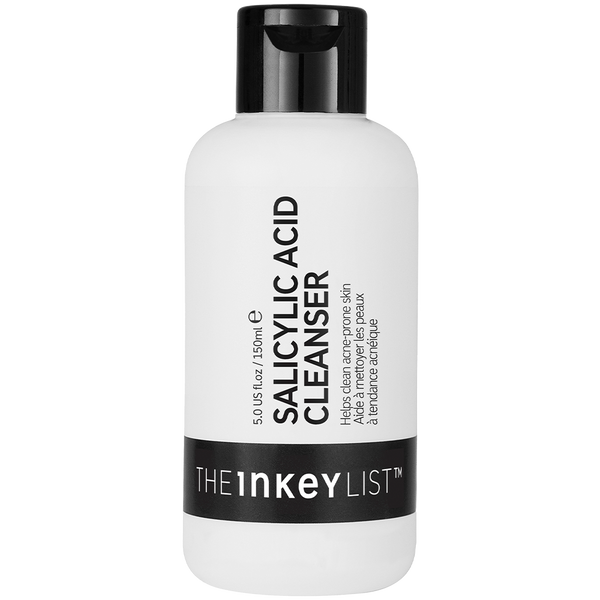
If your skin is congested, oily or acne-prone, a Salicylic Acid Cleanser is a strong starting point. Salicylic acid is oil-soluble, which means it can get into the lining of the pore rather than only working on the surface. That is exactly where the build-up that causes bumps and blackheads sits.
If your skin is dry, sensitive, or you are removing makeup and sunscreen, the Oat Cleansing Balm - 150ml, $17.00, is the gentler route. It melts makeup and sunscreen away without stripping, and colloidal oatmeal helps soothe skin while it works.
Double cleansing is worth understanding in the context of texture. You use a balm or oil first to break down makeup, sunscreen and surface oil, then follow with a water-based cleanser to clean the skin underneath. It matters here because incomplete removal is a direct contributor to congestion, and congestion is a direct contributor to bumpy skin texture.
One clear warning. Avoid harsh scrubbing and stripping foam cleansers. If your skin feels tight and squeaky after washing, that is not a sign it is clean. It is a sign you have removed lipids your barrier needs, and over weeks that will make your texture worse rather than better.
Step 2: Exfoliate consistently, not aggressively
This is the most important behavioral message in the entire article, so it is worth stating plainly: exfoliating two to three times a week, consistently, over months, will do far more for your skin than exfoliating daily and aggressively. Daily aggressive exfoliation damages the barrier, and a damaged barrier produces exactly the rough, flaky texture you were trying to remove.
Chemical exfoliation is the more controlled approach, and the three main families are worth knowing.
- AHAs, such as glycolic acid, are water-soluble and work at the surface, loosening the bonds that hold dead cells in place so they can shed properly.
- BHAs, such as salicylic acid, are oil-soluble and get into the pore itself, which makes them better suited to congestion and blackheads.
- PHAs are larger molecules that work more slowly and more gently at the surface. That larger size means less penetration and less irritation, which makes them the best starting point for sensitive skin.
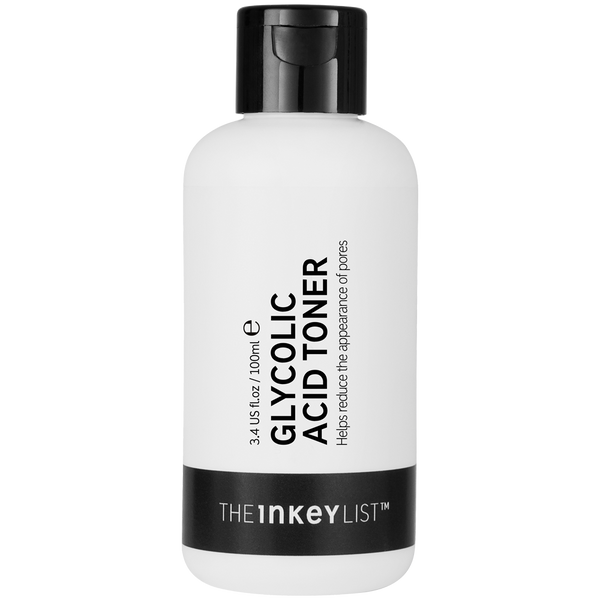
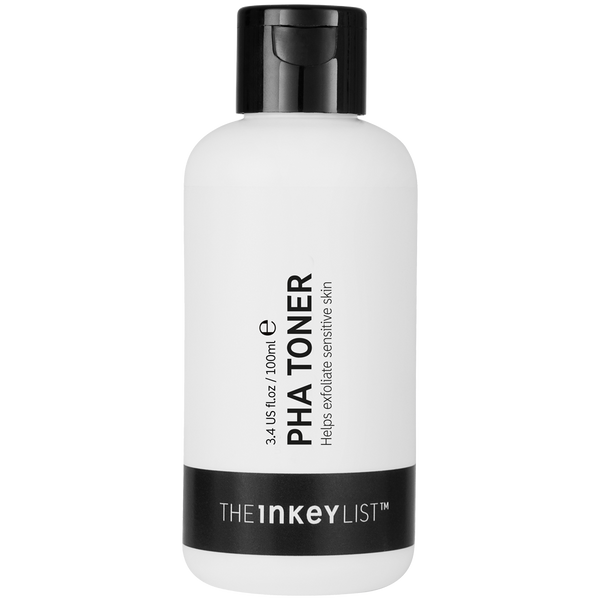
For rough, dull, uneven texture, the Glycolic Acid Toner, $18.00, is the resurfacing option. For sensitive or easily irritated skin, the PHA Toner, $18.00, is the gentlest choice, and it hydrates while it exfoliates rather than leaving skin feeling stripped. If you are not sure which direction to go, our guide to the best exfoliator for sensitive skin goes deeper on the distinction, and you can browse the full range of exfoliants to compare formats.
On frequency, keep it simple. Start twice a week at night. If your skin stays comfortable after two or three weeks, build to three times a week. Do not layer two different exfoliating acids in the same session while you are starting out.
Watch for the over-exfoliation warning signs: stinging on application, persistent tightness, redness, flaking, and skin that suddenly reacts badly to products it used to tolerate without issue. Overuse of exfoliating ingredients irritates skin and undermines the barrier. If you notice any of those signs, stop exfoliating entirely and focus on barrier repair until skin feels normal again.
Exfoliation clears what is already sitting on the surface. Changing texture at a deeper level means speeding up how quickly your skin renews itself, and that is where retinoids come in.
Step 3 and Step 4: Add a Retinoid, Then Support Renewal and Glow
Step 3: Add a retinoid at night
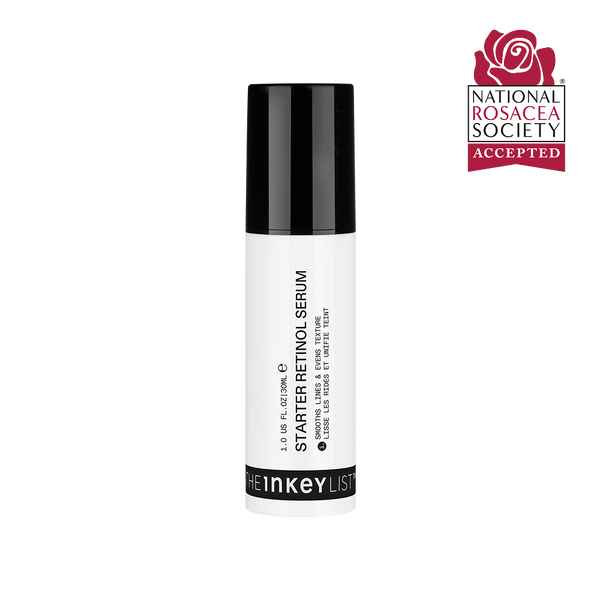
Retinoids encourage skin to renew itself more quickly. That is the whole mechanism in one sentence, and it connects directly back to the slowed turnover we established earlier. If texture is partly caused by cells lingering too long on the surface, an ingredient that shortens that cycle addresses the cause rather than the symptom. Over time this refines texture, softens the look of fine lines and improves overall smoothness.
Be realistic about the timeline. Clinical research on retinol for naturally aged skin published in JAMA Dermatologyfound visible improvement beginning at around 4 weeks, with continued improvement over 24 weeks of use. That is the honest picture. Four weeks for the first signs, six months for the substantial change.
Retinol at night. Exfoliating acids on separate nights. Never both while you are starting out.
Retinoids go in your evening routine only. Apply to dry skin, use roughly a pea-sized amount for the entire face, and start at once or twice a week rather than nightly. If your skin feels tight afterward, buffer by applying moisturizer first, or apply moisturizer immediately after. Build frequency slowly across several weeks rather than jumping straight to daily use.
Some initial dryness or light flaking is normal as your skin adjusts. The right response is to reduce frequency, not to abandon the ingredient entirely. Drop back to once a week, let your skin settle, then build again. And do not layer retinol with exfoliating acids on the same night in the early stages. Our guide to what not to mix with retinol covers the combinations worth avoiding in more detail.
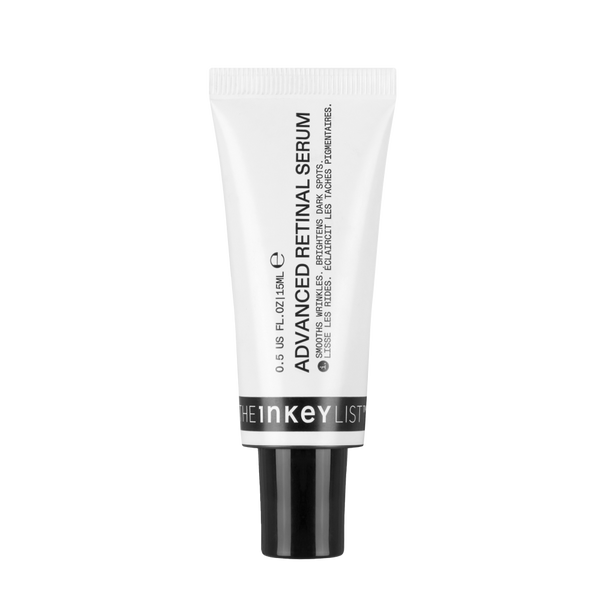
On choosing a product, browse the retinol collection and pick a strength that matches your experience level. If you are new to the ingredient, start lower than you think you need. There is nothing to be gained from starting strong and spending three weeks recovering. The Retinol Boost Duo, $37.05 (was $39.00), is a useful pairing option if you want the treatment and support steps together.
Step 4: Support renewal and glow
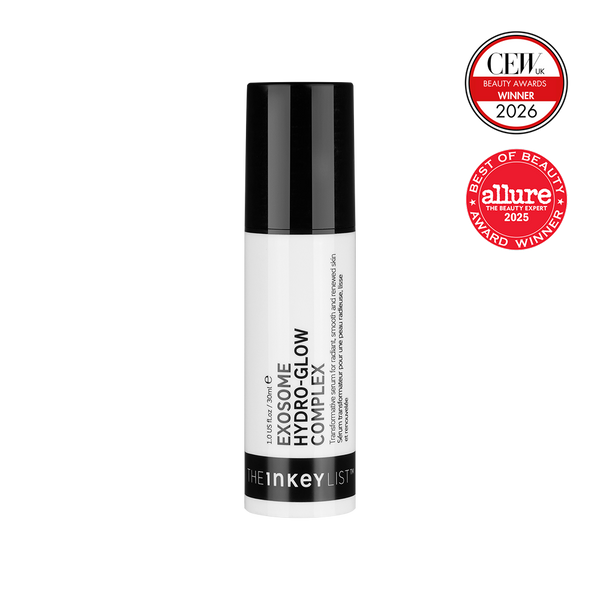
Alongside exfoliation and retinol, a renewal and radiance step helps the rest of the routine work harder. The Exosome Hydro-Glow Complex, $24.00, sits in this role. It works with your exfoliation and retinoid steps rather than replacing either of them.
Exosomes are best understood as a delivery and signalling system. They help carry ingredients where they need to go and help signal to skin, which means the rest of what you are applying can work more effectively. That is genuinely all you need to know to use the product well.
The on-site clinical claim for this formula reports results in 14 days, with the full caveat and testing details noted on the product page. It suits all skin types, and it layers well applied to damp skin after cleansing.
Actives only work well on skin that is properly hydrated and protected, which is what the next two steps handle.
Step 5 and Step 6: Hydrate, Support Your Barrier and Protect Daily
These are the two steps people skip most often, and they are the two that determine whether everything above actually works.
Step 5: Hydrate and support the barrier
The connection is direct. Dehydrated skin sheds unevenly and looks rougher. A compromised barrier makes texture worse rather than better. Hydration is not the optional nice-to-have at the end of a texture routine, it is a structural requirement of one.
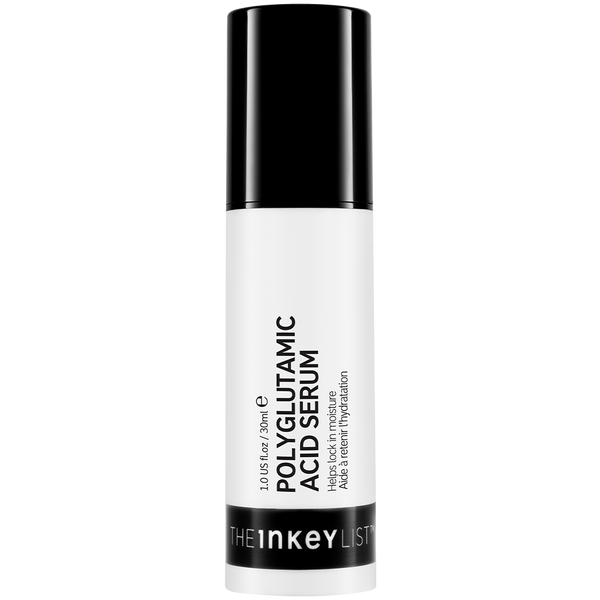
The Polyglutamic Acid Serum, $17.00, holds moisture at the surface of the skin and helps it look instantly smoother and plumper. It can hold significantly more moisture than hyaluronic acid, which is a genuine point of difference rather than a marketing line.
The Bio-Active Ceramide Moisturizer, $22.00, addresses the barrier itself. Ceramides are lipids your skin naturally contains, and levels drop over time. Replacing them strengthens the barrier so skin holds water more effectively and tolerates active ingredients more comfortably. The on-site clinical claim for this formula uses a 28 day framing, with the caveat detailed on the product page. In practical terms, apply hydrating serums to damp skin, then seal with your moisturizer.
Now the argument that matters most. If your skin is currently irritated, stripped or flaking, stop. Pause the exfoliants and the retinol entirely. Cleanse gently, hydrate, moisturize, and spend a fortnight rebuilding the barrier before you reintroduce anything active, and then reintroduce one thing at a time at low frequency. Pushing through irritation does not accelerate results. It extends the timeline, because you spend weeks repairing damage instead of making progress. Skin that is dehydrated or compromised cannot be resurfaced into smoothness.
Step 6: Protect your skin daily
Daily sun protection is the step that preserves everything the rest of the routine achieves, and the evidence for it is genuinely striking.
A landmark randomized controlled trial published in the Annals of Internal Medicine, available via PubMed, followed adults over roughly four and a half years. Participants assigned to daily broad spectrum sunscreen use showed no detectable increase in skin aging across the trial period. They were also around 24 percent less likely to show visible increases in skin aging than participants who used sunscreen only occasionally, at their own discretion.
Read that again, because it is unusual. Not slower aging. No detectable increase, measured objectively, over four and a half years.
For texture specifically, this matters because UV exposure degrades collagen and coarsens the skin surface over time. It also darkens post-blemish marks, which means unprotected skin actively works against the improvements the rest of your routine is making. You can exfoliate and use retinol diligently for six months and lose a meaningful portion of the benefit to unprotected daily exposure.
There is a practical safety dimension too. Exfoliating acids and retinoids can make skin more sensitive to sunlight. The moment you start using them is the moment daily protection becomes more important, not less.
The behavioral guidance is simple. Use broad spectrum protection every morning, reapply through the day when you are exposed, and combine it with shade and protective clothing when you are outside for extended periods. Broad spectrum means protection across both UVA and UVB, and it is the specification worth looking for.
Texture is not only a facial concern, and rough patches and bumps on the body respond to the same principles delivered in different formats.
Body Texture, KP Bumps and Rough Patches
Body skin is thicker than facial skin, and it gets a fraction of the attention. That combination means build-up happens readily on the upper arms, thighs, back, chest and elbows. Most people cleanse their face twice daily with a considered product and then apply nothing to their arms for a decade.
Keratosis pilaris deserves proper attention here because it is one of the most common causes of bumpy skin texture anywhere on the body. As covered earlier, keratin plugs form in the hair follicles, producing clusters of small rough bumps. People describe the feeling as sandpaper, or as goosebumps that never go down. It is harmless, it is not caused by poor hygiene, and it affects a very large proportion of the population.
The honest position on KP is that it is managed rather than cured. Consistent exfoliation and hydration improve it, often substantially, but it typically returns if you stop. That is not a failure of the products or of your routine. It is the nature of the condition, and clinical guidance reflects the same reality. Knowing this in advance is genuinely useful, because it reframes the goal from elimination to maintenance, which is achievable.
The evidence base supports keratolytics for KP, specifically alpha hydroxy acids such as glycolic and lactic acid, along with salicylic acid and urea. A review of topical keratolytics found these to be the mainstay of management. That is precisely why the formats below are built around them.
The Glycolic Acid Exfoliating Body Stick, $20.00, is the targeted treatment option. Its on-site clinical claim reports results in 7 days for KP bumps, ingrown hairs, rough skin and body breakouts, with the caveat detailed on the product page. The format is the practical advantage here: a stick lets you apply directly to the specific rough areas that need it, without decanting a liquid onto a cotton pad and trying to reach the back of your own arm.
The PHA Body Water Cream, $15.00, is the gentler two-in-one. It exfoliates and moisturizes in a single step, which makes it well suited to daily maintenance and to anyone whose skin does not tolerate glycolic acid comfortably. If you want both the targeted treatment and the daily maintenance step, the Exfoliating Body Duo, $33.25 (was $35.00), pairs them, and you can browse the full body care range for other formats.
A few behavioral points that make a disproportionate difference:
- Exfoliate the body two to three times a week rather than daily. The same consistency-over-intensity rule applies below the neck.
- Moisturize immediately after showering while skin is still damp, which traps water rather than sealing a dry surface.
- Avoid very hot water. It feels good and it strips lipids.
- Skip aggressive physical scrubbing, loofahs and stiff brushes on KP. Friction irritates the follicle and can worsen the appearance.
- Be patient. Body skin is thicker and turns over more slowly, so give it a solid six to eight weeks.
Ingrown hairs and body breakouts are closely related concerns and respond to the same approach, because both involve blocked follicles and both improve when the surface is exfoliated regularly and kept hydrated.
With face and body covered, the remaining question is how to combine all of this without overwhelming your skin.
Other Ingredients Worth Knowing, and How to Build a Routine That Works
A brief note on other useful actives
If your texture comes with additional concerns, a few other ingredients are worth knowing about. Keep this brief in your own routine as well as on the page, because adding more products is rarely the answer.
Niacinamide Serum helps regulate excess oil and refine the look of visible pores, which makes it a sensible addition for congested, oily skin. There is more detail on the niacinamide pillar page.
15% Vitamin C and EGF Serum targets dullness and uneven tone, so it is useful if you fall into the category of having both texture and tone concerns at once. See the vitamin C page for how to use it alongside other actives.
10% Azelaic Acid Serum for Redness Relief suits anyone whose texture arrives with visible redness or post-blemish marks. More on how azelaic acid works is available on its pillar page.
PDRN Serum is a newer option focused on skin renewal, for readers interested in the more recent end of renewal science. The PDRN page covers the mechanism.
How to build the routine without irritating your skin
The golden rule first: introduce one new active at a time, and give it two to three weeks before you add another. This is not caution for its own sake. If you introduce three products simultaneously and your skin reacts, you have no way of knowing which one caused it, and you will end up eliminating something that was working.
Here is a worked example of what the week looks like in practice.
Your morning is consistent every day. Cleanse, apply a hydrating serum to damp skin, moisturize, then apply broad spectrum sun protection.
Your evening is consistent in structure but varies in the treatment step. Cleanse, apply your treatment for that night, then moisturize. Across a week, that treatment step might rotate as follows: exfoliating toner on two nights, retinol on two separate nights, and hydration only on the remaining nights. Those hydration-only nights are not wasted. They are recovery nights, and they are what allows the active nights to keep working.
The stacking rules are worth stating plainly:
- Do not layer multiple exfoliating acids in a single session.
- Do not use an exfoliating acid and a retinoid on the same night while you are starting out.
- Always leave recovery nights in the week.
Learn to read your own skin, because it gives clear signals. Skin that feels comfortable, looks calm and tolerates products well can handle a little more. Skin that stings, feels tight or looks pink needs less. And skin that suddenly reacts to a product it has used happily for months is telling you the barrier is compromised. That is a signal to pull back, not a signal to push harder.
If you have already over-done it, the recovery protocol is straightforward. Pause all actives completely. Cleanse gently, hydrate, and moisturize consistently for one to two weeks. Once your skin feels normal again, reintroduce a single active at a lower frequency than before, and build from there. Irritated, over-processed skin needs time more than it needs treatment.
The same principles apply regardless of gender, though shaving adds its own texture and irritation considerations worth accounting for, which our men’s skincare routine guide covers directly. For a broader framework, the skincare routine guide walks through the full structure, and the bundle builder is a practical tool for assembling several steps at once.
Above all: consistency over months beats intensity over days. That is the thesis of this entire article, and it is the single behavior that separates people whose texture improves from people whose texture does not.
The most common question at this point is how long all of this actually takes.
How Long It Takes to See Results
Timelines are more useful in stages than as a single number, because different things improve at different rates.
Week 1 to 2. Hydration improves first. Skin feels smoother to the touch, surface dullness lifts, and makeup sits better. Several INKEY formulas carry on-site clinical claims in the 7 to 14 day range, with the full testing caveats noted on each product page. This early stage is real improvement, but it is surface-level and it is not yet structural change.
Week 4 to 6. This is when genuine texture change becomes visible rather than only tactile. The JAMA Dermatology retinol research found improvement beginning around the 4 week mark, and studies of keratolytics for rough texture and KP typically show improvement over 4 to 6 weeks of consistent use.
Week 12 and beyond. Deeper change in tone, fine lines and overall smoothness accumulates here, with retinoid research showing continued improvement out to 24 weeks.
The reason it takes this long is the turnover cycle established earlier. Your skin renews on a timeline measured in weeks, and that timeline lengthens as you age. You are working with your skin’s natural pace, and no product changes the fundamental speed of that biology.
Be clear about what will not change. Pore size is largely genetic, and while pores can look smaller when they are clear and the surrounding skin is smooth, they cannot be structurally shrunk. Deep acne scarring and ice pick scars usually need in-clinic treatment. KP is managed rather than cured. Saying this plainly is more useful than the alternative, because expectations that do not match reality are the main reason people abandon routines that were actually working.
One practical habit: take a photo in consistent lighting every two weeks. Gradual change is almost impossible to perceive day to day in the mirror, and most people underestimate their own progress considerably.
The Bottom Line on Textured Skin
Textured skin is usually dead skin build-up, congestion and slowing cell turnover, working together. The reassuring part is that all three respond to the same approach, which means you do not need three separate routines.
Cleanse properly and give it a full minute. Exfoliate consistently rather than aggressively, two to three times a week. Add a retinoid at night and build the frequency slowly. Hydrate and support your barrier, because actives do not work on compromised skin. Protect daily from UV, since unprotected exposure quietly undoes the rest. And treat your body with the same logic in formats designed for thicker skin.
If there is one thing worth carrying away, it is this: consistency beats intensity. A simple routine followed properly for three months will do considerably more for your skin than an aggressive routine abandoned after three weeks. The people who see real change are almost never the ones using the most products. They are the ones who kept going.
And it bears repeating: some texture is normal. Pores are normal. Skin is an organ, not a screen. The goal here is skin that feels comfortable, looks healthy and behaves predictably, not skin that looks filtered.
Not sure where to begin? Take the skincare quiz and get a personalized routine built around your specific concerns in about two minutes. If you already know what you need, you can shop products to improve textured and bumpy skindirectly. And if you have a question about combining actives or where to start, our askINKEY advisors are always happy to help.
Written by one of our askINKEY skincare advisors.
Frequently Asked Questions
Got a question?
Our askINKEY team are a friendly bunch of skincare experts with deep product knowledge and zero judgement. Whether you're an ingredient obsessive or just starting out, we'll make it make sense. No question too big. No question too small. We Give A Care, Every Day.


