

Azelaic Acid for Dark Spots and Hyperpigmentation: What It Does and How to Use It
Azelaic acid can help fade the look of dark spots and even skin tone - here's how it actually works, how to use it, and how long to give it.
Author
askINKEY skincare advisor
Published
18 September, 2026
Time to read
18 minutes
This article explains what azelaic acid is, how azelaic acid works on pigment, which kinds of dark spots it helps most, how to use it in a routine, what to pair it with, and how long results realistically take. If you have been researching azelaic acid for hyperpigmentation and want a clear answer rather than a list of promises, this is the guide for you.
Here is the honest headline before you read any further. Azelaic acid is one of the better researched ingredients for the look of uneven skin tone. It works gradually rather than instantly. And daily sun protection is the single factor that decides whether the progress you make actually holds.
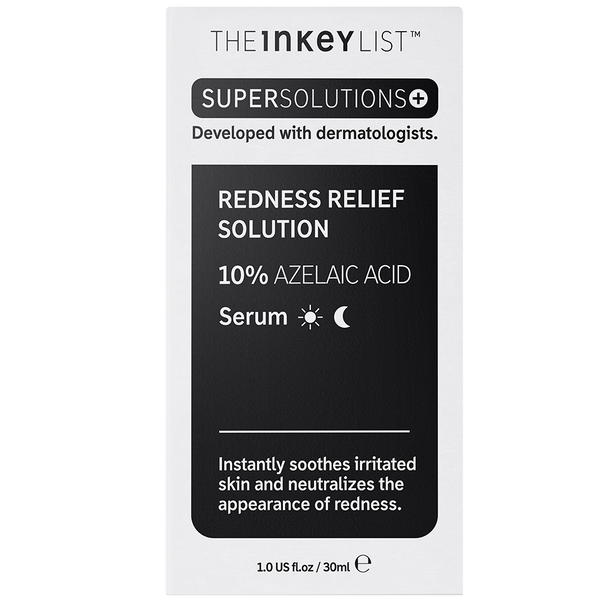
Our own formula is the 10% Azelaic Acid Serum for Redness Relief, $20. It is positioned first and foremost for calming visible redness, and helping to even the look of skin tone is part of what it does alongside that. We will be specific throughout about what a 10% cosmetic serum can offer and what sits outside its remit.
A note on scope. This is an ingredient guide, so azelaic acid is the subject of every section. If you want to understand the ingredient itself in more general terms, our azelaic acid page covers the fundamentals. If you want to understand what causes dark spots in the first place, our guide on how to get rid of dark spots covers the causes and the wider landscape of options. We will link out at the relevant moments rather than repeating that ground here.
What Azelaic Acid Is and How It Works on Dark Spots
Azelaic acid is a dicarboxylic acid, which simply means a molecule with an acid group at each end. It occurs naturally in grains such as barley, wheat and rye. The version used in skincare is produced in a lab, not extracted from grain, because laboratory production delivers far better stability and purity than an agricultural source ever could. That matters for a finished formula: you get a consistent amount of the active in every bottle, batch after batch.
Despite the name, it does not behave like the acids most people picture. It is not a resurfacing acid in the way glycolic or salicylic acid are. It is better understood as a multi-tasking active that happens to be an acid by chemical classification. For a fuller primer on the ingredient itself, our azelaic acid page is the place to start.
How azelaic acid acts on melanin production
The core mechanism is straightforward once the terms are unpacked. Melanin is the pigment that gives skin its color. It is produced by cells called melanocytes, and the production line is driven by an enzyme called tyrosinase. Azelaic acid inhibits tyrosinase. Slow that enzyme down and you slow the production of excess pigment.
That is the whole principle. Azelaic acid does not remove pigment that already exists. It reduces how much new excess pigment gets made while your skin’s natural turnover gradually brings the existing pigment to the surface and sheds it. Understanding this distinction explains almost everything about how the ingredient behaves, including why it takes time.
The selectivity point, and why it matters
Here is the characteristic that makes azelaic acid genuinely distinctive, and the reason this article is worth your time.
Azelaic acid is selective. It acts preferentially on abnormal, hyperactive melanocytes rather than on melanocytes behaving normally. In practical terms, it concentrates its effect where pigment production has gone into overdrive and largely leaves normally pigmented skin alone. DermNet, the dermatology reference resource, describes this targeted action on abnormal melanocytes as a defining feature of the ingredient, and the mechanistic literature reviewed in this overview of azelaic acid’s actions and clinical applications sets out the same picture.
Why should you care? Because the most common anxiety people have about any ingredient aimed at dark spots is creating a new problem while addressing the old one: pale patches, halos around the spots you were targeting, an overall washed-out look. Selectivity is the reason azelaic acid is not associated with lightening the surrounding skin. You are not bleaching anything. You are asking overactive cells to calm down while leaving the rest of your face to carry on as normal.
The other things azelaic acid does
Pigment is the headline, but three secondary actions matter for how the ingredient feels and performs day to day.
- Anti-inflammatory activity. Azelaic acid helps calm visible inflammation. This is relevant to dark spots specifically, because fresh marks are frequently accompanied by the redness and irritation that produced them in the first place.
- Mild keratolytic activity. It gently supports the shedding of surface cells, which assists natural turnover. Gently is the operative word. This is not exfoliation in the sense you get from an AHA or BHA.
- Antibacterial activity. It has an effect on the bacteria involved in breakouts, which is why it is a familiar name to anyone with acne-prone skin. The review of azelaic acid’s multiple uses in dermatology covers the breadth of this activity.
Put together, the honest benefits list reads like this. Azelaic acid helps visibly even the look of skin tone. It helps reduce the look of dark spots. It calms visible redness. It supports a clearer-looking complexion. Those are cosmetic outcomes concerning the look of your skin, and we are deliberate about that wording because it is accurate.
Where our formula sits
Our 10% Azelaic Acid Serum for Redness Relief is built around that combination. It is a clinically proven 10% azelaic acid serum that minimizes redness in 4 days, and it is an anti-redness formula for sensitive and rosacea-prone skin.
The redness-relief positioning is the primary one. Helping to even the look of tone runs alongside it.
Understanding the mechanism is useful, but the practical question is whether it applies to the particular spots on your own face. That is where we go next.
Which Dark Spots and Uneven Skin Tone Azelaic Acid Helps Most
Not every dark spot on your face is the same thing, and azelaic acid does not perform identically against all of them. This section is about how azelaic acid measures up against each category, not a taxonomy of pigmentation itself. If you are not yet sure which kind you are dealing with, read our guide on what type of skin hyperpigmentation you have first and then come back, because knowing what you are looking at changes what you should expect.
Post-acne marks and post-inflammatory hyperpigmentation: the strongest everyday case
Post-inflammatory hyperpigmentation is the flat, darker mark left behind after a breakout has healed. The pimple has gone. The discoloration it triggered has not. For most people searching for azelaic acid for dark spots, this is the category they are actually dealing with, and it is the one where the ingredient earns its reputation.
This is where azelaic acid is at its most useful in an everyday routine, and the reason is that it addresses the situation from more than one angle simultaneously.
- It calms the visible inflammation that drove the mark in the first place, and inflammation is the trigger for that surge in pigment production.
- It acts on the excess pigment production itself through tyrosinase inhibition.
- Its antibacterial activity is relevant to acne-prone skin, which helps with the cycle where new breakouts keep generating fresh marks faster than the old ones fade.
That third point is easy to underestimate, and it is the single most useful thing to understand if you have acne-prone skin. The frustration is rarely that one mark will not budge. It is that by the time one has faded, three more have appeared. Most ingredients aimed at dark spots only work on pigment that already exists, which means you are always playing catch-up. An ingredient working on both ends of that cycle, calming the inflammation that creates new marks while acting on the pigment in the existing ones, is doing considerably more for you. Our acne scars collection brings together the relevant options if you want to see what else sits alongside azelaic acid.
One realistic caveat worth stating clearly, because the language around this gets muddled. Azelaic acid helps the look of flat marks, where the skin surface is smooth and only the color has changed. Where a breakout has left indentation, pitting or raised texture, that is a structural change rather than a pigment one, and no serum resolves it. Textured scarring needs professional input, and anyone telling you otherwise is overselling.
Sun-related dark spots and general unevenness
Cumulative sun exposure produces a more diffuse kind of unevenness: patches across the cheeks, forehead and the bridge of the nose, plus a general loss of clarity in overall tone. Azelaic acid supports a more even-looking complexion here and is a reasonable long-term choice, because it is gentle enough to keep using indefinitely.
But there is a hard condition attached, and we would rather say it plainly than bury it. Without daily sun protection, new pigment arrives faster than existing spots fade. UV exposure is the direct stimulus for melanin production. You can inhibit tyrosinase every morning and still go backwards if you spend the afternoon reactivating it. This is not a scare tactic. It is arithmetic.
Melasma: proceed with professional advice
Melasma presents as larger, symmetrical patches, most often on the cheeks, upper lip and forehead. It is strongly influenced by hormones as well as UV exposure, which is why it is common during pregnancy and with hormonal contraception, and why it is well known for returning after it has cleared.
Research into azelaic acid and melasma does exist, and it is discussed in the prescription-strength context in the next section. What we will not do is suggest that our 10% cosmetic serum manages melasma. Melasma is a recognized condition that benefits from proper assessment. DermNet’s melasma resource is worth reading, and if you think melasma is what you are dealing with, see a doctor or dermatologist. That is the right first step, not a serum.
Deeper pigmentation
Some pigmentation sits deeper in the skin. It tends to look grayish or bluish-brown rather than crisply defined and brown, and it is considerably more stubborn because topical actives have further to travel and less to act on at the surface.
Being straightforward here matters more to us than being encouraging. Deeper pigmentation responds slowly to any topical ingredient, azelaic acid included, and frequently needs professional input to see meaningful change. If you have been applying something diligently for months with nothing to show for it, the honest interpretation may be that you need a professional assessment rather than a different serum. For pigmentation in specific localized areas, our guide to pigmentation around the mouth covers that particular pattern.
Suitability across skin tones
This deserves a direct answer, because it is one of the most frequently asked questions about any ingredient for the look of dark spots.
Azelaic acid has been studied specifically in deeper skin tones. Research examining 20% azelaic acid in patients with skin phototypes IV to VI found it to be effective and well tolerated in these groups. Combined with the selectivity we covered earlier, this is the basis for azelaic acid’s reputation as a sensible option across the full range of skin tones. It is not associated with the hypopigmentation risk that has historically made people cautious about other approaches to pigment. Our hyperpigmentation page has the broader context if you want it.
That brings us to the question everyone asks once they have decided the ingredient suits them: is 10% actually enough?
10% Azelaic Acid Versus 15-20% Prescription Strengths
Anyone who researches azelaic acid for more than ten minutes runs into the same discovery. The studies frequently use 15% or 20%. The serum on the shelf says 10%. It is a fair question to ask what that gap means, and we would rather answer it properly than hope you do not notice.
The landscape, stated plainly
In the US, cosmetic azelaic acid serums typically sit at around 10%. Formulas at 15% and 20% are prescription-only, available through a doctor or dermatologist who has assessed your skin and decided that strength is appropriate for you.
That is a regulatory distinction, not a marketing one. Prescription-strength formulas are medicines intended for specific diagnosed conditions, prescribed with supervision and a review process attached. A cosmetic serum is a different category with a different purpose. Neither is a substandard version of the other. They are answers to different questions.
What 10% realistically offers
A 10% concentration gives you a well-tolerated daily strength. It helps visibly even the look of skin tone. It calms visible redness. And critically, it is comfortable enough that most people can keep using it, in some cases twice daily, over the long term.
That last point is not a consolation prize. It is the entire argument.
Azelaic acid is an ingredient whose results are driven by consistency. It is acting on pigment production on an ongoing basis while your skin’s natural turnover cycle gradually does the rest. Interrupt that and you interrupt the results. A strength you actually tolerate, applied every day for three months, will generally do more for the look of your skin than a stronger one that stung too much and got abandoned in week two.
The best strength of azelaic acid is not the highest one available. It is the highest one you will still be using in three months.
The prescription evidence, as context only
The research at prescription strength is worth knowing about, because it demonstrates that this is a seriously studied ingredient rather than a passing trend.
A randomized trial comparing 20% azelaic acid cream with 4% hydroquinone in melasma, conducted over 24 weeks in 329 women, is one of the more substantial pieces of work on the ingredient and pigment. The broader review of azelaic acid’s multiple uses in dermatology sets that research in context alongside its other applications.
We want to be unambiguous about how to read this. Those trials used prescription-strength formulations, on diagnosed patients, under medical supervision. They tell you that azelaic acid as a molecule has real, measurable effects on pigment. They are not a claim about our 10% serum, and nothing in this article should be taken to suggest that a cosmetic serum matches prescription outcomes. It does not, and we are not going to pretend otherwise.
The trade-off, made useful
Higher concentrations bring a greater likelihood of stinging, dryness, flaking and general irritation. That is the exchange you make for the extra strength, and for some people under medical supervision it is absolutely the right exchange.
But irritation has a second-order cost that is easy to miss. Irritated skin is inflamed skin, and inflammation is one of the triggers for excess pigment production in the first place. Pushing a strength your skin is unhappy with can be self-defeating when the look of dark spots is your goal. Gentleness is not a compromise here. It is part of the strategy.
Our 10% Azelaic Acid Serum for Redness Relief is $20. We mention the price as a matter of fact rather than a sales point, because affordability is directly relevant to an ingredient that requires months of consistent use. A routine you can sustain is a routine that works.
And to repeat the important part: if you have melasma or pigmentation that has not shifted despite consistent effort, see a doctor or dermatologist. Prescription options exist, and a proper assessment is worth more than guesswork.
Knowing what to expect from the strength is one half of the equation. Using it correctly is the other.
How to Use Azelaic Acid in Your Routine
Azelaic acid is uncomplicated to use, which is one of its advantages. The instructions below are deliberately specific, because vagueness is what leads to people using an ingredient inconsistently and then concluding it does not work.
When to apply it
Azelaic acid can be used up to twice daily, morning and evening.
The governing rule is not about time of day. It is this: do not put azelaic acid and retinol in the same routine. Both are active ingredients, and layering them in a single application is the most common route to irritation for people who are otherwise doing everything right.
So the practical version:
- If you use retinol at night, use azelaic acid in the morning. Separate routines, no overlap, no competition.
- If you do not use retinol, azelaic acid can sit in your morning routine, your evening routine, or both.
Our guide on whether you can use azelaic acid with retinol goes into that pairing in detail if it applies to you.
Where it goes in the order
Layer thinnest to thickest. Azelaic acid serum is a lightweight step that belongs after cleansing and hydrating, and before anything heavier.
- Cleanse. Start on clean skin.
- Hyaluronic Acid Serum. Apply to damp skin. Our Hyaluronic Acid Serum draws water into the upper layers and gives the following steps a well-hydrated base.
- 10% Azelaic Acid Serum. A pea-sized amount for face and neck.
- Eye product, if you use one.
- Moisturizer. Whichever of our moisturizers suits your skin type.
- Broad-spectrum sunscreen, every morning without exception.
How much, and how often
A pea-sized amount covers face and neck. More is not better with any active, and a heavier application will not accelerate anything.
If you are new to azelaic acid, or your skin is on the sensitive side, start with once daily and build from there. Give it a week or two at that frequency. If your skin is comfortable, you can move to twice daily if you want to. If it is not, stay where you are. There is no schedule you are failing to meet.
Apply it across the area, not spot by spot
This is the most common mistake we see, and it is worth correcting directly.
Dark spots make you want to dab product precisely onto each one. Resist that instinct. The goal with azelaic acid is evening the look of your overall tone, not attacking individual spots, and the ingredient works by reducing excess pigment production across the whole area it is applied to. Spot-application also risks producing a patchy result, where treated areas look different from untreated ones around them.
Apply it as a full-face step. If your uneven tone is concentrated across your cheeks, cover the whole cheek area, not the four spots you can see today. Some of what you are preventing has not surfaced yet.
Sitting under sunscreen and makeup
The formula is lightweight and absorbs quickly, so it layers under sunscreen and makeup without pilling or interfering. Give it a moment to settle before your next step, which is good practice with any serum. For the vast majority of people this is a genuinely fuss-free addition to a routine.
Patch test first
Patch test before adding any new active, particularly if your skin is sensitive or reactive. It takes minutes and tells you something worth knowing. Our guide on why you need to do a patch test explains the method properly.
Once azelaic acid has a place in your routine, the next question is what else can sit alongside it.
What to Pair Azelaic Acid With, and What to Avoid Overdoing
Azelaic acid is one of the more agreeable actives to build a routine around. It plays well with most things. The problems that do arise almost never come from azelaic acid specifically, and almost always come from the total number of strong actives competing for space in one routine.
The governing principle for this entire section: alternate rather than stack. Most active ingredients that seem to conflict are perfectly compatible when separated by time. You are not choosing between them. You are scheduling them.
Niacinamide
Yes, these work together. Azelaic acid and niacinamide are compatible and complement each other well, with our 10% Niacinamide Serum at $13. We have a dedicated guide on using azelaic acid and niacinamide together, so read that for the full picture rather than the short version here.
Vitamin C
This pairing deserves proper attention, because both ingredients support a brighter, more even-looking complexion and people reasonably assume that means doubling up is twice as effective.
It does not work that way. Layering two brightening actives in a single application gives you a meaningfully higher chance of irritation without a proportional benefit, and vitamin C’s stability is sensitive to what surrounds it in a routine.
The sensible approach is to separate them:
- Vitamin C in the morning, under sunscreen. Vitamin C contributes antioxidant protection during the day, so morning is where it earns its place.
- Azelaic acid at the other end of the day, assuming retinol is not occupying your evening routine.
- Or on alternate days, if your skin prefers a lighter overall load.
Our 15% Vitamin C + EGF Serum is $20 and is formulated to be gentler and more stable than many vitamin C options, which makes it a practical partner if you have found traditional vitamin C serums irritating. Remember the earlier point: if a routine leaves your skin inflamed, you are potentially working against your own pigment goals.
Tranexamic acid
If azelaic acid has a natural partner for the look of uneven tone, this is it.
Tranexamic acid is particularly associated with the look of stubborn discoloration, and importantly it works through a different route to azelaic acid. That difference is the point. Two ingredients approaching pigment from different angles complement each other across a week in a way that two ingredients doing the same job do not.
The practical arrangement is alternation, not layering. Azelaic acid on some days, our Tranexamic Acid Serum at $19 on others. A simple pattern many people find workable is azelaic acid in the morning and tranexamic acid on alternate evenings, which gives both ingredients room without asking your skin to process everything at once.
Retinol and tretinoin
Do not use azelaic acid and retinol in the same routine. Use azelaic acid in the morning and retinol in the evening, or alternate nights, and your skin will thank you for the separation. If you are on prescription tretinoin, check timing with the prescriber who put you on it, and read our guide on using azelaic acid with retinol for the detail.
What to avoid overdoing
A short list of genuine cautions, all of which come back to total active load rather than azelaic acid itself.
- Do not layer AHAs, BHAs or PHAs in the same routine as azelaic acid. Glycolic, lactic, salicylic and mandelic acids are all fine in your wider routine on separate days. In the same application, you are stacking exfoliation on top of an active for no additional benefit.
- Count your actives honestly. People rarely have an azelaic acid problem. They have a five-actives-in-one-evening problem. Our guide on what products you should not layer together is a useful audit.
- Respond to tightness or stinging by reducing frequency, not by quitting. Twice daily to once daily, or daily to every other day, is almost always enough to restore comfort. Abandoning the ingredient entirely resets all the progress you have made.
- Introduce one new active at a time. If three things go in at once and your skin objects, you have no way of knowing which one to adjust.
Does azelaic acid exfoliate?
Briefly, since it shapes how you think about pairing. Azelaic acid has mild keratolytic activity, meaning it gently supports the shedding of surface cells. But it is not an exfoliating acid in the way an AHA or BHA is. It does not deliver the same surface resurfacing, and it is not intended to.
That is a feature rather than a shortfall. The gentleness is a large part of why azelaic acid suits sensitive skin and why it can be used consistently over months, which is precisely what pigment goals require.
With the routine settled, the remaining question is the one people find hardest: how long before anything changes.
How Long Azelaic Acid Takes to Work, and What to Expect
This is where most people go wrong with azelaic acid, and it has nothing to do with the ingredient. It is an expectations problem. People search for azelaic acid before and after results, see dramatic comparisons, apply it for three weeks, see very little, and conclude it does not work for them.
So let us set an honest timeline.
Comfort first, pigment later
The two things azelaic acid does operate on completely different clocks, and knowing that prevents a great deal of unnecessary disappointment.
Redness and irritation respond quickly. Our serum is clinically proven to minimize redness in 4 days. Calming is a fast effect.
Pigment takes considerably longer. For the look of dark spots and uneven tone, think in terms of weeks and months of consistent use rather than days. If you are still in the early weeks and feeling discouraged, you are not failing. You are simply earlier in the process than the marketing images suggested.
Why pigment is slow
The mechanism explains the timeline completely.
Azelaic acid inhibits tyrosinase and reduces the production of new excess pigment. It does not erase pigment that is already sitting in your skin. That existing pigment leaves the only way it can: by working its way up through your skin’s natural turnover cycle and shedding at the surface.
Turnover takes roughly a month in younger skin and longer as we age. So you are waiting on a biological process with its own pace. Azelaic acid’s job is to stop the queue getting longer while your skin clears the backlog. DermNet notesthat maximum results with azelaic acid are generally seen over months rather than weeks, which is consistent with everything we have described.
Azelaic acid does not delete the pigment you already have. It stops you making more of it while your skin gets on with clearing what is there.
What progress actually looks like
Set the right visual expectation and you will assess your own results more accurately.
You are looking for gradual softening. Spots become less sharply defined against the surrounding skin. The contrast drops. Your overall tone starts reading as more even, even if individual spots have not vanished. It is a fading and blending effect, not a disappearing act.
Here is a genuinely useful tip. Photograph your skin every four weeks in consistent conditions. Same spot, same light source, same time of day, no makeup, no filters. Gradual change is close to invisible in a mirror you look into daily, because your brain updates its baseline continuously. A set of photographs four weeks apart tells you the truth. More people quit effective routines because they cannot perceive progress than because progress was not happening.
Sun protection is not optional
This is the most important practical point in the entire article.
UV exposure directly stimulates melanin production. You can inhibit tyrosinase faithfully every morning, and if you then spend your day in unprotected sunlight you are switching the production line back on. Existing spots darken again. New ones form. Progress stalls or reverses.
Daily broad-spectrum sunscreen is the difference between results that accumulate and results that never quite arrive. Daily means daily, including overcast days and indoor days near windows.
Side effects and how to handle them
Azelaic acid is well tolerated compared with many actives, which is a large part of its appeal. Mild effects when starting out are common and usually settle.
- Mild tingling or a slight warm sensation on application, typically fading within a few minutes.
- Temporary dryness or slight flaking in the first couple of weeks.
- Slight itching as your skin adjusts.
These generally resolve as your skin acclimatizes. If they do not, reduce frequency rather than stopping altogether. Move from twice daily to once, or from daily to every other day, and build back up. If discomfort is significant, persistent, or accompanied by anything that concerns you, stop and seek advice from a doctor or dermatologist.
Purging versus a reaction
Worth understanding so you can tell the difference calmly.
Purging shows up in areas where you already tend to break out. It is your skin’s existing congestion surfacing faster than it otherwise would, driven by the mild keratolytic activity we covered earlier. It typically settles within a few weeks.
A reaction looks different. It appears in areas where you do not usually break out, and it tends to come with persistent stinging, burning, a rash, or noticeable swelling.
The practical test is location and accompanying symptoms. Familiar areas plus no significant discomfort usually means purging, and it is reasonable to continue. New areas plus stinging or a rash means stop and get advice.
Sensitive skin
Azelaic acid suits sensitive skin well, and our serum is an anti-redness formula for sensitive and rosacea-prone skin. Patch test first, start once daily, and build up only when your skin is comfortable. Our guide on patch testing covers how to do it properly.
Azelaic acid and pregnancy
This question comes up more than almost any other, because pregnancy is when a lot of people have to pause the actives they were relying on, and dark spots frequently become more noticeable at the same time thanks to hormonal changes.
We are not going to give you a blanket answer, because this is precisely the situation where a general article is the wrong source. Speak to your doctor, OB-GYN or pharmacist about your full routine, including azelaic acid, before you continue or start anything new. They can advise on your individual circumstances, your stage of pregnancy and everything else you are using, which no article can do.
Rosacea-prone skin
Briefly, because we have covered it properly elsewhere: azelaic acid is well established for rosacea-prone skin, and our guide on whether azelaic acid actually works for rosacea-prone skin is the place for that discussion.
Now let us turn all of this into something you can actually follow.
A Simple Routine for Dark Spots and Uneven Tone
Here is a straightforward routine built entirely from INKEY products, designed around the principles above: alternate rather than stack, protect daily, and keep it sustainable.
Morning
- Cleanse.
- 10% Azelaic Acid Serum for Redness Relief, $20. A pea-sized amount across face and neck.
- Moisturizer. Whatever suits your skin type from our moisturizers.
- Broad-spectrum sunscreen. Every morning.
On the days you would rather lead with vitamin C, swap in the 15% Vitamin C + EGF Serum, $20, in place of the azelaic acid step. Alternate them across days or use one morning and one evening. Do not layer them in the same routine.
Evening
- Cleanse.
- Hyaluronic Acid Serum on damp skin.
- Moisturizer.
For stubborn discoloration, add the Tranexamic Acid Serum, $19, on alternate evenings. If you are not using retinol at all, your azelaic acid serum can also sit in this routine, giving you the twice-daily use the formula supports.
If you have acne-prone skin and post-acne marks
Our 360 Acne Clearing Serum, $18, works as an alternative evening step on the nights you are not using tranexamic acid. Alternate it with your other actives rather than layering everything together. The whole point of a schedule is that nothing has to compete.
The honest total
A complete routine for the look of dark spots does not need to be expensive. The azelaic acid serum at $20 is doing the heavy lifting, paired with a daily broad-spectrum sunscreen and a moisturizer you already like. We state that as a fact rather than a pitch, because as we said earlier, affordability and consistency are directly connected with this ingredient.
Browse our full uneven skin tone collection if you want to see what else might fit.
The routine matters far less than the two things that determine whether it works: consistency and daily sunscreen. A modest routine followed properly beats an elaborate one followed occasionally, every time.
The Bottom Line on Azelaic Acid for Dark Spots
Four things are worth carrying away from all of this.
Azelaic acid works by inhibiting tyrosinase, which limits the production of excess pigment rather than erasing pigment that already exists. It is selective, acting on overactive melanocytes rather than normally pigmented skin, which is why it is not associated with lightening the areas around your spots and why it has a good record across the full range of skin tones. It performs best against post-acne marks and general unevenness, while melasma and deeper pigmentation warrant a conversation with a doctor or dermatologist. And it needs consistency plus daily sunscreen, because without protection new pigment simply outpaces the fading of the old.
The timeline is the part worth internalizing. Comfort improves within days. Tone takes weeks to months, with the fullest results building over time. That is not a limitation of the ingredient. It is how pigment behaves, and any product promising otherwise is selling you a story rather than a mechanism.
Which leads to the genuinely useful insight buried in all of this. The most common reason azelaic acid appears not to work is not the concentration, the formula or the pairing. It is that people stop before the biology has had time to catch up. The ingredient is patient by design. The routine has to be too.
If you want to start, our 10% Azelaic Acid Serum for Redness Relief is $20, and our azelaic acid page has more on the ingredient itself. Browse the full uneven skin tone and hyperpigmentation collections to see what else might suit you.
Clear guidance, proven ingredients, real results. Because at The INKEY List, We Give A Care.
Frequently Asked Questions
Got a question?
Our askINKEY team are a friendly bunch of skincare experts with deep product knowledge and zero judgement. Whether you're an ingredient obsessive or just starting out, we'll make it make sense. No question too big. No question too small. We Give A Care, Every Day.


