

Can You Use Azelaic Acid with Retinol?
Azelaic acid and retinol are a powerful pair for redness, acne marks and fine lines, as long as you keep them in separate routines. Here is exactly how.
Author
askINKEY skincare advisor
Published
16 May, 2026
Time to read
13 minutes
Yes, you can use azelaic acid with retinol, but not at the same time and not in the same routine step. The pairing works beautifully when you separate them: azelaic acid in the morning, retinol at night. Layered together in a single application, they ask more of your skin barrier than most people can comfortably give.
That single rule is the difference between a combination that transforms redness, post-acne marks and fine lines, and one that leaves you flaking, tight and convinced actives are not for you. Below, we break down what each ingredient actually does, why they complement each other rather than compete, the exact routines to follow, how to choose between our two retinols, and how to tailor the approach to your skin type. We also cover the question a lot of people arrive with but rarely see answered honestly: whether azelaic acid can sit alongside a prescription retinoid.
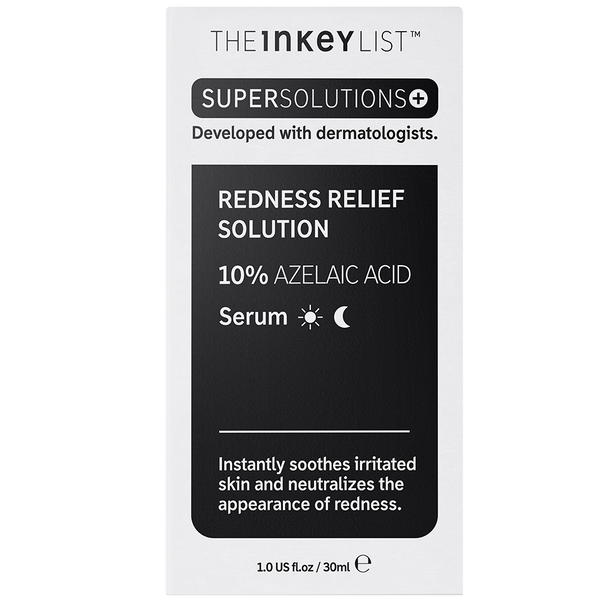
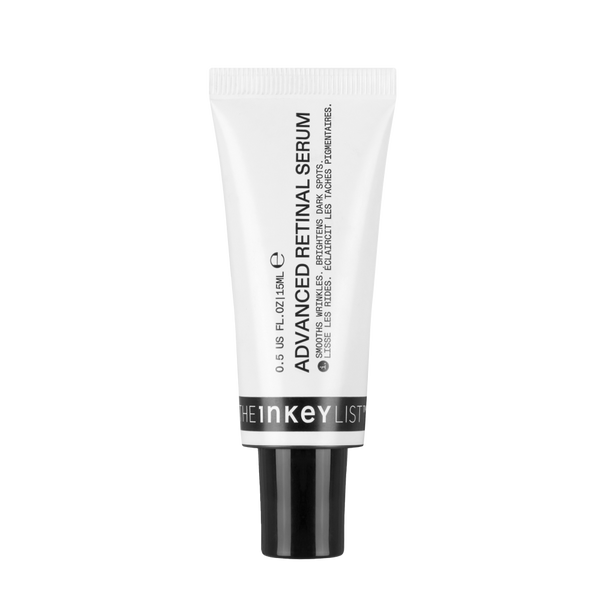
If you want the deeper background on either ingredient before you start, our azelaic acid ingredient guide and retinol ingredient guide cover the fundamentals. The products in question here are the 10% Azelaic Acid Serum for Redness Relief, the Starter Retinol Serum at $15.00 for 30ml, and the Advanced 0.2% Retinal Serum at $22.00 for 15ml. Whether you are asking “can I use azelaic acid with retinol” out of curiosity or you already own both bottles and want to know what to do with them, the answer is the same. Retinol and azelaic acid belong in the same skincare routine. They just do not belong in the same half of the day.
What Each Ingredient Actually Does (and How They Differ)
To understand why the combination works, you need to understand that these two ingredients are barely related. They come from different chemical families, act on different targets in the skin, and behave completely differently in sunlight. That last point is what makes the morning and evening split feel natural rather than like a compromise.
How azelaic acid works
Azelaic acid is a dicarboxylic acid that occurs naturally in grains like barley, wheat and rye. In skincare, it earns its place through three distinct mechanisms working at once.
The first is anti-inflammatory. Azelaic acid calms the inflammatory response that drives visible redness, which is why it has become a staple for reactive, flush-prone skin. The NIH’s consumer drug database, MedlinePlus, describes topical azelaic acid as working on rosacea by decreasing the swelling and redness of the skin, and on acne by killing the bacteria that infect pores.
The second is tyrosinase inhibition. Tyrosinase is the enzyme that kick-starts melanin production, and melanin is what leaves a brown or grey mark behind after a breakout heals. By slowing that enzyme, azelaic acid interrupts pigment production at the source rather than trying to buff a mark away from the surface. This is why it is so effective on post-acne marks and general unevenness.
The third is a mild keratolytic action. MedlinePlus notes that azelaic acid decreases the production of keratin, the natural substance that contributes to acne developing in the first place. In practice, that means gently loosening the dead cells and debris that congest pores, without the aggressive surface stripping of a strong exfoliating acid.
There is one more property that matters enormously for routine building: azelaic acid causes no photosensitivity. It is stable in daylight and does not increase your skin’s sensitivity to UV. That makes it a genuinely comfortable morning active. Azelaic acid is also widely considered suitable during pregnancy and breastfeeding, unlike vitamin A derivatives, though as with anything during pregnancy you should confirm with your doctor or midwife first.
How retinol works
Retinol is a vitamin A derivative, and it operates on an entirely different level of the skin. Rather than inhibiting a single enzyme, retinol converts within the skin to retinoic acid, binds to nuclear receptors in your skin cells, and influences gene expression. That is a fundamentally deeper intervention. It accelerates cell turnover, supports collagen production and refines skin texture over time. Research published on the NCBI on retinoids in the treatment of skin aging supports vitamin A derivatives as one of the most evidenced categories in topical skincare for fine lines and photoaging.
Retinol also carries real photosensitivity implications. It degrades in UV light and can make skin more vulnerable to sun exposure, which is why it is an evening ingredient without exception, and why daily SPF is not optional alongside it.
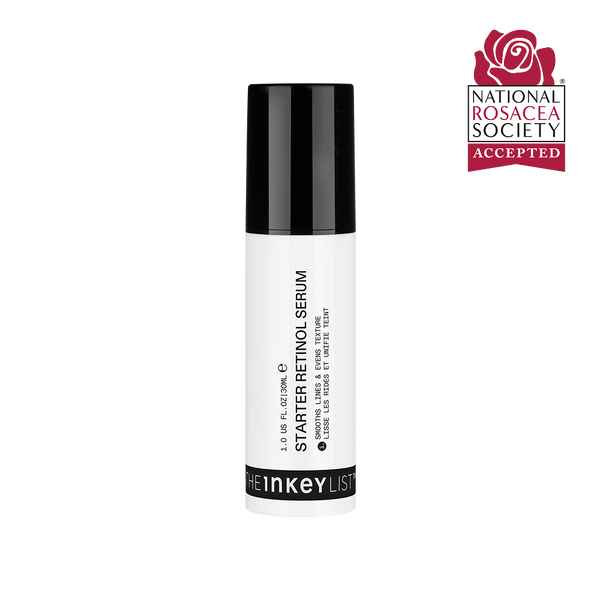
Our two retinols approach this differently. The Starter Retinol Serum, $15.00 for 30ml, combines 1% Granactive Pro+ with 0.01% Retinal in a slow-release delivery system, designed to give you meaningful results while keeping the adjustment period as gentle as possible. It is 2x more effective than standard retinol. In an in vitro assessment, 95% experienced zero irritation.*
The Advanced 0.2% Retinal Serum, $22.00 for 15ml, is a different proposition entirely. Retinal, or retinaldehyde, sits one conversion step closer to retinoic acid than retinol does, which is why it works up to 11x faster than standard retinol.* But the formula is more than its headline active. It pairs 0.2% encapsulated retinaldehyde with 2% Sirtalice™, a marine ferment extract that visibly lifts, tightens and smooths skin in as little as 30 minutes, and SymSitive® 1609, a fast-acting soothing active that calms skin within minutes while helping to strengthen the barrier. It is formulated for experienced retinoid users.
4-week in vitro study. 4-week in vitro study. G. Siegenthaler et al., Retinol and retinal metabolism, Biochemical Journal, 1990, 268, pp 371-378.
Is azelaic acid a retinoid?
No. This is one of the most common misconceptions about the ingredient, and clearing it up explains the entire compatibility question.
Azelaic acid is a naturally occurring dicarboxylic acid found in grains. It is not a vitamin A derivative, it does not convert to retinoic acid, and it does not act on retinoid receptors at all. Retinoids are a defined family that includes retinol, retinal, retinyl esters and prescription options like tretinoin. Azelaic acid belongs to none of them.
That distinction is precisely why the two are compatible. They are not competing for the same receptors or duplicating the same biological pathway. They are two separate tools doing two separate jobs, which is what allows them to cover more ground together than either manages alone.
Azelaic acid vs retinol: which should you use?
Honestly, this is rarely an either/or decision, and framing it that way tends to lead people to the wrong answer.
Azelaic acid is the better starting point if your primary concerns are redness, reactivity, breakouts and the marks they leave behind. It is gentler, it carries no photosensitivity, and it tends to be better tolerated by skin that reacts to most things.
Retinol is the more evidence-backed choice for fine lines, texture and long-term skin renewal. Nothing in the over-the-counter category has a deeper research base for structural change.
Both influence pigmentation, but through different routes: azelaic acid by inhibiting melanin production, retinol by accelerating the turnover that carries pigmented cells to the surface and away. If pigmentation is your main concern, that overlap is an argument for using both, not for choosing between them.
Having established that these two ingredients work through entirely separate pathways, the next question is why that separation is exactly what makes them such a strong pair.
Why Azelaic Acid and Retinol Work Well Together
The most useful skincare combinations are not the ones that stack similar ingredients on top of each other. They are the ones where two actives approach the same visible concern from opposite directions. Azelaic acid and retinol are a textbook example.
Retinol works through nuclear receptors and gene expression, changing how skin cells behave at a fundamental level. Azelaic acid works through enzyme inhibition and anti-inflammatory pathways, changing the environment those cells are operating in. There is no chemical interference between them because they are not touching the same machinery. They complement, they do not compete.
Here is where that plays out in practice.
Redness-prone skin that also wants anti-aging results. This is one of the hardest briefs in skincare. Retinol is the ingredient with the strongest evidence for fine lines, but it is also the ingredient most likely to provoke redness in exactly the skin that is already dealing with it. Azelaic acid solves that tension. Using the 10% Azelaic Acid Serum for Redness Relief every morning means your skin gets daily calming support while retinol does its structural work overnight. Our redness guide covers the wider picture if that is your primary concern.
Acne-prone skin targeting both breakouts and the marks they leave. This is where the pairing is most obviously greater than the sum of its parts.
Retinol prevents the congestion that causes breakouts. Azelaic acid works on what breakouts leave behind.
Retinol regulates cell turnover so pores are less likely to clog in the first place. That is preventative work, and it takes weeks to show. Azelaic acid handles the aftermath: the post-acne marks, the lingering discoloration, the uneven tone that stays long after the breakout itself has gone. The American Academy of Dermatology states that azelaic acid opens clogged pores and helps keep them open, works on the bacteria that cause acne, reduces inflammation due to acne, and can also treat the dark spots that appear when acne clears. Using both means you are addressing the breakout cycle at both ends simultaneously.
Uneven skin tone and hyperpigmentation. Because the two ingredients affect pigment through different mechanisms, combining them gives you two angles on the same problem. Azelaic acid slows melanin production. Retinol speeds the turnover that clears pigmented cells. For post-inflammatory hyperpigmentation in particular, that dual approach tends to outperform either used alone. Our hyperpigmentation guide goes deeper on the different types of discoloration and what actually shifts them.
The adjustment period advantage. Anyone who has introduced retinol knows the first four to eight weeks can be uncomfortable. Some of that is the well-documented adjustment your skin makes as turnover accelerates, sometimes described as a purge. Our guide on what skin purging is explains how to tell the difference between adjustment and genuine irritation. Having azelaic acid in your morning routine provides consistent anti-inflammatory support through that window, with no added photosensitivity to manage.
We want to be careful with this point. Azelaic acid is not a cure for retinol irritation, and it will not let you push retinol harder or faster than your skin can handle. It is a helpful counterpart, not a licence to overdo it. If retinol is genuinely irritating your skin, the answer is to use it less often, not to add more products.
The azelaic acid side of the pairing has its own evidence behind it. The 10% Azelaic Acid Serum for Redness Relief is clinically proven to reduce redness in four days, and 91% agreed skin felt instantly soothed.
Having made the case for combining them, we need to be equally clear about the single most important rule: not at the same time.
Why You Should Not Use Them at the Same Time
Two things are true at once here, and most advice online only tells you one of them. Yes, azelaic acid and retinol are compatible. No, you should not layer them in the same routine. Holding both of those ideas together is the whole point.
It is load management, not chemistry
This is the part that gets misreported constantly. Azelaic acid and retinol do not chemically react with each other. They do not deactivate each other. They do not neutralize each other’s benefits or create anything harmful on your skin. If you accidentally used them together one evening, nothing dangerous happened.
The reason to separate them has nothing to do with chemistry and everything to do with capacity. Your skin barrier can only absorb so much stimulation in one sitting. Both ingredients ask something of it. Retinol is driving accelerated cell turnover. Azelaic acid is contributing its own mild keratolytic action. Individually, both are manageable. Delivered in the same application window, night after night, the cumulative demand often exceeds what the barrier can recover from between uses.
Think of it as a budget rather than a chemical incompatibility. You have a finite amount of tolerance to spend, and spending it all in one go leaves nothing in reserve.
What over-exfoliation actually looks like
When you overspend that budget, the signs are consistent: dryness that moisturizer does not fix, flaking around the nose and mouth, redness that persists rather than settling, a tight or waxy feeling, and skin that suddenly stings at products it was fine with last week. That is barrier stress, and it is the most common reason people abandon actives.
Recovery is entirely possible, but it requires backing off rather than adding more. Our damaged skin barrier guidewalks through what a compromised barrier needs and how long repair realistically takes. The short version: simplify, hydrate, and reintroduce actives slowly once your skin has settled.
Retinol is PM only, and this one is non-negotiable
Retinol degrades in sunlight and increases photosensitivity. The American Academy of Dermatology recommends applying retinoids in the evening for this reason. There is no version of a well-built routine where retinol goes on in the morning.
Azelaic acid has no such restriction. It is stable in daylight and causes no photosensitivity. So the split writes itself: azelaic acid takes the morning slot it is perfectly suited to, and retinol takes the evening slot it requires. You are not compromising by separating them. You are putting each ingredient where it performs best.
Sensitivity amplification in the early weeks
During the first four to eight weeks of retinol use, your skin is more reactive than usual. Adding a second active to the same application during that window amplifies everything, and it makes diagnosis impossible. If you are using both simultaneously and your skin reacts, you have no way of knowing which ingredient caused it or which one to reduce.
Separating them gives you a clean signal. If your evenings are the problem, adjust retinol frequency. If your mornings sting, adjust azelaic acid. One variable at a time.
Patch test first
Before introducing either ingredient, patch test. Apply a small amount to a discreet area, such as behind the ear or on the inner forearm, and wait 24 hours to check for a reaction. It takes a day and it can save you weeks of recovery. Our guide on why you need to do a patch test covers the method properly.
The rule in three lines
- Do use azelaic acid in the morning and retinol at night.
- Do use them on alternate nights if a full AM/PM split is too much for your skin.
- Don’t apply them in the same routine, one immediately after the other.
This guidance is consistent across everything we publish. Our azelaic acid ingredient guide gives the same advice, and our guide on what not to mix with retinol covers the wider set of combinations worth keeping apart. If irritation does appear, research published on the NCBI on strategies to reduce retinoid-induced irritation supports hydration and barrier support as the most effective interventions.
Now that the rule is clear, here is exactly how to execute it.
How to Use Azelaic Acid and Retinol Together: Step by Step
There are two methods that work. Choose based on how your skin currently handles actives, not on how quickly you want results.
Method 1: The AM/PM split
This is the approach we recommend for most skin types. Azelaic acid every morning, retinol every evening, both used consistently.
Morning routine:
- Cleanse with a gentle cleanser.
- Apply Hyaluronic Acid Serum to damp skin. Our hyaluronic acid guide explains why applying it to damp skin matters.
- Apply 10% Azelaic Acid Serum for Redness Relief.
- Moisturize with Omega Water Cream or Bio-Active Ceramide Moisturizer.
- Finish with SPF - Non-negotiable, every morning, and especially when using retinol at night.
Evening routine:
- Cleanse thoroughly to remove SPF and the day.
- Apply Hyaluronic Acid Serum and allow it to absorb fully.
- Apply your retinol to dry skin.
- Optional: apply Niacinamide Serum if you want additional oil-balancing support. Our niacinamide guide covers what it does, and we have a dedicated post on whether you can use azelaic acid and niacinamide together.
- Moisturize to seal everything in.
Method 2: Alternate nights
If you have sensitive skin, rosacea-prone skin, or you are completely new to retinol, start here instead. Use azelaic acid every morning as normal, then alternate your evenings: retinol on Monday, Wednesday and Friday, and a simple hydrating routine with no actives on the nights in between. Using them on alternate days like this gives your barrier a full recovery cycle between retinol applications.
Stay on this pattern for four to eight weeks. If your skin is comfortable, increase to four nights, then five, and only move to nightly use once that feels genuinely easy. There is no prize for getting there quickly, and rushing is the most common cause of the irritation that makes people quit.
When to apply azelaic acid in your routine
Azelaic acid goes on after cleansing and hydrating, and before moisturizer. That is the whole answer for most people.
If you are using a hydrating serum like Hyaluronic Acid Serum, apply that first to damp skin, let it absorb, then apply azelaic acid to skin that is no longer wet. Moisturizer follows, then SPF if it is morning.
When you are pairing it with retinol, morning is the default placement. Azelaic acid has no photosensitivity issues, so it is entirely comfortable in daylight, and putting it in the AM keeps your evening free for retinol.
Used on its own, without retinol in the picture, azelaic acid can be applied twice daily. But once retinol occupies your evening routine, keep azelaic acid to mornings only. Doubling up gives you marginal additional benefit and a meaningfully higher chance of over-stressing your barrier.
How to layer azelaic acid and retinol
Strictly speaking, there is no layering order for these two ingredients, because they should never be in the same routine. The question people are really asking is what order everything else goes in, so here are both sequences in compact form.
Morning: cleanse, hydrating serum, azelaic acid, moisturizer, SPF.
Evening: cleanse, hydrating serum, retinol on dry skin, optional niacinamide, moisturizer.
The general principle is thinnest to thickest, with water-based products before oil-based ones. The one detail worth getting right is applying retinol to dry skin. Damp skin increases penetration, which sounds appealing but reliably increases irritation.
A note on salicylic acid
If you already use salicylic acid, treat it as a third exfoliating load. It should not share a routine with either azelaic acid or retinol. Slot it on a night when you are not using retinol, or drop it while you establish the azelaic acid and retinol pairing. Our guide on what not to mix with retinol covers the sequencing in more detail.
Key tips for both methods
- Always wear SPF the morning after retinol use, and every other morning too.
- Keep your routine consistent. Sporadic use produces sporadic results.
- Support hydration throughout. Research published on the NCBI supports moisturization as a primary strategy for reducing retinoid-induced irritation.
- Patch test before introducing either ingredient.
- If your skin flares, pause retinol for a few nights and keep azelaic acid going. It is the gentler of the two.
With the method settled, the next decision is which retinol to actually use.
Which INKEY Retinol Is Right for You?
We make two, and they are built for genuinely different users. Choosing correctly matters more than choosing the stronger one.
The Starter Retinol Serum, $15.00 / 30ml
The Starter Retinol Serum combines 1% Granactive Pro+ with 0.01% Retinal in a slow-release system. That delivery method is the point: the active is released gradually rather than all at once, which is what allows meaningful results without the harsh introduction people associate with vitamin A.
The results back that up. It is 2x more effective than standard retinol and 95% experienced zero irritation. 90% saw significant clinical improvement in the appearance of wrinkles in 4 weeks, and it smooths fine lines from 7 days.**
This is the right choice for anyone pairing retinol with azelaic acid for the first time. It is also the formula that works best with the alternate-nights method, because its gentleness means you are more likely to progress to nightly use rather than stalling out.
4-week in vitro study. 4-week in vitro study. 12-week consumer study of 130 participants. **4-week clinical study of 30 participants.
The Advanced 0.2% Retinal Serum, $22.00 / 15ml
The Advanced 0.2% Retinal Serum is a step up in every sense, and it is designed for experienced retinoid users. If you have used retinol consistently and comfortably, this is where you go next. If you have not, start with Starter.
It delivers 0.2% encapsulated retinaldehyde, which sits one conversion step closer to retinoic acid and works up to 11x faster than standard retinol.* Alongside it sits 2% Sirtalice™, a marine ferment extract that visibly lifts, tightens and smooths skin in as little as 30 minutes, and SymSitive® 1609, a fast-acting soothing active that calms skin within minutes and helps strengthen the barrier.
The results reflect that potency: a visible reduction in deep wrinkles in 1 week and 85% saw firmer, more lifted skin in 4 weeks.*
Please note that this product has not been tested on sensitive skin or on rosacea-prone skin. If your skin is reactive, the Starter Retinol Serum is the right choice for you.
Start with 2 to 3 nights a week and build tolerance from there. Because retinal works faster, barrier support matters more, not less. We recommend the Ectoin Hydro-Barrier Serum alongside it, and our ectoin guide and post on how to use ectoin with retinol and other actives explain how to fit it in. If you want to understand the difference between the two forms of vitamin A properly, we cover it in retinol vs retinal.
G. Siegenthaler et al., Retinol and retinal metabolism, Biochemical Journal, 1990, 268, pp 371-378. 8-week clinical study of 26 participants. 8-week consumer trial of 105 participants.
The quick decision
- New to retinol, sensitive skin, or rosacea-prone? Start with the Starter Retinol Serum and use the alternate-nights method. Build slowly and keep azelaic acid in your mornings throughout.
- Experienced retinoid user ready to step up? Advanced 0.2% Retinal Serum with the full AM/PM split, and prioritize barrier support from day one.
- Still unsure? Our retinol ingredient guide walks through strengths, formats and what to expect.
Both retinols are also available as Duo variants if you want to stock up.
One last point worth making plainly: clinical-grade retinoid results should not cost a fortune. At $15.00 and $22.00, these are formulas built on evidence rather than markup. We have written before about why a higher percentage does not equal better results, and the same logic applies to price.
Product chosen, the approach still needs tailoring to your skin.
Using Azelaic Acid and Retinol for Your Skin Type
The method stays the same. The pacing, the products around it and the level of barrier support all change depending on what your skin is dealing with.
Sensitive or rosacea-prone skin
Start with the alternate-nights method. Do not go straight to nightly retinol, however tempting the results sound.
Use the Starter Retinol Serum exclusively here. It is our gentlest formula, built with sensitive skin in mind, and in a 4-week in vitro study 95% experienced zero irritation. Two or three nights a week is plenty to begin with.
Azelaic acid is genuinely well suited to this skin type. It is FDA approved as a topical treatment for the acne-like breakouts of rosacea, and the American Academy of Dermatology notes it may also help reduce long-lasting discoloration. Because it causes no photosensitivity, using the 10% Azelaic Acid Serum for Redness Relief every morning gives you daily calming support without adding any UV burden.
On retinol nights, layer in the Ectoin Hydro-Barrier Serum for additional barrier support. If rosacea is your primary concern, our post on ectoin for rosacea-prone skin goes further than we can here.
Stay on alternate nights for four to eight weeks before considering anything more frequent. Reactive skin rewards patience more than any other type.
Oily or acne-prone skin
This is where the pairing shines, because it works both proactively and reactively.
Retinol is the proactive half. By regulating cell turnover, it reduces the congestion that leads to breakouts forming. Azelaic acid is the reactive half, working on post-acne marks, acne scars and the uneven tone left behind once a breakout clears.
Morning: cleanse, hydrating serum, azelaic acid, Omega Water Cream, SPF. Evening: cleanse, hydrating serum, retinol, Omega Water Cream. The lightweight gel-cream texture suits oilier skin without adding heaviness.
If acne is your main concern, our Acne & Breakouts collection brings together the full range.
Mature or anti-aging focused skin
This is where the Advanced 0.2% Retinal Serum earns its place, assuming you are an experienced retinoid user.
There is one addition worth making. Apply the Exosome Hydro-Glow Complex, $24.00, before Advanced Retinal. Used together, the duo is clinically proven to reduce the appearance of fine lines by 82% in 8 days.*
Follow with Bio-Active Ceramide Moisturizer in the evening to support barrier function overnight. Our ceramides guide explains why ceramides matter more as skin matures.
In the morning, azelaic acid keeps tone even and calm, and SPF protects the cellular work retinol is doing overnight. Skipping it undoes the progress.
Does azelaic acid help with wrinkles? Honestly, not directly. Azelaic acid is not a primary anti-wrinkle active and we are not going to claim otherwise. Its contribution to an anti-aging routine is tone, clarity and calm, which absolutely supports a smoother, more even overall result. But retinol does the structural work on fine lines and collagen. Use azelaic acid for what it is genuinely excellent at, and let retinol handle the rest.
*Clinical study of 26 participants over 8 days.
Combination skin
Combination skin does well on the standard AM/PM split with lightweight textures throughout. Use Omega Water Cream in both routines. In the morning, Niacinamide Serum sits comfortably alongside azelaic acid to help balance oil in the T-zone while azelaic acid works on tone. For the full picture on that combination, see our post on azelaic acid and niacinamide.
Now to the question US readers ask most often, which this article has never answered.
Can You Use Azelaic Acid with Prescription Retinoids?
First, a clear statement: we do not sell tretinoin or any prescription retinoid. Everything we make is available over the counter. We are answering this because people ask it, not because we have something to sell you at the end of it.
Azelaic acid is commonly used alongside prescription retinoids, and the same principle that governs the over-the-counter pairing applies. Separate them by time of day. Azelaic acid in the morning, the prescription retinoid at night, exactly as you would with retinol. The reasoning is identical: two actives in one application window ask more of the barrier than most skin can absorb.
The one difference is intensity. Prescription retinoids are typically more potent than over-the-counter retinol, which means barrier support and a slow build matter even more. Expect a longer adjustment period, keep hydration consistent, and resist adding anything else to the routine while your skin settles.
Most importantly, talk to your prescribing clinician before you add anything. If you are using a prescription retinoid, you have a healthcare professional overseeing your treatment, and they know your skin history, your prescription strength and your goals. That conversation is the responsible route, not a formality.
Azelaic acid vs tretinoin is a comparison we see a lot, and it is not really like for like. They are different categories of ingredient with different mechanisms, one available over the counter and one prescription-only under clinical supervision. Comparing them directly is a bit like comparing a running shoe to a physiotherapy plan.
If you are not on a prescription and you are looking for an accessible entry point to vitamin A, the Starter Retinol Serum is where we would point you. And our azelaic acid ingredient guide covers everything else you might want to know about the ingredient itself.
The Bottom Line on Azelaic Acid and Retinol
Yes, you can use azelaic acid with retinol. Keep them in separate routines: azelaic acid in the morning, retinol at night, or on alternate nights while your skin builds tolerance.
Together, the pairing covers more than either manages alone. Redness, post-acne marks, uneven skin tone, fine lines, texture and long-term collagen support all sit within reach of a two-product routine, provided you give each ingredient the space it needs.
Three habits make it work. Start slowly, because tolerance is built, not assumed. Support your barrier with consistent hydration and a moisturizer that suits your skin. And wear SPF every single morning, without exception.
The most common mistake is not choosing the wrong products. It is using the right ones too aggressively, too soon. Skincare rewards consistency far more than intensity, and the routine you can maintain for six months will always beat the one that burns out in three weeks.
For more on the ingredient itself, our azelaic acid ingredient guide is the place to go next.
Ready to Try Azelaic Acid and Retinol Together?
10% Azelaic Acid Serum for Redness Relief, $20.00 / 30ml. Clinically proven to reduce redness in four days. 91% agreed skin felt instantly soothed. Your morning active.
Starter Retinol Serum, $15.00 / 30ml. Smooths fine lines from 7 days. 2x more effective than standard retinol.** The gentlest entry point, and the right choice for sensitive or rosacea-prone skin. (4-week clinical study of 30 participants. **4-week in vitro study.)
Advanced 0.2% Retinal Serum, $22.00 / 15ml. Works up to 11x faster than standard retinol. Visible reduction in deep wrinkles in one week. For experienced retinoid users. Has not been tested on sensitive or rosacea-prone skin. (8-week clinical study of 26 participants.)
Exosome Hydro-Glow Complex, $24.00. Apply before Advanced Retinal. The duo is clinically proven to reduce the appearance of fine lines by 82% in 8 days. (Clinical study of 26 participants over 8 days.)
Not sure where to start? Build your own routine or take our skincare quiz for a personalized recommendation.
Read more: What Not to Mix with Retinol and Can You Use Azelaic Acid and Niacinamide Together?
Frequently Asked Questions
Got a question?
Our askINKEY team are a friendly bunch of skincare experts with deep product knowledge and zero judgement. Whether you're an ingredient obsessive or just starting out, we'll make it make sense. No question too big. No question too small. We Give A Care, Every Day.


