

Azelaic Acid for Rosacea-Prone Skin: Does It Actually Work?
What the clinical evidence really says about azelaic acid for rosacea-prone skin, plus how to use it, what to expect, and how long results take.
Author
askINKEY skincare advisor
Published
13 May, 2026
Time to read
14 minutes
Azelaic acid is one of the most discussed ingredients for rosacea-prone skin, and the short answer is that the evidence behind the ingredient is genuinely strong. Decades of dermatological research sit behind it, and unlike a lot of ingredients that trend for a season and disappear, azelaic acid has held its position because it does something specific and useful for skin that runs persistently red and reactive. It helps calm the look of inflammation, it does not add photosensitivity, and it is generally well tolerated by skin that struggles with almost everything else.
That last point matters more than it sounds. Rosacea-prone skin has a narrow tolerance window. It needs an active that offers anti-inflammatory support, that does not make skin more vulnerable to UV, and that respects the barrier rather than stripping it. Most actives fail at least one of those three tests. Azelaic acid passes all three, which is why it keeps coming up in conversations about redness when so many other ingredients get ruled out.
This article covers how azelaic acid works on the skin, what the clinical research actually shows, who it suits by rosacea subtype, how long results realistically take, and what side effects to expect when you start. It is written to be useful rather than promotional, which means it will also be clear about what this ingredient cannot do.
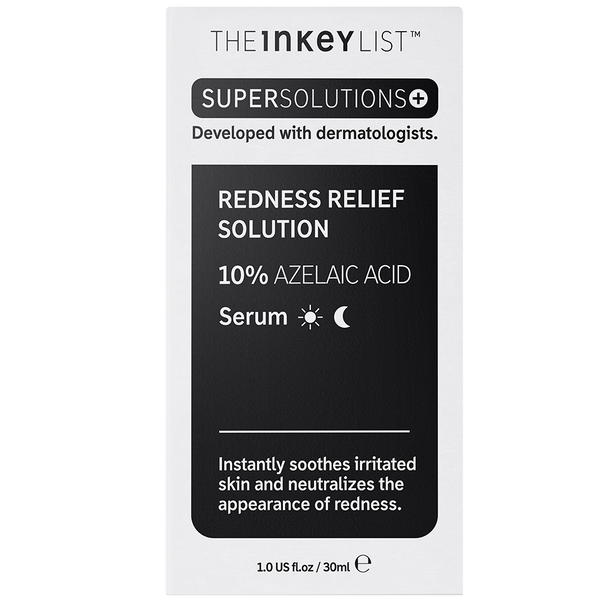
Our 10% Azelaic Acid Serum for Redness Relief is $20.00 for 30ml, rated 4.3 stars across 469 reviews. It is dermatologist-approved, formulated to be suitable for rosacea-prone skin, and clinically proven to minimize the appearance of redness in 4 days.*
*Independent clinical study of 22 people.
One thing to establish before we go further. This is a cosmetic serum, not a prescription medicine. Rosacea is a medical condition, and there is a real difference between a product that helps manage the appearance of redness and a drug that treats a diagnosed condition under clinical supervision. This article will be precise about that difference throughout, because being vague about it does not serve anyone with genuinely reactive skin. If you want the full ingredient picture beyond rosacea, our azelaic acid ingredient guide goes deeper on the chemistry and its other uses, and our redness guide covers what rosacea-prone skin needs at a concern level.
Before assessing whether any ingredient works, it helps to be clear about what you are asking it to do. That starts with understanding the condition itself.
What Rosacea-Prone Skin Actually Needs
Rosacea is a chronic inflammatory condition that affects the face. It produces persistent redness, visible capillaries, heightened sensitivity, and in some presentations, blemishes and thickening of the skin. It is not the same thing as flushing after a hot shower, and it is not the same thing as simply having a naturally rosy complexion. The defining features are persistence and reactivity: the redness does not fully settle, and the skin overreacts to things that would not bother most people.
Understanding this matters because it reframes the entire product question. If you think of rosacea-prone skin as “sensitive skin that needs gentle products,” you end up with a routine built entirely around avoidance. Nothing active, nothing that might sting, nothing that might do very much at all. That approach is understandable but it caps your results. The more useful framing is that rosacea-prone skin needs actives selected against specific criteria, not the absence of actives altogether.
The Four Recognized Rosacea Subtypes
Dermatology recognizes four presentations of rosacea, and knowing which one describes your skin changes what you should reasonably expect from any topical product.
Erythematotelangiectatic rosacea is characterized by persistent facial redness, frequent flushing, and visible capillaries, usually across the cheeks, nose, chin and forehead. This is the presentation most people picture when they think of rosacea. The skin often feels tight or stings in response to products, weather and temperature changes.
Papulopustular rosacea combines that background redness with inflammatory blemishes. These can look like acne to the untrained eye, which is one reason this subtype is frequently misidentified and mistreated with harsh acne products that make everything worse. The distinction matters: the blemishes here sit within an inflammatory context, not a comedonal one.
Phymatous rosacea involves thickening of the skin, most commonly around the nose, with an enlarged and sometimes uneven texture. This is a structural change to the skin tissue.
Ocular rosacea affects the eyes and eyelids, producing dryness, grittiness, irritation and sometimes swelling. It can occur alongside any of the facial presentations or on its own.
Here is the honest part, and it is worth saying plainly. Phymatous and ocular rosacea sit outside what topical skincare can meaningfully address. Skin thickening is a structural change that a serum cannot reverse, and nothing you apply to your face should be treating your eyes. Both warrant a conversation with a dermatologist. The American Academy of Dermatology Rosacea Resource Center is a genuinely useful, non-commercial starting point if either of those descriptions sounds like your experience.
What Sets Rosacea-Prone Skin Off
Triggers are individual, but the common ones cluster into recognizable categories. UV exposure is among the most consistently reported, which is why sun protection is foundational rather than optional for this skin type. Heat in all its forms is another: hot weather, hot drinks, hot showers, saunas, exercise in a warm room. Alcohol and spicy food are frequently cited. Stress is a genuine physiological trigger rather than a vague lifestyle factor, and it works through real mechanisms that affect barrier function and inflammatory signaling. Our guide to what skin stress is and how it affects your barrier covers that relationship in more depth.
Then there is a category people are often surprised by: skincare actives themselves.
Why Some Actives Backfire on Reactive Skin
Alpha hydroxy acids such as glycolic acid and beta hydroxy acids such as salicylic acid work by accelerating cell turnover or dissolving the bonds between surface cells. On resilient skin, that produces smoothness and clarity. On rosacea-prone skin, the same mechanism can outpace what the barrier can handle, leaving skin more permeable, more reactive and more visibly red than before. AHAs also increase photosensitivity, which is a direct problem when UV is already one of your leading triggers.
Strong retinol formulations present a related challenge. Retinol is one of the most evidence-backed ingredients in skincare, but the adjustment period it demands, with dryness, flaking and transient irritation, is precisely the kind of stress that reactive skin handles badly. That does not make it universally off-limits, and we cover the nuance in can you use retinol with rosacea-prone skin, but it does mean the introduction has to be far more careful than for other skin types.
So the criteria sharpen. Rosacea-prone skin does not just need products described as gentle. When people search for the best skincare for rosacea, what they actually need is a shortlist of actives that meet three specific conditions:
- Anti-inflammatory action, addressing the visible inflammation that drives redness rather than working around it.
- No added photosensitivity, so that using the product does not increase vulnerability to a primary trigger.
- Barrier support, or at minimum barrier neutrality, so the active is not quietly undermining the skin’s own defenses.
That third criterion deserves emphasis. A compromised barrier amplifies everything. When the barrier is impaired, irritants penetrate more easily, water escapes more quickly, and the skin’s inflammatory response becomes more easily triggered. This creates a loop: reactivity damages the barrier, the damaged barrier increases reactivity. It is why barrier repair should run alongside any active for people with rosacea-prone skin, never as an afterthought once things go wrong. Our roundup of the best ingredients for sensitive skin is a useful companion read if you are rebuilding a routine from the ground up.
Very few actives clear all three bars. Azelaic acid is one that does, which brings us to the question of how it actually works.
Is Azelaic Acid Good for Rosacea?
Yes. Azelaic acid is one of the most well-supported ingredients available for improving the appearance of redness on rosacea-prone skin, and it clears all three of the criteria set out above. It offers anti-inflammatory support, it does not increase photosensitivity, and it is generally tolerated well by skin that reacts to stronger exfoliating actives.
That is the direct answer. The more interesting question is why it works, and the explanation is genuinely worth understanding because it tells you which subtype it suits best and what to realistically expect.
Azelaic acid is a naturally occurring dicarboxylic acid. It is found in grains including wheat, rye and barley, and it also occurs naturally on human skin. For skincare and dermatological use, it is produced through fermentation rather than extracted from grain, which gives a consistent, high-purity ingredient. It has been used in dermatology for decades, which is part of why the evidence base is as developed as it is. This is not a new ingredient looking for an application.
It works through three distinct mechanisms, and they operate simultaneously.
Mechanism One: Calming Visible Inflammation
The redness associated with rosacea-prone skin is driven by an inflammatory cascade. Two of the key players are kallikrein-5, an enzyme, and cathelicidins, a family of antimicrobial peptides. In rosacea-prone skin, kallikrein-5 activity is elevated, which produces an abnormal form of cathelicidin, which in turn drives the inflammatory response and the dilation of blood vessels that reads on the surface as flushing and persistent redness.
Azelaic acid helps suppress these pro-inflammatory mediators. In plain terms, it interrupts part of the signaling chain that produces visible redness, rather than sitting on top of the skin and covering it. That is the difference between an ingredient that works with the skin’s own processes and one that provides purely surface-level camouflage.
What this means practically: over consistent use, skin tends to look calmer and less persistently flushed, and many people report that it feels less prone to reacting. This is the mechanism most relevant to the erythematotelangiectatic presentation, where diffuse redness and flushing are the defining features.
Mechanism Two: Antimicrobial Activity
Demodex mites live on everyone’s skin. They are microscopic, they are normal, and under ordinary circumstances they cause no problems at all. However, research has consistently found higher Demodex densities on rosacea-prone skin, and that elevated population is associated with inflammatory flare-ups, particularly the papules and pustules that characterize the papulopustular subtype.
Azelaic acid has antimicrobial properties that help reduce that microbial burden. This is the mechanism that makes it a strong option for people whose rosacea presents with blemishes as well as redness, because it works on both aspects at once rather than requiring a separate blemish product that might itself be too aggressive for reactive skin.
For readers whose primary concern is the blemish side of that picture, our acne and breakouts collection covers products formulated for that presentation.
Mechanism Three: Tyrosinase Inhibition
Azelaic acid also inhibits tyrosinase, the enzyme responsible for melanin production. This is why it appears in conversations about hyperpigmentation as well as redness.
For rosacea-prone skin, this matters in a specific way. When an inflammatory flare-up settles, it frequently leaves behind a mark. Post-inflammatory hyperpigmentation and post-inflammatory erythema can linger long after the original blemish or flare has resolved, and for many people those lingering marks are as frustrating as the active flare itself. By moderating melanin production, azelaic acid helps visibly fade those marks over time and supports a more even-looking tone.
This third mechanism is also the slowest to show results, which is worth knowing in advance so you are not judging the product on the wrong timeline.
The Photosensitivity Advantage
This deserves its own heading because it is genuinely underrated.
Most exfoliating actives increase your skin’s sensitivity to UV light. AHAs are the clearest example, and the standard advice to use them at night and wear diligent sun protection exists for good reason. For most skin types, this is a manageable trade-off.
For rosacea-prone skin, it is a much bigger problem, because UV exposure is one of the most reliably reported triggers. An active that increases photosensitivity is, in effect, making you more vulnerable to the thing most likely to set your skin off.
Azelaic acid does not cause photosensitivity. This makes it suitable for morning use, and it means you can build a twice-daily routine around it without introducing a new vulnerability. For anyone managing azelaic acid rednessconcerns who has previously been restricted to evening-only actives, that flexibility is practically useful rather than just theoretically nice.
To be clear, this does not reduce your need for daily sun protection. UV remains a trigger whether or not your active increases photosensitivity, and SPF is non-negotiable for rosacea-prone skin. What it does mean is that azelaic acid is not adding to the problem.
For a broader independent perspective on managing the condition, the National Rosacea Society maintains detailed patient-facing resources on management options.
Mechanism explains how an ingredient should work in theory. The more demanding question is what happens when it is measured.
The Clinical Evidence on Azelaic Acid and Redness
Before citing anything, it is worth setting out the framework, because this is where most articles on this topic become misleading.
There are two separate bodies of evidence here, and they are not interchangeable.
The first is ingredient-level evidence: peer-reviewed clinical research on azelaic acid itself. Nearly all of it was conducted at 15% concentration, which is prescription strength. This research establishes what the ingredient can do.
The second is product-level evidence: independent testing conducted on a specific formulation. In our case, that means independent studies on the 10% Azelaic Acid Serum for Redness Relief.
Both matter. Neither substitutes for the other. A brand that cites prescription-strength trials as though they validate a cosmetic product is misrepresenting the evidence, and we are not going to do that. Here is what each body of research actually shows.
Ingredient-Level Evidence at Prescription Strength
Two vehicle-controlled randomized phase III studies examined 15% azelaic acid gel in papulopustular rosacea and demonstrated statistically significant efficacy and safety. This research is available via PubMed and represents the kind of rigorous, controlled design that carries real weight, with a placebo vehicle for comparison and randomized allocation.
A comparative trial against topical metronidazole produced one of the most cited findings in this area. The study found that 15% azelaic acid gel used twice daily for 15 weeks demonstrated significant superiority over 0.75% metronidazole gel in improving the principal signs of rosacea, specifically inflammatory lesions and erythema. That is a stronger finding than the frequently repeated claim that the two are merely comparable, and it is worth reporting accurately.
A further study examined 15% azelaic acid foam, adding to the body of ingredient-level evidence across different vehicle formats and confirming that the ingredient’s performance is not confined to a single delivery system.
Now the boundary, stated in its own paragraph because it should not be buried.
All three of these trials tested 15% prescription formulations. They establish what azelaic acid can do at prescription strength. They did not test our 10% cosmetic serum, and results from prescription-strength research should not be read across to any over-the-counter product, including ours.
That distinction is the difference between an evidence-led article and a marketing document wearing a lab coat. The National Rosacea Society is a helpful independent reference for understanding how prescription options are positioned relative to cosmetic skincare.
Product-Level Evidence for the 10% Serum
Separately, our 10% Azelaic Acid Serum for Redness Relief has been independently tested, and here is exactly what that testing found, with the sample sizes stated openly.
- Clinically proven to minimize the appearance of redness in 4 days. Independent clinical study of 22 people under dermatological control.
- 91% agree skin was instantly soothed. From a 4-week independent consumer trial of 22 people under dermatological control.
- Demonstrated good skin compatibility for rosacea-prone skin, assessed under dermatological control.
Twenty-two participants is a small sample. We are stating that rather than hiding it behind a percentage, because transparency is not a value you claim selectively. A study of 22 people under dermatological control is meaningful product-level evidence, and it is a different order of evidence from a randomized phase III trial. Both of those things are true at the same time, and you deserve to know which is which when you are deciding what to put on reactive skin.
“Azelaic acid is a great multitasking ingredient. It is effective at calming irritated skin, making it a good option for those with sensitive skin.” Dr. Adeline Kikam, Board-Certified Dermatologist
The evidence supports the ingredient strongly and supports the specific formulation reasonably. What it cannot tell you is whether it suits your skin in particular.
Is Azelaic Acid Right for Your Skin?
The research answers whether azelaic acid works in general. This section is about whether it is the right choice for you specifically, which depends on your subtype, your skin type, and how severe your symptoms are.
Matching the Ingredient to Your Subtype
Erythematotelangiectatic rosacea is where azelaic acid is most directly relevant. The anti-inflammatory mechanism targets exactly the visible redness and flushing that define this presentation, and the absence of added photosensitivity is particularly valuable given how commonly UV features as a trigger for this group.
Papulopustular rosacea is arguably the best overall match, because two of the three mechanisms are working in your favor. The anti-inflammatory action addresses the background redness while the antimicrobial activity addresses the Demodex burden associated with inflammatory blemishes. You get dual action from a single, well-tolerated product rather than stacking a redness product and a blemish product on skin that will not thank you for either.
Phymatous rosacea is less responsive to topical skincare. The skin thickening involved is structural, and while azelaic acid may help with associated redness, it will not address the textural change. This subtype warrants professional care.
Ocular rosacea sits entirely outside the scope of facial skincare. Do not apply any serum near your eyes in an attempt to address it. This needs medical advice.
Matching the Ingredient to Your Skin Type
Dry and sensitive skin generally does well with a fragrance-free, non-stripping azelaic acid formula. Fragrance is a common irritant for reactive skin, and its absence removes one variable from an already complicated picture.
Combination and oily skin benefits from azelaic acid’s mild keratolytic action, which supports clearer-looking skin without the over-drying that stronger exfoliating acids can cause.
Reactive and barrier-compromised skin is where the comparison against AHAs and BHAs becomes most relevant. Azelaic acid is meaningfully gentler than those actives, adds no photosensitivity, and does not demand the same aggressive turnover.
Here is a straightforward way to self-qualify. Azelaic acid is likely a good fit if:
- Your primary concern is persistent facial redness or frequent flushing.
- You experience inflammatory blemishes alongside redness.
- You have tried AHAs or BHAs and found them too irritating.
- You are looking for an active you can use in the morning without adding photosensitivity.
- You want something that addresses lingering marks left behind after flare-ups settle.
- Your symptoms are mild to moderate and you are managing them cosmetically rather than medically.
10% Versus 15%: The Honest Version
Prescription azelaic acid formulations are typically 15%. Ours is 10% and available without a prescription.
You will sometimes see the claim that a lower concentration delivers identical results. We are not going to make that claim, because it is not supported. What is accurate is this: 10% is a well-tolerated over-the-counter concentration, and this specific formula has independent testing behind it. Higher-strength prescription options exist, and if your symptoms are moderate to severe, they are genuinely worth discussing with a dermatologist.
Concentration is also not the only variable. Formulation, vehicle, pH and supporting ingredients all influence how an active performs and how comfortable it feels. A well-formulated 10% serum you can use consistently without irritation may serve you better in practice than a stronger product you abandon after ten days. Consistency is the variable that most often determines outcomes.
How This Compares to Prescription Options
US readers frequently compare cosmetic azelaic acid against prescription azelaic acid gel and topical ivermectin, and the comparison deserves a straight answer.
Prescription medications are exactly that: medicines, prescribed and monitored by a clinician who has assessed your skin, your history and your symptom severity. A cosmetic serum is a different category serving a different purpose. It is not a substitute for prescribed medication, and it should not be positioned as one.
What is true is that different people arrive at different arrangements. Some use a cosmetic serum as a gentler daily option for mild to moderate redness. Some are prescribed medication because their presentation warrants it. Some do both under a clinician’s guidance, using prescribed treatment alongside supportive cosmetic skincare. All three are legitimate, and which applies to you is a conversation to have with a healthcare professional rather than a decision to make from a blog post. The American Academy of Dermatology is a sound place to start understanding when professional input is warranted.
Pregnancy and Breastfeeding
This is worth flagging because options narrow sharply during pregnancy and breastfeeding, and it is a period when many people find their skin becomes more reactive precisely when their usual products become off-limits.
Azelaic acid is generally considered suitable during pregnancy and breastfeeding, which makes it one of relatively few actives that remains available. As with anything during this period, confirm with your healthcare provider before starting, since individual circumstances vary.
Patch Test First
If you are new to actives, or your skin has a history of reacting unpredictably, patch test before applying anything to your full face. It takes a couple of days and it is the single most effective way to avoid a bad week. Our guide on why you should patch test walks through how to do it properly.
If you have decided the ingredient suits you, the redness collection is a good place to see how it fits alongside other options.
Deciding an ingredient suits you is one thing. Knowing what the first two weeks will feel like is another.
Azelaic Acid Side Effects: What to Expect
Most people tolerate azelaic acid well. That said, “well tolerated” is not the same as “you will feel nothing,” and going in without accurate expectations is the most common reason people stop using a product that was about to start working.
What Is Common and Normal
Mild tingling or a warm sensation on application. This is the most frequently reported effect, particularly in the first few days. It typically lasts a minute or two after application and fades as your skin adjusts.
Temporary dryness or slight flaking. Azelaic acid has a mild keratolytic action, and some skin responds initially with light dryness. This usually resolves as tolerance builds, and a good moisturizer manages it in the meantime.
Mild transient flushing on very reactive skin. Some people notice a brief increase in redness immediately after applying. It generally settles within the first couple of weeks.
Across all three, the pattern is the same: these typically settle within one to two weeks as skin adjusts. If you are still experiencing them at week four, something is not right, and the next section covers that.
Purging Versus Irritation, Briefly
Purging surfaces blemishes in areas where you normally break out, follows a recognizable pattern, and resolves. Irritation appears in new areas, presents as stinging, burning or persistent redness, and does not settle with continued use. The distinction determines whether you push through or stop. We cover it properly in does azelaic acid cause purging.
How to Minimize Side Effects
Almost every difficult first fortnight is preventable with a bit of front-loading.
- Patch test before your first full application. Two days of patience against two weeks of regret.
- Start PM only, for one to two weeks. Introduce it in the evening before considering twice-daily use. Slower introduction produces better long-term tolerance.
- Apply to clean, dry or slightly damp skin. Press and smooth the product in rather than rubbing. Friction is its own irritant on reactive skin.
- Buffer with a hydrating layer beforehand if your skin is very reactive. Applying a hydrating serum first creates a cushion that moderates the initial contact. Ectoin is particularly useful here, and our Ectoin Hydro-Barrier Serum is formulated for exactly this kind of buffering on stressed skin.
- Keep the rest of your routine simple while introducing a new active. One variable at a time. If something goes wrong, you want to know what caused it.
- Do not layer with exfoliating acids in the same routine. Azelaic acid and AHAs or BHAs in a single session is more than reactive skin needs.
Barrier support is doing a lot of quiet work throughout this list. A well-supported barrier tolerates actives better, full stop. Our guide to what skin stress is explains the underlying relationship if you want to understand why this matters as much as the active itself.
When to Stop and See a Dermatologist
Stop using the product and seek professional advice if you experience: sustained burning rather than brief tingling; pronounced swelling; blistering; hives; or redness that continues worsening beyond two weeks. These are not normal adjustment. They are signals to stop.
There is a meaningful difference between the tingle that fades in ninety seconds and a burn that persists for hours. Between light flaking and skin that is blistering. Between an initial reactive flush and redness that is escalating week over week. The first in each pair is adjustment. The second is not, and continuing to use a product through it does not build tolerance.
To be balanced about it: most people tolerate azelaic acid well, some experience a short adjustment period, and a small number simply will not get on with it. All three of those outcomes are normal. Finding out you are in the third group is disappointing but not a failure, and it is useful information about your skin.
With expectations set for the first few weeks, the next question is what happens over the following months.
How Long Does Azelaic Acid Take to Work?
The most common reason people abandon azelaic acid is not that it failed. It is that they expected results faster than any topical can deliver, or they misread a normal adjustment period as evidence the product was making things worse.
Here is a realistic staged timeline.
Day One
You will likely notice an immediate visual difference. Our formula contains allantoin alongside green pigments that optically neutralize the appearance of redness on contact.
Being transparent about this: that is a cosmetic, immediate optical effect. It is color correction, not the ingredient’s calming action, which has not had time to do anything yet. It is genuinely useful because it means the product does something visible from the first application, but it should not be mistaken for the underlying work. That takes longer.
Around Four Days
Independent clinical testing found a visible reduction in the appearance of redness in 4 days with consistent use, in a study of 22 people under dermatological control. This is where the 10% Azelaic Acid Serum for Redness Relief starts demonstrating measurable effect rather than optical effect.
Two to Four Weeks: The Adjustment Window
This is the period that determines whether people continue. Tingling settles as tolerance builds. Any brief purging resolves. Skin acclimatizes to a daily active.
It is also the period where results can feel like they have plateaued after the initial visible improvement. They have not. The cumulative work is happening beneath a surface that is not yet showing it. If you are going to quit, this is statistically when you will do it, and it is the worst possible moment to stop.
Four to Eight Weeks
With consistent daily use, this is where a more meaningful reduction in the appearance of redness typically becomes apparent. Just as importantly, many people report that skin simply feels less reactive, that triggers produce a less dramatic response, and that the baseline has shifted.
Eight to Twelve Weeks
The longest-timeline benefits arrive here: cumulative improvement in overall tone, the look of post-blemish marks, and general evenness. The tyrosinase-related benefits in particular are slow, because pigment fades gradually and there is no way to accelerate it meaningfully.
Does Azelaic Acid Cure Rosacea?
No, and we would rather say that clearly than let it go unaddressed.
Rosacea is a chronic condition. There is no cure, from a cosmetic serum or from anything else currently available. What azelaic acid does is help manage the appearance of redness while you use it consistently. Stop using it, and the appearance of symptoms gradually returns.
That is the nature of the condition, not a failure of the product, and it is the same for prescription options. Understanding this changes how you approach the whole category: you are not looking for a course of treatment with an endpoint, you are looking for something sustainable that you can maintain indefinitely without irritating your skin. Which, incidentally, is a strong argument for choosing a well-tolerated option over the strongest one available.
Consistency is the variable that matters most. Sporadic use produces sporadic results, and skin that gets an active three times one week and not at all the next never establishes the tolerance that makes the routine comfortable. Eight weeks of consistent daily use is a fair window for assessing whether it works for you.
Knowing the timeline is only useful if the routine around it supports the active properly.
Building a Rosacea Skincare Routine Around Azelaic Acid
A good rosacea skincare routine does two things at once: it delivers the active, and it supports the barrier well enough that the active stays comfortable. Miss the second and the first stops working, because you end up cycling between using it and recovering from it.
Application Technique
Use a pea-sized amount for face and neck, applied after cleansing and hydrating. Press and smooth the product into the skin rather than rubbing it in. Rubbing creates friction and mechanical irritation, which is exactly what reactive skin does not need.
Start PM only for one to two weeks. If your skin is comfortable after that, you can build to twice daily. There is no requirement to reach twice daily, and plenty of people get excellent results from evening-only use indefinitely.
The Morning Routine
- Gentle cleanse. A non-stripping cleanser sets the tone for everything after it. Our Oat Cleansing Balm is a good option for reactive skin, and best cleanser for sensitive skin will help you choose rather than default.
- Hydrating serum on damp skin. Our Hyaluronic Acid Serum draws moisture into the skin, and applying to damp skin gives it more to work with. The hyaluronic acid guide explains why the damp-skin detail actually matters.
- 10% Niacinamide Serum for daytime support. Our 10% Niacinamide Serum supports the barrier and helps with the look of redness during the day.
- Ectoin Hydro-Barrier Serum if your skin is very reactive. Optional, but a useful additional buffer during flare periods.
- Moisturizer. Our Omega Water Cream is a lighter option, while the Bio-Active Ceramide Moisturizer at $22.00 delivers more substantial barrier support. Both work; the choice depends on your preferred texture and how dry your skin runs. Browse the full moisturizers range for alternatives.
- SPF, every single morning, without exception. UV is among the most reliable rosacea triggers, which makes sun protection foundational rather than an optional final step. Our SPF guide explains what to look for, and sunscreen for sensitive skin covers formulations that suit reactive skin specifically.
The Evening Routine
- Cleanse. Remove the day, including sunscreen, without stripping. The Oat Cleansing Balm works here too.
- Hydrating serum on damp skin. Same principle as the morning. On very reactive skin, this layer also functions as a buffer for the active that follows.
- 10% Azelaic Acid Serum for Redness Relief. A pea-sized amount, pressed and smoothed across face and neck.
- Barrier-supporting moisturizer. Sealing the routine matters more in the evening, when the skin is doing most of its repair work. Ceramides are particularly well suited to this step because they replenish components the barrier is naturally built from.
How Azelaic Acid Fits With Other Actives
Short answers, with proper guides where you need the detail.
Niacinamide. Complementary rather than competing. The simplest arrangement is niacinamide in the morning and azelaic acid in the evening. Full detail in azelaic acid and niacinamide together.
Retinol. Different jobs, different evenings. Alternate rather than layer, and introduce retinol with real care on rosacea-prone skin. See can you use retinol with rosacea-prone skin and can you use azelaic acid with retinol.
Exfoliating acids. AHAs and BHAs should not share a routine with azelaic acid on reactive skin. Alternate days if you use them at all, and monitor how your skin responds.
Vitamin C. Take the morning slot for vitamin C and leave the evening for azelaic acid. They coexist comfortably when separated.
If you are rotating several actives and want a structured framework rather than improvising, skin cycling is a sensible approach for reactive skin because it builds recovery nights into the schedule by design.
The principle underneath all of this: barrier support runs alongside the active, never instead of it. Every hydrating and moisturizing step in these routines is doing real work, not padding.
The Honest Verdict on Azelaic Acid for Rosacea-Prone Skin
Yes, azelaic acid works, and it is one of the best-supported ingredients available for the appearance of redness on rosacea-prone skin. It is not a trend ingredient that arrived with a viral video and will be gone by next year. It has been used in dermatology for decades and the research reflects that.
The case for it is straightforward. Decades of ingredient-level research, including randomized controlled trials at prescription strength. Independent product-level testing on the 10% serum, including a clinically proven reduction in the appearance of redness in 4 days. No added photosensitivity, which is genuinely rare among effective actives and genuinely valuable when UV is one of your primary triggers. Generally well tolerated by skin that reacts to almost everything else. Considered suitable during pregnancy and breastfeeding. And available without a prescription.
The limits are equally clear, and naming them is the point. It will not cure rosacea, because nothing cures rosacea. It is a cosmetic serum, not a medicine, and the distinction is real rather than legal boilerplate. The prescription-strength trials establish what the ingredient can do at 15%, not what any 10% product will do for you. Phymatous and ocular presentations need professional care. Moderate to severe symptoms deserve a dermatologist conversation, and if that describes you, having it is a better use of your time than reading another product page.
What consistently separates people who get results from people who do not is not which product they chose. It is whether they used it for long enough to find out. Eight to twelve weeks of consistent daily use, with the barrier supported alongside the active, is what delivers. The instinct to keep switching when nothing has changed by week three is the single biggest obstacle, and resisting it is most of the work.
If you want to go deeper on the ingredient itself, our azelaic acid ingredient guide covers its full range of uses. If you are still weighing options, the redness collection shows how it sits alongside everything else formulated for this concern.
Because at The INKEY List, We Give A Care.
Ready to Start?
Shop the 10% Azelaic Acid Serum for Redness Relief, $20.00 for 30ml. Rated 4.3 stars from 469 reviews, dermatologist-approved, and clinically proven to minimize the appearance of redness in 4 days.*
Prefer to see the wider range first? Browse the redness collection.
Not sure where to begin? Take the skincare quiz and we will build a routine around your skin.
*Independent clinical study of 22 people.
Frequently Asked Questions
Got a question?
Our askINKEY team are a friendly bunch of skincare experts with deep product knowledge and zero judgement. Whether you're an ingredient obsessive or just starting out, we'll make it make sense. No question too big. No question too small. We Give A Care, Every Day.


