



When to Use Azelaic Acid: Morning or Night, How Often and Where It Goes in Your Routine
Both, actually. Azelaic acid is not photosensitizing, so morning, night or twice daily all work.
Author
askINKEY skincare advisors
Published
14 September, 2026
Time to read
13 minutes
Short answer: both. Azelaic acid is not photosensitizing, so morning, night or twice daily all work.
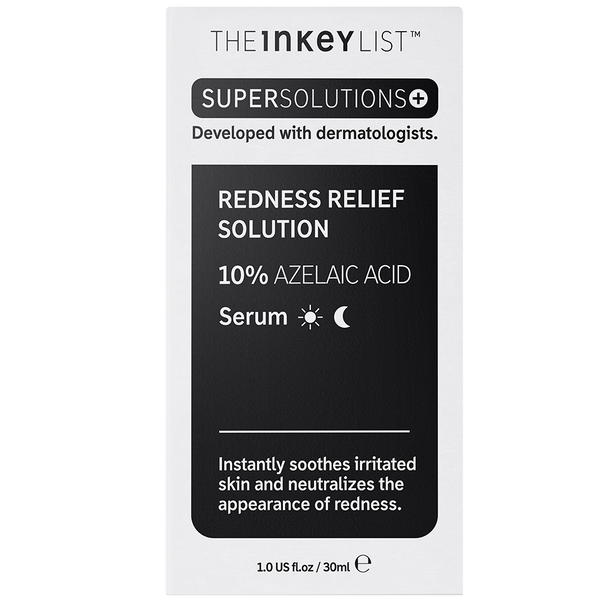
Azelaic acid can be used in the morning, at night, or both. It is not photosensitizing, so daylight is not a problem, and our 10% Azelaic Acid Serum for Redness Relief ($20) is directed for AM and PM use, up to twice daily. Which means the question of when to use azelaic acid has a better question sitting behind it: the time of day matters far less than what else shares that routine slot. This guide covers how to use azelaic acid from start to finish. You will get the morning versus night answer, how often to use it, exactly where it goes in your routine order, how much to apply, what not to layer it with, and how long results actually take. If what you want is the explainer on what azelaic acid actually does, that lives on its own page. This one is about timing, frequency and placement.
Here is the breakdown, starting with the answer.
The Short Answer: Morning, Night or Both?
Morning, night or both are all fine. Our directions are to use the serum AM and PM, up to twice daily.
People assume they have to choose because other actives have trained them to. A handful of well known ingredients genuinely do come with a time of day rule, usually because they increase sun sensitivity or degrade in daylight. That rule has quietly expanded into a general belief that anything called an acid belongs after dark. Azelaic acid does not fall into that category.
There are three legitimate ways to use it, and none of them is wrong:
- Morning only. Best if your evening is already spoken for, usually by a retinoid.
- Night only. Best if you use a vitamin C serum in the morning, or if you are new to azelaic acid and building tolerance.
- Twice daily. Best for skin that has already adjusted and is targeting persistent redness and uneven tone.
The right choice depends on what else is in your routine. Hold on to that reframe, because the rest of this article runs on it: this is not a decision about the clock, it is about avoiding a pile-up of strong actives in one sitting. Pick the slot where azelaic acid has room to itself and the timing question answers itself.
One reassurance before you choose: the formula is suitable for all skin types including sensitive skin, it is fragrance-free and vegan, and it is considered suitable during pregnancy and breastfeeding.
Almost all of the confusion lives in the morning slot, and it traces back to one myth.
Why Azelaic Acid Works in the Morning
The myth goes like this. Every acid in skincare makes skin more sun sensitive, so azelaic acid must be a night-time ingredient. It is a tidy assumption with very little supporting it, and it does not hold up here.
Start with the independent position. DermNet’s azelaic acid overview explicitly lists what azelaic acid does not cause, and photosensitivity appears on that list. That is a clinical reference source stating a negative finding outright, not a brand defending its own ingredient.
The research supports it. One study applied azelaic acid to skin immediately before UVB exposure and then measured how easily that skin reddened. Applying azelaic acid immediately before UVB exposure showed no detectable phototoxic effect, meaning treated skin was no quicker to burn than untreated skin.
Separately, research on twice daily use on light-exposed skin tracked pigmentation with color measurement over four to five weeks. Twice daily application did not make light-induced pigmentation worse. It did not prevent it either, which is exactly why the sunscreen point below still applies.
Azelaic acid is not photosensitizing. Morning use is safe.
There are two good reasons to actively want the morning slot. The first is logistics: putting azelaic acid in the AM frees your evenings for a retinoid on alternate nights, which is usually the tidiest way to run both without crowding either. The second is cosmetic. Our formula carries micro-fine green pigments from gardenia extract that help visibly neutralize redness on contact, so in the morning it doubles as a tone-evening base step under makeup, with no white cast to blend away.
The honest snag is pilling. Some people find serums pill under sunscreen or makeup, and the morning rush is usually the culprit. Use a pea-sized amount, give it a moment to absorb fully, and do not stack four products in ninety seconds.
If you use it in the morning, still finish with your sunscreen. Not because azelaic acid requires it, but because daily sun protection is what preserves the tone and redness results you are building.
Mornings make a strong case. Nights make an equally valid one.
Why Azelaic Acid Also Works at Night
The evening slot is the obvious pick when your morning is already crowded. If a vitamin C serum owns your AM routine, moving azelaic acid to the PM separates them cleanly and you keep both. There is a full guide on whether you can use azelaic acid with vitamin C if that is your situation.
Niacinamide works the same way. If you use both, our recommendation is azelaic acid in the PM and our Niacinamide Serum ($13) in the AM. The reasoning is covered in azelaic acid and niacinamide together and how and when to use niacinamide.
There is a practical argument for nights too. Most people have more time in the evening and skip fewer steps, and consistency outranks optimization. The slot you will genuinely stick with beats the theoretically ideal one you drop after a week and a half.
One small trade-off worth naming. The green tint that helps visibly neutralize redness in daylight does nothing for you overnight. It is a bonus the evening slot simply does not offer.
The same boundary applies at night as in the morning. Azelaic acid and a retinoid do not share a sitting. Alternate instead.
With the slot settled, the next questions are how often and how much.
How Often to Use Azelaic Acid, and How Much to Apply
How often should you use azelaic acid?
Up to twice daily. Yes, you can use azelaic acid every day, and daily use is what the formula is built for.
Even so, easing in is smart, especially if the ingredient is new to you or your skin is reactive. DermNet’s guidance on building from once to twice daily describes starting with once daily application and building to twice daily if tolerated. A workable version of that:
- Start once daily. Evening is the easiest entry point, since you can assess your skin the next morning.
- Hold for one to two weeks. You are checking for comfort here, not results.
- Add the second application. Only once the first is causing no tightness, stinging or irritation.
More is not better. Twice daily is a ceiling, not a goal. Once daily sustained across three months will outperform twice daily run hard for two weeks and then dropped.
How much azelaic acid should you use?
A pea-sized amount, for face and neck. That is the direction on our 10% Azelaic Acid Serum for Redness Relief, and it genuinely is enough.
Serums are formulated to spread thin across the full area. The instinct to apply more tends to backfire, because overloading is the most common reason a serum pills under sunscreen or makeup, and a heavier layer neither absorbs better nor works harder.
Include your neck. Most people stop at the jawline by habit, and the neck shows uneven tone just as clearly.
The order is straightforward, and it does matter.
Where Azelaic Acid Goes in Your Routine
One line: azelaic acid goes after cleansing and hydrating, and before moisturizer. It is a treatment serum, so it sits on clean, hydrated skin and gets sealed in afterward.
The full azelaic acid routine order, exactly as directed:
- Cleanse. Our Oat Cleansing Balm ($17) is a gentle option if you want one.
- Hyaluronic acid serum. Our Hyaluronic Acid Serum preps skin and improves comfort.
- Azelaic acid serum. Pea-sized, face and neck.
- Eye treatment.
- Moisturize. Our Bio-Active Ceramide Moisturizer ($22), or anything from our moisturizers.
- Sunscreen. Mornings only.
Use the same order AM and PM. Step six is the only morning-specific one.
On azelaic acid before or after moisturizer: before, and the reason is worth knowing. Moisturizer is designed to sit on the surface and hold water in. Putting a treatment serum on top of it means asking that serum to work its way through an occlusive layer to reach the skin it is meant to treat.
The principle underneath that order transfers to almost any routine: thinnest to thickest, water-based before oil-based, treatment before seal. For the full version, see how to build your skincare routine.
Two steps are easy to underrate. The cleanse matters more when a treatment serum is part of your daily routine, because stripped skin reacts more readily than balanced skin, so gentle and non-foaming serves you better. And the hydrating step is not padding. Applying azelaic acid over skin prepped with a hydrating serum is noticeably more comfortable, particularly on sensitive skin.
If you are also deciding where vitamin C belongs, when to use vitamin C is the companion guide to this one.
The order is the easy part. What shares the slot needs more care.
What Not to Layer With Azelaic Acid
One sentence: avoid layering azelaic acid with exfoliating acids, retinoids or vitamin C in the same routine. Alternate instead.
Keep these out of the same sitting:
- Exfoliating acids, including AHAs, BHAs and PHAs
- Retinoids, including retinol
- Vitamin C serums
The reason, stated once. Stacking multiple strong actives at the same time increases the risk of irritation without increasing the payoff. Alternating delivers the benefit of both with far less downside.
In practice there are two clean ways to alternate. Split by time of day, with azelaic acid in the morning and a retinoid at night. Or split by day, running azelaic acid Monday, Wednesday and Friday nights and a retinoid Tuesday, Thursday and Saturday nights.
For the detail on each combination, we have dedicated guides on azelaic acid with retinol, azelaic acid with vitamin C, azelaic acid with niacinamide and azelaic acid with salicylic acid. If you are wondering why over-exfoliation is the concern in the first place, is azelaic acid an exfoliant answers that one directly.
This is the reframe in action. Choosing a slot is really choosing what that slot already holds.
If your skin irritates easily, how you introduce it matters as much as where you place it.
Building Tolerance and How Long Results Take
Begin once daily, ideally in the evening, and move to twice daily only once skin feels comfortable. If it turns reactive, scale back to every other day instead of quitting outright. Pulling back nearly always beats stopping.
Patch test first. We recommend it for anything new, and why you should patch test walks through the method.
Mild tingling in the first few days is not unusual, and skin can go through a brief adjustment period whenever a new active joins the routine. If you want to know what is going on, does azelaic acid cause purging covers it.
“It helps with calming irritated skin, evening skin tone as well as redness relief. If you have sensitive skin, this is an ingredient to check out.” Dr Adeline Kikam, Dermatologist and Doctor
Now the timeline, straight. Our formula is clinically proven to minimize redness in 4 days, with 91% agreeing skin was instantly soothed. Fuller results build across 4 to 12 weeks of consistent use.
Independent clinical study of 22 people.
4 week independent consumer trial of 22 people under dermatological control.
That range is not invented for marketing. DermNet’s expected timeframes describe improvement after roughly four weeks, extending toward twelve weeks where redness is the focus. The American Academy of Dermatology describes topical treatment producing slight improvement at three to four weeks and a noticeable difference at two to three months, used alongside gentle cleansing and daily sun protection. Our 4 to 12 week window sits comfortably inside those expectations.
If skin stays irritated, stop and speak to a doctor or dermatologist. If you are using prescription treatments, check with your doctor before adding anything new. For the ingredient explainer underneath all of this, what azelaic acid does for skin has the full story.
Here is how it all looks as finished routines.
Three Sample Azelaic Acid Routines
Morning only
For anyone whose evening belongs to a retinoid.
- Cleanse
- Our Hyaluronic Acid Serum
- Our 10% Azelaic Acid Serum for Redness Relief
- Eye treatment
- Moisturizer
- Sunscreen
No exfoliating acids or vitamin C in this routine.
Evening only
For anyone using vitamin C in the morning, or anyone just starting out.
- Cleanse
- Hyaluronic acid serum
- Azelaic acid serum
- Eye treatment
- Moisturizer
No retinoid in this routine. Alternate nights instead.
Twice daily
For skin that has adjusted comfortably and is targeting persistent redness and uneven tone.
- The same five steps morning and evening
- Sunscreen added in the morning
No exfoliating acids, retinoids or vitamin C in either sitting
The Real Answer to When You Should Use Azelaic Acid
Morning, night or both. Azelaic acid is not photosensitizing, and our formula is directed for AM and PM use, up to twice daily. The clock was never the variable that mattered.
What matters is the company it keeps. Pick a slot where azelaic acid is not competing with exfoliating acids, retinoids or vitamin C, and then stay there. Two habits decide your results: a pea-sized amount in the right position in the routine, and consistency measured in 4 to 12 weeks rather than 4 to 12 days. For the ingredient explainer behind all of it, read what azelaic acid is and what it does.
Ready to start? Shop our 10% Azelaic Acid Serum for Redness Relief, $20 for 30ml. Clinically proven to minimize redness in 4 days*, suitable for sensitive skin, fragrance-free and vegan. If you are unsure how it fits with what you already use, take our skincare quiz and we will build the order around your skin.
Independent clinical study of 22 people.
Frequently Asked Questions
Got a question?
Our askINKEY team are a friendly bunch of skincare experts with deep product knowledge and zero judgement. Whether you're an ingredient obsessive or just starting out, we'll make it make sense. No question too big. No question too small. We Give A Care, Every Day.


