

Is Azelaic Acid an Exfoliant? The Honest Answer
It is not an AHA or a BHA, so it does not exfoliate in the way you would expect - but it does normalize how skin cells behave, which is why skin still looks smoother over time.
Author
askINKEY skincare advisor
Published
13 September, 2026
Time to read
14 minutes
Azelaic acid is not a chemical exfoliant in the way AHAs and BHAs are. It is a dicarboxylic acid, and it does not dissolve the bonds that hold dead surface skin cells together. It does, however, help normalize the way skin cells behave, which can leave skin looking smoother and more even over time.
That is the short version, and it is the version most of the internet gets wrong in one direction or the other. Some sources will tell you azelaic acid is an exfoliating acid because it has “acid” in the name. Others will tell you it does nothing for texture at all. Neither is true, and the space between those two answers is where the genuinely useful information lives.
In this guide we will cover what azelaic acid actually is on a chemical level, how chemical exfoliants really work and why azelaic acid does not belong in that category, whether it removes dead skin, how it compares with salicylic acid, whether it counts as enough exfoliation on its own, and how to use it in a real routine. We will also answer the question we get asked most often, which is whether you can use azelaic acid alongside an exfoliant.
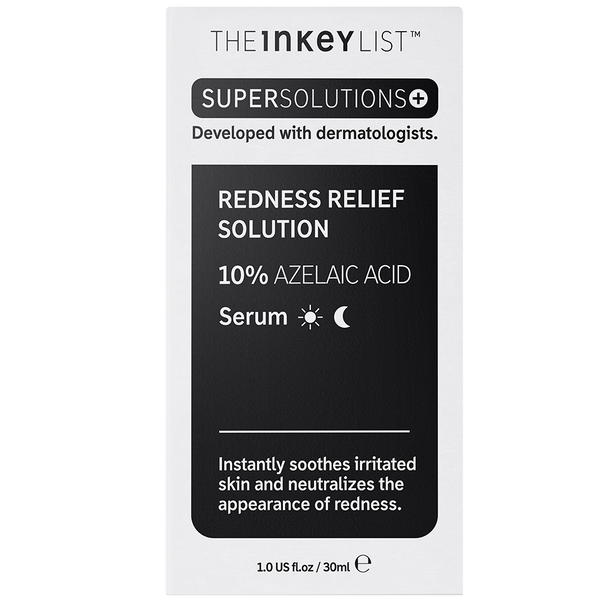
If you are here because you want a real exfoliant, you can skip ahead to our exfoliants collection. If you are here because you already own our 10% Azelaic Acid Serum for Redness Relief and want to know what it is actually doing to your skin, keep reading. No hype, no overclaiming, just what the evidence supports.
The short answer: is azelaic acid an exfoliant?
No, azelaic acid is not an exfoliant, at least not in the way most people mean when they use the word. It is not an alpha hydroxy acid and it is not a beta hydroxy acid. It does not work by loosening or dissolving the connections between dead skin cells sitting on the surface of your face, which is the defining mechanism of a chemical exfoliant.
But it is not inert on texture either, and this is where a flat “no” would mislead you. Here is the sentence worth holding onto, because it is the honest one and we will come back to it more than once: azelaic acid is not a chemical exfoliant, but it is keratolytic and comedolytic, which means it helps normalize how skin cells behave and delivers smoother-looking results gradually rather than instantly.
Keratolytic means it helps soften and break down excess keratin, the tough structural protein that can build up and make skin feel rough. Comedolytic means it helps keep pores from becoming congested in the first place. Neither of those words means “exfoliant”, and the distinction is not pedantry. It changes how you should use the ingredient, what you should expect from it, and what else you should or should not put on your face alongside it.
Why so many people assume azelaic acid exfoliates
The confusion is completely reasonable. There are three good reasons people arrive at the wrong conclusion:
- It has “acid” in the name. Glycolic acid exfoliates. Lactic acid exfoliates. Salicylic acid exfoliates. Pattern recognition says azelaic acid should too.
- It sits next to exfoliating acids on the shelf. Retailers, routines and skincare guides group acids together by name rather than by mechanism, so azelaic acid ends up filed alongside ingredients it has almost nothing chemically in common with.
- It genuinely does improve texture over time. People use it, their skin looks smoother and more even after a couple of months, and they reasonably conclude that something was exfoliated away. Something changed, but not through exfoliation.
What azelaic acid actually is (a dicarboxylic acid, not an AHA or BHA)
Azelaic acid is a saturated dicarboxylic acid with nine carbon atoms, written out as COOH-(CH2)7-COOH, with a molecular weight of around 188.22. It is a weak acid, which is part of why it behaves so differently from the stronger, faster-acting acids it gets grouped with.
“Dicarboxylic” sounds intimidating and means something very simple. A carboxylic acid group is the reactive business end of an acid molecule. AHAs and BHAs have one of them. Azelaic acid has two, one at each end of a straight chain of nine carbons. That structural difference puts it in an entirely separate chemical family from glycolic acid, lactic acid and salicylic acid. It is not a variation on an exfoliating acid. It is a different kind of molecule doing a different kind of work, which is confirmed across the clinical literature including this review of azelaic acid’s mechanism of action.
There is a nice piece of trust-building detail here too. Azelaic acid is not a lab curiosity invented for the skincare aisle. It occurs naturally in grains such as wheat, rye and barley, and it is also produced on healthy human skin by yeast that lives there normally. It has been studied in dermatology for decades, which is exactly the kind of ingredient track record we look for.
So when people search “is azelaic acid a chemical exfoliant” or “what type of exfoliant is azelaic acid”, the most useful thing we can do is correct the category rather than answer inside it. It is not a chemical exfoliant, and it is not a type of exfoliant at all. It is a keratolytic and comedolytic dicarboxylic acid, which is a genuinely different classification.
DermNet, an independent clinical dermatology resource, describes azelaic acid as keratolytic and comedolytic, and notes that it improves the disordered growth of skin cells lining the follicle.
Read that quote carefully, because it is doing a lot of work. It does not say azelaic acid removes dead skin. It says it improves how skin cells grow inside the follicle. Those are two very different sentences, and the difference between them is the entire point of this article. You can find the full ingredient breakdown on our azelaic acid guide.
Now that the chemistry is clear, it helps to know exactly what a chemical exfoliant does, because once you see that mechanism side by side the contrast becomes obvious.
How chemical exfoliants work, and why azelaic acid is different
Your outermost skin cells, called corneocytes, are held together by protein connections known as corneodesmosomes. Think of them as tiny anchors, or grips, holding each dead cell to its neighbors so the surface stays intact until those cells are ready to shed. Chemical exfoliants work by loosening or dissolving those anchors, so cells that are already finished with their job let go and come away more readily. That is the mechanism. That is the whole job description.
AHAs such as glycolic acid are water-loving, so they work mainly on the skin’s surface. BHAs such as salicylic acid are oil-loving, which lets them get into the pore lining and work on oil and build-up from the inside. PHAs are larger, slower molecules that do similar surface work more gently. That is as much acid mechanics as this article needs, because our guide to using acids in your skincare routine covers all three families properly, and our glycolic acid vs salicylic acid comparison goes deeper on how the two most popular options differ in practice.
Azelaic acid does none of that. There is no good evidence that it dissolves or loosens the connections between corneocytes. Its action is regulatory rather than dissolving. It influences how skin cells are produced and how they mature, which happens well before those cells reach the surface and become something you could exfoliate off.
The simple version: exfoliating acids loosen what is already there. Azelaic acid works on what happens next.
If you want to see what a true chemical exfoliant looks like in a routine, our Glycolic Acid Toner is a surface-level AHA option and our Beta Hydroxy Acid (BHA) Serum is the oil-loving one that gets into the pore. Neither is a substitute for azelaic acid, and azelaic acid is not a substitute for either of them. They are answering different questions.
Which raises the obvious follow-up. If azelaic acid does not loosen dead cells, does it do anything to them at all?
So does azelaic acid exfoliate dead skin? (the keratinization nuance)
Not in the way you are picturing. Azelaic acid does not remove cells that are already dead and sitting on the surface of your face. It works earlier in the process, further upstream, on the cells that have not finished forming yet. Nothing is being lifted off. Something is being corrected on the way up.
To understand why that still produces visible change, you need one piece of background: keratinization.
Your skin is in constant production. New cells are made in the deeper layers, they mature and flatten and fill with keratin as they travel upward, and eventually they reach the surface and shed. That full cycle is keratinization, and when it runs smoothly you never notice it happening. When it goes out of step, cells are produced too quickly, mature abnormally, or fail to shed on schedule. They accumulate, particularly inside the lining of the follicle, and the visible result is skin that looks rough, congested, uneven in tone and dull in a way that no amount of scrubbing quite fixes.
Azelaic acid intervenes there. According to DermNet, it improves the disordered growth of skin cells lining the follicle by inhibiting the proliferation and differentiation of keratinocytes. In plain English: it calms down the overactive production and abnormal maturing of cells inside the pore, rather than scrubbing finished cells off the top. This effect on keratinization patterns has been documented in dermatology research going back decades, including work examining its effects on the keratinisation pattern in follicular skin, and it is summarized across the broader literature on the multiple uses of azelaic acid in dermatology.
So when people search “how does azelaic acid exfoliate”, the honest answer is that it does not, but here is the mechanism they are actually noticing. Fewer cells piling up where they should not be means less visible congestion and a smoother-looking surface. The outcome overlaps with what an exfoliant delivers. The route there is completely different.
What azelaic acid does
- Helps normalize how skin cells are produced and mature, particularly inside the follicle
- Helps soften and reduce excess keratin build-up, which is what keratolytic means
- Helps keep pores from becoming congested, which is what comedolytic means
- Supports a more even-looking tone, partly through its effect on tyrosinase, the enzyme involved in pigment production, as explored in this research on its mechanism in the human epidermis
- Helps visibly reduce redness
What azelaic acid does not do
- It does not dissolve or loosen the bonds between dead surface skin cells
- It does not deliver the immediate, tangible smoothness of an exfoliating acid
- It does not replace an exfoliant if genuine exfoliation is your goal
- It does not work overnight
Why azelaic acid can still make skin look smoother and more even
Here is where we need to clear something up, because you may have seen azelaic acid described in a few different ways, including on our own pages.
You may have read that azelaic acid has “gentle exfoliating action”. What that phrase is describing is the result, not the mechanism. Skin looks smoother in a way that resembles what gentle exfoliation achieves, because normalized cell behavior means less build-up and less visible congestion. It is exfoliation-like smoothing, not an exfoliating acid at work. You may also have read that it “accelerates skin cell turnover”. The more accurate framing, and the one the evidence actually supports, is that it supports the skin’s natural renewal process and helps normalize keratinization. That is a meaningful difference, because “accelerates turnover” implies a speed and force that azelaic acid simply does not have.
The reconciling sentence, once more, because this page is meant to be the definitive one: azelaic acid is not a chemical exfoliant, but it is keratolytic and comedolytic, which means it helps normalize how skin cells behave and delivers smoother-looking results gradually rather than instantly.
That word “gradually” matters enormously for your expectations.
What to expect, and when. Azelaic acid works gradually. Research looking at visible and structural changes in the skin typically observes a window of around 4 to 8 weeks. If you are two weeks in and wondering why your skin does not feel polished, nothing has gone wrong. You are simply early.
This is also why azelaic acid feels so different to use than an exfoliating acid. A glycolic toner gives you feedback tonight. Azelaic acid gives you feedback in a month and a half. Neither is better, but only one of them requires patience, and knowing which is which stops people from abandoning the ingredient right before it starts working. If you are curious about what is happening in those early weeks, our guide on whether azelaic acid causes purging covers the turnover question and the timeline in detail.
The visible payoff, when it arrives, tends to show up in three places. Congestion looks reduced, because fewer cells are accumulating in the pore lining. Tone looks more even, helped by azelaic acid’s effect on pigment production. And texture looks smoother, which is the downstream consequence of the first two rather than a separate action. Our 10% Azelaic Acid Serum for Redness Relief is formulated around exactly this: a steady, well-tolerated dose of the mechanism described above, at $20 for 30ml.
The clearest way to see all of this in practice is to put azelaic acid directly next to the exfoliating acid it gets confused with most often.
Azelaic acid vs salicylic acid: two different jobs
These two ingredients get compared constantly, usually by people trying to work out which one to buy. The comparison is useful, but the framing is normally wrong. This is not a contest with a winner. They are different tools built for different jobs, and a routine can reasonably contain both.
What salicylic acid does
Salicylic acid is a beta hydroxy acid, and it is a true chemical exfoliant. It is oil-loving, which means it can travel into the pore, mix with the oil already there, and loosen the build-up from inside. That makes it the go-to for skin that is oily, congested, prone to blackheads and blemishes, and that responds well to something actively clearing the pore out. You feel the results relatively quickly. Our Beta Hydroxy Acid (BHA) Serum is the leave-on version, and our Salicylic Acid Cleanser is a gentler, rinse-off way to get the same ingredient into a routine without committing to daily leave-on exfoliation.
What azelaic acid does
Azelaic acid is a dicarboxylic acid, and it is not an exfoliant. It works on visible redness, on uneven-looking tone, and on the way skin cells behave inside the follicle. It does not clear the pore in the mechanical sense that salicylic acid does. It makes the pore less likely to get congested in the first place, and it evens out how skin looks overall. That makes it the more natural fit for skin dealing with persistent redness, uneven tone, or post-blemish marks that linger long after the blemish itself has gone.
Different tools, different jobs. One clears the pore. The other calms and evens.
Put simply: if your main frustration is that your skin feels congested, oily and rough, salicylic acid is doing the job you want done. If your main frustration is that your skin looks red, blotchy or uneven, azelaic acid is the one addressing that. Plenty of people want both things, which is entirely normal, and the two can absolutely coexist in a routine with a bit of scheduling. We cover exactly how in our dedicated guide to using azelaic acid with salicylic acid, so we will not duplicate it here.
If what you actually want is the AHA versus BHA decision rather than this one, our glycolic acid vs salicylic acidcomparison is the right page for that.
Understanding the difference raises a practical question for anyone already using azelaic acid, and it is the one we get asked most.
Is azelaic acid enough exfoliation on its own?
Let us answer this honestly, because there is a version of this answer that sells more product and a version that is true.
If your goal is genuine exfoliation, meaning you specifically want dead surface cells loosened and lifted away, then no, azelaic acid is not doing that job and it will not start. You would need an actual exfoliating acid for that.
But that is only half the answer, and the other half matters more for most people. If your goal is smoother, more even-looking skin with less visible redness, azelaic acid may well be all you need, and you may not need a dedicated exfoliant at all.
We will say the unpopular part plainly: not every routine needs an exfoliant. The idea that a complete skincare routine must include a separate exfoliating step is a habit of the industry, not a requirement of skin. Plenty of people, particularly those with sensitive or reactive skin, get better results from a well-tolerated active used consistently than from adding an exfoliating acid their barrier does not enjoy. If azelaic acid is giving you the skin you want, the correct number of additional exfoliants is zero.
If you do conclude that you want one, our guide to the best exfoliator for sensitive skin is the sensible starting point, and our PHA toner vs glycolic acid toner comparison helps you pick a strength, with our PHA Toner as the gentler of the two. The full range lives in our exfoliants collection.
Can you use azelaic acid with an exfoliant, or after exfoliating?
Yes, but not in the same routine. Our published guidance on the product page for our 10% Azelaic Acid Serum for Redness Relief is to avoid layering it with exfoliating acids (AHAs, BHAs, PHAs), retinols or vitamin C in the same routine, and to alternate use instead to prevent over-exfoliation and irritation.
That guidance is deliberately unambiguous, so here is what it looks like in practice.
Our guidance: alternate, do not stack. Using both in the same routine increases irritation risk without increasing results.
- Use azelaic acid on some evenings and your exfoliant on others, for example alternating nights
- Or use one in the morning and the other in the evening, keeping them separated by a full routine
- Or keep exfoliation to one or two nights a week and use azelaic acid on the remaining nights
- Whichever pattern you choose, give your skin a few weeks on it before judging the results
Can you use azelaic acid immediately after exfoliating? It is better to separate them. Applying azelaic acid straight after an exfoliating acid means putting an active onto skin that has just had its surface loosened, which raises the chance of stinging and irritation without adding any benefit. Nothing about that combination makes either ingredient work harder. It just makes the routine less comfortable.
Watch for the signs that you have pushed too far: tightness, stinging on application when there was none before, unusual sensitivity to products you normally tolerate, and visible redness that does not settle within a few hours. None of that is cause for alarm, and all of it is a signal to pause actives and focus on barrier support. Our guide on what to do if you have over exfoliated walks through recovery properly, and our Ectoin Hydro-Barrier Serum is a genuinely useful thing to reach for while your skin resets.
With the pairing rules settled, here is what a simple azelaic acid routine actually looks like from start to finish.
How to use azelaic acid in your routine
Azelaic acid is refreshingly low-maintenance. It does not need a complicated support structure around it, and the simplest version of the routine is usually the one people stick with.
- Cleanse. Start with clean, dry skin. Nothing else needs to happen at this step.
- Apply azelaic acid. Two to three drops of our 10% Azelaic Acid Serum for Redness Relief, smoothed over the whole face rather than spot-applied, since tone and redness are rarely confined to one patch.
- Moisturize. Follow with a moisturizer to lock everything in and support your barrier. Our Bio-Active Ceramide Moisturizer is a good match, and there are lighter and richer options in our moisturizers collection depending on your skin type.
Morning or evening? Our product page states it can be used both AM and PM. If you are new to actives, or your skin runs sensitive, start with a few times a week and build up as your skin tells you it is comfortable. There is no prize for going daily from day one.
How long until it works? Come back to the 4 to 8 week window. Consistency beats intensity with this ingredient every single time. Using it three nights a week for two months will do more for your skin than using it aggressively for ten days and stopping.
What pairs well with it? Niacinamide is a natural partner, and our 10% Niacinamide Serum works alongside it comfortably. We have a full guide on azelaic acid and niacinamide if you want the detail. Retinol also comes up constantly, and the short version is that the two are best alternated rather than layered, which our guide on whether you can use azelaic acid with retinol explains properly.
Who azelaic acid suits (including sensitive and reactive skin)
One of the quiet advantages of azelaic acid is how broadly tolerated it is. Because it is not stripping the surface, it tends to be an easier ingredient to live with than the exfoliating acids it gets confused with.
This might suit you if:
- You deal with visible redness that you would like to look calmer
- Your tone looks uneven, patchy or blotchy
- You have post-blemish marks that are outlasting the blemishes themselves
- Your skin gets congested easily and you want to address it without a strong exfoliant
- You have sensitive or reactive skin and have not got on well with AHAs or BHAs
- You want a single active that works on more than one thing at once
That sensitivity point is a genuine differentiator. Plenty of people find that exfoliating acids leave their skin tight, pink and irritated, and conclude that they simply cannot use actives. Azelaic acid is often the ingredient that changes their mind, because it delivers results through a mechanism that does not involve disrupting the surface. For anyone with rosacea-prone skin specifically, we have a dedicated deep dive into whether azelaic acid works for rosacea-prone skin, and it is worth reading in full rather than us summarizing it here.
Our formula is a 10% concentration, which sits in a well-studied range, and it is $20 for 30ml. You can find it alongside our other options in the redness collection.
Explore more guides
If you want to go deeper on any part of this, these are the pages worth your time:
- Azelaic acid: the complete guide for the full ingredient breakdown in one place
- A guide to using acids in your skincare routine for how AHAs, BHAs and PHAs actually differ
- Does azelaic acid cause purging? for what to expect in the first few weeks
- Azelaic acid for rosacea-prone skin for a proper look at the evidence
- Does azelaic acid help with post-blemish marks? for marks that outstay their welcome
- Glycolic acid vs salicylic acid for choosing between the two most common exfoliating acids
- Best exfoliator for sensitive skin if you have decided you do want one
The bottom line on azelaic acid and exfoliation
Azelaic acid is not a chemical exfoliant. It is a dicarboxylic acid, not an AHA or a BHA, and it does not loosen the bonds holding dead surface cells in place the way exfoliating acids do. Anyone telling you otherwise is working from the name rather than the chemistry.
What it does do is help normalize the way skin cells behave inside the follicle, which over a few consistent weeks can leave skin looking smoother, clearer and more even, with visibly less redness. That is a real and well-documented benefit. It is simply a different benefit from exfoliation, arriving more slowly and more gently.
So the practical takeaway is straightforward. If you want exfoliation, use an exfoliant and choose the strength that suits your skin. If you want calmer, more even-looking skin, azelaic acid is doing a different and genuinely useful job, and it does not need to be an exfoliant to be worth your shelf space. Clear guidance, proven ingredients, real results. That is the whole point.
Where to start
If visible redness and uneven tone are what brought you here, our 10% Azelaic Acid Serum for Redness Relief is the place to begin, at $20 for 30ml. It is not an exfoliant and we would never sell it as one, but it is a well-studied concentration of an ingredient that does its own job properly.
And if reading this has made you realize what you actually want is a true exfoliant, our exfoliants collection has the right one for your skin type.
Because at The INKEY List, We Give A Care.
Frequently Asked Questions
Got a question?
Our askINKEY team are a friendly bunch of skincare experts with deep product knowledge and zero judgement. Whether you're an ingredient obsessive or just starting out, we'll make it make sense. No question too big. No question too small. We Give A Care, Every Day.


