


Is Ceramide Moisturizer Good for Oily Skin?
Yes, oily and combination skin can use ceramides. Here's why they won't clog pores and how to choose the right lightweight texture.
Author
askINKEY skincare advisor
Published
27 October, 2026
Time to read
13 minutes
Yes. If you have oily or combination skin, you can absolutely use a ceramide moisturizer, and the right one will not feel greasy or trigger breakouts. That is the short answer, and it is worth stating plainly before we go any further, because the opposite belief keeps so many oily-skinned people trapped in a cycle of stripping their skin and wondering why it only gets shinier.
The fear is understandable. When your skin already produces more oil than you would like, the idea of adding a “ceramide moisturizer” sounds like pouring gasoline on a fire. People picture a thick, rich cream that sits heavy, looks shiny by lunchtime, and clogs pores into a fresh crop of breakouts. It is a reasonable worry, but it is aimed at the wrong target.
Here is the reframe that changes everything: the problem is almost never ceramides themselves. The problem is texture, and the rest of the formula wrapped around those ceramides. A heavy balm and a weightless water cream can both contain ceramides, yet behave in completely different ways on oily skin. Blame the format, not the ingredient.
By the end of this guide you will know whether ceramides suit your skin type, how to choose the right format so your moisturizer disappears instead of lingering, and which two options fit oily versus combination skin. We take the science and make it simple here, because clear guidance, proven ingredients, and real results matter more than hype. One of those options, our lightweight Omega Water Cream ($15), will come up again later as the go-to for oily skin, so keep it in the back of your mind.
Before we talk about which product to pick, it helps to understand one thing that surprises a lot of people: being oily on the surface does not mean your skin barrier is strong underneath. Let us unpack that, quickly and without the jargon.
Does Oily Skin Actually Need Ceramides?
It is one of the most counterintuitive truths in skincare: oily skin can still be short on ceramides. The oil you see in the mirror and the lipids that hold your barrier together are two different things, and confusing them is where a lot of routines go wrong.
Let us define the term simply. Ceramides are lipids that naturally live in your skin. Think of your skin cells as bricks and your ceramides as the mortar between them, the glue that keeps everything sealed, holds moisture in, and keeps irritants out. When that mortar is plentiful, skin feels comfortable and resilient. When it runs low, water escapes more easily and the barrier gets leaky, reactive, and prone to flare-ups. If you want the full ingredient explainer, you can learn what ceramides are and how they work; here we are staying focused on the oily-skin question.
Now, the key distinction. Oily skin produces excess sebum, which is the surface oil that gives you shine and that end-of-day slick on your forehead and nose. That is a separate system from the ceramides packed into your barrier. You can be shiny on top and under-supported underneath at the same time. One does not cancel out the other. In fact, plenty of oily-skinned people have barriers that are quietly struggling, which is exactly why their skin feels tight after cleansing even though it looks greasy an hour later.
What drains ceramides even when skin is oily
Oily skin types are often the most aggressive with their routines, and that is precisely the problem. The things people do to fight oil are frequently the things that deplete ceramides. The usual culprits include:
- Over-cleansing. Washing two, three, or four times a day with foaming formulas that leave skin squeaky clean. That squeak is not a victory. It is the sound of a stripped barrier.
- Harsh exfoliation. Scrubbing with gritty physical exfoliants or stacking too many chemical exfoliants in the hope of blitzing every blackhead.
- Strong actives used without support. Potent ingredients are great, but layered carelessly they can leave the barrier raw.
- Stripping formulas that leave skin tight. Anything that makes your face feel taut and parched is quietly removing the lipids you need.
Each of these can lower your ceramide levels and weaken the barrier, regardless of how much oil you produce. So the oilier person who double-cleanses, exfoliates nightly, and skips moisturizer to “stay matte” may actually have a more compromised barrier than their dry-skinned friend.
The dehydrated-oily loop
Here is where it gets genuinely frustrating for oily skin, and where the biggest myth of all starts to crumble. When the barrier is stripped and moisture is escaping, the skin often tries to compensate by producing even more oil. You strip, you tighten, your skin panics, it pumps out sebum, you see shine, you strip again. Round and round it goes. Skipping moisturizer to avoid grease can therefore make oiliness worse, not better. This is the dehydrated oily skin loop, and once you understand it, a lot of your skin’s behavior suddenly makes sense.
Oily on the surface, thirsty underneath. That combination is far more common than most people realize.
The takeaway is simple and a little liberating. Supporting the barrier with ceramides does not make oily skin greasier. Over time it helps skin feel more balanced, more comfortable, and often looks less shiny, because a well-supported barrier has less reason to overproduce oil in the first place. Ceramides are not the enemy of oily skin. They are quietly on its side.
So if ceramides clearly help, why do so many oily-skinned people still avoid them? Because of one stubborn fear that deserves a proper answer: the worry that ceramides clog pores and cause acne. Let us tackle that head-on.
The Big Myth: Do Ceramides Clog Pores or Make You Break Out?
This is the belief that keeps oily and acne-prone readers away from ceramide creams, so let us state it plainly and then correct it. The myth says that ceramides are pore-clogging and will trigger breakouts. The reality is that ceramides are not inherently comedogenic. Whether a moisturizer breaks you out depends on the whole formula and its texture, not on the presence of ceramides alone.
That is the entire crux of this article. Ceramides are a type of lipid your skin already contains. They are not a greasy foreign oil being smeared on top of your face. The thing that actually determines whether a product congests your pores is how the complete formula is built: which oils or butters it uses, how heavy the occlusives are, how the texture sits on skin, and whether the whole thing has been designed and tested with pores in mind.
What “non-comedogenic” really means
You will see the word non-comedogenic on a lot of labels, and it is worth knowing what it actually signals. In plain English, it means the product has been formulated and tested not to clog pores. That is the label to look for if you are oily or prone to breakouts. It is a practical promise about behavior on the skin, not a vague marketing flourish.
Here is a distinction that trips people up constantly: oil-free and non-comedogenic are not the same thing. They often get used interchangeably, but they describe two different qualities.
- Oil-free means the formula contains no added oils at all. A water cream, for example, can be entirely oil-free.
- Non-comedogenic means the formula has been tested not to clog pores, even if it contains some nourishing oils.
Both can suit oily skin. A product can include a little carefully chosen oil and still be non-comedogenic, because being tested not to clog pores is about the overall formulation, not a single ingredient. Equally, a weightless water cream can be fully oil-free. Neither label is automatically “better” for oily skin. What matters is matching the right one to how your skin behaves.
What actually causes greasiness and congestion
If ceramides are not the villain, what is? In practice, the real causes of a shiny, congested complexion are:
- Heavy occlusives applied in generous amounts, designed to seal very dry or compromised skin.
- Thick, balmy textures used by people who do not need that level of richness.
- Over-layering rich products, stacking a dense serum under a dense cream under a dense oil until the skin simply cannot breathe.
- Using too much product, because even a good moisturizer can feel heavy if you apply a coin-sized blob instead of a pea.
Notice that ceramides appear nowhere on that list. The common thread is weight and quantity, not the lipid itself. For a concrete example, our Omega Water Cream ($15) is both oil-free and non-comedogenic, which is exactly why it works for oily and combination skin without that smothered feeling. If you want to browse the whole lightweight category, the oil-free moisturizers collection is a good place to start.
For anyone who is acne-prone, there is genuine reassurance here. A barrier-supporting, non-comedogenic moisturizer can help your skin stay comfortable while you use the stronger ingredients that target blackheads, oily skin, and acne. Those actives can leave skin feeling tight and sensitive; a well-chosen ceramide moisturizer cushions that, so you can keep your routine consistent rather than abandoning it at the first sign of irritation. Supporting the barrier and tackling breakouts are not opposing goals. They work together.
Dewy, not greasy. Supported, not clogged.
That is the whole philosophy in one line. The goal is skin that looks fresh and hydrated without the oil slick, and barrier support that reinforces rather than suffocates. Once you accept that it is texture and formula doing the work, the next question answers itself: how do you actually choose the right texture for your skin?
Texture Is Everything: Choosing the Right Ceramide Moisturizer for Oily Skin
If there is one idea to carry away from this entire piece, it is this: when you have oily skin, texture is the single most important decision you will make about a moisturizer. Get the texture right and ceramides become an effortless part of your routine. Get it wrong and even the best ingredients will feel like a mistake.
So let us build a simple framework you can actually use, rather than a vague “listen to your skin” cop-out.
The texture spectrum, explained simply
Moisturizers sit on a spectrum from feather-light to deeply nourishing. Picture it as a straight line:
- Water creams and gel-creams sit at the lightest end. They are fast-absorbing, usually oil-free, and feel almost like a serum that disappears into the skin. These are the natural home for oily skin.
- Lotions and light creams sit in the middle, offering a touch more cushion while still absorbing reasonably quickly.
- Rich creams and balms sit at the nourishing end. They are more occlusive, better suited to dry, mature, or barrier-stressed skin, and they linger on the surface by design.
Crucially, ceramides can live anywhere on that spectrum. A water cream and a rich cream can both deliver them. The difference is entirely in how the product feels and behaves once it is on your face.
The sweet spot for oily and combination skin
For most oily and combination skin, the sweet spot is a lightweight, oil-free water cream. It delivers ceramides and hydration without weight, absorbs in seconds, and leaves a breathable finish rather than a film. You get the barrier benefit without the shine. This is why, for the majority of oily-skinned readers, the decision is genuinely this straightforward: start light.
That said, lighter is not always the answer for everyone. There are real situations where a slightly richer, still non-comedogenic ceramide cream makes sense even for oily skin:
- Winter dry patches. When cold air and indoor heating leave flaky areas, a little more nourishment on those spots is sensible.
- Anti-aging goals. If your oily skin also wants firming and smoothing support, a richer formula can deliver more on that front while still being pore-friendly.
- Combination skin with needy cheeks. When your T-zone is slick but your cheeks feel tight, the cheeks may simply want more than the forehead and nose do.
How much to use and where
Application is where a lot of good products get wrongly blamed. The rule is simple: a pea-sized amount is plenty. You can also tailor placement rather than slathering uniformly. Apply a little more where skin is drier, usually the cheeks, and a little less across the oily T-zone. This zone-based approach is the quiet secret of combination skin, and it costs you nothing.
What to look for on the label
When you are comparing options, scan the label for these signals:
- Ceramides as a listed ingredient, ideally alongside a humectant like glycerin or hyaluronic acid to pull water into the skin.
- “Non-comedogenic”, your pore-friendly reassurance.
- Fragrance-free, if your skin is sensitive or reactive.
- A finish described as “lightweight” or “dewy” rather than “rich”, “intense”, or “heavy”.
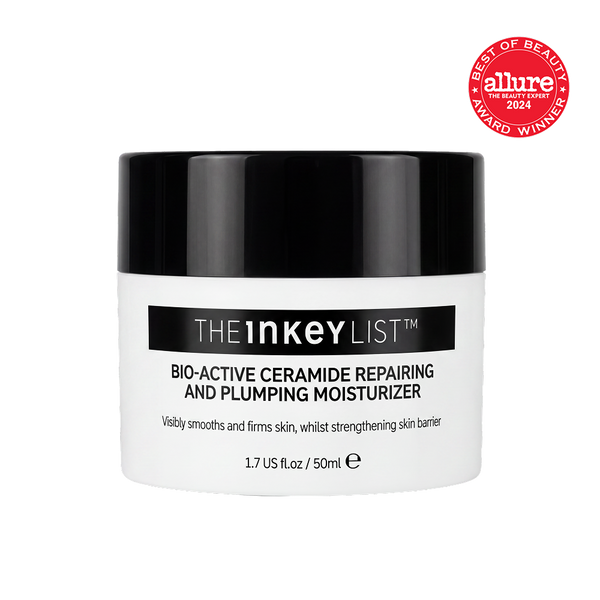
The simplest decision rule of all: match the texture to how your skin behaves across the day, not to whatever format is trending this season. If your face is slick by midday, lean light. If it feels tight and parched despite the oil, you can afford a touch more cushion. Our Omega Water Cream ($15) is the lightweight example for oily and combination skin, while our Bio-Active Ceramide Moisturizer ($22) is the richer, still non-comedogenic option for drier zones or anti-aging goals. You can also browse the ceramide collection to compare formats side by side.
Framework in hand, let us put those two options head to head so you can see exactly which one belongs in your routine.
INKEY’s Two Ceramide Picks for Oily and Combination Skin
Theory is useful, but at some point you want a recommendation you can act on. So here it is, honestly and without the usual marketing fog. For oily and combination skin, there are two formulas worth your attention, and they serve different needs. We will educate first, then recommend clearly.
The hero pick: Omega Water Cream
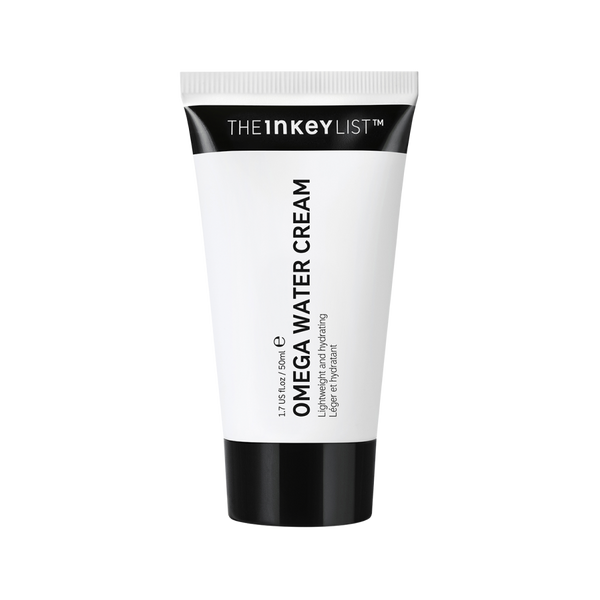
If your main goal is lightweight, oil-controlling hydration, our Omega Water Cream ($15) is the one to reach for. It is an oil-free, non-comedogenic water cream, which means it ticks both boxes we discussed earlier: no added oils and tested not to clog pores. The texture is gel-like and almost weightless. It absorbs fast, sits beautifully under makeup, and leaves skin feeling hydrated rather than coated.
The formula is thoughtfully built for exactly this skin type:
- 0.2% Ceramide Complex, rich in Omega 3, 6 and 9, to support and strengthen the barrier.
- 5% Niacinamide to help control excess oil and even out tone, a genuinely useful partner for shiny, uneven skin.
- 5% Glycerin, a humectant that draws in and holds hydration.
- 3% Betaine to help keep skin balanced and comfortable.
Together, these do something clever: they support the barrier (ceramides), address the oil and tone concerns oily skin cares about (niacinamide), and keep everything hydrated without weight (glycerin and betaine). It is barrier support and oil control in one light step.
The proof points back this up. The Omega Water Cream is clinically proven to help balance oil while deeply hydrating the skin. Those are the kinds of results that matter day to day: a more even-looking complexion and genuine, lasting hydration without the grease. At $15, it delivers that without a premium markup.
The secondary pick: Bio-Active Ceramide Moisturizer
Our Bio-Active Ceramide Moisturizer ($22) is the richer option, and it is still non-comedogenic, so it remains a sensible choice for oily and combination skin in the right circumstances. It is the pick for skin that wants barrier support plus firming and smoothing, or for drier cheeks and the colder months when a little more nourishment is welcome.
One honest caveat: unlike the Omega Water Cream, the Bio-Active is not oil-free. If you strongly prefer the lightest possible finish, or your skin runs very oily all over, this is your cue to head back to the Omega. For more on what makes these bio-active ceramides different, you can read how Bio-Active Ceramides compare to regular ceramidesrather than us rehashing it here. At $22, it is still honest value for a barrier-supporting, multi-benefit cream.
Which one is for you
Here is the quick decision guide:
- Choose the Omega Water Cream if your main goal is lightweight, oil-controlling hydration that disappears into the skin and plays nicely under makeup. This is the default for most oily and combination skin.
- Choose the Bio-Active Ceramide Moisturizer if you want barrier support plus firming and smoothing, you have drier cheeks or face cold-weather dryness, and you do not mind a more cushiony cream.
The underlying philosophy is the same across both: science-backed barrier support at honest prices, without the inflated cost that so often comes attached to the word “ceramide”. You should not have to pay a luxury premium to look after your skin barrier.
Knowing which product to buy is only half the battle, though. The other half is knowing exactly where it fits in your routine, so let us build that out step by step.
How to Use a Ceramide Moisturizer in an Oily Skin Routine
A great moisturizer only performs if it is used in the right order and the right way. The good news is that fitting ceramides into an oily skin routine is genuinely simple. You do not need ten steps or a complicated layering chart. You need a sensible sequence and a light hand.
The simple AM and PM order
Here is a clean framework that works morning and night:
- Cleanse. Start with clean skin, using a cleanser suited to your type rather than the harshest one you can find.
- Hydrate with a lightweight serum. This is where your water-based actives go.
- Lock it in with a ceramide moisturizer. This seals the hydration and reinforces the barrier.
- Finish with sunscreen in the morning. Sun protection is the final, non-negotiable morning step. In the evening, simply skip it.
The ceramide moisturizer’s job is always the same: to lock everything in and keep the barrier comfortable overnight or under the day’s other products.
Pairing ceramides with hyaluronic acid
One of the most common questions is whether ceramides and hyaluronic acid work together for oily skin, and the answer is an enthusiastic yes. In fact, they are a great pairing for skin that is oily and dehydrated at the same time, which, as we covered earlier, is extremely common.
The technique matters. Apply our Hyaluronic Acid Serum on slightly damp skin so it can draw water into the skin, then apply the ceramide moisturizer on top to seal that water in. The hyaluronic acid pulls moisture in; the ceramides stop it escaping. It is a two-part system, and it is perfect for shine-prone skin that still feels thirsty. If you want the full breakdown of how these two differ and when to prioritize each, read ceramides and hyaluronic acid, which does your skin need.
Pairing with oil-control and blemish actives
Ceramides also make the perfect teammate for the stronger ingredients oily and acne-prone skin tends to rely on. Our Niacinamide Serum is a natural fit for managing oil and tone, and our Salicylic Acid Cleanser, a 2% salicylic acid acne treatment, helps keep pores clear and tackle blackheads and breakouts. Both can leave skin feeling a little tight, and that is exactly where the ceramide moisturizer earns its place: it keeps the barrier comfortable while you use those actives, so you can stick with them consistently. For the complete guide to layering, see can you use ceramides with every active.
Practical tips that make all the difference
A few small habits separate a routine that works from one that feels heavy:
- Use a pea-sized amount. More is not better. More is just shinier.
- Zone your application. A touch more on dry cheeks, a little less on the oily T-zone.
- Let it absorb for a minute before makeup. Patience prevents pilling and that greasy slip.
- Patch test anything new. Introduce one product at a time so you know what your skin is responding to.
Consistency beats intensity every time. Barrier support shows up over weeks, not overnight.
That last point is the most important of all. A ceramide moisturizer is not a one-off rescue cream you reach for in a crisis and then forget. Its real power comes from steady, daily use that gradually strengthens the barrier. Occasional heavy layering will never beat a light, consistent routine. Give it a few weeks and let the results accumulate.
Conclusion
So, is ceramide moisturizer good for oily skin? Yes, without hesitation, when you choose the right texture. For oily and combination skin, that means reaching for something lightweight and non-comedogenic rather than a thick, rich cream. Ceramides are not the enemy of oily skin. They are part of the support system that helps it behave.
The myth we set out to bust comes down to one sentence: the greasy, heavy feeling people fear comes from dense formulas and over-application, not from ceramides themselves. Once you separate the ingredient from the texture, the whole worry falls apart, and a well-chosen ceramide moisturizer becomes one of the smartest steps an oily-skinned person can take.
As for the pick, keep it simple. Reach for our Omega Water Cream ($15) when you want lightweight, oil-controlling hydration that disappears into the skin. Step up to our Bio-Active Ceramide Moisturizer ($22) when you want richer barrier support with firming and smoothing benefits, or when colder months leave your cheeks feeling dry. Either way, you are getting proven ingredients and real barrier support, with clear guidance and effective skincare at honest prices.
Ready to Find Your Lightweight Match?
If your skin runs oily or combination and you want hydration that feels like nothing, shop our Omega Water Cream($15), the oil-free, non-comedogenic ceramide pick built exactly for you.
Prefer something richer, or chasing anti-aging benefits alongside barrier support? Compare it with our Bio-Active Ceramide Moisturizer ($22) to see which suits you better. And if you would rather have the decision made for you, take the skincare quiz for a recommendation tailored to how your skin actually behaves.
Frequently Asked Questions
Got a question?
Our askINKEY team are a friendly bunch of skincare experts with deep product knowledge and zero judgement. Whether you're an ingredient obsessive or just starting out, we'll make it make sense. No question too big. No question too small. We Give A Care, Every Day.


