

The Best Moisturizer for Acne-Prone Skin: How to Hydrate While Using Actives
Acne-prone skin still needs moisture. Here is how to hydrate without clogging pores, even while using active ingredients.
Author
askINKEY skincare advisor
Published
30 August, 2026
Time to read
13 minutes
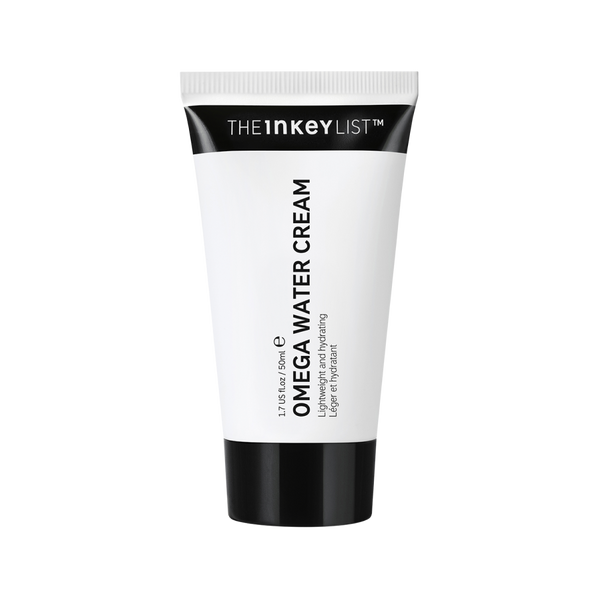
The best moisturizer for acne-prone skin from INKEY is Omega Water Cream, $15.00 for 50ml. It is oil-free, non-comedogenic and fragrance-free, formulated with 5% Niacinamide and a 0.2% Ceramide Complex, and it is designed specifically for skin that is oily and acne-prone rather than adapted from something built for another skin type.
Here is the problem this article exists to solve. People dealing with acne are often told, directly or by implication, that moisturizer is the enemy. So they skip it. Then their skin feels tight, looks dull, stings when they apply their serum, and is no clearer than it was a month ago.
The real question was never whether to moisturize. It is how to moisturize while you are also using ingredients that are actively drying your skin out. That is a sequencing problem, not a shopping problem, and almost nobody explains it properly.
By the end of this guide you will know what to look for in a moisturizer for acne-prone skin, how to layer one with salicylic acid and retinol, exactly where a pimple patch goes in the order, how to approach post-acne marks, and what a complete AM and PM routine looks like. If you are still working out your wider routine, start with our guide to how to choose the right moisturizer.
Does Moisturizer Cause Acne? Why Acne-Prone Skin Still Needs One
No, a well-formulated moisturizer does not cause acne. Problems come from the wrong texture for your skin, heavy occlusive oils and butters that sit on the surface, or fragrance applied to skin that is already irritated by active ingredients. The moisturizer itself is not the issue. The formula and the format are.
The counterintuitive part is what happens when you take moisturizer away. Skin stripped by a strong cleanser and a daily active feels tight within minutes of washing, looks flat and dull by the afternoon, and starts to flake around the nose and chin. That tightness is a signal. The skin barrier, the outer layer that holds water in and keeps irritants out, has been compromised.
This matters more than it sounds. A weakened barrier is more reactive to the very ingredients you are using to clear your skin. The stinging gets worse, the flaking gets worse, and the products that were supposed to help start feeling like the enemy. It is a loop that feeds itself.
Now the practical argument, which is the one that actually carries this article. Moisturizing is what allows you to keep using acne actives consistently, and consistency is what delivers results.
Skipping moisturizer rarely leads to clearer skin. It usually leads to abandoning the active within two weeks, which is roughly six weeks before most actives have had a fair chance to show you anything. The active gets blamed. The active was fine. The routine around it was not.
One more thing, briefly. Oily skin can still be dehydrated. Oil and water are different things, and skin can produce plenty of the first while lacking the second, which is why greasy skin can also feel tight. We have covered that paradox properly in why oily skin gets dehydrated too, and if oiliness is your main concern rather than breakouts, the best moisturizer for oily skin is the more useful read. If your skin is currently tight, stinging and flaking, our guide to a damaged skin barrier will help you reset before you add anything new, and our acne page covers the condition itself in depth.
With the case for moisturizing settled, the next question is what should actually be in the bottle.
What to Look For in a Moisturizer for Acne-Prone Skin
The right moisturizer for acne-prone skin is not defined by what it leaves out. It is defined by what it does. Here is the checklist we would apply to any formula, whether it is ours or not.
Niacinamide. A form of vitamin B3 that does several useful things at once for acne-prone skin. It helps control excess oil, supports a more even-looking skin tone, and contributes to the appearance of marks left behind after a breakout has healed. It is well tolerated by most skin types, which is not something you can say about every active. If you want the full breakdown, our niacinamide guide covers it.
Ceramides. These are lipids that occur naturally in your skin barrier, sitting between skin cells and holding the structure together. Topping them up supports the barrier, and barrier support is precisely what allows you to keep using actives without your skin staging a protest. More on ceramides if you want the detail.
Humectants such as glycerin and hyaluronic acid. Humectants draw water into the upper layers of skin. They deliver hydration without weight, which is the whole trick for acne-prone skin. You want water, not oil.
Betaine. Less famous than the others and worth knowing about. It is an osmolyte, which means it helps skin regulate its own water content and stay balanced rather than swinging between tight and greasy.
A lightweight, water-based, oil-free texture with a skin-friendly pH around 5.0. Texture is doing more work here than people realize. A formula that absorbs quickly and leaves no film sits comfortably under sunscreen and makeup, which means you will actually use it every day. A pH near 5.0 sits close to skin’s own, which supports comfort.
Now the other half of the checklist. This is sensible caution, not fear. Very little in skincare is universally bad, and context matters enormously.
Fragrance, when your skin is already irritated by actives. Fragrance is not inherently harmful, and plenty of people use fragranced products happily for years. But skin that is peeling from a retinoid or stinging from a BHA has a lower threshold for everything. Fragrance-free is the safer default while you are in that phase.
Heavy occlusive butters and rich plant oils. Shea butter and similar rich emollients are excellent for genuinely dry or compromised skin. On oily, acne-prone skin they can feel greasy, sit on the surface and leave you shiny by mid-morning. It is a texture mismatch rather than a moral failing.
Denatured alcohol high in the ingredients list. Alcohol appears in many formulas for legitimate reasons, including texture and penetration. Near the top of the list, in a product you are using twice daily on skin already stressed by actives, it can add to the tightness.
Anything that leaves a heavy film under sunscreen or makeup. Pilling, sliding foundation and a greasy finish all lead to the same outcome, which is that you quietly stop using the product.
A note on the word non-comedogenic. It is a useful filter rather than a cast-iron guarantee, because the term has no legal definition in cosmetics labeling. If you want the full picture of what the label does and does not tell you, we have written about what non-comedogenic actually means in detail. You can also browse our oil-free moisturizers if you would rather filter by format.
So the practical rule is this. Judge the finished formula rather than any single ingredient in isolation, because concentration, delivery and the rest of the formula all change the outcome. Patch test anything new. Introduce one product at a time so that if something does not agree with you, you know exactly what it was. And if you are not certain where your skin sits, what’s your skin type is a five-minute detour worth taking.
Apply that checklist to one formula and here is what it looks like when every box is ticked.
Omega Water Cream: Our Moisturizer for Acne-Prone Skin
Omega Water Cream is $15.00 for 50ml, and its subtitle tells you exactly who it is for: an oil-free moisturizer for oily, acne-prone skin. It holds a 4.4 star rating from over 1,600 US reviews, which is a large enough sample to be meaningful rather than flattering.
Here is the formula against the checklist above, with the reasoning attached to each number rather than the number left to impress you on its own.
5% Niacinamide. The workhorse of the formula. It helps balance oil, supports a more even-looking tone, and brings brightness to skin that has been looking flat. At 5% it is a meaningful concentration that remains comfortable for daily use on most skin.
0.2% Ceramide Complex, rich in Omegas 3, 6 and 9. This is the barrier support element and the reason the product carries its name. Omega fatty acids are structural components of healthy skin, and a barrier that is supported is a barrier that copes better with the actives you layer around it.
5% Glycerin. The humectant. It draws water into the upper layers of skin and holds it there, delivering hydration without any of the weight you would get from an oil-based approach.
3% Betaine. The osmolyte, helping skin hold onto water and stay balanced through the day rather than tipping into tight or greasy.
pH 5.0, oil-free, non-comedogenic, fragrance-free, alcohol-free and silicone-free. The format decisions. Together they produce a water-light gel-cream that absorbs quickly and disappears under sunscreen and makeup.
The results, in the brand’s own tested language:
Clinically proven to increase skin hydration levels*
Clinically proven to help balance oil*
100% said skin feels deeply hydrated after 14 days**
95% said skin tone looks more even after 28 days**
95% agreed it was easily absorbed and skin felt softer**
4-week independent clinical study of 22 people under dermatological control. *4-week independent consumer study of 22 people.
That last figure is worth pausing on, because “easily absorbed” is not a vanity metric for this category. A moisturizer that feels heavy on oily skin is a moisturizer that gets abandoned, and abandonment is the thing that derails routines.
Worth being precise about what this product is and is not. Omega Water Cream is a cosmetic moisturizer. It is not an acne treatment and it does not claim to be one. Its job is to hydrate, support your barrier and help balance oil, so that the products doing the treating can keep doing it. That division of labor is the entire point.
On suitability, Omega Water Cream is vegan and Vegan Society certified, dermatologically tested, and safe to use during pregnancy and while breastfeeding. It is also suitable for teenagers and for under-12s, which makes it a sensible first moisturizer rather than a scaled-down version of an adult product. We expand on both the teenage and pregnancy points later in this article.
Two alternatives, briefly, because one product does not suit everyone.
Bio-Active Ceramide Moisturizer at $22.00 is the one to consider if your skin is both acne-prone and genuinely dry, which is a more common combination than the internet suggests, particularly in winter or when you are a few weeks into a retinoid.
If the water-light texture is new to you and you want to understand why it behaves the way it does on oily skin, the best moisturizer for oily skin covers that ground properly.
Choosing the moisturizer is the easy half. Using it alongside strong actives is where routines fall apart.
How to Moisturize While Using Acne Actives
This is the part almost nothing online covers properly, and it is the difference between a routine that works and one that quietly gets abandoned in week three.
The sequencing principle
One rule covers most situations. Apply products thinnest to thickest, water-based before oil-based, actives before moisturizer, and sunscreen always last in the morning.
That is it. Everything below is an application of that principle to a specific scenario. The logic is straightforward: thin, water-based formulas need direct contact with skin to absorb, and putting a richer product underneath them creates a barrier they have to fight through.
Salicylic acid and moisturizer
A salicylic cleanser is a rinse-off product. Salicylic acid is oil-soluble, which is what lets it get into the pore lining where blackheads and congestion form, but in a cleanser it does that work and then washes away. What stays behind is the effect it has had on your skin’s surface.
This is why the moisturizer afterwards matters so much. The cleanser decides how clear your pores are. The moisturizer decides whether your skin feels comfortable or stripped for the next twelve hours. This is the single most common failure point in an acne routine. People use an effective acid cleanser, follow it with nothing, and conclude the cleanser is too harsh. Usually the cleanser is fine. The routine just stopped one step too early.
In practice: use Salicylic Acid Cleanser, rinse thoroughly, pat skin until it is just damp rather than dripping, then apply Omega Water Cream. Applying to slightly damp skin gives the humectants something to work with.
If you are new to salicylic acid, start with once daily in the evening rather than twice. Blackheads and visible pore congestion respond to consistency, not intensity.
Leave-on BHA and acne serums
Leave-on actives are a different proposition, because they stay on the skin and keep working.
360° Skin Clearing Serum is our most complete answer here. Its promise is “Balance. Clear. Fade. 1 Serum for All 3 Stages of Blemishes”, and the formula reflects that three-part job: 1% Dioic Acid, 2% Salicylic Acid and 0.4% Dendriclear. The reason it is built in stages is that breakouts are not a single event. There is the oil and congestion that precedes them, the breakout itself, and the mark that lingers afterwards. Most products address one of those and leave you to solve the other two.
How to layer it: apply to clean skin, before anything else, so it has direct contact. Give it a minute or two to absorb properly. Then apply Omega Water Cream over the top. Do not rush the gap between the two, because a serum that has not absorbed will simply mix with whatever you put on next.
If your primary concern is congestion and blackheads rather than active breakouts, Beta Hydroxy Acid Serum is the more targeted alternative, and the same sequencing applies.
Retinol and moisturizer
Retinol is a PM-only ingredient. That is non-negotiable, both because it can increase sun sensitivity and because it is simply more useful overnight.
Moisturizer is what makes retinol sustainable rather than something you try for two weeks and give up on. The early weeks of any retinoid involve a period of adjustment, when increased cell turnover can bring dryness, flaking and a tight, slightly raw feeling. That is the phase where most people quit, and it is almost always the phase where moisturizer was missing.
Practical approach with Retinol Serum:
- Start at two or three nights a week, not nightly. Build up only when your skin is comfortable at the current frequency.
- Apply to clean, completely dry skin. Damp skin increases penetration, which sounds appealing and mostly just increases irritation.
- Let it absorb, then follow with Omega Water Cream.
- If your skin is reactive, apply moisturizer first as a buffer, then retinol, then moisturizer again.
That last technique has a name and a method, and we have written it up in full in the moisture sandwich method. It is genuinely useful if you have struggled with retinol before.
One caution. Do not stack retinol with other strong actives on the same night while you are still adjusting. What not to mix with retinol sets out the combinations to keep apart, and alternating nights is almost always better than doubling up.
Pimple patch sequencing
This is the question nobody answers properly, and getting it wrong is why patches fall off in the night.
Hydrocolloid patches work by making direct contact with clean, dry skin. The hydrocolloid material absorbs fluid from the blemish and forms a gel-like seal over it. Moisturizer underneath does two things, both bad: it stops the adhesive gripping, and it puts a layer between the patch and the thing it is supposed to be drawing from.
The correct order:
- Cleanse and rinse thoroughly.
- Let your skin dry completely. Not damp, not almost dry. Completely dry, which usually takes a few minutes.
- Apply the patch directly to the blemish, pressing gently around the edges to seal it.
- Apply your moisturizer around the patch, not over it.
- Leave it in place for at least six hours, or overnight, then remove gently. If it has turned opaque white, it has absorbed as much as it is going to.
If you would rather moisturize first, that is fine, but you have to wait. Apply your moisturizer, give it several minutes to absorb fully so that no tackiness remains on the surface, then apply the patch. If the patch slides or lifts at the edges, the skin underneath was not dry enough.
Our Hydrocolloid Invisible Pimple Patches are designed for exactly this. Patches are also useful for a reason people underrate: they physically stop you touching the blemish.
What not to pile on at once
The most common mistake in acne routines is not choosing the wrong product. It is choosing four right products and starting them all on the same Monday.
Introduce one new active at a time. Give it four weeks before you judge it, because skin cell turnover and the natural breakout cycle mean shorter windows tell you very little. And patch test first, particularly with leave-on actives.
If your skin starts stinging, tightening or flaking, the instinct is often to strip things back further, dropping the moisturizer because it feels like the thing making your skin “greasy”. Do the opposite. Reduce the frequency of the active and increase the barrier support.
The rule to remember: if an active is making your skin uncomfortable, the answer is usually more barrier support, not less.
Rebuilding comfort is not a delay to your results. It is what makes the results possible.
You can browse everything we make for this concern in acne and breakouts.
Once breakouts settle, the marks left behind become the next concern.
Fading Post-Acne Marks and Building Your Routine
The breakout clears and something stays behind. Understanding what that something is determines whether skincare can help.
Flat marks versus texture
There are two different things people call scarring, and only one of them responds to skincare.
Flat post-acne marks are discoloration without any change in the skin’s surface. They can be pink, red, brown or deeper depending on your skin tone, and they are the result of the inflammation that accompanied the breakout. Run a finger over them and the skin is smooth. These fade. They can take weeks or months, and they respond well to consistent skincare and daily sun protection.
Textural scarring is a change in the skin’s surface itself, whether indented or raised. Skincare can improve the surrounding skin, but it does not rebuild lost structure. That is a clinical conversation, not a moisturizer conversation, and we would rather tell you that plainly than sell you something on a promise it cannot keep.
Knowing which you are dealing with saves months of frustration. If it is flat and you can only see it, it is pigment and it will improve. If you can feel it, that is texture and it needs professional advice.
Our hyperpigmentation guide goes deeper on why marks form and how pigment behaves. You can also see everything relevant in acne scars.
Niacinamide as the workhorse
For flat marks, niacinamide is the ingredient we would build around. It is well tolerated, it works on tone over time, and it layers comfortably with almost everything else in a routine.
Omega Water Cream’s 5% Niacinamide contributes here as part of your daily base, with 95% saying skin tone looks more even after 28 days.**
**4-week independent consumer study of 22 people.
If you want a more targeted step, 10% Niacinamide Serum goes underneath your moisturizer. And the “fade” stage of 360° Skin Clearing Serum is built for exactly this phase, which is what makes it useful across the whole breakout cycle rather than only during a flare.
A glow step, if you want one
Exosome Hydro-Glow Complex at $24.00 is a supporting act rather than a second hero, and worth mentioning if dullness is part of what is bothering you alongside the marks.
100% saw more glowing skin, clinically proven*
6-in-1 skin rejuvenation: clinically proven to visibly improve radiance, hydration, tone, firmness, elasticity, and texture*
Proven to deliver up to 12-hours of hydration**
4-week clinical study of 26 people. *Clinical study of 31 people.
It is a glow boosting step, and it helps support natural collagen production. Treat it as an addition once your skin is settled rather than something to introduce in the middle of a breakout. If the ingredient itself is new to you, our exosomes page explains what they are and how they are used in skincare.
Sun protection is non-negotiable for marks
If you take one thing from this section, take this. Daily sun protection is not an optional extra when you are trying to fade post-acne marks. It is the step that determines whether the rest of your effort holds.
UV exposure re-stimulates the pigment-producing cells responsible for the mark. You can spend three months on niacinamide and undo a meaningful portion of it across a sunny two weeks. Broad-spectrum protection every morning, applied as the final step of your routine, is what protects the work everything else is doing.
Your AM routine
- Cleanse with Salicylic Acid Cleanser, or something gentler if your skin is currently sensitized.
- Treat with your serum of choice, applied to clean skin and given a moment to absorb.
- Moisturize with Omega Water Cream.
- Protect with a broad-spectrum sunscreen, always last.
Your PM routine
- Double cleanse if you have worn makeup or sunscreen, starting with Oat Cleansing Balm, followed by your usual cleanser.
- Treat with Retinol Serum or your acne serum, on alternating nights rather than together.
- Moisturize with Omega Water Cream.
- Patch where needed, on clean dry skin, applied before your moisturizer and worked around.
If you want this mapped out more broadly, our skincare routine guide covers the full structure.
Who this suits
Teenage skin. If you are looking for the best moisturizer for teenage skin, the qualities that matter are simplicity, a light texture and no fragrance. Omega Water Cream is fragrance-free, dermatologically tested and suitable for teenagers and under-12s, which makes it a sensible first moisturizer to build a routine around. Starting with a moisturizer rather than a stack of actives is genuinely the better move at this stage.
Pregnancy and breastfeeding. Omega Water Cream is safe to use during pregnancy and while breastfeeding. Retinol is the ingredient to pause, and our guide to pregnancy-safe skincare covers what to swap and what to keep. This matters because hormonal breakouts are common in pregnancy at exactly the moment several standard options come off the table.
The Takeaway
The best moisturizer for acne-prone skin from INKEY is Omega Water Cream, $15.00 for 50ml, oil-free and fragrance-free with 5% Niacinamide and a Ceramide Complex.
Three things to carry away. Moisturizing is not optional when you are using acne actives, it is the thing that makes them sustainable. Sequencing matters more than adding another product, so get the order right before you get anything else. And consistency across four weeks beats intensity across four days, every time.
Clear guidance, proven ingredients, real results. That is the whole approach, and it works better when you are not fighting your own routine.
Ready to start? Shop Omega Water Cream at $15.00 for 50ml. If you would rather have a routine built around your skin specifically, take our skincare quiz, or get a closer read on what your skin is doing with Acne Analyzer Pro. Putting a full routine together? The bundle builder will help you do it in one go.
Because at INKEY, we give a care.
Frequently Asked Questions
Got a question?
Our askINKEY team are a friendly bunch of skincare experts with deep product knowledge and zero judgement. Whether you're an ingredient obsessive or just starting out, we'll make it make sense. No question too big. No question too small. We Give A Care, Every Day.


