


Can Salicylic Acid Cause Acne? What Is Really Happening To Your Skin
Salicylic acid rarely creates new acne, but it can bring existing congestion to the surface faster. Here are the five likely explanations for what you are seeing, how to tell them apart, and what to do next.
Author
askINKEY skincare advisor
Published
15 August, 2026
Time to read
11 minutes
Ask whether salicylic acid can cause acne and the accurate answer has two halves. Salicylic acid is rarely responsible for creating new congestion in the skin. It is frequently responsible for changing how fast congestion that already existed becomes visible. Those are different events with different timelines and, importantly, different solutions. A breakout that shows up after you start using salicylic acid is therefore not automatically purging, even though that is the first conclusion most people reach.
One clarification belongs up front. “Purging” is a consumer term that the skincare world adopted because it was useful, not a formally defined clinical diagnosis. The effect it describes is real and reasonably well documented, since accelerated cell turnover can surface congestion that was already developing. What does not exist is an agreed clinical definition or a set of diagnostic criteria. That vacuum explains why the advice you find online is so inconsistent.
What follows is a decision tool rather than a glossary entry. You will find the five most likely explanations for what you are seeing, a practical way to identify which one is yours, how long each should reasonably take to resolve, and the specific adjustment to make for each. Readers who want the ingredient fundamentals should start with how salicylic acid works.
The structure runs from short answer to mechanism to diagnosis to fixes.
The short answer
Quick answer: Salicylic acid does not usually cause new acne. It accelerates how quickly your skin sheds dead cells inside the pore, which can bring existing congestion to the surface sooner than it would have arrived by itself. That accelerated surfacing is what people call purging, and it typically settles within 2 to 4 weeks. If breakouts are showing up in areas where you never normally break out, or your skin is stinging, flaking or red, irritation or over-use is the more likely explanation.
Seventy words, and it covers the majority of cases. The rest of this article helps you determine which category you fall into.
Readers who want the underlying process explained in full should head to what skin purging actually is, since this page is built to help you decide what to do rather than to define terms.
Where to start
Dealing with a breakout right now? These four routes cover most situations.
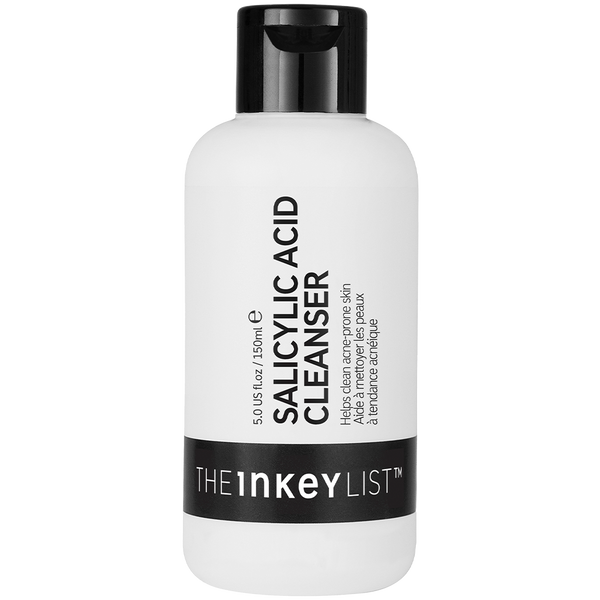
- Our Salicylic Acid Cleanser, 150ml ($15) - a 2% rinse-off formula, and the gentlest entry point because contact time is measured in seconds.
- Our Beta Hydroxy Acid (BHA) Serum ($14) - a leave-on option that suits skin already comfortable with a salicylic cleanser.
- Our 360° Acne Clearing Serum ($18) - a multi-stage approach for persistent acne where one active has not been enough.
- Our Hydrocolloid Invisible Pimple Patches, pack of 22 ($10) - the immediate, low-risk move for an individual blemish tonight.
Want something tailored rather than a general recommendation? Acne Analyzer Pro gives you a personalized starting point in a few minutes.
To understand why five different causes can produce the same symptom, you need to know what salicylic acid is doing once it gets inside the pore.
How salicylic acid works inside the pore
Start with chemistry, because it explains everything downstream. Salicylic acid is classified as a beta hydroxy acid, and the FDA notes that it is the BHA most commonly used in cosmetics. In the United States it occupies a second regulatory category as well, appearing as an over-the-counter drug active in anti-acne products, which is why labels carry the format “Salicylic Acid 2% Purpose - Acne Treatment.”
The property that matters here is oil solubility. Alpha hydroxy acids are water-soluble and largely work across the skin’s surface. Salicylic acid dissolves in oil, which lets it travel into an oily environment rather than sitting on top of one. A comprehensive review of salicylic acid as a peeling agent describes it as lipid-soluble and miscible with the lipids of the skin and the sebaceous glands, allowing it to concentrate in the pilosebaceous unit. Translated: it reaches the pore and the oil gland attached to it, which is exactly where acne begins.
What happens when it arrives? The classic description is keratolytic. DermNet explains that it softens and loosens keratin, and that in acne it slows the shedding of skin cells inside the follicle so follicles are less likely to clog, while also breaking down blackheads and whiteheads. The peeling-agent review sharpens the mechanism further, arguing the action is better described as desmolytic. Desmosomes are the protein structures that bond adjacent skin cells to one another, and salicylic acid disrupts that adhesion rather than dissolving keratin filaments directly. Cutaneous bioassay research on salicylic acid as a keratolytic documents the same reduction in cell cohesion.
Remove the terminology and one image remains. Dead cells inside the pore are stuck together. Salicylic acid unsticks them.
Salicylic acid does not create new congestion. It changes how quickly existing congestion reaches the surface.
Everything in this article follows from that sentence. When a plug of oil and dead cells is already forming beneath the surface, loosening it can bring it up faster than it would have surfaced naturally. The product is not manufacturing new breakouts. It is compressing a timeline. A blemish that would have shown up in three weeks may appear in five days, and since several tend to arrive together, it registers as a sudden decline rather than an acceleration.
Why formulation matters as much as percentage
A great deal of online comparison stops at the percentage on the front of the bottle, which is a mistake. Two products can both contain 2% salicylic acid and feel entirely different on the face. Irritation risk climbs as pH drops, because a lower pH increases the proportion of free acid available to the skin. Formulation, buffering and format do at least as much work as concentration.
That thinking shaped our Salicylic Acid Cleanser:
- 2% salicylic acid, which helps clean and reduce acne and helps reduce acne and blackheads.
- pH 4.5 to 5.0, deliberately close to skin’s comfortable range instead of driven as low as the formula allows.
- 1% zinc compound, added for oil control.
- 0.5% allantoin, added to soothe.
The formula is fragrance-free, vegan, and safe during pregnancy and breastfeeding. Those decisions matter in practice. A buffered rinse-off cleanser and a high-strength leave-on acid are different propositions, and the difference tends to reveal itself in the first two weeks.
For strengths, formats and pairings beyond the mechanism, see our full guide to salicylic acid, or shop salicylic acid if you already know what you need.
Understanding the mechanism is only useful if you can tell whether your skin is actually following it, which is where most people get stuck.
Purging vs an acne flare
First, the honest part. Purging is consumer vocabulary, not a clinical diagnosis. There is no agreed definition of it and no diagnostic criteria a dermatologist could apply to confirm it on your face. The effect behind the term is genuine and reasonably well described in the literature, but the term itself is informal. We think that is worth stating plainly, because the missing definition is exactly why the internet cannot agree on what purging looks like and why so many people struggle to place themselves in one category or the other.
What can be offered instead are five discriminating signals. Individually, none settles the question. Together, they usually do.
Onset: how quickly did it appear?
Purging generally starts fast, within the first few days to about two weeks of beginning a product or increasing frequency. That speed is consistent with the mechanism, since you are accelerating a process that was already in motion.
A flare that appears months into unchanged use points elsewhere. Skin that was perfectly happy for a season and then turned is usually responding to a different variable: a new product somewhere else in the lineup, a hormonal shift, a change in climate, or over-exfoliation that finally accumulated past a threshold.
Location: where are the breakouts showing up?
Underrated, and one of the most reliable indicators available. Purging surfaces congestion that was already there, so it appears where you habitually congest. For most people that means the T-zone, chin and jawline.
Breakouts in places you genuinely never break out are a strong argument against purging. If your upper cheeks and temples have been clear your entire adult life and both flared at once, that distribution does not match the mechanism.
Appearance: what do the lesions look like?
Purging tends to produce smaller, more superficial lesions. Whiteheads and blackheads that come to a head fairly quickly, resolve, and move on. They usually resemble a sped-up version of your normal congestion rather than something you have never seen before.
Deep, hard, painful nodules that sit under the skin for weeks are not characteristic of purging. Neither is a field of small uniform red bumps with no head, which fits irritation far better.
Duration: how long does each individual breakout last?
Track a single lesion instead of the overall impression. Purging breakouts complete their cycle faster than your usual ones, which is the entire point of an accelerated process.
A blemish that holds the same state for two or three weeks is behaving like ordinary acne that happened to coincide with a new product. Read how long skincare takes to work alongside this, since unrealistic expectations drive a lot of unnecessary product switching.
Trajectory: which direction is it heading?
If you use only one test, use this one. Purging gets better week by week. Irritation does not.
Purging has a recognizable shape. Week one can look worse than the starting point, week two roughly steady, week three noticeably calmer. The direction is downward even when the opening days are rough. A true reaction either plateaus or escalates. Week three worse than week one means you are not riding out a purge.
Signs it is not purging
Be honest with this list. Any of these argues for irritation or over-use rather than purging:
- Stinging or burning at the moment of application
- Tightness after cleansing
- Flaking or visible peeling
- Broad redness rather than discrete lesions
- Breakouts in areas that are normally clear
- Symptoms intensifying week on week instead of easing
- Products that never used to sting starting to sting
The American Academy of Dermatology’s guidance on how to safely exfoliate at home confirms that over-exfoliation can produce redness, irritation, a compromised barrier and even breakouts, which is why these markers deserve real weight.
For the complete explanation of the underlying process and how other actives behave, read our complete guide to skin purging. If you have landed on the irritation side, sensitive skin and breakouts is the better next step, and does azelaic acid cause purging covers a common point of confusion for multi-active routines.
Diagnosis established, here are the five explanations behind nearly every case of “salicylic acid broke me out.”
The five real reasons salicylic acid can seem to cause acne
1. You are purging, and it is temporary
What it looks like: Small, superficial lesions arriving quickly in your usual problem zones, clearing faster than your normal breakouts, and trending better week over week.
Why it happens: As described above. Existing congestion is surfacing sooner because the bonds between those cells have been loosened.
What to do: Hold your current frequency. Resist both escalating and quitting. When skin looks worse, the two instincts are to attack harder or bail out entirely, and each destroys your ability to read the situation. Keep the routine stable, support the barrier, add nothing new, and reassess at four weeks instead of every morning.
Keeping skin comfortable through the adjustment matters. Our Hyaluronic Acid Serum ($13) applied to damp skin, followed by a lightweight moisturizer, maintains hydration without introducing another variable.
2. You are over-exfoliating
This is the leading cause by a considerable margin, and virtually nobody recognizes themselves in it.
What it looks like: Skin that feels tight post-cleanse, appears shiny or slightly waxy instead of healthy, stings from products that were previously fine, develops small bumps, and produces more oil rather than less as it compensates.
Why it happens: Stacking. Picture a routine that is not remotely unusual: a salicylic cleanser, a BHA serum, an exfoliating toner several nights a week, a weekend scrub, and a clay or acid mask whenever skin looks congested. That is four or five exfoliating steps. To the person performing it, this is one skincare routine, because it happens in one sitting. To the skin, it is five separate insults.
Most people who think salicylic acid broke them out are simply using too many exfoliating steps at once.
What to do: audit your exfoliating steps honestly, then reduce to one. Read every label you own and flag anything with an acid, an enzyme, a scrub particle, or a resurfacing claim. Keep the single most valuable one, retire the rest, and drop to two or three times per week before rebuilding. AAD guidance recommends matching frequency to your skin type and method and moisturizing immediately after exfoliating.
What products should I not layer together is the practical companion here, and glycolic acid vs salicylic acid will help if you are trying to decide which single exfoliant to keep.
3. Your barrier is compromised from stacking actives
What it looks like: Skin that reacts to nearly everything, reads as flushed or inflamed rather than congested, feels tight and greasy simultaneously, and rejects products it used to tolerate.
Why it happens: The skin barrier is the outermost protective layer, responsible for holding water in and keeping irritants out. Compromise it and water escapes faster while irritants enter more easily. The result is reactive, inflamed, bumpy skin that most people interpret as an acne flare. It usually is not. It is a defense system running on empty.
Combinations cause this far more often than single products. Salicylic acid alongside retinol, alongside a potent vitamin C, alongside benzoyl peroxide, or several acids on the same night. What not to mix with retinol and salicylic acid and retinol, can you use them together cover the pairings most commonly mishandled, and salicylic acid or benzoyl peroxide, which is better for acne is useful if you are running both.
What to do: pause every active for one to two weeks. Reduce to cleanse, hydrate, moisturize, protect. Then reintroduce one active at a time, allowing two weeks between additions. It feels painfully slow, and it is dramatically faster than going through this cycle three separate times.
Our Ectoin Hydro-Barrier Serum ($17) supports skin through recovery, and our Bio-Active Ceramide Moisturizer($22) helps rebuild the barrier itself. If this cause describes you, browse the damaged skin barrier edit.
4. It is irritation, not acne
What it looks like: Small, uniform red bumps that appeared rapidly, frequently across a broader area than your usual breakouts, with stinging, warmth, tightness or flaking alongside. These are not comedones. There is no plug and nothing to extract.
Why it happens: Skin is objecting to something it finds too aggressive, whether that is strength, frequency, format, or the other products surrounding it. A peer-reviewed review of over-the-counter acne treatments highlights tolerability and irritation as central limitations on real-world results, which is a clinical way of saying the best formula is the one your skin will actually accept over time.
The trap is that irritation bumps resemble acne closely enough that people respond by adding more acne products. That is exactly backwards. Acne actives cannot resolve irritation because there is no congestion to clear. They prolong it.
What to do: stop the active completely rather than cutting back. Let skin settle for one to two weeks, cleanse gently, keep everything minimal, then reintroduce slowly with a patch test first. Our Oat Cleansing Balm ($17) removes friction from cleansing during recovery, and our Omega Water Cream ($15) delivers lightweight, barrier-friendly hydration for oily skin that is currently unhappy.
5. The rest of your routine is the problem
What it looks like: Congestion that persists or worsens even though your salicylic acid step looks entirely sensible written down.
Why it happens: Almost nobody investigates this, because attention gravitates to the newest and most active product. Meanwhile a rich balm sitting on oily skin overnight, a heavy occlusive layered over congested zones, or a moisturizer mismatched to your skin type may be generating more congestion than the acid is clearing.
Format is decisive and routinely ignored. A rinse-off salicylic cleanser and a leave-on serum behave completely differently, because one has seconds of contact time and the other has hours. People with dry or sensitive skin often get everything they need from the cleanser alone and nothing beneficial from stacking a leave-on acid on top. Find your skin type if you are unsure, because format matching starts with an accurate assessment.
Widen the lens further. Hair products migrating onto the hairline and forehead. Heavy body products across the chest and shoulders. Pillowcases and phone screens. And the plain logical point that a breakout beginning in the same week as a new salicylic product does not establish that the product caused it. Skin has many inputs, and coincidence is common.
What to do: change one variable at a time and give each change two weeks. Alter four things simultaneously and you will never learn which one mattered.
Cause identified, the next question is always about timing.
How long it should last, and how to introduce it without the flare-up
The standard adjustment window is 2 to 4 weeks. Most people see meaningful improvement inside a month, with the trajectory turning downward well before week four.
Deciding whether the ingredient suits you at all is a longer question. Give it 6 to 8 weeks of consistent use before making that judgment, consistent with standard dermatology guidance on evaluating any topical routine. Skin cell turnover will not move faster to accommodate impatience, and abandoning a product at week two means you never actually tested it.
When to stop and see a professional
Patience has boundaries. Stop the product and see a dermatologist if:
- Breakouts are appearing in areas where you do not normally break out
- Lesions are deep, painful or cystic
- Symptoms are worsening rather than improving
- There is significant swelling, burning or widespread redness
- Nothing has settled beyond 6 weeks
Seeing a dermatologist is a practical step, not a personal failure. Some acne genuinely requires prescription intervention, and nothing is gained by spending another three months cycling through products that were never going to be strong enough.
How to introduce salicylic acid without triggering a flare-up
The majority of bad experiences are introduction errors rather than ingredient problems. This sequence prevents most of them:
- Begin two to three times per week, not daily. Frequency is the single most common mistake at the start.
- Add one new active at a time, waiting two weeks before introducing anything else, so cause and effect stay legible.
- Patch test before applying to your whole face. FDA guidance on BHA products advises testing on a small area first and discontinuing if you experience irritation or prolonged stinging. Why do I need to do a patch test walks through the method.
- Always follow with a moisturizer. AAD guidance is to moisturize immediately after exfoliating, and with acids this is not optional.
- Choose a rinse-off format before a leave-on if your skin is sensitive or the ingredient is new to you.
- Wear sunscreen every day. Regulatory guidance on BHAs recommends daily sun protection alongside their use, so make it a fixed part of your morning routine.
Effective salicylic acid should not require enduring discomfort as the cost of results. In a 4-week independent consumer trial of 66 people using our Salicylic Acid Cleanser ($15), 92% agreed their skin did not feel tight or stripped, 90% agreed their skin looked visibly clearer after 3 days, and 93% agreed their skin instantly looked less oily. Comfort and efficacy are not mutually exclusive when the formula is properly built.
Still choosing a format? The exfoliants edit lays out the options, and our skincare routine guide covers overall structure.
Building a routine that keeps skin clear, and who should be more cautious
A well-built routine around salicylic acid is largely an exercise in restraint. Here is how it plays out across a day.
Mornings begin with a gentle cleanse. This is not the slot for your active, since skin has spent the night repairing and does not need stripping first thing. Follow with a hydrating or barrier-supporting serum, then a lightweight moisturizer matched to your skin type, then sunscreen every single day without exception. Our Omega Water Cream ($15) suits oily and acne-prone skin because it hydrates without heaviness. If nothing in your cabinet fits, the moisturizers edit is the place to look.
Evenings start with cleansing, and double cleanse if you have worn makeup or sunscreen, since no active can work through a day’s residue. Our Oat Cleansing Balm ($17) handles the first pass, followed by our Salicylic Acid Cleanser($15). The complete guide to double cleansing covers technique if this is new.
Your active comes next, on designated nights only. That could be our Beta Hydroxy Acid (BHA) Serum ($14) for congestion and blackheads, or our 360° Acne Clearing Serum ($18) when acne is persistent and one active has not been sufficient. On off nights, skip the active entirely. That restraint is the hardest part of the routine and the part that produces results.
Close with hydration and a moisturizer every night, active or not. For ongoing oil control and redness, our 10% Niacinamide Serum ($13) pairs well with salicylic acid, and salicylic acid and niacinamide, the best duo for oily, acne-prone skin explains the logic behind the combination.
Spot treatment and body breakouts
For a single blemish rather than general congestion, targeted action beats escalating your entire routine. A salicylic acid spot treatment approach works well, and our Succinic Acid Treatment ($15) can be applied directly to an individual blemish. Our Hydrocolloid Invisible Pimple Patches ($10) shield a spot overnight and, just as usefully, stop you from picking at it.
Salicylic acid is equally applicable to the chest, back and shoulders, where congestion is widespread and rarely discussed openly. Skin there is thicker and frequently tolerates the ingredient well. Cleanse promptly after sweating rather than hours later, rinse thoroughly so nothing lingers, and remember that conditioner rinsing down your back is a real and commonly missed contributor. Salicylic acid for blackheads goes further on congestion specifically, and our acne guide is the broader resource.
Who should be more cautious
Sensitive skin. Rinse-off formats only to begin with, twice weekly, before considering anything further. Sensitive skin and breakouts covers this properly.
Dry skin. Barrier support comes first, and it is worth genuinely questioning whether a leave-on acid is necessary. A cleanser plus a good moisturizer is frequently the complete answer.
An already compromised barrier. Repair first, actives later. Applying an acid to a struggling barrier extends the problem rather than resolving it.
Pregnancy and breastfeeding. Our 2% rinse-off Salicylic Acid Cleanser is safe during pregnancy and breastfeeding. Leave-on and higher-strength formats are a separate discussion, so read your guide to pregnancy-safe skincare and review your wider routine with a healthcare professional.
Managing several concerns simultaneously? Our complete skincare concerns guide and the acne and breakouts edit will help you sequence them.
The bottom line
So, can salicylic acid cause acne? Not typically in the sense of generating new congestion. What it can do is make existing congestion visible sooner, and that temporary surfacing is what people mean by purging, a consumer term rather than a formal clinical diagnosis. When breakouts follow salicylic acid, the explanation is almost always one of five things: genuine purging, over-exfoliation, a compromised barrier, irritation rather than acne, or something else entirely in your routine. Real purging should settle within 2 to 4 weeks with steady week-over-week improvement. Stop and see a dermatologist if symptoms worsen, breakouts appear in unusual areas, or nothing has resolved beyond six weeks. For ingredient fundamentals, read our guide to salicylic acid. Skincare becomes considerably easier once you understand what your skin is actually doing.
Figuring out which of the five causes applies to you is faster with a guided assessment than with trial and error. Acne Analyzer Pro walks you through it and points toward a sensible next step for your skin specifically. If you would rather rebuild the routine from the ground up, build your routine will structure it for you. And when you already know what you are looking for, the acne and breakouts edit is there.
Frequently Asked Questions
Got a question?
Our askINKEY team are a friendly bunch of skincare experts with deep product knowledge and zero judgement. Whether you're an ingredient obsessive or just starting out, we'll make it make sense. No question too big. No question too small. We Give A Care, Every Day.


