

Mandelic Acid: What It Does, Who It Suits and What to Use Instead
The gentlest AHA, explained: what mandelic acid actually does, who it suits, and what to use instead.
Author
askINKEY skincare advisor
Published
23 August, 2026
Time to read
18 minutes
Mandelic acid is an alpha hydroxy acid derived from bitter almonds, used in skincare to gently exfoliate the surface of the skin, even out tone and soften the look of dark marks. It is widely described as one of the gentlest AHAs, and the reason comes down to chemistry: its molecule is significantly larger than the other acids it sits alongside, so it moves into skin more slowly and more evenly.
This guide covers what mandelic acid actually does, how it compares with glycolic, lactic, salicylic and azelaic acid, how to use it without damaging your barrier, who it suits best, and which ingredients do a similar job if mandelic acid is not the right fit for you or you cannot get hold of it. No hype, no hero language, just what the ingredient is and what the evidence says.
What Is Mandelic Acid and Is It an AHA?
Yes, mandelic acid is an AHA. It belongs to the alpha hydroxy acid family, a group of ingredients that are plant or animal derived and share a particular job in skincare: they loosen the bonds holding dead cells together at the surface of your skin so those cells can shed more readily. The result, over time, is a smoother, more even-looking surface. AHAs are tone and texture ingredients above all else.
Mandelic acid specifically is derived from bitter almonds. The name is a small piece of chemistry history. It comes from Mandel, the German word for almond, which tells you a lot about where the compound was first isolated and why it carries the name it does.
If you have spent any time reading ingredient lists, you will have met the rest of the family. Glycolic acid, from sugar cane. Lactic acid, originally from milk. Citric and malic acids, from fruit. They all work by broadly the same mechanism, which a peer-reviewed review of alpha hydroxy acids in dermatological practice describes in detail: they act on the outermost layer of skin to encourage the natural shedding process that slows down as we age and that can stall in skin dealing with congestion or sun damage.
So if they all do the same job, why does it matter which one you pick?
Molecule Size Is the Whole Story
This is the single most important fact about mandelic acid, and it is the one that explains almost everything else in this article. Acids in the AHA family differ in molecular weight, measured in daltons, and that weight determines how quickly and how deeply the acid travels into skin.
Here are the three most common AHAs, from smallest to largest:
- Glycolic acid: approximately 76 daltons. The smallest AHA, and the fastest to penetrate.
- Lactic acid: approximately 90 daltons. Mid-sized. Exfoliates at a moderate pace and has a hydrating side to it, as confirmed by NIST Chemistry WebBook reference data.
- Mandelic acid: approximately 152 daltons. By some distance the largest of the three, as confirmed by its chemical profile in the NIST Chemistry WebBook.
Think of it as the difference between water and syrup soaking into a sponge. A smaller molecule slips in fast and gets in deep. A larger one moves slowly and spreads more evenly across the surface before it goes anywhere.
That slow, even entry is why mandelic acid has a reputation for being gentle. Less of it reaches the deeper layers quickly, so there is less of the sudden sting, flush or tightness that some people get from stronger acids. It is also why mandelic acid tends to work more gradually. Gentleness and speed are a trade-off, not a free upgrade, and any article that tells you otherwise is selling you something.
How Mandelic Acid Works on Skin
There are three mechanisms worth understanding, and they are simpler than they sound.
Exfoliation. Mandelic acid encourages the shedding of dull, dead cells sitting on the surface. Your skin does this naturally, but the process slows with age and can become uneven. Helping it along is what softens rough texture and lifts the flat, tired look that builds up when old cells linger.
Melanin. Melanin is the pigment that gives skin its color. When the process that produces it goes into overdrive in one spot, you get a dark mark. Mandelic acid is associated with interrupting that process, which is the reason it appears so often in formulas aimed at uneven tone and dark marks. It is working on the cause of the pigment, not just buffing away what is already there.
Cell turnover. Underneath the surface, your skin is constantly making new cells and pushing them upward. Mandelic acid supports that renewal cycle, which is what delivers a fresher-looking surface over weeks rather than days.
It also has antibacterial properties. That is part of why you find it in formulas aimed at acne-prone skin, where the goal is a combination of keeping pores clear and calming the conditions that let breakouts take hold.
An Honest Word About the Evidence
Here is something most articles on this ingredient skip, and we would rather say it plainly.
Most of the strongest published research on mandelic acid comes from in-clinic chemical peels, performed by professionals at concentrations far higher than anything you will find in a leave-on product you apply at home. Studies commonly work at 10%, 30%, 45% and above, applied for a controlled period and then removed. A serum you leave on your face overnight is a genuinely different proposition.
That does not mean the ingredient does not work in everyday skincare. The comparative research discussed later in this article found mandelic acid to be better tolerated than glycolic acid at a matched concentration, which is a meaningful finding for anyone with reactive skin. But it does mean you should read any dramatic before-and-after claim carefully, and long-term studies on leave-on mandelic acid specifically remain limited.
We would rather you knew that than believed something we cannot back up. With the mechanism clear, the more useful question is what all of this actually delivers.
Mandelic Acid Benefits for Skin
The chemistry is interesting. What most people want to know is whether it will do anything they can see in the mirror. Here is what mandelic acid is genuinely useful for, and how long each of those things realistically takes.
Mandelic Acid for Hyperpigmentation and Dark Spots
This is the headline use, and the reason mandelic acid has the following it does.
Hyperpigmentation is simply an excess of melanin concentrated in one area of skin. It is not damage and it is not dirt. It is your pigment-producing cells overreacting to something, usually sun exposure, inflammation, hormones or a combination. The result shows up as sun spots, patches of uneven tone, melasma, or the marks left behind after a breakout has cleared.
Because mandelic acid works on both ends of the problem, interrupting excess pigment production while encouraging pigmented surface cells to shed, it is well suited to this concern. If you want the full picture on the concern itself, our guide to what hyperpigmentation is and why it happens covers the causes in more depth.
Worth knowing before you start: not all pigmentation is the same, and the type you have affects what will help. Melasma behaves differently from a sun spot, which behaves differently from a post-acne mark. Our breakdown of the different types of hyperpigmentation is the fastest way to work out which one you are actually looking at, and how to get rid of dark spots on the face goes into the practical routes for each. If uneven tone rather than distinct spots is what you are seeing, uneven skin tone: what causes it and how to even it out is the closer match.
Mandelic Acid for Post-Acne Marks
This deserves its own section, because there is a distinction here that almost nobody makes properly and it matters enormously for your expectations.
A post-acne mark is the flat brown, purple or pink patch left behind after a breakout heals. The skin surface is smooth. It is a pigment issue, and pigment issues can fade.
A scar is a change in the structure of the skin. An indent, a pit, a raised area. The tissue itself has been altered.
No acid, at any strength, in any bottle, will resolve a true indented or raised scar. Ingredients that work on pigment can only work on pigment. If a product promises to erase scarring, be skeptical. Mandelic acid can genuinely help soften the appearance of flat post-acne marks over time, and that is a real and worthwhile benefit, but it is a different job from resurfacing textural scarring, which is clinic territory.
One area that catches people out is pigmentation around the mouth, which is often mistaken for shadow and is frequently post-inflammatory in origin. If that is your concern, it is worth reading up on it specifically.
Smoother Texture and Brighter-Looking Skin
Dullness is rarely a pigment problem. More often it is a light problem. When dead cells sit unevenly on the surface, they scatter light in all directions instead of reflecting it cleanly, and skin reads as flat and tired regardless of tone.
Gentle, consistent exfoliation smooths that surface. Light reflects more evenly. Skin looks brighter. This is usually the first benefit people notice from any AHA, and with mandelic acid it tends to arrive gradually rather than overnight, which is precisely the point of using a slower acid. You can browse the full range of exfoliants if you want to see how different formats approach the same job.
Mandelic Acid for Acne-Prone Skin
Two things make mandelic acid relevant here. It helps keep the surface of pores clear of the dead cells that contribute to congestion, and its antibacterial properties address another part of the picture.
It is worth being clear about scope. Salicylic acid, a BHA, is oil-soluble and can travel into the pore lining itself, which is why it is usually the first suggestion for blackheads and deep congestion. Mandelic acid works more at the surface. For skin dealing with both congestion and the marks left behind by previous breakouts, mandelic acid’s dual action on clarity and tone is what makes it appealing. Our acne and breakouts range covers the wider set of options.
There is supporting research worth citing carefully here. A 2019 comparative study in the Journal of Cosmetic Dermatology looked at 45% mandelic acid peels against 30% salicylic acid peels in mild-to-moderate acne and found comparable efficacy between the two, with mandelic acid showing the better tolerability profile. Both were in-clinic peels at high concentrations, so this is not a direct read-across to a leave-on serum, but the tolerability finding is consistent with everything else we know about the molecule.
Mandelic Acid for Sensitive Skin
This is the core of mandelic acid’s reputation, and it follows directly from the molecule size we covered earlier.
Slower, more even penetration means a lower chance of the sting, flush and tightness that make people give up on acids entirely. If you have tried glycolic acid and found your skin red and uncomfortable afterwards, mandelic acid is the sensible next thing to try before concluding that exfoliating acids are not for you.
Gentler does not mean risk-free. Sensitive skin can still react, patch testing still applies, and building up slowly still matters. It means the odds are better, not that the odds are zero.
Mandelic Acid and Deeper Skin Tones
Here is a genuinely under-discussed point.
For richer and deeper skin tones, irritation is not just uncomfortable, it can be counterproductive. Inflammation is one of the triggers for post-inflammatory hyperpigmentation, which means an aggressive exfoliant used to fade dark marks can, if it irritates, contribute to creating new ones. That is a frustrating loop to be caught in.
This is why milder acids are frequently favored for deeper skin tones. A lower irritation risk means a lower chance of triggering the very thing you are trying to treat. This is a reasoned position based on how post-inflammatory hyperpigmentation forms rather than a claim from a specific trial, and if pigmentation is a persistent concern for you, a dermatologist will give you better guidance than any article can.
How Long It Actually Takes
Skin renews gradually, and the honest answer is slower than most marketing implies.
- Weeks one to two. Possibly a slightly smoother feel. Do not expect visible change.
- Weeks three to six. Texture and brightness are usually the first visible improvements.
- Weeks eight to twelve and beyond. Pigmentation is the slowest concern to shift. Dark marks that took months to form take months to fade.
Consistency beats intensity every single time. Two or three sensible applications a week for three months will do far more than an aggressive fortnight followed by a damaged barrier and a break. With the benefits established, the obvious next question is how mandelic acid stacks up against everything else on the shelf.
Mandelic Acid vs Glycolic, Lactic, Salicylic and Azelaic Acid
The short version: mandelic acid is the gentlest AHA and the best starting point for sensitive skin and uneven tone, glycolic acid is the strongest and fastest for texture, lactic acid sits in the middle and adds hydration, salicylic acid is the only one that works inside the pore, and azelaic acid is not an exfoliant at all despite the name.
Here is the fuller comparison, acid by acid.
- Mandelic acid. Type: AHA. Molecule size: largest, approximately 152 Da. How it behaves: slow, even exfoliation at the surface. Best suited to: uneven tone, dark marks, post-acne marks, sensitive skin. Gentleness: the gentlest AHA.
- Glycolic acid. Type: AHA. Molecule size: smallest, approximately 76 Da. How it behaves: fastest and deepest penetration of the group. Best suited to: rough texture, dullness, body skin, resilient skin that tolerates actives well. Gentleness: the strongest AHA, with the highest irritation risk.
- Lactic acid. Type: AHA. Molecule size: mid-range, approximately 90 Da. How it behaves: moderate exfoliation with a hydrating quality, as it also functions as a humectant. Best suited to: dryness combined with dullness. Gentleness: moderate.
- Salicylic acid. Type: BHA, and oil-soluble rather than water-soluble. How it behaves: dissolves into oil, so it can work inside the pore itself rather than only on the surface. Best suited to: blackheads, congestion, oily skin. Gentleness: moderate, and it can be drying with frequent use.
- Azelaic acid. Type: a dicarboxylic acid, chemically distinct from both AHAs and BHAs. How it behaves: it does not exfoliate. It calms visible redness and works on uneven tone by a different route. Best suited to: redness, uneven tone, sensitive and rosacea-prone skin. Gentleness: very gentle.
None of these is better than the others in the abstract. They do different jobs on different skin. The question is never which acid is strongest, it is which acid matches your concern and your tolerance.
Mandelic Acid vs Glycolic Acid
This is the comparison most people are searching for, so it is worth doing properly.
Glycolic acid is the workhorse of the AHA family. At 76 daltons it penetrates fastest and deepest, which makes it highly effective and also the most likely to cause irritation. For skin that tolerates it, glycolic delivers results quickly. For skin that does not, it delivers redness.
The most relevant piece of research here is a comparative in vivo study of the efficacy and tolerance of exfoliating agents, published by Rizza and colleagues in 2010, which used reflectance spectrophotometry to compare topical exfoliating agents including glycolic acid and mandelic acid at a matched 10% concentration. The finding was consistent with what the molecule size predicts: glycolic acid produced faster exfoliation but more intense erythema, meaning visible redness, and a greater photosensitizing effect. Mandelic acid acted more slowly with a safer overall profile.
That matched-concentration design is what makes this study genuinely useful. It is not comparing a strong peel against a weak one, it is comparing like for like at a concentration far closer to what appears in consumer skincare.
You may see another study cited in this debate, and it is worth understanding what it actually says. A 2009 comparison published in Dermatologic Surgery examined a 35% glycolic acid peel against a 20% salicylic plus 10% mandelic combination peel. The mandelic-containing arm produced fewer side effects. Note carefully: mandelic acid was used in combination with salicylic acid in that study, and both arms were in-clinic peels. The result cannot fairly be attributed to mandelic acid on its own.
And for balance, a systematic review of randomized controlled trials on chemical peels adds a nuance that complicates the neat story: the mandelic-containing peel in one trial showed more visible desquamation, meaning more visible flaking, though not significantly more irritation, burning or dryness. Gentler is a tendency, not a guarantee.
The practical verdict. If glycolic acid leaves your skin irritated, red or tight, mandelic acid is a genuinely sensible alternative that targets the same broad concerns more slowly. If glycolic works beautifully for you, there is no reason to switch. You can compare the glycolic acid range if you want to see how it is typically formulated.
Mandelic Acid vs Azelaic Acid
These two get compared constantly and the comparison is slightly misleading, because they are not doing the same thing.
Azelaic acid is a dicarboxylic acid. It is not an AHA and it is not an exfoliant, despite having “acid” in the name. It works on visible redness and uneven tone through a completely different mechanism, without shedding surface cells at all. Our guide to what azelaic acid is explains the distinction properly.
That difference makes azelaic a real option for a specific person: someone who wants tone benefits but whose skin genuinely cannot handle exfoliation. If every acid you have tried has ended in redness, an ingredient that improves tone without exfoliating is not a compromise, it is the correct answer.
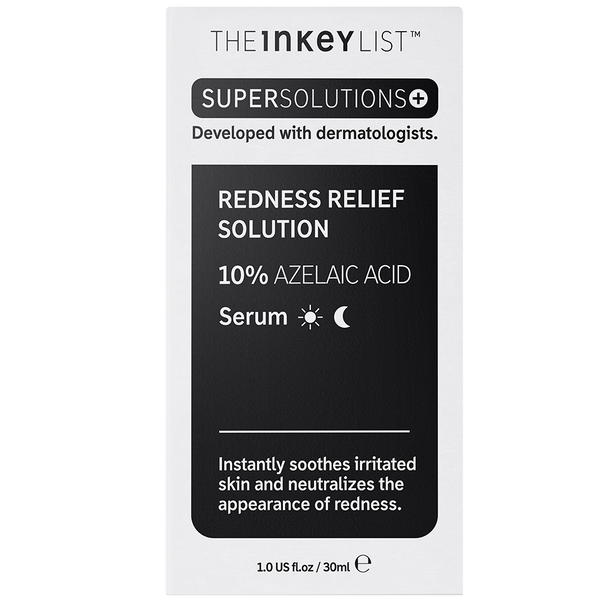
Our 10% Azelaic Acid Serum for Redness Relief, $20.00 for 30ml, is formulated for exactly that scenario. It pairs 10% Azelaic Acid with 0.3% Allantoin, and it is suitable for sensitive and rosacea-prone skin, as well as being pregnancy and breastfeeding safe. [NEEDS SIGN-OFF] It is “Clinically proven to minimize redness in 4 days.*” where “*Independent clinical study of 22 people.”
If redness is your primary concern rather than pigmentation, our article on azelaic acid for rosacea-prone skin is the more relevant read.
The Simple Decision Rule
If your skin reacts to most acids, start with the gentlest option available and build up slowly. You can always increase frequency. You cannot un-damage a barrier quickly. For the wider context on which ingredient addresses which concern, our complete skincare concerns guide maps it out.
Choosing the right acid is only half the job. Using it well is the other half.
How to Use Mandelic Acid Safely
Whichever formula you own, the principles below apply. This is generic guidance about the ingredient, not instructions for a specific bottle, so check the label you have in front of you as well.
Where It Sits in Your Routine
Apply it after cleansing, onto dry skin, before your heavier serums and moisturizer. Dry skin matters more than people realize. Applying an acid to damp skin can increase how much penetrates and how quickly, which is exactly what you do not want when you are trying to keep things gentle.
Order of operations in general is thinnest to thickest, and if layering confuses you, our guide on how to layer skincarewalks through it step by step. Follow with a moisturizer, always. Exfoliating without supporting the barrier afterwards is how people end up with problems.
Should You Use Mandelic Acid in the Morning or at Night?
Night, generally. Exfoliating acids are usually better placed in your PM routine, for two reasons. It avoids stacking fresh exfoliation with a full day of sun exposure, and it leaves your morning routine free for the ingredients that pair better with daylight, principally antioxidants and SPF.
If you do use an AHA in the morning, sunscreen stops being optional and becomes structural.
How Often Should You Use It?
Start at two or three times a week. Build up only if your skin stays comfortable across a full two weeks at that frequency.
Formulas vary widely in concentration, and lower concentrations are the sensible starting point if you are new to the ingredient or new to acids generally. There is no prize for starting strong.
Going too hard too soon is the most common mistake with any exfoliating acid. Over-exfoliation damages your skin barrier, and a damaged barrier undoes every benefit you were exfoliating to achieve. Build frequency up slowly. Your skin will tell you when it has had enough, and it is worth listening the first time.
How to Patch Test Mandelic Acid
Do not skip this, particularly with a new active.
Apply a small amount to dry, cleansed skin behind your ear or on the inner arm. Wait at least 24 hours. Be aware that a reaction can take up to 72 hours to appear, so a clear result at 24 hours is reassuring rather than conclusive. If you see redness, itching or burning at any point, rinse the area and do not use the product on your face.
Our full explanation of why patch testing matters covers the method in more detail, including how to patch test when you are introducing several products at once.
Does Mandelic Acid Cause Sun Sensitivity?
Yes. AHAs can make skin more sensitive to sunlight, which is well documented in the safety review of alpha hydroxy acids in dermatological practice referenced earlier. Daily SPF is non-negotiable while you are using one.
There is a specific detail worth adding. The matched-concentration study discussed above found a greater photosensitizing effect for glycolic acid than for mandelic acid. Mandelic acid is the lower-risk option on this measure, but lower risk is not no risk, and the sun protection advice stands regardless.
Keep the SPF going after you stop, too. If you are using an acid to fade pigmentation, unprotected sun exposure is actively working against you, generating new pigment faster than the acid can fade the old. Our Dewy Sunscreen SPF 30 is formulated to sit comfortably under makeup so daily use is realistic rather than aspirational, and if the numbers on the bottle confuse you, our explainer on what SPF actually means decodes them.
Signs You Are Overdoing It
Your skin gives clear warnings before things get bad. Watch for:
- Tightness that does not resolve after moisturizing.
- Stinging from products that never used to sting, which is often the earliest sign.
- Flaking or peeling, especially in patches.
- Persistent redness that lasts beyond a few minutes after application.
- New sensitivity to temperature, wind or water.
- Increased breakouts in areas that were previously clear.
If you notice these, stop exfoliating entirely. Go back to a simple routine of gentle cleanser, moisturizer and SPF for two to four weeks, and reintroduce the acid at a lower frequency once your skin feels normal again. Our complete skincare routine guide is a useful reset framework.
Who Should Be Cautious
Anyone with a compromised or irritated barrier should repair it before adding an exfoliant. Anyone with active eczema, dermatitis or broken skin should avoid applying acids to affected areas. Anyone with a nut allergy who feels uncertain about the bitter almond derivation should speak to a doctor or pharmacist first, and patch test carefully regardless.
Consult a doctor or dermatologist if you are unsure about compatibility with prescribed skincare. Prescription retinoids, prescription azelaic acid and other medicated products change the calculation entirely, and that is a conversation for the person who prescribed them.
Safe use also means knowing what mandelic acid can and cannot share a routine with.
What You Can and Cannot Mix With Mandelic Acid
The governing principle first, because it explains every answer below. Most skincare compatibility problems are not chemical reactions in the bottle. They are simply too much active at once on skin that cannot cope with the load. The question is rarely “will these cancel each other out” and almost always “is this more than my barrier can handle tonight”.
Mandelic Acid and Niacinamide
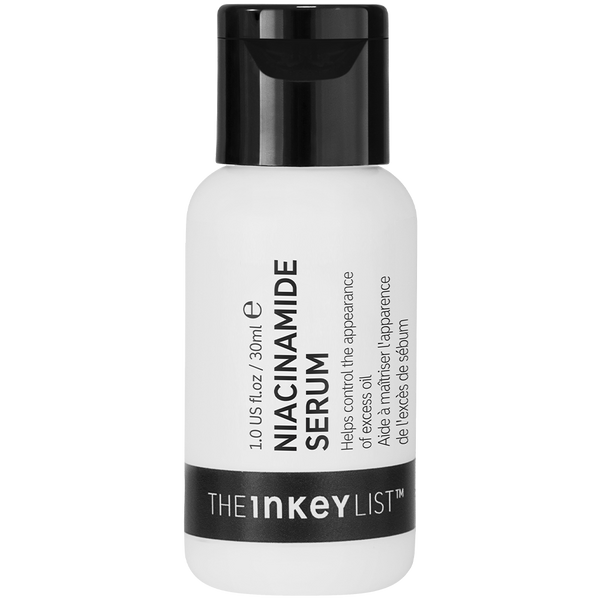
Yes, these work well together. Niacinamide supports the skin barrier, which is genuinely useful alongside anything that exfoliates. The old internet worry about these two neutralizing each other has not held up. If you want the detail on what the ingredient does, our niacinamide guide covers it.
Mandelic Acid and Retinol
Use with care, and alternate rather than layer. Both mandelic acid and retinol increase cell turnover. Doing both in the same routine on the same night stacks two renewal actives on top of each other and raises irritation risk considerably.
Alternate nights is the sensible approach: acid one evening, retinol the next. We have a dedicated guide on what not to mix with retinol that goes into the full set of pairings, so start there if retinol is a fixture in your routine, and our retinol hub explains the ingredient itself.
Mandelic Acid and Vitamin C
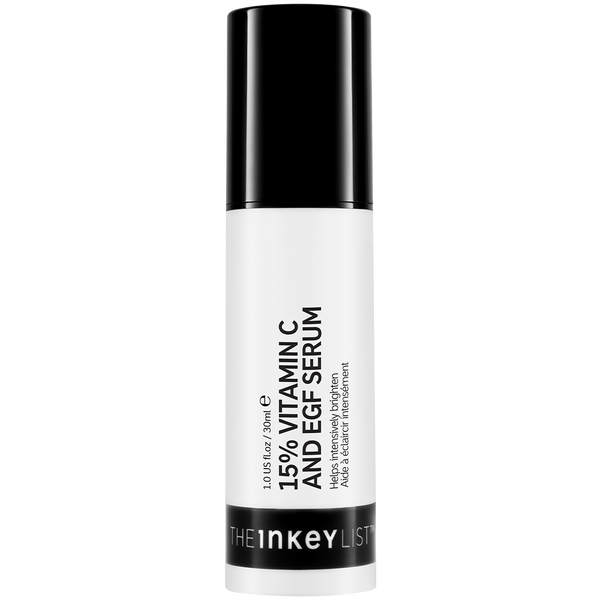
Alternate, do not layer. Our own guidance on the 15% Vitamin C + EGF Serum is explicit: do not mix with Retinol, AHAs, BHAs or PHAs in the same routine. Use Vitamin C in the AM, Retinol or Acids in the PM.
That split works nicely in practice. Vitamin C is an antioxidant, so the morning is where it earns its place, sitting under your SPF. Your exfoliating acid goes at night. Both ingredients target uneven tone by different routes, so running them at opposite ends of the day gets you both benefits without the irritation of stacking them. Our vitamin C guide explains the ingredient in more detail, and when to use vitamin C serum covers the timing question specifically.
Mandelic Acid and Azelaic Acid
Alternate, do not layer. Our guidance on the 10% Azelaic Acid Serum is to avoid layering with exfoliating acids (AHAs, BHAs, PHA), Retinols or Vitamin C in the same routine, and to alternate use to prevent over-exfoliation and irritation.
The two ingredients are compatible within a routine. They are just not compatible stacked in the same session. Alternate nights, or use one in the morning and one in the evening. If you are combining azelaic with other actives more broadly, can you use azelaic acid with retinol covers similar ground.
Mandelic Acid and Salicylic Acid
Possible, but easy to overdo. An AHA and a BHA together is a common combination in professional settings, but at home it is a fast route to over-exfoliation. Alternate rather than stack. If you have both, use one on a Monday and the other on a Thursday rather than both on a Monday.
Mandelic Acid and Other AHAs
Choose one. Layering mandelic acid with glycolic or lactic acid is the quickest way to damage your barrier that we can think of. They do the same job by the same mechanism. Two of them is not double the benefit, it is double the load. Pick the one that suits your skin and commit to it.
Mandelic Acid and Benzoyl Peroxide
Separate them. Morning and evening, or alternate days. Both can be drying, and used together they can strip skin quickly.
Mandelic Acid and Alpha Arbutin or Kojic Acid
Compatible. Both target pigment through routes that do not involve exfoliation, so they add pigment-fading power without adding exfoliating load. For anyone focused on dark marks, this is one of the more useful combinations available.
The Quick Reference
- Safe to layer in the same routine: niacinamide, alpha arbutin, kojic acid, hydrating and barrier-supporting ingredients such as hyaluronic acid, ceramides and squalane.
- Alternate, use at different times or on different days: retinol, vitamin C, azelaic acid, salicylic acid and other BHAs, benzoyl peroxide.
- Choose one, do not combine: other AHAs including glycolic and lactic acid.
The practical rule that covers everything: introduce one new active at a time and give your skin two weeks before adding another. If something goes wrong, you will know exactly what caused it.
For readers who have now worked out that mandelic acid is not their best route, or who simply cannot find it, here are the alternatives worth considering.
What to Use Instead of Mandelic Acid
We no longer offer a mandelic acid product. Rather than leave that as a dead end, here is the more useful way to think about it.
Mandelic acid was never doing one job. It was doing three at once: fading the look of pigment, brightening and evening tone, and encouraging cell turnover for smoother texture. Each of those splits out into a more targeted ingredient, and for most people one of the three is what they actually wanted all along.
So the question is not “what replaces mandelic acid”. It is “which of mandelic acid’s three jobs do I actually need done”.
If Your Main Concern Is Dark Spots and Post-Acne Marks
This is the closest successor, and for anyone who came to mandelic acid specifically for pigmentation, it is the most direct swap.
Our Tranexamic Acid Serum, $19.00 for 30ml, is built around 2% Tranexamic Acid, described on the product page as a dermatologist-favorite ingredient for fading dark spots. It is supported by 2% Acai Berry Extract to even tone and a 2% Vitamin C derivative to brighten. It is suitable for all skin types including sensitive skin, and [NEEDS SIGN-OFF] it is marked pregnancy and breastfeeding safe.
Here is the detail that matters most if irritation is what pushed you away from acids in the first place. Asked directly whether it is an exfoliating acid, the product page answers plainly: no. It targets pigment without exfoliating at all, which means no shedding, no sting and no added sun sensitivity from the exfoliation itself. For anyone whose barrier has had a hard time, that is a meaningful difference.
[NEEDS SIGN-OFF] On timelines, the stated expectation is: “You may notice brighter skin in 2-4 weeks, with significant improvement in dark spots and hyperpigmentation typically visible after 6-8 weeks of consistent use.”That is slower than most marketing would have you believe and consistent with how pigment actually behaves.
If you want to see the wider set of options for this concern, browse hyperpigmentation and acne scars and marks.
If You Want Gentle Brightening and a More Even Tone
If what drew you to mandelic acid was the promise of brighter, more even-looking skin without the aggression of a strong acid, this inherits that position.
Our 15% Vitamin C + EGF Serum, $20.00 for 30ml, uses 15% Ascorbyl Glucoside rather than pure L-ascorbic acid. That distinction is the whole point. Ascorbyl Glucoside is a stable form of vitamin C, which means it brightens with less of the irritation and instability that puts sensitive skin off traditional vitamin C serums. It is paired with 1% Epitensive™ plant-derived EGF, which supports skin renewal. It is suitable for sensitive skin, pregnancy and breastfeeding safe, and Vegan Society certified.
[NEEDS SIGN-OFF] The results reported come from a consumer trial rather than a clinical study, and we think that distinction is worth stating rather than blurring: “87% agree skin looks brighter*”, “88% saw a visible improvement in the tone and texture of their skin*” and “84% agree skin looks healthier & less dull*” where “*4-week independent consumer trial of 64 people.”
If sensitivity is the reason you have avoided vitamin C until now, our article on vitamin C for sensitive skin explains which forms tend to suit reactive skin. You can also browse the uneven skin tone range.
If You Want Cell Turnover and Smoother Texture
If the appeal of mandelic acid was renewal, resurfacing and smoother texture rather than pigment specifically, retinol inherits that job, and there is a beginner-friendly way in.
Our Starter Retinol Serum, $15.00 for 30ml, is designed for exactly the person mandelic acid suited: retinol beginners, sensitive skin and rosacea-prone skin. It uses a slow-release encapsulated Dual-Retinoid complex of 1% Granactive Pro+ and 0.01% Retinal. The encapsulation is doing the same conceptual work that mandelic acid’s large molecule does, releasing the active gradually rather than all at once.
[NEEDS SIGN-OFF] US WORDING DIVERGENCE — SEE VERIFICATION LOG. The US product page states “Clinically proven to smooth fine lines in just 7 days*”, where the UK page states “from 7 days”. These are materially different claims. Do not publish either version until the claims owner confirms which is correct for this market.
Use it PM only, two to three nights a week to begin with. To be explicit: this is the gentle beginner option, and it is not the same as our higher-strength Advanced 0.2% Retinal Serum, $22.00. If you are weighing up which is right for you, retinol vs retinal explains the difference between the two forms of vitamin A, and which retinol product is right for younarrows it down further.
One important note: we advise that you do not use any retinol/retinal/vitamin A products without consulting your doctor first when pregnant.
You Do Not Need All Three
Please do not read this as a shopping list. Adding three new actives at once is the single fastest way to irritate your skin and learn nothing about what works for you.
Pick the one that matches your main concern. Give it eight to twelve weeks of consistent use. Then reassess. Consistency with one well-chosen product will always outperform a crowded shelf of half-finished bottles.
Finally, here are the quick answers to everything else you might still be wondering.
The Takeaway on Mandelic Acid
Mandelic acid is the gentlest of the alpha hydroxy acids, and the reason is chemistry rather than marketing. At roughly 152 daltons it is the largest common AHA molecule, so it enters skin slowly and evenly instead of all at once.
That slower action makes it well suited to uneven tone, dark marks, post-acne marks and skin that has reacted badly to stronger acids. It works gradually. It needs daily SPF alongside it. And it fades marks rather than resolving scars, which is a distinction worth holding on to when you are setting expectations for your own skin.
The bigger point is that the ingredient is a means, not the goal. What you actually want is skin that looks more even, and there is more than one route to that. If mandelic acid is not available to you or does not suit your skin, tranexamic acid covers the pigment-fading job without exfoliating at all, a gentle stabilized vitamin C covers brightening, and a beginner retinol covers renewal and texture. One of those, used consistently, will get you further than three used sporadically.
Skincare gets a great deal easier the moment you understand what an ingredient actually does and why. That is the entire reason this page exists.
Still Not Sure Where to Start?
Talk to us. Our askINKEY advisors answer skincare questions every day, and no question is too big or too small. No judgement, no jargon, just a straight answer from someone who knows the ingredients.
If you know the science now but still are not sure what your skin needs, our skincare quiz builds a personalized routine around your concerns in a few minutes.
Written by one of our askINKEY skincare advisors
Frequently Asked Questions
Got a question?
Our askINKEY team are a friendly bunch of skincare experts with deep product knowledge and zero judgement. Whether you're an ingredient obsessive or just starting out, we'll make it make sense. No question too big. No question too small. We Give A Care, Every Day.


