

The Science Behind The Product: PHA Body Water Cream
A 2-in-1 daily body moisturizer with 3% PHA that gently exfoliates and deeply hydrates at the same time, for smoother body skin and the perfect self tanner base.
Author
askINKEY skincare advisor
Published
23 April, 2024
Time to read
6 minutes
Most people moisturize their body and stop there. It feels like the complete routine, because it is the routine almost everyone was taught. But body skin is not facial skin. The dead-cell layer sitting at the surface is thicker across the limbs and trunk than it is on the face, there are far fewer oil glands producing natural lubrication, and the whole renewal cycle moves slowly. That combination is why arms and legs can still feel rough, look dull, and turn flaky in patches even when you are applying lotion every single day. Moisturizer adds water and oil to the surface. It does not remove what is already sitting on it.
This is the gap a chemical exfoliant for body skin fills, and it is the reason PHA Body Water Cream exists. Rather than asking you to add a scrub, a wash, or a weekly treatment to a routine you are already struggling to keep up with, PHA Body Water Cream is a 2-in-1 daily body moisturizer that delivers gentle chemical exfoliation and deep hydration at the same time. One product, one step, two jobs. It clears the buildup that makes skin look dull, then hydrates the smoother surface underneath.
INKEY SAYS EXFOLIATE. Not aggressively, not once a week with a fistful of grit, but gently and consistently, in the step you are already doing. Over the next few thousand words we will cover what PHA actually is, how it differs from the AHAs and BHAs you already know, who it suits, exactly how and when to use it, why it is one of the best ways to prep skin before self tanner, and how to pair it with something more targeted if you deal with rougher patches, KP bumps or ingrown hairs. To understand why any of it works, start with why body skin behaves so differently from the skin on your face.
Why Your Body Skin Needs More Than a Moisturizer
If you have ever wondered why the skin on your face responds quickly to a good routine while your shins stay stubbornly dry, the answer is structural. These are genuinely different environments, and they need different treatment.
Start with oil. Sebaceous glands are the tiny structures that produce sebum, your skin’s own moisturizer, and they are not distributed evenly. Dermatological literature on sebaceous gland distribution puts density on the face and scalp at roughly 400 to 900 glands per square centimeter, while most of the trunk and limbs sit below 100. That is close to a tenfold difference. Your forehead is generously supplied. Your shins, forearms, elbows and knees are running on a fraction of the resource. Less natural lubrication means dryness sets in faster and lingers longer, which is exactly why those areas are the first to feel tight after a shower.
Then there is cell turnover. In plain English, cell turnover is the process of new skin cells forming at the base of the epidermis, gradually travelling up to the surface, and eventually shedding away. It is a conveyor belt, and it is slower than most people assume. Classic dermatological research on epidermal turnover time, revisited by DermNet’s guide to the structure of the epidermis, places the full journey from cell division to shedding at roughly 40 to 80 days depending on the site and the method of measurement, with around 20 days spent crossing the outermost layer alone in young adults. That pace slows further with age.
Now add the third factor. A 2022 meta-analysis of epidermal thickness published in the Journal of the European Academy of Dermatology and Venereology found that while total epidermal thickness varies considerably by site, the stratum corneum, the layer made up of flattened, already-dead cells, tends to be thicker across many body sites than it is on the face. More dead cells, shed more slowly, with less oil keeping them soft and pliable in the meantime.
Body skin renews itself more slowly than facial skin, which is why it needs help clearing the surface.
That is the whole picture in one sentence. And it explains something a lot of people quietly experience without being able to name it: the feeling that your body lotion has stopped working. It has not stopped working. It is doing precisely what it was formulated to do, which is deposit moisture and help hold it there. The problem is what it is landing on. Hydration applied over a layer of accumulated dead cells sits on top of that layer rather than reaching the smoother, healthier skin beneath it. You get short-lived softness that fades by mid-afternoon, and a surface that still catches the light unevenly and reads as dull.
Daily life compounds all of it. Long hot showers feel wonderful and strip lipids from the surface while they do it. Foaming cleansers formulated for a squeaky-clean finish take more than they need to. Shaving and hair removal disrupt the surface directly. Friction from waistbands, sports gear, gym leggings and backpack straps adds mechanical stress. Seasonal shifts, central heating in winter and air conditioning in summer, pull ambient humidity down and take skin moisture with it. Each of these individually is minor. Stacked across a week, they leave you with a surface that is drier than it should be, a compromised skin barrier, and buildup that has nowhere to go.
None of that means anything is wrong with your skin. This is normal physiology meeting normal modern life. But it does mean that if your primary concern is dehydrated skin or texture that never quite smooths out, moisturizing harder is not the lever. Clearing the surface first, then hydrating it, is.
Which brings us to the practical problem. Historically, that meant adding a step: a scrub in the shower, a dry brush by the door, a weekly treatment you keep meaning to do. Most people do not sustain it. An exfoliating body lotion solves the sequencing differently, by folding the exfoliation into the moisturizing step you already reliably do. No extra product, no extra time, no new habit to build. It is also worth saying that surface buildup plays into more stubborn concerns for some people, including KP bumps, ingrown hairs and body breakouts, and if those are your main issue we have dedicated guides across the body skincare range that go deeper than this article will.
So buildup needs clearing. The next question is how you actually clear it, and the two available routes are not equally suited to the job.
What Is Chemical Exfoliation, and Why It Beats Scrubbing
There are two broad ways to remove dead skin cells from the surface of your skin, and understanding the difference is most of what you need to know about how to exfoliate your body properly.
The first is physical exfoliation. Scrubs with sugar, salt or ground shells, exfoliating mitts, dry brushes, textured cloths. These work through friction. You apply pressure, the abrasive particles or fibers dislodge loose surface cells, you rinse, and skin feels immediately smoother. There is real satisfaction in it, and the results are instant, which is a genuine part of the appeal.
The second is chemical exfoliation. Instead of physically scraping cells away, chemical exfoliants use acids to loosen the bonds holding dead cells to the surface, so those cells release and shed naturally. Nothing is scrubbed. You apply, and the chemistry does the work.
The practical difference between them matters more on the body than anywhere else, and it comes down to surface area and control. Your body is a lot of ground to cover. When you scrub, you are applying pressure by hand across dozens of square inches of skin with wildly varying sensitivity, and you are doing it without any real feedback about how hard is too hard. Nobody scrubs evenly. Everybody presses harder on the parts that feel roughest, which are often the parts already most compromised. On skin that is already dry or reactive, that combination of abrasion and pressure can leave the surface feeling irritated and looking red rather than smooth.
Chemical exfoliation removes the guesswork entirely. The acid works uniformly across whatever area you have applied it to. Your elbow gets the same treatment as your forearm, at the same intensity, regardless of how much pressure your hand happened to apply. No scrubbing, no abrasion, no deciding in the moment how much is enough.
There is also the honest, unglamorous reason body exfoliation fails for most people, and it has nothing to do with efficacy. It is a separate step. It happens in the shower, it takes effort, it makes a mess, it needs rinsing, and it competes with everything else you are trying to get done before work. People buy the scrub with real intentions. It ends up at the back of the shower shelf, used twice a month at best. The most effective chemical exfoliant for body skin is not the one with the highest percentage on the label. It is the one you will genuinely use, consistently, without having to think about it.
That reframes what you should be looking for. If the product needs to be used daily, across large areas, on skin of varying sensitivity, then gentleness is not a compromise on performance. Gentleness is the thing that makes daily use possible, and daily use is what produces results.
This is where polyhydroxy acid, or PHA, comes in. PHAs are the gentlest of the chemical exfoliating acid families, alongside the alpha hydroxy acids and beta hydroxy acids you have probably encountered in facial skincare. We have a full breakdown of what PHA is and how it works on our dedicated PHA page, so we will not repeat all of it here. The short version is that PHAs exfoliate at the surface, they do it gradually, and they are notably well tolerated. If you want the stronger AHA route for targeted areas, glycolic acid is the better known and more intensive option, and we will come back to how the two work together later on.
One note on expectations, because this matters and we would rather be straight with you. Chemical exfoliation supports smoother, softer, more even-looking skin over time. It is not a transformation and it is not overnight. What it does is help your skin do what it is already trying to do, at a slightly better pace, consistently. That is a modest promise, and it is one that holds up.
With the category understood, here is the specific product built around it.
What Is PHA Body Water Cream
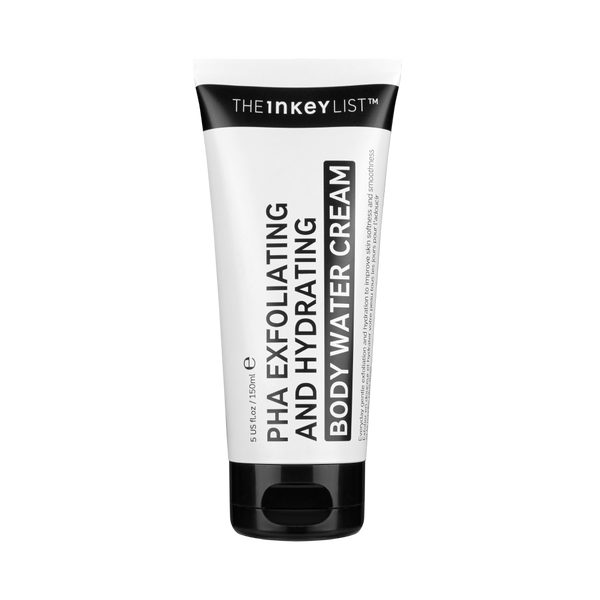
PHA Body Water Cream is a 2-in-1 daily body moisturizer that delivers chemical exfoliation and deep hydration at the same time. That is the core proposition, and everything else about the formula follows from it. It is not a treatment you schedule. It is the body moisturizer you already use, doing an additional job.
It is formulated with 3% PHA, specifically Gluconolactone, and it helps you achieve and maintain smoother, brighter and more even-looking skin. The texture is deliberately lightweight. It absorbs instantly, leaves no sticky residue, and needs no rinsing at all. That last point is a genuine structural difference from scrubs and washes rather than a marketing line. A leave-on product keeps working after you have left the bathroom, and it lets you get dressed within a minute of applying rather than standing around waiting to dry.
Alongside the acid, jojoba and rice bran provide nourishing benefits that smooth and soften skin, so the formula is supporting comfort at the same time as it is clearing the surface.
Here is what the testing showed:
- 97% agreed the product was gentle enough for daily application.
- Reveals brighter, smoother and more even body skin in just 1 week.*
- Strengthens the skin barrier and significantly improves and maintains hydration.*
- Visibly reduces dry, flaky body skin in just 7 days.*
It is also clinically tested and proven non-comedogenic, which is a term worth unpacking rather than glossing over. Non-comedogenic means the formula has been specifically tested and shown not to clog pores. Comedones are the blocked follicles that show up as blackheads and bumps, so a non-comedogenic formula is one you can apply generously across your chest, back and shoulders without worrying that the moisturizer itself is contributing to congestion. That makes it suitable for breakout-prone skin, which is a meaningful consideration on the body, where richer traditional lotions applied under clothing can be a problem for some people.
The good-to-knows, all in one place:
- Fragrance-free
- Alcohol-free
- Silicone-free
- Gluten-free
- Vegan, and certified by The Vegan Society
- Suitable during pregnancy and breastfeeding
- Formula pH sits at 4.5 to 5.0
- Can be used AM and/or PM
That pH figure is worth pausing on, because it is one of the quieter indicators of how a formula will feel in practice. Healthy skin naturally sits on the acidic side, and a formula in the 4.5 to 5.0 range is well within the comfortable zone rather than pushing into the aggressively low pH territory that some stronger acid products occupy in pursuit of speed.
The fragrance-free point deserves the same attention. Fragrance is one of the more common triggers for sensitivity, and on the body you are applying product across a very large surface area, often to freshly shaved skin, often under clothing that traps it against you for hours. Leaving fragrance out is a formulation decision made in favor of tolerability.
The framing that matters most, though, is the practical one. This is a PHA body cream that replaces the body lotion already in your bathroom. It is not an addition to your routine, it is a substitution within it. You are not being asked to find another two minutes in your day or another space on your shelf. You are being asked to swap one product for another that happens to do more.
Having covered what is in it, here is the mechanism that makes one ingredient deliver two separate benefits.
How Does PHA Body Water Cream Work
PHA is a dual-acting Polyhydroxy Acid, and the two actions are genuinely distinct. It is worth taking them one at a time.
Action one is exfoliation. PHA gently exfoliates the skin’s surface, loosening and removing the dead skin cells that have accumulated there. This is what addresses rough texture, dullness and unevenness. It is working at the surface, on the layer of cells that have already finished their life cycle and are simply waiting to shed.
Action two is hydration. PHA acts as a humectant, drawing moisture into the skin and increasing hydration levels.
A humectant is an ingredient that attracts water molecules and helps hold them in the skin. If that sounds familiar, it should. It is the same category of ingredient as hyaluronic acid, which is probably the humectant you know best. The reason gluconolactone can do this comes down to its chemistry. It carries multiple hydroxyl groups on its structure, and those groups bind water. It is a genuine two-for-one built into the molecule itself, not two separate ingredients bolted together in a formula.
One ingredient, two jobs. It clears the surface and pulls moisture in.
Why does that combination matter so much here? Because almost every other exfoliant leaves you with an unfinished job. You scrub, you rinse, you have removed surface cells and stripped some moisture in the process, and now you need to rehydrate separately. The exfoliating step and the moisturizing step remain two things. PHA collapses them into one, and that is precisely what allows this to function as a daily moisturizer rather than a weekly treatment. It is not exfoliating and then hoping you remember to moisturize. It is doing both in the same pass.
The formula’s pH of 4.5 to 5.0 supports that daily-use positioning. It sits in the range where skin is comfortable, which is part of why the formula tolerates the kind of repeated application that a harsher, lower-pH product would not.
Working alongside the acid, jojoba and rice bran provide the nourishing element, smoothing and softening as the PHA clears and hydrates. This is the part of the formula that handles feel and comfort, and on a product designed for everyday use across large areas, feel is not a secondary consideration.
If PHA sounds familiar, there is a good chance you have already met it on your face. Many people first encounter it in a facial routine, and our PHA Toner is the facial counterpart to this cream, working on the same principle in a format suited to the face. The body version takes the same gentle, dual-acting logic and rebuilds it in a texture designed for arms, legs and torso rather than cheeks and forehead.
That is the mechanism, and it is deliberately simple. No complicated multi-stage process, no ingredient that only activates under specific conditions. An acid with a large, water-binding molecule that works patiently at the surface while holding moisture in place.
The obvious next question is how this compares to the acids you already know, which is where most people’s real decision gets made.
PHA vs AHA and BHA: Why PHA Suits Body Skin
If you have spent any time in skincare, you know AHAs and BHAs. PHA is the third family, and it is the least familiar of the three. Here is how they actually differ, and why the answer changes depending on whether you are treating your face or your entire body.
What AHAs do
Alpha hydroxy acids are water-soluble acids that work on the skin’s surface, and glycolic acid is the one you have almost certainly heard of. Their defining characteristic is molecular size. Glycolic acid has a molecular weight of around 76 daltons, making it one of the smallest hydroxy acid molecules available, and small molecules move through the surface layer readily. That translates to fast, effective, noticeably intensive exfoliation.
AHAs are excellent, and we sell them for good reason. Their intensity is a feature when you are treating a specific, stubborn area and you want visible results quickly. It becomes a consideration when you are covering your entire body every day.
What BHAs do
Beta hydroxy acids are oil-soluble, and that single property defines what they are good at. Because oil-soluble ingredients can move into the pore rather than only working across the surface, BHAs get inside congested follicles. Salicylic acid is the familiar example. This makes BHAs the natural choice for congestion, oiliness, blackheads and blemishes, on the face and on the body alike.
Again, different tool, different job. A BHA is targeting what is inside the pore. That is a distinct problem from a surface covered in dead cells.
What makes PHA different
Polyhydroxy acids share the basic structure of AHAs but carry additional hydroxyl groups, and the practical consequence is size. Gluconolactone weighs in at roughly 178 daltons, which is around two and a half times the molecular weight of glycolic acid. Published dermatological reviews of hydroxy acid classification and mechanismdescribe how this larger size limits how quickly and how deeply the acid penetrates, keeping its activity concentrated in the upper layers of the skin.
Slower, shallower, more gradual. That is why PHA is the gentlest of the three families and consistently the best tolerated on sensitive skin.
The critical point is that this gentleness is the feature, not a watered-down version of something better. A PHA is not an AHA that did not try hard enough. It is an acid engineered to work at a pace that skin can accommodate indefinitely. And it comes with the humectant benefit built in, which neither AHAs nor BHAs offer in the same way. Those acids exfoliate. PHA exfoliates and hydrates.
Why PHA suits body skin specifically
Now put those properties against what body application actually demands.
You are covering a very large surface area. You are potentially doing it every single day, twice a day. You are applying across regions of dramatically different sensitivity in a single pass: tough skin on knees and elbows, thin skin on the inner arms, freshly shaved skin on legs and underarms, and areas that spend all day under friction from clothing. And you are doing it without the careful attention most people give their face.
In that context, intensity is the wrong optimization target. Tolerability is the right one. An acid you can apply everywhere, daily, without irritation beats a stronger acid you can only use twice a week on selected areas. The consumer data supports the point: 97% agreed it was gentle enough for daily application.
Is PHA good for sensitive skin?
Broadly, yes, and this is one of the most common questions we get. PHA is the gentlest of the chemical exfoliating acid families, the larger molecule means it works more gradually at the surface, and this particular formula is fragrance-free and pairs the acid with jojoba and rice bran to smooth and soften. It is formulated for daily use, which is not something you would design into a product that irritated skin.
That said, we will not tell you it is universally suitable, because no product is. Skin is individual. If yours is reactive, patch test before you commit to full-body application, and if you have a diagnosed skin condition, speak to your doctor first. That is sensible practice with any new product, not a warning specific to this one.
Who PHA Body Water Cream is for
It suits anyone with dry, rough, dull or uneven-textured body skin. It suits anyone completely new to chemical exfoliation who wants to start somewhere forgiving. It suits anyone with sensitive skin who has tried scrubs and found them too abrasive. It suits anyone with breakout-prone body skin, since the formula is clinically tested and proven non-comedogenic. And it suits anyone who uses self tanner and wants a properly smooth base, which we will get to shortly. It is also suitable during pregnancy and breastfeeding.
Some readers will have more targeted concerns, things like KP bumps or ingrown hairs, and the right pairing for those is covered further down.
None of this makes AHAs or BHAs the wrong choice. They are different instruments for different jobs, and we make all three because all three have a place. The question is never which acid is strongest. It is which acid matches what you are trying to do.
With the choice settled, here is how to actually use it.
When and How to Use PHA Body Water Cream
The best thing about this product is how little there is to explain, but the details that do matter are worth getting right.
When. PHA Body Water Cream can be used AM and/or PM. It is a daily body moisturizer, so it slots directly into whatever routine you already have without rearranging anything.
How. Apply to clean, dry skin and massage in using circular motions until fully absorbed. Because the texture is lightweight and absorbs instantly with no sticky residue, you can get dressed shortly afterward rather than standing around in a towel. There is no rinsing involved at any stage.
Where. Arms, legs, chest, back, elbows, knees. Anywhere that feels rough or dry, or looks dull. The areas people most often skip are the ones that benefit most, so pay attention to elbows, knees and the backs of the arms.
The simple version, in order:
- Shower or bathe as normal, using whatever cleanser you already use.
- Pat skin dry rather than rubbing it vigorously.
- Dispense the cream and apply to clean, dry skin.
- Massage in circular motions until fully absorbed.
- Get dressed. No rinsing, no waiting around.
The easiest moment to build the habit is straight after showering, when skin is clean and you are already reaching for a moisturizer. That is a suggestion rather than a rule. Some people prefer applying before bed, some in the morning. The best time is whichever one you will actually stick to.
What to expect, and when. We will be specific rather than vague, because the testing gives us real numbers. It visibly reduces dry, flaky body skin in just 7 days, and reveals brighter, smoother and more even body skin in just 1 week.Continued daily use is what maintains that result. This is not a product where you get everything in week one and then plateau. The value is in the maintenance.
Which leads to the single most important point in this entire section: consistency beats intensity. This is a gentle formula designed for repeated daily use, and its results come from regular application rather than occasional heavy treatment. If you apply it every day for a month, you will be significantly better off than if you apply it aggressively three times and then forget about it for a fortnight. The gentleness is what makes the consistency achievable, and the consistency is what produces the outcome. Those two things are connected, not separate.
An important note on sun exposure. PHA can increase the skin’s sensitivity to the sun. This is standard for hydroxy acids as a category, and it is why the FDA’s guidance on labeling cosmetics containing hydroxy acids addresses sun sensitivity directly. In practice, this means you should wear sun protection on exposed areas and limit your time in direct sun, particularly on skin you have been treating. That is good general practice regardless of what is in your routine, and it is worth taking seriously if you are applying to arms, shoulders, chest or legs during warmer months.
On patch testing. It is always worth patch testing when you introduce a new product, and that goes double if you know your skin runs reactive. Apply a small amount to a discreet area, wait, and see how your skin responds before going all in. It costs you a day and it removes the uncertainty.
Finally, remember what this replaces rather than what it adds. You are not building a longer routine. You are swapping your existing body lotion for one that also exfoliates. Same step, same time, more work getting done. If you want to explore what else pairs with it, the full body collection covers the rest of the range.
There is one use case that comes up so often it deserves its own section, and it is the reason a lot of people buy this cream in the first place.
Using PHA Body Water Cream Before and After Self Tanner
Anyone who has ever ended up with streaky ankles or dark, blotchy knees knows that self tanner is unforgiving. What is less widely understood is that the failure almost never happens during application. It happens in the days before, and it comes down to exactly the surface science we have already covered.
Self tanner develops in the uppermost layer of the skin, reacting with the cells sitting at the surface. That means it goes wherever those cells are, in whatever quantity they are present. Where skin is dry, rough or flaky, there is more dead cell material for the tanner to cling to, so color develops darker and more intensely in those spots. Where skin is smooth, it develops evenly. Dead skin cells are the single biggest cause of patchy fake tan, and no amount of careful application technique fully compensates for an uneven base. Smooth base, even result. It really is that direct a relationship.
Before you tan
Use PHA Body Water Cream regularly in the week before you tan. Not once, and not aggressively the night before. Regularly, across several days, so the exfoliation happens gradually and evenly across the whole surface.
This is where a gentle daily exfoliant genuinely outperforms a harsh scrub for tan prep, and the reasoning is practical rather than promotional. A scrub used the night before an application removes cells unevenly, because you scrubbed unevenly, and it can leave the surface irritated and reactive right at the moment you are about to apply color to it. Irritated, unevenly buffed skin is not a good canvas. Several days of gentle, uniform exfoliation produces something much closer to a genuinely level surface.
The texture matters here too. Because PHA Body Water Cream absorbs instantly and leaves no sticky or greasy residue, it does not sit on the skin as a barrier that interferes with how tanner deposits. Heavy, occlusive lotions applied close to tanning time can do exactly that, which is why the standard advice has always been to avoid moisturizing right before you apply. A fast-absorbing formula behaves differently.
Pay particular attention to the areas that classically go wrong: elbows, knees, ankles, wrists, hands and feet. These are the driest, roughest, most keratinized parts of the body and they grab color harder than anywhere else. Consistent exfoliation across the preceding week is the most effective thing you can do about them.
After you tan
Keep using it. This one surprises people, because the instinct is to leave a fresh tan completely alone, but the logic follows directly from how tan fades.
Your tan does not evaporate. It leaves as the colored surface cells shed away. If that shedding happens unevenly, which is what happens naturally when some areas are rougher than others, the tan comes off in patches and you get the mottled look that makes everyone reach for a scrub in frustration. Gentle, even exfoliation means those cells shed more uniformly, so the tan fades down more evenly rather than breaking up into blotches.
The hydration piece supports this as well. Well-hydrated skin sheds more gracefully than dry skin, which is part of why every tanning brand tells you to moisturize afterward. Here that is happening in the same step as the exfoliation.
One honest caveat, because we are not going to pretend every tanning product behaves identically: always follow the specific instructions that came with whichever tanner you use. Formulations differ, development times differ, and some brands have particular guidance about what to apply and when. Our advice is about the state of your skin. Theirs is about their product. Follow both.
That covers all-over smoothing. For the areas that need something with more intensity behind it, there is a partner product designed for exactly that.
Pairing With the Glycolic Acid Exfoliating Body Stick for Targeted Concerns
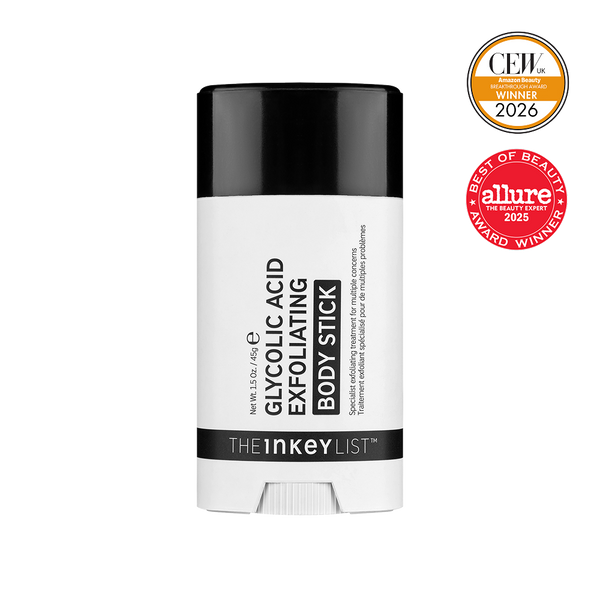
Here is the cleanest way to think about how our two body exfoliants relate to each other. PHA Body Water Cream is your daily all-over step. The Glycolic Acid Exfoliating Body Stick is your targeted step. Two different jobs, deliberately designed to complement rather than duplicate each other.
The Glycolic Acid Exfoliating Body Stick is built around three active components. 7% Glycolic Acid exfoliates dead skin and smooths rough texture. 0.5% Salicylic Acid helps unclog pores and target body breakouts. 10% Shea Butternourishes and soothes, offsetting the intensity of the acids with something genuinely comforting. It is clinically proven to tackle keratosis pilaris (KP) bumps, ingrown hairs, rough skin and body breakouts in just 7 days.*
The format is a big part of why it works for targeted use. A stick applies directly to a specific area with no decanting, no mess on your hands, and no rinsing. You are not spreading an intensive acid across skin that does not need it, and you are not wasting product on areas that are already smooth. You swipe it exactly where the concern is and leave everything else alone. For anyone who has tried to apply a strong liquid exfoliant to the back of their own arms, the practical advantage is immediately obvious.
Why glycolic acid specifically? This connects straight back to the comparison earlier. Glycolic acid is an AHA with a very small molecule, which means faster and deeper penetration and a more intensive result than PHA delivers. That intensity is exactly what you want on a concentrated problem area, and exactly what you do not want spread across your whole body every day. The range is built this way on purpose: the gentle acid handles the large-surface daily work, the intensive acid handles the specific stubborn spots. Neither one is trying to do the other’s job.
How to use the Body Stick. Apply AM or PM, directly to clean, dry skin. Start with 2 to 3 times per week and build up to daily use if your skin tolerates it comfortably. There is no advantage to rushing this. Let your skin tell you the pace.
The pairing rule that actually matters. This is the most useful practical instruction in this section, so we will state it plainly:
Use the Body Stick on your target areas. Use PHA Body Water Cream on everything else. Do not layer both exfoliants on the same area on the same day.
They are both exfoliating acids. Applying them to the same patch of skin in the same session is not double the benefit, it is just more acid than that area needs, and the likely outcome is irritation rather than faster results. Treat them as a map rather than a stack. The Body Stick covers the backs of your arms or wherever your specific concern lives. The cream covers everywhere it does not.
Because both products are exfoliating acids, the sun guidance from earlier applies to any treated area that will be exposed. Cover up, protect exposed skin, and be sensible about time in direct sun.
And now the honest part, which we would rather say than have you discover after buying two products. Most people do not need both. If your situation is simply that your body skin is dry, rough or dull and you want it smoother and better hydrated, PHA Body Water Cream on its own is the complete routine. Adding a second exfoliant does not accelerate anything. The Body Stick earns its place when you have a specific, localized, stubborn concern that the daily all-over step is not fully resolving. If that is not you, save your money and your bathroom shelf.
That kind of honesty is worth more to us than an extra unit sold. We would rather you buy one product that works than two products where one sits unused.
If you do have those more specific concerns, we have written dedicated guides that go considerably deeper than this article can, and those are the better starting point. Meanwhile, if you want a broader view of the glycolic acid range and where else it fits, that is all in one place.
Let us pull the whole thing together into something you can actually follow.
Build Your Full Body Routine
A complete body routine has three beats, and that is genuinely all it needs.
One, cleanse as normal. Whatever body wash you already use is fine, though a gentler, non-stripping formula will always serve you better than something that leaves skin squeaky.
Two, apply PHA Body Water Cream daily, all over. This is the load-bearing step. Clean, dry skin, massaged in, no rinsing. It is your moisturizer and your exfoliant simultaneously.
Three, use the Body Stick on targeted areas if, and only if, you have a specific concern that needs it.
Different parts of the body have genuinely different needs, and rather than skim across all of them here, we would point you to the guides that cover them properly. Underarms are the area people most consistently overlook despite dealing with shaving, friction, deodorant and darkening all at once. Ingrown hairs come with their own set of dos and don’ts that deserve more space than a paragraph. Both have dedicated articles. If you want the facial equivalent of this cream, the PHA Toner works on the same principle, and the full body range covers everything else.
The thing that determines your results is not how many products are in the routine. It is whether you do the simple daily step consistently.
The Takeaway on Chemical Exfoliation for Body Skin
Body skin carries a thicker layer of dead cells at the surface, produces a fraction of the natural oil your face does, and renews itself slowly. Moisturizing alone leaves all of that buildup exactly where it is, which is why lotion can feel like it stopped working when nothing about it changed. A gentle chemical exfoliant for body skin addresses both halves of the problem in a single move: it clears the surface, then hydrates what is underneath.
What makes PHA Body Water Cream worth your attention is not that it does something dramatic. It is that it does something sensible, in a step you were already taking. 3% PHA, exfoliation and hydration together, lightweight and instantly absorbing, no rinsing, non-comedogenic and suitable for breakout-prone skin. Not an extra step, just a better version of one you already have. Use it daily and you get smoother, brighter, more even-looking skin over weeks of consistency, which is a more honest promise than overnight transformation and a considerably more reliable one. Because at INKEY, We Give A Care.
Where to Start
Add PHA Body Water Cream as your daily all-over step, and reach for the Glycolic Acid Exfoliating Body Stick if you have specific areas that need something more targeted. You can browse the full body range or read more about how PHA works if you want the deeper detail first. And if you are not sure where to begin, our askINKEY advisors are on live chat and happy to help you work it out.
\4-week clinical trial of 21 people*
\*4-week consumer study of 100 people*
Frequently Asked Questions
Got a question?
Our askINKEY team are a friendly bunch of skincare experts with deep product knowledge and zero judgement. Whether you're an ingredient obsessive or just starting out, we'll make it make sense. No question too big. No question too small. We Give A Care, Every Day.


